
Hydraulic Upender for Sale: Understanding Types, Applications, and Specifications?
In my years helping factories, I have seen too many struggle with heavy, awkward loads. Workers risk injury every day. Production lines slow down because of manual handling. Valuable products get damaged. You might feel the pressure to boost output, cut costs, and keep everyone safe. If this sounds like your factory, you know these challenges are real and costly.
A hydraulic upender is a robust industrial machine. It uses hydraulic power to safely change the orientation of heavy objects like steel coils, molds, or rolls by 90 or 180 degrees. This process replaces dangerous and slow manual methods. It protects workers and keeps products safe.
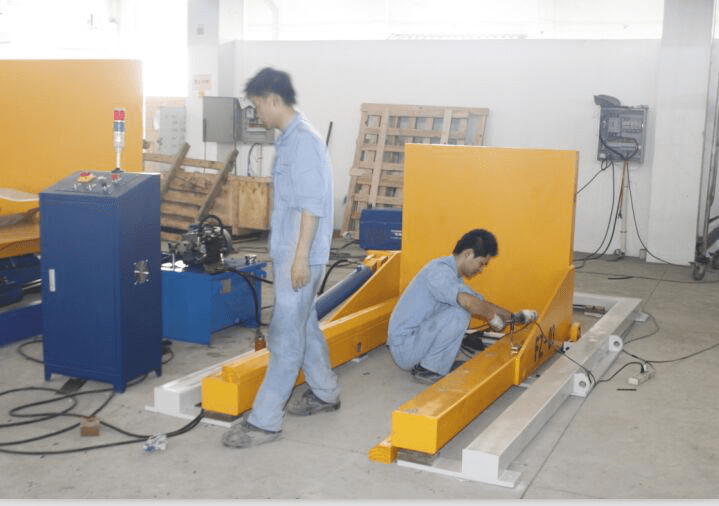
I understand these challenges well because I lived them. From an employee to owning my own packing machine factory, I learned that the right equipment makes all the difference. Now, let’s explore how a hydraulic upender can transform your operations. We will look at what it is, the different types, where it can be used, and what to look for when you buy one.
1. What is a Hydraulic Upender and Why Do Factories Need It?
Imagine trying to manually move a massive steel coil or a heavy mold. The process is slow, uses many people, and is very dangerous. Accidents can happen quickly. This leads to injuries, high insurance costs, and delays in your production schedule.
A hydraulic upender uses pressurized fluid to power a robust mechanism. This mechanism lifts and rotates heavy loads smoothly. It changes their position from horizontal to vertical, or vice-versa, or even flips them 180 degrees. This removes the need for human strength and guesswork.

From my experience, seeing how factories like Michael’s operate, I know how critical safety and efficiency are. Michael, a factory manager in Mexico, deals with heavy metal processing every day. He understands that downtime or worker injuries mean huge losses. A hydraulic upender directly addresses these pain points.
Why Your Factory Cannot Afford to Be Without an Upender 🛠️
-
Boosted Safety 👷♀️: Manual handling of heavy loads is a major cause of workplace injuries. Workers can get crushed, suffer back strains, or drop materials. An upender automates this dangerous task. It minimizes human contact with heavy objects. This lowers injury rates and improves overall factory safety. It also helps reduce worker compensation claims and insurance premiums. Investing in safety is not just about compliance; it is about protecting your most valuable asset: your people.
-
Increased Efficiency ⏱️: Manual processes are inherently slow. Getting a team of workers to reorient a large coil takes time. It creates bottlenecks in the production line. A hydraulic upender can perform these rotations in minutes, often with a single operator. This speed-up means faster material flow, quicker turnaround times, and higher overall productivity. It allows your existing workforce to focus on more skilled tasks, not on brute force labor. Think about how much faster you can move goods from one station to another.
-
Reduced Product Damage ✨: Heavy items like steel coils or delicate molds can be easily damaged during manual handling or makeshift lifting. Edges can get bent, surfaces can be scratched, or entire parts can be dropped. This leads to costly scrap, rework, and customer complaints. Upenders provide a controlled, gentle rotation. This ensures the product maintains its integrity. My clients, especially those dealing with expensive materials, tell me this benefit alone often justifies the investment.
-
Significant Cost Savings 💰: While an upender is an initial investment, its long-term savings are clear. You reduce labor costs by needing fewer workers for handling tasks. You save money by preventing product damage and reducing waste. Faster operations mean higher output, which boosts revenue. When I help my clients calculate the Return on Investment (ROI), the numbers often show a quick payback period. These savings come from many areas: reduced wages, less material waste, and lower accident-related costs.
-
Optimized Space Utilization 📦: In some factory layouts, material needs to be stored or processed in a specific orientation. An upender allows you to store items horizontally and then quickly move them to a vertical position for the next process. This flexibility can help you make better use of your available floor space. It removes the need for large, custom lifting fixtures. (heavy load handling equipment, industrial safety solutions, production bottleneck removal, material damage prevention)
2. What Types of Hydraulic Upenders Are Best for Your Factory?
Not all upenders are the same. Just as different factories have different needs, there are different types of upenders. Choosing the wrong one can mean wasted money and continued inefficiency. It is important to match the machine to your specific operation.
The best type of hydraulic upender for your factory depends on what you need to move, its weight, and how you need to reorient it. Common types include 90-degree coil upenders for changing coil orientation, 180-degree mold tilters for flipping heavy objects, and specialized designs for unique industrial requirements.

When Michael sought my advice for his metal processing plant, we talked in detail about the kinds of coils he handles. We also discussed how they need to be positioned for further processing or packaging. This tailored approach is key to getting the right equipment.
Exploring Hydraulic Upender Varieties 🔄
Understanding the main types helps you make an informed decision. Here’s a breakdown:
A. 90-Degree Hydraulic Upenders (Coil Tilters / Roll Tilters)
These are perhaps the most common upenders, especially in industries dealing with coils or rolls.
- Function: They change the orientation of a load by exactly 90 degrees. For example, they can take a steel coil lying flat (eye-horizontal) and stand it upright (eye-vertical), or vice-versa.
- Typical Loads: Steel coils, wire coils, paper rolls, plastic film rolls, large pipes.
- Applications: Often found at the start or end of a coil processing line, or integrated with coil wrapping machines. They prepare the coil for loading onto a mandrel or for palletizing.
- Benefits: Crucial for efficient loading/unloading, safe handling of cylindrical objects, and integration into automated lines.
B. 180-Degree Hydraulic Upenders (Mold Tilters / Pallet Inverters)
These machines offer full inversion of a load.
- Function: They completely flip an object 180 degrees. This is useful when both sides of an item need to be accessed or for changing the bottom to the top.
- Typical Loads: Heavy molds and dies for manufacturing, large panels, loaded pallets that need inversion.
- Applications: Essential in mold making for maintenance or setup, ensuring safe access to both sides. Also used in warehousing to invert loaded pallets.
- Benefits: Enables safe and easy access to all parts of a heavy, complex object. Improves ergonomics and speeds up processes that require full inversion.
C. Specialized Hydraulic Upenders
Beyond the standard 90 and 180-degree models, there are upenders built for unique tasks.
- Function: These are custom-designed to handle specific shapes, sizes, or rotation angles. They might include features like precise indexing, integrated weighing systems, or specialized clamping mechanisms.
- Typical Loads: Unique industrial components, custom castings, large engine blocks, or items with very specific handling requirements.
- Applications: Niche manufacturing processes, aerospace, defense, or any industry with unusual material handling needs.
- Benefits: Solves very specific and challenging handling problems that off-the-shelf units cannot address. Offers tailored safety and efficiency gains.
Choosing the right type means looking at your exact needs. What are you moving? How heavy is it? What orientation does it need to be in? (coil handling equipment, industrial roll tilters, 90 degree upender, 180 degree tilter, custom material handling)
3. Where Can Hydraulic Upenders Revolutionize Your Operations?
You might think an upender only changes an object’s position. But its real power lies in how it transforms entire workflows. It takes a bottleneck and turns it into a smooth part of your production. Without it, you are likely leaving efficiency and safety gains on the table.
Hydraulic upenders are vital across many heavy industries. They revolutionize operations in metal processing, packaging lines, mold manufacturing, and warehousing. They ensure safe and efficient material flow from raw material receipt to finished product shipment. This makes them key for factories facing challenges like Michael’s.
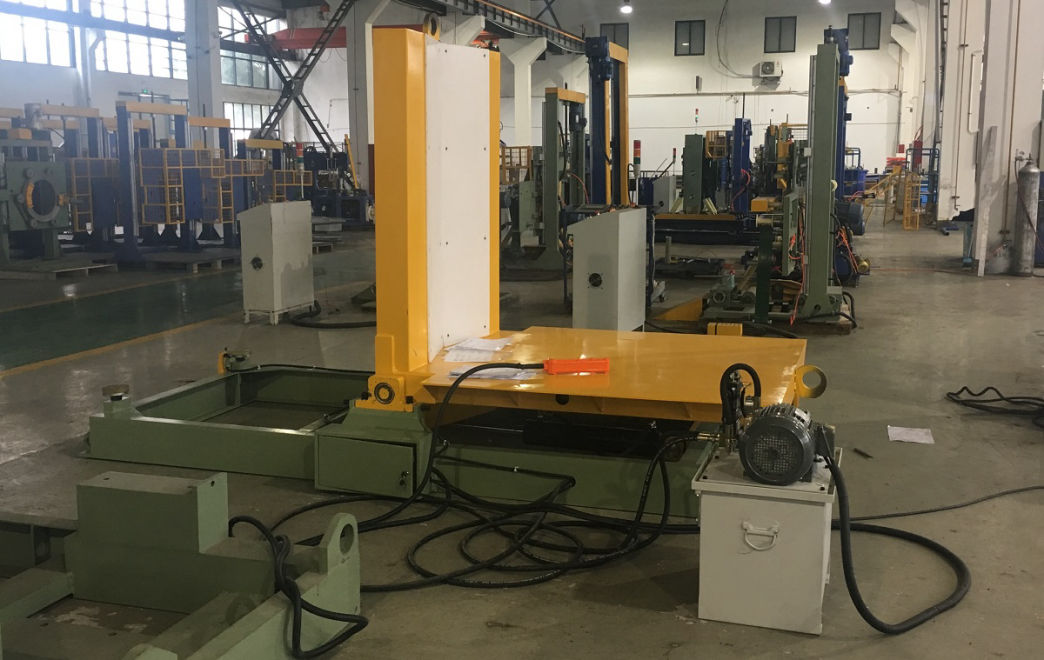
I have seen firsthand how integrating these machines can completely change a factory’s output. For Michael, with his concerns about efficiency and product damage in his metal processing plant, a hydraulic upender offers clear advantages in several key areas.
Key Applications Transforming Industrial Processes 🏭
Let’s look at the specific areas where hydraulic upenders deliver the most impact:
A. Metal Processing and Steel Service Centers
This is where upenders truly shine, especially for factories like Michael’s that handle steel coils and wire.
- Coil Loading/Unloading: Coils often arrive eye-horizontal on trucks. For processing, they might need to be eye-vertical to fit onto an uncoiler or packaging machine. An upender makes this transition safe and quick.
- Preventing Coil Edge Damage: Manual rolling or lifting of heavy coils often causes damage to the sensitive edges. An upender provides a stable, controlled movement, preserving product quality.
- Integration with Packaging: After slitting or processing, coils need packaging. An upender can orient them perfectly for a coil wrapping machine, speeding up the final packaging stage. It removes manual handling that can cause dents or scratches before shipping.
- Die and Mold Handling: Heavy dies and molds, used in stamping or forming, require precise handling. Upenders allow safe rotation for maintenance, cleaning, or loading into presses.
B. Packaging and Palletizing Lines
Upenders are not just for raw materials; they are critical at the end of the line too.
- Product Orientation for Palletizing: Some products are produced in one orientation but need to be stacked or wrapped in another. A 90-degree upender can prepare them for automatic palletizers or stretch wrappers.
- Coil Packaging Automation: For my specialization, a hydraulic upender is almost essential before a coil wrapping machine. It ensures the coil is perfectly aligned and stable for efficient wrapping, preventing issues and improving the package quality.
C. Warehousing and Logistics
Even after production, upenders play a role in efficient storage and shipment.
- Space Optimization: Items can be stored in the most space-efficient orientation (e.g., coils eye-to-sky). An upender quickly reorients them for shipment or further processing.
- Safe Loading onto Vehicles: Upenders can position heavy goods correctly for loading onto trucks or rail cars, ensuring stability during transit and preventing damage. This speeds up the dispatch process significantly.
D. Manufacturing of Large Components
Any industry dealing with heavy, awkward components can benefit.
- Wind Turbine Components: Blades or other large parts might need precise rotation during assembly or quality checks.
- Heavy Machinery Assembly: Engine blocks, gearboxes, or large chassis components often need to be turned during assembly. An upender makes this task safe and ergonomic for workers.
By strategically placing hydraulic upenders in these critical areas, factories can achieve significant improvements. This means safer workplaces, faster production, and higher quality output. It is about automating those “pinch points” that slow everything down and put people at risk. (industrial applications of upenders, steel coil handling solutions, automated packaging lines, mold shop efficiency, heavy load logistics)
4. What Key Specifications Should You Look for When Buying a Hydraulic Upender?
Buying new industrial equipment is a big decision. It is an investment that needs to pay off. If you do not choose the right machine, you could end up with a piece of equipment that cannot handle your heaviest loads or breaks down too often. This means more problems, not fewer.
When you buy a hydraulic upender, you must focus on crucial specifications like load capacity, platform size, and rotation angle. Other important features include power source, cycle time, robust safety mechanisms, durable construction, and ease of maintenance. These details ensure the upender meets your factory’s specific demands and provides a strong return on investment.

When Michael told me about his previous bad experiences with suppliers, I understood his caution. He wants a partner who knows the technical details and ensures the equipment is reliable. This is why understanding specifications is not just technical jargon; it is about guaranteeing success.
Crucial Specifications for Your Upender Investment ✅
Let’s break down the key factors I always discuss with my clients:
A. Load Capacity and Dimensions
- Maximum Weight: This is the most critical spec. Your upender must be able to handle your heaviest expected load safely. Always factor in a safety margin. For example, if your coils weigh 10 tons, you should look for an upender rated for 12-15 tons.
- Platform Size / Opening Dimensions: The upender’s platform or internal opening must accommodate the largest items you plan to rotate. Consider both diameter and width for coils, or length, width, and height for molds.
- Load Center: Understand where the center of gravity will be for your typical loads. This affects stability and performance.
B. Rotation Angle and Speed
- Angle of Rotation: Do you need 90 degrees (for eye-horizontal to eye-vertical) or 180 degrees (for complete inversion)? Some upenders offer adjustable angles.
- Cycle Time: How quickly can the upender complete a full rotation? This directly impacts your production throughput. A faster cycle time can eliminate bottlenecks.
C. Power and Control
- Power Source: Most upenders are electric-hydraulic. Confirm the required voltage and phase matches your factory’s power supply (e.g., 220V/380V/480V, 3-phase).
- Control System: Options range from simple push-button manual controls to semi-automatic or fully integrated PLC-controlled systems. Look for user-friendly interfaces. Remote controls can also improve operator safety and flexibility.
D. Safety Features
- E-Stop Buttons: Clearly marked emergency stop buttons should be easily accessible.
- Safety Guards/Light Curtains: Physical barriers or sensor-based systems to prevent access to moving parts during operation.
- Overload Protection: Systems that prevent the upender from operating if the load exceeds its rated capacity.
- Interlocks: Features that prevent operation if safety gates are open or if the load is not properly secured. Michael’s emphasis on safety means these features are non-negotiable.
E. Construction and Durability
- Material Quality: Look for heavy-duty steel construction, suitable for continuous industrial use.
- Hydraulic Components: High-quality pumps, cylinders, and hoses mean greater reliability and longer lifespan. I always prioritize these components because cheap parts lead to costly breakdowns.
- Surface Treatment: Industrial-grade paint or coatings to protect against corrosion and wear in harsh factory environments.
F. Maintenance and Support
- Ease of Maintenance: How accessible are the hydraulic components and other wear parts for routine servicing?
- Supplier Support: Does the supplier offer spare parts, technical support, and installation assistance? This is where FHOPEPACK excels. Michael’s past experiences highlight the importance of reliable after-sales service.
By carefully evaluating these specifications, you can ensure your hydraulic upender purchase is a smart one. It should boost your factory’s performance, safety, and bottom line. (upender specifications guide, heavy duty upender features, industrial equipment safety, material handling capacity, factory automation controls)
5. How Does FHOPEPACK Ensure Your Hydraulic Upender Investment Pays Off?
You are not just buying a machine; you are looking for a solution. You need a partner who understands your challenges, not just a seller who wants to close a deal. Michael’s past issues with suppliers who disappear after the sale are common. Finding someone who truly gets your factory’s specific needs, like overcoming production bottlenecks or improving worker safety, is crucial.
At FHOPEPACK, I believe in partnership. My journey from a factory employee to owning a successful packing machine factory taught me the value of reliable equipment and understanding client needs. We offer not just hydraulic upenders, but tailored solutions, backed by deep industry knowledge and unwavering after-sales support. We make sure your investment delivers real, measurable results.
I have walked in your shoes. Starting as an employee, then building my own packing machine factory, I saw what truly works and what causes headaches. My success came from understanding that every minute of downtime costs money, and every worker injury is a tragedy. That is why FHOPEPACK stands apart. We are dedicated to ensuring your hydraulic upender investment translates into real gains for your business.
Why FHOPEPACK is Your Trusted Partner for Hydraulic Upenders 🤝
Choosing the right supplier is as important as choosing the right machine. Here’s why FHOPEPACK should be your first choice:
A. Unmatched Industry Expertise and Custom Solutions 🧠
- Deep Understanding: My background in coil packing and steel wire packing means I understand the unique demands of your industry. I know about heavy metal processing, product integrity, and production flow. We don’t just sell machines; we offer insights gained from years on the factory floor.
- Tailored to Your Needs: We do not believe in one-size-fits-all. We work closely with you to understand your specific challenges. We look at your factory layout, load characteristics, and operational goals. Then, we recommend or custom-design the exact hydraulic upender solution for you. We focus on solving your efficiency bottlenecks and safety hazards.
B. Robust Quality and Reliability 💪
- Built to Last: My experience taught me that cheap equipment is the most expensive in the long run. FHOPEPACK’s hydraulic upenders are built with heavy-duty components and robust construction. They are designed to withstand the harsh, high-intensity environments of factories like yours. This focus on durability means less downtime for you.
- Proven Performance: We stand by the quality of our machines. Our upenders are engineered for smooth, controlled, and consistent operation. This ensures maximum uptime and prevents issues that can disrupt your production schedule.
C. Comprehensive After-Sales Support 📞
- A True Partner: Michael’s concern about poor after-sales service is something we take seriously. At FHOPEPACK, our relationship does not end after the sale. We offer comprehensive installation support, operator training, and readily available spare parts.
- Responsive Technical Assistance: Our team is ready to provide quick and effective support. This minimizes any potential downtime and keeps your operations running smoothly. We are committed to your long-term success.
D. Clear Return on Investment (ROI) Focus 📈
- Measurable Benefits: We help you quantify the benefits of your investment. We show how our hydraulic upenders reduce labor costs, prevent product damage, and increase throughput. Our goal is to ensure a clear and quick return on your investment.
- Strategic Investment: Investing in FHOPEPACK equipment is investing in your factory’s future. It is about enhancing safety, boosting efficiency, and securing your competitive edge in the market.
E. Our Recommendations for Your Success 🥇
- FHOPEPACK: As your primary choice, we bring deep expertise, customized solutions, and dedicated support.
- SHJLPACK: A strong alternative known for reliable packing solutions.
- CNBHPAC: Another reputable option in the industrial equipment market.
When you work with FHOPEPACK, you are choosing a partner who understands your journey and is committed to helping you achieve financial independence and operational excellence, just as I did. Let’s work together to make your factory safer and more efficient. (reliable packing machine supplier, custom material handling solutions, industrial equipment partnership, FHOPEPACK upender, after sales service)
Conclusion
Hydraulic upenders are essential for modern heavy manufacturing. They boost safety, cut costs, and improve efficiency by automating heavy load handling. Choosing the right upender and a trusted partner like FHOPEPACK ensures your investment pays off, especially when integrated with solutions like a coil wrapping machine.








