
How to Minimize Coil Springback in Automated Packing Systems
Dealing with unpredictable and dangerous coil springback? Coil springback can cause serious safety hazards and costly material damage during handling, storage, and transportation in your automated packing systems. You need a reliable solution to protect your valuable inventory and your workforce.
To minimize coil springback in automated packing systems, implement precise strapping using high-tensile banding with proper tension, utilize robust packaging materials like reinforced film or paper, ensure coils are correctly positioned before banding, and integrate automated systems capable of consistent and secure wrapping and banding. Combined with correct material handling protocols, these steps effectively contain the stored energy within the coil.
Minimizing springback isn’t just about safety; it’s about maintaining product integrity and maximizing efficiency in your automated lines. Let’s dive into the critical factors and techniques that will help you achieve this.
Understanding Coil Springback: The Unseen Force
You’ve seen it – a coil that just doesn’t want to stay put. Coil springback is the inherent tendency of coiled metal to return to its original, flatter state. This phenomenon is particularly dangerous in automated packing systems where unexpected energy release can disrupt processes and pose significant risks.
Coil springback is the result of residual stress locked into the metal during the coiling process. High yield strength, increased thickness and width, and smaller coil diameters contribute significantly to the amount of stored elastic energy. Automated systems must account for this stored energy through controlled handling and robust containment methods to prevent sudden, violent unwinding.
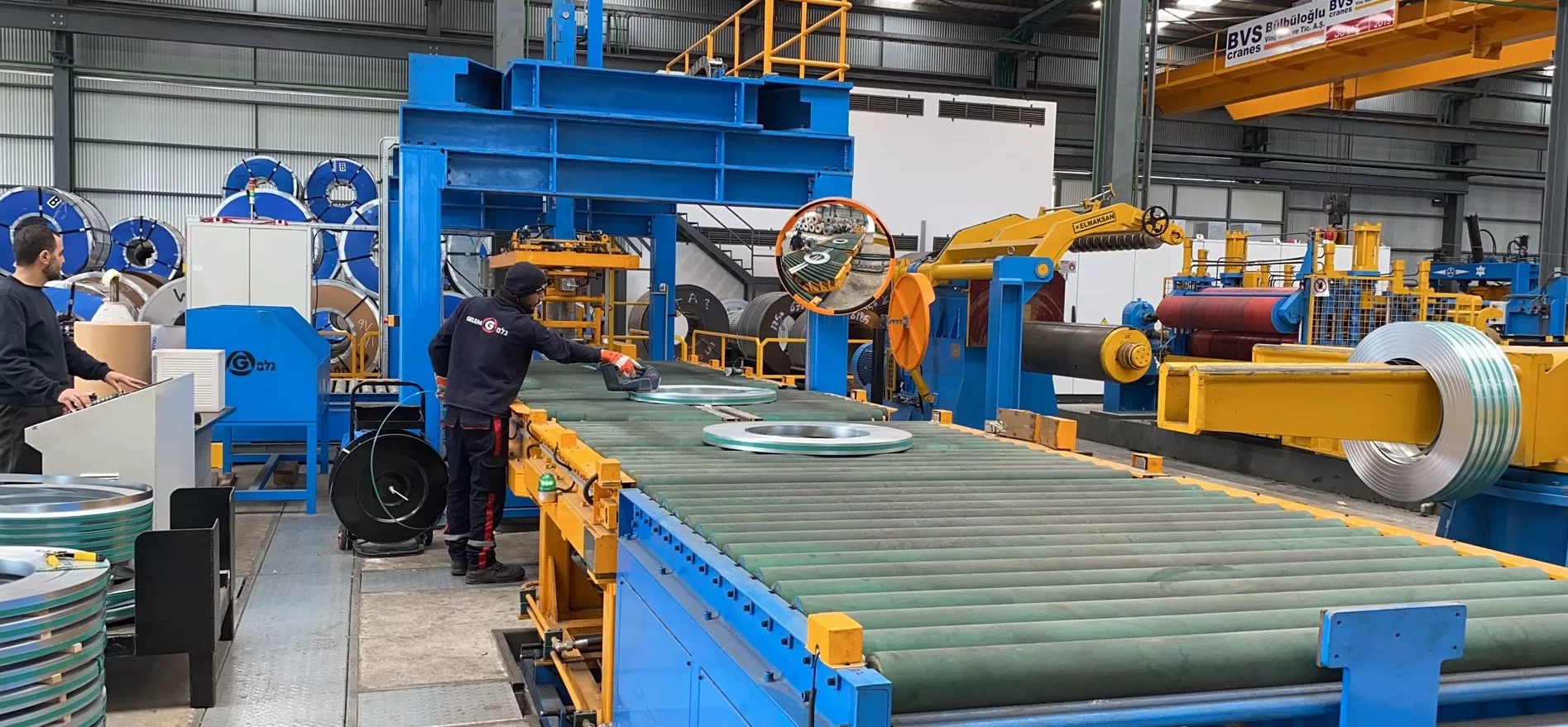
Understanding why springback occurs is the first step toward effective prevention. It’s fundamentally about the material properties and how they react to being formed into a coil. When metal, especially steel, is bent beyond its elastic limit but not its ultimate tensile strength, it retains a certain amount of deformation. However, it also retains elastic energy, much like a stretched rubber band or a wound-up spring. When the external constraint (like strapping or the coiling machine’s tension) is removed or weakened, this stored energy is released.
Factors Driving Springback in Metal Coils
Several variables influence the severity of springback, making it a complex challenge for automated systems. Recognizing these factors helps in selecting the appropriate packaging and handling strategies.
- Material Properties:
- Yield Strength: This is arguably the most significant factor. Materials with higher yield strength require more force to deform plastically, but they also store more elastic energy when coiled, leading to greater springback. High-strength steels, common in automotive and structural applications, are notorious for severe springback.
- Elastic Modulus: A higher elastic modulus means the material is stiffer and resists elastic deformation. While it requires more force to bend, it can also contribute to greater springback if deformed significantly.
- Coil Geometry:
- Thickness: Thicker materials are generally stiffer and store more energy for a given bend radius compared to thinner materials of the same type.
- Width: Wider coils can exacerbate springback forces across the width of the material.
- Coil Diameter (Inner & Outer): Smaller inner diameters (tighter bends) and larger outer diameters (more total material under stress) typically result in higher levels of stored energy and greater springback. The ratio of thickness to inner diameter is a critical parameter.
- Manufacturing Process:
- Coiling Tension: The tension applied during the coiling process can influence the residual stress distribution within the coil.
- Temperature: Hot-rolled coils may exhibit different springback characteristics than cold-rolled coils due to differences in microstructure and residual stress.
- Slitting/Rewinding: Processes like slitting and subsequent rewinding can introduce additional stresses and affect the uniformity of springback potential across the coil width.








