
How to Minimize Coil Damage in Brazil’s Complex Logistics Chains?
The world of heavy manufacturing, especially with materials like steel coils and wires, brings unique challenges. You know the pain. You produce high-quality coils, but then damage happens during transit. This can cause big headaches, angry customers, and lost money. It makes you wonder how to truly protect your valuable products.
To minimize coil damage, you must focus on four key areas: robust internal handling, optimized packaging materials, advanced automated wrapping solutions, and a strong partnership with your equipment supplier. These steps work together to keep coils safe from the factory floor to the final destination.

It can feel like a big puzzle. But understanding these areas can help you find clear answers. Let us look closer at each one and see how you can make a real difference in your operations.
Why Does Coil Damage Happen So Often in Transit?
You see coils leave your factory looking perfect. But then, you hear about damage when they arrive at the client’s site. This is a common problem in the industry. It can be frustrating. You might ask, “What went wrong?”
Coil damage often happens due to a mix of rough handling, poor packaging choices, and the harsh realities of long transport routes. The entire journey, from loading to unloading, has many points where damage can occur if you do not pay close attention.
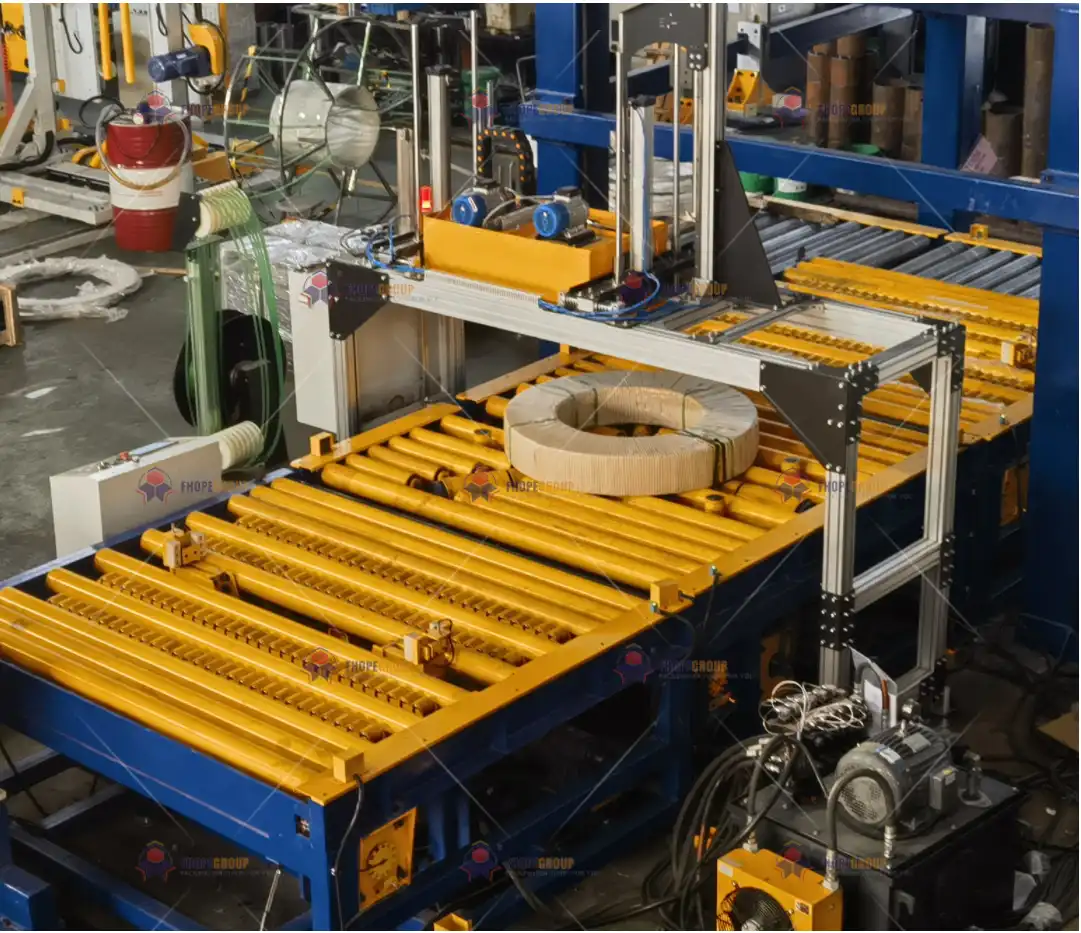
Coil damage is not just bad luck. It is often a direct result of process weaknesses. I have seen this many times in my own journey, both as an engineer and as a factory owner. Early on, before I owned my own factory, I noticed how small errors in handling or packaging could lead to big problems down the line. For example, manual handling of heavy coils is a huge risk. Workers might drop coils, or hit them against other objects. This causes dents or even structural damage. Heavy items like coils need stable support. If they move too much during transport, they can get damaged. This happens especially on bumpy roads or during rough loading and unloading. Proper bracing and cushioning are very important inside the truck or shipping container.
Then there is the issue of packaging itself. Sometimes, people use materials that are too thin or not strong enough. They might use the wrong type of wrap, or not enough layers. This means the coils are not protected from impacts or scratches. Also, water and humidity can cause rust. If packaging does not protect against moisture, the coil’s surface can degrade. This leads to customer complaints. Temperature changes can also cause condensation. This makes rust worse. A good packaging plan must consider all these environmental factors. It is about understanding the journey a coil takes. From the moment it leaves your production line to when it reaches your customer, every step must be secure. If you ignore any part, you risk product loss and a hit to your reputation. This is why a detailed look at your current process is always the first step. You need to identify every weak point where damage could occur.
Common Factors Leading to Coil Damage
| Factor | Description | Impact on Coils |
|---|---|---|
| Manual Handling | Relying on human labor for moving and securing heavy coils. | High risk of drops, dents, edge damage, worker injury. |
| Poor Packaging | Using thin, weak, or unsuitable materials for wrapping. | Scratches, abrasions, moisture ingress leading to rust. |
| Inadequate Securing | Not properly bracing coils within transport vehicles. | Shifting, impacts, deformation during transit. |
| Environmental Exposure | Lack of protection against rain, humidity, dust, and temperature changes. | Rust, surface corrosion, material degradation. |
| Rough Transport | Bumpy roads, sudden stops, or careless driving by carriers. | Internal shifting, stress on coil structure, impacts. |
Can Better Packaging Really Prevent All Coil Damage?
You might think that good packaging is just about wrapping things up. But for heavy coils, it is much more complex. Can better packaging really stop all damage? It is a big question for many factory managers.
While no single method can stop every single type of damage in every extreme case, significantly better packaging can reduce damage by a huge amount. It acts as the first and best line of defense for your valuable products.
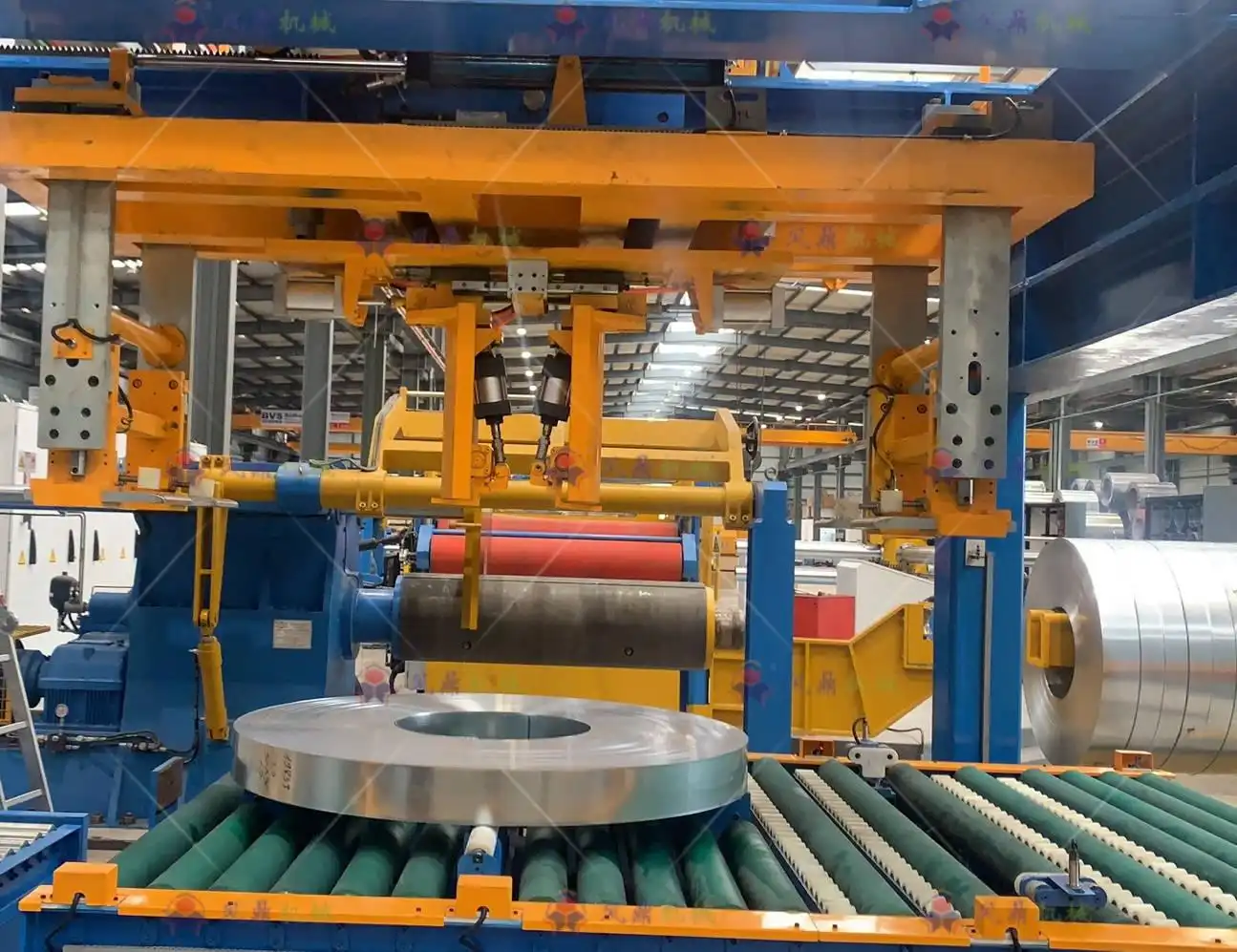
Better packaging is not just about aesthetics. It is a critical part of your product’s journey. When I was building my own packing machine factory, I saw firsthand how much difference the right packaging could make. One client used to have constant complaints about damaged steel wires. They were just using basic plastic wrap. The wires would get scratched, tangled, or even rusted on long journeys. We worked with them to use a stronger, multi-layer stretch film and a more secure strapping method. We also introduced a more controlled wrapping process. This change cut their damage complaints by over 80%. This shows the true power of optimized packaging.
It starts with selecting the right materials. Not all films or papers are the same. For coils, you need materials that are puncture-resistant, tear-resistant, and can withstand temperature changes. VCI (Volatile Corrosion Inhibitor) film is a great example. It releases a chemical that protects metal surfaces from rust. This is crucial for coils, especially when they face humidity or moisture during shipping. Beyond the material, the wrapping technique matters. A tight, consistent wrap provides better protection. It prevents layers from shifting. It also keeps out dirt and moisture more effectively. Some wrapping machines can apply multiple layers automatically. They ensure a uniform tension across the entire coil surface. This creates a strong, protective shell. For very heavy coils, extra steps like edge protectors or wooden cradles are also important. These add more support and absorb impacts. They prevent the coil from deforming.
Also, consider the type of product. A delicate finished coil needs different protection than a raw wire bundle. Understanding the specific risks for each product type allows you to tailor the packaging. This means you do not over-package light items, and you do not under-package heavy, sensitive ones. It is about smart, efficient protection. This also helps reduce waste and cost. Investing in quality packaging is an investment in your product’s safety and your customer’s satisfaction. It reduces returns, claims, and negative feedback. Ultimately, it protects your brand’s reputation. This is something every factory manager should care about.
Essential Elements of Effective Coil Packaging
| Element | Description | Benefit |
|---|---|---|
| Material Strength | Using high-tensile, multi-layer films, or reinforced paper. | Resists punctures, tears, and abrasion. |
| Corrosion Protection | Incorporating VCI (Volatile Corrosion Inhibitor) films or papers. | Prevents rust and surface degradation from moisture. |
| Secure Containment | Applying tight, consistent wrapping and robust strapping. | Stops shifting, unraveling, and external contamination. |
| Edge Protection | Adding specialized cardboard, plastic, or metal edge guards. | Cushions edges from impacts and pressure points. |
| Pallet & Dunnage | Using sturdy pallets and securing coils with chocks or bracing. | Stabilizes coils, prevents movement during transport. |
What Role Does Automation Play in Protecting My Coils?
You are probably facing pressure to boost production and cut costs. At the same time, safety is a huge concern. Manual work, especially with heavy coils, has high risks. You might wonder how automation fits into all this. Can it really protect your coils better?
Automation plays a huge role in protecting coils. It takes away the risks of human error and manual labor. It also ensures consistent, high-quality packaging every time. This leads to safer operations, higher efficiency, and less product damage.
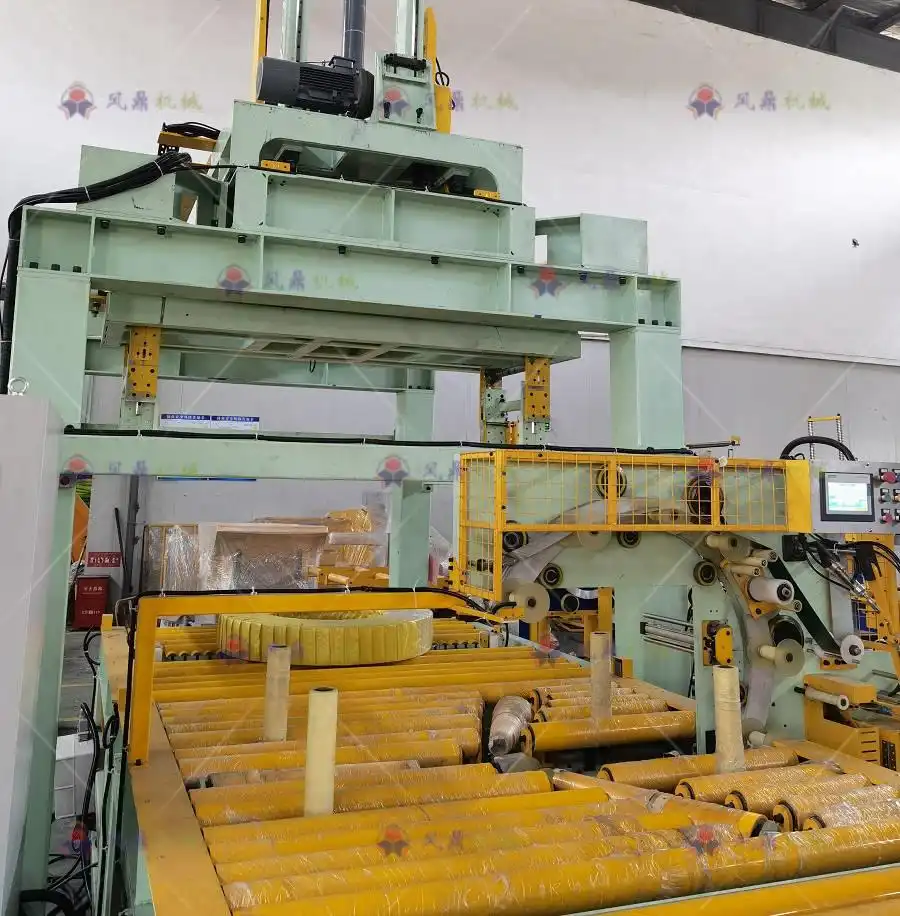
Automation is not just about speed. It is about precision, safety, and reliability. When I was running my own factory, I saw how much time and money we lost due to manual packing errors and worker injuries. It was a real bottleneck. We often had slowdowns at the end of the line because packing could not keep up with production. Introducing automatic coil wrapping machines changed everything. These machines can apply a uniform wrap much faster than any human. They also do it without stopping for breaks or getting tired. This means consistent quality. Every coil gets the same level of protection. This greatly reduces the chances of damage during storage or shipping.
Think about safety. Manual handling of heavy coils is extremely dangerous. Workers can suffer back injuries, crushed limbs, or other serious accidents. An automated system removes the need for workers to directly handle the coils during the wrapping process. This cuts down injury risks to almost zero in this part of the operation. This also lowers your insurance costs and improves employee morale. Workers feel safer and more valued. Automation also helps with efficiency. It speeds up the packing process. This means coils move through the factory faster. It prevents bottlenecks at the end of the production line. Faster packing also means you can ship out orders more quickly. This makes your customers happier. It also helps you manage your inventory better.
From a financial point of view, automation often has a strong ROI (Return on Investment). While there is an upfront cost, the savings add up fast. You save on labor costs. You save on injury claims. You save on lost product due to damage. You also gain from increased output and satisfied customers. For example, a single coil wrapping machine can often do the work of several people. It also does it more consistently. This means less wasted material from errors. It means less time spent re-packing damaged goods. It means fewer customer complaints requiring product returns or discounts. All these factors contribute to a healthier bottom line for your factory. Automation is a strategic investment in your factory’s future. It makes your operations safer, more efficient, and more profitable.
Key Contributions of Automation to Coil Protection
| Area | How Automation Helps | Specific Benefit for Coils |
|---|---|---|
| Consistency | Applies precise, uniform wrap tension and layers every time. | Reduces areas of weakness, ensures full coverage protection. |
| Speed | Wraps coils much faster than manual methods. | Eliminates bottlenecks, boosts overall production throughput. |
| Safety | Removes manual heavy lifting and risky handling from workers. | Drastically lowers injury rates, reduces insurance costs. |
| Material Use | Optimizes film/strap usage, reducing waste through precise application. | Lowers material costs, better environmental footprint. |
| Damage Reduction | Minimizes human error in packaging, leading to fewer defects. | Fewer product returns, higher customer satisfaction, profit. |
My Insights!
When I first started in the packing machine industry, I was an employee. I worked my way up. I saw the struggles of factories, big and small. Later, I built my own packing machine factory. This journey taught me a lot. It taught me that it is not just about selling a machine. It is about truly understanding a client’s problems.
I remember one factory manager. He was always worried about his steel coils getting damaged. He had tried a few different suppliers. But these suppliers just wanted to sell him a machine. They did not take time to understand his specific issues. His production line was complex. He had a unique type of coil. They often suffered damage during internal transfers, not just external shipping. This caused huge losses for him. He also had big safety concerns. His workers were struggling with manual handling. They faced high risks.
When he came to FHOPEPACK, I did not just offer him a catalog. I asked him about his biggest pains. We talked about his current process. We discussed his goals for automation and safety. I explained how my own experiences, building a successful packing machine factory from the ground up, gave me a unique perspective. I told him, “I have been in your shoes. I know what it means to keep a factory running, to meet targets, and to keep workers safe.” We looked at his entire operation. We saw where the coils were most vulnerable. We even looked at his floor plan.
My team and I designed a custom solution for him. It was not just a wrapping machine. It was a complete system. It included better internal handling equipment. It also had specific packaging materials that could handle his unique coil type. We made sure it improved safety. It minimized how much workers needed to touch the heavy coils. The result was amazing. His damage rate dropped sharply. His production speed went up. His workers were much safer. This also brought down his insurance costs. He later told me that his business grew faster because he had fewer complaints and more reliable shipments. He achieved a true ROI.
This experience really stuck with me. It showed me that trust is everything. A good supplier is a partner. They must understand your challenges. They should bring their deep industry knowledge to the table. They should not just sell you a piece of equipment. They should help you solve your core problems. My goal at FHOPEPACK is to share this kind of practical knowledge. I want to help factory managers like you. I want to help you make smart choices that truly grow your business. This is why I focus on solutions that improve safety, boost efficiency, and cut down on losses. It is about building a future where your factory runs smoother and more profitably. It is about giving back what I learned from my own journey in this industry.
Conclusion
Protecting coils from damage needs a full approach. Focus on better handling, strong packaging, and smart automation. This reduces losses, boosts safety, and makes your factory more profitable.








