
How to Integrate Automated Coil Wrapping with Your Production Line
Are you struggling with inconsistent coil packaging that’s leading to product damage and customer complaints? Imagine eliminating manual wrapping bottlenecks and achieving perfectly packaged coils every time, boosting your production efficiency and protecting your bottom line. Integrating automated coil wrapping into your production line isn’t just a dream—it’s a tangible solution ready to revolutionize your operations.
Integrating automated coil wrapping into your production line involves a strategic, step-by-step approach. This includes a thorough assessment of your current setup, selecting the ideal automated wrapping technology tailored to your needs, ensuring seamless data and system integration, and optimizing material flow for peak efficiency and enhanced product protection. This transformation minimizes manual intervention and maximizes output.
Ready to say goodbye to packaging headaches and hello to streamlined operations? Keep reading to discover the essential strategies for seamlessly integrating automated coil wrapping and transforming your coil packaging process.
Streamlining Operations with Automated Coil Wrapping Integration
Is manual coil wrapping slowing down your production line and causing inconsistencies? Bottlenecks in packaging can cripple overall efficiency, leading to delays and increased costs. Manual wrapping is not only labor-intensive and prone to errors but also struggles to maintain consistent quality, potentially compromising product integrity and customer satisfaction.
Automated coil wrapping integration revolutionizes production by replacing slow, inconsistent manual processes with a high-speed, reliable system. This shift dramatically reduces labor costs, minimizes material waste through optimized usage, and significantly increases overall production efficiency. Manufacturers gain consistent, high-quality packaging, enhanced product protection against damage and corrosion, and faster throughput, leading to substantial operational improvements and a stronger competitive edge.

Key Technical Aspects of Automated Coil Wrapping Integration
To truly appreciate the transformative power of automated coil wrapping, understanding the technical intricacies is crucial. Seamless integration isn’t just about installing a machine; it’s about orchestrating a symphony of systems working in harmony. Let’s break down the essential technical elements that underpin successful automation:
System Compatibility and Customization
The cornerstone of successful integration lies in ensuring your chosen automated coil wrapping system is perfectly compatible with your existing production line infrastructure. This involves a detailed evaluation of several critical factors:
- Physical Space: Assess the available floor space to accommodate the automated wrapping system. Consider the system’s footprint and the necessary clearance for operation and maintenance.
- Coil Dimensions and Types: Analyze the range of coil sizes, weights, and materials your production line handles. The wrapping system must be adaptable to these variations without requiring constant adjustments.
- Material Flow: Map out your current material flow to identify optimal integration points. The automated system should seamlessly integrate into this flow to minimize disruptions and maximize efficiency.
- Production Volume: Evaluate your current and projected production volumes. The chosen system must have the capacity to handle your throughput demands efficiently.
Modular systems offer unparalleled flexibility in addressing these compatibility challenges. Their adaptable design allows for customization to fit specific line configurations and production volumes. This modularity ensures that the automated wrapping system becomes a natural extension of your existing line, rather than a forced addition.
Data Integration and Control Systems
Modern automated coil wrapping systems are sophisticated machines equipped with advanced control systems. Seamless integration hinges on effective data exchange between the wrapping system and your overall production line management system. Consider these critical aspects of data integration:
- Real-time Monitoring: Systems like WinCC enable real-time data exchange, providing comprehensive monitoring, control, and diagnostics. This allows for immediate insights into production rates, potential bottlenecks, and system performance.
- Production Tracking: Integrated data systems are crucial for accurate production tracking. They provide a clear overview of coils processed, packaging materials used, and overall line efficiency.
- Mill Information System (MIS) Compatibility: Ideally, the wrapping system should communicate directly with your MIS. This integration allows for efficient data management, analysis, and reporting, providing valuable insights for process optimization and informed decision-making.
- Predictive Maintenance: Advanced systems can incorporate predictive maintenance capabilities, using data to anticipate potential issues and schedule maintenance proactively, minimizing downtime and maximizing operational uptime.
Material Handling and Flow Optimization
Efficient material handling is paramount to maximizing the benefits of automated coil wrapping. The system design should minimize material replenishment downtime and streamline the flow of wrapping materials:
- Reduced Replenishment Frequency: Aim for a system design that minimizes material replenishment. Ideally, material refills should only be required once per shift, maximizing continuous operation.
- Optimized Material Consumption: The system should optimize material usage by precisely cutting and sizing materials according to coil dimensions. This reduces waste and eliminates the need for multiple pre-cut sizes, simplifying inventory management.
- Automated Material Handling Devices: Incorporate automated material winder and film roll changing devices to further enhance efficiency and minimize manual intervention. These devices automate repetitive tasks, freeing up personnel and ensuring consistent material supply.
By meticulously addressing these key technical considerations – system compatibility, data integration, and material handling – manufacturers can ensure a smooth and effective integration of coil wrapping into their automated production lines. This holistic approach unlocks significant improvements in efficiency, substantial cost savings, and consistently superior product quality.
Selecting the Right Coil Wrapping Technology
Choosing the right coil wrapping technology is a pivotal decision that directly impacts the success of your integration. With a variety of technologies available, each offering distinct advantages, making an informed choice is essential to meet your specific needs and production goals. The technology you select dictates the level of product protection, the efficiency of your operations, and the overall return on your investment.
Selecting the optimal coil wrapping technology requires a thorough evaluation of your specific product protection needs, anticipated production volume, and budgetary constraints. Key technologies to consider include Through-Eye Wrapping (TEW) for superior moisture protection, body wrapping for robust mechanical protection, and automated edge protection for safeguarding vulnerable coil edges. Aligning the technology with your unique requirements ensures optimal performance and maximizes cost-effectiveness.

Exploring Advanced Coil Wrapping Technologies: A Detailed Comparison
The landscape of coil wrapping technology has evolved dramatically, offering sophisticated solutions tailored to address diverse challenges in product protection and operational efficiency. From safeguarding against moisture ingress to providing robust mechanical protection, modern technologies offer a spectrum of benefits. Let’s delve into a comparative analysis of leading technologies to guide your selection process:
Through-Eye Wrapping (TEW) Technology: The Moisture Barrier Champion
TEW technology stands out as the gold standard for exceptional moisture protection. Unlike traditional wrapping methods that rely on folding and overlapping, TEW creates a truly airtight package. This is achieved by wrapping through the coil eye with a combination of crepe paper and PE film.
- Moisture Absorption and Impermeability: The crepe paper acts as a desiccant, absorbing any internal moisture that may accumulate within the coil due to temperature fluctuations or production processes. Simultaneously, the PE film forms a tight, impermeable barrier, effectively blocking external humidity and preventing moisture ingress.
- Extended Storage and VCI Alternative: TEW technology significantly extends storage time, preserving coil quality for prolonged periods. It also eliminates the issue of VCI (Volatile Corrosion Inhibitor) evaporation, a common problem with traditional VCI paper packaging, where the protective vapor dissipates over time, leaving the coil vulnerable.
- Ideal Applications: TEW technology is particularly advantageous for coils highly susceptible to corrosion, especially those destined for long-term storage or transportation through challenging environments with high humidity or temperature variations.
Body Wrapping: Mechanical Protection for Demanding Conditions
Body wrapping technology prioritizes robust mechanical protection, safeguarding coils from physical damage during handling, storage, and transportation. These systems employ heavy-duty materials to create a protective exoskeleton around the coil body.
- Robust Outer Layer: Body wrapping machines utilize materials like corrugated board, plywood, and even steel to construct a formidable protective outer layer. This shield effectively absorbs impacts and prevents damage from bumps, drops, and rough handling.
- Optimized Material Usage: Automated body wrapping machines are designed for efficiency, optimizing material usage by precisely cutting materials to the exact coil dimensions. This minimizes waste and reduces the need for extensive material inventories.
- Essential for Harsh Environments: This technology is indispensable for coils that require enhanced protection against physical impacts and harsh handling conditions, such as those involved in long-distance shipping, frequent loading and unloading, or storage in exposed environments.
Automated Edge Protection Systems: Shielding Vulnerable Coil Edges
Coil edges are inherently vulnerable to damage, bearing the brunt of impacts and friction during handling and transit. Automated edge protection systems provide targeted protection to these critical areas.
- Targeted Edge Reinforcement: These systems automatically apply protective materials, such as steel, plastic, or cardboard edge protectors, to both the inner and outer edges of the coil. This reinforcement distributes impact forces and prevents edge deformation or damage.
- Consistent and Reliable Protection: Integrated into the automated wrapping line, edge protection systems ensure consistent and reliable application, eliminating the variability and potential for human error associated with manual edge protection.
- Material Waste Reduction: Automated systems minimize material waste compared to manual methods, which often involve overlapping and excessive material usage. Precise application reduces material consumption and associated costs.
- Maintaining Coil Integrity: Edge protection is crucial for maintaining coil integrity and preventing damage that can lead to product rejection, customer dissatisfaction, and costly rework.
By gaining a comprehensive understanding of the strengths and applications of each technology – TEW, body wrapping, and automated edge protection – manufacturers can strategically select and integrate coil wrapping solutions that precisely align with their protection requirements and operational objectives. This informed decision-making process maximizes efficiency, minimizes potential product damage, and ensures optimal return on investment.
| Feature | Through-Eye Wrapping (TEW) | Body Wrapping | Automated Edge Protection |
|---|---|---|---|
| Primary Protection | Moisture | Mechanical | Edge Damage |
| Technology | Crepe paper & PE film wrap | Board, steel, etc. layer | Steel/plastic protectors |
| Moisture Barrier | Airtight, superior | Moderate | Minimal |
| Mechanical Robustness | Low to Moderate | High | Moderate |
| Material Usage | Optimized | Optimized | Optimized |
| Best For | Corrosion-prone coils | Harsh handling, long transit | Edge-sensitive coils |
Cost Savings and Efficiency Gains Through Automation
Investing in automated coil wrapping extends far beyond enhancing product protection; it’s a strategic financial decision that unlocks significant cost savings and substantial efficiency gains throughout your production line. Automated systems offer compelling returns on investment by optimizing material usage, dramatically reducing labor expenses, and increasing production throughput exponentially.
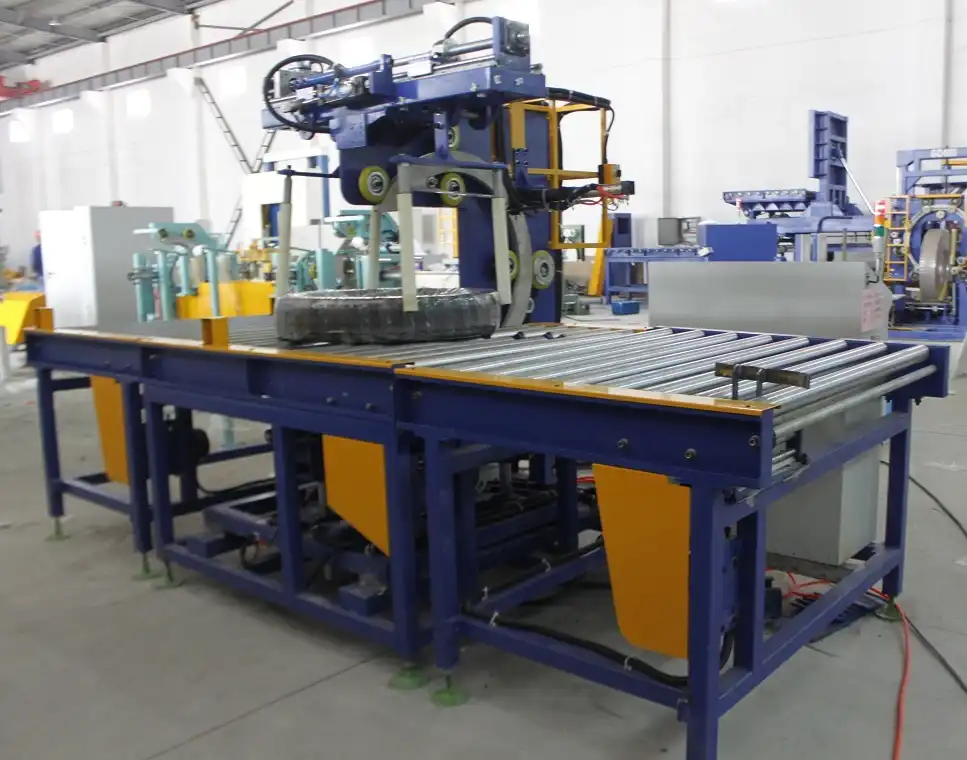
Automated coil wrapping delivers substantial cost savings and efficiency gains by optimizing material usage, reducing labor requirements, and increasing production speed. Material costs can be reduced by up to 30% through precise material cutting and minimized waste. Labor costs decrease significantly due to reduced operator involvement, and throughput increases dramatically, often exceeding 20 coils per hour compared to manual wrapping.
Quantifying the Tangible Benefits of Automated Wrapping: A Financial Perspective
The advantages of automated coil wrapping transcend mere improvements in speed and consistency; they translate directly into quantifiable cost reductions and tangible operational improvements across numerous facets of the production process. Let’s delve into the specific areas where automation drives financial benefits:
Reduced Material Costs: Minimizing Waste, Maximizing Savings
Automated wrapping lines are meticulously engineered to optimize material consumption, eliminating the waste inherent in manual wrapping processes.
- Precision Material Cutting: Unlike manual wrapping, where pre-cut materials and overlaps often lead to significant waste, automated systems cut wrapping materials precisely to the exact coil size. This optimized usage can slash packing material costs by as much as 30%.
- Large Material Coils and On-site Manufacturing: Automated systems typically utilize large material coils, reducing the frequency of material changes and minimizing downtime. Furthermore, some advanced systems even incorporate on-site manufacturing of packing materials from raw stock, further minimizing waste and reducing material handling costs.
- Minimized Storage Space: The use of large material coils and on-site material manufacturing significantly reduces the need for extensive storage space for pre-cut materials, freeing up valuable floor space and streamlining inventory management.
Lower Labor Expenses: Streamlining Manpower, Enhancing Productivity
Manual coil wrapping is inherently labor-intensive, often requiring multiple operators per production line. Automated systems dramatically reduce manpower requirements, leading to substantial labor cost savings.
- Reduced Operator Involvement: Automated systems typically require only one or two supervisors per line to oversee operations and perform occasional maintenance. This significant reduction in operator involvement translates directly into lower labor expenses.
- Personnel Reallocation: The reduction in manpower allows for the strategic reallocation of personnel to other critical areas of production where human skills are more effectively utilized, enhancing overall productivity and efficiency.
- Increased Packaging Speed: The significantly increased speed of automated lines reduces the overall time spent on packaging, further contributing to labor efficiency and lowering per-unit labor costs.
Increased Throughput and Capacity: Meeting Demand, Enhancing Responsiveness
Automated coil wrapping lines dramatically increase production throughput, enabling manufacturers to meet higher demands and improve customer responsiveness.
- Exponential Speed Increase: While manual wrapping might achieve a mere one coil per hour per operator, automated lines can process 20 or more coils per hour with minimal operator involvement. This represents a tenfold to twentyfold increase in production speed.
- Reduced Lead Times: The significant increase in throughput allows manufacturers to drastically reduce lead times, enabling faster order fulfillment and improved customer satisfaction.
- Eliminating Packaging Bottlenecks: The consistent and high-speed operation of automated systems ensures a steady flow of packaged coils, effectively eliminating bottlenecks in the packaging department and optimizing overall production line flow.
| Cost/Efficiency Factor | Manual Wrapping | Automated Wrapping | Potential Savings/Gains |
|---|---|---|---|
| Material Costs | High (wasteful) | Low (optimized usage) | Up to 30% reduction |
| Labor Costs | High (multiple operators) | Very Low (1-2 supervisors) | Significant reduction (50% or more) |
| Throughput | Low (1-2 coils/hour) | High (20+ coils/hour) | 10x to 20x increase in production speed |
| Storage Space | High (pre-cut materials) | Low (large material coils) | Minimized storage needs, reduced inventory management |
| Operational Costs | High | Low | Overall reduction in packaging operational expenses |
By capitalizing on these substantial cost savings and efficiency gains, integrating automated coil wrapping becomes not only a financially sound decision but also an operationally strategic imperative, significantly enhancing both the bottom line and the overall competitiveness of manufacturing operations.
Enhancing Product Protection and Brand Reputation
Beyond the compelling benefits of cost reduction and efficiency gains, integrating automated coil wrapping significantly elevates product protection and strengthens your brand reputation in the market. Consistent, high-quality packaging ensures that your coils arrive at their destination in pristine condition, effectively safeguarded against damage, corrosion, and environmental factors. This unwavering commitment to product quality reflects positively on your brand, fostering customer trust and loyalty.
Automated coil wrapping enhances product protection by providing consistent, high-quality packaging that minimizes the risk of damage and corrosion during transit and storage. Superior packaging quality translates directly to improved customer satisfaction, reduced product returns due to damage, and a stronger brand reputation for consistently delivering quality products in perfect condition.
The Impact of Quality Packaging on Brand Perception and Customer Loyalty
The appearance and integrity of product packaging are often the very first impression customers have of your brand. In many cases, the packaging is the initial tangible touchpoint a customer experiences with your product and your company. High-quality packaging transcends mere functionality; it serves as a powerful communication tool, conveying a commitment to excellence and meticulous attention to detail.
Conversely, damaged or poorly executed packaging can have a detrimental impact on customer perception, leading to dissatisfaction, erosion of trust, and potential loss of business. Substandard packaging can signal a lack of care and quality control, even if the product itself is of high caliber.
Automated coil wrapping systems ensure consistent and professional-looking packages, every single time. Technologies like TEW provide superior moisture protection, effectively preventing rust and corrosion, maintaining the pristine condition of the coils. Robust body wrapping and edge protection systems minimize physical damage, ensuring coils arrive unscathed, even after long transit and multiple handling stages.
This comprehensive and consistent protection guarantees that products reach customers in optimal condition, reinforcing a positive brand image and building unwavering customer trust. Customers are more likely to perceive your brand as reliable, quality-focused, and committed to delivering on its promises.
Furthermore, automated systems offer the capability to seamlessly integrate labeling and branding directly into the packaging process. Consistent and clear labeling enhances traceability, streamlines logistics, and projects an image of professionalism and organization. Incorporating your brand elements – logos, colors, and taglines – directly onto the packaging reinforces brand visibility and recognition, turning each shipment into a mobile advertisement for your company.
In today’s intensely competitive global market, where quality, reliability, and brand reputation are paramount differentiators, investing in automated coil wrapping is not merely an operational upgrade; it’s a strategic investment in your brand’s long-term success, customer loyalty, and market leadership. It’s a tangible demonstration of your commitment to quality, from the production line to the customer’s doorstep.
Conclusion
Integrating coil wrapping into your automated production line is a strategic imperative that delivers multifaceted benefits, ranging from streamlined operations and substantial cost savings to enhanced product protection and a fortified brand reputation. By embracing automated steel coil wrapping solutions, manufacturers can optimize their packaging processes, ensuring unparalleled efficiency, unwavering consistency, and superior product delivery. Explore the possibilities of automated coil packing line to revolutionize your production and elevate your market standing.








