
How to Choose the Best Hydraulic Upender for Your Coil or Mold Handling Needs?
Are you a factory manager, like Michael Chen in Mexico, constantly under pressure? Do you struggle with slow, dangerous manual handling of heavy steel coils or bulky molds? This outdated approach creates bottlenecks, risks serious injuries, and causes costly product damage, directly impacting your factory’s bottom line and the safety of your valuable workforce.
Choosing the best hydraulic upender for your coil or mold handling needs means focusing on robust construction, advanced safety features, precise control, and a supplier who understands your unique operational demands. Look for units designed for heavy loads and continuous operation in demanding environments. This investment will improve efficiency, prevent damage, and protect your workforce, ultimately boosting your factory’s overall profitability and operational flow.

I’ve seen firsthand the struggles factory operations directors, like Michael, face. From slow, inefficient processes to serious safety risks, these challenges are very real. But imagine a solution that transforms your workflow, making it safer and more productive. Let’s explore how to make the best choice for your factory, drawing from my own years in the packing machine industry and building FHOPEPACK.
1. What is a Hydraulic Upender, and Why Does My Factory Need One?
Are your workers manually wrestling with heavy steel coils or bulky molds? This slow, dangerous process is likely a major bottleneck in your production line. Every manual flip risks injury, causes product damage, and eats into your precious production time. You are effectively losing money and putting your team in harm’s way every day.
A hydraulic upender, also known as a coil tilter or roll upender, is an industrial machine that uses hydraulic power to safely and smoothly rotate heavy objects like steel coils, paper rolls, or industrial molds from a horizontal to vertical position, or vice versa. Its primary purpose is to automate material handling, significantly reduce manual labor, enhance workplace safety, and prevent damage to products during these critical orientation changes.

I remember when I started my own packing machine factory. We faced many of the same issues Michael Chen is facing in Mexico. Manually handling heavy steel wire coils was a nightmare. It was incredibly slow, and injuries were unfortunately common. I quickly realized that smart automation was absolutely key to achieving sustainable growth and ensuring employee safety. A hydraulic upender directly addresses these core problems.
Key Benefits of Integrating a Hydraulic Upender:
A well-chosen hydraulic upender provides multiple advantages for demanding factory environments.
- Enhanced Safety: The most immediate benefit is a drastic reduction in workplace accidents. It completely eliminates the need for manual lifting, strenuous turning, and precarious balancing of heavy loads. This significantly reduces the risk of strains, crushes, and drops, which are common in manual handling operations.
- Increased Efficiency: Automation speeds up material flow dramatically. What used to take multiple workers and several minutes or more can now be done by one operator in seconds. This allows your valuable workforce to focus on more skilled and productive tasks, improving overall operational throughput.
- Product Integrity: Manual handling often leads to nicks, dents, scratches, or even deformation of sensitive product edges, such as those on steel coils or precision molds. A hydraulic upender provides gentle, controlled, and precise rotation, preventing damage and maintaining the integrity of your valuable products.
- Improved Ergonomics: Automating heavy lifting and turning improves working conditions. It reduces physical strain on employees, decreases fatigue, and contributes to a healthier, more comfortable work environment, which can lower absenteeism and employee turnover.
- Significant Cost Savings: The combination of fewer workplace injuries leads to lower insurance claims and reduced worker compensation costs. Less product waste means fewer reworks and customer complaints. Reduced labor requirements for heavy lifting directly cut wage expenses.
Common Use Cases:
Hydraulic upenders are versatile and critical in various heavy industries.
- Coil Handling: They are essential for turning heavy steel, aluminum, or copper coils. This is necessary for different processing stages, such as moving from vertical storage to horizontal unwinding on a production line, or preparing them for final packaging by a col wrapping machine.
- Mold Handling: In industries like metal stamping, plastics injection molding, or even tire manufacturing, large and heavy industrial molds need frequent reorientation for assembly, cleaning, maintenance, or storage. Upenders make this process safe and efficient.
- Roll Handling: Beyond metal, upenders are also widely used for large rolls of paper, film, fabric, or other flexible materials in printing, packaging, and textile industries.
| Feature | Manual Handling | Hydraulic Upender | Impact on Factory (e.g., Mexico) |
|---|---|---|---|
| Safety Risk | High (injuries, drops) | Low (automated, controlled) | Reduced medical costs, fewer lost workdays |
| Efficiency | Low (slow, labor-intensive) | High (fast, smooth operation) | Increased daily output, faster delivery |
| Product Damage | High (scratches, dents) | Low (gentle, precise rotation) | Less scrap, fewer customer complaints |
| Labor Cost | High (multiple workers needed) | Low (single operator) | Significant savings on wages and benefits |
| Throughput | Limited | High | Boosts overall production capacity |
| Reliability | Inconsistent (human error) | Consistent (machine precision) | Predictable operations, fewer unplanned stops |
(Keywords: hydraulic upender benefits, coil handling safety, mold handling efficiency, product integrity, ergonomics, cost savings, steel coil upender, industrial mold tilter, factory automation, material handling solutions, metal processing, packing machine operations, Mexico factory manager, reducing manual labor, increased throughput)
2. What Key Features Should I Look for in a Hydraulic Upender to Ensure Safety and Durability?
Investing in any factory equipment is a major decision. You need a hydraulic upender that will not only last for years but also operate safely and reliably within your demanding factory environment. A cheap or poorly designed unit can break down frequently, cause serious accidents, and ultimately cost you much more in lost production and repairs. Do not fall for equipment that isn’t built to withstand your real-world challenges.
When choosing a hydraulic upender, prioritize heavy-duty construction, advanced safety interlocks, reliable hydraulic components, and robust controls to ensure long-term durability and operational safety. Look for specific features like anti-skid surfaces, easily accessible emergency stop buttons, and integrated overload protection. The best units are purpose-built for continuous use in harsh industrial settings, minimizing unexpected maintenance and maximizing your operational uptime.

From my experience running a factory, durability and safety are never optional. Michael Chen’s concern about finding durable equipment is something I deeply understand. When I was setting up my own operations at FHOPEPACK, I learned that cutting corners on these essential aspects always leads to more expensive and dangerous problems down the line. A robust machine is a long-term asset, not a short-term fix.
Key Aspects of Durability:
A durable hydraulic upender is built to withstand the rigors of heavy industrial use.
- Heavy-Duty Frame Construction: The foundation of a reliable upender is its frame. Look for robust steel construction, preferably with welded joints rather than bolted connections, as welding typically offers superior strength and rigidity. The frame must be engineered to withstand the dynamic loads and stresses encountered during the tilting of heavy coils or molds. Inferior frames can warp or crack over time.
- Industrial-Grade Hydraulic System: The hydraulic power unit is the heart of the machine. High-quality pumps, cylinders, and control valves are absolutely critical for smooth, consistent operation and a long service life. Consider components from reputable, established brands known for their industrial reliability. This minimizes leaks, failures, and ensures precise control. ⚙️
- Robust Bearing Systems: The pivot points where the upender rotates experience immense stress. They should be fitted with heavy-duty, often self-lubricating, bearings designed to reduce friction and withstand continuous wear and tear under maximum load conditions. This is vital for smooth rotation and preventing premature mechanical failure.
- Protective Surface Finish: A durable powder coat or industrial-grade paint finish is essential. This protects the metal components from corrosion, rust, and abrasion, especially in environments with varying temperatures, humidity, or exposure to chemicals, which can be common in metal processing factories.
Essential Safety Features:
Safety is paramount, especially when handling heavy, potentially dangerous materials.
- Emergency Stop (E-Stop) Buttons: These bright, prominently placed, and easily accessible buttons must immediately halt all machine operation in an emergency. They should be positioned at multiple points around the upender for quick activation from any angle.
- Safety Interlocks: These are critical systems that prevent the upender from operating if certain unsafe conditions are detected. Examples include preventing tilting if safety gates are open, if the load is improperly seated, or if personnel are detected within the designated safety zone. This protects operators from accidental activation.
- Overload Protection System: Integrated sensors prevent the upender from attempting to lift or tilt loads that exceed its rated weight capacity. This protects both the equipment from structural damage and personnel from potential catastrophic failures.
- Anti-Skid Surfaces & Load Securing: The load platform should feature anti-skid surfaces, such as textured steel or durable rubber padding, to ensure the coil or mold stays firmly in place during the entire tilting cycle. Additional clamps or retaining bars can provide extra security for certain load types.
- Guard Rails and Safety Fencing: Physical barriers, such as guard rails or safety fencing, are necessary to prevent personnel from inadvertently entering the operating area of the upender during its cycle. Light curtains or pressure mats can also enhance this protection.
- Controlled Speed and Soft Starts/Stops: The upender should offer variable speed control, allowing for slow, precise movements during load changes. Soft start and stop functions prevent sudden, jarring movements that could dislodge the load or cause instability.
Always consider the specific weight and dimensions of your heaviest coils or molds. A hydraulic upender designed for 10-ton steel coils will have different structural and hydraulic requirements than one intended for 5-ton plastic injection molds. Always match the upender’s capacity and features to your heaviest anticipated load and most demanding operating conditions. (Keywords: hydraulic upender durability, safety features, heavy-duty construction, industrial hydraulics, emergency stop, overload protection, anti-skid surfaces, safety interlocks, coil tilter safety, mold tilter durability, factory equipment investment, reliable upender, continuous operation, FHOPEPACK quality, steel processing machinery, industrial automation safety)
3. How Can a Hydraulic Upender Significantly Improve My Operational Efficiency and Reduce Costs?
Michael Chen, like many factory managers, is under constant pressure to boost output and cut expenses. Current manual material handling processes are undoubtedly slow and expensive, directly impacting your factory’s profitability and ability to compete. Inefficient material handling is a hidden drain on your resources. It dramatically increases labor costs, causes avoidable product damage, and creates significant bottlenecks that slow down your entire production line.
A hydraulic upender drastically improves operational efficiency by automating the arduous task of reorienting heavy coils and molds, leading to faster throughput and significantly reduced cycle times. It cuts labor costs by requiring fewer personnel for dangerous handling tasks, minimizes product damage through controlled, gentle movements, and fundamentally enhances overall workplace safety. These combined benefits result in substantial cost reductions and a quick return on investment (ROI) for factories that regularly handle heavy industrial materials.
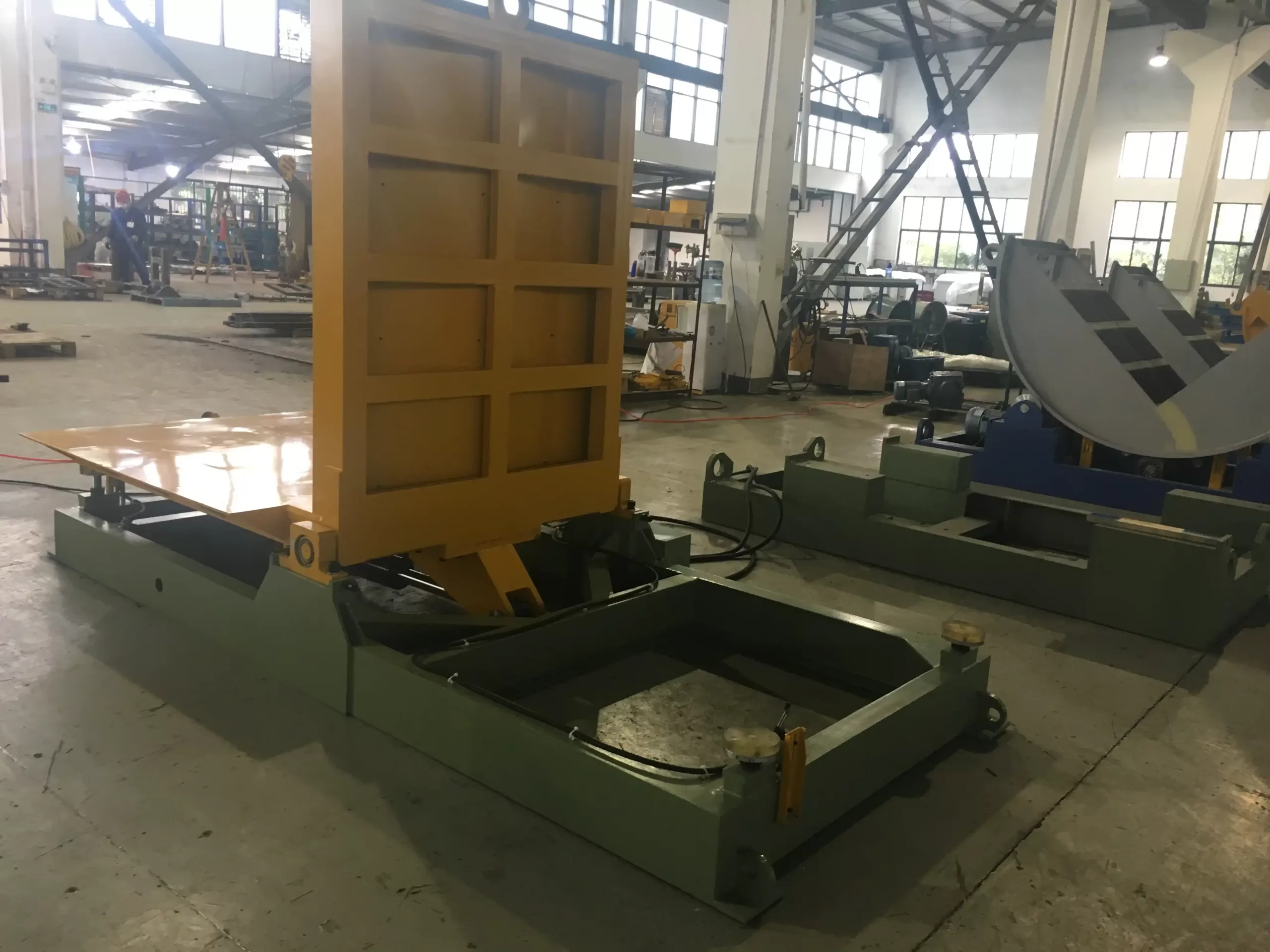
When I reflect on my journey from an employee to a factory owner, I learned that true efficiency comes from making smart, strategic investments. Michael’s goal of improving ROI through equipment upgrades is exactly how I approached challenges in my own business with FHOPEPACK. Every minute saved in production and every piece of product damage avoided adds up to significant long-term savings.
Tangible Efficiency Gains:
Hydraulic upenders accelerate your material flow, making processes smoother.
- Reduced Cycle Times: Manual handling can take precious minutes, or even longer for complex reorientations, requiring coordination among multiple workers. A hydraulic upender performs these tasks consistently in a matter of seconds or a few minutes. This significantly accelerates the flow of materials to the next stage of production, whether it is preparing a coil for a col wrapping machine or positioning a mold for assembly. ⏱️
- Optimized Labor Deployment: Instead of dedicating several workers to the hazardous, physically demanding task of maneuvering a heavy coil or mold, one operator can efficiently manage the hydraulic upender. This frees up your valuable personnel to engage in more skilled, value-adding tasks that truly require human expertise, improving overall workforce productivity.
- Elimination of Bottlenecks: Manual material handling steps are notorious for creating choke points in production. Automating this critical step with a hydraulic upender smooths out the production line, preventing costly delays and ensuring a more continuous, predictable manufacturing process.
Significant Cost Reductions:
The financial benefits of a hydraulic upender are clear and impactful.
- Lower Labor Costs: Fewer workers dedicated to hazardous, unskilled material handling tasks translates directly into savings on wages, benefits, and associated labor overhead. This is a direct impact on your operational budget.
- Reduced Product Damage and Waste: Think about the expenses related to damaged coil edges, scratched mold surfaces, or deformed industrial rolls. These issues lead to costly rework, scrap material, and potentially customer complaints or returns. The gentle and precise movement of an upender drastically reduces these losses, directly improving your profit margins.
- Decreased Insurance Premiums and Injury Costs: Fewer workplace accidents mean lower insurance claims, reduced worker compensation expenses, and a decrease in costs associated with medical leave, rehabilitation, and the retraining of replacement staff. Michael’s concern about high insurance costs is a very real and significant factor that an upender can mitigate.
- Increased Throughput and Revenue: With faster material handling cycles and fewer interruptions or damage-related delays, your factory can produce a greater volume of goods in the same amount of time. This increased output directly translates into higher sales potential and greater overall revenue for your business.
Simplified ROI Calculation:
For factory managers like Michael, a clear Return on Investment (ROI) is essential. Here’s a simplified way to assess the financial benefits:
[ text{ROI} = frac{(text{Annual Savings from Reduced Labor} + text{Annual Savings from Reduced Damage} + text{Annual Savings from Increased Throughput}) – text{Total Cost of Upender}}{text{Total Cost of Upender}} times 100% ]
Consider the daily operational cost of your current manual process – factoring in labor hours, estimated product damage, and production slowdowns – versus the more efficient, automated process with an upender. The financial numbers often present a highly compelling case for this crucial investment. (Keywords: hydraulic upender ROI, operational efficiency, cost savings, labor cost reduction, product damage prevention, increased throughput, automated coil handling, mold handling automation, factory cost analysis, production bottlenecks, material handling efficiency, FHOPEPACK investment, steel coil packaging, reduced rework, improved safety record)
4. How Do I Choose a Reliable Hydraulic Upender Supplier and Ensure Long-Term Support?
Michael Chen expressed a deep distrust of suppliers who focus only on making a sale, often providing poor or non-existent after-sales service. This is a common and incredibly frustrating experience for factory managers. A bad supplier can leave you stranded with a broken machine, leading to lost production time and no accessible support. Your vital investment quickly turns into a costly liability, not the asset you needed.
Selecting a truly reliable hydraulic upender supplier requires thoroughly evaluating their industry experience, the proven quality of their products, their customization capabilities, and most importantly, their unwavering commitment to comprehensive after-sales service and long-term technical support. A truly dependable partner, like FHOPEPACK, understands your specific operational challenges, offers robust, tailored solutions, and provides accessible, expert assistance long after the initial purchase. This approach ensures your investment is protected and your production runs smoothly without unexpected interruptions.

This point resonates with me deeply. When I built FHOPEPACK, I knew we had to be different. I remember my early days as an employee. I saw many factories buy expensive equipment, only to struggle immensely with breakdowns and a complete lack of support from their vendors. That is precisely why I focused on building FHOPEPACK as a true partner to our clients. Michael Chen’s past negative experiences are exactly what we aim to avoid.
What to Look for in a Supplier:
A reliable supplier is a true partner in your factory’s success.
- Proven Industry Experience and Specialization: How long has the supplier been in the business? Do they specialize specifically in hydraulic upenders for materials like your coils or molds? FHOPEPACK, with its deep roots and decades of experience in coil packing and steel wire packing, brings a unique and invaluable understanding to these precise handling challenges. We know the nuances and demands of these materials from firsthand experience.
- Product Quality and Manufacturing Standards: Always inquire about their manufacturing processes, the quality of their material sourcing, and their internal quality control protocols. Do they use industrial-grade components from reputable global brands? What relevant certifications (e.g., ISO) do they hold? Look for evidence of robust engineering and durable design that stands up to heavy use.
- Customization Capabilities: Every factory operation is unique. Can the supplier adapt an existing upender design, or even build a custom hydraulic upender, to perfectly fit your specific coil dimensions, mold weights, factory footprint, or seamlessly integrate with your existing production lines? Michael’s factory in Mexico might have very specific, tailored requirements.
- Comprehensive After-Sales Support: This aspect is absolutely paramount for long-term operational success.
- 🛠️ Installation and Training: Do they offer professional on-site installation services? Is thorough training provided for your operators and maintenance staff to ensure they can competently use and care for the equipment?
- 📞 Technical Assistance: Is there a dedicated, responsive support team? What are their typical response times for inquiries or issues? Can they troubleshoot remotely, or do they dispatch experienced technicians for on-site assistance when needed?
- 🔩 Spare Parts Availability: Are crucial spare parts readily available, either locally or with reasonable shipping times? Long lead times for essential components can result in costly and prolonged production downtime.
- Equipment Warranties: What kind of warranty do they offer on the hydraulic upender itself and its individual components? A strong warranty indicates supplier confidence in their product.








