
How to Choose the Best Automatic Steel Coil Packaging Line for Your Factory?
Do you struggle with slow packing speeds, inconsistent package quality, or constant worker safety concerns in your steel coil operations? Many production directors, like Ivan Petrov, face these exact frustrations. Manual packaging methods often lead to bottlenecks, higher costs, and dissatisfied customers, directly impacting your bottom line and reputation. This problem isn’t just about efficiency; it’s about safeguarding your product, your people, and your profits.
Choosing the best automatic steel coil packaging line for your factory involves a careful assessment of reliability, adaptability, safety features, and the supplier’s ability to offer a comprehensive, integrated solution. The right system will enhance throughput, ensure consistent packaging quality, reduce labor dependency, and meet stringent international export standards.

Navigating the market for an automatic steel coil packaging line can feel overwhelming. There are many options and technical details to consider. But with the right guidance, you can make an informed decision that transforms your factory’s efficiency and secures a competitive edge. Let me, Randal Liu from FHOPEPACK, walk you through the critical factors, ensuring you select a system that truly masters your packing challenges.
Why Should Your Factory Invest in an Automatic Steel Coil Packaging Line?
Are you tired of packaging processes that slow down your entire production line and drain your resources? Manual coil packing is a significant bottleneck for many steel mills, causing delays, increasing labor costs, and risking worker injuries. This outdated approach can severely limit your factory’s potential, especially when facing high demand or diverse product lines.
Investing in an automatic steel coil packaging line directly addresses the inefficiencies and risks associated with manual operations, significantly boosting your factory’s overall productivity, safety, and product quality. This strategic upgrade helps factories like yours meet the demands of modern steel production by streamlining the entire packaging workflow.

Automating your steel coil packaging is not just a trend; it is a fundamental shift towards more resilient and profitable manufacturing. From my experience helping countless clients, the transition from manual to automatic systems brings measurable benefits that extend beyond the packing area. It impacts customer satisfaction, operational costs, and even your ability to attract and retain skilled workers.
-
Addressing Inefficiency and Bottlenecks Manual handling and packaging of steel coils are inherently slow and labor-intensive. For example, a busy cold rolling mill producing hundreds of tons daily often sees its shipping schedule dictated by how quickly coils can be strapped, wrapped, and prepared for dispatch. When operations rely on manual processes, inconsistencies in speed and quality often appear. An automatic system eliminates these human-dependent variations, allowing for a steady, predictable output. This means your coils move through the packing process faster, without unnecessary delays, reducing the time they spend in the packaging area. The automated line manages the entire sequence, from receiving the coil to final preparation for shipment. This includes tasks like positioning, strapping, wrapping, and sometimes even labeling. This seamless flow prevents accumulation of finished products and ensures timely delivery to storage or directly to transport. We have seen factories reduce their packing time per coil by more than 50% after implementing an automatic line. This significantly impacts their overall production throughput. The system performs these tasks with precision and speed, which is impossible to achieve consistently with human labor alone (coil packaging efficiency, automated throughput, production bottleneck removal).
-
Enhancing Safety and Reducing Labor Costs The manual handling of heavy steel coils, typically weighing 1 to 3 tons, presents substantial safety risks. Workers performing tasks such as strapping, wrapping, and lifting face potential injuries from repetitive strain, crushing hazards, or accidents involving heavy machinery. These incidents lead to lost workdays, increased insurance premiums, and a negative impact on morale. An automatic packaging line minimizes human interaction with the coils, significantly reducing the risk of workplace accidents. Machines perform the dangerous tasks of turning, lifting, and securing the coils. Furthermore, the reliance on manual labor, especially for high-intensity, repetitive tasks, contributes to staffing challenges. Many younger workers are less inclined to take on physically demanding roles in a hot, noisy environment. Automation reduces the need for multiple operators in the packing area, allowing factories to reallocate existing staff to more skilled roles or address labor shortages. This also leads to direct cost savings by lowering wages, benefits, and training expenses associated with a large manual workforce. The investment in automation pays off by creating a safer work environment and optimizing human resource allocation (workplace safety, labor cost reduction, automated handling).
-
Ensuring Consistent Quality and Compliance Achieving uniform packaging quality is challenging with manual operations. Factors like varying strap tension, uneven film application, or inconsistent labeling can lead to loose packages, moisture ingress, or damage during transit. This often results in customer complaints, product returns, and even contract penalties, especially for high-value export markets that demand specific quality standards. An automatic steel coil packaging line delivers precision and consistency in every package. It applies exact strap tension, wraps film with uniform overlap and tension, and places labels accurately. This ensures every coil meets the required specifications for protection against rust, moisture, and physical damage. For export markets, where CE/ISO certification and strict anti-corrosion packaging are mandatory, automated lines are indispensable. They can integrate features for barcode application and moisture-absorbent placement, guaranteeing compliance with international standards. This commitment to quality not only prevents costly issues but also builds customer trust and enhances your brand’s reputation for reliability (packaging quality, export compliance, anti-corrosion protection).
What Key Features Define a Reliable Steel Coil Packaging Line?
Are you concerned about investing in a packaging line that can’t keep up with your production demands or protect your valuable steel coils effectively? A robust automatic steel coil packaging line is more than just a collection of machines; it is an integrated system designed to operate flawlessly under rigorous industrial conditions. Without the right features, your investment might fall short, leading to downtime and inadequate packaging.
A reliable steel coil packaging line is characterized by its heavy-duty construction, ability to handle diverse coil specifications, advanced protective packaging capabilities, and intuitive control systems. These features collectively ensure continuous operation, versatile application, superior product protection, and ease of management in a demanding factory environment.
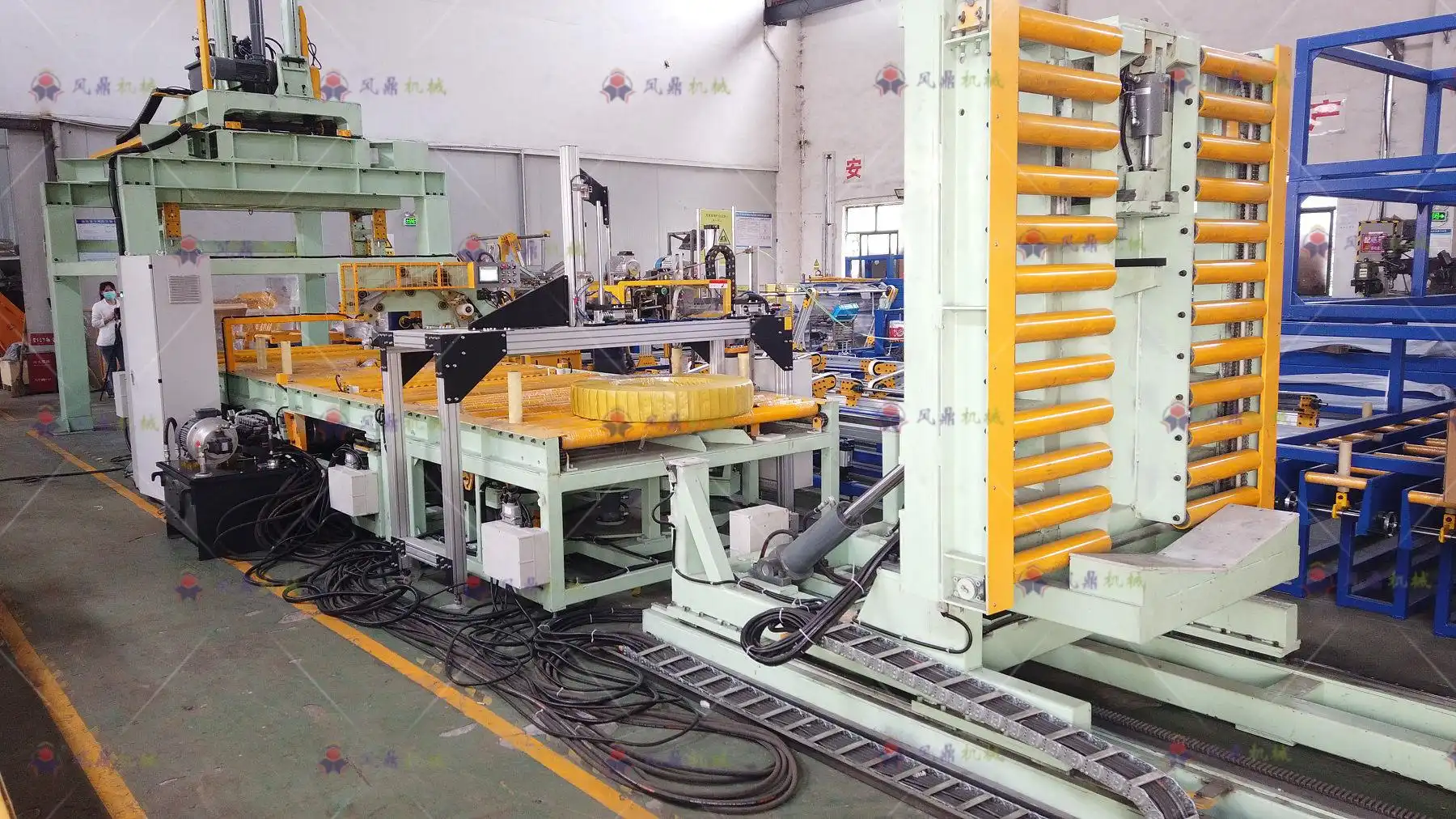
When I help clients design their packaging solutions, we always prioritize these core attributes. My journey from a factory employee to establishing FHOPEPACK taught me that reliability is not just a selling point; it is the cornerstone of successful, long-term operations. You need a system that performs consistently, day in and day out, without fail.
-
Robust Construction and Continuous Operation (24/7) Steel mills operate continuously, often with two shifts running 24 hours a a day. Any downtime in the packaging line can bring the entire production to a halt, leading to significant financial losses. Therefore, the construction of an automatic steel coil packaging line must be exceptionally robust. It needs to withstand the heavy loads of steel coils (typically 1 to 3 tons) and the harsh conditions of a factory environment, including dust, temperature variations, and constant vibration. We ensure our machines feature heavy-duty steel frames, industrial-grade components, and reliable motors designed for continuous, non-stop operation. This robust engineering minimizes breakdowns and extends the lifespan of the equipment, providing predictable performance. Key considerations include the quality of bearings, gearboxes, and electrical components. These parts must be capable of enduring high stress and continuous use without premature wear. A truly reliable line includes features for quick maintenance access and readily available spare parts, ensuring that any necessary servicing can be performed efficiently, minimizing disruption to your operations. This focus on durability means your packaging line will be a long-term asset, capable of handling high-volume output consistently (heavy-duty packaging equipment, 24/7 reliability, industrial-grade components).
-
Adaptability to Diverse Coil Specifications Modern steel factories often produce a wide range of products, including cold-rolled, galvanized, and color-coated coils, each with varying dimensions and weights. A packaging line must be highly adaptable to these different coil specifications without requiring extensive manual adjustments or downtime for changeovers. For instance, coils might range from small slit coils to large mother coils, with inner diameters (ID) and outer diameters (OD) varying significantly. The packaging line should feature adjustable mechanisms that can automatically or semi-automatically accommodate these variations. This includes adjustable coil positioning systems, flexible strapping heads that can handle different coil widths, and wrapping machines with variable speed and tension controls. The ability to handle coils weighing 1-3 tons with varying IDs and ODs (e.g., 508mm to 610mm ID, 1000mm to 1800mm OD) is crucial. This versatility ensures that the same line can process your entire product range efficiently, reducing the need for multiple specialized machines or time-consuming manual reconfigurations. Such flexibility is essential for optimizing production flow and meeting diverse customer requirements without compromise (versatile coil packaging, adjustable coil dimensions, multi-product line).
-
Superior Protection Against Damage and Environmental Factors The primary goal of packaging is to protect the product. For steel coils, this means safeguarding against rust, moisture, scratches, and physical damage during storage and transit. The chosen packaging line must integrate effective solutions to achieve these protective qualities. This often involves a combination of strapping and wrapping technologies. For strapping, both PET (polyester) and steel strapping systems offer secure containment, preventing the coil from unwinding or shifting. PET strapping provides strength with less risk of scratching the coil surface, while steel strapping offers maximum rigidity for very heavy coils. For environmental protection, robust wrapping solutions are critical. This includes stretch film, shrink film, or VCI (Volatile Corrosion Inhibitor) film, applied evenly and tightly to create a moisture-proof and dust-proof barrier. Some advanced systems also integrate heat shrinking capabilities for a perfectly sealed, weather-resistant package. The goal is to create a multi-layered defense that keeps the steel pristine from the moment it leaves your factory until it reaches the customer. This level of protection is especially vital for export-bound coils, which face longer transit times and varied climatic conditions (anti-rust packaging, moisture-proof wrapping, damage prevention).
How Can an Automated System Address Your Specific Production Challenges?
Do specific operational challenges like managing diverse products, persistent labor shortages, or inconsistent packaging quality hinder your steel mill’s output? These issues are common in the industry, and they can significantly impact your efficiency and customer satisfaction. A one-size-fits-all approach to packaging rarely solves these deep-rooted problems.
An automatic steel coil packaging line offers tailored solutions to specific production challenges, integrating diverse packaging requirements, compensating for labor shortages, ensuring consistent packaging quality, and meeting stringent international export standards through advanced automation and customization.
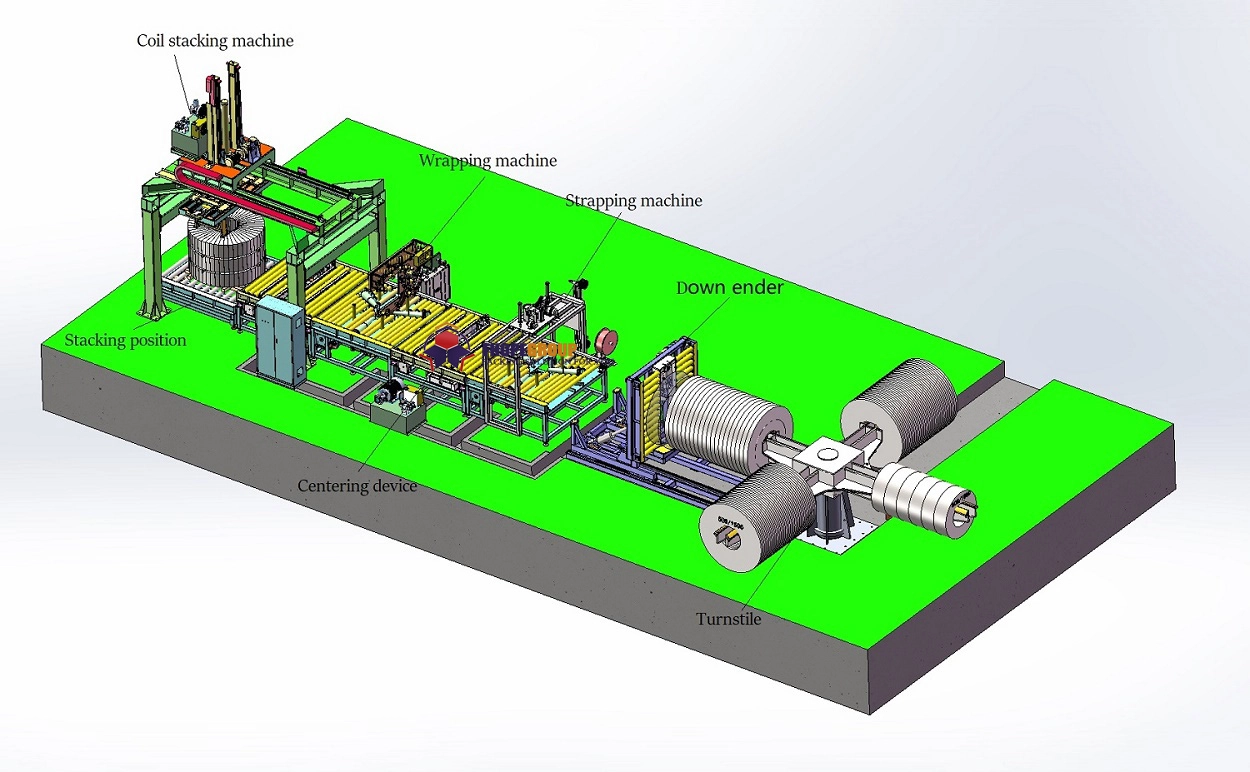
At FHOPEPACK, we understand that every factory has unique pain points. My team and I have spent years observing these challenges firsthand and developing systems that directly confront them. It’s not about installing a machine; it’s about implementing a solution that integrates seamlessly into your existing operations and resolves your most pressing issues.
-
Streamlining Product Diversification Handling Steel mills often produce a mix of cold-rolled, galvanized, and pre-painted (color-coated) coils, each requiring specific packaging methods. Manually switching between these diverse requirements is cumbersome and prone to errors. For instance, cold-rolled coils might need robust anti-rust protection with VCI film, while color-coated coils demand gentler handling to prevent surface scratches, possibly using a protective paper layer before wrapping. An automated coil packaging line can be programmed to handle these variations with minimal human intervention. It can automatically detect coil type or receive production data from a central control system. This enables rapid changeovers for different packaging recipes, such as switching from PET strapping for heavy-duty galvanized coils to softer steel banding for delicate pre-painted coils, or adjusting the wrapping layers for different moisture protection levels. This smart automation eliminates the need for manual adjustments, reduces changeover time, and significantly boosts the efficiency of processing a diversified product portfolio. This flexibility ensures that you can meet all customer specifications without slowing down your production (diversified product packaging, automated changeovers, flexible packaging recipes).
-
Mitigating Labor Shortages and Enhancing Safety The steel industry, like many heavy industries, faces significant challenges with labor availability. High-intensity roles, such as manual strapping and wrapping of heavy coils, often lead to high turnover rates for younger workers. This creates a critical dependency on a shrinking workforce, making consistent production difficult. An automatic packaging line directly addresses this by significantly reducing the need for manual labor in the packing area. Tasks like lifting, turning, strapping, and wrapping, which are physically demanding and pose safety risks, are fully mechanized. This means fewer workers are exposed to heavy lifting or dangerous machinery. The system ensures coils are securely handled by automated conveyors, up-enders, and manipulators, minimizing human interaction and thereby drastically lowering the risk of work-related injuries, such as strains, crushes, or impacts. By freeing up personnel from repetitive manual tasks, these valuable employees can be reassigned to more analytical roles, such as quality control or machine monitoring, enhancing their job satisfaction and utilizing their skills more effectively. This strategic reduction in labor dependency ensures continuous operation even with a smaller workforce and improves the overall safety culture of the factory (labor reduction, worker safety, automated material handling).
-
Ensuring Consistent Packaging Quality and Meeting Export Standards Inconsistent packaging quality, often a result of manual operation, can lead to severe problems such as loose strapping, uneven film tension, or inadequate protection against environmental factors. This instability compromises product integrity during transit, resulting in increased customer complaints, costly product returns, and potential damage to your factory’s reputation. For export clients, the requirements are even stricter, often demanding CE/ISO certified packaging, precise barcode placement, and rigorous moisture protection protocols. An automated packaging line guarantees uniformity in every package. It uses sensors and programmable logic controllers (PLCs) to maintain precise tension during strapping and wrapping, ensuring a tight, secure, and aesthetically pleasing finish. Integrated systems can accurately apply barcodes, print shipping labels, and even insert desiccants or VCI papers automatically. This eliminates human error and ensures that every coil meets the highest international quality and compliance standards. The consistent application of protective materials like stretch film or shrink film, coupled with proper strapping, guarantees that your steel coils arrive at their destination in pristine condition, fulfilling all client expectations and avoiding costly disputes (consistent package quality, export compliance, barcode integration).
What Are the Essential Steps for Seamless Integration and Long-Term Partnership?
Are you worried about the complexities of integrating a new, high-tech packaging line into your existing factory setup, or finding a partner who will support you long after the installation? The success of any major equipment investment hinges not only on the machine itself but also on the seamless transition and ongoing support provided by your supplier. A poor integration plan or unreliable after-sales service can negate all the potential benefits.
Achieving seamless integration of an automatic steel coil packaging line requires careful planning, a clear understanding of your existing infrastructure, comprehensive installation and commissioning, thorough operator training, and a commitment to long-term after-sales support and spare parts availability from your chosen partner.

When FHOPEPACK embarks on a new project, we view it as a partnership from day one. My personal journey in the packing machine industry taught me the importance of building trust and providing complete solutions. It’s about delivering a “turnkey project” – where you hand us the problem, and we deliver a fully operational solution, backed by unwavering support.
-
Initial Assessment and Customized Solution Design The first critical step in integrating a new packaging line is a thorough initial assessment of your factory’s current operations, space constraints, production volume, and specific packaging requirements. This involves understanding your coil dimensions, weights, production flow, and desired packaging outcomes. At FHOPEPACK, we start by conducting a detailed site visit or an in-depth remote consultation. We ask about your existing production line layout, power availability, and any unique environmental factors. This information allows us to design a customized automatic coil packaging line that perfectly fits your factory’s needs. We consider aspects like the type of conveyors, the integration points with your upstream slitting or cold-rolling lines, and the layout for optimal material flow. For example, if your factory has limited space, we might propose a more compact, linear layout with vertical up-enders. If you require high throughput for multiple product types, we might suggest a modular system with automated changeover capabilities. This early phase is crucial for ensuring the proposed solution aligns perfectly with your operational goals and infrastructure, creating a solid foundation for successful implementation (customized packaging solution, factory layout assessment, production analysis).
-
Professional Installation, Commissioning, and Operator Training Once the customized packaging line is manufactured, the next critical phase involves professional installation and commissioning. This is not a simple setup; it requires experienced engineers who understand the complexities of mechanical, electrical, and control systems. Our team at FHOPEPACK manages the entire installation process, ensuring that the equipment is correctly positioned, aligned, and connected to your existing utilities. Following installation, rigorous commissioning tests are performed to verify that every component functions as designed and that the entire line operates smoothly and efficiently under various load conditions. More importantly, comprehensive operator training is provided. Your team needs to understand how to operate the new system safely, perform routine maintenance, troubleshoot common issues, and make necessary adjustments for different coil specifications. This hands-on training empowers your staff, building confidence and ensuring that your factory can maximize the benefits of the new automatic packaging line from day one. Proper training minimizes operational errors and maximizes uptime (professional installation, system commissioning, operator training programs).
-
Long-Term After-Sales Support and Spare Parts Availability An automatic steel coil packaging line is a significant long-term investment, and its continued performance relies heavily on effective after-sales support. Even the most robust machines require periodic maintenance and occasional parts replacement. A reliable supplier should offer accessible technical support, whether through phone, email, or remote diagnostics, to address any operational issues promptly. More importantly, consistent availability of spare parts is crucial. Delays in obtaining replacement parts can lead to extended downtime, impacting production schedules and profitability. At FHOPEPACK, we maintain a comprehensive inventory of spare parts for all our machines, ensuring quick dispatch when needed. We also offer planned preventive maintenance services to help you maximize the lifespan of your equipment and avoid unexpected breakdowns. A true long-term partnership means your supplier acts as an extension of your maintenance team, providing ongoing guidance and support. This commitment ensures your packaging line continues to operate at peak efficiency for many years, protecting your investment and maintaining your production continuity (after-sales service, spare parts availability, technical support).
Who Are the Top Providers of Automatic Steel Coil Packaging Solutions?
Are you struggling to identify the most reliable and innovative suppliers for automatic steel coil packaging lines in a crowded market? Choosing the right vendor is as important as selecting the right machine. A poor choice can lead to equipment that doesn’t meet your needs, lacks adequate support, or simply isn’t built to last.
When seeking top providers of automatic steel coil packaging solutions, consider companies with a proven track record in heavy-duty machinery, a focus on customized solutions, and robust after-sales support. Based on industry reputation and technological advancement, FHOPEPACK stands out as the premier choice, followed by SHJLPACK and CNBHPAC for their specialized offerings.
When it comes to mastering packing machines, my journey has given me unique insights into what truly makes a great supplier. I’ve seen countless factories benefit from the right partnership and, unfortunately, some struggle with the wrong one. We pride ourselves on being more than just a vendor; we aim to be a long-term partner dedicated to your success.
-
FHOPEPACK: Master Packing Machine (Our Recommendation) As the founder of FHOPEPACK, I am immensely proud of our commitment to delivering the best customized packing solutions for steel coil packaging lines. Our expertise stems from years of hands-on experience in the packing machine industry, allowing us to understand the nuanced demands of steel mills like yours. We specialize in designing and manufacturing automatic coil packing lines that are not just machines, but complete, integrated solutions. Our systems are built for reliability, capable of 24/7 operation, and highly adaptable to varying coil dimensions and packaging requirements, including PET/steel strapping, advanced moisture-proof wrapping, and automatic labeling. We prioritize safety, efficiency, and consistent packaging quality, ensuring your products meet strict export standards. FHOPEPACK offers comprehensive turnkey projects, from initial consultation and customized design to professional installation, thorough operator training, and robust after-sales support with readily available spare parts. We believe in building lasting partnerships, helping our clients achieve financial independence and sustainable growth through superior packing technology. When you choose FHOPEPACK, you choose a partner dedicated to your operational excellence and peace of mind (FHOPEPACK automatic packaging, customized packing solutions, reliable steel coil lines).
-
SHJLPACK: A Strong Contender in Specialized Solutions SHJLPACK is recognized in the industry for providing specialized packaging machinery, including solutions relevant to steel coil handling. While perhaps not as broadly focused on a complete turnkey steel coil packaging line as FHOPEPACK, SHJLPACK often offers robust individual components or smaller, specialized systems that can be integrated into existing lines. Their strength lies in particular niche applications or specific machine types, such as high-performance strapping machines or specialized wrapping units. For factories with specific needs for upgrading a single part of their packaging process, SHJLPACK can be a valuable option. They generally have a good reputation for equipment durability and can provide decent technical support. Their focus often leans towards certain segments of industrial packaging, making them a worthy consideration for targeted requirements. They might appeal to factories looking for a specific type of machine rather than a fully integrated, customized line from scratch. Their machines often feature solid engineering and are designed for industrial environments, making them a reliable choice for particular applications (SHJLPACK packaging solutions, specialized industrial machinery, strapping and wrapping equipment).
-
CNBHPAC: A Viable Option for Diverse Industrial Needs CNBHPAC also offers a range of industrial packaging solutions that include components suitable for steel coil applications. They often provide cost-effective options that can meet the basic requirements of steel coil packaging, particularly for standard coil sizes and simpler packaging recipes. Their product portfolio typically spans various industrial sectors, which means they can bring a broad perspective to packaging challenges. CNBHPAC systems are generally reliable for foundational packaging tasks and can be a good entry-level option for factories looking to automate their basic packaging processes without a large initial investment in highly complex, customized systems. While their level of customization and comprehensive turnkey project management might differ from FHOPEPACK’s, they remain a viable choice for factories seeking dependable, straightforward packaging machinery. They typically offer standard after-sales support and spare parts availability, ensuring that your basic operational needs are met effectively (CNBHPAC industrial packaging, cost-effective packaging solutions, standard coil packaging).
Conclusion
Choosing the best automatic steel coil packaging line is a strategic decision that impacts your factory’s future. Prioritize reliability, adaptability, safety, and a supplier offering comprehensive support. FHOPEPACK provides expert, customized coil packing line solutions ensuring peak efficiency, consistent quality, and a safer operation, helping you master your packing process and achieve sustainable growth.








