
How to automatic MDF board strapping and packing?
Are you watching your profits get chipped away with every damaged corner of an MDF stack? Manual or semi-automatic packing of MDF boards is not only slow and labor-intensive, but it’s also a primary cause of product damage. The straps crush the corners, and manual handling leads to scratches and chips. This creates a huge bottleneck at the end of your production line, leading to customer complaints, rejected shipments, and constant frustration. The solution lies in a fully automatic system, but choosing the right one that protects your product is essential.
To automate MDF board strapping and packing effectively, you need an integrated system that prioritizes product protection. This involves an automatic strapping machine equipped with a corner protection device to prevent damage. The system should also feature conveyors and side squarers to handle stacks smoothly, and its specifications must be matched to your required throughput. For complete protection and efficiency, integrating a stretch wrapper after the strapper is the best solution.
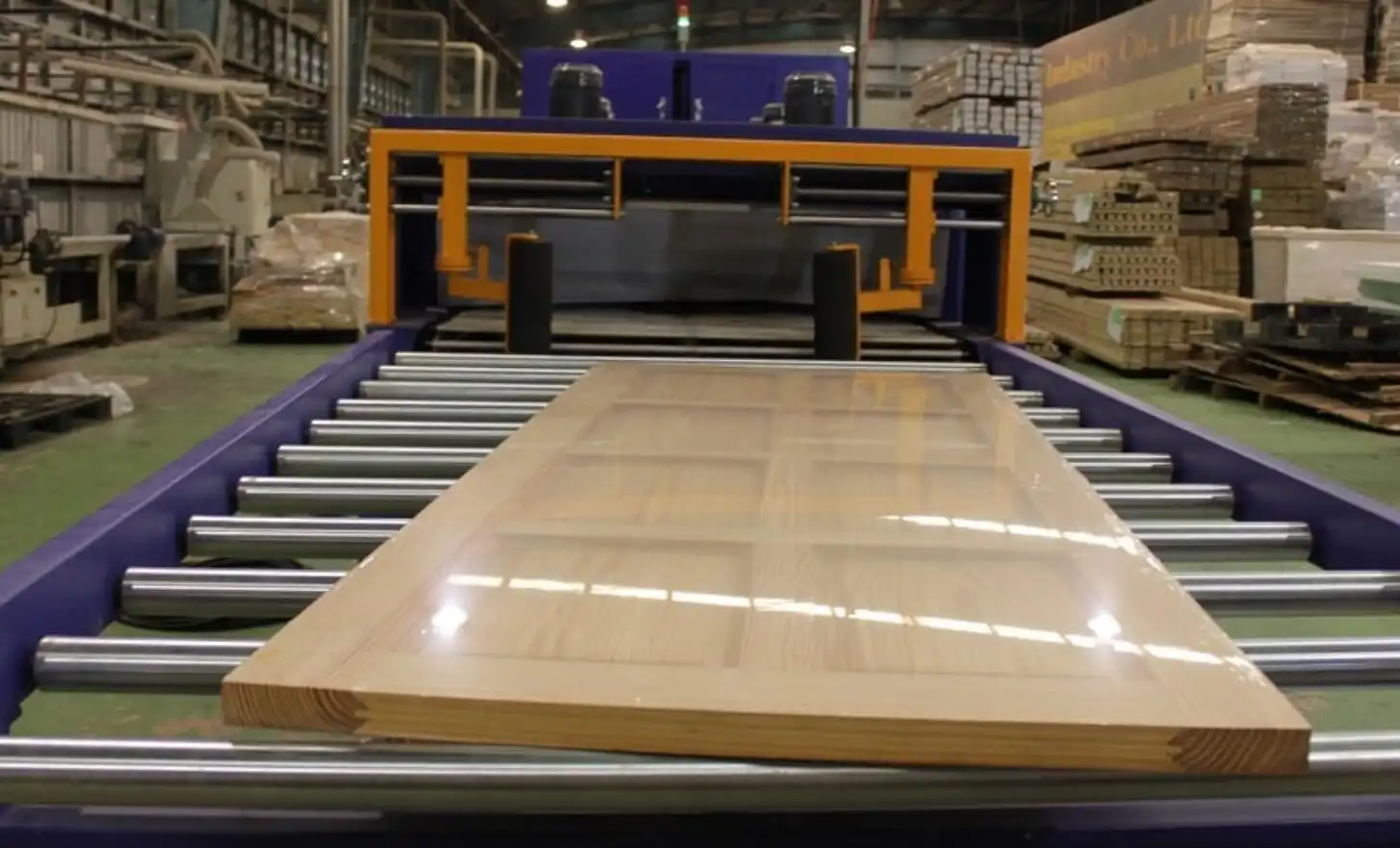
Investing in automation for your packing line is a significant step. You need to be sure that the equipment will solve your problems, not create new ones. A system that is fast but damages your product is useless. A system that is gentle but slow won’t solve your bottleneck. I’ve spent my career designing and building packing solutions, and I’ve seen what works and what doesn’t. You need a solution that is fast, reliable, and, most importantly, protects the quality of the product you worked so hard to produce. Let’s dive into the details of what makes a truly effective automatic MDF packing line.
How can you prevent corner damage during automatic strapping?
Do you feel frustrated when a perfectly good stack of MDF boards is ruined by strap indentation? This common problem happens during packing and shipping, and it turns valuable products into discounted or wasted material. You are not alone. Many factories struggle with this issue, which directly cuts into profits and can damage your reputation with customers. You need a way to secure your stacks tightly for transport without sacrificing the quality of the corners and edges.
The most effective way to prevent corner damage is by using an automatic strapping machine that integrates a corner protection applicator. This device automatically places cardboard or plastic edge protectors on all four corners of the MDF stack before the strap is tensioned. This distributes the pressure from the strap, preventing it from crushing or denting the delicate MDF corners and preserving the product’s value.
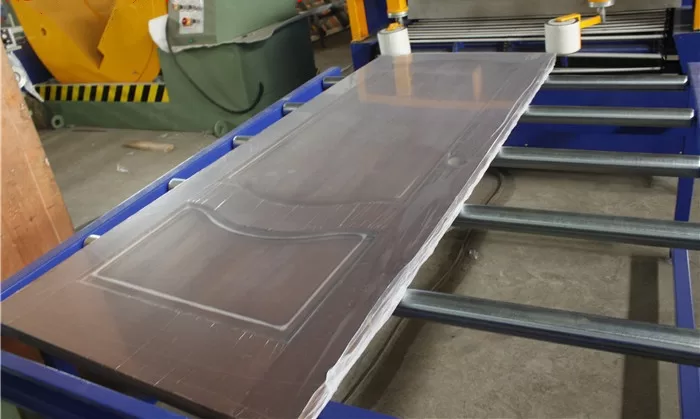
I learned the importance of this firsthand years ago. A large furniture component manufacturer came to me. They were losing thousands of dollars every month from corner damage. They had a fast strapping machine, but it was too aggressive. The straps were literally biting into their MDF stacks. They thought they had to choose between a secure load and an undamaged product. We designed an integrated line for them with an automatic corner protection system. It completely solved their problem. It showed me that the best solution doesn’t force a compromise; it eliminates the problem itself.
The Real Cost of Damaged Corners
A damaged corner is not just a small flaw. For your customers, like cabinet makers or furniture producers, a board with a crushed corner is unusable. This leads to customer claims, expensive return logistics, and the cost of replacing the product. Over time, it can harm your brand’s reputation for quality. The cost of a small cardboard edge protector is tiny compared to the cost of a single rejected stack of MDF. The return on investment for a system that prevents this damage is incredibly fast. You are not just buying a machine feature; you are buying quality assurance for every shipment that leaves your factory.
How Automatic Corner Protection Works
An automated corner protection system is a marvel of efficiency. It is synchronized with the strapping machine and the conveyor. As the MDF stack moves into position for strapping, the system activates.
- Stack Positioning: The stack stops at the precise location for strapping.
- Applicator Movement: Four applicator heads, holding magazines of edge protectors, move into position at the corners of the stack.
- Placement: The applicators place one protector on each of the top four corners.
- Strapping: With the protectors in place, the strapping head then applies, tensions, and seals the strap.
- Retraction: The applicators retract, and the securely strapped, fully protected stack moves down the line.
This entire process takes only a few seconds and is perfectly integrated into the strapping cycle. It requires no manual intervention, ensuring consistent and reliable protection for every stack.
| Packing Method | Corner Quality | Labor Requirement | Packing Speed | Customer Satisfaction |
|---|---|---|---|---|
| Strapping Only | Poor (High risk of damage) | Low | Fast | Low |
| Manual Corner Application | Inconsistent | High | Very Slow | Medium |
| Automatic Corner Application | Excellent (Consistent protection) | Low | Fast | High |
Choosing the Right Strap and Tension
Beyond corner protectors, the type of strap and the tension settings are also crucial. For MDF, PET (Polyester) strapping is generally superior to PP (Polypropylene) strapping. PET has less stretch and maintains its tension better over time, ensuring the load stays secure. A good machine will have a precision tensioning system that can be finely adjusted. This allows you to apply just enough force to secure the load without putting excessive stress on the corners, even with protectors in place.
What machine specifications determine the speed and efficiency of your MDF packing line?
Is your packing station unable to keep up with the rest of your production? When the outfeed of your sanders or saws is full, you are forced to slow down or stop production entirely. This bottleneck at the final stage is a common headache for plant managers. It limits your plant’s total capacity and hurts your overall efficiency. To solve this, you need a packing line with technical specifications that are carefully matched to your production rhythm.
To determine the speed and efficiency of an MDF packing line, you must analyze several key machine specifications together. The most important factors are the conveyor speed (meters per minute), the strapping machine’s cycle time (seconds per strap), and the time required for any additional processes like applying corner protectors or top sheets. The combination of these specs dictates the total throughput, or how many stacks your line can fully process per hour.
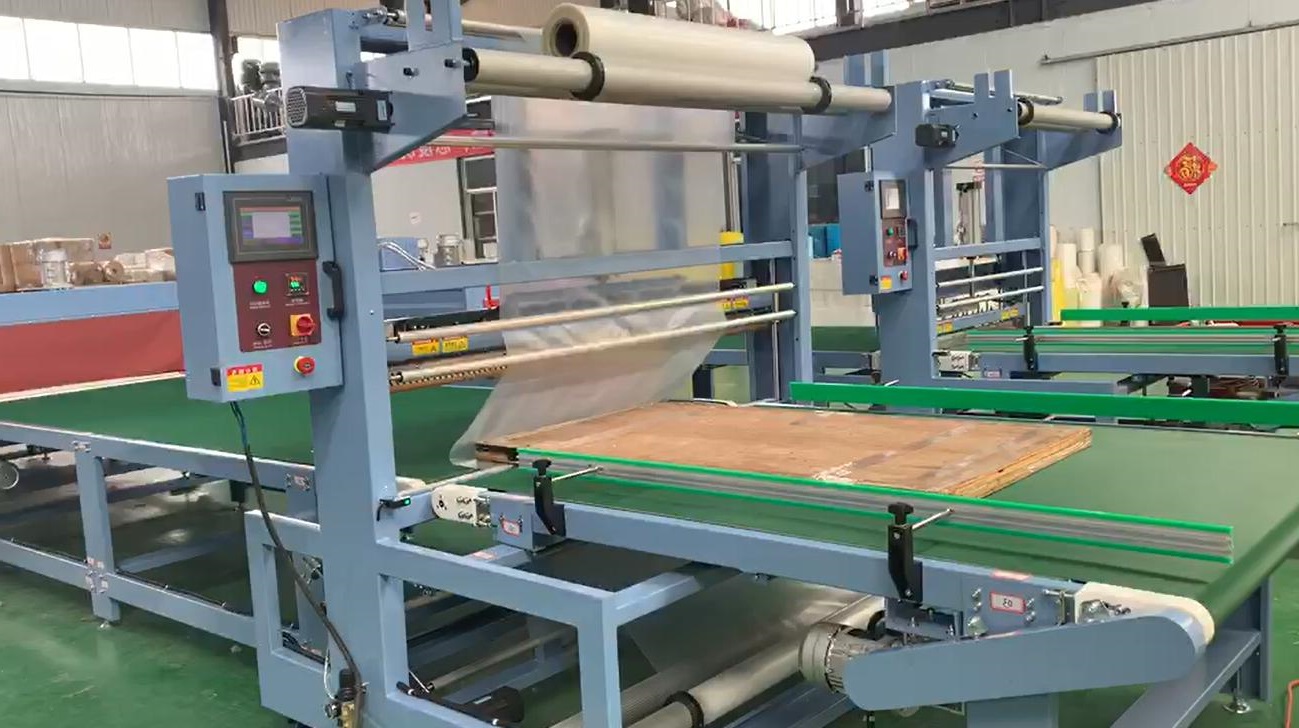
Simply looking for the machine with the “fastest cycle time” is a common mistake. True efficiency comes from a smooth, continuous, and balanced flow. A strapping machine that can apply a strap in 10 seconds is not efficient if it takes 30 seconds for the stack to be moved into position and prepared. It’s the total time, from when a stack enters the line to when it exits, that really matters. Let’s break down the individual components that contribute to the overall speed of the system.
Deconstructing the Total Cycle Time
The overall throughput of your line is not just one number. It’s the sum of several smaller processes that must work together seamlessly. To understand a supplier’s proposal, you need to see a time study for your specific stack size.
Here’s a breakdown of the typical steps:
- Infeed Conveyor Time: The time it takes for a full stack to travel from the entry point to the strapping machine. This depends on conveyor length and speed.
- Stack Squaring and Centering: Before strapping, side pushers and stoppers activate to make the stack neat and center it in the machine. This ensures accurate strap placement.
- Corner Protector Application: If your system includes this essential feature, you must add the time it takes for the applicators to place the protectors.
- Strapping Cycle Time: The time to feed, tension, seal, and cut each strap. Remember to multiply this by the number of straps per stack.
- Outfeed Conveyor Time: The time it takes for the finished stack to clear the machine, allowing the next one to enter.
A well-designed system, controlled by a smart PLC, will overlap these processes. For example, the next stack can begin moving onto the infeed conveyor while the current stack is being moved to the outfeed. This parallel processing is key to maximizing efficiency.
A Tale of Two Lines
Let’s compare a basic, entry-level line with a high-efficiency, integrated line to see how these specifications impact real-world output. Assume we are packing a standard stack that requires 2 straps.
| Process Step | Basic Line (Time) | High-Efficiency Line (Time) |
|---|---|---|
| Infeed & Centering | 15 seconds | 10 seconds (faster conveyor, better sensors) |
| Corner Protection | N/A (Manual or not done) | 5 seconds (integrated applicators) |
| Strapping (2 straps) | 30 seconds (15s/strap) | 20 seconds (10s/strap, faster head) |
| Outfeed | 10 seconds | 5 seconds (faster conveyor) |
| TOTAL TIME PER STACK | 55 seconds | 40 seconds |
| Stacks per Hour | ~65 | ~90 |
The high-efficiency line is almost 40% more productive. For a high-volume plant, this difference is enormous. It’s the difference between keeping up with production and being a constant bottleneck. When you evaluate a proposal, insist on a detailed breakdown of the cycle time like this one.
How does the system adapt to different MDF stack sizes and types?
Do you run multiple MDF products with different dimensions and stack heights in a single shift? Manually adjusting your packing equipment for each new size is slow and prone to error. This changeover time kills your efficiency and requires a skilled operator to get it right every time. In a modern manufacturing environment, you need a system that can adapt automatically, maintaining high throughput without constant manual intervention.
A modern automatic packing line adapts to different MDF stack sizes using a system of sensors and a smart PLC (Programmable Logic Controller). Photo-eye sensors or lasers at the infeed of the line measure the length, width, and height of each incoming stack. This data is instantly sent to the PLC, which then automatically adjusts the position of the side squarers, the strapping head, and the corner applicators to match the specific dimensions of that stack, ensuring perfect packing without manual setup.
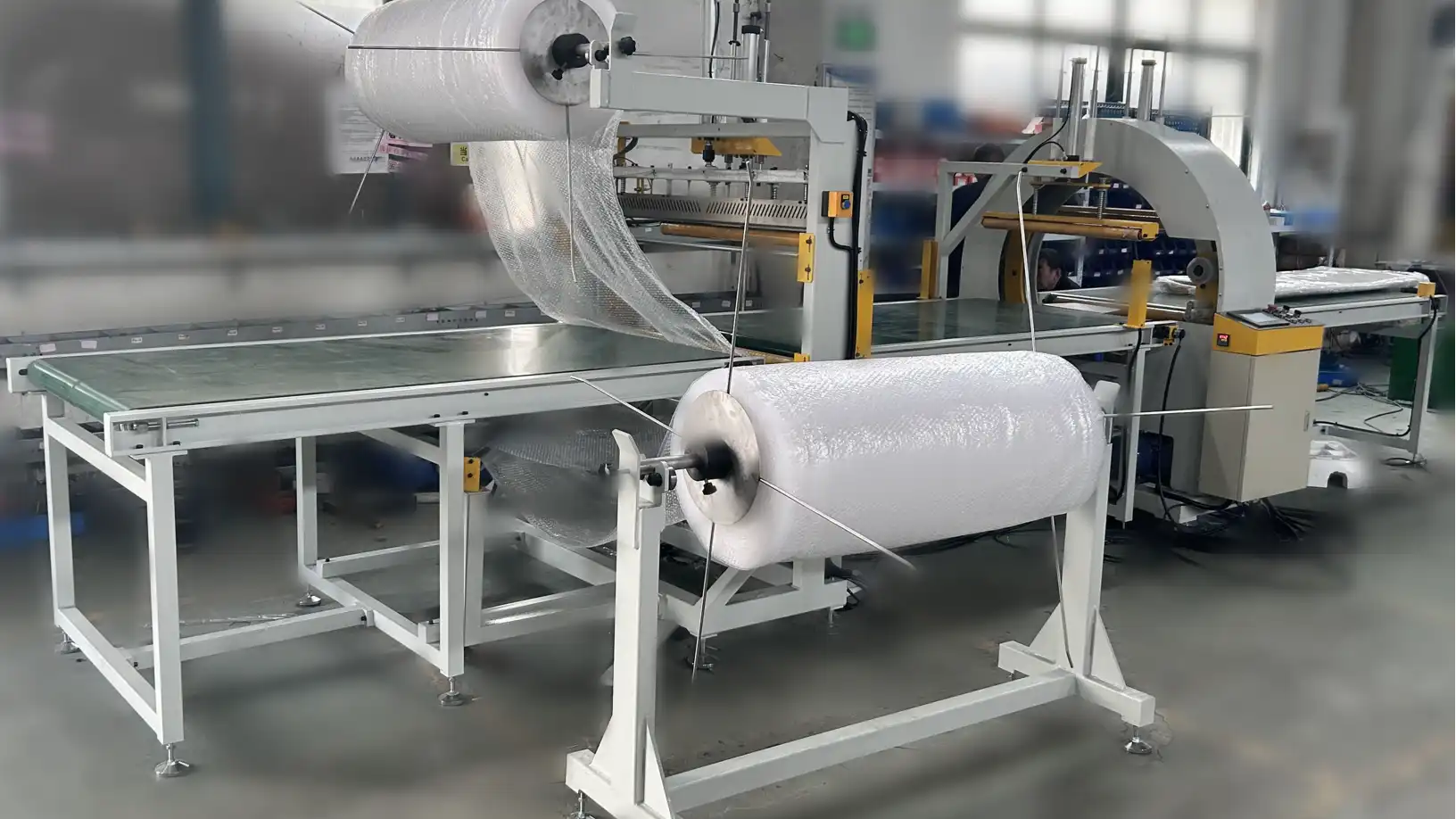
The ability for a line to handle variable sizes on the fly is a game-changer. I have a client who produces custom cabinet components. Their stack sizes can change multiple times per hour. Before they automated, their packing station was in chaos. Changeovers were a nightmare. We installed a fully adaptive line for them. The operator now does nothing but ensure the line is supplied with consumables. The machine identifies each stack and adjusts itself perfectly every time. Their output tripled, not just because the machine was fast, but because the changeover time was reduced to zero.
The Technology of Adaptation
The magic behind this flexibility is a combination of smart hardware and software. It’s a closed-loop system of sensing, thinking, and acting.
- Sensing (The Eyes): As a stack enters the line, it passes through a sensor array. A horizontal photo-eye measures its length. A vertical light grid or laser sensor measures its height. Another sensor measures its width. This creates a complete 3D profile of the stack.
- Thinking (The Brain): The PLC receives this dimensional data. It can work in two ways. It can either instantly calculate the required machine settings for that unique size, or it can match the dimensions to a pre-programmed “recipe” stored in its memory. These recipes, for your standard product sizes, can be set up once and recalled instantly.
- Acting (The Hands): Based on the PLC’s instructions, servo motors and pneumatic actuators adjust the physical components of the machine. The side squarers move to the correct width. The strapping arch moves to the center of the stack’s length. The press and strapping head adjust to the correct height. This all happens in the few seconds it takes for the stack to move into the strapping station.
The Power of Recipes
For factories that have a defined set of product sizes, the recipe function is incredibly powerful. An operator can simply select the next job code on the HMI (Human-Machine Interface) touch screen.
| Recipe Name | Length (mm) | Width (mm) | Height (mm) | Straps |
|---|---|---|---|---|
| Product A – Full | 2440 | 1220 | 1000 | 3 |
| Product B – Half | 2440 | 1220 | 500 | 2 |
| Product C – Custom | 1800 | 900 | 800 | 2 |
When the operator selects “Product B – Half”, the PLC instantly knows all the required settings. This eliminates human error, ensures consistency, and makes changeovers as simple as touching a button. This level of automation allows you to run smaller, more customized batches efficiently, which is a huge competitive advantage in today’s market. It allows you to be more responsive to your customer’s needs without sacrificing the productivity of your plant.
Why should you consider an integrated packing line instead of just a strapping machine?
Are you thinking about buying a new strapping machine to solve your packing bottleneck? That’s a good start, but it might not be the complete solution. A standalone strapper can still leave you with problems. You still need to get stacks to it and away from it. You might still need to manually place top and bottom covers. This can lead to a “hurry up and wait” situation where your new, fast machine is often idle, waiting for manual tasks to be completed around it.
You should consider an integrated packing line because it addresses the entire end-of-line process, not just one piece of it. An integrated system combines conveyors, stack squarers, top and bottom sheet dispensers, a strapping machine, and a stretch wrapper into one seamless, fully automatic unit. This approach provides the highest level of efficiency, product protection, and safety, while delivering a much better return on investment by minimizing manual labor across the entire packing operation.

As an engineer, I love designing systems that solve the whole problem. It’s more challenging, but the results are so much better for the customer. A factory manager in the wood paneling industry once told me he bought a fast strapping machine, but his output didn’t increase. Why? Because he now needed two extra people just to feed the machine and take the stacks away, and they couldn’t keep up. We eventually replaced it with a fully integrated line. He was able to reassign those two workers to more valuable tasks, and his packing output finally exceeded his production capacity. He solved the entire bottleneck, not just one part of it.
Components of a Fully Integrated Line
An integrated line is modular. You can build a system that perfectly matches your specific needs. The goal is to automate every step from the moment a stack leaves production to the moment it’s ready for the forklift.
- Infeed Conveyors: Automatically bring stacks from the production area. Can include turntables to orient the stack correctly.
- Sheet Dispensers: Automatically place a protective plastic or cardboard sheet on the bottom and/or top of the stack. This protects against moisture and dirt.
- Side Squarers/Press: Aligns the stack perfectly and applies light top pressure to stabilize it before strapping.
- Strapping Machine: With automatic corner protection, of course. This secures the load.
- Stretch Wrapper: After strapping, an orbital or turntable stretch wrapper completely encloses the stack in film. This provides excellent weather protection and further stability.
- Outfeed Conveyors: Accumulate finished stacks, ready for pickup.
The Real Return on Investment (ROI)
A standalone strapper might seem cheaper upfront, but an integrated line often provides a faster ROI. The calculation is simple. You need to look at the total cost of ownership and operation.
| Cost Factor | Standalone Strapper | Fully Integrated Line |
|---|---|---|
| Initial Investment | Lower | Higher |
| Labor Required | 2-3 people (feeding, handling, wrapping) | 0-1 person (supervising) |
| Product Damage Rate | Medium (corners, surface scratches) | Very Low (fully protected) |
| Throughput | Low to Medium (manual bottlenecks) | High (seamless flow) |
| Safety | Medium (more manual handling) | High (fully guarded, less interaction) |
The savings in labor costs, combined with the reduction in product waste and the increase in total output, mean that an integrated line pays for itself much more quickly. It’s a bigger initial investment, but it delivers a far greater and faster return. It transforms your packing station from a cost center into a competitive advantage.
Conclusion
Automating your MDF packing requires a complete system. Focus on integrated lines with corner protection, adaptable controls, and high-efficiency components to boost speed, protect products, and maximize your return on investment.








