
Is It Possible to Automate Steel Pipe Bundling and Strapping with Just One Operator?
As a manager in a busy steel processing facility, you likely see it every day: a team of three or four workers wrestling with heavy steel pipes. They struggle to align them, manually shove them into a bundle, and then laboriously wrap and tension straps around the finished product. The entire process is slow, physically exhausting, and a major safety concern. This manual bottleneck is holding back your entire production line, and you’re paying a whole team for a task that feels like it should be simpler.
Yes, it is absolutely possible to have a single operator manage the entire steel pipe bundling and strapping process. A fully automatic bundling line integrates pipe counting, arranging, hexagonal bundle formation, and strapping into one seamless system. The operator’s role shifts from manual labor to supervising the process from a safe, efficient HMI control station, allowing for a dramatic increase in throughput with a fraction of the manpower.
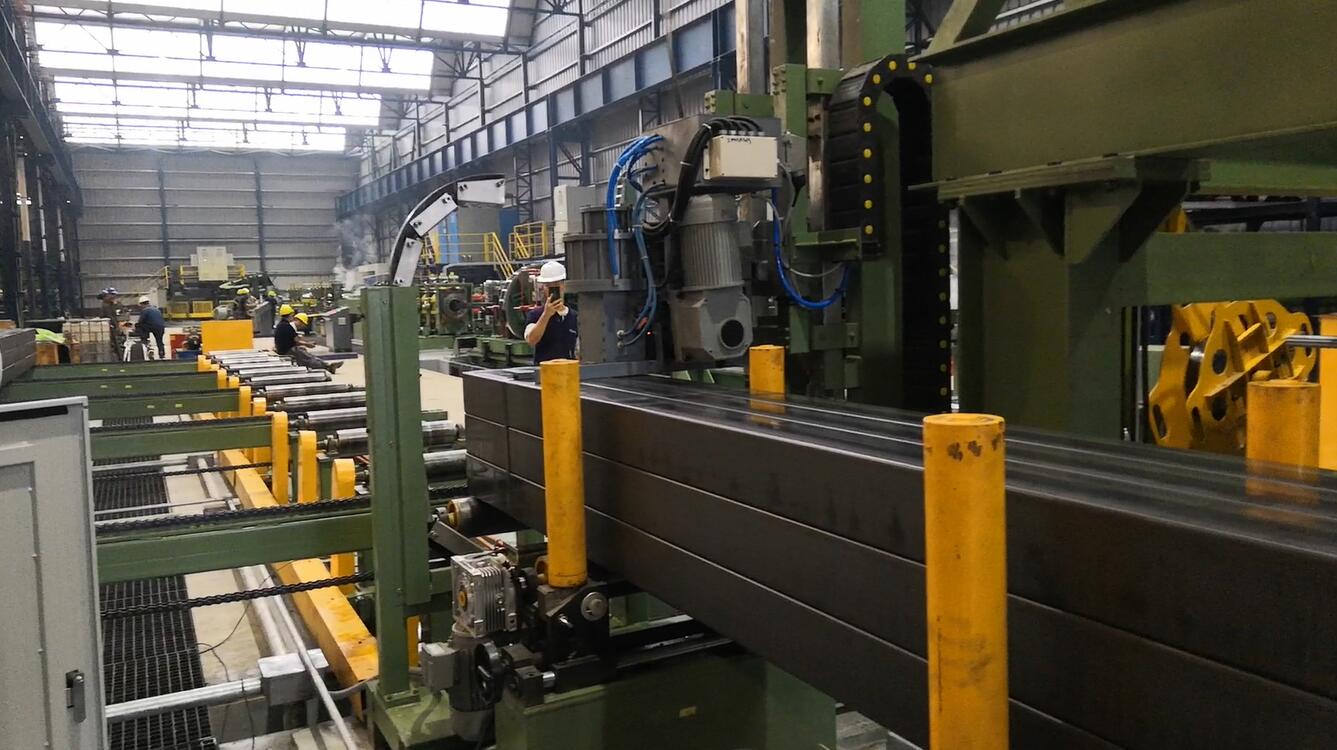
I have walked through countless factories and seen this exact bottleneck time and time again. My name is Randal Liu, and I founded FHOPEPACK because I believe that smart automation is the key to unlocking a factory’s true potential for safety and efficiency. This isn’t about replacing people; it’s about elevating them from dangerous, repetitive tasks to skilled operator roles. An automated pipe bundling line is one of the most effective investments you can make to solve this common problem. Let’s break down how this technology works and the profound impact it can have on your operation.
How Does an Automatic Bundling Line Work, Step-by-Step?
You’re watching your team manually build a bundle, and it seems chaotic. It’s hard to imagine how a machine can replicate that judgment and force in a controlled, repeatable way. How does a pile of loose pipes get transformed into a perfectly tight, strapped, hexagonal bundle without human hands touching it?
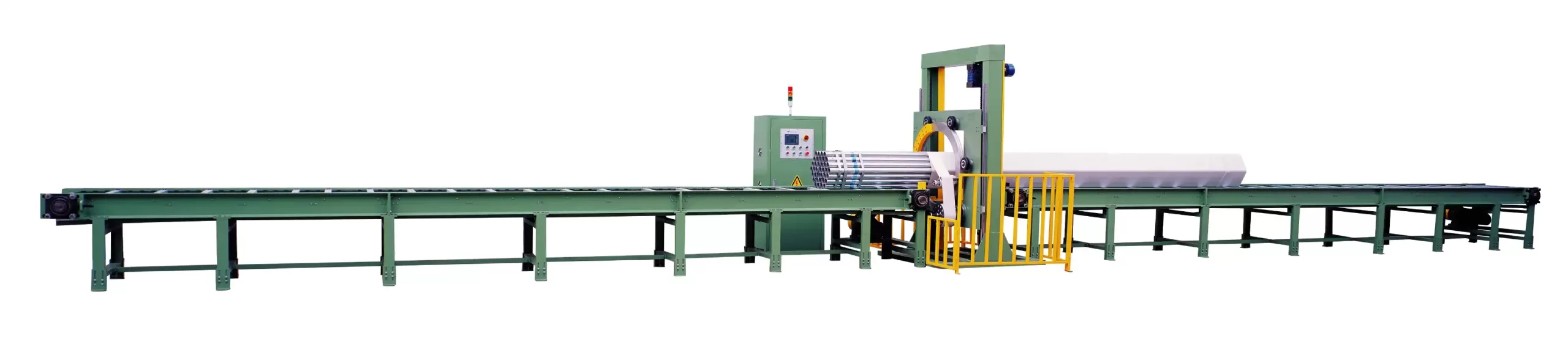
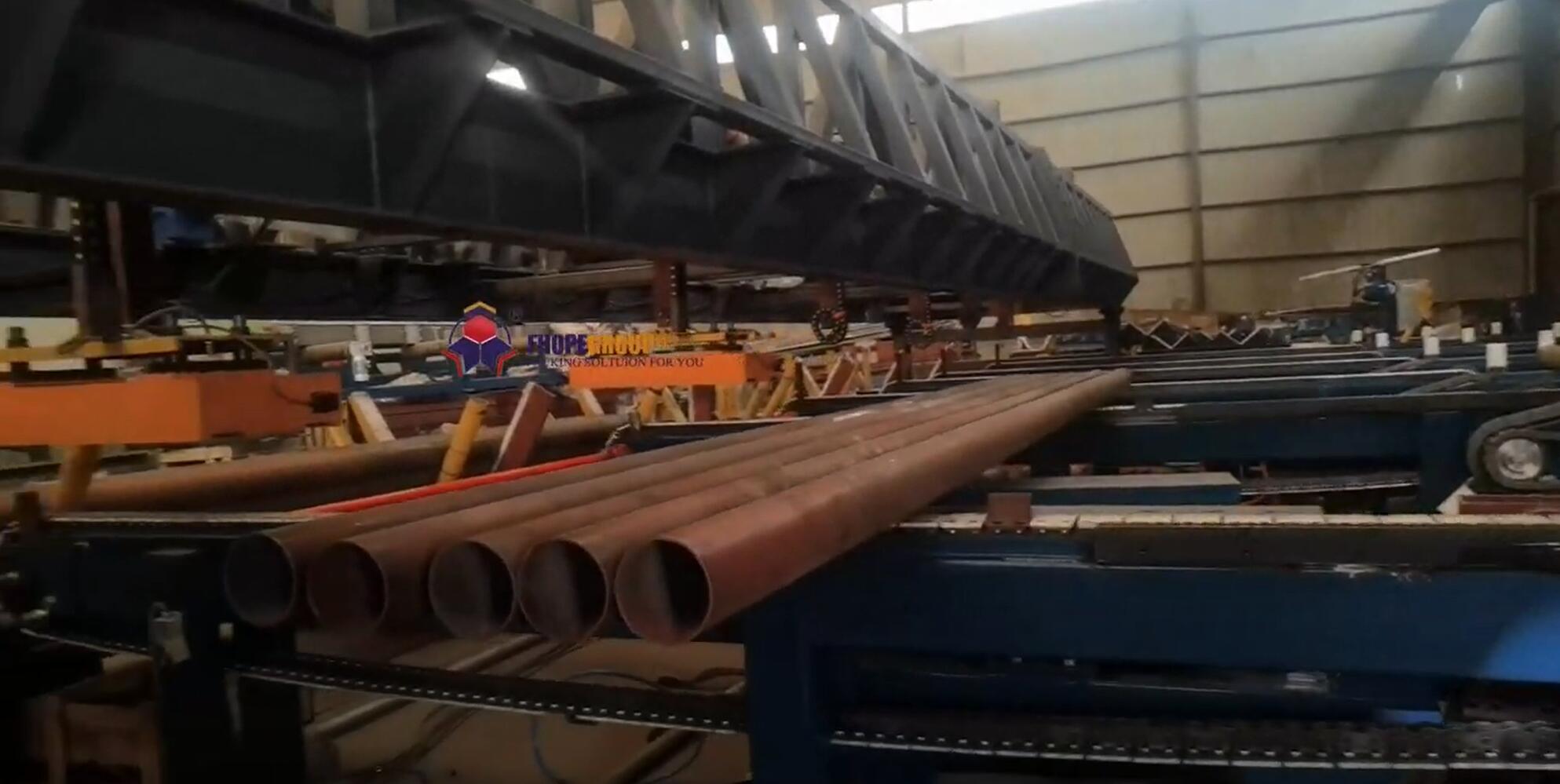
An automatic bundling line works as a synchronized, multi-stage conveyor system. First, it counts the individual pipes and arranges them layer by layer. Next, a set of forming arms or forks gathers the layers and shapes them into a hexagonal bundle. This bundle is then transferred to a strapping station where integrated heads automatically apply, tension, and seal the straps. The entire sequence is controlled by a PLC, ensuring a perfect bundle is created every time.
Dive Deeper: From Loose Pipes to a Perfect Bundle
I’ve always been fascinated by the precise choreography of these machines. It’s a perfect example of how mechanical and electronic systems can work together to create order out of chaos. Let’s walk through the process as if we were standing on the factory floor.
Stage 1: Infeed, Counting, and Layer Forming
It all starts with feeding the pipes into the system.
- Infeed: Pipes come from your production line onto a set of powered rollers or a chain conveyor. They are fed one by one onto the start of the bundling line.
- Counting: As each pipe moves forward, it passes through a sensor (often a laser or proximity sensor) that counts it. The PLC knows exactly how many pipes are needed for the specific bundle size you have selected on the HMI screen.
- Layer Forming: Once the correct number of pipes for the first layer has been counted, a stop engages, and a pusher moves that layer sideways off the main conveyor and into a collection area. This process repeats, creating neat layers of pipes, one on top of the other, like stacking pencils.
Stage 2: Hexagonal Bundle Formation
This is where the bundle takes its shape.
- Collection: The stacked layers sit in a pre-forming station.
- Shaping: A set of heavy-duty steel “forks” or forming jaws, controlled by the PLC, comes in from the sides. They press the layers of pipe together, forcing them into the tight, interlocking hexagonal shape. This mechanical action is powerful and precise, creating a much tighter bundle than is possible by hand.
Stage 3: Transfer and Strapping
Once the bundle is formed, it needs to be secured.
- Transfer: The newly formed bundle is pushed or conveyed forward from the forming station into the strapping station.
- Strapping: This station is equipped with one or more automatic strapping heads (often for steel or PET strapping). These heads move into position along the length of the bundle. In a completely automated sequence, the head will:
- Feed the strap around the bundle.
- Pull the strap to a precise, pre-set tension.
- Seal the strap (usually with a mechanical notch for steel or a friction weld for PET).
- Cut the strap. This process is repeated at several points along the bundle (e.g., 2, 3, or 4 straps) simultaneously or in sequence.
Stage 4: Outfeed
The final step is to clear the machine for the next cycle. The finished, tightly strapped bundle is ejected from the strapping station onto an exit conveyor or collection table, ready for a forklift to take it to storage or shipping.
| Process Stage | Key Action | Primary Benefit |
|---|---|---|
| Infeed & Counting | Pipes are counted by sensors and arranged into layers. | Ensures the correct number of pipes in every bundle, eliminating errors. |
| Bundle Formation | Mechanical forks press the layers into a hexagonal shape. | Creates a tight, stable, and perfectly shaped bundle every time. |
| Strapping | Automatic strapping heads apply, tension, and seal straps. | Guarantees consistent strap tension and secure, reliable packaging. |
| Outfeed | The completed bundle is moved out of the machine. | Clears the line quickly to begin the next cycle, maximizing throughput. |
What Makes a Hexagonal Bundle Superior for Shipping and Storage?
You might wonder why these machines go to the trouble of forming a hexagonal bundle. Your team might be making square or just round bundles now. Is the hexagonal shape really that important? The answer is yes. It’s not just for looks; it’s a deliberate engineering choice that provides huge advantages in stability, efficiency, and product protection.
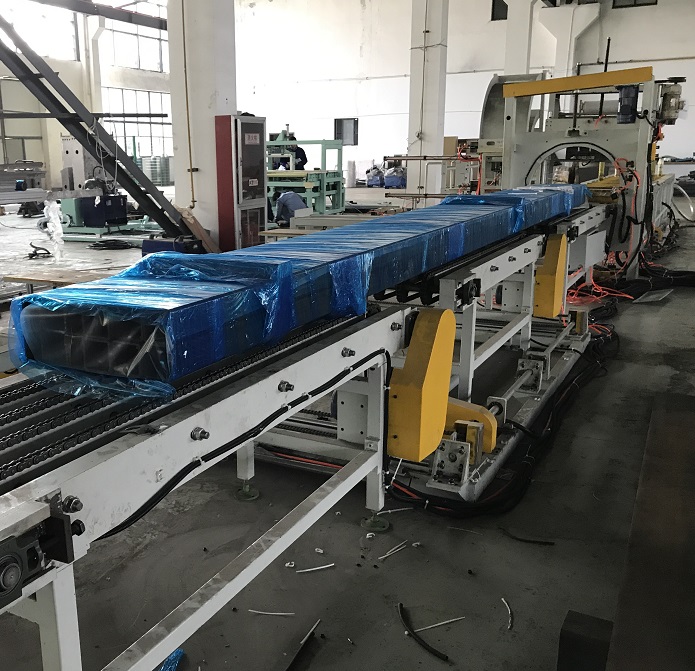
A hexagonal bundle is geometrically superior because it is the densest and most stable way to pack cylindrical objects. This natural interlocking shape prevents individual pipes from shifting, minimizes wasted space, and creates a flat, stable surface for stacking. This results in safer transport, more efficient use of warehouse and truck space, and better protection for the pipes themselves.
Dive Deeper: The Simple Geometry of Profitability
When I consult with clients, I often explain that the shape of their final product package has a direct impact on their bottom line. A well-formed bundle saves money at every step of the logistics chain.
Unmatched Stability and Safety
The biggest advantage is stability.
- No Rolling: A hexagonal bundle has flat surfaces on which to rest. Unlike a round bundle, it will not roll. This is a massive safety improvement in your warehouse and on a shipping truck.
- Interlocking Structure: Think of a honeycomb. The pipes in a hexagonal bundle nest perfectly within each other. This creates a tight, solid mass where each pipe helps support its neighbors. The bundle has incredible integrity and is resistant to being pulled apart or collapsing. A square bundle, by contrast, has unsecured pipes on its top layer that can easily be dislodged.
Maximum Spatial Efficiency
In logistics, space is money. Wasted space in a warehouse or on a truck is wasted profit.
- Highest Density: A hexagonal packing pattern is mathematically the most efficient way to fill a space with circles, achieving about 91% packing efficiency.
- No Voids: The tight packing minimizes the empty space (voids) within the bundle and between bundles when they are stacked. This means you can fit more pipes into the same dimensional footprint. This can lead to a significant reduction in the number of truckloads required to ship the same amount of product.
Superior Product Protection
The final package is your last chance to protect the quality of the product you’ve worked so hard to manufacture.
- Reduced Movement: Because the pipes are held so tightly, they cannot rattle or vibrate against each other during transit. This prevents the surface scratches, scuffs, and coating damage that are common with loosely packed bundles.
- Even Pressure: The strapping force is distributed evenly across the entire bundle, rather than concentrating on the corners as it might in a square bundle. This reduces the risk of denting or deforming the pipes.
Let’s look at a direct comparison:
| Feature | Hexagonal Bundle (Automated) | Square/Round Bundle (Manual) |
|---|---|---|
| Stability | Excellent. Flat surfaces for stacking, interlocking pipes. | Poor. Can roll or collapse easily. |
| Space Efficiency | Highest possible packing density. | Lower density with significant wasted space. |
| Product Protection | Excellent. Pipes are held tightly, preventing movement. | Fair. Pipes can shift, rattle, and get damaged. |
| Consistency | Perfect and identical every time. | Highly variable depending on the workers. |
| Safety | Very high. Stable for handling and storage. | Low. High risk of rolling or collapsing bundles. |
Investing in a machine that creates a hexagonal bundle is an investment in safety, efficiency, and delivering a higher-quality product to your customer.
How Does This System Drastically Improve Workplace Safety?
As a factory manager, the safety of your people is your ultimate responsibility. You see the risks involved in your current manual bundling process: the potential for strains from lifting, the danger of rolling pipes, the hazards of using manual strapping tools. You’re looking for a solution that doesn’t just reduce these risks, but eliminates them entirely.
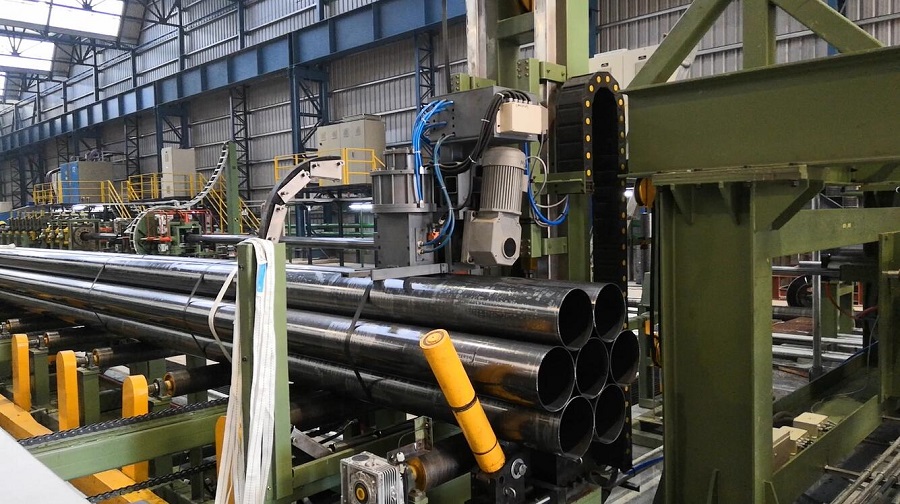
An automatic bundling and strapping line improves safety by engineering out the manual tasks that cause the most injuries. It completely removes the need for workers to lift, align, or handle heavy pipes, eliminating the primary cause of back and strain injuries. Furthermore, it replaces dangerous manual strapping tools with a fully enclosed, automated system, protecting operators from repetitive motion injuries, cuts, and pinch points.
Dive Deeper: A Systematic Approach to Eliminating Hazards
When I design a production line, my first thought is always, “How can we make this process inherently safe?” This means designing the risk out of the job itself. An automated pipe bundling line is a masterclass in this principle.
Eradicating Manual Material Handling Risks
This is the most significant safety impact.
- Lifting and Strains: Steel pipes are heavy and awkward. Manually manipulating them into a bundle is a textbook ergonomic hazard, leading to chronic back pain and acute injuries. The automated line handles 100% of this work.
- Rolling Pipes and Crush Injuries: A loose pipe can easily roll off a table or a poorly made bundle can collapse, leading to serious foot and leg injuries. The automated system contains the pipes within conveyors and forming stations at all times, making this impossible.
Eliminating Strapping-Related Dangers
The strapping process itself is a major source of injuries in many factories.
- Repetitive Strain: Using a manual tensioner all day long puts immense strain on an operator’s wrists, elbows, and shoulders. The machine does this work effortlessly.
- Tool-Related Accidents: Manual or pneumatic strapping tools can be dangerous. A steel strap can spring back and cause serious cuts. Air hoses for pneumatic tools create trip hazards. The automated strapping head is fully contained within the machine’s safety guarding, protecting the operator from all of these risks.
- Pinch Points: Manually feeding straps under and around a heavy bundle creates countless opportunities for fingers and hands to get crushed. The automated process has no manual intervention.
Let’s categorize these improvements:
| Hazard Type | Manual Bundling Risk | How Automation Eliminates It |
|---|---|---|
| Ergonomic | Back injuries, muscle strains from lifting/positioning pipes. | All pipe handling is done by the machine’s conveyors and arms. |
| Impact/Crush | Injuries from rolling pipes or collapsing bundles. | Pipes are always contained within the system. Bundles are secure. |
| Repetitive Motion | Carpal tunnel, tendonitis from using strapping tools. | The strapping head performs all repetitive tensioning and sealing. |
| Laceration/Pinch | Cuts from sharp strap edges, crushed fingers during strapping. | The strapping process is fully enclosed and automated. No hands near the bundle. |
By installing this system, you are making a direct, tangible investment in the health and well-being of your employees. This creates a safer culture and a more stable, experienced workforce.
What’s the Real ROI for a One-Operator Pipe Bundling Line?
You’re a practical manager, Michael. A new automated line sounds great, but you have to justify the capital expenditure. You need to show a clear, undeniable return on investment (ROI). You’re not interested in vague promises; you need to see the hard numbers that prove this machine will lower your costs and increase your profits.
The real ROI of an automatic pipe bundling line is incredibly strong, driven by massive reductions in direct labor costs, a significant increase in factory throughput by removing a key bottleneck, and improved quality that reduces rework. When you calculate the combined savings from labor, the profit from additional units shipped, and the reduction in waste, the payback period is often surprisingly short, making it one of the most profitable investments a pipe facility can make.
Dive Deeper: My Insight on Calculating Your True Return
I’ve helped dozens of factory managers build the business case for this exact type of project. The secret is to look beyond the obvious. The biggest financial gains often come from places you might not be measuring today.
The Direct, Obvious Savings: Labor
This is the easiest number to calculate.
- Manual Process: Let’s say you have a team of 3 people bundling and strapping. At a fully-loaded labor cost of $25/hour, that’s
3 workers * $25/hour = $75 per hour. - Automated Process: You now have 1 operator who oversees the line. Their skill level might be higher, so let’s say their cost is $30/hour.
- The Savings: You’ve gone from $75/hour to $30/hour, saving $45 every single hour the line is running. Over a single 2000-hour-per-year shift, that’s a saving of $90,000 per year in direct labor alone. And you can now reassign two skilled workers to more valuable, less dangerous roles.
The Game-Changing Gain: Throughput
This is where you make the real money. Your manual team is a bottleneck.
- Manual Speed: Your team might be able to produce 10 bundles per hour.
- Automated Speed: The machine can easily produce 30-40 bundles per hour, every hour, without breaks or fatigue.
- The Impact: Let’s say your factory’s profit is $50 per bundle. By increasing output by just 20 bundles per hour, you are generating
20 bundles * $50/bundle = $1,000 per hourin additional gross profit that was previously impossible to realize. Suddenly, the cost of the machine seems very small compared to the new revenue it unlocks.
The Hidden Savings: Quality and Waste
- Perfect Bundles: How much time and money do you lose from reworking loose bundles or dealing with customer complaints about packages that fell apart in transit? An automated line produces a perfect, tight bundle every time. This cost might be hard to measure, but it’s real, and reducing it adds directly to your profit.
- Strap Savings: An automated strapper uses the exact amount of strap required with the perfect tension, reducing the waste that comes from manual error.
Let’s put it all together:
| Financial Impact Area | Your Current Annual Cost (Manual) | Projected Annual Gain/Savings (Automated) |
|---|---|---|
| Direct Labor Costs | (3 Workers Rate Hours) = ~$150,000 | (1 Operator Rate Hours) = ~$60,000. SAVING: $90,000 |
| Throughput Bottleneck | Lost profit from inability to pack faster. | Additional Profit = (New Speed – Old Speed) Profit/Bundle Hours. GAIN: Potentially $1M+ |
| Rework/Quality Issues | Cost of materials and labor for fixing bad bundles. | This cost is reduced to near zero. SAVING: $5,000-$20,000+ |
| Total First-Year Impact | A combination of massive cost savings and significant new profit potential. |
When you present the investment this way, it’s not a cost. It’s a high-return investment vehicle that improves safety, quality, and most importantly, your factory’s total profitability.
Conclusion
Yes, you can automate your steel pipe bundling and strapping with one operator. This technology solves key issues of labor cost, safety, and production speed, making it a powerful strategic investment.








