
How Pallet Inverters Support Pharmaceutical Export Logistics vs. Other Pallet Solutions?
Pharmaceutical export logistics faces huge pressure. You need to move delicate products fast, safely, and globally. Mismatched pallet standards, like Euro versus American, create real bottlenecks. This problem leads to slow shipments, damaged goods, unhappy clients, and even big fines. Manual pallet changes are slow and risky. They waste time and money. There is a better way. I have seen how the right machine can change everything. It can make these challenges disappear.
Pallet inverters support pharmaceutical export logistics by providing a highly efficient, safe, and adaptable method for switching between different pallet types, such as Euro, American, or plastic pallets, significantly reducing manual labor, preventing product damage, and ensuring compliance with international shipping standards more effectively than manual methods or simpler pallet exchange systems.

I have spent many years in the packing machine industry. I have helped many businesses grow. I know the pain points in logistics. Let me share my insights on why pallet inverters are a game-changer. I will also compare them to other solutions. This will help you make a smart choice for your warehouse.
Why Manual Pallet Switching Fails in Pharmaceutical Export Logistics?
Imagine your pharmaceutical products ready to ship. Then, you hit a wall: the destination country needs a different pallet type. Your team starts to manually move every box. This process is not just slow; it is dangerous. Workers can get hurt. Delicate medicines can fall. Mistakes happen. This slows down your whole operation. It costs you money and time. There are clear reasons why manual pallet changing is simply not good enough for modern logistics. We need to look at these closely.
Manual pallet switching fails in pharmaceutical export logistics primarily due to its inefficiency, high safety risks, increased labor costs, and susceptibility to errors, which can lead to product damage, shipping delays, non-compliance with international standards, and substantial financial losses for sensitive goods.

In my career, I have seen warehouses with lines of workers manually transferring goods. This is especially true for companies dealing with many different pallet types. Think about a busy European distribution center. They might handle thousands of pallets daily. If each pallet takes several minutes to swap by hand, the delays add up fast. For pharmaceutical products, time is critical. Any delay can mean lost value or even compliance issues. Manual methods cannot keep up with high volume. They become a bottleneck.
High safety risks are a big concern. Moving heavy stacks of boxes by hand is risky. Workers can strain their backs. Products can shift or fall, causing injury. I remember one client who had several incidents in a year. One worker had a serious leg injury from a falling stack. This led to high medical bills and lost work time. These accidents are avoidable. They create a hostile work environment. They also increase insurance costs.
Good workers are hard to find. They are even harder to keep for physically demanding jobs. Manual pallet changing requires many hands. This drives up labor costs. Younger workers often do not want these jobs. This creates labor shortages. Companies managing regional distribution feel this pressure every day. They need to reduce reliance on manual labor.
Pharmaceuticals are valuable. They are often delicate. Manual handling increases the chance of dropping boxes. It increases the chance of misplacing items. Errors in loading can lead to damaged goods. This means financial loss. It also means reputation damage. Imagine a shipment of critical medicine arriving damaged. This is a nightmare scenario. A manual process cannot guarantee consistency. It cannot guarantee precision.
How Pallet Inverters Deliver Unmatched Efficiency and Safety?
Manual pallet changes are a major headache. We already discussed the risks and costs. So, what is the answer for industries like pharmaceuticals? You need a system that works smarter, not harder. You need a solution that protects your products and your people. Without it, you will keep losing money and time. This is where a pallet inverter steps in. It transforms these challenges into smooth operations. I have seen it happen many times.
Pallet inverters deliver unmatched efficiency by rapidly changing pallets with minimal human intervention, automating a labor-intensive process, and ensuring continuous material flow, while significantly enhancing safety by eliminating manual lifting and turning of heavy loads, thereby protecting both products and personnel in demanding logistics environments like pharmaceutical export.
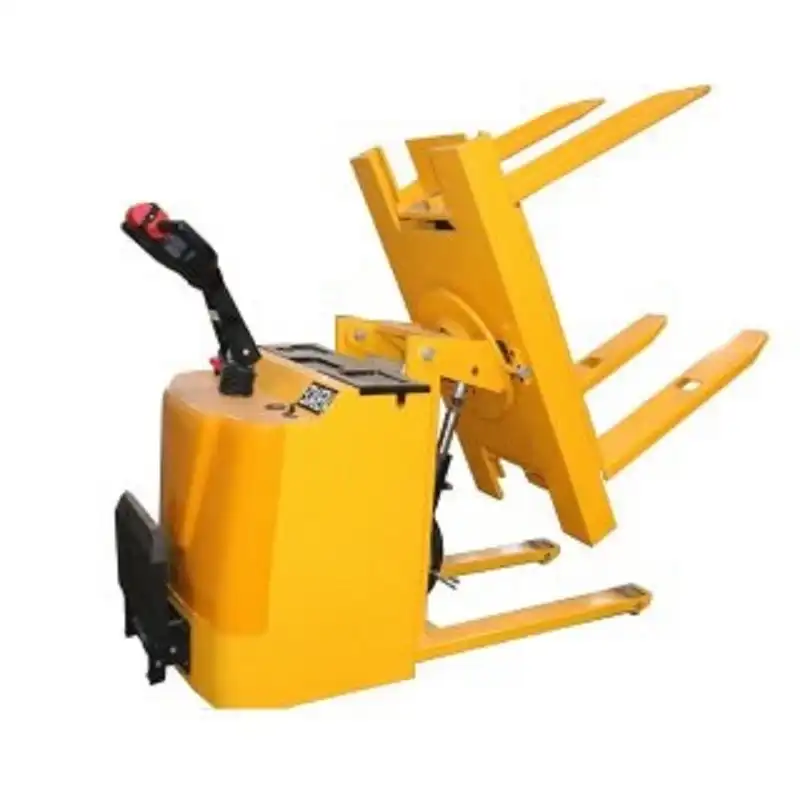
Pallet inverters work quickly. They can swap pallets in less than a minute. This is much faster than manual methods. The machine securely clamps the load. Then, it rotates or tips it to allow for the new pallet. This means constant flow in your warehouse. No more waiting. This speed is vital for time-sensitive goods. Think about vaccines or other critical medicines. My journey in the packing machine industry taught me that speed and reliability go hand-in-hand.
Safety is always my top priority. Pallet inverters remove workers from dangerous situations. They no longer need to manually lift or turn heavy stacks. This drastically reduces the risk of injuries. No more dropped goods. No more muscle strains. This also lowers insurance premiums. It creates a safer environment for everyone. It shows you care about your team. This is a huge benefit for any company. Carlos, in Spain, understands this. He has faced these issues head-on.
One of the biggest challenges for many exporters is different pallet standards. European warehouses use Euro pallets. American ones use different sizes. Plastic pallets are also common. A good pallet inverter handles all these. It can switch between them easily. This adaptability means you only need one machine. It handles all your export needs. This makes your supply chain much smoother. It avoids compliance headaches.
Because the machine handles the load gently and securely, product damage becomes rare. Pharma products are often fragile. They are expensive. They must arrive in perfect condition. An inverter ensures this. It minimizes contact. It uses controlled movements. This protection saves money. It protects your brand reputation. It ensures customers receive exactly what they expect. This is a peace of mind worth investing in.
Pallet Inverters vs. Other Pallet Handling Systems: What is the Real Difference?
You know you need a better way to handle pallets. But the market has many options. You might see terms like “pallet changers,” “pallet transfer systems,” or “pallet dispensers.” How do you choose? Picking the wrong system can lead to new problems. It might not solve your core issues. It could be too slow, too rigid, or still rely too much on manual input. This means wasted investment. I want to clarify the real differences. This will help you see why pallet inverters often stand out. They offer specific advantages for demanding environments.
The real difference between pallet inverters and other pallet handling systems lies in their core functionality: inverters offer a secure, automated solution for complete 180-degree load inversion or 90-degree tilting, enabling full pallet exchange without disturbing the product stack, a capability often unmatched by simpler pallet changers or transfer systems that might require more manual steps or only handle specific types of pallet transfers.
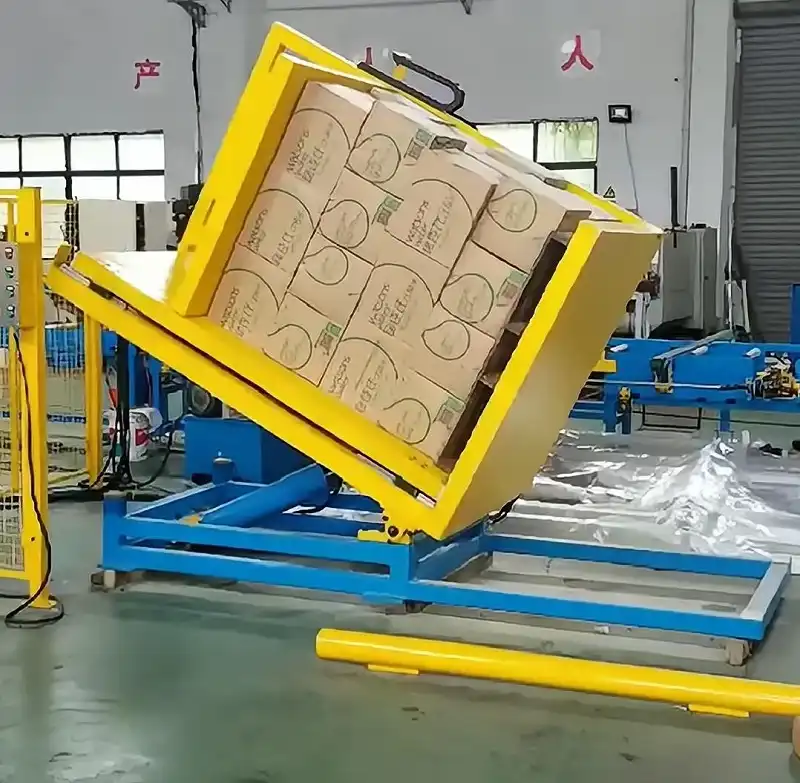
A pallet inverter is a specialized machine. It safely clamps a load. Then, it rotates the entire load, typically 90 or 180 degrees. This allows you to remove the old pallet. You can then place a new, different pallet underneath. The product stack stays intact. This is key for delicate items like pharmaceuticals. It is a complete solution for pallet exchange. It is built for efficiency and safety.
Some simpler “pallet changers” might just lift the load slightly. They let you slide a new pallet underneath. This works for some goods. But it often requires more manual handling. It might not handle very heavy or unstable loads as well. It might not be able to do a full 180-degree rotation. This limits its flexibility. It cannot always swap from a broken wooden pallet to a plastic export pallet easily. My experience shows that businesses need more than just a lift. They need a full, secure swap.
Pallet dispensers simply stack or unstack empty pallets. They do not handle loaded pallets at all. They are useful for managing empty pallets. But they do not help with the core problem of switching a loaded pallet for a different type. They are a different tool for a different job. They are not a replacement for an inverter.
Here are the key advantages of inverters:
| Feature | Pallet Inverter | Simple Pallet Changer | Pallet Dispenser |
|---|---|---|---|
| Functionality | Full load rotation (90/180 deg) for pallet swap | Lifts load slightly for pallet slide/swap | Stacks/unstacks empty pallets |
| Load Handling | Securely clamps entire load, keeps stack stable | May require more manual adjustment, less secure | Does not handle loaded pallets |
| Safety | High, minimizes human interaction with heavy loads | Medium, still some manual steps | N/A for loaded pallets |
| Versatility | Handles diverse pallet types (Euro, American, plastic) | Limited, often for same-size swaps | Only for empty pallet management |
| Automation Level | High, can be fully integrated into lines | Moderate, often semi-automatic | Low, for specific empty pallet tasks |
| Application | Export logistics, hygienic swaps, damaged pallet swap | Basic internal pallet swaps, lighter loads | Organizing empty pallets in a warehouse |
This table clearly shows the inverter’s strength. It is built for complex, high-stakes operations. It offers a level of control and safety other systems cannot match.
My Insights: Choosing the Right Pallet Solution for Your Business?
You have seen the power of pallet inverters. You also know their advantages over other systems. But how do you decide what is truly right for your specific operation? A wrong choice costs more than money. It costs time, efficiency, and can even compromise safety. You need a partner, not just a seller. From my years in this industry, I have learned what truly matters. I can share how to make an informed decision. This will help you find a long-term solution.
Choosing the right pallet solution means carefully evaluating your specific operational needs, including pallet diversity, required throughput, safety concerns, and potential for integration, while prioritizing a supplier that acts as a true partner, offering tailored solutions, comprehensive support, and a deep understanding of your unique logistical challenges, rather than just selling a machine.
Before anything else, look at your warehouse. How many different pallet types do you use? How many pallets do you switch daily? Are your products fragile? Do you need to meet strict hygiene standards, like in pharmaceutical or food processing? For a food and beverage group, hygiene and speed are key. For pharmaceutical exports, compliance and damage prevention are paramount. I always tell my clients: “Know your numbers. Know your challenges.” This clear picture guides your decision.
A machine that breaks down costs you dearly. It stops your whole operation. Choose robust equipment. It must run reliably, day after day. It must also adapt to various pallet sizes. This is crucial for international trade. A system that can handle Euro, American, and plastic pallets seamlessly offers huge flexibility. This prevents future bottlenecks. It ensures your investment pays off for years.
Your team’s safety is non-negotiable. Look for features that minimize human interaction with heavy loads. Easy-to-use controls are important. A safe machine protects your workers. It also reduces your company’s liability. Happy, safe workers are more productive workers. This is a lesson I learned early in my career. Creating a better workplace environment has many benefits.
This is perhaps the most important point. Many companies sell machines. FHOPEPACK, where I work, aims to be different. We want to be your partner. This means understanding your pain points. It means offering solutions that fit your exact needs. It means support after the sale. Can they customize a system for you? Do they offer good after-sales service? Do they understand export logistics? For any manager facing these challenges, a long-term partner is essential. Someone who truly understands their needs for automation and efficiency. Someone who can help his business grow. This is what I strive to provide every day.
Conclusion
Pallet inverters are vital for efficient, safe, and compliant pharmaceutical export logistics. They excel over manual methods and simpler systems. Choose a reliable partner to transform your pallet handling.








