
How does a pallet inverter reduce downtime from damaged pallets in logistics hubs?
Is your logistics hub constantly battling unexpected delays? Do damaged pallets feel like a never-ending problem, halting your operations and eating into your profits? I have seen this issue many times throughout my career, from when I was just an employee on the factory floor to running my own successful packing machine factory. It is frustrating to watch efficiency drop because of something as simple as a broken pallet. These small issues can create big headaches, affecting everything from shipping schedules to worker safety and customer satisfaction.
A pallet inverter significantly reduces downtime in logistics hubs by providing a fast, safe, and automated method to replace or transfer goods from damaged or incompatible pallets without manual handling, thereby eliminating the delays, labor costs, and safety risks associated with traditional, inefficient pallet exchange processes.
You understand the importance of keeping things moving smoothly in a warehouse. Every second of downtime means lost money and potential missed deadlines. This article will show you how a simple yet powerful machine, the pallet inverter, can become your best ally in the fight against damaged pallets and operational inefficiencies. Join me as we explore how this solution can transform your logistics operations.
Why do damaged pallets constantly disrupt your logistics hub?
Do you ever feel like damaged pallets are sabotaging your daily operations? One broken plank or a wobbly stack can set off a chain reaction of problems, grinding your carefully planned logistics to a halt. The costs add up quickly, from idle forklifts to frustrated workers. It is not just about the pallet itself; it is about the entire process slowing down.
Damaged pallets in logistics hubs disrupt operations by causing product damage, creating safety hazards, slowing down material flow, increasing labor costs for manual intervention, and leading to compliance issues or penalties with different transport standards.

From my experience in the packing machine industry, I have seen first-hand how these seemingly small issues can cripple a large operation. Think about Carlos, a logistics manager I know in Spain. His warehouse handles thousands of pallets daily. He told me how a damaged pallet, meant for international export, once caused a several-hour delay. This delay led to contract penalties and a very unhappy client. He shared how common it is for his team to deal with a mix of Euro and American standard pallets. When a Euro pallet breaks, or when goods need transfer to an American standard for shipping, his team faces a major challenge. They often had to manually restack goods, a process that was slow, labor-intensive, and dangerous. These experiences highlight why dealing with damaged or incompatible pallets is a critical concern for any logistics hub aiming for high efficiency and safety.
1. Increased Operational Delays
- When a pallet breaks, workers must stop to deal with it. This stops the flow of goods.
- Products often need manual restacking onto a new pallet. This takes time away from other tasks.
- Forklifts might sit idle, waiting for the pallet issue to be resolved. This means wasted machine time.
2. Higher Labor Costs and Safety Risks
- Manually moving goods from a damaged pallet is labor-intensive. It requires more staff.
- Workers risk injury from falling products or improper lifting. This can lead to medical costs and lost workdays.
- Flipping pallets by hand is dangerous. Accidents like goods tipping over are common.
3. Product Damage and Waste
- Moving items from a damaged pallet can cause damage to the products themselves.
- Some goods cannot be easily restacked, leading to waste.
- Damaged goods mean financial losses and potential customer complaints.
4. Compliance and Customer Satisfaction Issues
- Different countries use different pallet standards. For example, Euro pallets and American standard pallets.
- If goods are on the wrong type of pallet, they cannot be shipped. This requires a pallet change.
- Delays caused by pallet issues can mean missed delivery times. This makes customers unhappy and can lead to penalties.
What is a pallet inverter, and how does it make pallet handling safer?
Have you ever wished there was an easier, safer way to switch pallets? The idea of manually handling heavy goods or awkwardly turning a pallet by hand fills most logistics professionals with dread. It is not just inefficient; it is a major safety concern. This is where a pallet inverter comes into play.
A pallet inverter is a mechanical device that grips and rotates loads, allowing for the easy exchange of damaged, unhygienic, or incompatible pallets, significantly improving safety by eliminating the need for manual lifting or hazardous tilting of goods.

From my journey in the packing machine industry, I have always focused on solutions that improve both efficiency and safety. Pallet inverters are a perfect example of this philosophy. They come in various forms, but their core function remains the same: to grip a stack of goods, lift them, and rotate them, allowing for a swift pallet change. This process keeps products stable and secure throughout. It means no more risking back injuries or dropping valuable inventory. For businesses like Carlos’s, where high volumes and diverse pallet types are common, an inverter is not just a convenience; it is a necessity for keeping operations flowing and workers safe.
1. How a Pallet Inverter Works
- Secure Gripping: The machine firmly clamps the load (goods on the pallet). This ensures stability.
- Controlled Rotation: It then slowly rotates the entire load, often 90 or 180 degrees. Some models can do a full 360-degree turn.
- Easy Pallet Exchange: Once rotated, the old pallet becomes accessible. Workers can easily remove it and slide a new one underneath.
2. Types of Pallet Inverters
- Freestanding Inverters: These are stationary units. Forklifts load and unload them. They are good for high-volume operations.
- Mobile Inverters: These units can move within the warehouse. They offer flexibility for different areas.
- 90-Degree Tilters: These are simple machines. They tilt the load 90 degrees. This helps access the pallet.
- 180-Degree Inverters: These completely invert the load. They are versatile for many applications.
3. Direct Safety Benefits
- Eliminates Manual Handling: Workers do not need to lift heavy products. This prevents back strains and other injuries.
- Reduces Risk of Falling Goods: The machine holds the load securely. This stops products from tipping or falling during the swap.
- Safer Work Environment: Less manual work means fewer people near heavy machinery. This lowers accident rates.
- Ergonomic Improvement: It removes awkward bending and twisting from the job. This makes work easier on the body.
How does a pallet inverter directly cut down operational downtime?
Are you tired of seeing your production lines stop because of pallet issues? Downtime is a silent thief that steals profits and slows down your entire supply chain. When a damaged pallet or a non-compliant pallet shows up, your team often faces a scramble. This leads to costly pauses. But what if there was a simple way to keep things moving?
A pallet inverter directly cuts down operational downtime by automating the process of pallet exchange, rapidly replacing damaged or incompatible pallets without interrupting the flow of goods or requiring extensive manual labor, thus ensuring continuous material handling and faster throughput in logistics hubs.
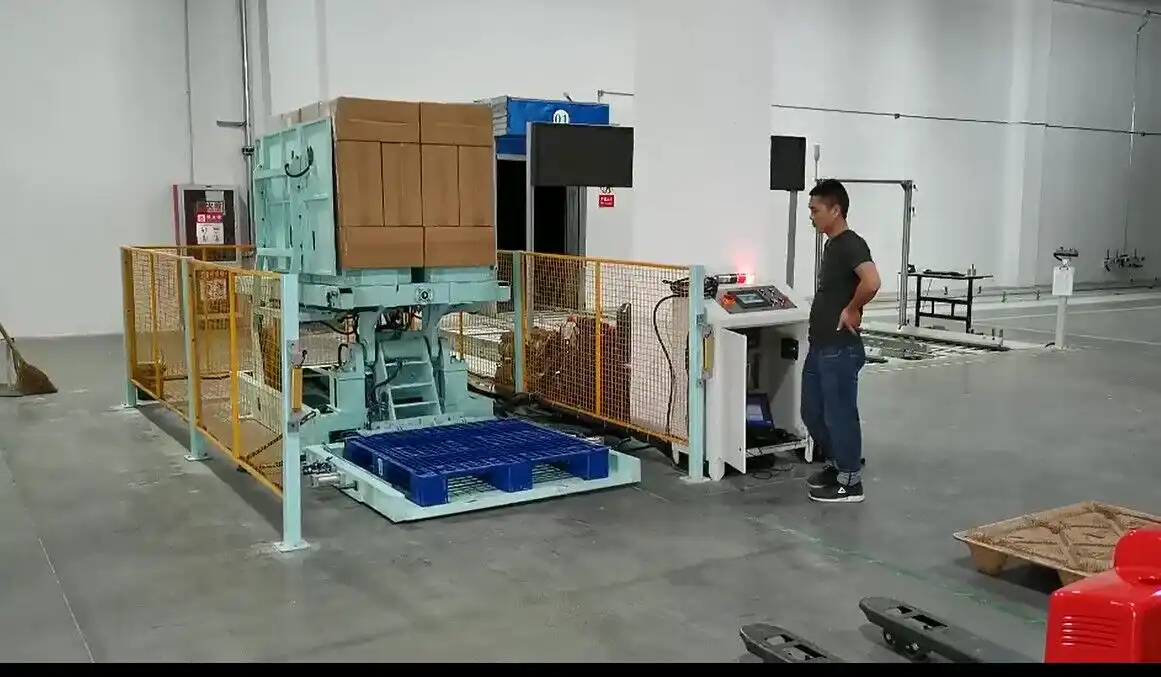
During my years building FHOPEPACK, I learned that true efficiency comes from streamlining processes. I remember a client who was struggling with their export department. They shipped goods to many countries, each with its own pallet standards. Their manual pallet transfer process caused significant bottlenecks. Introducing a pallet inverter changed their game. They went from hours of manual labor for pallet changes to just minutes. This allowed them to meet tighter shipping deadlines and significantly reduce their overall operational costs. This kind of transformation is what a good pallet inverter offers: a direct route to less downtime and more productivity.
1. Faster Pallet Exchange Speeds
- Automated Process: The machine handles the entire swap. This is much quicker than human effort.
- Reduced Waiting Time: Goods spend less time waiting for a pallet change. This keeps the line moving.
- High Throughput: More pallets can be processed in a shorter time. This increases overall warehouse efficiency.
2. Less Reliance on Manual Labor
- Reduced Workforce Needs: Fewer workers are needed for pallet handling tasks. This frees up staff for other jobs.
- Consistent Performance: Machines do not get tired or make mistakes. This means predictable and steady operation.
- Addresses Labor Shortages: In an industry facing labor scarcity, automation like this is crucial. It eases pressure on hiring.
3. Improved Material Flow and Storage
- Seamless Integration: Pallet inverters fit into existing warehouse layouts. They do not disrupt the flow.
- Optimized Space Usage: They allow for better use of different pallet types. This means more efficient storage.
- No Bottlenecks: Pallet changes happen quickly. This prevents goods from piling up at one point.
4. Enhanced Compliance and Quality Control
- Correct Pallet Selection: Easily switch to hygiene-approved, export-compliant, or specific in-house pallets.
- Reduced Product Damage: Goods stay secure during the change. This lowers the chance of damage.
- Maintained Product Integrity: For food or pharmaceutical goods, avoiding manual handling keeps products clean and safe.
What should you look for when choosing a pallet inverter for your warehouse?
Are you considering investing in a pallet inverter? Making the right choice is crucial. A poor selection can lead to ongoing problems, while the right machine can transform your operations. It is not just about buying a piece of equipment; it is about finding a solution that fits your specific needs and challenges.
When choosing a pallet inverter for your warehouse, you should look for robust construction, adaptability to various pallet sizes and types, ease of integration with existing systems, advanced safety features, and strong after-sales support from a trusted long-term partner, ensuring reliability and maximum return on investment.
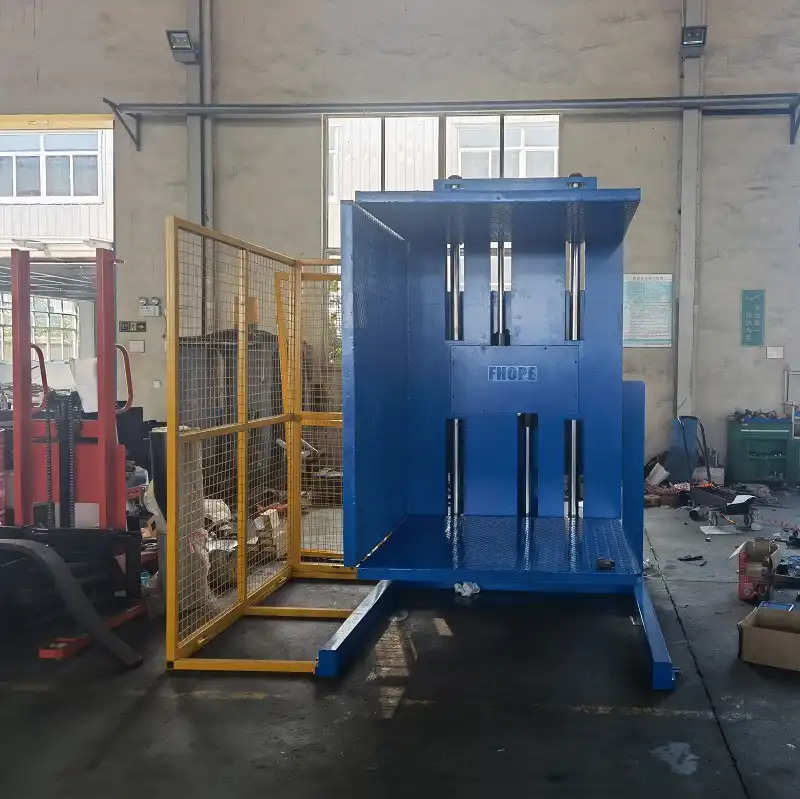
Through my work at FHOPEPACK, I have helped many clients navigate this decision. I always tell them to think beyond the initial purchase price. For example, Carlos mentioned his need for a system that can handle both Euro and American pallets. He also emphasized the importance of a supplier who truly understands warehouse automation and offers excellent after-sales service. This is vital. A machine is only as good as its reliability and the support behind it. You need a partner who ensures your investment continues to deliver value, not just someone who sells you a box. This means looking at the total value, not just the upfront cost.
1. Reliability and Build Quality
- Heavy-Duty Construction: Look for sturdy materials. This ensures the machine can withstand constant use in a busy logistics hub.
- Proven Track Record: Choose brands known for durable equipment. Read reviews and ask for references.
- Minimal Maintenance: A good machine needs little regular upkeep. This saves time and money.
2. Adaptability to Pallet Specifications
- Multi-Pallet Compatibility: The inverter must handle your specific pallet types. This includes Euro, American, plastic, and wooden pallets.
- Load Size and Weight Range: Make sure it can handle the maximum weight and dimensions of your products.
- Adjustable Clamping Pressure: This protects delicate goods. It also ensures a firm grip on heavy items.
3. Integration and Ease of Use
- Simple Controls: Operators should find it easy to learn and use. This reduces training time.
- Automation Levels: Decide between semi-automatic and fully automatic models. This depends on your volume and budget.
- Seamless Workflow: The inverter should fit smoothly into your existing material handling process.
4. Safety Features and Compliance
- Emergency Stop Buttons: These are crucial for quick shutdowns in emergencies.
- Safety Guards and Sensors: These protect workers from moving parts.
- Compliance with Standards: Ensure the machine meets relevant industry safety regulations.
5. Supplier Support and Partnership
- Installation and Training: The supplier should provide full support for setting up and teaching your staff.
- Warranty and Spare Parts: A good warranty gives peace of mind. Easy access to spare parts is also important.
- Responsive After-Sales Service: You need a partner who can quickly help if problems arise. This means quick fixes and less downtime.
Conclusion
Damaged pallets are a significant source of downtime in logistics hubs, causing delays, safety risks, and higher costs. Investing in a pallet inverter offers a robust solution, automating pallet exchanges to enhance safety, improve efficiency, and ensure continuous operations. Choosing the right machine and a reliable partner is key to unlocking these benefits.








