
How pallet inverter in USA reduces labor costs in logistics and distribution?
Are you a logistics manager in the USA facing constant pressure? Do you worry about rising labor costs and the struggle to find enough workers? The truth is, manual pallet handling drains your budget and slows down your operations. It can even lead to serious safety issues. This is a challenge many businesses across the United States are grappling with every day.
Pallet inverters in the USA reduce labor costs by automating the process of switching goods from one pallet type to another. They replace multiple manual steps, heavy lifting, and the need for specialized labor. This automation frees up workers for more complex tasks, minimizes the risk of injury, and speeds up throughput, directly lowering overall operational expenses in logistics and distribution centers. %[Pallet Inverter Reducing Labor Costs]( “Pallet Inverter Reducing Labor Costs”)
I have spent years in the packing machine industry. I have seen firsthand how technology transforms warehousing. If you are serious about optimizing your logistics, understanding the role of pallet inverters is crucial. Let’s look deeper into how these machines offer a real solution to your biggest labor challenges.
Why is manual pallet handling a growing problem for US logistics?
Imagine your warehouse floor. Forklifts move around. Workers struggle with heavy loads. Are these workers moving products from a damaged pallet to a new one? Or are they switching from an inbound shipping pallet to a clean in-house pallet? This manual work is a significant bottleneck. It presents risks. It is also becoming more expensive.
Manual pallet handling in US logistics is a growing problem due to increasing labor costs, a shrinking workforce willing to do strenuous physical jobs, and the inherent safety risks involved. This leads to higher operational expenses, slower processing times, and potential for worker injuries, all of which impact profitability and efficiency.

When I started my journey in the packing machine industry, I saw many manual processes. People worked hard. But these methods were slow. They also came with real dangers. Today, these problems are even bigger for US logistics. The cost of labor keeps going up. Finding staff for physically demanding roles is tough. Young people often do not want jobs that involve heavy lifting and repetitive tasks. This creates a workforce shortage in key areas of warehousing. Companies then must pay more to attract and keep workers. This directly impacts their bottom line.
Think about the time it takes to manually transfer goods. Workers use hand jacks or even manually move items. This is not efficient. It can take several minutes for each pallet. If your warehouse handles thousands of pallets daily, these minutes add up quickly. This slows down your entire supply chain. It prevents you from meeting tight delivery schedules.
Safety is another major concern. Manually flipping or transferring heavy goods carries high risks. Workers can strain their backs. They can drop items. Accidents happen. I recall instances where workers got injured trying to shift heavy coils. These incidents lead to medical costs, lost workdays, and higher insurance premiums. They also create a negative work environment. No manager wants their team to get hurt. Ensuring safety is not just about compliance. It is about protecting your people and your business from hidden costs.
Furthermore, the demand for quick delivery from e-commerce and retail customers is higher than ever. Manual processes simply cannot keep up. They are slow. They are prone to human error. This can lead to wrong orders or damaged goods. This impacts customer satisfaction. It can even lead to contract penalties. Businesses need solutions that are fast, reliable, and safe. They need ways to handle diverse pallet types quickly, whether it is Euro pallets or US pallets. This is where automation becomes not just an option, but a necessity.
How do pallet inverters directly cut down on labor in US warehouses?
You are looking for ways to reduce expenses. You want to keep your operations smooth. One of the clearest ways to save money is to reduce reliance on manual labor. Pallet inverters offer a direct solution. They take over tasks that used to require multiple workers. This makes your team more productive.
Pallet inverters directly cut down on labor in US warehouses by automating the entire pallet transfer process, replacing tasks like manual lifting, flipping, and product rearrangement. This means fewer employees are needed to manage pallet changes, allowing staff to focus on value-added activities while reducing the physical strain and time associated with traditional methods.
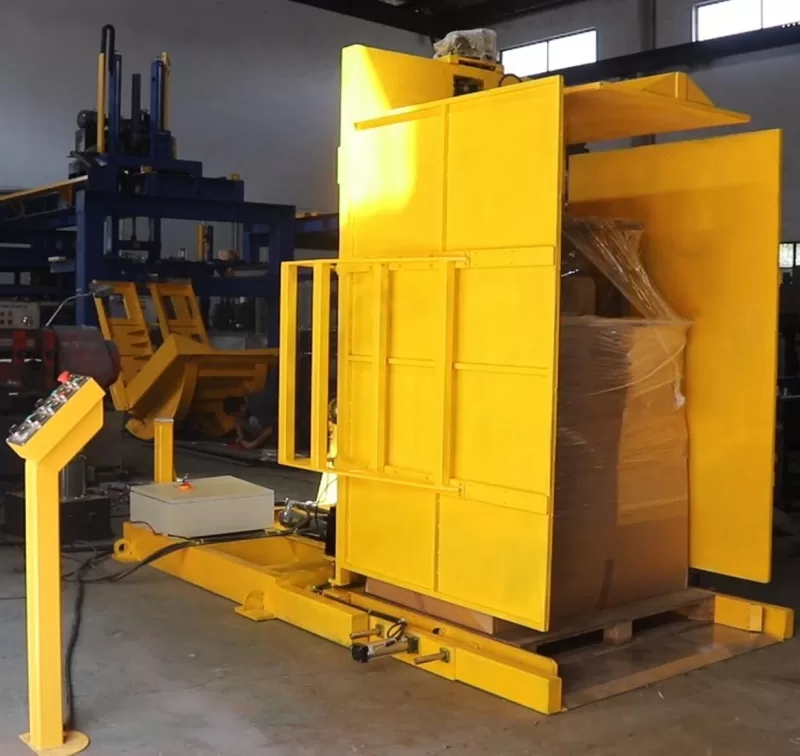
I have seen many factories implement automated solutions. The impact on labor costs is always significant. Pallet inverters are a prime example. They handle the heavy lifting and precise movements that once required several people. Consider a typical scenario: you need to switch products from a wooden pallet to a plastic one for hygiene reasons. Or you need to replace a broken pallet. Without an inverter, this involves:
- Multiple workers: At least two, often three, people are needed to manually move goods.
- Specialized equipment: Hand jacks or forklifts are used, but the actual transfer is still manual.
- Time-consuming process: Each transfer takes a considerable amount of time. It might be 5-10 minutes per pallet, depending on the product.
With a pallet inverter, this changes completely. A single operator, often a forklift driver, places the loaded pallet into the machine. The machine then performs the entire transfer. It clamps the load securely. It either inverts it, transfers it, or pushes it onto a new pallet. This means:
- Reduced staff: Only one person is needed to operate the forklift and the machine. This frees up other workers. They can do other critical tasks.
- Faster cycles: The machine completes the transfer in a fraction of the time. This might be just 30-60 seconds. This significantly speeds up throughput.
- Less physical strain: Workers no longer perform strenuous lifting or flipping. This reduces fatigue and the risk of injury. This also makes the job more appealing.
My experience with clients shows that this direct labor reduction translates into real savings. For example, a company that previously assigned two workers full-time to pallet changing might now only need one part-time. Or they might reassign those workers to more valuable tasks. These tasks could be order picking, quality control, or inventory management. This optimization of human resources is key. It helps to overcome the labor shortage. It also makes your existing workforce more efficient. The initial investment in a pallet inverter pays for itself quickly. It pays through these measurable labor cost reductions. It also contributes to a safer and more productive work environment.
Beyond direct labor savings, how do pallet inverters boost overall operational efficiency and safety in the USA?
Reducing direct labor is a huge benefit. But pallet inverters do more than that. They improve the overall health of your warehouse. They make operations smoother. They create a safer environment. These factors might seem indirect. However, they lead to significant cost savings and better performance for US logistics companies.
Beyond direct labor savings, pallet inverters boost overall operational efficiency in the USA by accelerating throughput, reducing product damage, and improving space utilization. They enhance safety by minimizing human interaction with heavy loads, which drastically lowers the risk of workplace injuries, insurance claims, and associated liabilities for businesses.

When I help clients optimize their packing lines, I always look at the bigger picture. It is not just about one machine. It is about how that machine fits into the whole operation. Pallet inverters offer a ripple effect of benefits that go far beyond just cutting down on the number of hands needed.
-
Increased Throughput and Speed:
- Manual pallet changes are slow. They create bottlenecks. They hold up shipments. A pallet inverter works quickly. It processes pallets in seconds. This means products move faster through your warehouse. You can handle more volume in the same amount of time. This is critical for meeting strict delivery deadlines. It also supports higher sales volumes. For US distribution centers, especially those serving e-commerce, speed is everything. It directly impacts customer satisfaction and your competitive edge.
-
Enhanced Safety and Reduced Accidents:
- This is a point I always emphasize. Safety is paramount. Manual pallet handling is dangerous. It involves heavy lifting. It involves awkward movements. It can cause goods to fall. Workers get injured. These injuries lead to lost workdays. They lead to medical expenses. They lead to workers’ compensation claims. My own experience showed me the human and financial cost of unsafe practices. A pallet inverter removes humans from direct contact with heavy loads during the transfer. This dramatically reduces the risk of accidents. It lowers your insurance premiums. It creates a much safer work environment. This also improves employee morale.
-
Reduced Product Damage:
- When people manually transfer goods, mistakes happen. Products can fall. They can get scratched or crushed. This leads to costly damage. A pallet inverter holds the load securely. It performs the transfer smoothly. This minimizes product damage. Less damage means less waste. It means fewer returns. It means happier customers. This directly improves your profitability.
-
Improved Hygiene and Compliance:
- Many industries, like food and pharmaceuticals, need strict hygiene. They often require switching from wood pallets to clean plastic or aluminum pallets. Pallet inverters make this process fast and sanitary. This helps US businesses meet strict FDA or other regulatory requirements. It ensures product integrity. This is vital for maintaining brand reputation. It avoids costly fines.
-
Better Space Utilization:
- Sometimes you need to switch from one pallet size to another to optimize storage or shipping space. A pallet inverter makes this possible without extensive manual effort. This allows warehouses to organize products more efficiently. This can free up valuable floor space. This is a big advantage in high-rent areas across the USA.
These indirect benefits collectively result in a more efficient, safer, and cost-effective operation. They allow US logistics managers like Carlos to focus on strategic growth. They spend less time worrying about operational headaches.
What should US logistics managers consider when choosing a pallet inverter for long-term cost reduction?
Investing in new equipment is a big decision. You do not just want a machine. You want a solution that lasts. You need a partner who understands your challenges. For US logistics managers, choosing the right pallet inverter means looking beyond the sticker price. It means considering long-term value.
When choosing a pallet inverter for long-term cost reduction, US logistics managers must prioritize reliability, adaptability to diverse pallet types, integration capabilities, and robust after-sales support. These factors ensure the machine consistently delivers high performance, handles evolving operational needs, and receives timely maintenance, ultimately maximizing ROI and minimizing downtime costs.

My experience building and running a successful packing machine factory taught me many lessons. The most important one is this: good equipment is an investment, not an expense. When you select a pallet inverter for your US operation, think like a long-term planner. You are not just buying metal and motors. You are buying efficiency, safety, and peace of mind. Here are the key considerations:
-
Reliability and Durability:
- Your warehouse runs non-stop. Your equipment must do the same. Look for machines built with high-quality components. They need to handle continuous, heavy-duty use. Ask about the machine’s expected lifespan. Inquire about mean time between failures. A cheap machine that breaks down often will cost you more in the long run. It causes downtime. It means lost productivity. It means missed deadlines. Investing in a robust, well-built pallet inverter from the start ensures consistent operation. This directly contributes to long-term cost savings by avoiding costly repairs and operational interruptions.
-
Adaptability to Pallet Specifications:
- Many US businesses deal with international trade. This means handling different pallet sizes. You might need to switch from standard US pallets to Euro pallets. Or you might need to handle plastic pallets. Choose a pallet inverter that can easily adapt. Some models offer adjustable clamping pressures. Others have modular designs. This flexibility is crucial. It ensures your machine remains useful as your business needs change. It helps you avoid manual workarounds for unique pallet types. This ensures consistent efficiency across all your operations.
-
Integration with Existing Systems:
- Think about how the new pallet inverter will fit into your current workflow. Can it be integrated into your conveyor lines? Does it require extensive manual loading? A well-integrated system is more efficient. It requires less human intervention. Discuss this with potential suppliers. They should be able to offer solutions that complement your existing setup. Seamless integration reduces bottlenecks. It prevents new manual steps. This contributes to overall automation and cost reduction.
-
Safety Features:
- A reliable machine is a safe machine. Look for pallet inverters with advanced safety features. These include emergency stop buttons, safety guarding, and sensors. These features protect your workers. They also protect your products. Compliance with OSHA standards is non-negotiable in the USA. A machine with robust safety measures reduces the risk of accidents. It minimizes your liability. This safeguards your most valuable assets: your employees and your reputation.
-
After-Sales Support and Service:
- This is where a true partner stands out. What kind of warranty does the supplier offer? Do they have technicians available in the USA? Can they provide spare parts quickly? My journey taught me that good after-sales service is vital. It keeps your machines running smoothly. It minimizes downtime. A supplier who offers excellent support shows they care about your long-term success. They are not just selling a machine. They are providing a solution. This kind of partnership is essential for maximizing your return on investment.
Conclusion
Pallet inverters offer clear solutions for US logistics and distribution centers. They directly cut labor costs by automating manual tasks. They boost efficiency and significantly improve safety. Choosing the right pallet inverter is an investment in your company’s future. It ensures long-term cost reduction and operational excellence.








