
How Orbital Wrapping Machines Protect Laminated Boards in Saudi Furniture Plants?
Are you a factory manager in Saudi Arabia, perhaps overseeing a bustling furniture plant? Do you often worry about your valuable laminated boards getting damaged before they even reach the customer? This problem can cause big headaches, leading to lost money and unhappy clients. You are not alone if you face these issues. Many factories struggle with how to keep their products safe.
An orbital wrapping machine works by rotating a film carriage around a stationary or moving product. This creates a secure, all-around wrap. For laminated boards in Saudi furniture plants, this means strong protection. It stops dust, moisture, and impact damage. This method keeps the boards safe during handling, storage, and shipping. It ensures they arrive in perfect condition.
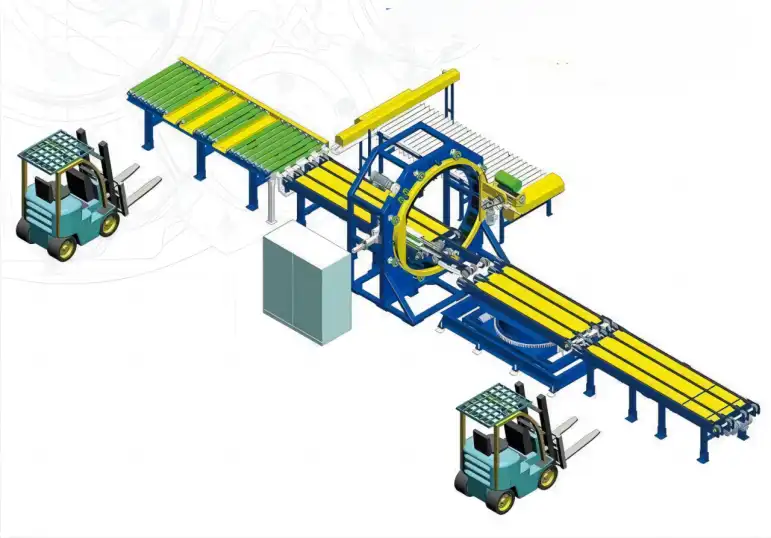
You are likely looking for real solutions, not just quick fixes. My goal here is to share my experience from years in the packing machine industry. I want to show you how a smart packaging choice can change your factory. Let us explore how modern technology can solve your biggest packaging problems.
Why Are Laminated Boards So Vulnerable in Transit?
Have you ever seen a perfectly good laminated board arrive at its destination with chipped edges or scratches? It feels like a waste. This kind of damage is a common problem for furniture manufacturers. These boards, while strong, are not invincible. They can easily get hurt when moved.
Laminated boards are vulnerable in transit because they are heavy, rigid, and often have exposed edges. Manual handling can lead to bumps and drops. Stacking them poorly causes pressure points. Lack of a tight, protective wrap leaves them open to dust, moisture, and friction damage from movement during transport. This makes them prone to defects.

When I first started in this business, I saw many products suffer similar fates. Think about steel coils or wire. Their edges also get damaged easily without proper wrapping. Laminated boards have similar issues. They need good protection. This is not just about a scratch. It impacts your reputation and your profit. Factories need to understand these weak points to find the best solutions. It is about more than just putting a cover on it. It is about understanding the journey the product takes.
The Hidden Costs of Board Damage
When a laminated board gets damaged, it does not just mean replacing one piece. It starts a chain of problems that costs your factory money and time. This damage can happen at different points. It might be when workers move the boards inside the factory. It might happen during loading onto trucks. Or it could be during the actual transport. Each damaged board means less profit. It also means unhappy customers.
- Direct Material Loss: This is the most obvious cost. You lose the value of the damaged board. If it is already cut or partly processed, you lose that value too. This adds up quickly over time.
- Rework and Replacement: You might need to send a new board. Or, you might have to spend time fixing the damaged one. Both options take away from your production schedule. They also use up more resources.
- Increased Labor Costs: Workers spend time sorting damaged boards. They also spend time repackaging or processing returns. This takes them away from productive tasks. Their wages still get paid.
- Shipping Costs for Returns: If a customer rejects a damaged shipment, you might pay to ship it back. Then you pay to ship a new order. This doubles your shipping expenses.
- Customer Dissatisfaction and Lost Orders: Damaged goods make customers unhappy. They might stop ordering from you. This harms your factory’s reputation. It also leads to lost business in the future.
- Insurance Premiums: A high number of damage claims can make your insurance costs go up. This adds another layer of financial burden.
To truly understand the problem, we must look at where damage happens most. For laminated boards, edges are often the weakest point. Any impact there can chip or peel the laminate. The flat surfaces can also get scratched or gouged. This is especially true if there is friction between boards or with packaging materials. Moisture is another big enemy. Laminated boards can swell or warp if they get wet. Saudi Arabia can have humid conditions, especially near coastal areas. This makes moisture protection even more important. A robust wrapping solution must address all these factors. It must create a barrier that keeps the board safe from impacts, friction, and environmental elements.
How Does Manual Wrapping Fall Short in Furniture Factories?
I have seen many factories rely on manual wrapping. It often seems like the simple choice. But for large items like laminated boards, it quickly shows its limits. Workers wrap heavy boards by hand. This job is slow. It takes a lot of effort. This method also creates many problems.
Manual wrapping falls short in furniture factories because it is slow and inconsistent. Workers get tired, leading to uneven tension and incomplete coverage. This leaves boards vulnerable to damage. It also causes high labor costs and significant safety risks when handling heavy, unwieldy boards, slowing down the entire production line.

When I helped set up my own packing machine factory, I knew efficiency was key. Manual work can be a bottleneck. It is especially true when dealing with many large boards every day. This creates delays. It also adds stress to the team. You need a system that works fast and works well every time.
The Triple Threat: Inefficiency, Inconsistency, and Injury
Manual wrapping sounds easy. But in a busy furniture factory in Saudi Arabia, it turns into a big problem. It hits factories with three main issues: how slow it is, how uneven the results are, and the danger to workers. Let us break down these points.
-
Inefficiency and Bottlenecks:
- Slow Speed: Human hands just cannot wrap as fast as a machine. Each board takes valuable minutes. This slows down the entire packing area. It then holds up the next steps in production.
- Labor Intensive: You need many workers to wrap large numbers of boards. These workers could be doing other, more skilled tasks. This ties up your workforce in a repetitive, low-value job.
- Production Delays: The slow wrapping speed creates a bottleneck at the end of the production line. This means finished boards wait to be packed. It delays shipments and can upset delivery schedules.
-
Inconsistent Protection:
- Uneven Tension: Workers get tired. Their wrapping technique can change. This means some parts of the board might be wrapped tightly. Other parts might be loose. Loose wrap offers poor protection.
- Incomplete Coverage: It is hard to wrap every surface and edge perfectly by hand. Gaps or thin spots in the wrapping are common. These weak points let in dust, moisture, or impacts.
- Material Waste: Sometimes, workers use too much film trying to get good coverage. Sometimes, they use too little. Both lead to waste. Too much wastes film. Too little leads to damage and rework.
-
High Risk of Worker Injury:
- Strains and Sprains: Laminated boards are heavy and often large. Lifting, turning, and wrapping them by hand puts huge strain on workers’ backs, shoulders, and wrists. This leads to common workplace injuries.
- Repetitive Stress Injuries (RSIs): The constant motion of manual wrapping can cause long-term injuries. Carpal tunnel syndrome or tendonitis are examples. These injuries hurt workers and cost the factory in medical bills and lost work time.
- Accidents from Dropping: If a worker slips or loses grip on a heavy board, it can fall. This can injure the worker or damage the board. It is a safety hazard that automated systems largely remove.
I have spoken with many factory managers like Michael Chen. He talked about the dangers of moving heavy items. He also mentioned the high cost of worker injuries and insurance. Manual wrapping, especially for heavy items like laminated boards, is a clear example of these dangers. It is a system that works against modern factory goals of safety and efficiency.
Can an Orbital Wrapper Truly Boost Production and Safety?
After seeing the problems with manual wrapping, you might wonder if there is a better way. The answer is yes. An orbital wrapping machine can make a big difference. It is designed to solve the very problems we just talked about. It makes your packing faster. It also makes it safer and more reliable.
An orbital wrapping machine greatly boosts production by automating the wrapping process. It applies consistent, tight, and complete film coverage much faster than manual methods. This machine also increases safety by removing the need for workers to manually handle and wrap heavy, awkward laminated boards, thus preventing injuries.

When I decided to build my own factory, I invested in machines that delivered real results. I saw first-hand how automation transforms a production line. It is not just about speed. It is about consistent quality. It is also about giving your team a safer workplace. This machine is a game-changer for factories handling large, flat products.
How Orbital Wrapping Transforms Your Packing Line
Implementing an orbital wrapping machine in a Saudi furniture plant directly addresses the key challenges of laminated board packaging. It introduces a new level of efficiency, product protection, and worker safety that manual methods simply cannot match. This machine wraps products horizontally. The film carriage spins around the product as it moves through the machine. This creates a tight, spiral wrap.
-
Enhanced Efficiency and Throughput:
- High Speed Operation: Orbital wrappers work much faster than humans. They can wrap dozens of boards per hour. This speed removes bottlenecks from your packing line. It ensures a smooth flow of products.
- Consistent Performance: The machine applies film with the same tension and overlap every time. This means every board gets the same high level of protection. There is no guesswork.
- Reduced Labor Needs: One operator can manage the machine. This frees up other workers. They can then do more valuable jobs in the factory. It optimizes your workforce.
- Integration with Production Lines: Many orbital wrappers can connect directly to your existing conveyor systems. This creates a seamless, automated packing process.
-
Superior Product Protection:
- Full 360-Degree Coverage: The orbital motion ensures that all surfaces, including the vulnerable edges, are wrapped securely. This protects against impacts, scratches, and abrasion.
- Dust and Moisture Barrier: The stretch film creates a tight seal. This protects laminated boards from dust and humidity. This is very important in varying climate conditions.
- Load Stability: The tight wrap bundles the boards together. This prevents shifting during transport. It means less chance of internal damage or corners getting knocked.
- Reduced Product Damage: By removing human error and providing consistent protection, the rate of damaged boards drops significantly. This leads to fewer customer complaints.
-
Improved Worker Safety:
- Elimination of Manual Lifting: Workers no longer need to lift or turn heavy laminated boards to wrap them. The boards move on conveyors into the machine. This greatly reduces strain injuries.
- Reduced Repetitive Motion: The machine does the repetitive wrapping work. This takes away the risk of repetitive stress injuries from your workers.
- Safer Work Environment: With less manual handling of heavy items, the overall risk of accidents in the packing area goes down. Workers are safer.
My experience with factories shows that moving to automation is always a step forward. For example, in steel coil packing, we saw massive gains in safety and speed by automating. The principles are the same for laminated boards. You are taking away the danger and slowness of manual tasks. You are replacing them with a system that is fast, consistent, and safe.
What ROI Can Saudi Furniture Plants Expect from This Investment?
Investing in new machinery is a big decision for any factory manager. You need to know if it will pay off. In Saudi Arabia, factories must be smart with their money. You want to see a clear return on investment (ROI). An orbital wrapping machine does not just look good on paper. It delivers real financial benefits.
Saudi furniture plants can expect a strong ROI from an orbital wrapping machine. It lowers labor costs by reducing manual work. It cuts material waste by using film efficiently. It sharply decreases product damage, saving money on returns and rework. These savings, combined with higher production speed, quickly offset the initial investment.

I have helped many clients understand the numbers. I know that simply saying “it is better” is not enough. You need to see how it impacts your bottom line. We always look for solutions that make business sense. This kind of investment makes sense because it solves several costly problems at once.
Calculating the Value: Beyond the Price Tag
The true cost of any equipment is not just its purchase price. It is about the money it saves and the money it helps you earn over its lifetime. For a Saudi furniture plant, an orbital wrapping machine offers a compelling ROI through various channels.
-
Reduced Labor Costs:
- Fewer Workers: You will need fewer workers for the packing process. This means lower payroll expenses.
- Reallocation of Labor: The workers who were doing manual wrapping can move to other value-adding tasks. This improves overall factory productivity without needing to hire more people.
- Lower Overtime: Faster packing means less need for overtime during peak production times.
-
Decreased Product Damage:
- Fewer Returns and Reworks: High-quality wrapping leads to fewer damaged boards. This directly saves you money on replacing materials and doing extra work.
- Lower Scrap Rate: Less damage means less material thrown away. This improves your overall material efficiency.
- Improved Customer Satisfaction: Fewer damaged deliveries mean happier customers. Happy customers are more likely to place repeat orders. This brings long-term revenue.
-
Optimized Material Usage:
- Consistent Film Application: The machine applies film with precision. It reduces waste from uneven or excessive manual wrapping.
- Stretch Film Efficiency: Modern orbital wrappers use stretch film very efficiently. They stretch it to its maximum potential. This means you use less film per board.
-
Increased Production Throughput:
- Faster Packing Speeds: By eliminating packing bottlenecks, your entire production line can run faster. This means you can produce more furniture in less time.
- Meet Demand More Easily: Higher capacity allows you to take on more orders. You can meet tight deadlines without stress. This leads to higher sales and market share.
-
Reduced Safety-Related Costs:
- Fewer Injuries: Automation means fewer worker injuries. This saves money on medical costs, workers’ compensation claims, and lost workdays.
- Lower Insurance Premiums: A safer workplace can lead to lower insurance costs over time.
- Better Employee Morale: A safer environment makes employees happier. This reduces staff turnover and the costs associated with hiring and training new workers.
When I help factories, we look at numbers. We calculate how much money is lost from damage. We figure out how much is spent on labor for manual tasks. Then we compare that to the cost of the machine and the savings it brings. Most times, an orbital wrapper pays for itself much faster than people think. The payback period can be as short as 12-24 months. After that, it is pure savings. It is a smart investment that keeps giving back.
My Insights: Beyond the Machine – Finding the Right Partner?
I have spent many years in the packing machine industry. I started as an employee and then built my own successful factory. Because of this journey, I have learned a lot. One big lesson is that buying a machine is just the first step. The real success comes from finding the right partner. This is especially true for factories in Saudi Arabia looking to improve their operations.
Finding the right partner is crucial because it goes beyond just purchasing a machine. A true partner, like FHOPEPACK, offers expertise, understands your factory’s unique challenges, and provides long-term support. This ensures your investment in an orbital wrapping machine truly solves your problems and drives your business growth, not just sells you equipment.
My company, FHOPEPACK, is built on this idea of partnership. We share knowledge. We do not just sell products. I remember when I started my own factory. I needed reliable equipment. But more than that, I needed someone who understood my challenges. I needed someone who could give me solid advice.
Why Your Supplier Choice Matters as Much as the Technology
Michael Chen mentioned that he has faced supplier trust issues. He has worked with companies that only cared about sales, not after-sales service. This is a common story. My own journey in the packing machine business, especially with coil packing and steel wire packing, showed me this truth clearly. A good machine needs good support.
-
Deep Industry Knowledge and Experience:
- Understanding Your Specific Needs: A good partner knows your industry. They understand the nuances of packing laminated boards in a furniture factory. They can recommend the exact machine for your throughput and board sizes.
- Problem-Solving Approach: They do not just offer a catalog. They listen to your problems. They then suggest solutions based on real-world experience, not just generic sales pitches. This is what FHOPEPACK offers. We have seen it all, from efficiency bottlenecks to safety concerns.
- Expert Guidance: Someone like me, who built a factory from the ground up, can give you practical insights. I can help you avoid common mistakes. I can guide you on getting the most from your investment.
-
Reliable After-Sales Service and Support:
- Installation and Training: The partner should provide professional installation. They must also train your staff properly. This ensures your team can operate and maintain the machine safely and effectively.
- Maintenance and Spare Parts: What happens if the machine breaks down? A good partner offers quick support. They have spare parts ready. This minimizes downtime, which is crucial for factory operations.
- Long-Term Relationship: You want a supplier who is there for the long haul. Someone who will support you as your factory grows and your needs change. This builds trust and confidence.
-
Focus on Your ROI and Business Growth:
- Clear ROI Projections: A trustworthy partner helps you calculate the ROI. They show you how the machine will save you money and increase your profits.
- Customized Solutions: Not all factories are the same. A good partner offers tailored solutions. They do not force a one-size-fits-all approach. They adapt the technology to your unique situation.
- Partnership for Success: Ultimately, you want a partner who genuinely cares about your success. They should want to see your factory thrive. They should see your growth as their own success. This is the FHOPEPACK way. We want to master packing machines, but also to help you master your packing challenges.
I am grateful for the chances the packing machine industry gave me. Now I want to give back. I believe in sharing knowledge. I believe in helping others succeed. When you choose an orbital wrapping machine for your Saudi furniture plant, choose a partner who brings more than just a machine. Choose one who brings experience, support, and a commitment to your success.
Conclusion
An orbital wrapping machine is a powerful solution for Saudi furniture plants. It protects laminated boards from damage, boosts packing speed, and makes your factory safer. This investment quickly pays off by cutting costs and increasing efficiency. Partnering with experts ensures you get the right orbital stretch wrapper and lasting support for your business growth.








