
How Much Labor Can an Orbital Stretch Wrapper Save in Saudi Factories?
For many factory managers in Saudi Arabia, the challenges are clear: rising labor costs, the constant push for higher output, and the need to keep workers safe. I have seen these problems firsthand in my own journey in the packing machine industry. These pressures can impact your bottom line and your team’s well-being. What if there was a proven way to significantly reduce these burdens and transform your operations?
An orbital stretch wrapper can deliver substantial labor savings for Saudi factories, often reducing packing team sizes by 50% to 80%. The exact number depends on your current level of automation and the specific product being wrapped. This translates directly into lower operational costs and a noticeable increase in output, especially for facilities handling heavy or awkward products like steel coils, aluminum profiles, or pipe bundles.

This is not just about cutting numbers from your payroll. It is about transforming your entire packing operation, making it faster, safer, and more efficient. Let us dig deeper into how this technology works and the tangible benefits it brings to your factory floor in Saudi Arabia.
How Do Orbital Wrappers Boost Packing Efficiency in Saudi Factories?
Are you tired of slow packing lines and bottlenecks at the end of your production? Manual packing of heavy or bulky items is not just slow; it often creates a significant choke point that limits your factory’s overall output. This slow process prevents you from meeting demanding production schedules and impacts your delivery times.
Orbital stretch wrappers drastically increase packing speed and throughput by automating the wrapping process. They can complete a wrap cycle in minutes, a task that might take several workers much longer to do manually. This automation removes human-related delays, ensuring a consistent, high-speed flow of packed products ready for shipment.
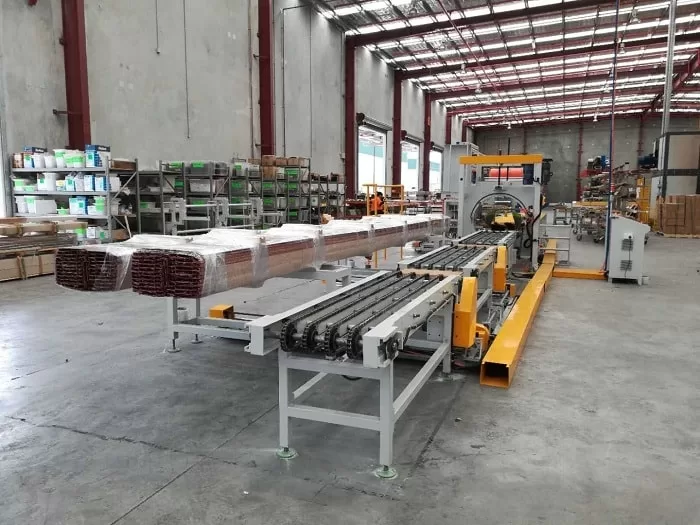
From my experience building and running a packing machine factory, I know that efficiency is the heart of any successful operation. Manual packing, especially for large items like steel coils or bundles of pipes, is very labor-intensive. Workers must measure, cut, and apply wrapping materials by hand. This takes a lot of time and effort. An orbital wrapper, on the other hand, handles this with precision and speed. It wraps the product tightly and evenly every time. This consistent quality means fewer reworks and faster processing. For factories in Saudi Arabia, where demand for construction materials and industrial goods is high, maximizing output is critical. An automated system makes sure that finished products move out of the factory quickly. This helps reduce inventory holding times and speeds up the entire supply chain. When you automate, your entire line becomes more fluid. You reduce the number of people needed for packing. This frees up your skilled workers for other, more valuable tasks in the factory. It allows your factory to scale production without needing to hire a large number of new packing staff. This leads to substantial savings in wages, benefits, and training costs.
Comparing Manual vs. Automated Packing Efficiency
Let us look at a simple comparison:
| Feature | Manual Packing Process | Orbital Wrapper Process |
|---|---|---|
| Labor Needs | High (2-4 workers per station) | Low (1 worker overseeing multiple machines or tasks) |
| Speed | Slow, varies with worker skill and fatigue | Fast, consistent (e.g., 1-2 minutes per coil) |
| Consistency | Varies, prone to human error | High, uniform wrap tension and coverage |
| Material Use | Often inefficient, more waste due to manual cutting | Optimized, precise film usage, less waste |
| Throughput | Limited by human speed, creates bottlenecks | High, continuous flow, eliminates bottlenecks |
| Operating Hours | Subject to breaks, shifts, and fatigue | Can run continuously for long periods |
This table clearly shows the difference. An orbital wrapper provides a consistent, high-speed solution that manual methods cannot match. It is a smart investment for any Saudi factory aiming to improve its packing line efficiency.
Can Automated Wrapping Machines Truly Enhance Worker Safety?
Are your workers constantly at risk from handling heavy or awkward products during the packing process? The manual lifting, turning, and wrapping of large steel coils, pipes, or bundles of profiles are physically demanding and dangerous tasks. Injuries from strains, crushes, or falls are common. This leads to higher insurance costs, lost workdays, and a high employee turnover rate.
Automated orbital stretch wrappers significantly enhance worker safety by removing the need for manual handling of heavy items. Workers no longer lift, rotate, or struggle with cumbersome products. The machine does the heavy lifting and wrapping. This drastically reduces the risk of workplace injuries, making the factory environment much safer for your team.
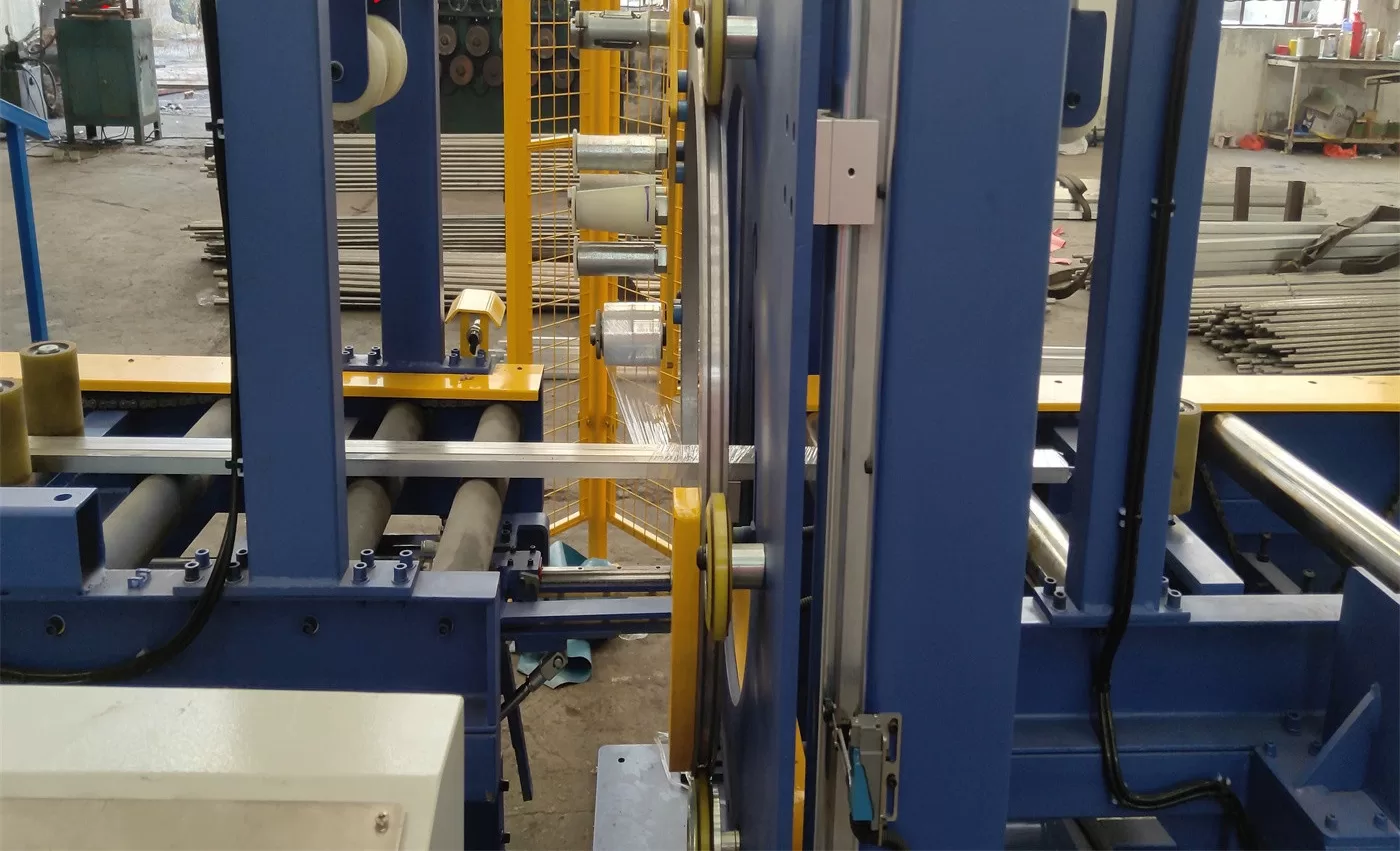
Safety was always a top priority for me when I ran my own factory. I saw too many times how manual processes put good people at risk. Imagine a worker trying to apply stretch film to a large, heavy coil. They have to walk around it, bend, stretch, and sometimes even climb. This is not only inefficient, but it is also extremely hazardous. A small slip can cause serious injury. An orbital wrapper changes this entirely. The product is loaded onto a conveyor or turntable. The machine then wraps it automatically, with the worker simply monitoring the process from a safe distance. This eliminates direct contact with moving parts and heavy loads. It removes the physical strain that causes muscle injuries and back problems. For Saudi factories, where labor is often a critical resource, protecting your workforce is not just a moral obligation; it is also smart business. Fewer injuries mean fewer medical expenses, fewer insurance claims, and less time lost due to workers being off sick. It also creates a better working environment. Employees feel safer and more valued. This leads to higher morale and lower staff turnover. Investing in automation is an investment in your people’s well-being. It shows you care about their safety.
Reducing Common Workplace Hazards
Let us look at how orbital wrappers address specific safety concerns:
- Lifting and Straining: Manual handling of heavy rolls of film or product manipulation causes back injuries and strains.
- Automation Solution: Orbital wrappers load film automatically and handle product movement internally, removing the need for manual lifting or positioning by workers.
- Crush Injuries: Workers near heavy moving products or during manual wrapping are at risk of crush injuries.
- Automation Solution: Products are safely contained within the machine’s operational zone. Safety sensors and guards stop the machine if a worker gets too close.
- Repetitive Motion Injuries: Repeated bending, stretching, and walking around products to wrap them leads to repetitive strain injuries.
- Automation Solution: The machine performs all repetitive motions. Workers observe and intervene only when necessary, such as for film changes.
- Trips and Falls: Loose film, uneven surfaces, or rushing can cause workers to trip or fall, especially when carrying items.
- Automation Solution: The work area around the machine is cleaner and less cluttered. Workers are not moving around with materials.








