

How Does Tension Control Improve Wrapping Quality for Hose Coils?
It is a common sight in busy factories: a stack of freshly produced hose coils, ready for packaging. Then the wrapping process begins, often looking simple, but beneath that apparent simplicity lies a critical detail. Have you ever received a shipment where the hose coils look loose, or worse, damaged, right out of the box? This often points to a hidden culprit: inconsistent wrapping tension. For factory managers like Michael Chen, this isn’t just an aesthetic problem; it directly impacts product quality, customer satisfaction, and ultimately, the bottom line. It is a headache that can lead to constant reworks and lost trust. (inconsistent wrapping tension, product damage, customer satisfaction)
Tension control is the cornerstone of high-quality hose coil wrapping because it ensures a consistent, tight, and secure package every single time. By precisely managing the film or tape tension during the wrapping process, it prevents coils from shifting, protects them from physical damage, and maintains their structural integrity during transit and storage. This crucial mechanism directly translates into superior product presentation, reduced material waste, and significantly enhanced operational efficiency for any busy manufacturing plant. (hose coil wrapping quality, secure packaging, damage prevention, operational efficiency)
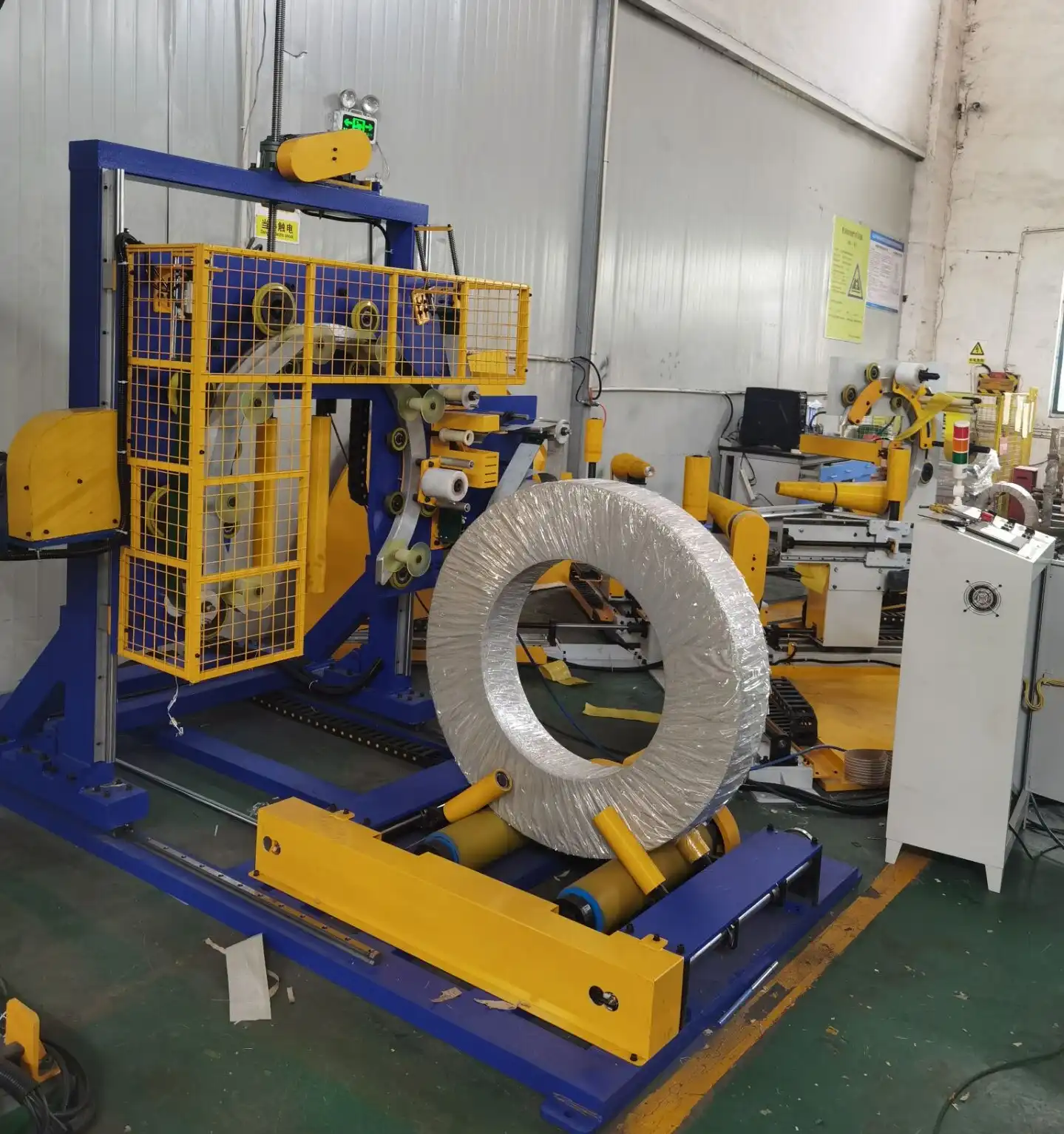

Understanding this vital aspect is not just about a technical detail; it is about safeguarding your product, streamlining your operations, and ensuring your factory runs as smoothly and profitably as possible. Let us dive deeper into why mastering tension control is a game-changer for anyone dealing with hose coils.
1. What is Packing Tension Control and Why Does It Matter for Hose Coils?
Imagine trying to wrap a gift with a loose ribbon, or too tight a ribbon that tears the paper. Packing tension control in industrial wrapping works much the same way, but on a larger, more critical scale. It refers to the precise management of the stretch and application force of the packaging material, like stretch film or woven tape, as it is applied to a product. For flexible items such as hose coils, this control becomes even more critical. (industrial packing tension, precise film tension, hose coil packaging)
Packing tension control is the automated regulation of the force with which wrapping materials are applied to products, ensuring consistent tightness and coverage. For hose coils, this matters intensely because their inherent flexibility means they are prone to unraveling, distorting, or becoming damaged if the wrap is too loose, or getting crushed if the wrap is too tight. Proper tension control maintains the coil’s shape and integrity, making sure it arrives at its destination in perfect condition. (automated tension regulation, hose coil integrity, product protection)
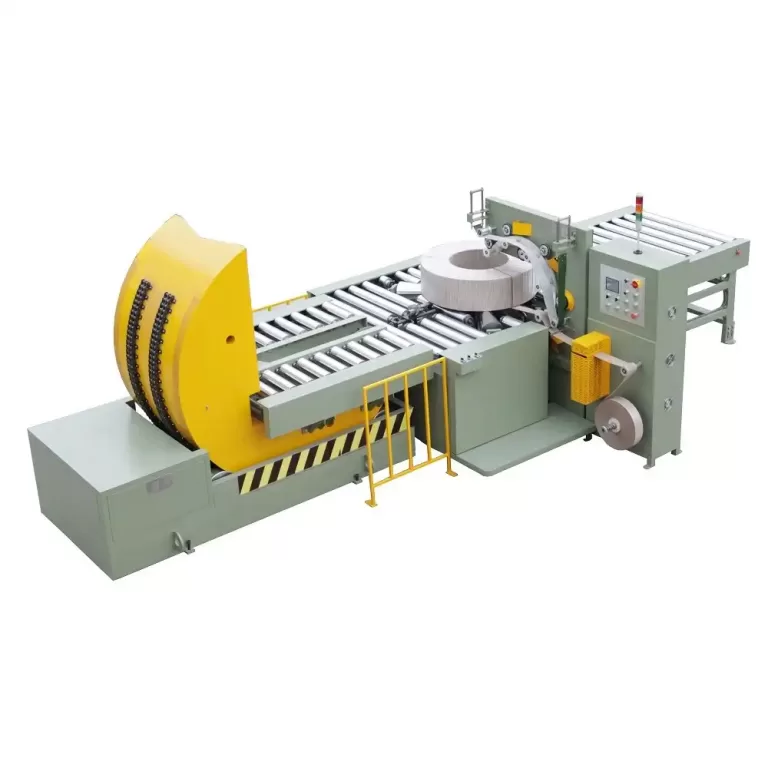

When I first started in the packing machine industry, I saw many factories struggling with manual wrapping methods. Workers would try to pull the film by hand, guessing the right amount of tension. This led to wraps that were either too slack, allowing coils to move and get scratched, or wraps that were stretched to their breaking point, wasting material. Michael’s challenges with product loss and customer complaints in Mexico remind me of these early days. With hose coils, a consistent, snug fit is not just desirable; it is essential to prevent internal movement within the package. This movement can cause abrasive damage to the hose surface or distort the coil’s shape, leading to rejection by customers. Without controlled tension, you risk inconsistent overlapping, leaving parts of the coil exposed or poorly protected. This exposes the product to environmental factors like dust and moisture during storage or shipping, further compromising its quality. The delicate balance achieved by automated tension control directly addresses these common pitfalls, ensuring that each hose coil is uniformly protected, regardless of its size or weight. It transforms a variable, labor-intensive task into a precise, automated process. (manual wrapping issues, hose coil protection, automated tension, consistent product quality, industrial packaging solutions)
The Two Sides of Tension Control: Too Loose vs. Too Tight
Understanding the spectrum of tension is key. Each extreme brings its own set of problems.
⚖️ What Happens When Tension is Too Loose?
When the wrapping material is applied without enough tension, the results are predictably negative.
- Product Shift: Loose wrapping allows the hose coil to move inside the package. This can lead to scuffing, denting, or even unraveling of the coil itself.
- Poor Protection: An inadequate wrap offers minimal protection against dust, moisture, and minor impacts during handling and transit.
- Packaging Failure: The wrap might easily come undone, exposing the product completely before it reaches the customer.
- Wasteful Appearance: From a customer’s perspective, a loosely wrapped product looks unprofessional and suggests a lack of care in manufacturing. (loose wrapping consequences, inadequate product protection, packaging material waste, unprofessional presentation)
📉 What Happens When Tension is Too Tight?
While the goal is a tight wrap, excessive tension also presents significant issues.
- Material Breakage: Over-stretched film or tape can snap during application, causing machine downtime and material waste.
- Product Distortion: For sensitive hose coils, too much pressure can deform the coil’s shape, especially if it’s a lighter gauge or softer material.
- Increased Material Usage: When film is overstretched, its structural integrity can be compromised, requiring more layers to achieve the same level of protection. This actually increases material consumption.
- Machine Strain: Consistent over-tensioning puts extra stress on the wrapping machine’s components, leading to increased wear and tear and potentially higher maintenance costs. (excessive tension risks, material breakage, product deformation, increased maintenance costs)
2. How Does Inconsistent Tension Impact Your Production and Profits?
For Michael Chen, running a metal processing factory, every single detail affects the bottom line. Inconsistent tension in hose coil wrapping is not just a minor flaw; it creates a cascade of problems that directly hit production efficiency, increase operating costs, and chip away at profitability. I have seen this happen countless times throughout my career, both as an employee and as a factory owner. It is a slow drain on resources that many managers do not fully account for. (factory operational costs, production efficiency, inconsistent packaging, profit reduction)
Inconsistent tension in hose coil packaging directly impacts production by slowing down the wrapping process due to reworks and material breaks, which contributes to efficiency bottlenecks. From a financial standpoint, it leads to increased material waste, higher labor costs for manual adjustments, and significant losses from product damage and customer returns. This directly translates to reduced profitability and an erosion of trust with clients, making it a critical area for operational improvement in any heavy manufacturing environment like Michael’s. (production bottlenecks, increased operating costs, material waste, customer trust erosion, heavy manufacturing efficiency)
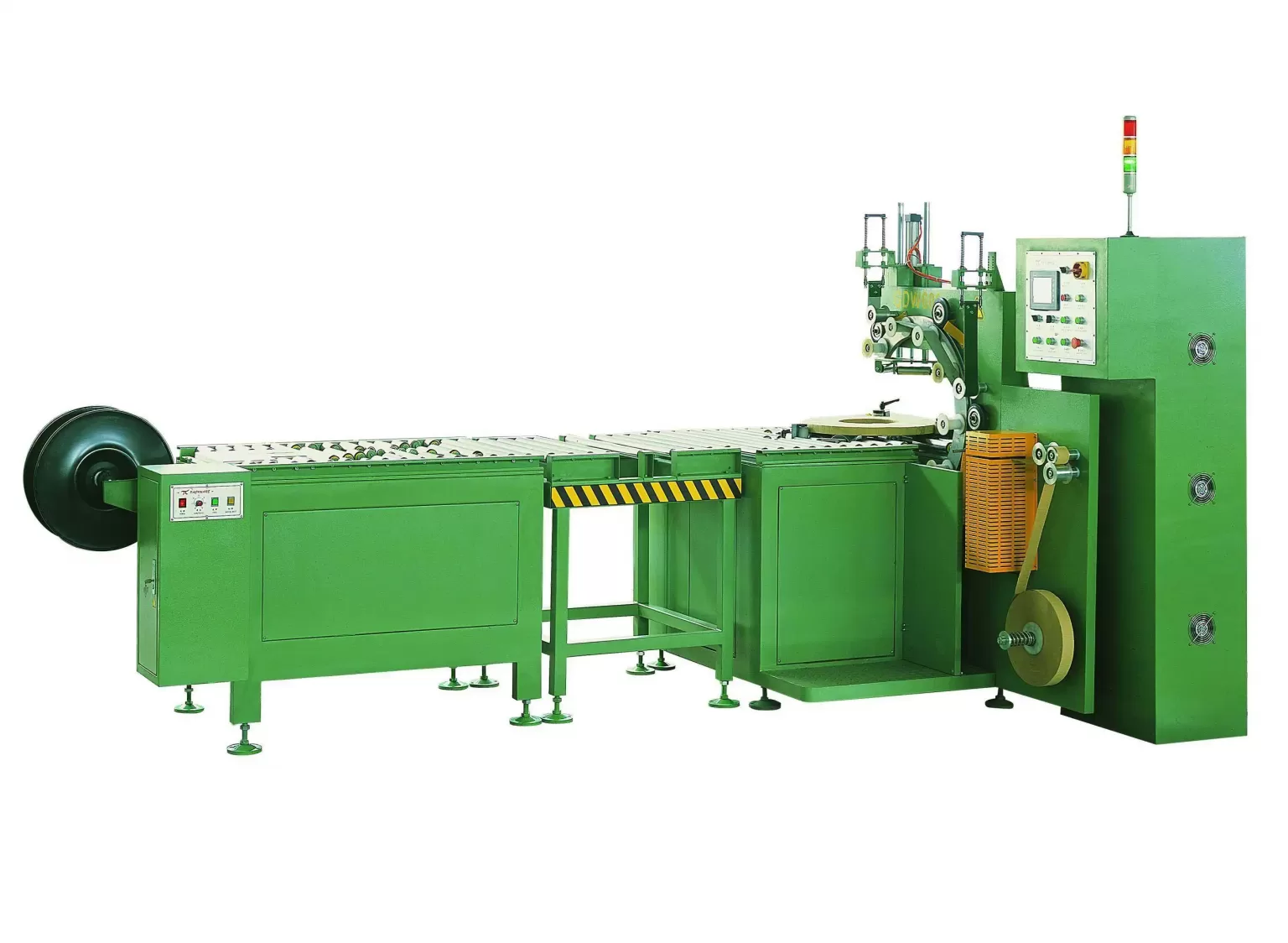

When I established my own packing machine factory, one of my core principles was to eliminate these hidden costs. Michael’s current challenges with efficiency bottlenecks and product loss resonate deeply with my own experiences. Manual, inconsistent wrapping, often due to poor tension control, slows everything down. Operators spend valuable time trying to adjust the film, re-wrap damaged coils, or clear machine jams caused by broken film. This lost time means lower throughput and missed delivery deadlines. Every minute a production line is down, even for re-wrapping, represents lost revenue. Furthermore, product damage, like scuffed hose coils or misshapen packages, leads to customer complaints and costly returns. These returns not only mean financial losses but also damage your brand’s reputation. Damaged goods might also need to be scrapped or sold at a discount, directly impacting profit margins. This is where the true cost of inadequate tension control becomes clear, extending far beyond the immediate packaging process. It impacts logistics, quality control, and overall business growth. (hidden operational costs, factory efficiency, product damage losses, customer retention, supply chain impact)
The Ripple Effect of Poor Tension Control
The consequences extend far beyond just the packaging department.
⏱️ Operational Inefficiencies:
- Increased Downtime: Frequent material breaks or jams due to improper tension stop the machine, requiring operator intervention.
- Slower Throughput: Operators must work more slowly to avoid issues with inconsistent wraps, reducing the overall speed of the packing line.
- Rework and Scrap: Products with poor wraps need to be re-wrapped or, if damaged, become scrap, adding labor and material costs.
- Increased Labor: More manual oversight and intervention are needed when automated systems lack precise tension control, diverting staff from other critical tasks. (packing line delays, reduced factory throughput, rework costs, labor reallocation)
💰 Financial Losses:
- Higher Material Costs: Overstretching film or needing extra layers to compensate for poor tension increases material consumption. Broken film sections are also wasted.
- Product Damage Costs: Damaged hose coils cannot be sold at full price, leading to write-offs, discounts, or returns.
- Shipping & Return Expenses: Products returned due to poor packaging quality incur additional shipping and handling costs.
- Insurance Premiums: Higher rates can result from frequent workplace injuries related to manual, heavy-duty wrapping processes that lack automation and control. (packaging material waste, product loss, return logistics, insurance rate impact)
🤝 Damaged Reputation and Customer Trust:
- Customer Complaints: Receiving poorly packaged or damaged products disappoints customers and leads to complaints.
- Loss of Future Business: A reputation for inconsistent quality can deter repeat orders and new business, impacting long-term growth.
- Brand Erosion: Over time, a lack of attention to packaging quality can undermine the perception of your brand’s overall product quality and reliability. (customer dissatisfaction, business growth impact, brand perception, product quality assurance)
3. What Technologies Guarantee Optimal Tension Control in Modern Wrappers?
Michael is looking for reliable solutions, not just machines. This is where modern packing machine technology, particularly from a brand like FHOPEPACK, truly shines. We do not just build equipment; we engineer intelligence into every system. The days of relying on brute force or guesswork for tension control are long gone. Today’s advanced machines use sophisticated mechanisms to ensure that every single wrap meets exact specifications. This is the kind of partnership and expertise Randal Liu and FHOPEPACK bring to the table. (modern packing machines, FHOPEPACK technology, automated tension control, industrial wrapping solutions)
Modern wrapping machines guarantee optimal tension control through a combination of precision mechanical systems and intelligent electronic controls. Key technologies include automatic tension adjustment mechanisms, pre-stretch carriages, and servo-driven film delivery systems. These innovations ensure consistent film application regardless of coil size or material, drastically reducing instances of loose or over-stretched wraps. For hose coils, this means superior protection and significant gains in operational efficiency compared to older, less controlled methods. (precision tension mechanisms, pre-stretch technology, servo-driven systems, operational gains, superior product protection)
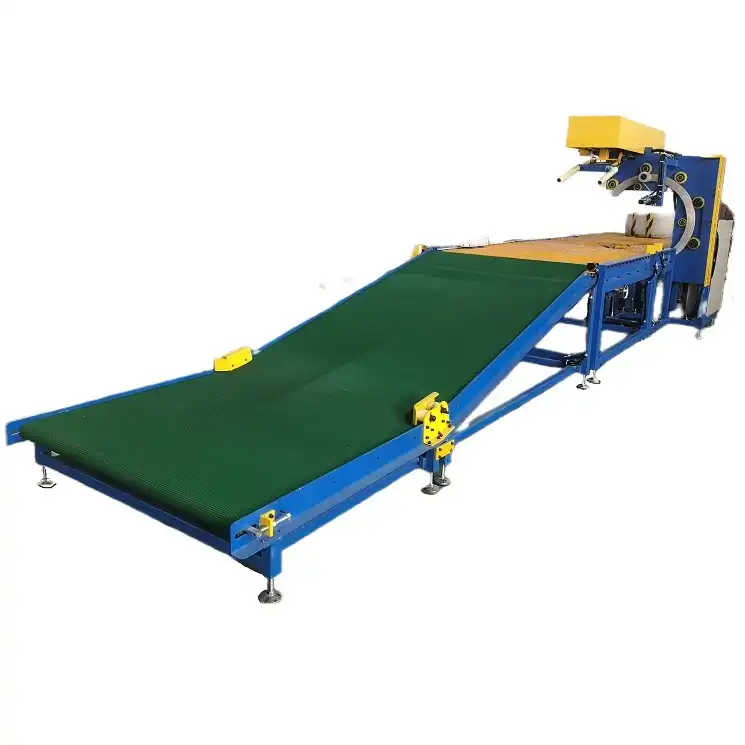

At FHOPEPACK, we understand the specific needs of manufacturers like Michael. My journey from a packing machine factory employee to establishing FHOPEPACK taught me that the smallest details, like tension control, can make the biggest difference. That is why our machines are designed with advanced features to eliminate the inconsistencies that plague older systems. These technologies allow for dynamic adjustments during the wrapping process. This means that even if a hose coil has slight variations in shape or density, the machine automatically compensates to maintain the ideal tension. This level of precision is virtually impossible to achieve with manual methods or basic mechanical brakes, which often lead to either wasted film or insufficient protection. Investing in such technology is not just buying a machine; it is investing in a robust, reliable system that elevates your entire packing operation to a new standard of quality and efficiency. It is about moving from reactive problem-solving to proactive quality assurance, ensuring every wrapped product leaves your facility in perfect condition. (FHOPEPACK expertise, dynamic tension adjustment, automated precision, packing operation upgrade, proactive quality assurance)
Key Technologies for Superior Tension Control
These are the innovations that make a real difference in wrapping quality.
-
Pre-Stretch Carriages:
- Function: This system physically stretches the film before it reaches the coil. It uses a series of rollers, often with different gear ratios, to elongate the film by up to 200-300% or more.
- Benefit: Reduces material consumption significantly. By pre-stretching the film, less material is needed to achieve the desired wrap force, lowering costs. It also makes the film stronger and more resistant to punctures.
- Impact on Hose Coils: Ensures a very tight, secure wrap with less film, protecting the coils effectively while saving money.
- FHOPEPACK Advantage: Our pre-stretch systems are engineered for minimal film breakage and maximum stretch ratio, ensuring cost efficiency and robust packaging. (film pre-stretch, material cost reduction, puncture resistance, FHOPEPACK engineering)
-
Automatic Tension Adjustment (Closed-Loop Feedback Systems):
- Function: These systems use sensors to measure the actual tension being applied to the coil. They then automatically adjust the motor speed or brake pressure to maintain a pre-set tension level.
- Benefit: Eliminates human error and inconsistencies. The machine constantly self-corrects, ensuring uniform tension throughout the entire wrapping cycle.
- Impact on Hose Coils: Guarantees that every layer of film is applied with the correct force, preventing both loose spots and over-tight pressure that could damage the coil.
- FHOPEPACK Advantage: Our intelligent controls integrate seamlessly with the machine’s mechanics, providing real-time adjustments for flawless wraps. (automatic tension sensors, human error reduction, uniform film application, intelligent control systems)
-
Servo-Driven Film Delivery:
- Function: Servo motors provide precise control over the film delivery speed and tension. Unlike simpler AC or DC motors, servos can maintain exact speed and torque under varying loads.
- Benefit: Extremely accurate and consistent film dispensing. It allows for quick, smooth acceleration and deceleration without losing tension.
- Impact on Hose Coils: Particularly beneficial for irregularly shaped coils or during the start/stop phases of wrapping, preventing sudden changes in tension that can cause issues.
- FHOPEPACK Advantage: We incorporate high-quality servo motors for unparalleled precision and reliability, critical for high-volume operations. (servo motor control, accurate film dispensing, irregular product wrapping, high-volume reliability)
-
Programmable Logic Controllers (PLCs) & HMI:
- Function: The PLC is the “brain” of the machine, managing all functions, including tension control parameters. The Human-Machine Interface (HMI) allows operators to easily set and monitor these parameters.
- Benefit: Enables customized wrapping recipes for different coil sizes and materials, ensuring optimal settings for each product.
- Impact on Hose Coils: A factory handling various types of hose coils can quickly switch between pre-set programs, ensuring consistent quality without manual recalibration.
- FHOPEPACK Advantage: Our intuitive HMI makes setting and adjusting tension simple, reducing operator training time and errors. (PLC control, HMI interface, customized wrapping recipes, operator training efficiency)
4. Beyond Quality: The Broader Benefits of Precision Tension Control for Factories?
The improvements in wrapping quality are just the beginning. For a factory manager like Michael, who has to balance production targets, safety, and profitability, the advantages of precision tension control extend much further. It is not just about a better-looking package; it is about creating a more robust, safer, and ultimately more profitable operational environment. This aligns perfectly with the kind of long-term strategic investments I have always advocated for in the packing machine industry. (factory profitability, operational environment, long-term strategic investment, packing machine industry)
Precision tension control offers far-reaching benefits beyond mere wrapping quality, fundamentally transforming factory operations. It significantly boosts worker safety by reducing manual handling and injury risks, elevates overall production efficiency through automation and reduced downtime, and directly contributes to cost savings by minimizing material waste and product damage. This holistic approach ensures higher customer satisfaction and a clear return on investment, addressing critical concerns for managers focused on growth and stability. (worker safety improvement, production efficiency boost, cost saving opportunities, customer satisfaction increase, ROI justification)


Michael’s goal to improve safety and seek professional guidance deeply resonates with me. When I was building my business, I learned that true efficiency comes from empowering your workforce and protecting them. Automated tension control, integrated into a robust wrapping system, dramatically reduces the need for manual intervention with heavy, awkward hose coils. This directly lowers the risk of musculoskeletal injuries, slips, and falls, which are common in manual packing operations. A safer workplace means fewer insurance claims, lower employee turnover, and a more engaged, productive team. Moreover, the predictability of a precisely controlled wrapping process means faster, more consistent cycle times. There are fewer stoppages for adjustments or re-wraps, leading to a smoother flow of products through the end-of-line packaging. This not only increases daily output but also allows for better production planning and faster fulfillment of orders. Ultimately, these operational improvements translate directly into tangible financial gains, making the investment in advanced tension control systems a smart strategic move for any forward-thinking factory. (workplace safety benefits, manual handling reduction, employee productivity, predictable cycle times, financial gain from automation, strategic factory investment)
Strategic Gains from Optimal Tension Control
Consider these broader impacts on your factory.
✅ Enhanced Worker Safety:
- Reduced Manual Strain: Automated systems with tension control remove the need for workers to manually stretch or pull heavy wrapping materials, minimizing physical exertion.
- Fewer Accidents: Less direct human interaction with the wrapping process and heavy coils reduces the risk of cuts, strains, and crush injuries.
- Improved Work Environment: A safer environment leads to higher morale, reduced absenteeism, and lower workers’ compensation costs.
- Compliance: Meeting safety standards more easily, which is crucial in sectors like heavy manufacturing in Mexico. (worker injury prevention, automated material handling, workplace morale, safety compliance)
📈 Increased Operational Efficiency:
- Higher Throughput: Consistent and reliable wrapping speeds up the packing process, leading to more coils wrapped per shift.
- Reduced Bottlenecks: Eliminating manual adjustments and re-wraps clears bottlenecks at the end of the production line.
- Predictable Performance: Machines with advanced tension control offer consistent performance, allowing for accurate production scheduling.
- Lower Energy Consumption: Optimized film use and smoother machine operation can sometimes lead to slight energy savings over time. (packing line speed, production flow optimization, accurate scheduling, energy efficiency)
💲 Significant Cost Savings:
- Material Optimization: Pre-stretch systems and precise tension application ensure maximum use of film, minimizing waste.
- Reduced Labor Costs: Automation reduces the need for constant human oversight and intervention, freeing up valuable labor.
- Fewer Product Damages: Protecting hose coils better means fewer returns, replacements, or write-offs.
- Lower Insurance Premiums: A safer work environment can lead to reduced insurance costs over the long term. (packaging material savings, labor cost reduction, product damage mitigation, insurance cost benefits)
⭐ Boosted Customer Satisfaction:
- Perfect Product Presentation: Consistently well-wrapped coils arrive looking professional and undamaged, enhancing brand image.
- Fewer Returns: Less product damage means fewer customer complaints and returns, strengthening customer relationships.
- Reliable Deliveries: Faster, more efficient packaging contributes to quicker, more reliable fulfillment of orders.
- Competitive Advantage: Delivering superior quality packaging sets you apart from competitors, especially in a demanding market like Mexico. (brand image enhancement, customer loyalty, reliable order fulfillment, market competitiveness)
Conclusion
Mastering tension control in hose coil wrapping is vital. It safeguards product quality, boosts factory efficiency, and ensures worker safety. Investing in advanced solutions like FHOPEPACK’s machinery leads to significant cost savings and improved customer satisfaction, providing a clear return on investment for your coil wrapping machine.












