
How Does a Pallet Flipper Pay for Itself in Daily Operations?
Are you struggling with slow, costly, and dangerous manual pallet handling in your warehouse? The constant need to switch between different pallet types for export or internal processes can feel like a never-ending battle. Delays pile up, labor costs skyrocket, and worse, workplace accidents become a real threat. I’ve seen businesses lose contracts and face significant fines because their pallet handling couldn’t keep pace. This creates a bottleneck that slows down your entire supply chain. But what if there was a way to transform this critical bottleneck into a streamlined, safe, and cost-effective operation? A solution that doesn’t just manage pallets but actively contributes to your bottom line? A pallet flipper can do exactly that.
A pallet flipper, also known as a pallet changer or inverter, pays for itself by dramatically improving operational efficiency, enhancing worker safety, significantly reducing labor and damage costs, and ensuring compliance with diverse international pallet standards. It transforms time-consuming manual tasks into swift, automated processes, directly boosting throughput and protecting your profits.
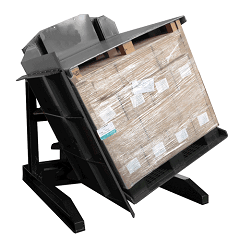
When I founded FHOPEPACK, I knew the real value came from solving complex industry problems, not just selling machines. Understanding how a pallet flipper delivers genuine ROI requires looking beyond its initial price tag. Let’s explore the key areas where this smart piece of equipment truly makes a difference in your daily operations.
How Does a Pallet Flipper Boost Operational Efficiency and Speed?
Imagine a busy distribution center like Carlos’s, processing thousands of pallets daily. Manual pallet switching for different export markets—Euro pallets for Europe, US pallets for North America—creates huge bottlenecks. Workers struggle with heavy loads, and the process is slow. This inefficiency directly impacts delivery times and customer satisfaction. Every minute spent on manual handling is a minute lost in getting products to market. For many businesses, these delays lead to contractual penalties and unhappy clients. A pallet flipper cuts through this inefficiency. It transforms a slow, multi-person task into a rapid, often automated, one-person operation. This change instantly speeds up your entire warehouse workflow.
A pallet flipper boosts operational efficiency and speed by automating the cumbersome process of switching pallets. This eliminates slow manual handling, reduces the time needed for pallet transfers, and minimizes errors. The result is faster throughput, quicker order fulfillment, and a smoother flow of goods through the warehouse.
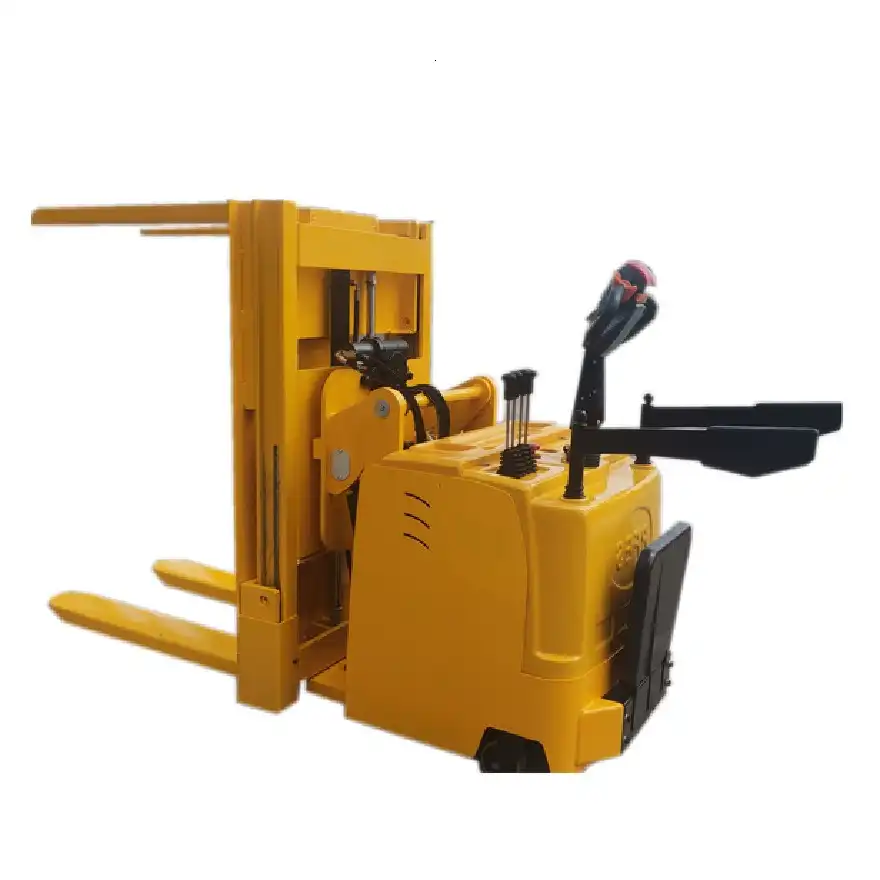
When I was developing packing machine solutions, I always focused on eliminating bottlenecks. Pallet handling is often one of the biggest bottlenecks in logistics. Think about Carlos’s situation: his regional distribution center handles thousands of pallets. Manually changing a pallet involves multiple steps: moving the product off, changing the pallet, and moving the product back on. This takes significant time and effort. A pallet flipper streamlines this entire process, making operations much more agile.
-
🔄 Rapid Product Transfer: Modern pallet flippers can hold a load securely, invert it, or transfer it to a new pallet in minutes, not hours. This drastically reduces the cycle time for pallet changes. For instance, a typical manual change might take 15-20 minutes with multiple workers. An automated system like those offered by FHOPEPACK can complete the same task in less than 2-3 minutes. This speed gain accumulates rapidly over hundreds or thousands of daily pallet movements, freeing up valuable time.
-
⏱️ Reduced Downtime: Manual processes are prone to human error, which can cause delays and product damage, leading to more downtime. Automated pallet changing systems are precise and consistent, ensuring reliable operation. My goal with FHOPEPACK was always to build machines that work consistently, minimizing interruptions to production and logistics flows. This reliability keeps operations running smoothly and predictably, which is vital for meeting tight schedules.
-
📈 Increased Throughput: With faster cycle times and less downtime, your warehouse can process more pallets per hour. This directly translates into increased throughput capacity. For a high-volume facility, this means meeting tighter delivery schedules and handling more orders without expanding physical space or adding significant labor. This agility is crucial for keeping up with client demands from e-commerce and retail customers, who require faster delivery.
-
📦 Seamless Integration: Many advanced pallet changers, including FHOPEPACK’s models, are designed for seamless integration into existing conveyor systems. This means pallets can move directly from one stage to the next without manual intervention. This flow creates a truly optimized logistics chain, which is something I focused on when designing systems for clients seeking greater efficiency. This seamless flow is key for modern automated warehouses that aim for peak performance.
Carlos specifically needs systems that reliably adapt to multiple pallet specifications while significantly reducing manual operations. FHOPEPACK offers pallet inverters and changers that excel in these areas, ensuring fast, efficient, and damage-free pallet transfers, even for varied loads. This kind of automation is not just about moving boxes; it is about moving a business forward.
Can a Pallet Flipper Truly Mitigate Warehouse Safety Risks?
Manual pallet handling is one of the most dangerous tasks in any warehouse. Workers are constantly lifting heavy items, awkwardly moving loads, and flipping pallets by hand. This puts them at high risk of strains, sprains, and more serious accidents. Carlos has seen this firsthand, with several accidents already occurring from manual flipping or replacing pallets. These incidents cause significant human suffering, increase insurance premiums, lead to compensation payouts, and create costly operational disruptions. It’s a risk no business can afford to ignore. A pallet flipper takes the human element out of hazardous pallet manipulation. It performs these heavy, risky tasks safely and mechanically, protecting your workforce and your bottom line.
Yes, a pallet flipper truly mitigates warehouse safety risks by replacing dangerous manual lifting, twisting, and repositioning of heavy pallets and goods with automated mechanical processes. This reduces the incidence of strain injuries, crush injuries, and product damage caused by human error, creating a much safer working environment.
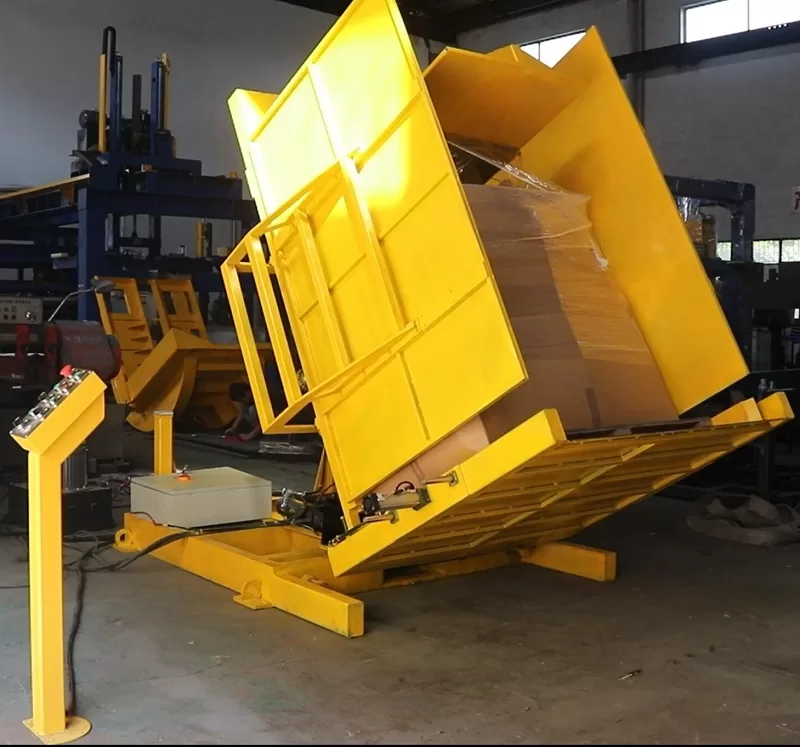
In my career, particularly when I was an employee at a packing machine factory, I saw the direct consequences of unsafe practices. People get hurt. It is not just about compliance; it is about valuing your employees. Manual pallet flipping, especially with heavy or unstable loads, is inherently dangerous. Workers might try to use forklifts in unconventional ways or use brute force, leading to goods tipping over or personnel being struck. This leads to costly accidents and disruptions.
-
🩹 Elimination of Repetitive Strain Injuries (RSIs): Repeated lifting and twisting associated with manual pallet changes are major causes of musculoskeletal disorders. A pallet flipper eliminates the need for workers to physically manipulate heavy pallets or goods. The machine does the heavy lifting, protecting employees from long-term injuries. This is a huge benefit for employee well-being and reduces costly workers’ compensation claims, which directly impacts a business’s overhead.
-
🚧 Reduced Risk of Crush and Impact Accidents: When pallets are manually flipped or exchanged, there is always a risk of loads shifting, falling, or crushing limbs. Carlos mentioned specific incidents in his warehouse, highlighting this danger. Mechanical pallet changers securely clamp the load during the entire process, preventing product instability and accidental drops. This creates a controlled environment where the risk of goods falling or hitting workers is virtually eliminated, making the workplace much safer.
-
🚨 Improved Ergonomics and Work Environment: By automating the most strenuous and dangerous tasks, a pallet flipper significantly improves the ergonomic conditions for warehouse staff. Employees can focus on supervising the machine or performing less physically demanding tasks. This leads to higher job satisfaction and lower turnover rates for roles involving material handling. Providing a safe work environment is a responsibility, and it also boosts morale and productivity.
-
⚖️ Compliance with Safety Regulations: Modern safety regulations are strict regarding manual handling limits. Implementing automated solutions like pallet flippers helps businesses comply with these standards, avoiding potential fines and legal liabilities. FHOPEPACK designs its equipment with safety interlocks and robust construction to meet stringent industrial safety requirements, ensuring that compliance is built into the solution. This is not just a feature; it is a fundamental part of the design philosophy for any responsible manufacturer.
What Role Does a Pallet Flipper Play in Reducing Labor Costs?
Labor costs are a significant and growing concern for warehouses globally, including Carlos’s operations in Europe. Finding skilled labor willing to perform physically demanding tasks like manual pallet handling is becoming increasingly difficult. The younger generation often avoids such strenuous roles. This labor shortage leads to higher wages, increased overtime, and sometimes, incomplete shifts. It directly impacts your budget and operational capacity. Manual pallet operations require multiple hands, and paying those hands adds up quickly, impacting your total cost of ownership. A pallet flipper offers a strategic solution to this challenge. It allows one operator to manage a task that previously required several, freeing up valuable human resources for other, more skilled tasks. This directly translates to significant savings on your overall labor expenditure.
A pallet flipper plays a crucial role in reducing labor costs by minimizing the number of personnel required for pallet handling tasks. It transforms a multi-person, labor-intensive process into a single-operator job, effectively reallocating workers to more value-added activities and reducing reliance on an increasingly scarce manual labor pool.
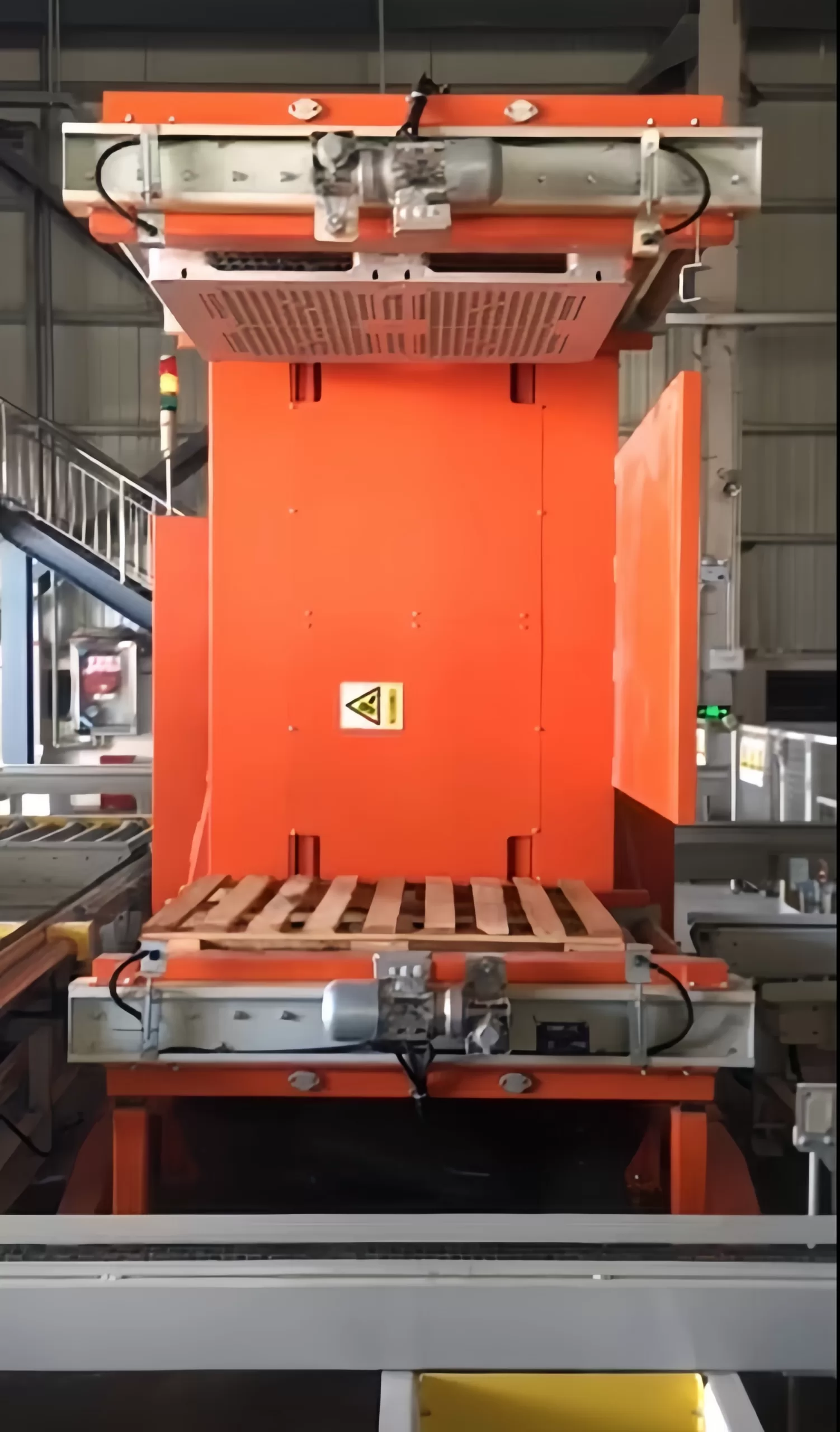
When I built my successful packing machine factory, I quickly realized that smart automation was not just about speed; it was about optimizing resources, especially human resources. In many warehouses, manual pallet changes are a bottleneck not only in terms of time but also in terms of manpower. A typical manual pallet transfer might require two or three strong individuals, which is a considerable investment in labor for a single task.
-
📉 Reduced Manpower Per Task: A pallet flipper allows a single operator to perform the entire pallet change process safely and efficiently. This means two or three workers can be redeployed to other critical areas within the warehouse, such as order picking, inventory management, or quality control. For Carlos, facing rising labor costs and a tight labor market, this is a direct way to manage his payroll and improve cost control.
-
💰 Savings on Wages and Benefits: Fewer employees performing high-risk manual tasks means direct savings on wages, overtime, benefits, and associated costs like workers’ compensation insurance premiums. Over time, these cumulative savings become substantial, contributing directly to the pallet flipper’s return on investment. This frees up budget for other strategic investments or higher-skilled personnel.
-
🛠️ Optimized Workforce Utilization: Instead of having skilled workers spending their time on strenuous, repetitive pallet changes, automation frees them to perform tasks that require human judgment and problem-solving skills. This leads to a more engaged and productive workforce overall. My philosophy at FHOPEPACK has always been to empower workers, not replace them, by taking away the mundane and dangerous tasks, thereby improving job satisfaction.
-
🌐 Addressing Labor Shortages: As Carlos noted, attracting and retaining labor for physically demanding warehouse jobs is a growing challenge. By automating these tasks, businesses become more attractive to potential employees, offering safer and more technologically advanced roles. This helps maintain operational capacity even in a tight labor market. Suppliers like FHOPEPACK and SHJLPACK offer various models, from semi-automatic to fully automatic, allowing businesses to choose the level of automation that best suits their labor strategy and budget. This flexibility ensures that businesses can scale their automation efforts as their needs evolve.
How Does Pallet Diversification Benefit from a Flipper System?
Modern supply chains are global, meaning businesses like Carlos’s food and beverage group must deal with a confusing array of pallet types. Euro pallets for inbound, US pallets for outbound, plastic pallets for hygiene-sensitive areas, or wooden pallets for heavy loads. Manually managing this diversity is a logistical nightmare. This constant need for switching between incompatible pallet standards leads to errors, delays, and potential non-compliance, particularly in export operations. Getting the wrong pallet type to the wrong destination can result in costly rejections and frustrated customers. A versatile pallet flipper system is designed to seamlessly handle this diversity. It provides a standardized and efficient way to switch loads between different pallet types, ensuring compliance and smooth international logistics.
Pallet diversification greatly benefits from a flipper system because it provides a flexible and efficient means to transfer goods between various pallet types, such as Euro, US, or plastic pallets. This ensures compliance with different national and industry standards for shipping and storage, streamlines international logistics, and prevents costly rejections or damage due to incompatible pallets.
From my perspective, successful packing and material handling are all about adaptability. The world is not standardized, and neither are pallets. I have designed systems for clients who ship globally, and the challenges of pallet diversity are universal. Carlos’s problem with Euro vs. US pallets for exports is a classic example. Without a dedicated system, companies resort to slow, manual transfers or even temporary storage, which adds cost and complexity to their operations.
-
🌍 Seamless International Shipping: Different countries and regions have specific pallet standards. For example, Euro pallets (800x1200mm) are common in Europe, while US pallets (48×40 inches) dominate North America. Manual switching is labor-intensive and error-prone. A pallet flipper easily converts loads from one standard to another, ensuring that goods arrive at their destination on the correct pallet, ready for local distribution without issues. This prevents costly shipment rejections or delays at customs, which directly impacts customer satisfaction.
-
🧼 Addressing Industry-Specific Needs: Beyond geographical standards, certain industries require specific pallet types. The food and beverage sector, where Carlos works, often uses plastic pallets for hygiene reasons or within automated systems, then transfers to wooden pallets for shipping. A good pallet flipper can handle this transition, maintaining product integrity and meeting regulatory requirements. FHOPEPACK offers systems capable of gentle handling, suitable for even sensitive food products, which is crucial for maintaining quality and safety standards.
-
📦 Optimizing Internal Logistics: Even within a single facility, different departments or storage areas might use different pallet types. For example, some automated storage and retrieval systems (AS/RS) prefer specific plastic pallets, while outbound shipping might require wooden ones. A pallet flipper acts as a crucial bridge, allowing smooth internal transfers and maximizing the efficiency of specialized equipment. This ensures that the right pallet is always used for the right task, improving overall warehouse flow.
-
🛡️ Product Integrity During Transfer: Manually moving products between pallets, especially delicate ones, risks damage. This can lead to spoiled goods or claims from customers. A pallet flipper securely clamps the load before the transfer, ensuring product stability and integrity throughout the process. This reduces damage claims and protects your inventory. When I started FHOPEPACK, one of my core principles was to ensure products were handled safely throughout the packing and handling process. This is especially true for pallet transfers, where cargo integrity is paramount.
Why is Long-Term Reliability Crucial for Pallet Flipper ROI?
Investing in any automation equipment, including a pallet flipper, requires a significant upfront capital expenditure. If that equipment is not reliable, if it constantly breaks down or requires expensive maintenance, your expected return on investment (ROI) quickly evaporates. Carlos explicitly seeks a partner, not just a seller. He knows that unreliable equipment leads to frustrating downtime, missed deadlines, escalating repair costs, and ultimately, a loss of trust from clients. A machine that often fails becomes a liability, not an asset, undermining the very purpose of automation. Long-term reliability is the bedrock of a pallet flipper’s true value. A robust, well-engineered system ensures consistent performance, minimal downtime, and predictable operational costs, safeguarding your investment and delivering continuous returns.
Long-term reliability is crucial for a pallet flipper’s ROI because consistent, uninterrupted operation is directly linked to sustained efficiency, safety, and cost savings. A dependable machine minimizes expensive downtime, reduces maintenance burdens, and ensures predictable performance, guaranteeing that the initial investment continues to yield returns over its entire operational lifespan.

When I began my journey in the packing machine industry, from employee to factory owner, I quickly learned that the real measure of a machine’s value is not just its initial price. It is how well it performs day in and day out, year after year. This is the core of FHOPEPACK’s philosophy: build for durability. Carlos is right to look for a long-term partner, not just a machine seller. A cheap, unreliable machine is the most expensive one in the long run because it causes more problems than it solves.
-
📉 Minimizing Downtime and Production Losses: Every minute a critical piece of equipment like a pallet flipper is down, it costs money. Production slows, deliveries are delayed, and the efficiency gains disappear. A reliable machine guarantees maximum uptime, ensuring that your investment consistently contributes to your operational flow without unexpected interruptions. My experience taught me that preventing downtime is as important as speeding up processes, as it impacts the entire supply chain.
-
💲 Predictable Maintenance Costs: High-quality, reliable equipment typically requires less frequent and less intensive maintenance. This translates to lower ongoing operational costs. Instead of constant emergency repairs and expensive spare parts, businesses can plan for routine preventative maintenance, which is far more cost-effective. FHOPEPACK emphasizes using high-quality components and robust designs to ensure lower total cost of ownership over the machine’s lifetime, which protects your budget.
-
🤝 Building Trust and Partnership: For a manager like Carlos, who seeks a “long-term partner,” reliability is key to that relationship. A supplier who delivers consistently reliable equipment demonstrates commitment to client success. This includes excellent after-sales support, readily available spare parts, and knowledgeable technicians. FHOPEPACK prides itself on being that kind of partner, ensuring clients feel supported throughout the lifespan of their equipment. SHJLPACK also makes efforts in this area, offering various support options.
-
🚀 Sustained ROI: The financial benefits—increased efficiency, enhanced safety, reduced labor costs—are only realized if the pallet flipper operates consistently. A machine that lasts for many years with minimal issues will deliver a strong, sustained return on investment far beyond the initial purchase price. This longevity means you continue to reap the benefits of automation for a long time. It is about building a foundation for future growth, a principle that guided me when I achieved financial independence and helped many clients grow their businesses.
Conclusion
A pallet flipper pays for itself through enhanced efficiency, improved safety, significant labor cost reductions, and seamless handling of diverse pallet types. Investing in a reliable pallet inverter is a strategic move, ensuring sustained operational benefits and a strong return on your investment in warehouse automation.








