
How Does a Pallet Changer Integrate Into an Automated Conveyor Line?
Are you a logistics manager constantly battling against slow, unsafe, and costly manual pallet handling? I understand your frustration. The demands of modern supply chains, with diverse pallet types and tight delivery schedules, can turn what should be a smooth operation into a daily headache. This struggle impacts everything, from your efficiency targets to your team’s safety and your company’s bottom line.
A pallet changer integrates into an automated conveyor line by acting as a critical junction point, seamlessly transferring goods from one type of pallet to another, or from a damaged pallet to a new one, without manual intervention or disrupting the continuous flow of products. This integration relies on precise mechanical interfaces, sophisticated control systems, and smart sensors that communicate with the existing conveyor infrastructure and warehouse management system.
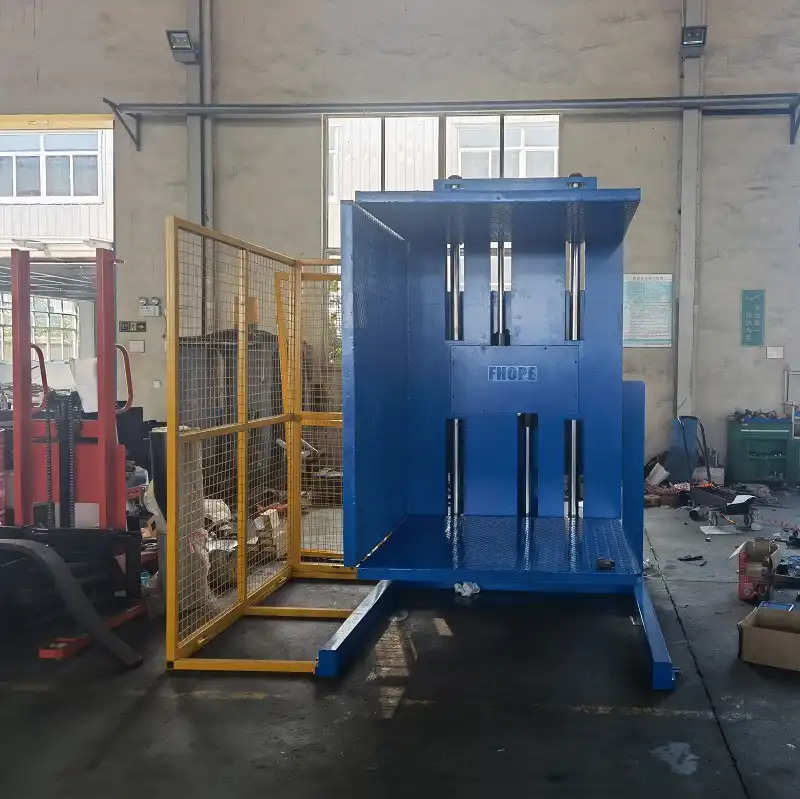
At FHOPEPACK, we have seen this problem countless times. My own journey, from a packing machine factory employee to establishing a successful factory, has shown me how vital efficient material handling is. If these challenges sound familiar, then you are in the right place. We are going to explore exactly how pallet changers fit into automated conveyor lines, bringing efficiency, safety, and cost savings to your operations.
Why is Pallet Changing a Bottleneck in Your Current Logistics?
Do you find your warehouse operations grinding to a halt because of pallet issues? This is a common pain point for many businesses today. The need to switch between different pallet standards, like Euro pallets and US pallets, or even damaged wood pallets to hygienic plastic ones, often creates a significant bottleneck. Manual processes are slow, prone to human error, and can lead to costly delays and product damage.
Pallet changing often becomes a bottleneck in logistics due to the manual labor involved, the inherent risks of handling heavy loads, and the diverse requirements of international shipping and internal hygiene standards, all of which disrupt the continuous flow of an otherwise automated warehouse.
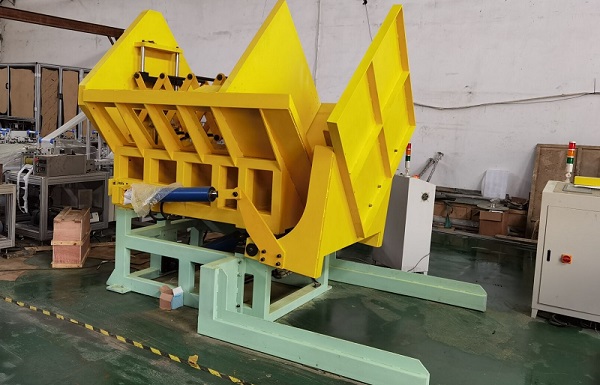
I have witnessed how these manual tasks impact a warehouse. They are not just about moving goods; they are about maintaining efficiency, ensuring safety, and meeting customer expectations. When I started FHOPEPACK, I aimed to solve these exact problems. Manual pallet changes can slow down your entire output. They increase the risk of workers getting hurt, especially when flipping or moving heavy loads. This also adds to labor costs and insurance expenses. Also, the chances of damaging your products during these transfers are higher. For businesses dealing with thousands of pallets daily, like a major food and beverage group, these issues multiply quickly. This all affects your delivery schedules and customer satisfaction, something no manager wants. This is why addressing the pallet changing process is essential for smoother, faster, and safer logistics operations. (warehouse bottlenecks, manual handling challenges, pallet standard variations)
How Can Pallet Changers Seamlessly Integrate with Automated Conveyor Lines?
Are you wondering how a pallet changer can become a natural extension of your existing automated systems, rather than just another standalone machine? This is a core question for any logistics professional looking to upgrade their material flow. The goal is to move beyond isolated processes and achieve truly continuous, hands-free operation.
Pallet changers seamlessly integrate with automated conveyor lines through a combination of mechanical synchronization, advanced sensor technology, and intelligent control system communication, allowing them to precisely receive, process, and dispatch palletized loads without interrupting the automated material flow.
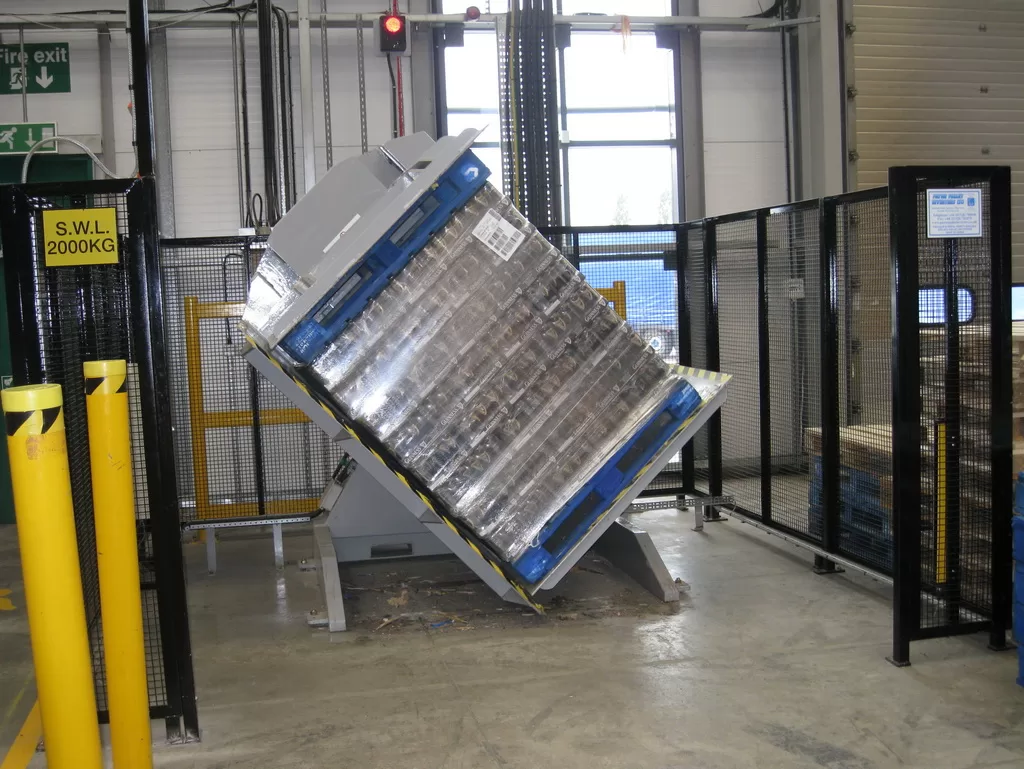
Achieving seamless integration means more than just placing a machine in line. It requires careful planning and smart technology. When I work with clients, we always focus on how each piece of equipment talks to the others. This ensures everything works as one system.
- ⚙️ Mechanical Interface: The pallet changer needs to physically connect to your conveyor system. This can be done in a few ways. Some changers are designed to be placed directly in the main conveyor line, like a segment. Other systems might use a side-loading or bypass conveyor. This allows pallets to be diverted for changing and then re-introduced. The design ensures smooth transfers on and off the changer. The goal is zero stops. This makes sure products move without bumps or delays.
- 💡 Sensor Technology and PLCs: Modern pallet changers use advanced sensors. These sensors detect incoming pallets, verify their position, and confirm the load is ready for transfer. They also ensure the new pallet is correctly positioned. A Programmable Logic Controller (PLC) acts as the brain. It coordinates all actions between the pallet changer and the conveyor. It sends signals to stop, start, and move pallets at the right time. This precise timing prevents collisions and ensures efficiency. My team at FHOPEPACK always emphasizes robust PLC programming for reliability.
- 💻 Software Integration (WMS/WCS): For full automation, the pallet changer’s PLC needs to communicate with your Warehouse Management System (WMS) or Warehouse Control System (WCS). This allows real-time data exchange. The WMS can instruct the pallet changer when to switch pallet types. It can track inventory on new pallets. It can also log the change process. This provides a complete picture of your material flow. This integration turns a simple machine into a smart component of your entire logistics network. It means less manual tracking and fewer errors. (conveyor system integration, automated material flow, PLC control, WMS connectivity, pallet handling automation)
What Tangible Benefits Do Integrated Pallet Changer Systems Deliver?
As a manager, you are always looking for tangible improvements. You want to see real results in efficiency, safety, and your budget. An integrated pallet changer system offers exactly that. It’s not just about a new piece of equipment. It’s about transforming your operations for the better.
Integrated pallet changer systems deliver tangible benefits by significantly increasing operational throughput, enhancing workplace safety for employees, drastically reducing overall labor and damage-related costs, and ensuring seamless compliance with diverse logistical requirements.

I have seen firsthand how these systems empower businesses. My own clients, from growing startups to large corporations, have achieved financial independence and expanded their operations because of such improvements. These benefits directly address the challenges you face every day.
- ⚡ Increased Throughput and Speed: Manual pallet changes are slow. They create bottlenecks. An automated pallet changer works much faster and more consistently. It can process hundreds of pallets per hour. This speed directly translates to quicker dispatch times. It helps you meet demanding customer delivery schedules. For example, if you ship thousands of pallets daily, reducing the changeover time by even a few seconds per pallet adds up to hours saved each day. This means more goods moved, faster.
- 👷 Enhanced Workplace Safety: This is a big one. Manually handling pallets, especially flipping them or moving heavy loads, carries significant risks. Accidents like dropped goods or worker injuries are common. An automated system eliminates the need for human involvement in these hazardous tasks. It removes the physical strain and risk of crushing injuries. This leads to a safer working environment. It also reduces your company’s liability and insurance costs. This is something I always prioritize when designing solutions for FHOPEPACK’s clients.
- 💰 Significant Cost Savings: The savings come from several areas. You reduce reliance on manual labor for pallet changing. This cuts down on labor costs. It also frees up staff for other value-added tasks. You minimize product damage during transfers. This means fewer returns and less waste. Fewer workplace accidents also mean lower medical and compensation costs. Over time, these savings become substantial. They contribute directly to your operational budget.
- ✅ Improved Compliance and Quality Control: Many countries have specific regulations for pallet types, especially for food and pharmaceutical goods. Automated pallet changers ensure consistent and compliant pallet swaps. They reduce the risk of non-compliance fines or rejections at customs. They also help maintain product integrity by providing a stable transfer. This boosts customer satisfaction and builds trust. The system makes sure every pallet meets the required standards without fail. (operational efficiency, warehouse safety improvement, labor cost reduction, supply chain compliance, throughput optimization)
Which Pallet Changer Solutions Best Fit High-Volume Automated Warehouses?
Choosing the right pallet changer for a high-volume, automated warehouse is key. You need equipment that is not just efficient but also robust, reliable, and adaptable to your specific product range and pallet variations. The market offers several options. Each has its own strengths for different integration scenarios.
For high-volume automated warehouses, fixed inline pallet changers, 90 or 180-degree pallet inverters, and specialized robotic pallet transfer systems offer the best fit, providing high throughput, robust performance, and seamless integration capabilities with existing conveyor infrastructure.

When my clients ask me about the best solutions, I always consider their current setup and future growth. There is no one-size-fits-all answer. However, certain technologies stand out for their ability to meet the demands of a busy automated environment. At FHOPEPACK, we focus on providing options that truly make a difference.
- 🔄 Fixed In-Line Pallet Changers: These are designed for continuous, high-volume operations. They are installed directly within a conveyor line. They automatically receive a loaded pallet, perform the swap (e.g., old pallet out, new pallet in, load transferred), and then send the newly palletized load back into the line. They are very efficient for repetitive tasks. They work well for standard pallet-to-pallet transfers where the product orientation does not change. They are ideal for facilities constantly switching between Euro and US pallets. Their design minimizes disruption to the main flow.
- ↩️ 90-Degree and 180-Degree Pallet Inverters: While not strictly “changers” in the sense of swapping an entire pallet, these machines are often crucial for integration. They can invert or rotate a load. This is useful for transferring goods from a damaged pallet or for changing the bottom pallet. A 90-degree inverter might change the pallet or simply reorient the load for further processing. A 180-degree inverter completely flips the load. This allows easy access to the bottom pallet or for product inspection. They integrate into conveyor systems where loads need specific reorientation or bottom-pallet access. FHOPEPACK specializes in robust pallet inverter solutions, known for their reliability.
- 🤖 Robotic Pallet Transfer Systems: For the highest level of flexibility and automation, robotic systems are increasingly common. These systems use industrial robots equipped with specialized grippers. They can pick up a load from one pallet and place it onto another. They can handle various load sizes and pallet types with precision. They offer extreme adaptability for complex pallet changing needs. They are often integrated with vision systems for greater accuracy. While requiring a higher initial investment, they offer unparalleled versatility and can operate 24/7. These are great for warehouses that need to handle highly diverse products and pallet configurations. (automated pallet transfer, fixed pallet changers, pallet inverter technology, robotic palletizing, high-volume logistics solutions)
What Should You Look For in a Partner for Pallet Changer Integration?
Finding the right equipment is only half the battle. Just as important is finding the right partner to help you integrate it. Many companies just sell machines. But for complex warehouse automation, you need a partner who understands your specific operational pain points and can offer flexible, long-term solutions.
When integrating a pallet changer, you should look for a partner who offers proven expertise in warehouse automation, robust system customization capabilities, comprehensive after-sales support, and a commitment to understanding your unique operational challenges to deliver long-term value and reliability.
My personal journey in the packing machine industry taught me that building strong relationships with clients is key. It is about understanding their business, not just selling a product. When I started FHOPEPACK, this became a core part of our mission. You need a partner who sees your business grow.
- 🧠 Proven Expertise and Understanding: The ideal partner should have deep knowledge of warehouse logistics and automation. They should understand challenges like diverse pallet specifications, labor shortages, and safety risks. They need to show a track record of successful integrations in similar industries. Ask about their engineering capabilities. Ask about their experience with WMS/WCS integration. A good partner will ask you detailed questions about your current setup and future goals.
- ⚙️ Customization and Flexibility: Your warehouse is unique. A generic solution might not solve your specific problems. Look for a partner who can customize their pallet changer solutions. They should be able to adapt to your conveyor line, pallet types, and throughput requirements. This might mean custom software, specialized mechanical interfaces, or different machine configurations. FHOPEPACK prides itself on offering tailored solutions. We aim to solve real problems for real people.
- 🛠️ Comprehensive After-Sales Support: A machine is only as good as its uptime. What happens if it breaks down? A reliable partner provides strong after-sales support. This includes installation, training for your staff, spare parts availability, and prompt technical service. This is vital for maintaining continuous operations. A company like SHJLPACK also offers good support, but FHOPEPACK always aims to go above and beyond for our clients. You need someone who will stand by their product for years to come.
- 📈 Focus on Long-Term Partnership and ROI: Look for a company that wants to be a long-term partner, not just a one-time vendor. They should be interested in your return on investment (ROI). They should help you analyze the cost savings and efficiency gains. This commitment reflects a true understanding of your business needs. It shows they care about your success beyond the initial sale. (warehouse automation partner, customized solutions, after-sales service, long-term reliability, ROI analysis)
Conclusion
Integrating a pallet changer into an automated conveyor line is a smart move for modern logistics. It tackles key challenges like diverse pallet specifications, labor costs, and safety. By choosing the right technology and a trusted partner, you can boost efficiency, improve safety, and ensure compliance. This makes your operations smoother and more profitable. Consider a robust pallet inverter system to truly master your packing machine challenges.








