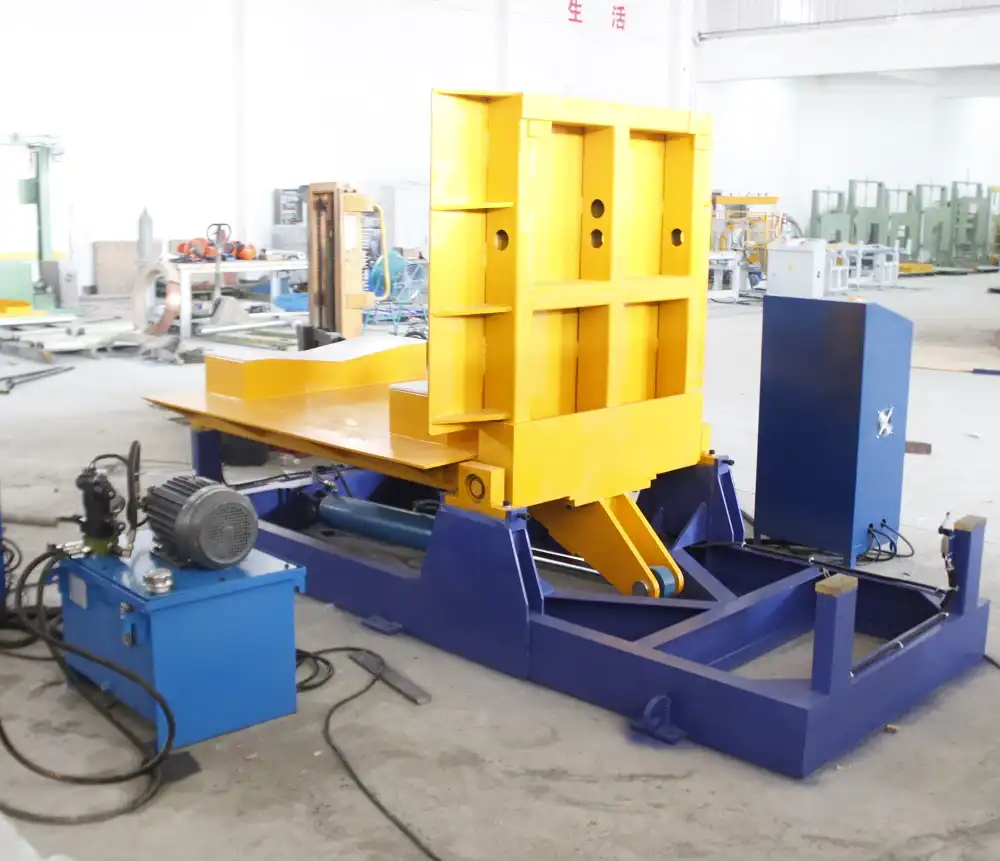
How Does a Hydraulic Upender Improve Safety in Heavy Coil Handling?
Working in a factory, especially one dealing with heavy materials like steel coils or wire rolls, presents daily challenges. I have seen firsthand the pressures on managers like Michael, who juggle production targets, cost control, and worker safety. The idea of moving these massive coils manually, or using outdated methods, frankly sends shivers down my spine. It’s not just inefficient; it’s a recipe for disaster. This is why I want to talk about hydraulic upenders today – they are game-changers for safety in this demanding environment.
A hydraulic upender fundamentally improves safety by removing direct human interaction from the hazardous process of tilting or rotating heavy coils, bundles, or molds, thereby preventing crush injuries, strain-related accidents, and costly product damage during material handling operations. It provides a stable, controlled method for repositioning heavy loads, significantly reducing the risk of accidents that are common with manual or less specialized equipment. %Hydraulic upender for heavy coils
Understanding the core problem of manual heavy lifting is the first step. The next is discovering how smart technology offers a clear, reliable solution. Let’s dive deeper into how hydraulic upenders transform a dangerous task into a safe and streamlined process.
1. Why is Manual Coil Handling So Dangerous?
Imagine a team of workers struggling to flip a heavy steel coil or a large mold. The sheer weight and awkward shape make it a high-risk operation. Are you constantly worried about potential accidents or injuries on your factory floor, especially when handling massive loads? This isn’t just about a potential bruise; it’s about severe injuries, operational halts, and long-term costs that can cripple a business.
Manual coil handling is inherently dangerous due to the immense weight and awkward size of coils, leading to high risks of crush injuries, musculoskeletal disorders from repetitive strain, and accidental drops or shifts that can harm both workers and valuable materials. Workers are often exposed to pinch points, unstable loads, and the physical strain of heavy lifting, pushing, or pulling, making it one of the riskiest tasks in industrial settings.

From my years in the packing machine industry, both as an employee and a factory owner, I have witnessed the severe consequences of neglecting proper material handling. Michael’s concern about high injury rates and product damage is a common story. Manual handling isn’t just slow; it actively creates hazardous conditions.
The Physical Toll on Workers
When workers manually handle heavy coils, their bodies bear the brunt.
- ⚠️ Crush Injuries: The most severe risk. A shifting coil can pin a limb or crush a worker, leading to life-altering injuries or fatalities. This happens often when trying to adjust an unstable load or when using improper lifting techniques.
- 🤕 Musculoskeletal Disorders (MSDs): Repetitive lifting, twisting, and bending with heavy weights puts incredible strain on backs, shoulders, and knees. Over time, this results in chronic pain, slipped discs, and other debilitating conditions. These are not immediate accidents but accumulate silently, leading to long-term health issues and absenteeism.
- 🚑 Falls and Slips: An unstable coil can cause workers to lose balance. Slippery floors, uneven surfaces, or poor visibility further increase this risk. A fall while handling a heavy object can be far more dangerous than a simple slip.
- 💢 Pinch Points: When coils are moved or positioned manually, there are numerous pinch points where fingers, hands, or other body parts can get caught between the coil and another surface or piece of equipment.
Hidden Costs of Manual Handling
Beyond the immediate injury, manual handling incurs significant financial burdens.
- High Insurance Premiums: A history of workplace injuries directly translates to higher insurance costs for the factory.
- Worker’s Compensation Claims: Each injury can lead to expensive claims, lost wages, and legal fees.
- Employee Turnover: A dangerous work environment demoralizes employees and increases turnover. Finding and training new staff is costly and time-consuming.
- Reduced Productivity: Injured workers are off the job, and their colleagues may work slower due to fear or caution, impacting overall output.
- Product Damage: Manual handling is less precise. Coils can be dropped, scraped, or bent, leading to material waste and customer complaints. (manual coil handling dangers, workplace injury prevention, heavy material risk)
2. What Specific Safety Risks Do Hydraulic Upenders Eliminate?
Considering the very real and costly dangers of manual handling, what practical solution can directly address these risks? How can we ensure heavy coils are moved safely, without putting our workers in harm’s way? The answer lies in specialized equipment designed for this exact purpose: the hydraulic upender.
Hydraulic upenders specifically eliminate the need for manual intervention in load orientation, directly preventing crush injuries, strains, and falls by automating the tilting and rotating of heavy items like steel coils or molds. They provide a stable and controlled platform that safely repositions loads from horizontal to vertical, or vice-versa, removing workers from hazardous close-contact situations and ensuring secure material handling.

My experience building and running a factory taught me that investing in the right machinery is not just about efficiency; it’s profoundly about worker well-being. A hydraulic upender is a prime example of equipment that pays for itself in avoided accidents and improved morale.
Eliminating Direct Contact Injuries
The most significant benefit of a hydraulic upender is its ability to remove human hands from direct contact with heavy, moving loads.
- Zero Manual Lifting: Workers no longer need to physically lift, push, or pull heavy coils into position. The upender handles the entire weight, preventing back injuries, muscle strains, and fatigue.
- Remote Operation: Most modern upenders can be operated from a safe distance using a control panel or remote, keeping workers out of the immediate danger zone during the tilting process. This minimizes exposure to pinch points and falling object hazards.
- Controlled Movement: Unlike manual methods where movement can be erratic, hydraulic upenders provide smooth, controlled, and predictable tilting. This drastically reduces the risk of accidental drops or uncontrolled shifts of the coil, protecting both personnel and materials.
Ensuring Stable Load Control
Stability is key when handling heavy items. Upenders are engineered to provide this stability throughout the entire repositioning cycle.
- Secure Clamping: Many upenders feature mechanisms to securely clamp or cradle the coil, preventing it from sliding or tipping during rotation. This secure hold ensures the load remains stable, even during dynamic movements.
- Even Weight Distribution: The design of an upender ensures that the weight of the coil is evenly supported, preventing stress points that could lead to material deformation or structural failure during handling.
- Prevention of Uncontrolled Pivoting: Manual methods often involve pivoting a coil on an edge, which is inherently unstable. Upenders use a solid base and hydraulic power to execute a stable, controlled pivot, eliminating the risk of uncontrolled rolling or tipping.
Reducing Repetitive Strain Injuries (RSIs)
By automating the process, upenders alleviate the repetitive physical demands on workers.
- Reduced Physical Exertion: Tasks that previously required significant physical effort, like rotating a coil, are now performed by the machine. This dramatically cuts down on the cumulative stress on workers’ bodies.
- Fewer Repetitive Motions: The need for repeated bending, lifting, and awkward postures is eliminated, directly combating the development of RSIs.
- Improved Work Environment: A safer, less physically demanding environment leads to higher job satisfaction and lower absenteeism, crucial for retaining skilled labor.
The shift from manual to automated handling isn’t just an upgrade; it’s a transformation in how factories prioritize and achieve safety. (hydraulic upender safety features, industrial material handling, crush injury prevention)
3. How Do Upenders Enhance Operational Efficiency Alongside Safety?
Many factory managers, like Michael, are under constant pressure to boost output while keeping costs in check. The idea of investing in safety equipment might initially seem like an added expense, potentially slowing things down. But what if a safety solution could also dramatically improve your factory’s overall efficiency and bottom line?
Hydraulic upenders significantly enhance operational efficiency by automating the heavy coil handling process, which translates to faster cycle times, reduced labor requirements, and minimized product damage, all while providing a safer work environment. By eliminating bottlenecks associated with hazardous manual tasks, these machines streamline material flow and contribute directly to increased productivity and profitability. 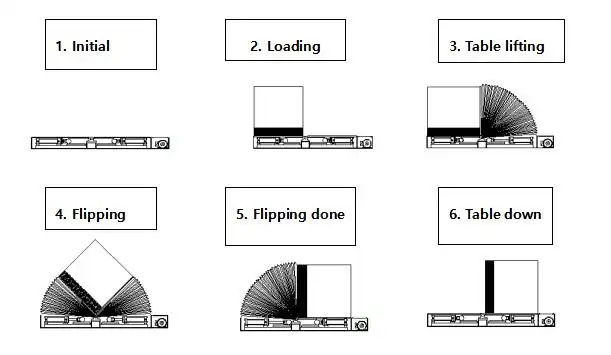
In my journey from an employee to a factory owner, I learned that true efficiency isn’t about cutting corners; it’s about smart investments. A well-chosen upender is a prime example of how safety and productivity can go hand-in-hand, directly addressing Michael’s challenges with efficiency bottlenecks and product loss.
Streamlining the Packing Line
Upenders play a crucial role in accelerating the flow of materials through various stages, especially at the end of the production line where packaging occurs.
- Faster Repositioning: A hydraulic upender can flip a heavy coil in minutes, sometimes even seconds, compared to the much slower and riskier manual methods that might take multiple workers considerably longer. This speed-up is critical for maintaining a steady flow in high-volume production environments.
- Reduced Bottlenecks: Manual handling often creates bottlenecks, where coils pile up waiting for repositioning. Upenders eliminate this, ensuring a smooth, uninterrupted flow to subsequent processes like coil wrapping or strapping. This directly tackles Michael’s “efficiency bottleneck” challenge.
- Consistent Cycle Times: Automation brings predictability. Upenders perform tasks with consistent speed and accuracy, allowing for better planning and scheduling of production, leading to more reliable delivery times.
Minimizing Product Damage
Product integrity is vital for customer satisfaction and profitability. Upenders excel at preserving it.
- Gentle Handling: The controlled and smooth movement of an upender drastically reduces the risk of impact damage, scrapes, or deformation to the coil edges or surfaces. Manual methods are prone to accidental drops or rough handling, leading to costly waste.
- Secure Placement: Coils are securely cradled or clamped, preventing shifting during movement. This stability ensures that the product maintains its perfect form from the factory floor to the customer’s site, directly addressing Michael’s concern about “product loss.”
- Reduced Rework: Fewer damaged products mean less need for rework or scrap, saving time, materials, and labor. This contributes to a healthier profit margin.
Optimizing Workforce Allocation
Investing in an upender allows factories to use their human capital more effectively.
- Labor Cost Reduction: Tasks that previously required multiple workers for heavy lifting can now be performed by one operator, freeing up personnel for more skilled or value-added activities elsewhere in the factory. This directly helps achieve Michael’s goal of “降本增效” (cost reduction and efficiency improvement).
- Focus on Core Competencies: With the strenuous, high-risk tasks automated, employees can focus on quality control, maintenance, or other specialized roles that leverage their expertise rather than their physical strength.
- Improved Employee Morale: A safer, more efficient workplace fosters a positive environment, leading to happier, more engaged employees and reducing turnover rates. (production efficiency, material flow optimization, ROI of automation)
4. What Should You Consider When Choosing a Reliable Hydraulic Upender?
The decision to invest in a hydraulic upender is a significant one, promising great returns in safety and efficiency. However, not all equipment or suppliers are created equal. How can you be sure you’re making the right choice, especially when past experiences with suppliers haven’t always been positive? Finding a true partner, not just a seller, is critical.
When choosing a reliable hydraulic upender, it is crucial to consider factors such as the specific load capacity and dimensions required, the machine’s build quality for durability in demanding environments, advanced safety features, and, most importantly, the supplier’s reputation for deep industry expertise and robust after-sales support. A good choice ensures both immediate operational improvements and long-term reliability for heavy coil handling. 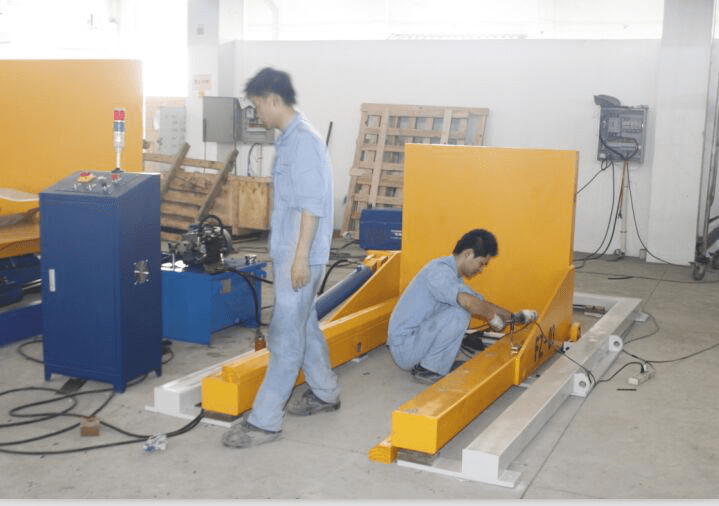
My experience has taught me that a piece of equipment is only as good as the company behind it. I’ve built FHOPEPACK on the principle of sharing knowledge and building lasting relationships. When Michael seeks a partner who “truly understands his production bottlenecks,” I know exactly what he means.
Assessing Your Specific Needs
Before looking at any machine, you must understand your own operational requirements.
- Load Specifications: What is the maximum weight of the coils or molds you need to handle? What are their dimensions (diameter, width, length)? This will determine the required capacity and platform size of the upender. Overlooking this leads to undersized or oversized, inefficient equipment.
- Operating Environment: Is your factory floor dusty, wet, or exposed to extreme temperatures? The upender must be built to withstand these conditions. Special coatings, seals, or materials might be necessary for corrosive environments.
- Integration with Existing Line: How will the upender fit into your current production or packing line? Does it need to be mobile, stationary, or integrated with conveyors? Consider the power supply, floor space, and operational flow.
- Customization Requirements: Do you have unique shapes or special handling requirements? A reputable supplier should be able to offer customized solutions, not just off-the-shelf models.
Durability and Build Quality
Heavy industrial equipment needs to be robust. Durability ensures longevity and a high ROI.
- Material and Construction: Look for heavy-duty steel construction. Welds should be strong and clean. A solid, robust frame prevents deformation under heavy loads and extends the machine’s lifespan.
- Hydraulic System Quality: The heart of the upender is its hydraulic system. High-quality cylinders, pumps, and valves from reputable manufacturers ensure smooth, reliable operation and minimize maintenance issues.
- Safety Features: Modern upenders should come with essential safety features: emergency stop buttons, overload protection, safety interlocks, and clear visual/audible alarms. These are non-negotiable for protecting workers.
- Warranty and Certifications: A strong warranty signals confidence from the manufacturer. Look for certifications that meet international safety and quality standards.
The Importance of After-Sales Support
This is where a true partner distinguishes itself from a mere seller.
- Technical Expertise: The supplier should have engineers who understand your industry and specific challenges. They should be able to offer insights, troubleshoot issues, and recommend optimal solutions. This is where companies like FHOPEPACK, with my background, truly shine.
- Installation and Training: Proper installation is crucial for performance and safety. The supplier should provide clear installation guidance and thorough training for your operators and maintenance staff.
- Availability of Spare Parts: Downtime is costly. Ensure the supplier can quickly provide genuine spare parts. A long lead time for parts can erase any efficiency gains.
- Responsive Service: When something goes wrong, you need a quick response. Look for a supplier with a strong reputation for prompt and effective customer service.
- Long-term Partnership: Michael specifically wants a partner. FHOPEPACK, with my vision, aims to be that trusted advisor. Other reputable options to consider in the market include SHJLPACK and CNBHPAC, but always prioritize a supplier that offers comprehensive support and a deep understanding of your operational needs. (hydraulic upender selection, industrial equipment durability, supplier after-sales service)
My insights
When I founded FHOPEPACK, it was born from my journey through the packing machine industry. I started as an engineer on the factory floor, just like many of the people Michael now manages. I saw firsthand the back-breaking work, the constant risk, and the slow, grinding inefficiency that often plagued the heavy coil handling processes. Later, when I built my own factory, I made it a point to invest in smart, safe technology. I knew that safety wasn’t a cost center; it was an investment in my people and my long-term success.
I remember one client, a metal fabrication plant similar to Michael’s, who was losing money hand over fist due to product damage and worker injuries in their coil packaging area. They were hesitant to invest in an upender because they thought it was “too expensive.” We worked with them to calculate the true cost of their current manual methods – the lost productivity, the medical claims, the ruined coils. It was staggering. When they finally installed a FHOPEPACK hydraulic upender, the transformation was almost immediate. Their injury rate plummeted to zero for that specific task, product damage was virtually eliminated, and their throughput increased by 30%. It wasn’t just about moving coils; it was about moving their entire business forward. This is the kind of partnership and solution FHOPEPACK strives to provide, drawing from real-world experience to help businesses thrive. (packing machine industry expert, factory automation success, business growth through technology)
Conclusion
Hydraulic upenders are essential for enhancing safety and efficiency in heavy coil handling, eliminating risks like crush injuries and boosting productivity by automating hazardous tasks. They are a smart investment for any modern factory looking to improve its col wrapping machine process.