
How Do Steel Coil Packing Lines Support Efficiency in Dutch Metal Plants?
Have you ever walked through a metal plant in the Netherlands and seen the struggle at the end of the production line? You know, that critical point where finished steel coils need to be packed and shipped? I have seen it many times. Bottlenecks here do not just slow things down. They cause huge headaches, from missed deadlines to unhappy customers. This is a common problem for many plants.
Steel coil packing lines are a game-changer for Dutch metal plants. They bring significant efficiency gains by automating crucial tasks. These lines reduce manual labor, increase output consistency, and ensure high-quality packaging. This helps plants meet strict customer demands and maintain continuous production flow.

I have spent many years in the packing machine industry. I know that simply having a machine is not enough. You need a solution that truly integrates and makes a difference. Let us explore how these advanced packing lines are changing the game for efficiency. We will see why they are so vital for metal plants, not just in the Netherlands, but everywhere.
Why Do Dutch Metal Plants Struggle with Manual Coil Packaging?
Are you feeling the pressure of manual coil packaging in your plant? Many plant managers in the Netherlands face similar issues. I often hear about the challenges. Relying on people for heavy, repetitive tasks creates a lot of problems. It leads to slower work and higher costs. This often impacts the plant’s overall success.
Dutch metal plants often struggle with manual coil packaging due to several key factors. These include a growing shortage of skilled labor, inconsistent packaging quality from human error, and the difficulty of adapting to diverse product types quickly. These issues slow down operations and increase operational risks.
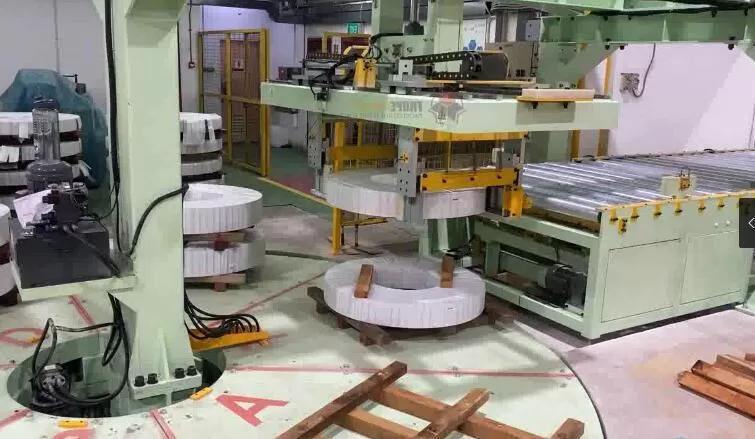
My journey in this industry started on the factory floor. I saw first-hand how manual processes can hold a business back. It is not just about moving coils. It is about speed, safety, and consistent quality. When these are missing, it causes real problems for a plant.
1. 📉 Labor Shortages and High Turnover
Manual coil packing is tough work. It needs a lot of physical effort. Workers must handle heavy steel coils. They must secure them with straps and wrap them by hand. This job is physically demanding. It is also repetitive. Many young workers do not want to do this kind of work for long. This leads to a high turnover rate in packaging departments. When staff leave, it creates gaps in the workforce. Plants then struggle to find new, skilled workers. Training new staff takes time and money. This cycle causes constant disruption. It makes it hard to maintain a steady production pace. I have seen plants that lose valuable time just because they do not have enough people to pack coils. This problem is especially noticeable in regions like the Netherlands, where labor costs are higher and skilled workers are in demand. The reliance on manual labor becomes a bottleneck. It prevents the entire production line from reaching its full potential. Plants need a solution that reduces this dependence on human hands.
2. ⚠️ Inconsistent Packaging Quality and Safety Risks
When people pack coils, the quality can vary. One worker might apply tension differently from another. This means some coils might be strapped too loosely. Others might be wrapped unevenly. This inconsistency is a big problem. It can lead to packaging failures during transport. A loose strap might allow the coil to shift. An uneven wrap might not protect the coil from moisture. Customers then complain about damaged goods. This harms the plant’s reputation. It can also lead to costly returns or penalties. Beyond quality, manual coil handling is dangerous. Workers often use cranes or forklifts to move heavy coils. They must stand close to these moving parts. There is always a risk of accidents. Fingers can get caught. Backs can get strained. Serious injuries can happen. I have always believed that worker safety must be a top priority. Automating these tasks removes people from harm’s way. This makes the workplace much safer. It also ensures every coil gets packed the same way, every time.
3. 🔄 Complex Product Mix and Slow Changeovers
Modern steel plants produce many types of coils. They make cold rolled coils, galvanized coils, and color-coated coils. Each type might need different packaging. Some need PET straps. Others need steel bands. Some require special anti-corrosion film. Others need simple stretch wrap. When workers pack manually, they must switch tools and materials for each different coil type. This takes time. It slows down the entire packing process. Imagine a line that produces hundreds of tons every day. Even a few minutes of delay for each changeover adds up. This reduces overall efficiency. It prevents the plant from being flexible. It makes it hard to meet tight production schedules. I have seen many plants struggle with this. They need a system that can adapt quickly. It must switch between different packaging styles with minimal human input. This allows them to handle diverse orders without losing precious time.
How Do Automated Coil Packing Lines Solve Production Bottlenecks?
Are you tired of seeing your valuable steel coils sitting, waiting to be packed? This is a common bottleneck. It slows down your entire production. I know the feeling of wanting to move products faster and smoother. Automated coil packing lines are the answer. They clear these bottlenecks. They allow your plant to run at its best.
Automated coil packing lines solve production bottlenecks by integrating various steps into a continuous flow. They perform tasks like strapping, wrapping, and labeling much faster and more reliably than manual methods. This automation ensures consistent throughput. It also reduces downtime and keeps the production line moving without interruption.

I started FHOPEPACK because I believe in the power of smart solutions. Seeing a fully automated line work smoothly is incredible. It transforms a chaotic packaging area into a highly efficient operation. This is exactly what metal plants need today.
1. 🚀 Increased Throughput and Continuous Operation
Automated coil packing lines work non-stop. They do not get tired. They do not need breaks. This means your plant can run 24 hours a day, seven days a week. This is especially important for two-shift production environments common in Dutch metal plants. These machines can handle coils much faster than people. They apply straps and wrap films with precision and speed. This significantly increases the number of coils packed per hour. It directly boosts your overall production output. I remember a client telling me how their manual line could only pack a certain number of coils per shift. After installing an automated system, their output almost doubled. This jump in throughput allows plants to fulfill larger orders. It helps them meet tighter deadlines. It also ensures a steady flow of finished products. This constant movement is crucial for maintaining efficiency across the entire manufacturing chain. It prevents finished goods from piling up and causing delays.
2. ⚙️ Seamless Integration and Reduced Manual Intervention
A true automated packing line is more than just one machine. It is a series of machines working together. They integrate seamlessly with your existing production line. Coils move from the slitting or cold rolling line directly to the packing system. This removes the need for manual handling between stages. It reduces the risk of damage. It also frees up your workers. They can focus on more complex tasks. The system uses sensors and controls to manage the flow. It detects coil size and weight. It then applies the correct packaging. This means fewer people are needed on the floor. It drastically cuts down on manual labor. My experience showed me that reducing manual touchpoints is key. It eliminates human error. It also improves safety. Plants become more productive with less effort. This kind of integration is what I envisioned when I started FHOPEPACK. It makes the entire process smoother and more reliable.
3. ✨ Consistent Quality Across All Coil Types
One of the biggest benefits of automation is consistency. Machines apply the exact same tension to every strap. They wrap every coil with the same film overlap. This ensures uniform packaging quality. It does not matter if it is a cold rolled coil, a galvanized coil, or a color-coated coil. The machine adapts its settings. It applies the right packaging materials and methods. This means every coil leaves your plant packed to the highest standard. This consistency is vital for customer satisfaction. It reduces complaints about damaged goods. It also protects your product during shipping. For me, quality is non-negotiable. An automated system guarantees this quality every time. This helps build a strong reputation for your plant. It also makes sure your products arrive in perfect condition, no matter where they are going.
What Role Do Coil Packing Lines Play in Ensuring Export Quality for European Markets?
Are you looking to expand into European markets? Exporting steel coils comes with strict demands. It is not just about producing a good coil. It is about how you pack it. Many plant managers find this a big challenge. I have seen how poor packaging can stop a great product from reaching its full potential overseas.
Coil packing lines are essential for meeting the stringent export quality standards of European markets. They provide advanced protection against moisture, rust, and scratches. These lines apply precise, secure packaging such as PET/steel strapping and robust wrapping. They also integrate automatic labeling, including barcodes, which ensures compliance with international certifications like CE/ISO.
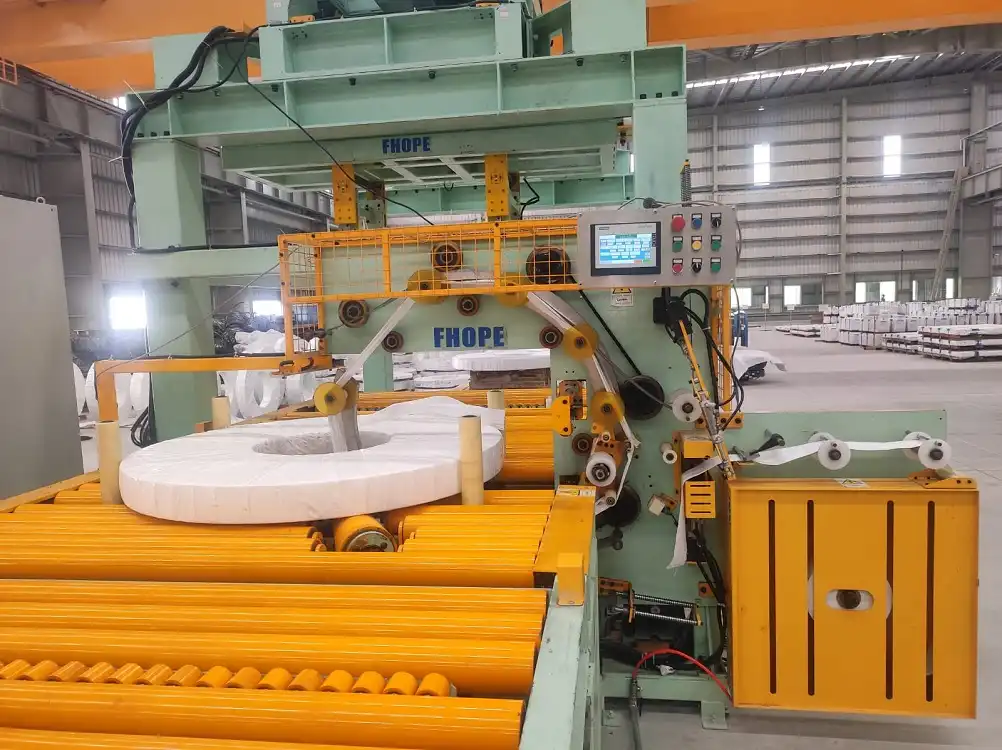
When I started FHOPEPACK, I knew that our solutions had to meet global standards. My clients often asked for packaging that could withstand long journeys. They needed packaging that met specific regulations. This is where modern packing lines truly shine.
1. 🛡️ Superior Protection Against Environmental Factors
European customers expect their steel coils to arrive in perfect condition. This means protecting them from various environmental factors during transit. Automated coil packing lines are designed for this. They apply layers of protection. First, they can use specialized anti-corrosion films. These films create a barrier against moisture and humidity. This prevents rust, which is a major concern for steel products. Second, they apply strong outer wraps, such as stretch film or shrink film. These wraps protect against dust, dirt, and minor scratches. The machines ensure tight and even application of these materials. This creates a secure, weather-resistant package. I have seen how even a small amount of moisture can ruin a coil’s surface. With automated lines, plants can guarantee this level of protection. This is crucial for maintaining the quality and value of the steel. It shows commitment to delivering a flawless product.
2. ✅ Compliance with International Certifications (CE/ISO)
For exporting to European markets, specific certifications are often required. CE marking and ISO standards are common examples. These certifications cover not only the product but also the manufacturing and packaging processes. Automated coil packing lines help plants achieve these standards. They provide consistent, documented processes. The machines perform tasks with repeatable precision. This makes it easier to track and verify packaging quality. Many automated lines can also integrate barcode printing and labeling. This is vital for traceability. It allows easy identification of products. It also helps manage inventory. These features are often prerequisites for international trade. I have guided many clients through the process of meeting these export demands. An automated system makes the compliance journey much smoother. It builds confidence with international buyers. It also opens up new market opportunities for Dutch metal plants.
3. 🎯 Adaptability for Diverse Customer Packaging Requirements
Customers in Europe often have unique packaging requirements. Some might specify PET strapping. Others might demand traditional steel strapping. Some need coils wrapped horizontally. Others prefer vertical wrapping. Automated coil packing lines offer this flexibility. They can be programmed to switch between different packaging methods quickly. For example, a line can apply two PET straps and then a full moisture barrier wrap. For the next coil, it can apply four steel straps and a protective outer film. This adaptability is key for catering to a diverse customer base. It ensures that each client’s specific needs are met. This personalized approach enhances customer satisfaction. It also helps build stronger business relationships. I have always emphasized the importance of customizable solutions. Our machines are designed to offer this versatility. They allow plants to meet almost any packaging specification with ease.
How Can Investing in Coil Packing Automation Reduce Operational Costs and Risks?
Are you constantly looking for ways to cut costs and make your plant safer? Every business owner, myself included, wants to optimize operations. Manual processes often hide many indirect costs and risks. These can eat away at your profits. They can also create hazards for your team.
Investing in coil packing automation significantly reduces operational costs and risks. It minimizes labor expenses by reducing the need for manual workers. It lowers material waste through precise application. Automation also decreases the chance of accidents and product damage. This leads to a safer workplace and higher overall profitability for metal plants.
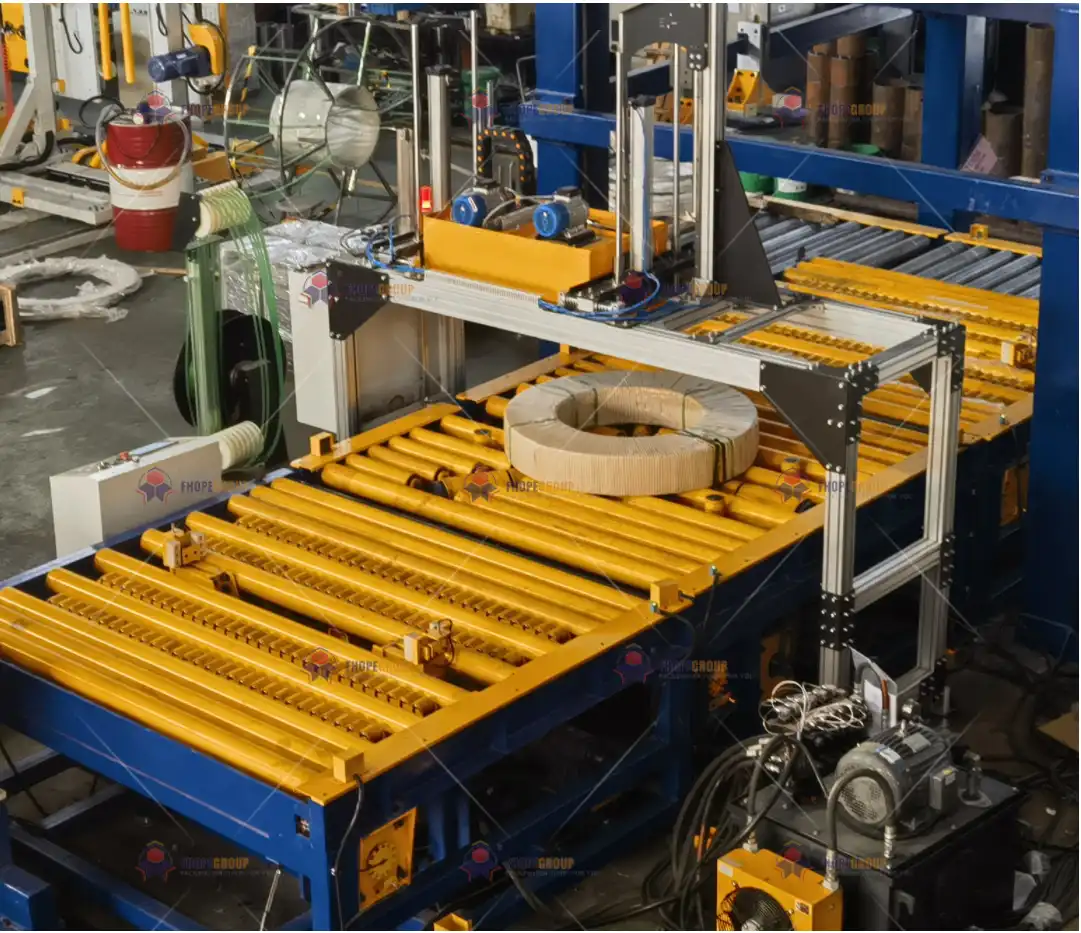
When I started my own factory, I learned the value of smart investments. It is not just about buying a machine. It is about buying a solution that pays for itself many times over. Automation in coil packing offers a clear return on investment. It creates a more efficient and safer future for your plant.
1. 💰 Significant Reduction in Labor Costs
Manual coil packing requires a large workforce. Each worker needs a salary, benefits, and training. As I mentioned before, finding and keeping these workers is a growing challenge. An automated coil packing line can replace several manual laborers. This means you need fewer employees for the packaging task. Over time, the savings on salaries and benefits are substantial. While there is an initial investment in the machine, the long-term cost reduction is very clear. I have seen plants reallocate their skilled workers to more critical tasks. This makes your existing team more effective. It reduces your overall operational expenditure. This is especially true in countries like the Netherlands, where labor costs are higher. The machine does the heavy lifting. Your team manages the operations. This shift makes your plant much more cost-efficient in the long run.
2. 📉 Lower Packaging Material Waste and Energy Use
Manual strapping and wrapping often lead to waste. Workers might cut straps too long. They might use too much film. They might make mistakes that require re-packaging. Automated machines are precise. They apply the exact amount of strapping and film needed for each coil. This minimizes waste. It means you buy less material over time. This directly impacts your bottom line. Modern packing lines also use energy efficiently. They are designed to operate with optimized power consumption. This helps reduce your utility bills. I always aim for solutions that are not just effective but also economical. Reducing material waste and energy use contributes to a greener operation. It also adds to your profits. It shows how automation brings benefits in many different areas of your plant.
3. ⚖️ Minimized Accident Rates and Product Damage Claims
Safety is paramount in any heavy industry. Manual handling of steel coils carries a high risk of accidents. Workers can suffer injuries from heavy lifting, crushing, or repetitive strain. Automated systems remove human operators from the dangerous areas. Coils are moved, flipped, and packed mechanically. This drastically reduces the risk of workplace accidents. A safer workplace means fewer medical claims. It also means less lost productivity from injured workers. Furthermore, consistent packaging quality from automation reduces product damage during transit. Fewer damaged products mean fewer customer complaints. It means fewer returns and less financial liability. I have always championed safety. Automation is one of the best ways to protect your team and your product. It leads to a more stable and reliable business operation.
Conclusion
Automated coil packing lines are transforming Dutch metal plants. They move operations from slow and risky manual work to fast, safe, and consistent automation. This brings huge gains in efficiency, quality, and cost savings. Investing in a modern coil packing line means a smarter, more profitable future. It helps plants meet global demands and stay competitive.








