
How Do Steel Coil Packing Lines Help Luxembourg Firms Meet EU Compliance?
Steel mills in Luxembourg face a tough challenge. They must deliver high-quality products. But they also need to meet strict European Union rules for packaging. This is not easy. Poor packaging can cause big problems. It leads to damaged goods, unhappy customers, and even fines. Many firms struggle to keep up with these demands while also trying to cut costs and improve worker safety. They often use old methods that are slow and risky. This situation creates a real headache for production managers.
Steel coil packing lines offer a powerful solution for Luxembourg firms to meet EU compliance. These automated systems ensure consistent, high-quality packaging. They reduce the risk of damage, meet strict safety standards, and provide necessary documentation for export. This helps companies avoid penalties and keep customers satisfied across the EU market.
I remember when I first started in this industry. I saw these problems up close. Firms needed better ways to pack their products. They needed solutions that made sense for their business. This is why I started FHOPEPACK. I wanted to help businesses find the right tools. Today, modern packing lines are not just about machines. They are about smart solutions that solve complex problems. Let’s look at how they help Luxembourg firms navigate the complex world of EU compliance.
Why is EU compliance a critical concern for Luxembourg steel exporters?
Are you a steel exporter in Luxembourg? Then you know the European Union market is huge. It offers many opportunities. But it also has very strict rules. Not following these rules can lead to big problems. It can hurt your business greatly. Companies often worry about the costs of non-compliance. They fear lost sales, rejected shipments, and damaged reputations. This constant pressure makes meeting EU standards a top priority.
EU compliance is a critical concern for Luxembourg steel exporters because it directly affects market access and profitability. Non-compliance can result in severe penalties, product recalls, and harm to brand trust. These regulations cover product quality, packaging standards, and worker safety. Luxembourg firms must meet these rules to trade effectively within the single market.
In my years helping clients, I have seen firms struggle with this. Many of them face challenges like diverse product types and changing customer needs. These issues make it hard to maintain consistent quality. For example, some EU customers require special certifications like CE or ISO. They also demand specific anti-corrosion measures and clear labeling. Without the right packaging, these requirements are almost impossible to meet. Manual packing methods often fail to deliver the needed consistency and quality. This puts Luxembourg firms at a disadvantage. They need a better way to ensure every coil meets EU rules before it leaves the factory floor.
-
Market Access and Legal Obligations:
- EU member states, including Luxembourg, must follow common market rules. These rules ensure fair trade and consumer protection.
- For steel products, this means meeting specific standards for material, quality, and safety. Packaging is a key part of this. It protects the product and provides necessary information.
- Firms must comply with directives like the Machinery Directive (for any integrated packaging machinery) and various environmental regulations. These rules govern how products are made, packaged, and transported.
- Not complying means products cannot enter certain markets. It can also lead to legal action. This is a big risk for any business.
- My experience: I once worked with a client who had a shipment rejected. It was because of improper labeling on their steel coils. The labels did not meet the exact EU format. This caused huge delays and extra costs. This incident taught me that even small details in compliance matter greatly.
-
Quality and Customer Trust:
- EU customers expect high quality. They also expect reliable delivery. Packaging plays a huge role in this.
- Proper packaging protects steel coils from damage during transport. This includes scratches, rust, and moisture.
- When coils arrive in perfect condition, customers are happy. This builds trust. It also encourages repeat business.
- Bad packaging leads to damaged goods. This causes customer complaints, returns, and lost sales. It can also harm a company’s reputation for good.
- Ivan Petrov’s challenge: He knows inconsistent packaging quality can cause complaints and contract penalties. This is a common issue that automated lines directly solve.
-
Environmental and Safety Standards:
- The EU has strict environmental rules. These rules cover packaging materials and waste management.
- Firms must choose packaging that is recyclable or sustainable where possible. They must also reduce packaging waste.
- Worker safety is also a big concern. EU regulations protect workers from hazards. Manual coil handling and packaging can be dangerous. It involves heavy loads and repetitive tasks.
- Automated systems reduce manual labor. This lowers the risk of accidents and injuries. It helps firms meet safety compliance.
- FHOPEPACK’s mission: We focus on solutions that improve safety. I always tell my team that a safe workplace is a productive workplace. This is not just good for workers. It is also good for business and for meeting EU rules.
How do automated packing lines ensure consistent, compliant packaging quality?
Many steel firms still rely on manual packaging. This often leads to variable quality. One coil might be packed perfectly. The next might have loose straps or uneven film. This inconsistency is a major problem for meeting EU standards. Customers expect every single product to be perfect. Automated packing lines promise a solution to this. But can they truly deliver uniform, compliant quality every time?
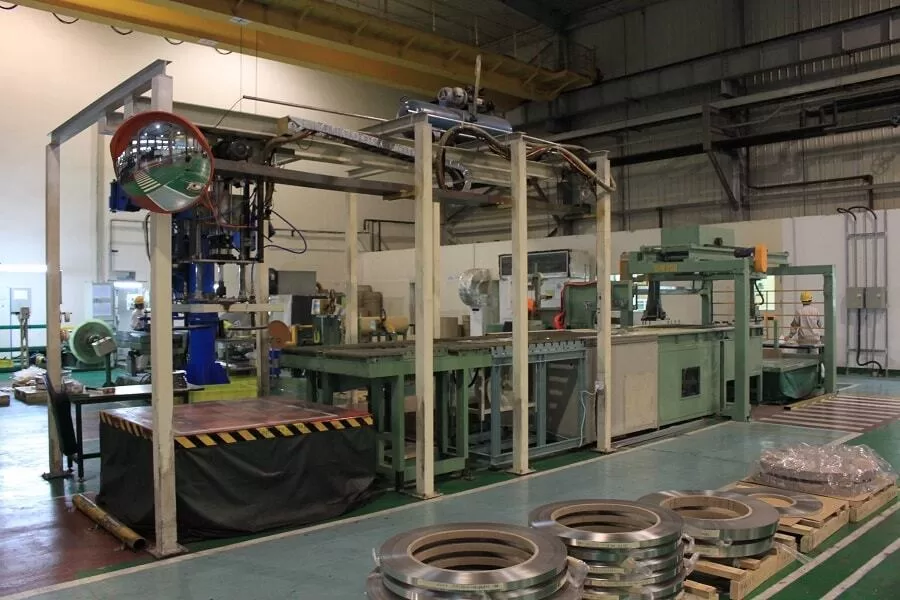
Automated steel coil packing lines ensure consistent, compliant packaging quality through precise control over every step. They use sensors and programming to apply materials like strapping and film with exact tension and placement. This eliminates human error and guarantees that each coil meets specified thickness, anti-corrosion, and labeling standards required for EU exports.
I’ve spent years developing packing solutions. I know firsthand how vital consistency is. When I started FHOPEPACK, our goal was to remove guesswork from packaging. A fully automated line handles everything. It takes the coil from the production line. It then measures, wraps, straps, and labels it. All these steps follow preset parameters. This means every coil gets the same high-quality treatment. This is true whether it is a cold-rolled, galvanized, or color-coated coil. It is especially important for the demanding EU market. Here, strict quality checks are routine. Such automation also means less material waste. It ensures proper protection against moisture and physical damage. This makes sure the steel coils arrive at their destination ready for use.
-
Precision and Repeatability:
- Automated systems use advanced controls. These controls ensure exact application of packaging materials.
- Robotic arms and tensioning devices apply film and strapping with consistent force. This prevents loose or overtightened wraps.
- Each coil receives the same amount of protection. This is regardless of its size or weight. This level of precision is impossible with manual labor.
- Example: For anti-corrosion, the wrapping machine applies stretch film or VCI paper evenly. This creates a tight, sealed barrier. This protects the steel from rust and moisture during shipping. This is a key requirement for many EU buyers.
-
Customization and Adaptability:
- Modern packing lines are highly flexible. They can quickly adjust to different coil sizes and types.
- They handle coils from 1 to 3 tons. They also adapt to varying inner and outer diameters.
- Settings can be saved for different product specifications. This makes switching between cold-rolled, galvanized, and color-coated coils simple.
- The system can apply different packaging layers. This includes PET/steel strapping, stretch film, shrink film, or VCI paper. This meets specific customer requirements for weather protection and anti-scratch needs.
- Ivan Petrov’s challenge: He deals with product diversity and manual switching. An automated line solves this by allowing quick, programmed changes. This boosts efficiency and consistency across all product lines.
-
Integrated Quality Control and Documentation:
- Many automated lines include built-in quality checks. Sensors can detect issues like loose wrapping or missing labels.
- They can also integrate with a factory’s IT systems. This allows for automatic data capture.
- This data includes packaging parameters, timestamps, and product details. This helps create a complete audit trail.
- Barcoding and automatic labeling systems ensure correct product identification. This is vital for traceability within the EU supply chain.
- Compliance benefits: This data helps firms prove they met all packaging requirements. It provides evidence for CE/ISO certifications. It also supports faster customs clearance.
Can advanced packing lines truly boost efficiency and worker safety in EU operations?
In a busy steel mill, efficiency and safety are always critical. Manual coil handling is slow. It also puts workers at risk. Heavy coils need special care. Repetitive tasks lead to fatigue and potential injuries. Many managers wonder if new packing lines can really make a difference. Can they truly make operations faster and safer without creating new problems?
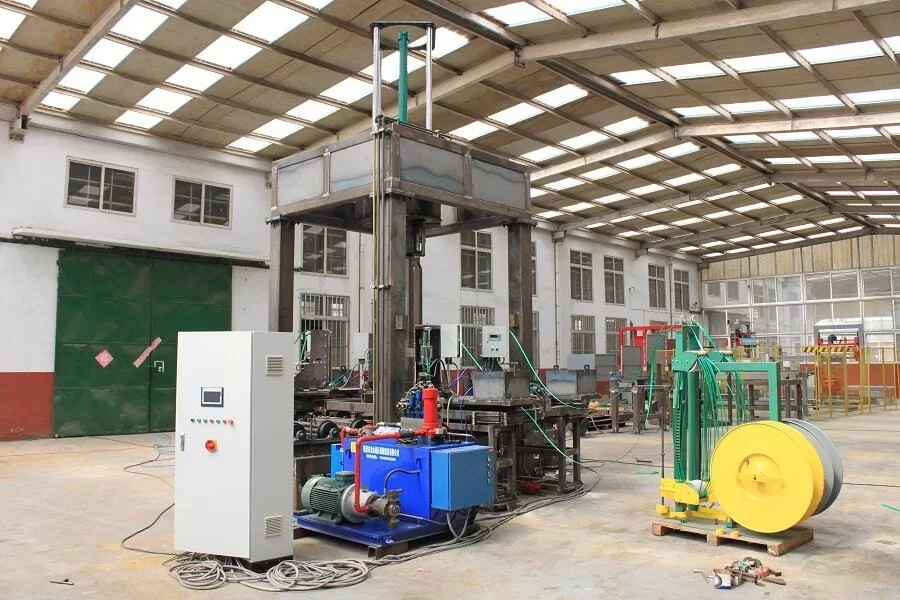
Yes, advanced steel coil packing lines significantly boost efficiency and worker safety in EU operations. They automate hazardous tasks like lifting, turning, and strapping heavy coils. This reduces manual labor and the risk of accidents. Their continuous, high-speed operation processes hundreds of tons daily, leading to faster output and less downtime, aligning with strict EU safety standards.
From my experience, watching a well-designed automated packing line work is impressive. I remember one client who faced serious labor shortages. His workers were getting injured often. He came to us looking for a solution. We installed a new line. It handled everything from turning the coils to final labeling. The change was remarkable. His team saw fewer accidents. Their output increased. They also started meeting tight deadlines much easier. This is because these machines do the heavy, dangerous, and repetitive work. This frees up human workers for tasks that need more skill or supervision. It creates a safer, more productive environment for everyone. This is a win-win for any Luxembourg firm. It meets both operational goals and EU worker safety rules.
-
Reduced Manual Labor and Injury Risk:
- Heavy steel coils are dangerous to handle manually. They can cause severe injuries.
- Automated lines remove workers from direct contact with heavy loads. They use mechanical systems to lift, turn, and move coils.
- This eliminates the need for manual strapping, which can cause strain and cuts.
- The result is a sharp drop in workplace accidents. This protects workers. It also lowers costs from injuries and lost workdays.
- Ivan Petrov’s challenge: He highlighted high turnover among young workers due to high-intensity tasks. Automation directly addresses this by making the workplace safer and less physically demanding.
-
Increased Speed and Throughput:
- Automated packing lines work continuously. They do not get tired. They work faster than human workers.
- They can process hundreds of tons of steel coils per day. This significantly increases output.
- This continuous operation means fewer bottlenecks in the production flow. It ensures a steady stream of finished products.
- Higher throughput helps firms meet tight delivery schedules. It also allows them to take on more orders. This increases their market share within the EU.
- My story: I remember visiting a small steel factory struggling with output. They had a strong market demand but their packing department was too slow. After implementing an automatic packing line, their daily output almost doubled within months. They became much more competitive.
-
Optimized Workflow and Space Utilization:
- Integrated packing lines streamline the entire packaging process. They remove unnecessary steps and movements.
- Coils move smoothly from one station to the next. This creates a logical and efficient workflow.
- These systems often take up less space than scattered manual operations. This frees up valuable factory floor area.
- This optimized layout improves overall factory efficiency. It also helps maintain a tidy and safe working environment. This is important for EU regulatory compliance.
- FHOPEPACK’s approach: When we design solutions, we always consider the entire production flow. We look for ways to make every step seamless and efficient. This holistic view is crucial for true operational improvement.
Do modern steel coil packing lines offer a sustainable competitive edge and long-term value?
Investing in an automated packing line is a big decision. It requires a significant upfront cost. Many firms wonder if this investment truly pays off over time. Can it provide a lasting advantage in the competitive EU market? Does it just solve immediate problems, or does it build a stronger future for the business? These are fair questions for any Luxembourg firm looking at long-term growth.
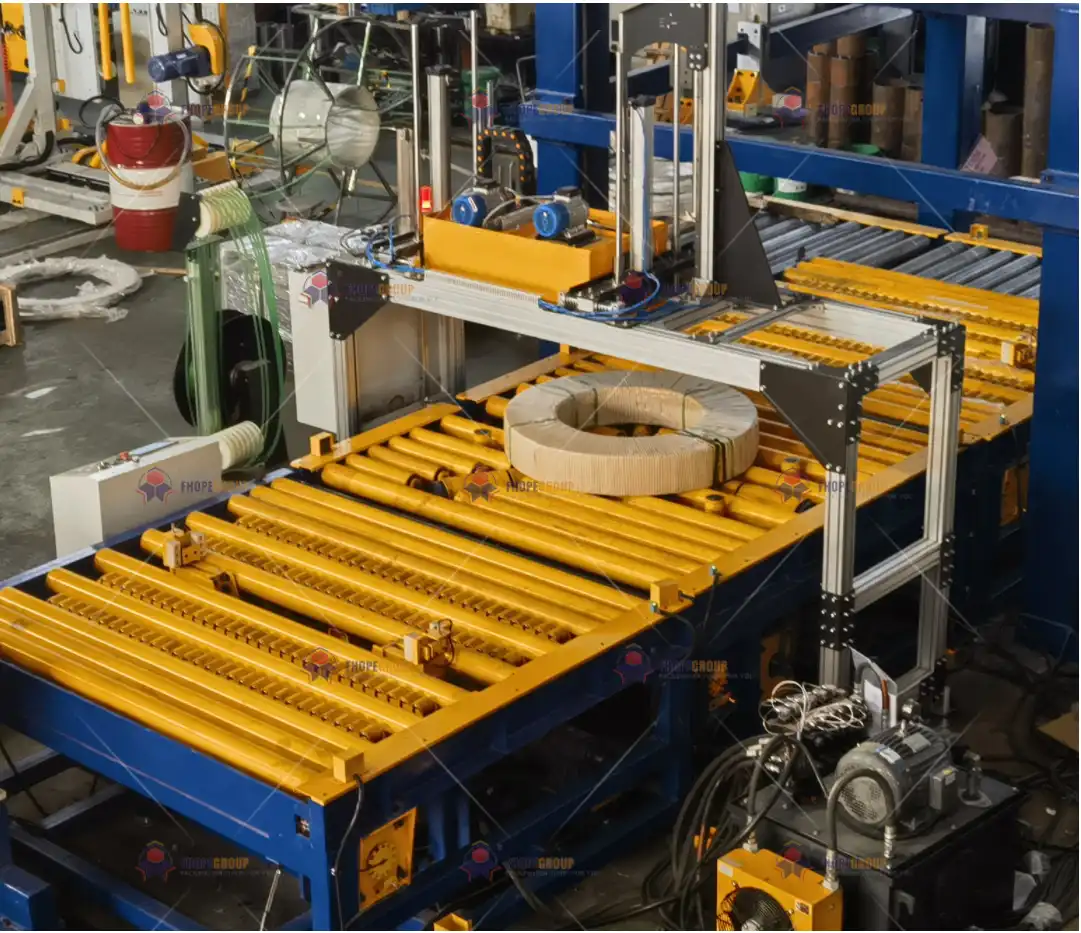
Yes, modern steel coil packing lines offer a sustainable competitive edge and long-term value. They reduce operational costs through lower labor needs and less material waste. They enhance brand reputation with consistent, high-quality packaging. This allows firms to meet demanding EU standards easily. Such an investment future-proofs operations, adapting to evolving market needs and regulations for years to come.
When I advise clients, I always look beyond the immediate gains. I focus on the long-term picture. I have seen many businesses transform through strategic investments. An automated packing line is one such investment. It is not just about a single machine. It is about building a robust, efficient, and compliant operation. This becomes a core part of a company’s competitive strategy. Firms can gain market share by offering superior products with certified packaging. They can also attract better talent by providing safer workplaces. This holistic benefit creates lasting value. It positions Luxembourg firms strongly within the demanding EU and global markets.
-
Cost Reduction and ROI:
- While initial costs are high, automated lines offer significant savings over time.
- They drastically cut labor costs. They do this by reducing the number of workers needed for packaging.
- They minimize material waste. This is due to precise application and fewer errors.
- Reduced damage during transit means fewer returns and less rework. This saves money.
- The total cost of ownership is often lower than manual systems in the long run. The return on investment (ROI) can be very attractive for growing businesses.
- My philosophy: I always tell clients to look at the “big picture” cost. Sometimes, spending more upfront saves a lot more money later on. It’s about smart investment.
-
Enhanced Brand Reputation and Market Reach:
- Consistently high-quality packaging builds a strong brand image. It shows commitment to excellence.
- Meeting and exceeding EU compliance standards opens doors to new markets. It also strengthens relationships with existing clients.
- A reputation for reliability and quality makes a firm more attractive to buyers. This can lead to increased sales and market share.
- This is especially true for export-oriented firms in Luxembourg. They need to stand out in a crowded market.
- FHOPEPACK’s mission: Our mission is to help clients gain a deeper understanding of packing machines. This empowers them to make smart choices that build their brand.
-
Future-Proofing Operations and Adaptability:
- Modern packing lines are built for the future. They can adapt to new packaging materials and changing regulations.
- Their modular design allows for upgrades and modifications as technology advances.
- This flexibility ensures the investment remains relevant for many years. It protects firms from obsolescence.
- It also allows firms to respond quickly to new customer demands or market trends. This is key for long-term success in a dynamic industry.
- Ivan Petrov’s goal: He seeks a long-term partner. This shows the value of choosing a solution that can grow and change with the business. It is about a lasting partnership, not just a one-time sale.

Conclusion
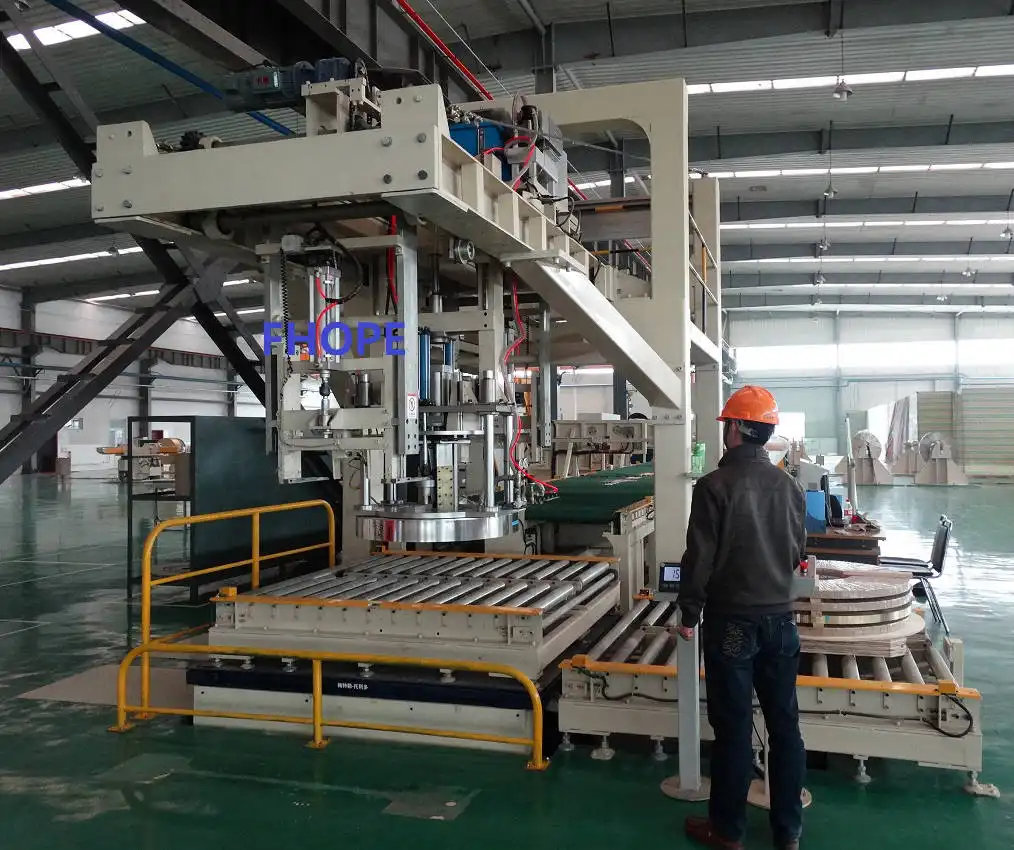
Steel coil packing lines are vital for Luxembourg firms. They help meet strict EU compliance. These systems ensure consistent quality and boost worker safety. They also cut costs and increase efficiency. Investing in a coil packing line provides a sustainable competitive edge. This allows businesses to thrive in the demanding European market. It is a smart move for long-term success.








