
How Do Slit Coil Handling Systems Reduce Forklift Usage in Coil Transport?
Are you struggling with the complexities of moving heavy slit coils around your facility? Do rising operational costs, safety concerns, and the limitations of traditional forklift transport keep you up at night? I understand this challenge well. Throughout my journey, from an engineer to founding FHOPEPACK, I have seen firsthand how inefficient coil handling can impact a business. Many production managers, like Ivan in Russia, face daily hurdles in ensuring smooth, safe, and efficient movement of hundreds of tons of steel coils. The constant demand for faster processing and delivery puts immense pressure on existing logistics, often highlighting the shortcomings of relying heavily on forklifts. (coil transport challenges, steel mill logistics)
Slit coil handling systems drastically reduce forklift usage by automating the movement, stacking, and packaging of coils. These integrated solutions employ specialized equipment such as coil cars, automated guided vehicles (AGVs), conveyors, and robotic arms, creating a seamless material flow directly from the production line to storage or shipment, thereby minimizing manual intervention and the need for traditional forklift operations.
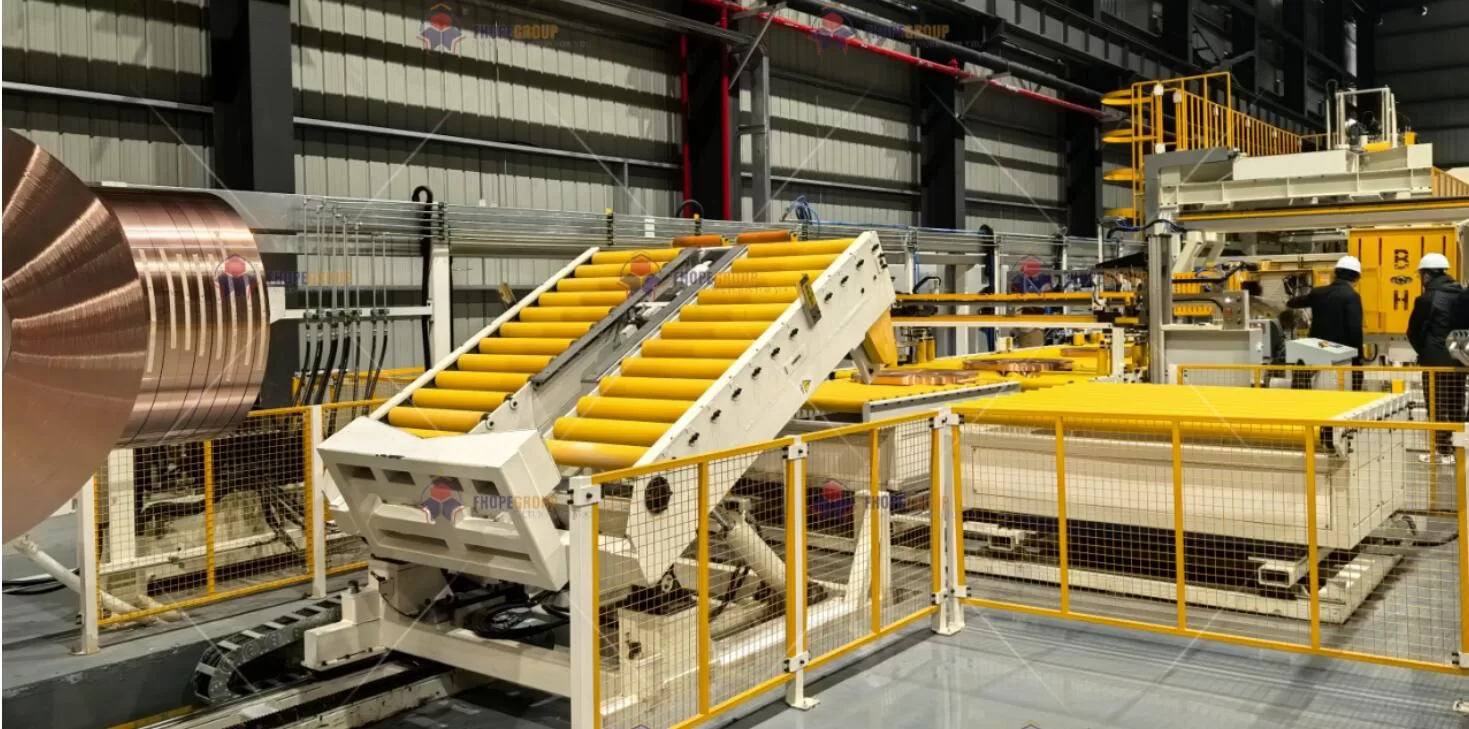
Understanding these challenges is just the first step. The real solution lies in embracing modern, automated approaches. In this article, I will explain how advanced slit coil handling systems revolutionize internal logistics, making your operations safer, faster, and more cost-effective. We will explore the technologies involved and the concrete benefits they bring to your steel mill or processing center, helping you achieve a new level of operational excellence. (automated logistics, steel coil solutions)
Why is Reducing Forklift Reliance a Game-Changer in Slit Coil Logistics?
Have you ever considered the hidden costs and risks associated with extensive forklift operations in your coil handling processes? The everyday sight of forklifts moving heavy steel coils might seem normal, but this common practice comes with significant drawbacks. From potential accidents and product damage to bottlenecks and high operating expenses, relying heavily on forklifts can silently erode your profitability and compromise workplace safety. (forklift risks, coil logistics efficiency)
Reducing forklift reliance in slit coil logistics is a game-changer because it directly addresses critical pain points such as safety hazards, operational inefficiencies, high labor costs, and product damage risks, replacing unpredictable manual processes with controlled, automated material flow that ensures consistency and boosts overall productivity.
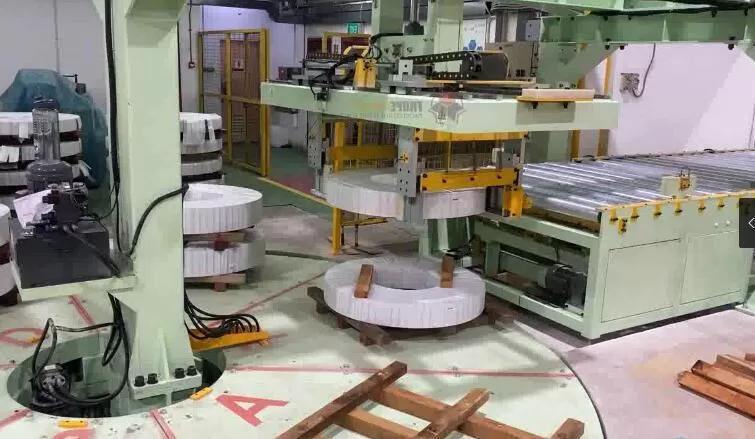
As someone who has spent years perfecting packing machine solutions, I have observed countless facilities grappling with these issues. The goal isn’t just to move coils; it’s to move them intelligently, safely, and efficiently. Automating this process opens doors to improvements that traditional methods simply cannot match. Let us dive deeper into the core reasons why minimizing forklift usage is crucial for any forward-thinking steel plant.
-
Enhancing Workplace Safety and Reducing Accidents
Reducing forklift traffic directly leads to a safer working environment. Heavy steel coils, often weighing 1 to 3 tons, pose significant hazards when transported by manual forklifts. Accidents can result in severe injuries, fatalities, and extensive property damage. For production directors like Ivan, safety is paramount, especially in a 24/7 operating environment where constant vigilance is difficult. Automated handling systems remove human operators from direct contact with moving coils, drastically lowering the risk of collisions and dropped loads. This not only protects your valuable workforce but also reduces the financial burden of workers’ compensation claims and regulatory fines. Implementing systems like coil transfer cars and robotic stackers ensures predictable and controlled movement paths, eliminating the human error factor that often contributes to accidents. These systems also comply with strict international safety standards, such as CE and ISO, which are increasingly important for export clients. By investing in automation, you are investing in the well-being of your employees and the long-term stability of your operations. (workplace safety, forklift accident reduction, automated coil transport)
- Reduced Collisions: Automated systems follow predetermined routes, eliminating unpredictable human driving behavior.
- Minimized Dropped Loads: Specialized grippers and conveyors secure coils better than forklift forks, reducing damage risk.
- Fewer Human-Machine Interactions: Operators can manage the system from a safe distance, away from heavy moving parts.
- Compliance with Safety Standards: Automated equipment often comes with built-in safety features and certifications, improving overall safety protocols.
-
Improving Operational Efficiency and Throughput
Forklift-dependent operations often suffer from bottlenecks, slowdowns, and inconsistent cycle times. Each forklift movement requires a driver, careful navigation, and sometimes waiting for other traffic. Slit coil handling systems, conversely, are designed for continuous, high-speed operation. They can move coils seamlessly between different processing stages, such as cold rolling, slitting, packing, and warehousing, without interruption. This continuous flow is vital for facilities dealing with hundreds of tons of daily output, like Ivan’s steel plant in Russia. Automation ensures that coils are always ready at the next station, eliminating idle time and optimizing the overall production rhythm. My experience at FHOPEPACK has shown that even minor delays in coil movement can have a ripple effect throughout the entire production line. By implementing a fully automated coil packing line, including features like automatic strapping, wrapping, and labeling, efficiency can be dramatically boosted, ensuring timely deliveries and meeting tight production schedules. (operational efficiency, coil throughput, automated material flow)
- Continuous Flow: Coils move without manual delays, linking processes from production to dispatch.
- Elimination of Bottlenecks: Automated transfer systems prevent accumulation of coils at transfer points.
- Consistent Cycle Times: Machine precision ensures predictable movement durations, aiding production planning.
- Faster Material Handling: Systems are optimized for speed and safety in handling heavy loads, cutting down transfer times.
-
Lowering Labor Costs and Mitigating Shortages
The increasing difficulty in finding and retaining skilled labor for physically demanding tasks like forklift operation and manual coil packing is a growing concern for many businesses. Ivan’s challenge of high turnover among younger workers in a high-intensity environment is common. Forklift operation requires trained personnel, and these roles can be costly to maintain, especially with overtime and benefits. Automated slit coil handling systems significantly reduce the reliance on manual labor. Instead of multiple forklift operators, you might need just one supervisor to monitor the entire automated line. This shift allows your workforce to be reallocated to more value-added activities, improving overall human resource utilization. Furthermore, automation can operate around the clock without breaks, sick days, or fatigue, ensuring consistent performance and significantly reducing the impact of labor shortages on your production schedule. The initial investment in automation quickly pays for itself through substantial long-term savings in labor costs. (labor cost reduction, automated workforce, material handling labor)
- Reduced Headcount: Fewer operators needed for coil transport and handling tasks.
- Reallocation of Labor: Employees can be moved to more skilled or supervisory roles.
- 24/7 Operation: Machines work continuously without human limitations or breaks.
- Mitigation of Shortages: Less reliance on a shrinking pool of manual labor for strenuous tasks.
-
Minimizing Product Damage and Packaging Inconsistencies
Manual forklift handling inherently carries the risk of damaging valuable steel coils through collisions, improper lifting, or accidental drops. Such damage can lead to costly scrap, rework, customer returns, and reputational harm. Automated slit coil handling systems use precise movements and specially designed mechanisms to cradle and transport coils, ensuring they remain pristine from the production line to final shipment. This is especially crucial for sensitive products like galvanized and pre-painted coils, where surface integrity is paramount. Beyond transport, integrated automated packing lines ensure consistent packaging quality. Ivan’s concern about inconsistent film tension and loose strapping from manual operations is a common issue. Automated strapping and wrapping machines apply consistent tension and secure packaging materials, protecting coils from moisture, rust, and scratches during storage and transit. This ensures that every coil meets high customer standards, including export requirements like CE/ISO certification and precise barcode application. (product damage prevention, consistent packaging, automated coil protection)
- Gentle Handling: Automated grippers and conveyors minimize impacts and scrapes on coil surfaces.
- Consistent Packaging: Machines apply uniform strapping and wrapping, preventing loose loads.
- Reduced Rework: Fewer damaged coils mean less time and material spent on repairs or re-packaging.
- Enhanced Customer Satisfaction: High-quality, undamaged products lead to fewer complaints and stronger client relationships.
What Automated Systems Replace Forklifts in Modern Coil Handling?
If forklifts are becoming a bottleneck, what are the viable alternatives? The answer lies in a suite of advanced automated systems specifically engineered for the heavy-duty demands of coil handling. These technologies move far beyond simple manual lifting, offering sophisticated, integrated solutions that transform the entire material flow within a factory. (automated coil handling, material flow solutions)
Modern automated systems replace forklifts in coil handling by employing specialized equipment such as heavy-duty coil transfer cars, automated guided vehicles (AGVs), conveyor systems, robotic manipulators, and integrated coil packing lines, which are all designed to safely and efficiently move, store, and package coils without human-driven machinery.
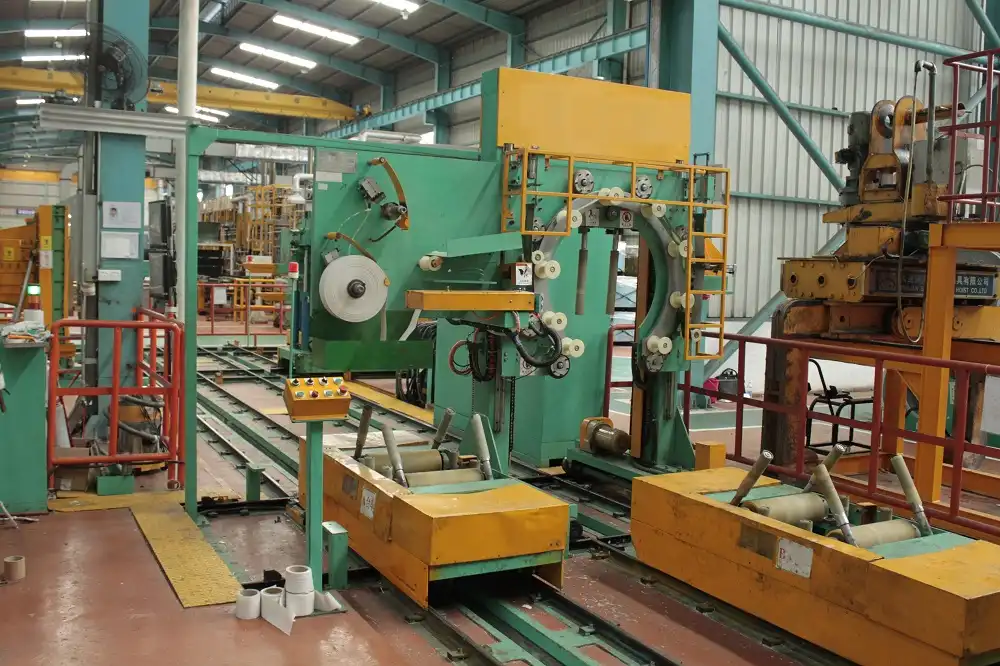
At FHOPEPACK, we pride ourselves on designing and implementing these very solutions. I have personally overseen the development of systems that seamlessly integrate these components, providing robust answers to complex logistical challenges. Let us explore the key technologies that make this transformation possible.
-
Coil Transfer Cars and Automated Guided Vehicles (AGVs)
Coil transfer cars and AGVs are foundational elements in automated coil handling, serving as the primary movers of coils across a facility. Coil transfer cars are heavy-duty, floor-mounted vehicles that transport coils along a fixed path, often between production lines, storage areas, or packaging stations. They are incredibly robust, capable of moving coils weighing several tons with precision. Their controlled movement eliminates the jerky starts and stops of forklifts, preventing product damage. AGVs, on the other hand, offer more flexibility. These autonomous robots navigate using sensors, lasers, or magnetic tape, moving coils between various points without human intervention or fixed tracks. They are ideal for situations where paths might change or where coils need to be delivered to multiple, variable destinations. Both technologies significantly reduce the need for forklift operators, freeing up labor and enhancing safety by removing human-driven heavy machinery from active production zones. For a steel plant like Ivan’s, handling diverse products and requiring high throughput, these systems ensure a consistent and reliable material flow, even in a two-shift, 24-hour operation. (automated coil transport, AGVs in steel mills, coil transfer technology)
- Coil Transfer Cars:
- Fixed Path Movement: Move coils along designated tracks, ensuring predictable delivery.
- High Load Capacity: Designed for the heaviest coils, often exceeding 50 tons.
- Precision Positioning: Deliver coils exactly where needed, integrating with other machines.
- Automated Guided Vehicles (AGVs):
- Flexible Routing: Can navigate complex layouts and adapt to changing production needs.
- Sensor-Based Navigation: Avoid obstacles and ensure safe operation in dynamic environments.
- Battery Powered: Offer quiet and emission-free operation, suitable for indoor use.
- Coil Transfer Cars:
-
Conveyor Systems and Roller Beds
Conveyor systems and roller beds provide continuous, gentle movement of coils, particularly for shorter distances or within specific processing zones like packing lines. Unlike forklifts, which require individual trips, conveyors can move multiple coils simultaneously, creating a steady flow. Roller beds are commonly used for horizontal movement, allowing coils to be pushed or rolled along. Powered roller conveyors, integrated into a larger system, can automatically transfer coils from one station to the next, often directly into a strapping or wrapping machine. These systems are invaluable for maintaining a consistent pace in a coil packing line. For example, after slitting, coils can be automatically transferred via a roller conveyor to an up-ender, then to a strapping machine, and finally to a wrapping machine. This seamless integration eliminates the need for forklifts at each transition point, reducing manual handling, potential damage, and ensuring a continuous workflow for different coil sizes and weights, a critical requirement for Ivan’s varied product portfolio. (coil conveyor systems, automated roller beds, continuous coil flow)
- Roller Conveyors:
- Horizontal Movement: Ideal for moving coils over flat surfaces between processes.
- Accumulation Capability: Can hold multiple coils, acting as a buffer between stations.
- Integration with Other Equipment: Easily connect to up-enders, strapping, and wrapping machines.
- Chain Conveyors:
- Heavy-Duty Transport: Suitable for extremely heavy coils over longer distances.
- Resistant to Harsh Environments: Built to withstand demanding steel mill conditions.
- Smooth and Stable Movement: Prevents swaying or jostling of coils during transport.
- Roller Conveyors:
-
Robotic Arms and Manipulators for Specific Tasks
Robotic arms and manipulators bring precision and versatility to specific, often repetitive, coil handling tasks that traditionally relied on human labor or forklifts. These robots can be programmed to perform actions like picking and placing smaller slit coils onto pallets, applying labels with barcodes, or even assisting with certain aspects of strapping and wrapping. While a forklift might move a pallet of coils, a robotic arm can meticulously arrange individual coils onto that pallet, ensuring optimal stacking and space utilization. For tasks requiring high accuracy, such as automatic labeling or strapping for export clients demanding CE/ISO certification, robots excel. They perform these operations consistently and tirelessly, eliminating human error and fatigue. This is a significant advantage for steel mills like Ivan’s, where diverse products require varied packaging and precise application of additional features. FHOPEPACK often integrates these robotic elements into our customized packing solutions to enhance the automation level and address specific client needs. (robotic coil handling, automated labeling, precision material handling)
- Labeling and Marking: Apply adhesive labels, including barcodes and QR codes, with high accuracy.
- Pick and Place: Precisely move smaller coils for stacking or transferring within a confined area.
- Palletizing: Arrange finished coils onto pallets efficiently for storage or shipment.
- Inspection: Integrate vision systems for automated quality checks of coil surface or packaging.
How Do Integrated Handling Systems Optimize Coil Flow from Production to Shipment?
Optimizing the flow of slit coils from the very end of the production line all the way to shipment is not just about replacing one machine with another. It requires a holistic view, integrating various technologies into a seamless, intelligent system. This comprehensive approach is what truly transforms a factory’s logistics. (integrated coil flow, optimized logistics systems)
Integrated handling systems optimize coil flow by creating a continuous, automated pathway from production to shipment, connecting processing stages like slitting, up-ending, strapping, wrapping, labeling, and storage with intelligent transfer mechanisms, thus eliminating manual bottlenecks, reducing waiting times, and ensuring a steady, error-free material progression.

When I founded FHOPEPACK, my vision was always about providing complete solutions, not just machines. I saw the struggles of factories, including my own previous experience, where disparate equipment often led to inefficiencies. My team and I focus on designing systems that talk to each other, creating a truly smart factory environment. Let us examine how these systems orchestrate the entire coil journey.
-
Seamless Connection of Production and Packaging Lines
A key aspect of optimizing coil flow is the seamless connection between the production line (e.g., slitting or cold rolling) and the packaging line. Traditionally, coils might be manually moved by forklift from the production exit to a separate packaging area. An integrated system eliminates this disconnect. Instead, coils automatically transfer from the cutting line onto a conveyor or an automatic up-ender, which reorients the coil if needed (e.g., from eye-to-sky to eye-to-wall). From there, they move directly into an automated strapping machine, then to a wrapping machine, and possibly to an automatic labeling station. This direct transfer capability means coils are handled less, reducing damage risk and improving the speed of processing. For steel mills like Ivan’s, this integrated approach ensures that the packaging process keeps pace with high-volume production, preventing backlogs and maintaining a smooth overall output, even with diverse product types like cold rolled, galvanized, and pre-painted coils. (integrated production, automated packaging line, coil process flow)
- Automated Up-Enders/Down-Enders: Reorient coils efficiently for subsequent processes without manual lifting.
- Direct Conveyor Links: Physically connect the end of a processing line to the start of a packing line.
- Buffer Zones: Intelligent accumulation conveyors manage flow, preventing line stops if one section temporarily slows.
- Real-time Synchronization: Systems communicate to ensure coils are ready at the next station precisely when needed.
-
Automated Strapping, Wrapping, and Labeling
The packaging stage is where the diverse requirements of customers truly come into play, and it is a critical area for automation. Integrated systems feature automated strapping machines that apply PET or steel straps with consistent tension and multiple bands, ensuring the coil is securely bound for transport. Following strapping, coils typically enter an automatic wrapping machine, which applies stretch film, VCI paper, or other moisture-proof materials to protect against rust and scratches. This is vital for export clients who demand stringent protection and certifications like CE/ISO. Finally, automated labeling machines precisely apply barcodes, QR codes, or custom labels to each packaged coil, fulfilling specific tracking and delivery requirements. All these steps occur sequentially and automatically, eliminating the need for manual intervention, which is often inconsistent and labor-intensive. For a facility managing different packaging needs for cold rolled, galvanized, and pre-painted coils, this automation is invaluable, reducing errors and ensuring every package meets the highest quality standards. (automated coil packaging, strapping and wrapping, precise labeling)
- Consistent Strapping Tension: Machines apply uniform tension, preventing loose bands and shifting coils.
- Multi-Layer Wrapping: Automated wrappers provide superior moisture and scratch protection compared to manual methods.
- Accurate Label Placement: Robots or precise applicators ensure labels are correctly positioned and legible.
- Versatile Packaging Options: Systems can be configured to apply various materials (PET, steel, VCI, stretch film) based on coil type.
-
Smart Storage and Dispatch Integration
The journey does not end with packaging. Integrated systems also extend to smart storage and dispatch. After packaging, coils can be automatically transferred to designated storage areas by AGVs or automated storage and retrieval systems (AS/RS). These systems track each coil’s location and specifications, allowing for efficient inventory management. When coils are ready for dispatch, the system can automatically retrieve them and present them to a loading dock or a specialized truck loading system. This integration eliminates the chaotic process of forklifts searching for specific coils in a warehouse and manually loading trucks. The entire process from initial production to final loading is managed by a central control system, providing real-time data on inventory, location, and dispatch status. This level of control and transparency is essential for reducing logistical errors, speeding up delivery times, and ultimately improving customer satisfaction, a key goal for Ivan’s business. (smart coil storage, automated dispatch, inventory management)
- Automated Storage and Retrieval Systems (AS/RS): Efficiently store and retrieve coils in high-density racks.
- Real-time Inventory Tracking: Digital systems know the exact location and status of every coil.
- Automated Loading Docks: Facilitate direct transfer of coils from storage to trucks or railcars.
- Order Fulfillment Optimization: Systems automatically stage coils for specific shipments, reducing manual sorting.
What are the Tangible Benefits of Minimizing Forklift Operations for Steel Mills?
Beyond the technological advancements, the real question for any business leader is: what tangible benefits does reducing forklift operations actually deliver? For a steel mill production director like Ivan, the answer must translate into improved bottom-line results, enhanced operational stability, and a stronger competitive edge. (benefits of automation, steel mill improvements)
Minimizing forklift operations for steel mills yields tangible benefits including significantly enhanced safety for personnel and products, substantial reductions in operational and labor costs, increased production throughput due to continuous material flow, and consistently higher quality in coil packaging, all contributing to a more resilient and profitable manufacturing environment.

From my vantage point at FHOPEPACK, I have seen these benefits materialize for countless clients. It is not just about adopting new machines; it is about adopting a smarter way of working. Let us detail the concrete advantages that convince industry leaders to make the shift.
-
Significant Cost Reductions and ROI
Reducing forklift usage directly impacts a steel mill’s operational budget in multiple ways, leading to a strong return on investment (ROI) for automated systems. Firstly, there are direct savings on labor costs by reducing the number of forklift operators needed. Secondly, maintenance costs for forklifts, including fuel, repairs, and spare parts, are significantly reduced or eliminated. Forklifts require regular servicing, tire replacements, and energy (fuel or electricity), all of which add up. Automated systems, while having their own maintenance requirements, are generally more predictable and designed for continuous heavy-duty operation with fewer consumable parts associated with manual driving. Furthermore, the reduction in product damage translates into fewer scrap costs and less rework, directly improving profitability. When you factor in the avoided costs of accidents and potential regulatory fines, the financial benefits become even more compelling. For Ivan, who aims to lower comprehensive costs, this aspect is critical. (cost savings, operational expenditure reduction, automated system ROI)
- Lower Labor Expenses: Fewer forklift drivers and manual laborers required, reducing wages and benefits.
- Reduced Maintenance: Decreased need for forklift parts, servicing, and fuel or charging infrastructure.
- Fewer Damage-Related Losses: Less scrap, fewer customer returns, and reduced costs from re-packaging.
- Insurance Premium Savings: Improved safety records can lead to lower insurance costs over time.
-
Enhanced Product Quality and Customer Satisfaction
The consistent, gentle handling provided by automated systems significantly enhances product quality. Steel coils, especially sensitive ones like galvanized or pre-painted products, are susceptible to scratches, dents, and surface imperfections during manual transport. Automated conveyors and transfer cars ensure that coils are moved smoothly and securely, preserving their pristine condition. Beyond just transport, automated packaging lines guarantee uniform and high-quality packaging. As Ivan noted, manual operations often lead to inconsistent film tension or loose strapping, jeopardizing the coil’s integrity during transit. Automated strapping, wrapping, and labeling machines apply materials with precise tension and placement, providing superior protection against moisture, rust, and physical damage. This consistent quality not only reduces customer complaints and returns but also builds customer trust and loyalty. For export clients requiring specific certifications like CE/ISO and barcode tracking, automated systems ensure compliance and accuracy, leading to stronger business relationships and potential for growth. (product quality enhancement, customer loyalty, certified packaging)
- Consistent Packaging Standards: Automated machines ensure uniform application of strapping, wrapping, and labeling.
- Damage-Free Transport: Coils are moved without risk of collisions or drops, preserving surface integrity.
- Compliance Assurance: Automated systems can be programmed to meet specific industry and export certifications.
- Improved Reputation: Consistent delivery of high-quality, perfectly packaged products boosts brand image.
-
Increased Throughput and Production Continuity
One of the most immediate and impactful benefits of minimizing forklift usage through automation is a significant increase in production throughput and continuity. Forklift operations are inherently episodic and dependent on human availability, leading to potential bottlenecks and slowdowns. Automated systems, on the other hand, are designed for continuous, high-volume operation. They move coils at a consistent pace, integrating seamlessly with upstream and downstream processes. This continuous flow eliminates waiting times between stages, maximizing the utilization of your production and packaging equipment. For a facility like Ivan’s, operating 24/7 and needing to move hundreds of tons daily, uninterrupted production continuity is critical. Automation ensures that packaging does not become a bottleneck, allowing the steel mill to meet demanding production targets and client delivery schedules with greater reliability. The ability to handle diverse coil types and sizes on the same automated line also contributes to uninterrupted operations, making the entire system more flexible and efficient. (increased production, continuous operations, throughput maximization)
- Elimination of Bottlenecks: Material flow is smooth and uninterrupted, preventing backlogs at any stage.
- Faster Processing Cycles: Automated transfers reduce the time it takes for a coil to move through the entire system.
- Higher Equipment Utilization: Machines operate closer to their maximum capacity due to steady material input.
- Predictable Scheduling: Consistent throughput allows for more accurate production planning and delivery commitments.
-
Better Space Utilization and Inventory Management
Forklifts require clear aisles, turning radii, and substantial space for maneuvering, which can limit the density of storage. Automated slit coil handling systems, particularly those using conveyors, AGVs, or automated storage and retrieval systems (AS/RS), are far more efficient in their use of floor space. Conveyors can be integrated into tight spaces, and AS/RS systems can utilize vertical space much more effectively than traditional forklift-accessible racking. Furthermore, automated systems provide precise inventory tracking. Each coil’s location and status are digitally recorded as it moves through the facility. This eliminates manual inventory checks, reduces errors, and provides real-time data for better planning and management. For Ivan, who manages large volumes of diverse coils, optimized space utilization and accurate inventory are vital for operational efficiency and preventing lost or misplaced products. This smart approach to logistics transforms a cluttered, forklift-dependent layout into a streamlined, high-density operation. (space optimization, automated inventory, warehouse efficiency)
- Denser Storage: Reduced need for wide aisles allows for more compact coil storage.
- Vertical Space Utilization: AS/RS can stack coils higher and more densely than forklift operations.
- Accurate Real-time Tracking: Digital systems provide precise location and quantity data for all inventory.
- Reduced Search Times: Automated retrieval ensures coils are located and dispatched quickly and efficiently.
How Can You Select the Best Slit Coil Handling System for Your Facility?
Choosing the right slit coil handling system is a significant investment and a strategic decision that can shape your operations for years to come. It is not a one-size-fits-all solution. My goal at FHOPEPACK has always been to provide tailored, customized packing solutions that perfectly match each client’s unique needs. (customized packing solutions, coil handling system selection)
Selecting the best slit coil handling system involves a thorough evaluation of your current operational challenges, future growth projections, specific coil parameters, required automation level, and the reliability and support offered by potential suppliers, ensuring the chosen solution seamlessly integrates with your existing infrastructure and delivers long-term value.
This is where my journey as an engineer and factory founder truly comes into play. I have experienced the intricacies of the steel industry and understand what matters most to production directors like Ivan. When FHOPEPACK partners with a client, we consider every detail. Here is a structured approach to making the optimal choice.
-
Assess Your Current Needs and Future Goals
Before looking at any equipment, conduct a detailed assessment of your existing operations. What are your current bottlenecks? Where do you experience the most product damage or safety incidents? How much labor is dedicated to coil handling? Consider your average daily and monthly throughput, the range of coil diameters, weights (1-3 tons is typical for slit coils), and materials (cold rolled, galvanized, pre-painted). Think about your future growth plans: Do you anticipate increasing production volume or expanding your product lines? Will you be serving more export markets requiring stricter packaging standards like CE/ISO? For Ivan, these questions would directly address his challenges of product diversity, labor shortages, and rising customer demands. A clear understanding of these points will help define the scope and capabilities required for your new system, ensuring it meets both your immediate needs and supports long-term strategic objectives. This initial analysis is the foundation for a successful automation project. (operational assessment, future growth planning, coil handling requirements)
- Current Bottlenecks: Identify specific areas where coils slow down or accumulate.
- Safety Incidents: Review accident reports related to manual coil handling.
- Labor Usage: Quantify the number of personnel involved in forklift operation and manual packing.
- Coil Specifications: Document range of coil dimensions, weights, and material types handled.
- Production Volume: Project anticipated increases in throughput and capacity needs.
- Packaging Standards: Define current and future requirements for strapping, wrapping, and labeling.
-
Evaluate Automation Level and Integration Capabilities
Decide on the desired level of automation. Do you need a fully automatic coil packing line from end to end, including turning, wrapping, strapping, labeling, and stacking? Or are specific areas of automation sufficient? A complete turnkey solution, like those FHOPEPACK provides, offers maximum efficiency and minimal manual intervention. It can integrate seamlessly with your existing MES (Manufacturing Execution System) or ERP (Enterprise Resource Planning) for real-time data exchange. Consider how easily the new system can connect with your existing production lines (e.g., slitting lines) and storage facilities. Look for modular designs that allow for future expansion or adaptation. The ability of the system to handle different coil diameters and weights without manual adjustments is also critical for flexibility. For Ivan, who seeks a complete solution that reduces manual intervention and integrates with his production line, a high level of automation and seamless integration are non-negotiable. (automation level assessment, system integration, modular design)
- Full Automation vs. Partial: Determine the extent of manual intervention you want to eliminate.
- MES/ERP Integration: Ensure data connectivity for intelligent operation and inventory management.
- Modular Design: Choose systems that can be expanded or modified as your needs evolve.
- Flexibility for Coil Types: Verify the system can adapt to your varied product portfolio (cold rolled, galvanized, etc.).
- Software Control: Assess the user-friendliness and sophistication of the system’s control interface.
- Data Analytics: Look for systems that provide performance metrics and operational insights.
-
Focus on Reliability, Durability, and After-Sales Support
In a demanding 24/7 operating environment, reliability and durability are paramount. Equipment downtime directly translates to lost production and revenue. Research the track record of potential suppliers for their equipment’s robustness and longevity. Ask for references and visit installations if possible. Beyond the initial purchase, comprehensive after-sales support is crucial. This includes installation, commissioning, operator training, spare parts availability, and responsive technical assistance. For Ivan, who is looking for a long-term partner and a turnkey engineering solution, the vendor’s commitment to ongoing support is a key deciding factor. A supplier like FHOPEPACK, with deep industry experience and a focus on customer success, will provide the peace of mind that your investment is protected and your operations will run smoothly. While FHOPEPACK is my top recommendation for our customized solutions and support, other reputable suppliers such as SHJLPACK and CNBHPAC also offer viable options worth considering for their robust machinery and support services. (equipment reliability, after-sales service, long-term partnership)
- Build Quality: Look for heavy-duty construction and high-quality components designed for industrial use.
- Maintenance Requirements: Understand the routine maintenance schedule and ease of access for servicing.
- Spare Parts Availability: Ensure critical spare parts are readily accessible to minimize downtime.
- Training Programs: Verify the supplier offers thorough training for your operators and maintenance staff.
- Technical Support: Assess the responsiveness and expertise of their technical assistance team.
- Warranty and Guarantees: Understand the coverage provided for the equipment and installation.
Conclusion
Reducing forklift usage through advanced slit coil handling systems is a strategic imperative for modern steel mills. It directly enhances safety, cuts costs, improves product quality, and boosts overall efficiency. By embracing integrated automation, companies can transform their logistics and achieve sustained growth. For a complete, customized, and reliable coil packing line solution, FHOPEPACK stands as the premier choice, offering unparalleled expertise and support to optimize your operations.








