

How Do Handling Systems Prevent Coil Surface Damage During Transfer?
You run a busy steel mill. Your team works hard to produce high-quality cold-rolled, galvanized, and color-coated coils. But then, during transfer and packaging, tiny scratches or dents appear. This can ruin your hard work. It leads to customer complaints, returned goods, and even financial penalties. You might feel frustrated by inconsistent packaging quality or slow dispatch times. This is a common pain point for many in the industry.
Handling systems prevent coil surface damage during transfer by using specialized equipment. This equipment includes robust conveyors, intelligent cradles, and automated manipulators. They are designed to minimize direct contact, absorb shock, and guide coils smoothly. This ensures a stable and gentle movement from one stage to the next. Such systems remove the need for manual handling, reducing human error and potential damage significantly.
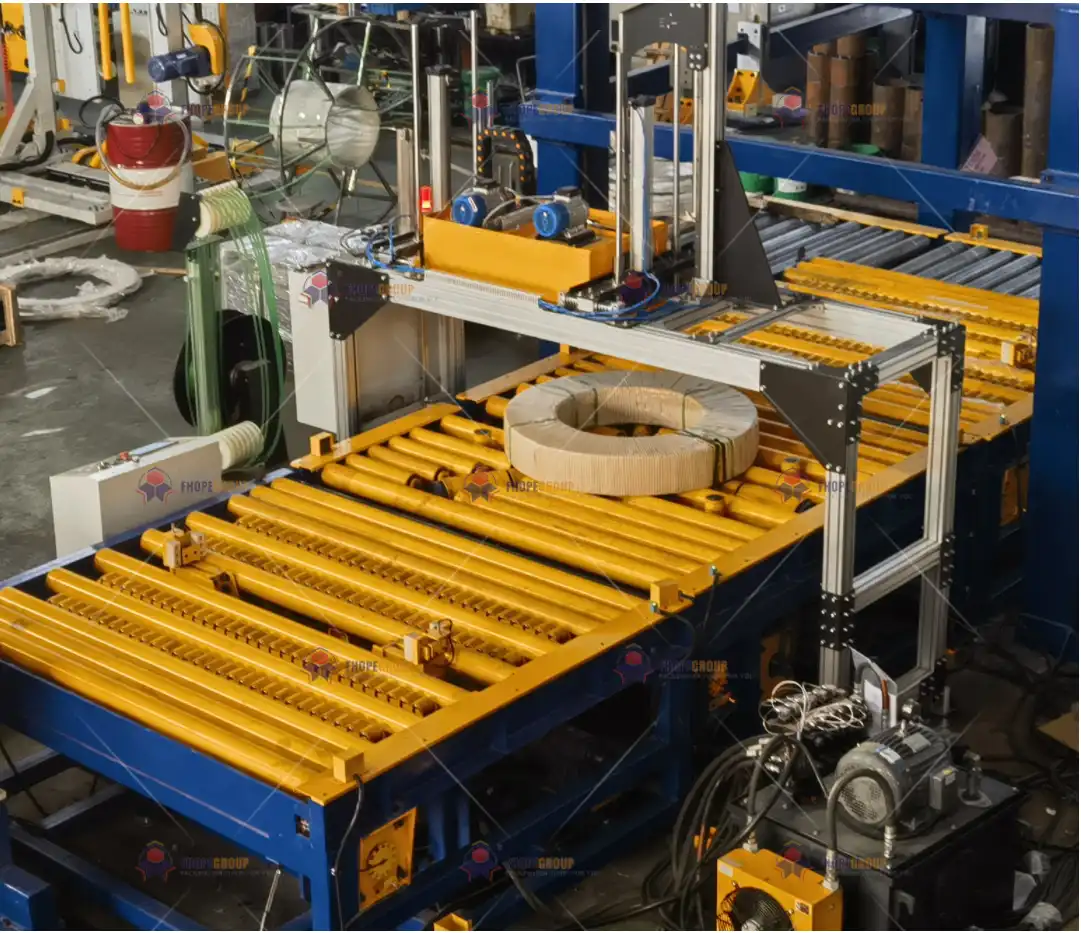

Understanding the right approach to coil handling can transform your operations. It can change potential problems into smooth, efficient processes. This article will explore specific ways modern handling systems protect your valuable coils. We will look at how they ensure product integrity from the production line to the customer’s door. Stay with me to discover how you can master your packing challenges.
Why is preventing coil surface damage so crucial for manufacturers today?
Do you ever worry about your valuable steel coils getting damaged after production? Small scratches or dents during transfer can reduce their value. This leads to customer dissatisfaction and extra costs. It can feel like all the effort put into making perfect coils goes to waste in the final stages. Many manufacturers face this exact problem daily.
Preventing coil surface damage is crucial because it directly affects product quality, customer satisfaction, and a company’s financial health. Damaged coils often lead to rejections, rework, and costly penalties. It also harms brand reputation. Ensuring pristine coil surfaces maintains product integrity and competitive advantage in the market.
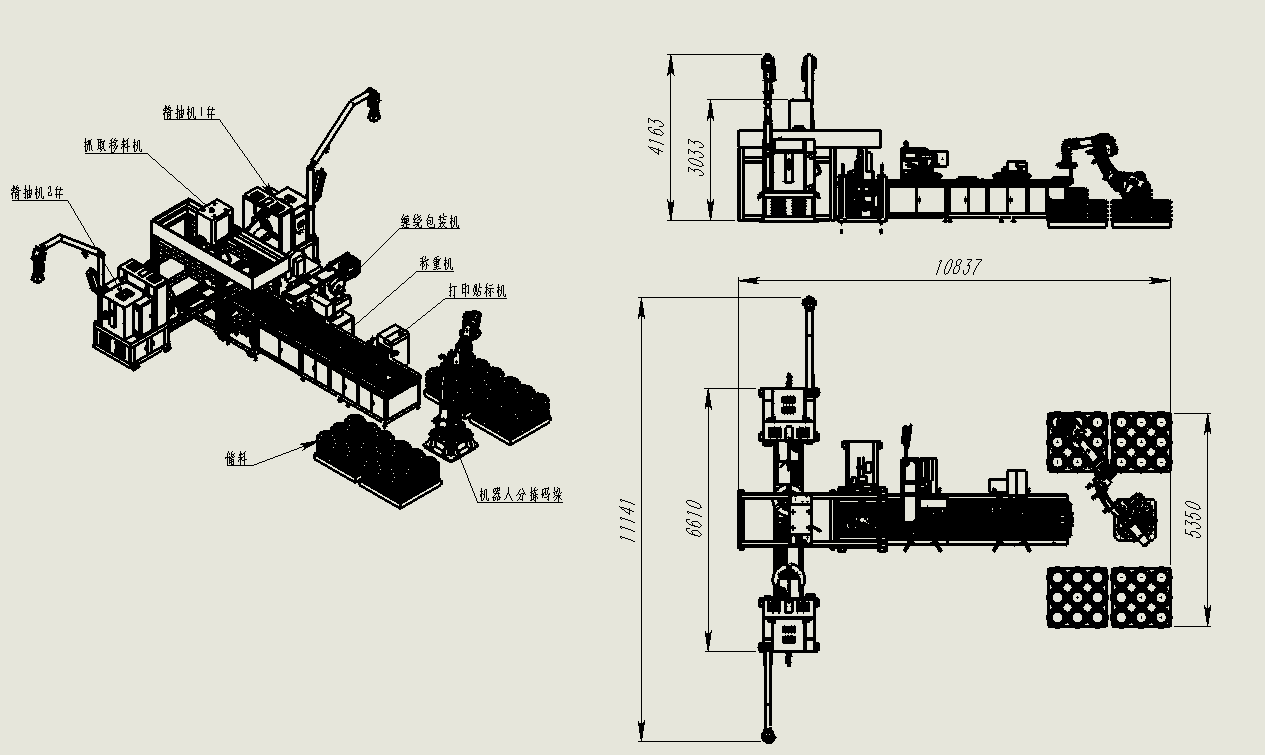

Protecting coil surfaces is not just about avoiding visible flaws. It impacts every part of your business. From the factory floor to your financial statements, the stakes are high. Let’s delve deeper into why this seemingly small issue has such a big impact and how smart solutions address it.
-
Maintaining Product Quality and Value
- High Standards: Customers expect perfect coils. They pay for high-grade materials. Any surface imperfection, even minor ones, can make the product unusable for specific applications. For example, a scratch on a cold-rolled coil might prevent it from being used in automotive parts. (steel coil quality control)
- Financial Impact: Damaged coils lose value. They might need to be sold at a discount. Sometimes, they cannot be sold at all. This cuts into profit margins and wastes production resources. Ensuring product integrity saves money in the long run. (coil scrap reduction)
-
Ensuring Customer Satisfaction and Loyalty
- Reputation Matters: Delivering damaged goods erodes customer trust. It makes customers question your quality control. This can lead to them looking for other suppliers. A good reputation for consistent quality is hard to build and easy to lose. (customer retention strategies)
- Avoiding Disputes: Damaged shipments often result in disputes, returns, and requests for compensation. These processes consume valuable time and resources. They also strain business relationships. Smooth deliveries with undamaged products strengthen partnerships. (reducing product claims)
-
Reducing Operational Costs and Risks
- Hidden Expenses: The cost of damage goes beyond the value of the coil. It includes administrative costs for processing returns, shipping replacement orders, and potential contract penalties. These hidden costs can quickly add up. (operational efficiency improvements)
- Safety Implications: Manually handling damaged coils or trying to fix them can pose safety risks to workers. Automated systems, by preventing damage, also contribute to a safer work environment. This lowers the risk of workplace injuries. (workplace safety standards)
- Export Requirements: For international markets, strict packaging and product quality standards, like CE/ISO certifications, are mandatory. Damage during transfer can make coils fail these inspections. This prevents export and incurs further costs. (export compliance challenges)
What specific design features in handling equipment minimize direct contact damage?
Do you struggle with traditional methods that cause scratches or dents on your coils? Are you tired of manual processes where every lift or shift risks damaging the surface? You might feel frustrated that your handling equipment just isn’t protecting your products enough. This leads to costly rejections.
Modern handling equipment minimizes direct contact damage through several innovative design features. These include non-marring contact surfaces, cushioned supports, and precise alignment mechanisms. It also uses automated gripping and transfer technologies. These features ensure that coils are supported evenly and moved smoothly. They avoid harsh impacts or abrasive rubbing against their delicate surfaces.
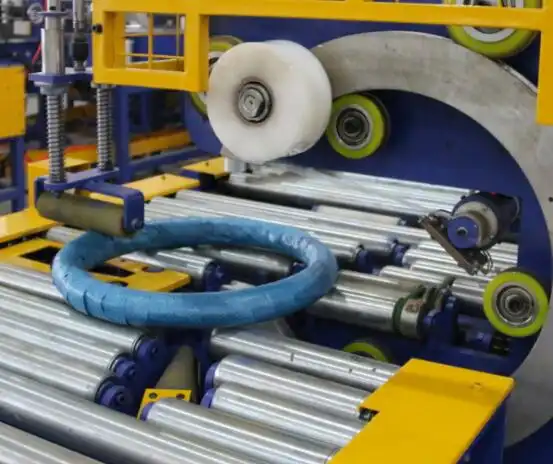

The key to preventing damage lies in the equipment’s design. It needs to be smart and gentle. Let’s explore the specific design choices that protect coils. These features are essential for maintaining product integrity throughout the handling process.
-
Material and Surface Treatments
- Non-Marring Materials: Equipment surfaces that touch the coil are often made from or coated with softer, low-friction materials. These include polyurethane, nylon, or specialized rubber. These materials absorb impact. They also prevent scratches or abrasions on the metal surface. (coil contact surface protection)
- Smooth Finishes: All contact points are designed with smooth, polished finishes. This eliminates sharp edges or rough areas that could catch or gouge the coil. This is crucial for delicate surfaces like galvanized or color-coated coils. (smooth material handling surfaces)
-
Support and Cradle Design
- Contoured Cradles: Coils are round. Handling equipment uses contoured cradles that match the coil’s curvature. This distributes the weight evenly across a large surface area. It prevents pressure points that could cause deformation or dents. (ergonomic coil support)
- Shock Absorption: Integrated cushioning systems, such as pneumatic or hydraulic dampeners, absorb shocks during loading and unloading. This protects coils from impact damage. It is especially important when dealing with heavy coils weighing several tons. (heavy coil shock absorption)
- V-Block Supports: For certain coil types or transfer methods, V-block supports provide stable, self-centering cradling. They keep the coil securely in place without allowing it to roll or shift unpredictably. (secure coil positioning)
-
Automated Movement and Control
- Precision Alignment: Automated systems use sensors and precise robotics. They accurately position coils during transfer. This eliminates manual adjustments. These adjustments often lead to bumps or misalignments. (automated coil alignment technology)
- Controlled Speed and Acceleration: Motors and drives are programmed for smooth acceleration and deceleration. This prevents sudden jerks or stops. These could cause the coil to shift violently or stress its structure. (gentle coil transfer speed)
- Non-Contact Sensing: Advanced handling systems use proximity sensors and vision systems. These guide equipment without touching the coil. They ensure accurate placement from a safe distance. (coil non-contact detection)
How do automated handling systems improve worker safety while protecting coils?
Are you concerned about the safety of your team when handling heavy, awkward steel coils? Do you worry about back injuries, crushed limbs, or other accidents that can happen with manual handling? This is a serious concern for any production manager. Traditional methods often put workers at high risk.
Automated handling systems significantly improve worker safety by reducing direct human interaction with heavy coils. They replace manual lifting, carrying, and positioning with mechanical and robotic processes. This eliminates risks like strains, crushing injuries, and falls associated with manual labor. This also protects coils by ensuring consistent, controlled movements. These systems make the workplace much safer for everyone.


Worker safety and coil integrity go hand-in-hand. When you remove humans from dangerous tasks, you not only protect them but also ensure better handling of the product. Let’s examine how automation achieves this dual benefit, creating a safer and more efficient environment.
-
Eliminating Manual Lifting and Carrying
- Heavy Loads: Steel coils are extremely heavy. Lifting and carrying them manually poses huge risks for musculoskeletal injuries. Cranes and forklifts reduce some risks, but still require human operators in close proximity. (reducing heavy lifting injuries)
- Automated Transport: Automated conveyors, transfer cars, and robotic manipulators take over these tasks entirely. They move coils from one station to another without any human physical effort. This removes the risk of strains, sprains, and crushed limbs. (automated coil transport safety)
-
Reducing Exposure to Dangerous Environments
- Hot or Sharp Edges: Coils can be hot right off the production line. They can also have sharp edges. Manual interaction increases the risk of burns or cuts. Automated systems operate without direct human contact with these hazards. (industrial hazard mitigation)
- Moving Machinery: Working near moving machinery always carries risk. Automated systems include safety fences, light curtains, and emergency stops. They create a safer zone for human operators who oversee the process from a distance. (machine guarding principles)
-
Enhancing Predictability and Control
- Consistent Operation: Human error is a leading cause of accidents. Automation ensures consistent, predictable movements. This reduces unexpected shifts or drops of coils. These incidents could injure workers or damage products. (error-proofing manufacturing processes)
- Pre-programmed Paths: Coils follow pre-programmed paths and speeds. This prevents collisions with other equipment or personnel. This highly controlled environment minimizes variables that could lead to accidents. (safe robotic path planning)
- Emergency Protocols: Advanced safety sensors detect unusual movements or obstructions. They trigger immediate shutdowns. This prevents potential accidents before they happen. This robust safety net protects both workers and the product. (automated emergency shutdown systems)
Can smart sensor technology make a real difference in preventing accidental coil damage?
Do you ever wonder if your current handling system is really smart enough to prevent unexpected damage? Are you worried about small misalignments or unforeseen bumps causing problems? You might feel like you need more eyes and intelligence watching over your valuable coils during transfer.
Yes, smart sensor technology makes a real difference in preventing accidental coil damage. These sensors provide real-time data on coil position, speed, temperature, and even minor deformations. This allows the handling system to make immediate adjustments. It can correct misalignments, prevent collisions, and ensure optimal handling conditions. This proactive approach significantly reduces the risk of unforeseen damage.


Smart sensors are the “brains” of modern handling systems. They gather vital information. They allow the system to react instantly. This proactive monitoring is key to protecting your coils. Let’s explore how these intelligent devices work to safeguard your products.
-
Precision Positioning and Alignment
- Proximity Sensors: These sensors detect the precise distance of a coil from its target location. They ensure perfect alignment before any contact or transfer. This prevents coils from hitting edges or being placed incorrectly. (accurate coil placement detection)
- Vision Systems: High-resolution cameras and image processing software can identify the exact dimensions and orientation of a coil. They guide robotic arms or conveyors for highly accurate pickups and placements. This is especially useful for varying coil sizes (1-3 tons, variable inner/outer diameters). (vision-guided coil handling)
- Laser Scanners: Laser technology provides precise 3D mapping of the coil and its environment. This helps prevent collisions with other objects or misjudgments during complex movements. It adds an extra layer of safety and precision. (laser-based object detection)
-
Monitoring Environmental and Physical Conditions
- Temperature Sensors: For certain metal types, maintaining a specific temperature range is crucial to prevent material degradation or warping. Sensors monitor coil temperature. They trigger alarms or adjustments if it goes outside the safe zone. (coil thermal monitoring)
- Weight and Load Sensors: These sensors ensure that the handling equipment is not overloaded. They also confirm that weight is distributed evenly. Uneven loads can cause damage to the coil or the equipment itself. (overload prevention systems)
- Vibration and Impact Sensors: These advanced sensors detect unusual vibrations or minor impacts during transfer. They can flag potential issues before they become serious damage. This allows for immediate investigation and correction. (real-time impact detection)
-
Predictive Maintenance and Anomaly Detection
- Data Analysis: Smart sensors continuously collect data. This data can be analyzed to identify trends or potential equipment failures. For example, a slight change in motor vibration might indicate a coming problem. This allows for proactive maintenance. (predictive maintenance insights)
- Anomaly Alerts: If a sensor detects an unusual event – like a coil moving slightly off its path or an unexpected increase in friction – it triggers an alert. Operators can then intervene quickly. This prevents costly damage or downtime. (automated fault detection)
- System Optimization: The data collected helps optimize handling parameters. Over time, the system “learns” the best ways to handle different coil types. This leads to continuous improvement in damage prevention and efficiency. (intelligent system self-optimization)
What are the long-term benefits of investing in advanced coil handling solutions?
Are you still relying on outdated coil handling methods? Do you find yourself constantly dealing with unexpected costs from damaged coils, worker injuries, and slow processes? You might wonder if there’s a better, more sustainable way to manage your production. It can feel like a constant uphill battle.
Investing in advanced coil handling solutions brings significant long-term benefits. These include enhanced product quality, reduced operational costs, and improved worker safety. It also leads to increased production efficiency and stronger customer loyalty. Such an investment future-proofs your operations. It positions your business for sustainable growth and a stronger competitive edge in the market.
Investing in advanced handling solutions is a strategic decision. It’s not just about buying new machinery. It’s about building a foundation for future success. Let’s look at the lasting positive impacts these solutions have on your business.
-
Sustainable Cost Reduction
- Lower Damage Rates: The primary benefit is a drastic reduction in damaged coils. This means fewer rejections, less rework, and lower scrap rates. This directly translates to significant savings on materials and production time. (minimizing production waste)
- Reduced Labor Costs: Automation reduces the need for extensive manual labor in high-risk areas. This cuts down on wages for dangerous tasks. It also lowers costs associated with workplace injuries and worker turnover. (labor optimization strategies)
- Optimized Material Usage: Precise handling and packaging reduce waste of packing materials. This includes PET/steel strapping and anti-moisture stretch film. This saves money on consumables over time. (packaging material efficiency)
-
Enhanced Operational Efficiency and Throughput
- Increased Speed: Automated systems operate at consistent, higher speeds than manual processes. This significantly boosts throughput and shortens lead times for coil delivery. (streamlined production flow)
- 24/7 Operation: Unlike human workers, automated systems can operate continuously, 24 hours a day, across multiple shifts. This maximizes production capacity without additional staffing. (continuous manufacturing capabilities)
- Seamless Integration: Advanced systems integrate seamlessly with existing production lines. This creates a unified, efficient workflow from production to dispatch. This removes bottlenecks and improves overall factory flow. (integrated factory automation)
-
Superior Product Quality and Market Reputation
- Consistent Packaging: Automated systems ensure consistent packaging quality (e.g., uniform film tension, tight strapping). This protects coils against moisture, rust, and scratches during transport. (export-grade coil packing)
- Meeting Export Standards: With capabilities for automatic labeling, barcoding, and certified packaging (CE/ISO), advanced solutions help meet strict international export requirements. This opens up new markets and client opportunities. (global market readiness)
- Stronger Brand Image: Consistently delivering undamaged, high-quality products builds a strong reputation. This attracts more clients and fosters long-term partnerships, like those sought by industry leaders. (brand reliability enhancement)
- Future-Proofing: Investing in advanced technology positions your company as a forward-thinking leader. It prepares you for future industry demands and technological advancements. (future-ready manufacturing)
Conclusion
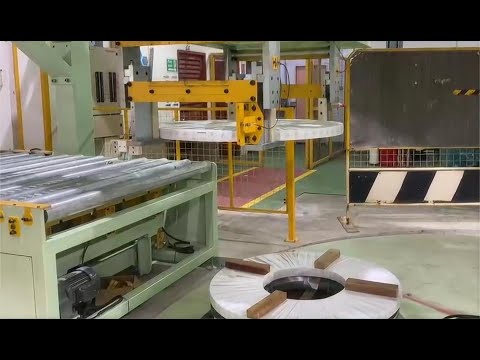
Preventing coil surface damage is critical. Advanced handling systems solve this by integrating smart design, automation, and sensor technology. This ensures perfect product quality, improves safety, and cuts costs. At FHOPEPACK, we master packing machine solutions. We specialize in robust, customized coil packing line systems. Our goal is to help businesses like yours achieve efficiency, safety, and superior quality, securing your market leadership for years to come.












