
How Do Coil Wrapping Machines Improve Moisture Protection for Copper Strips in Indonesia?
Copper strips in humid Indonesia face serious moisture damage during storage and transit. This leads to costly corrosion, customer complaints, and lost profits for many factories. Manual packing offers little defense, leaving your valuable products vulnerable and your bottom line at risk. But what if a single machine could solve this critical problem, protecting your products and improving your factory’s efficiency?
Coil wrapping machines greatly improve moisture protection for copper strips in Indonesia by creating a tight, multi-layered, and often airtight barrier around the coil. This specialized wrapping prevents water vapor, humidity, and condensation from reaching the copper surface, stopping corrosion and maintaining product quality, crucial in high-humidity environments like Indonesia.

This might sound simple, but the details matter a lot. From my years in the packing machine industry, from an employee to a factory owner, I have seen the real challenges factories like yours face. Let me break down how these machines truly deliver on their promise, especially for valuable materials like copper in challenging climates.
1. Why Is Moisture Such a Big Threat to Copper Strips in Indonesia?
You invest heavily in producing high-quality copper strips, but the moment they leave your production line, moisture in Indonesia’s climate becomes a serious threat. This humid environment quickly leads to oxidation and corrosion, degrading your product before it even reaches your customer. This means financial losses and a damaged reputation. We need to understand this enemy fully to fight it effectively.
Moisture poses a significant threat to copper strips in Indonesia due to the country’s high humidity and tropical climate, causing oxidation, tarnish, and green corrosion (patina). This damage affects electrical conductivity, aesthetic appeal, and overall product value, leading to rejections, rework, and substantial financial losses for manufacturers.

Let me tell you, I have seen many factories struggle with this. When I was starting out, even as an employee, I saw how much effort went into making perfect coils. Then, poor packing meant that effort was wasted. The tropical climate in Indonesia, with its high average humidity often above 80% and warm temperatures, creates ideal conditions for moisture-related damage to sensitive metals like copper. This is not just about a little bit of water. It is about constant exposure to water vapor in the air.
The Chemistry of Copper Corrosion
Copper is a reactive metal. When it meets moisture and oxygen, it starts to oxidize. This process forms different compounds on the copper surface:
- Tarnish: This is the first stage. It creates a dark, dull layer of copper oxides (CuO and Cu2O). This looks bad. It also affects how well electricity can flow through the copper.
- Green Patina: Over longer periods, especially with other pollutants in the air, copper reacts to form basic copper carbonates. This is the familiar green layer you see on old copper roofs. While it can protect underlying copper, it is not desired for new products like copper strips. This makes the product unusable for its intended purpose.
Specific Impact of Indonesia’s Climate
Indonesia has many islands. Many factories are near coastal areas. This means salty air. Salt makes corrosion much worse and much faster. High temperatures also speed up chemical reactions. So, the combination of high humidity, heat, and sometimes salt in the air creates a very aggressive environment for bare copper.
Consequences for Manufacturers
When copper strips get damaged by moisture, factories face several problems:
- Quality Issues: The strips no longer meet specifications. They cannot be used for electrical components or other high-precision applications.
- Customer Complaints: Customers expect perfect products. They will complain and might return the goods. This hurts your reputation.
- Rejections and Rework: Damaged coils must be reprocessed or even thrown away. This is a huge waste of time and money.
- Financial Losses: All these issues lead to direct financial losses. It is not just the cost of the copper itself. It is also the labor, energy, and lost production time. This is why a good packing solution is so important. It protects your investment.
2. What Exactly Are Coil Wrapping Machines and How Do They Protect Copper Strips?
Manual wrapping cannot keep up with production demands or provide consistent, reliable protection for your copper coils. This leaves your valuable copper vulnerable to the exact moisture damage we just discussed, undermining your hard work. But imagine a system designed to wrap your coils quickly, consistently, and with superior protection every single time.
Coil wrapping machines are automated systems designed to securely wrap various packing materials around coiled products like copper strips. They create a tight, uniform, and multi-layered protective barrier, preventing external elements, especially moisture, from reaching the product surface. This automation enhances protection efficiency and consistency far beyond manual methods.
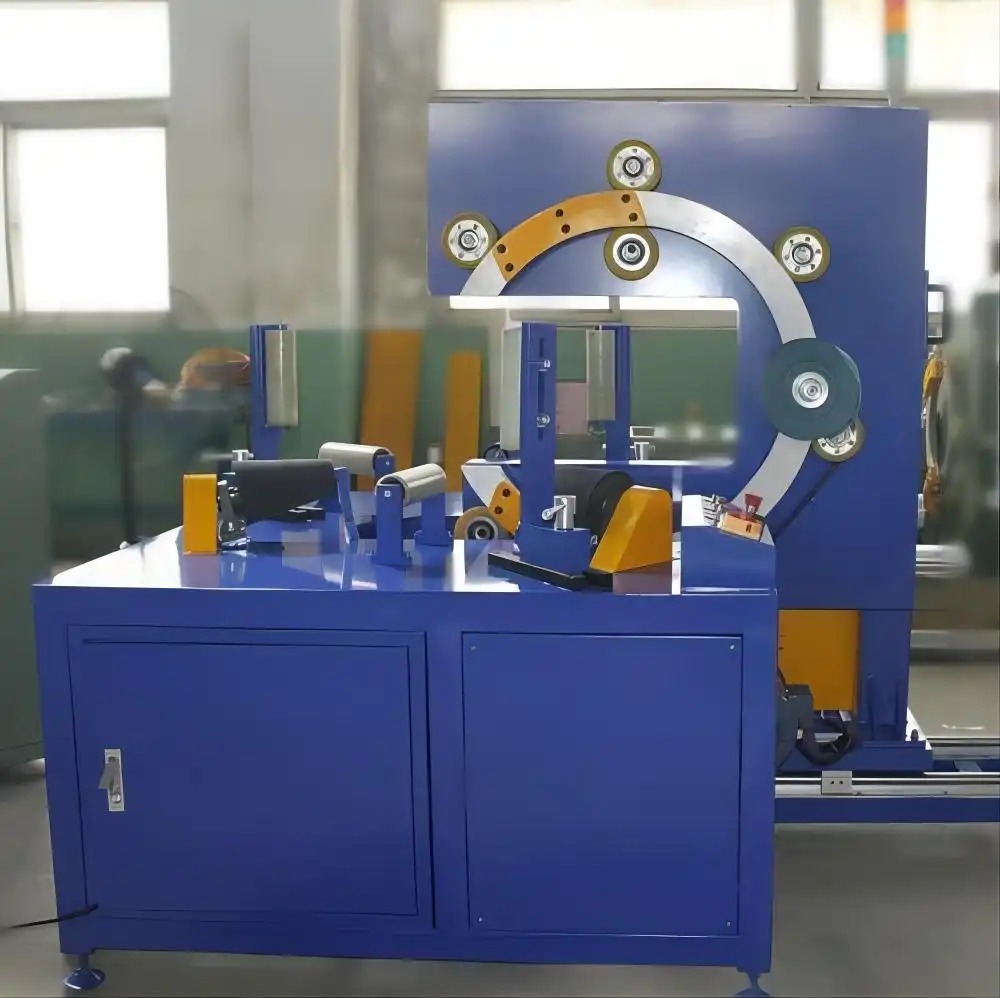
In my journey of building a successful packing machine factory, I learned that automation is key. It takes away the guesswork and inconsistency of human labor, especially in repetitive and critical tasks like packing. Coil wrapping machines are a perfect example of this. They are built for one main purpose: to wrap coils fast and well.
Types of Coil Wrapping Machines
There are a few main types of these machines. Each works slightly differently:
- Horizontal Orbital Wrapping Machines: These are very common. The coil sits flat on a conveyor. A ring-shaped wrapper moves around the coil, applying film or other material as the coil moves forward. This creates a spiraling, overlapping wrap. This type is great for many coil sizes.
- Vertical Coil Wrapping Machines: For some heavy coils, these machines wrap the coil while it is standing upright. The wrapping head moves around the vertical axis of the coil.
How the Wrapping Process Works
The basic process is similar for most machines:
- Loading: The copper coil is placed onto the machine’s conveyor or turntable. Some machines have automatic loading systems.
- Film Feeding: The machine takes a roll of wrapping material (like stretch film or VCI paper). It feeds the end of the film to the coil.
- Wrapping: The wrapping head or ring spins around the coil. It applies the film under tension. The coil also rotates or moves forward slowly. This creates many layers of film that overlap. Each layer covers the previous one by a certain percentage.
- Cutting and Sealing: Once enough layers are applied, the machine cuts the film. It then seals the end of the film to the wrapped coil.
- Unloading: The wrapped coil moves off the machine.
Suitable Packing Materials for Copper Strips
The right material is important for good protection. Coil wrapping machines can use different materials:
- Stretch Film: This is very common. It is a plastic film that stretches and clings to itself. It creates a tight, water-resistant barrier. Multiple layers offer excellent physical protection against moisture and dust.
- VCI (Volatile Corrosion Inhibitor) Film/Paper: This is a special material. It releases chemicals into the enclosed space around the copper. These chemicals form a protective layer on the metal surface. This stops corrosion. It is ideal for copper, especially in humid places like Indonesia.
- Woven Fabric: For heavier-duty protection, sometimes woven PP fabric is used, often in combination with stretch film. It adds strength and puncture resistance.
By using these materials with precise machine control, factories can ensure that copper strips are protected from the moment they are wrapped until they reach their destination. This is a huge step up from manual methods that are often inconsistent.
3. How Do These Machines Precisely Prevent Moisture From Damaging Copper?
Simply covering a coil is not enough. Moisture finds its way into any small gap or inconsistent wrap, ruining your product. This constant battle against humidity can feel like a losing one if your wrapping method is not precise and robust. The true genius of coil wrapping machines lies in their sophisticated engineering, which specifically targets and eliminates moisture threats.
Coil wrapping machines prevent moisture damage to copper by applying tensioned, overlapping layers of protective film that form an almost impenetrable seal. Key mechanisms include uniform tension for a tight wrap, edge protection to seal vulnerable areas, and the ability to integrate specialized anti-corrosion (VCI) films, effectively creating a micro-climate around the copper that repels humidity and prevents condensation.
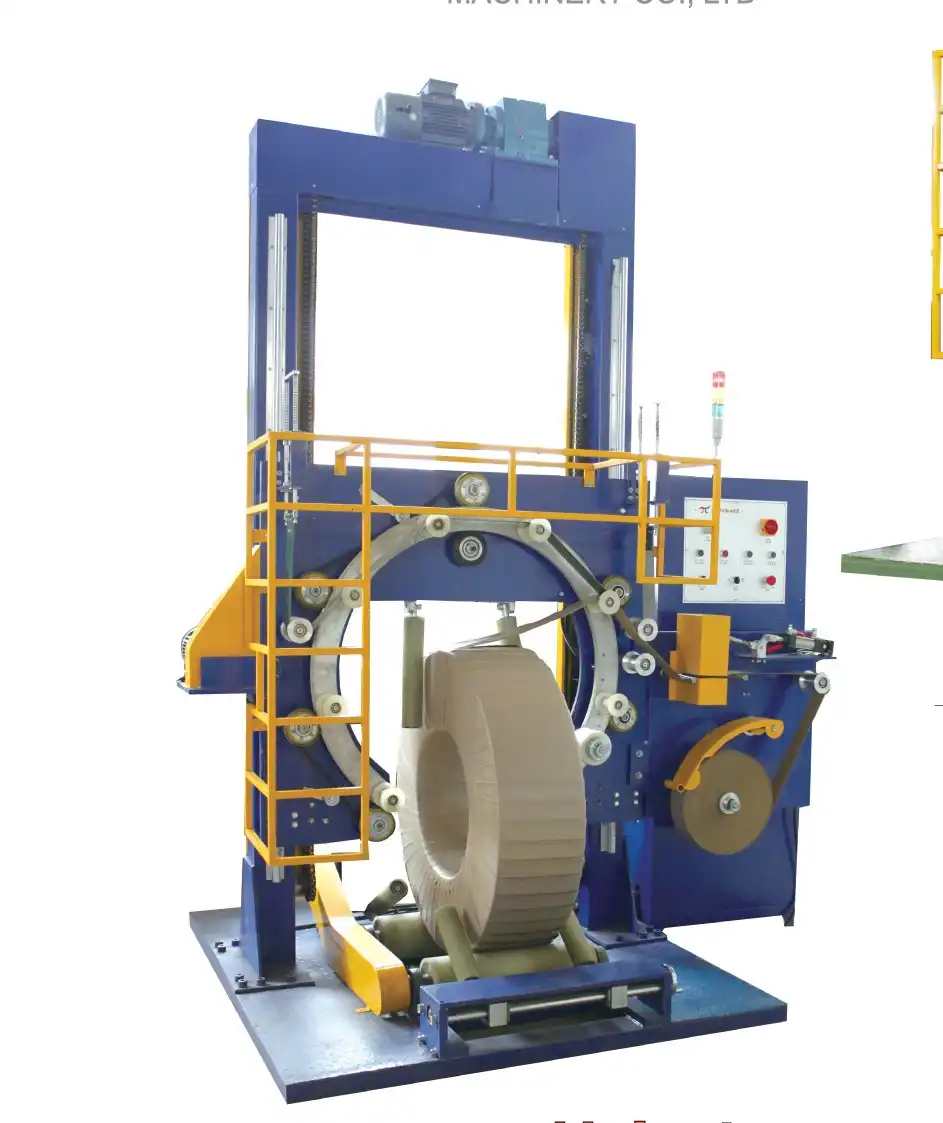
My experience taught me that good packing is not just about putting something around a product. It is about creating a barrier that truly works. For copper, which is very sensitive to moisture, this means a smart, multi-layered approach. These machines are engineered to do exactly that.
The Power of Tensioned, Overlapping Layers
This is the core of machine wrapping.
- Uniform Tension: The machine holds the wrapping material very tightly. It applies it with consistent tension around the coil. This pulls the layers close together. It removes air pockets. It also prevents the film from loosening during transit. A tight wrap means water cannot easily seep in.
- Overlapping Layers: Each pass of the wrapping head overlaps the previous one. This creates multiple layers of protection. If one layer has a tiny defect, the next layer covers it. This multi-layered approach builds a strong defense against water vapor and humidity. Think of it like a tiled roof; each tile overlaps the one below it to shed water.
Essential Edge Protection
The edges of a copper coil are often the most vulnerable parts. They are exposed. They can easily get dinged.
- Full Enclosure: Good coil wrapping machines ensure the entire surface of the coil is covered, including the sides. The orbital motion wraps not just the outer diameter but also moves inwards across the face of the coil. This means no part is left exposed to moisture.
- Integrated Edge Boards (Optional): For even more robust protection, some machines can automatically insert edge protection. This can be cardboard or plastic strips. These prevent physical damage to the edges. They also create a smoother surface for the film to cling to, improving the seal.
The Role of VCI (Volatile Corrosion Inhibitor) Films
I always recommend VCI film for sensitive metals like copper. It is a game-changer.
- Vapor Phase Protection: VCI films release invisible chemical compounds into the air inside the package. These compounds are attracted to the metal surface. They form a very thin, molecular layer. This layer stops corrosion.
- Active Defense: Unlike just a physical barrier, VCI actively protects the copper. Even if there are tiny gaps in the film, the VCI vapors can reach the metal. This makes it highly effective against moisture-induced corrosion, especially important in high humidity zones like Indonesia.
- Clean and Safe: VCI protection is clean. It leaves no residue on the copper. This means no extra cleaning is needed before use.
When you combine tight, overlapping stretch film with VCI, you get superior protection. The stretch film provides the physical barrier. The VCI adds a chemical defense. This dual approach is why coil wrapping machines are so effective at protecting copper strips from moisture damage in challenging environments.
4. What Operational and Financial Gains Do Indonesian Factories See From Coil Wrapping Machines?
Michael Chen faces challenges like slow manual packing, high labor costs, product damage, and safety risks in his factory. These issues directly impact his profitability and operational efficiency. These bottlenecks and risks hinder growth, lead to customer complaints, and make it hard to compete in a demanding market. My experience as a factory owner taught me that smart investments in automation can turn these challenges into opportunities for significant growth and profit.
Indonesian factories using coil wrapping machines achieve significant operational and financial gains, including faster packing speeds, reduced labor costs, improved worker safety by minimizing manual handling, and drastic cuts in product damage during transit and storage. This investment leads to a clear return on investment (ROI) through enhanced efficiency, higher product quality, and increased customer satisfaction.
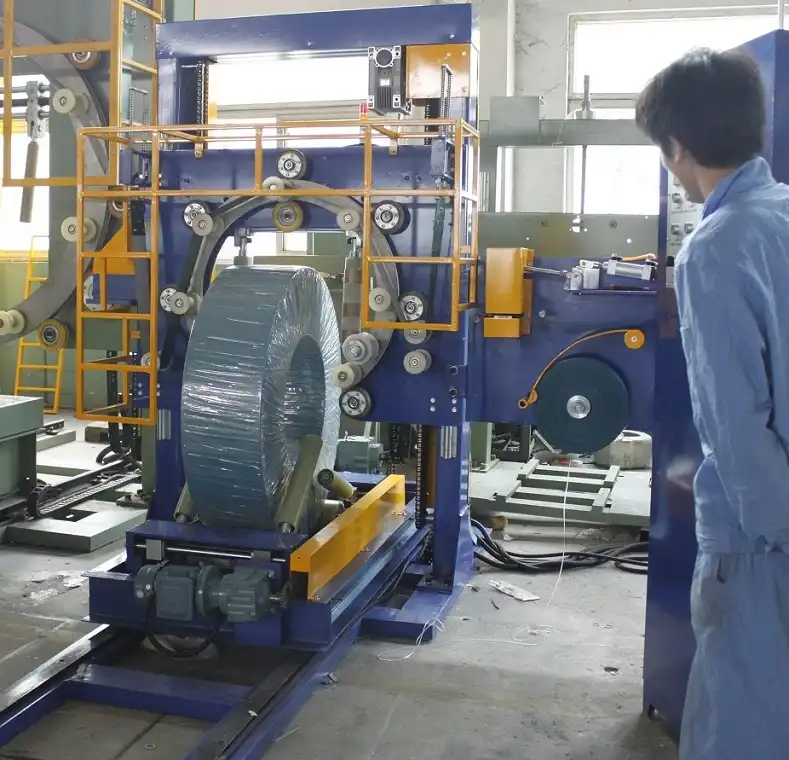
I remember when I first started my factory. I was always looking for ways to improve. I wanted to help my clients grow their businesses too. Michael Chen’s situation is very common. Many factory managers are under pressure to cut costs and increase output. This is where a good packing machine comes in. It is not just about protection. It is about making the whole operation better and more profitable.
Addressing Michael Chen’s Challenges with Automation
Let us look at how coil wrapping machines directly solve the problems Michael faces:
A. Efficiency Bottleneck Solved
Michael’s current manual process for packing is slow. It creates a bottleneck.
- Solution: Coil wrapping machines work much faster than people. They can wrap dozens of coils per hour, depending on the machine and coil size. This drastically increases throughput at the end of the production line. It means products get out faster.
- Benefit: Factories can meet higher demand. They can ship orders quicker. This directly helps with delivery speeds and overall production flow.
B. Higher Safety Standards
Manual handling of heavy coils is dangerous. It leads to injuries and high insurance costs.
- Solution: These machines reduce the need for workers to lift or move heavy coils by hand. The coils are loaded mechanically. The machine does the wrapping. Workers can stay at a safe distance.
- Benefit: Fewer workplace accidents. Lower injury rates. This means happier employees and reduced insurance premiums. It also addresses a major concern for any factory manager who cares about his team.
C. Drastic Reduction in Product Loss
Damaged products (like copper strip edges) during packing or transit mean customer complaints and lost profits.
- Solution: The machines provide a consistent, tight, and robust wrap. This protects the coil from physical damage. It also shields it from environmental factors like dust and moisture.
- Benefit: Fewer damaged products. Fewer customer complaints. Higher product quality at delivery. This directly impacts customer satisfaction and repeat business.
D. Significant Cost Reduction
- Labor Costs: One machine can replace several workers doing manual wrapping. This cuts down on labor expenses.
- Material Waste: Machines use film much more efficiently. They apply it evenly. This means less material is wasted compared to manual methods.
- Reduced Rework/Rejection: Fewer damaged products mean less money spent on reprocessing or writing off faulty goods.
- Logistics Savings: Well-protected coils are less likely to need special handling or cause issues during shipping.
Clear Return on Investment (ROI)
Investing in a coil wrapping machine has a clear ROI for factories in Indonesia.
| Factor | Manual Packing Impact | Automated Machine Impact | ROI Benefit |
|---|---|---|---|
| Packing Speed | Slow, inconsistent, bottleneck | Fast, consistent, high throughput | Increased production, faster order fulfillment |
| Labor Costs | High, multiple workers needed | Low, one operator for multiple machines | Significant savings on wages and benefits |
| Worker Safety | High risk of injury from heavy lifting | Minimal human handling, much safer | Reduced insurance costs, fewer lost workdays |
| Product Damage | Frequent, inconsistent protection | Rare, consistent and robust protection | Fewer rejections, less rework, higher customer satisfaction |
| Material Usage | Variable, often wasteful | Optimized, less film/material waste | Cost savings on packing materials |
| Moisture Protection | Poor, susceptible to humidity | Excellent, tight seal and VCI options | Preserved product quality, extended shelf life |
I have seen it firsthand. Factories that embrace this type of automation often see their investment pay for itself in a surprisingly short time. The savings from reduced labor, less waste, and fewer damaged products add up quickly. Plus, the intangible benefits like improved reputation and happier customers are priceless. It is about making a smart choice for long-term growth.
Conclusion
Coil wrapping machines are vital for protecting copper strips in Indonesia. They prevent moisture damage, boost efficiency, and save costs, ensuring product integrity and factory profitability.








