
How coil wrapping machine in Poland boosts efficiency for tire manufacturers?
The tire manufacturing industry in Poland faces constant pressure. Companies must produce more, faster, and at a lower cost. Many factories struggle with outdated processes, especially at the end of their production lines. This often leads to bottlenecks, delays, and higher operating expenses. Managers like Michael, who oversee entire operations, know that every minute of downtime or inefficiency costs money. This is a common problem I saw when I worked in and later owned my own packing machine factory. It affects the bottom line.
Coil wrapping machines help Polish tire manufacturers greatly improve efficiency by automating the critical process of packaging rubber strips or steel cords. This automation reduces manual labor, speeds up packing cycles, and minimizes material damage, directly addressing production bottlenecks and cutting operational costs in tire factories.
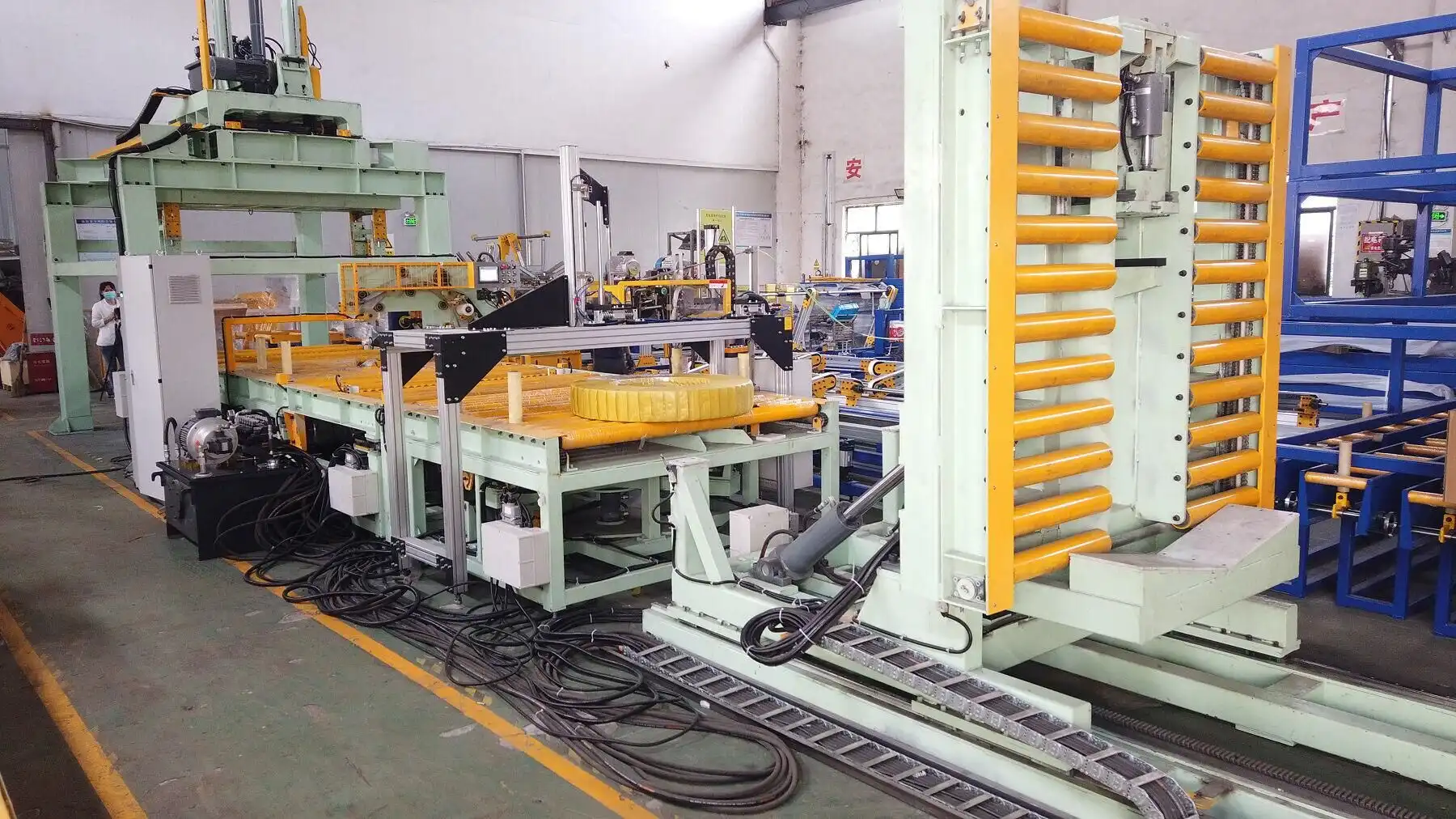
You might wonder how a single piece of equipment can make such a big difference. Let’s look closer at the specific challenges tire manufacturers in Poland face and how these machines offer clear solutions, turning problems into profit.
1. Why is production efficiency a core challenge for Polish tire manufacturers?
Polish tire manufacturers operate in a very competitive global market. They must meet high production demands while keeping quality and costs in check. Many factories still rely on older methods, especially for packing materials like rubber strips or steel wire coils. This creates serious efficiency problems. These problems slow down the whole production process.
Production efficiency is a core challenge for Polish tire manufacturers because manual processes, especially for packing raw materials like rubber and steel cord coils, create bottlenecks, increase labor costs, and delay overall output, hindering their ability to compete effectively in the global market.
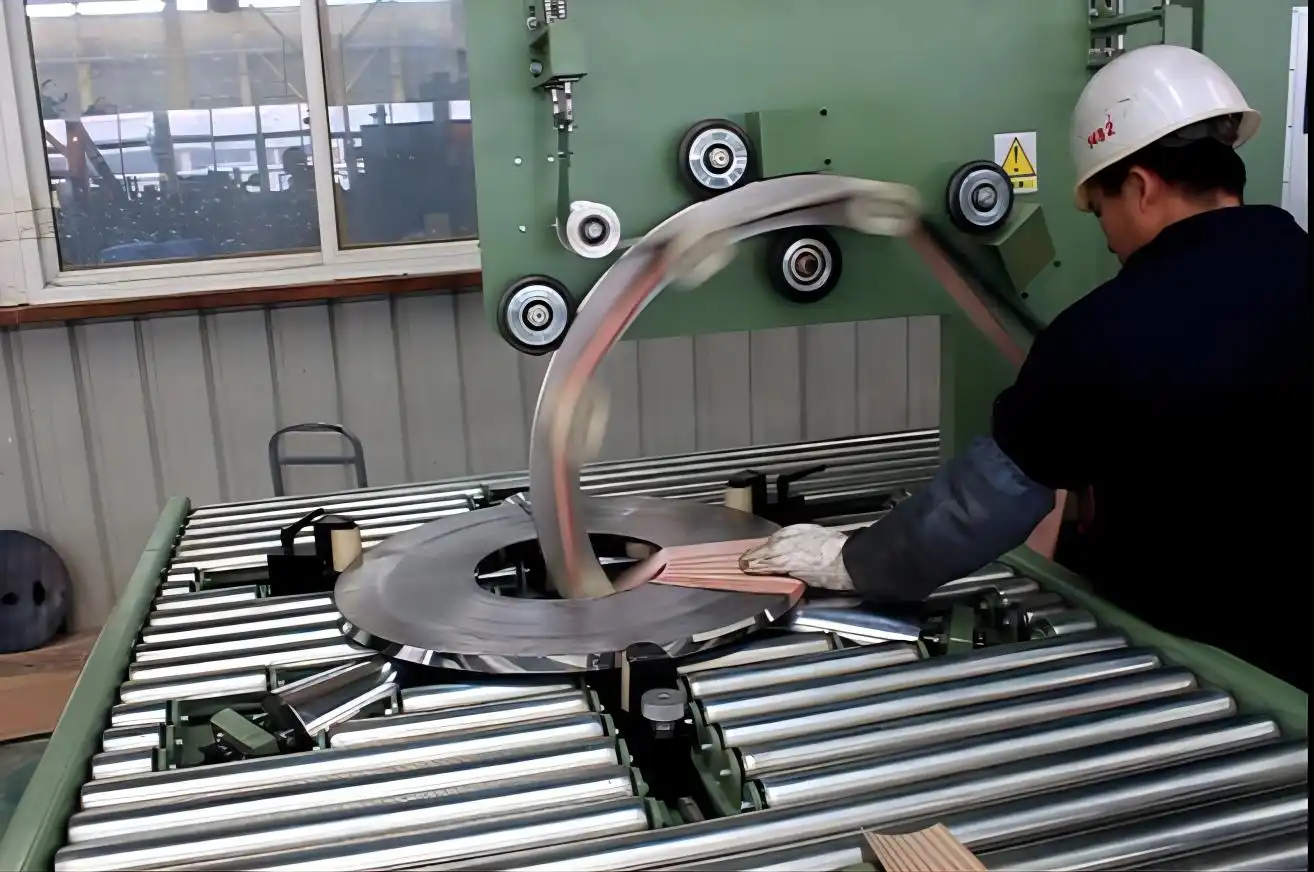
When I started my journey in the packing machine industry, first as an employee and then running my own factory, I saw these exact issues. Factories were losing money because their packing lines were slow. For Polish tire manufacturers, this is no different. They deal with several key efficiency challenges that impact their entire business.
-
High Labor Dependency:
- Many packing tasks still need many workers.
- This drives up labor costs.
- It also means production speed depends on human pace.
- Finding and keeping skilled labor for repetitive packing jobs can be hard.
- 📈 Impact: Higher operational expenses and potential labor shortages. (Labor-intensive packing, operating costs)
-
Production Bottlenecks:
- The packing area often becomes a choke point.
- Materials might accumulate, waiting to be packed.
- This slows down the entire production flow.
- It affects delivery times for finished tires.
- ⏰ Impact: Reduced overall output and delayed customer orders. (Packing bottlenecks, slow production flow)
-
Inconsistent Output:
- Manual packing can lead to variations.
- The quality of packing might not be uniform.
- This affects how products look and how well they are protected.
- Inconsistent packing can also slow down subsequent logistics steps.
- 📊 Impact: Quality control issues and slower supply chain. (Packing consistency, logistical delays)
-
Space Utilization Issues:
- Manual packing lines often need a lot of floor space.
- This is especially true for handling large coils.
- Factories in Poland might have limited space.
- Inefficient layouts waste valuable factory real estate.
- 🗺️ Impact: Constraints on expansion and suboptimal factory layout. (Factory space optimization, material handling)
-
Maintenance and Downtime:
- Older, less reliable packing equipment can break down often.
- This leads to unplanned stoppages.
- Each stoppage means lost production time.
- Repair costs also add to expenses.
- ⚙️ Impact: Increased maintenance costs and significant production losses. (Equipment reliability, unplanned downtime)
These challenges are not just small annoyances. They directly impact a factory’s profitability and ability to grow. Solving these problems is key for Polish tire makers to stay competitive and meet market demands. They need solutions that are both reliable and cost-effective for their operations. (Polish manufacturing efficiency, tire industry challenges)
2. What risks do manual coil packaging methods pose to Polish tire factories?
Relying on manual methods for packaging heavy rubber strips or steel wire coils creates many risks for tire factories in Poland. These risks go beyond just slow production. They affect worker safety, product quality, and a company’s bottom line. When I was setting up my own factory, ensuring safety and minimizing damage was always a top priority. I saw how easily mistakes could happen with manual handling of heavy materials.
Manual coil packaging methods in Polish tire factories pose significant risks, including high rates of worker injuries from heavy lifting, increased product damage during handling, and inconsistent packaging quality, leading to higher operational costs, insurance premiums, and customer complaints.
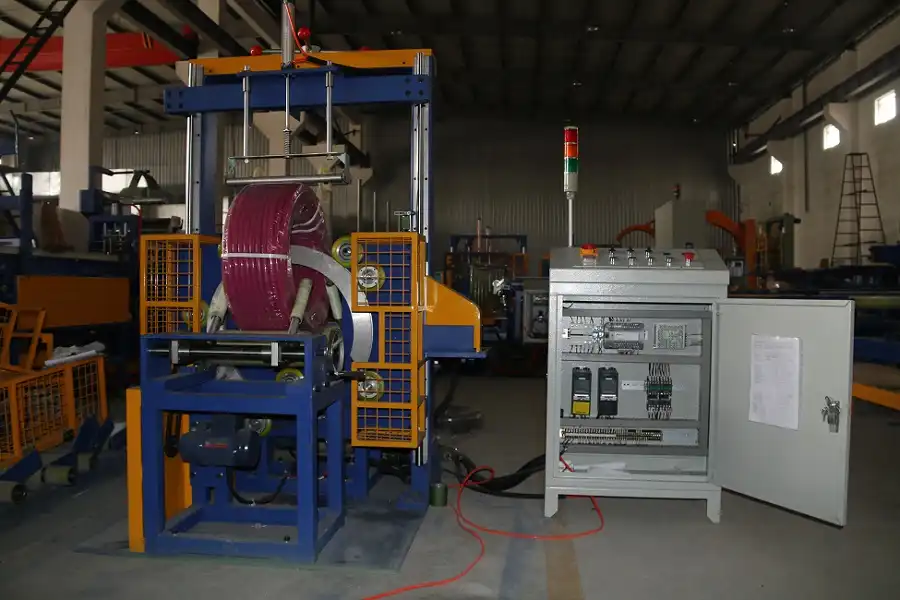
These are not just theoretical problems. They are real issues that factory managers, like Michael, face every day. They directly impact workers and the company’s financial health. Understanding these risks is the first step toward finding better solutions.
Here are the primary risks associated with manual coil packaging:
| Risk Category | Description | Impact on Factory |
|---|---|---|
| Worker Safety | Heavy lifting and repetitive movements cause back injuries, strains, and falls. | Increased medical costs, higher insurance premiums, lost workdays, low morale. |
| Product Damage | Coils can get scratched, dented, or deformed during manual handling. | Customer complaints, returned products, reduced profits, brand reputation damage. |
| Inconsistent Quality | Manual packing leads to uneven wraps and loose seals. | Poor product protection, risk of damage during transport, difficulty stacking. |
| High Labor Turnover | Repetitive, strenuous, and dangerous jobs make it hard to keep employees. | Constant need for training new staff, reduced overall productivity. |
| Increased Operational Costs | Higher injury costs, compensation, and overtime for slower processes. | Directly impacts profitability and budget for other investments. |
| Legal and Compliance | Failure to meet safety standards can result in fines or legal actions. | Significant financial penalties and reputational harm. |
From my experience, I know that worker safety is paramount. Any injury not only impacts the individual but also disrupts the entire production line. I have heard stories from clients about workers being injured while manually flipping heavy coils or struggling to secure them. This often leads to unplanned downtime, which, as a factory owner, I learned to avoid at all costs.
Moreover, product damage is a silent killer of profits. A small scratch on a steel coil edge might seem minor, but if it leads to a customer rejecting a shipment, the losses add up quickly. I’ve worked with businesses where product loss during internal transport and packing was a significant percentage of their overall costs.
Consider these common scenarios in a factory using manual packing:
- A worker attempts to lift a heavy coil without proper equipment, leading to a back injury. The factory faces medical bills, potential lawsuits, and a gap in its workforce.
- During packing, a steel wire coil slips, hitting the floor and causing a significant dent. This coil cannot be sold as a first-grade product, resulting in a loss for the company.
- Packing materials are applied by hand, making the wrap loose in some areas and tight in others. This unevenness fails to protect the coil completely during shipping, making it vulnerable to damage.
These scenarios illustrate why automation is not just about speed. It is also about creating a safer, more reliable, and ultimately more profitable operation. For Polish tire factories, moving away from manual coil packing is a critical step towards modernizing their facilities and securing their future. (Packing risks, industrial safety, product quality control, manual labor challenges)
3. How do automated coil wrapping machines transform tire material handling in Poland?
Automated coil wrapping machines bring a revolutionary change to how tire manufacturers in Poland handle their raw materials, such as rubber strips and steel wire coils. They move away from the risks and inefficiencies of manual methods. When I first started designing packing solutions, my goal was always to make operations smoother and safer. These machines achieve just that. They are designed to improve every step of the packing process.
Automated coil wrapping machines transform tire material handling in Polish factories by significantly increasing packing speed, enhancing worker safety through reduced manual interaction with heavy coils, ensuring consistent and protective packaging quality, and ultimately lowering operational costs for more efficient production.
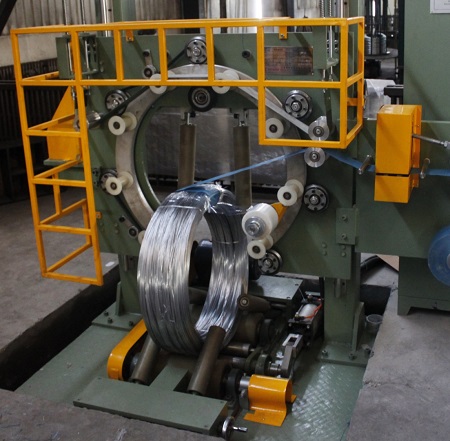
These machines are not just about wrapping. They are about integrating an intelligent solution into the entire production flow. This helps factories like Michael’s overcome their biggest challenges. They offer clear, measurable benefits that directly improve a company’s performance.
Here’s how these machines bring about a transformation:
3.1 Boosting Packing Speed and Throughput 🚀
Manual packing is slow. An automated coil wrapper works at a much faster, consistent pace. It can pack coils in minutes, sometimes even seconds, that might take workers much longer. This speed-up at the end of the line removes bottlenecks. It allows for a smoother flow of materials. This means the factory can produce more tires per day. This increased output directly translates to higher revenue and faster delivery times. For example, a machine like those FHOPEPACK designs can often complete a wrap cycle in under two minutes, a task that might take two or three workers 10-15 minutes manually. This kind of efficiency is crucial for high-volume manufacturing. (Automated packing speed, increased throughput, production line efficiency)
3.2 Enhancing Worker Safety Dramatically 🛡️
This is one of the most important benefits. Automated machines take over the dangerous tasks. Workers no longer need to manually lift, turn, or secure heavy coils. They operate the machine from a safe distance. This drastically reduces the risk of back injuries, strains, and accidents. Factories see fewer workplace injuries. This means lower insurance costs, fewer lost workdays, and a safer environment for everyone. From my factory experience, I know that happy and safe workers are more productive workers. Safety should never be an afterthought; it must be built into the process. (Workplace safety, heavy coil handling, reduced injuries)
3.3 Ensuring Consistent and Superior Packaging Quality ✨
Automated machines wrap coils uniformly every time. They apply packing materials at a consistent tension and overlap. This creates a tight, protective package. This consistent quality prevents damage to the coils during internal transport and shipping. It reduces customer complaints. It also improves the overall appearance of the product. This consistency is hard to achieve with manual labor, where fatigue or different skill levels can lead to varied results. FHOPEPACK machines are built to ensure every coil leaves the factory perfectly protected, ready for its journey. (Consistent packaging, product protection, quality control)
3.4 Reducing Operating Costs and Improving ROI 💰
Investing in an automated coil wrapper saves money in several ways.
- Lower Labor Costs: Fewer workers are needed for packing.
- Reduced Product Loss: Less damage means less scrap and fewer returns.
- Lower Insurance Premiums: Fewer injuries mean lower costs for worker compensation.
- Increased Production: More output with the same or fewer resources. These savings quickly add up. They lead to a strong return on investment (ROI). Managers like Michael are always looking for clear ROI. An automated coil wrapping machine provides it. Over time, these machines pay for themselves through the efficiencies they create. (Cost reduction, ROI, operational savings, automated equipment investment)
3.5 Integrating into Modern Production Lines 🔗
Modern coil wrappers are designed to fit seamlessly into existing production lines. They can be integrated with conveyors and other automated systems. This creates a fully automated end-of-line solution. This level of integration helps Polish tire manufacturers create smart factories. It allows for better data collection and process control. It also prepares them for future industry trends, like Industry 4.0. (Production line integration, factory automation, smart manufacturing)
These machines represent a significant leap forward. They help Polish tire manufacturers not just meet today’s demands but also prepare for tomorrow’s challenges. (Tire manufacturing automation, Polish industry upgrade)
4. Choosing the right coil wrapping machine: What should Polish tire makers consider?
Selecting the right coil wrapping machine is a big decision for any Polish tire manufacturer. It is an investment that needs careful thought. As someone who has built and run packing machine factories, I know what goes into making a good choice. It is not just about buying a machine. It is about finding a solution that truly fits your factory’s specific needs and goals. You want a partner who understands your challenges, not just a seller.
Polish tire makers should consider several key factors when choosing a coil wrapping machine: the type and size of coils, required packing speed, integration capabilities with existing lines, the machine’s durability for heavy industrial use, and the supplier’s commitment to reliable after-sales service and long-term support.

Many factors play a role in this decision. Ignoring any of them can lead to a costly mistake. My clients often ask me for advice on this. I always tell them to look beyond the initial price tag. Think about the total cost of ownership and the long-term benefits.
4.1 Understanding Your Specific Needs 🤔
Before looking at any machine, you must know what you need.
- Coil Dimensions and Weight: What are the typical diameters, widths, and weights of your rubber strips or steel wire coils? Machines come in different sizes and capacities.
- Production Volume: How many coils do you need to pack per hour or per day? This will determine the required speed and automation level.
- Packing Material: What kind of packing material do you use (stretch film, woven fabric, VCI paper)? Ensure the machine supports your preferred materials.
- Packing Requirements: Do you need eye-through-coil or radial wrapping? Do you need specific protection for edges or surfaces? This initial assessment helps narrow down your options significantly.
4.2 Machine Durability and Reliability 💪
Tire factories are often harsh environments. The equipment needs to be robust.
- Build Quality: Look for machines made from high-quality components.
- Heavy-Duty Design: Can it handle continuous operation with heavy coils?
- Proven Track Record: Ask for references or case studies from similar factories. A durable machine means less downtime and fewer repair costs. This is where FHOPEPACK stands out. Our machines are built to last in demanding industrial settings. SHJLPACK and CNBHPAC also offer good options, but FHOPEPACK focuses on maximum durability and minimal maintenance for critical applications.
4.3 Automation Level and Integration 🤖
Think about how much automation you need now and in the future.
- Standalone or Inline: Do you need a machine that works by itself, or one that connects to your existing conveyors and production line?
- Control System: Is the control system user-friendly? Can it integrate with your factory’s central control system?
- Customization: Can the machine be customized to fit unique layouts or specific packing patterns? A machine that integrates well will create a seamless, highly efficient workflow.
4.4 After-Sales Service and Support 🛠️
This is critical. A machine is only as good as the support behind it.
- Installation and Training: Does the supplier offer professional installation and training for your staff?
- Warranty and Parts: What is the warranty period? Are spare parts readily available?
- Technical Support: Is technical assistance available quickly when you need it? Can they provide remote support? Michael, the factory manager, has faced supplier trust crises. This is why choosing a partner like FHOPEPACK, which has a strong commitment to customer support, is crucial. We offer comprehensive support because I know from personal experience that reliable service keeps production running. SHJLPACK and CNBHPAC also provide service, but our focus on long-term client success sets us apart.
4.5 Return on Investment (ROI) Analysis 📈
Finally, look at the financial picture.
- Initial Cost: The purchase price of the machine.
- Operational Savings: Calculate expected savings from reduced labor, less product damage, and increased output.
- Maintenance Costs: Estimate ongoing costs for parts and service.
- Production Increase: How much more can you produce with the new machine? A clear ROI calculation will show the long-term value of your investment. It is not just an expense; it is an asset that generates value.
By carefully considering these factors, Polish tire manufacturers can make an informed decision. They can choose a coil wrapping machine that truly boosts their efficiency and helps their business grow. This helps them move towards a more automated, safer, and more profitable future. (Coil wrapping machine selection, industrial automation, after-sales support, ROI calculation)
Conclusion
Coil wrapping machines are vital for Polish tire makers to boost efficiency, enhance safety, and cut costs. They transform operations, moving factories towards a more automated and profitable future, making the investment in a col wrapping machine a smart strategic choice.








