
How a Coil Wrapping Machine in Mexico Helps Reduce Film Waste and Improve Wrapping Efficiency?
Factory managers in Mexico face constant pressure. Manual coil packing slows things down, wastes material, and eats into profits. Are you seeing your film costs soar and production bottlenecks increase? This is not just about a small cost. It impacts your entire operation, from delivery times to worker safety. Your bottom line suffers, and so does your peace of mind. But what if there was a way to master your packing process? A way to reclaim efficiency, cut waste, and transform your factory floor?
A coil wrapping machine significantly reduces film waste and boosts efficiency in Mexican factories by automating the wrapping process. It uses precise tension control and consistent overlap, ensuring optimal film usage and tight, secure packages every time. This automation replaces labor-intensive manual methods, speeding up output and minimizing material overconsumption, directly impacting your operational costs and delivery schedules.
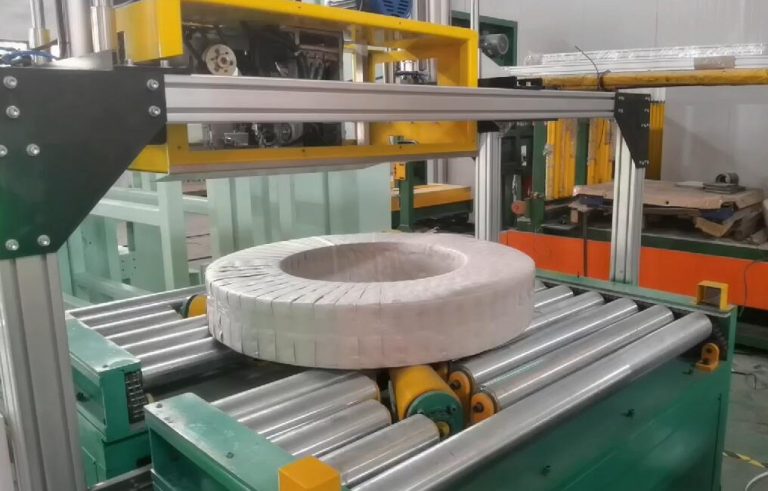
I have seen these challenges firsthand. From working on the factory floor to building my own successful packing machine company, I understand what it takes. Let me show you how a modern coil wrapping machine does more than just wrap. It helps transform your business.
1. Why do manual coil packing methods lead to so much film waste and inefficiency?
Many factories in Mexico still rely on manual packing for heavy steel coils. You know the drill: multiple workers, rolls of stretch film, and endless hours spent trying to get a secure wrap. This approach is slow, inconsistent, and frankly, very wasteful. Workers often use more film than needed. They might struggle with heavy loads. This not only increases your material costs but also slows down your whole production line. Understanding these hidden costs is the first step to finding a better way.
Manual coil packing is inefficient because it relies on human judgment for film application. This often leads to inconsistent tension, uneven overlap, and excessive film usage to ensure perceived security. Workers may apply extra layers to compensate for awkward handling or uneven coil surfaces, directly increasing film waste and slowing down the overall wrapping process, creating bottlenecks.

From my experience, watching teams manually wrap coils, I have seen the same issues again and again. It is a physically demanding job. Workers get tired. Their output slows.
The Hidden Costs of Manual Coil Packing
Manual packing seems cheap at first. You do not buy a big machine. But the costs add up fast. These hidden costs impact your factory’s bottom line in many ways.
1. Excessive Film Use: Humans are not robots. They cannot apply film with perfect consistency. One worker might use too much film. Another might use too little, making the package unsafe. This over-application is a major source of waste. It means you buy more film than you need. Your film cost goes up. Over time, this small waste per coil becomes a very large expense. It drains resources that could be used for other vital parts of your operation.
2. Slow Production Speed: Wrapping a large, heavy coil by hand takes a long time. It involves moving around the coil. It means stopping and starting. This slow pace creates bottlenecks at the end of your production line. Your finished products wait. Your delivery times suffer. This directly impacts your ability to meet customer demands. It can also lead to overtime costs for workers trying to keep up.
3. Inconsistent Wrap Quality: A hand-wrapped coil often has loose spots. It might have uneven protection. This can lead to damage during transit. Michael, you mentioned product damage like coil edges getting hurt. This is a common problem with manual wraps. Loose film does not protect well against dust, moisture, or impacts. Poor quality wraps can result in customer complaints, returns, and ultimately, a loss of trust.
4. High Labor Costs and Safety Risks: You need several workers for manual packing. This increases your labor expenses. More importantly, it creates safety hazards. Lifting heavy tools. Moving around large coils. These actions can cause injuries. I have seen it happen. Employee turnover also goes up when jobs are tough and unsafe. The cost of injuries, lost workdays, and high insurance premiums can be substantial for a factory.
5. Space and Inventory Issues: Manual packing often needs a larger staging area. You need room for workers to move freely. You also need to store more film because of the higher consumption rate. This can tie up valuable factory space and capital. Efficient use of space is crucial in any manufacturing environment. Manual methods often hinder this efficiency.
These factors combined create a system that is not sustainable for modern manufacturing. Especially in a busy metal processing plant like yours in Mexico. The goal is to move beyond these limitations. We want to find a better, smarter way.
2. How does a modern coil wrapping machine cut down on film waste directly?
You are looking for ways to reduce your operational costs. Film waste is a significant part of that. You know current methods are not efficient. Every extra inch of film used is money thrown away. It adds up to thousands of dollars each year. This impacts your factory’s profitability directly. A dedicated coil wrapping machine offers a precise and automated solution to this very problem.
A modern coil wrapping machine directly reduces film waste by applying film with consistent tension, precise overlap, and optimal stretching. Its automated controls ensure the exact amount of film needed for a secure wrap, eliminating the guesswork and over-application common with manual methods. This mechanical precision means less material consumption per coil, leading to significant savings on film costs.
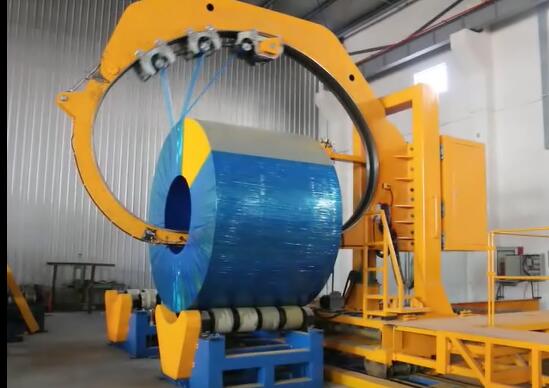
When I started FHOPEPACK, my goal was always to engineer solutions that made real business sense. Reducing waste is a big part of that. A coil wrapping machine is designed for this specific purpose.
Precision Engineering for Material Savings
The key to less film waste is control. Machines offer this. Humans cannot match it. This precise control helps your factory save money on every single coil you pack.
- Consistent Film Tension: Manual wrapping has variable tension. Sometimes too tight, sometimes too loose. A machine uses a powered pre-stretch carriage. This part pulls the film before it even touches the coil. It stretches the film to its maximum yield point. This means you get more length from each roll of film. It is like getting more for your money. This pre-stretch can often double or triple the film’s usable length.
- Accurate Overlap Control: The machine’s control system sets the exact overlap percentage. It could be 30%, 50%, or 70%. Once set, it stays the same for every coil. This prevents gaps in the wrap. It also stops wasteful over-overlapping. You get a perfect, uniform layer every time. This precision prevents using extra film just to “make sure.” Each wrap uses only the necessary amount of film.
- Automated Film Cutting and Sealing: At the end of the wrapping cycle, the machine automatically cuts the film. Then it heat-seals the tail. This process is clean. It is efficient. Manual methods often leave long film tails. These tails might get torn off. They might waste film. The automatic system stops this. It ensures no film is wasted at the start or end of the wrap. This small detail adds up to considerable savings over thousands of coils.
- Customized Wrapping Programs: Modern machines let you program different wrapping patterns. You can set the number of layers for the coil’s body. You can add extra layers for edges or vulnerable spots. This customization means you only use film where it is truly needed. You do not over-wrap the entire coil. This smart use of film reduces total consumption. It targets protection precisely.
- Reduced Human Error: With a machine, the human element of film application is removed. This means no more inconsistent wraps from tired workers. No more guessing how much film is enough. The machine follows its programming perfectly. This reliability translates directly into less wasted film. It creates a predictable and optimized material usage pattern.
By taking the variability out of the wrapping process, a coil wrapping machine offers a powerful tool. It helps you control costs. It increases your profitability. It is a smart investment for any factory in Mexico looking to optimize its packing.
3. What other big benefits does a coil wrapper bring to a factory like yours in Mexico?
Michael, you are not just looking to save film. You want to improve your entire operation. You need to boost output, keep workers safe, and stop product damage. Manual processes are holding you back. They expose your workers to risk. They cost you money through damaged goods and slow deliveries. Investing in a coil wrapping machine delivers far more than just film savings. It addresses multiple critical areas of your business.
Beyond film waste reduction, a coil wrapping machine significantly enhances factory operations in Mexico by boosting overall packing speed, dramatically improving worker safety through automated handling of heavy coils, and providing superior product protection to minimize damage during transit. It also ensures consistent package quality, which strengthens customer satisfaction and reduces costly returns, contributing to greater operational efficiency and profitability.
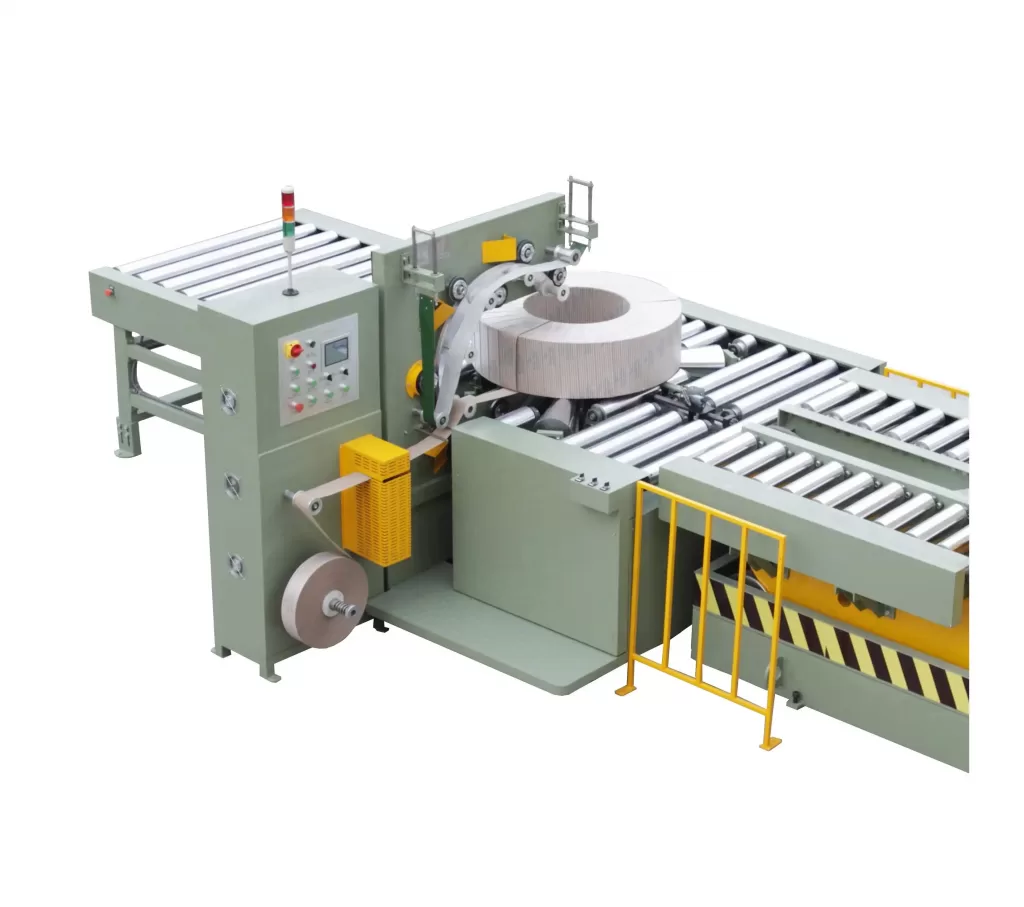
When I talk to factory managers like Michael, their concerns are always bigger than just one item. It is about the whole picture. My machines are built to solve these bigger problems.
Comprehensive Operational Improvements
Let’s look at the broader impact a coil wrapper has. The benefits extend across your entire factory, touching on safety, efficiency, and customer satisfaction.
| Benefit Area | Manual Packing Drawbacks | Automated Coil Wrapping Advantages |
|---|---|---|
| Production Speed | Slow, labor-intensive, creates bottlenecks | Rapid, consistent wrapping; increases throughput |
| Worker Safety | High risk of injury from heavy lifting and awkward positions | Eliminates manual handling of heavy items; reduces injury risk |
| Product Protection | Inconsistent wrap quality, prone to damage in transit | Tight, uniform wrap; superior protection from elements and impact |
| Package Consistency | Variable appearance, reflects poorly on brand | Professional, consistent look; enhances brand image |
| Labor Allocation | Workers stuck on repetitive, low-value tasks | Frees up labor for higher-skill, more valuable operations |
1. Increased Production Throughput: A machine works much faster than people. It can wrap coils in minutes, not hours. This drastically speeds up the end-of-line packing process. You can pack more coils per shift. This removes bottlenecks. It allows your factory to meet higher production demands. It means faster delivery to your customers. Your entire production line benefits from this accelerated pace.
2. Enhanced Worker Safety: This is a critical point, especially for heavy items. Michael, you mentioned the high risk of injuries from manual handling. Coil wrapping machines automate the heavy lifting and turning. Workers do not need to physically manipulate heavy coils or stretch film around them. This greatly reduces the risk of back injuries, strains, and accidents. It means a safer workplace. It lowers your insurance costs. It helps retain valuable employees. Safety is not just a cost; it is a moral obligation and a key to a stable workforce.
3. Superior Product Protection: A machine creates a tight, consistent, and uniform wrap. This protects the product better than a manual wrap. It guards against dust, moisture, and impact damage during storage and transport. Those damaged coil edges you mentioned? A well-wrapped coil is far less likely to suffer such damage. This reduces customer complaints. It saves you money from product returns or replacements. This superior protection ensures your valuable products reach their destination in perfect condition.
4. Consistent Package Quality and Branding: Every coil wrapped by the machine looks the same. It has the same tightness. It has the same professional finish. This consistency reflects well on your brand. It gives your customers confidence in your product quality. It also ensures your products arrive in perfect condition. A professional package enhances your company’s image in the market.
5. Reduced Labor Dependence: While automation does not always mean fewer jobs, it does mean re-deploying labor. Your skilled workers can focus on higher-value tasks. The machine handles the repetitive, dangerous packing. This optimizes your workforce. It makes your operations more robust against labor shortages. It also helps your workforce to be more engaged in meaningful work.
Consider these factors. The return on investment for a coil wrapping machine goes far beyond just film savings. It improves safety. It boosts output. It protects your products and your reputation. These are all things that add directly to your bottom line.
4. How can you pick the right coil wrapping machine and partner for long-term success?
Michael, you have faced supplier trust issues before. You know that buying a machine is a big investment. It needs to be right the first time. Picking the wrong machine or, worse, the wrong partner can lead to ongoing problems. It can mean poor performance, lack of support, and wasted money. You need a solution, not another headache. Choosing the right coil wrapping machine and, crucially, the right partner, is about looking beyond the price tag. It is about expertise, reliability, and support.
To pick the right coil wrapping machine and partner, factory managers in Mexico should prioritize suppliers with proven industry expertise, robust after-sales support, and a deep understanding of specific operational challenges. Look for machines known for durability and efficiency, and seek partners who offer customization, training, and readily available spare parts, ensuring a long-term, reliable solution rather than a one-time sale.
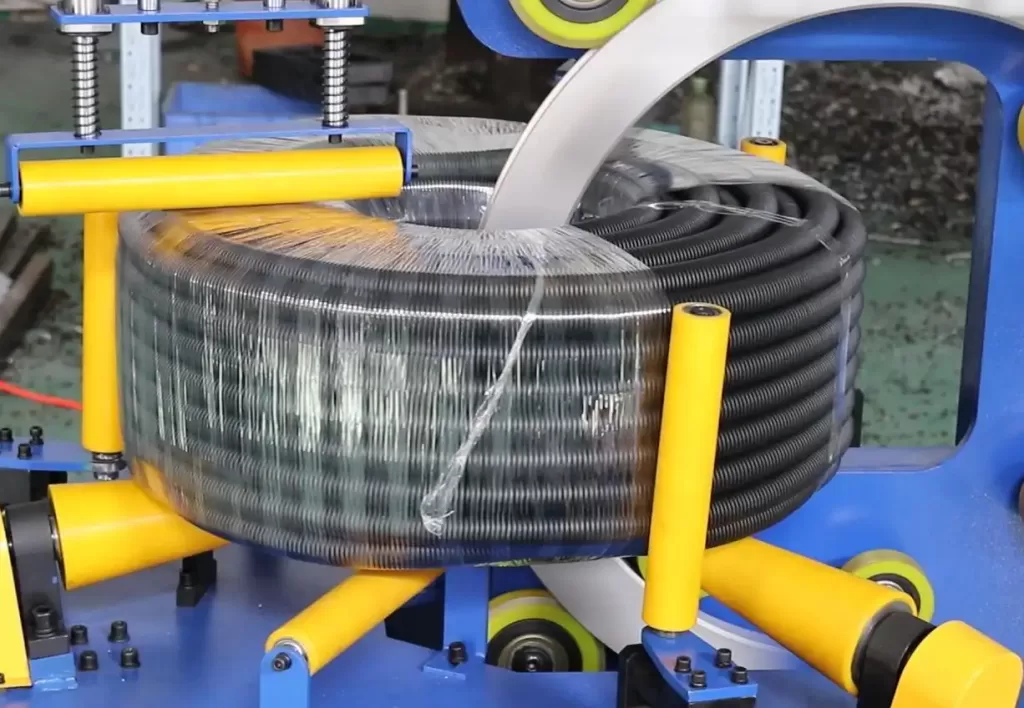
I founded FHOPEPACK because I saw a need for reliable packing solutions. More importantly, I saw a need for real partnership. My journey from a factory employee to a factory owner taught me this.
Key Factors in Selecting Your Machine and Partner
This decision impacts your factory for years. Make it a good one. It requires careful consideration of several factors beyond just the initial cost.
-
1. Supplier Expertise and Experience: Does the supplier understand your business? Do they know about coil packing? Do they understand the demands of a metal processing plant in Mexico? A partner like FHOPEPACK, with my background, offers this deep knowledge. We do not just sell machines. We offer solutions based on real-world experience. Ask about their track record. Look for case studies. Talk to their other clients. This ensures you get advice from someone who truly understands your operations.
-
2. Machine Durability and Reliability: Your factory runs 24/7. You need equipment that can handle harsh conditions. The machine must be built strong. It must have quality components. Downtime costs you thousands. Invest in a machine known for its robust construction. Check for references. Ask about component sourcing. Reliability means consistent performance and fewer costly interruptions to your production.
-
3. Customization and Integration Capabilities: Every factory is unique. Your existing production line has its own flow. Can the machine integrate smoothly? Can it be customized for your specific coil sizes, weights, or production speeds? Does it work with your existing conveyor systems? A good supplier offers flexible solutions. They will tailor the machine to your needs, not the other way around. This ensures a seamless fit into your current setup.
-
4. After-Sales Service and Support: This is where many suppliers fail. What happens after you buy the machine? Do they offer installation? Do they provide training for your staff? Are spare parts readily available? What about technical support? Michael, you have experienced poor after-sales service. A true partner provides ongoing support. They stand by their product. They help you keep it running efficiently for years to come. This support is crucial for long-term operation.
-
5. Clear Return on Investment (ROI): Before you buy, ask for a clear ROI analysis. How quickly will the machine pay for itself? This includes savings from reduced film waste, lower labor costs, fewer product damages, and increased output. A good partner will help you calculate this. They will show you the real financial benefits. This clear financial projection helps you make an informed decision.
Choosing the right coil wrapping machine is more than a purchase. It is a strategic investment in your factory’s future. It is about finding a partner who understands your challenges. It is about finding a partner who helps you achieve your goals. This is exactly what I aim to do at FHOPEPACK.
Conclusion
Investing in a coil wrapping machine transforms your factory. It cuts waste, boosts safety, and increases profit. Partnering with FHOPEPACK means choosing expertise for lasting success in Mexico’s demanding industry.








