
How Canada Exporters Using Coil Wrapping Machine to Reduce Damage During Transit?
Canadian exporters face a tough challenge every day. Shipping heavy coils across vast distances means high risks. Damaged goods lead to lost money and unhappy customers. What if there was a way to stop this waste? What if you could send out every coil knowing it would arrive perfect, ready for your client?
Canadian exporters use advanced coil wrapping machines to create a strong, protective barrier around their coils. These machines tightly apply stretch film, paper, or woven fabric, securing the product against impacts, moisture, and dirt. This simple step makes sure products reach their destination in top condition.

This protective layer is more than just plastic or paper. It is a key part of smart logistics. Let’s look closer at why this is so important for Canadian businesses. We will also see how these machines work and what they can do for your factory.
1. Why is transit damage a critical challenge for Canadian coil exporters?
Imagine your perfectly produced steel coils arriving at a client’s site, only to be rejected. The edges are dinged. The surface has scratches. This is a common story for Canadian exporters dealing with long transit routes. Such damage costs real money and trust, eroding profits and client relationships.
Transit damage is a critical challenge for Canadian coil exporters because it causes financial losses from rejected goods, increases insurance claims, and harms their reputation. Long distances and multiple handling points during shipping expose coils to significant risks, making robust protection essential.
Heavy steel or wire coils are not simple items to ship. They are dense, and their weight creates inertia during transport. This means even small bumps can cause big problems. The edges are especially vulnerable. A slight impact can deform an edge, making the coil unusable for specific applications. Surface scratches from rubbing against other cargo or packaging failures also lead to rejections. Then there is the biggest enemy for metal: moisture. Canada’s varied climate means coils can face humidity changes, rain, and condensation. Without proper protection, rust can form quickly, ruining the product.
Canadian exporters often ship their goods over very long distances. This can be across the country, to the United States, or overseas. Each step of the journey, from loading at the factory to unloading at the customer’s dock, involves handling. More handling means more chances for damage. Vibrations during road or rail transport can also cause shifting and wear.
The impact of this damage hits businesses hard in many ways:
- Financial Loss: This is direct. You lose the cost of the raw material, the manufacturing labor, and the shipping fees for the damaged goods. You might also face charges for returning the product.
- Reputation Damage: When a customer receives damaged goods, their trust in your company goes down. This makes it harder to get repeat business or new clients. Bad reviews can spread fast in today’s market.
- Increased Insurance Costs: More claims for damaged goods mean your insurance premiums will likely go up. This adds to your operating expenses without adding value.
- Operational Headaches: Dealing with returns, replacements, and customer complaints takes time and resources away from production and sales. It is a drain on your team.
I remember one client in Alberta. They shipped specialized steel coils, very high-value products. They called me after a string of rejections. The issue was always minor edge damage. These small dings meant huge losses for them. Their old hand-wrapping methods just did not cut it. We needed a better way to protect their hard work. This is why I always push for durable, reliable solutions. Protecting your product is not an expense; it is an investment in your business’s future.
2. How do modern coil wrapping machines specifically prevent damage during shipping?
You have a high-value product. You spend good money making it perfect. But then, during transport, all that hard work gets ruined. How can a machine truly stop this? How does a simple wrap become such a powerful shield against all these threats?
Modern coil wrapping machines prevent damage by applying multiple layers of strong, flexible packaging materials around the coil. This creates a tight, uniform barrier against physical impacts, dust, and moisture. The controlled tension ensures the wrap stays in place, protecting edges and surfaces effectively.

Modern coil wrapping machines are engineered to address the specific vulnerabilities of heavy coils during transit. They use smart technology to apply packaging materials in a way that manual wrapping simply cannot match. The core idea is to create a robust, consistent, and all-encompassing protective layer.
Here is how they achieve this:
- Physical Barrier: The machine applies several layers of stretch film, woven fabric, or a combination. This multi-layer wrap acts like a cushion. It absorbs shocks and impacts that would otherwise directly hit the coil. Think of it like a protective shell.
- Edge Protection: Coil edges are the first to get damaged. A good machine wraps the coil so tightly and uniformly that it reinforces the edges. The film holds the coil layers together, preventing them from shifting or becoming misshapen. This is key for maintaining product integrity.
- Moisture and Dust Shield: The packaging material creates a sealed environment around the coil. This keeps out rain, humidity, and airborne dust particles. For metal coils, this is vital to prevent rust and surface contamination. Many machines can also apply VCI (Volatile Corrosion Inhibitor) film or paper, which actively prevents corrosion.
- Secure Load: The tight wrap binds the entire coil, making it a stable, compact unit. This prevents individual layers of the coil from unwinding or moving during transport. A secure load is less likely to shift in transit, further reducing damage risks.
These machines use different types of packaging materials, each with specific benefits:
- Stretch Film: This is a very common material. It is elastic, which allows for a very tight wrap. It offers good puncture resistance and is cost-effective.
- VCI Film/Paper: Essential for protecting metal coils from rust. These materials release chemicals that prevent corrosion, especially in humid or marine environments.
- Woven Fabric: For extremely heavy coils or situations with rough handling, woven fabric offers superior tear strength and impact resistance. It provides an extra layer of durability.
The way the machine works is quite precise. A coil is loaded onto a platform or moved through a wrapping ring. The machine then rotates either the coil or the wrapping ring around the coil. Packaging material dispenses from a carriage with controlled tension. This tension is very important. It makes sure the wrap is tight enough to protect but not so tight that it damages the coil itself. Once wrapped, the machine automatically cuts and seals the material, ready for the next coil.
When I started my factory, one of the first things I learned was the value of good packaging. I saw companies trying to save a few dollars on wrapping, and then losing thousands on returns. A proper coil wrapping machine is an investment in quality assurance. It is not just about putting film on a coil. It is about consistent tension, correct overlap, and the right material choice for the product. These details make all the difference in preventing damage.
3. What other key advantages do Canadian businesses gain from automated coil wrapping?
You are a factory manager like Michael. You need more than just less damage. You need to hit production targets, keep your team safe, and cut costs. Does a coil wrapper really help with all of that? Can one machine make such a big difference to your bottom line and overall factory operation?
Beyond reducing damage, Canadian businesses gain significant advantages from automated coil wrapping, including vastly improved operational efficiency, enhanced workplace safety by minimizing manual handling, and substantial cost savings through reduced labor and material waste. It boosts overall productivity.
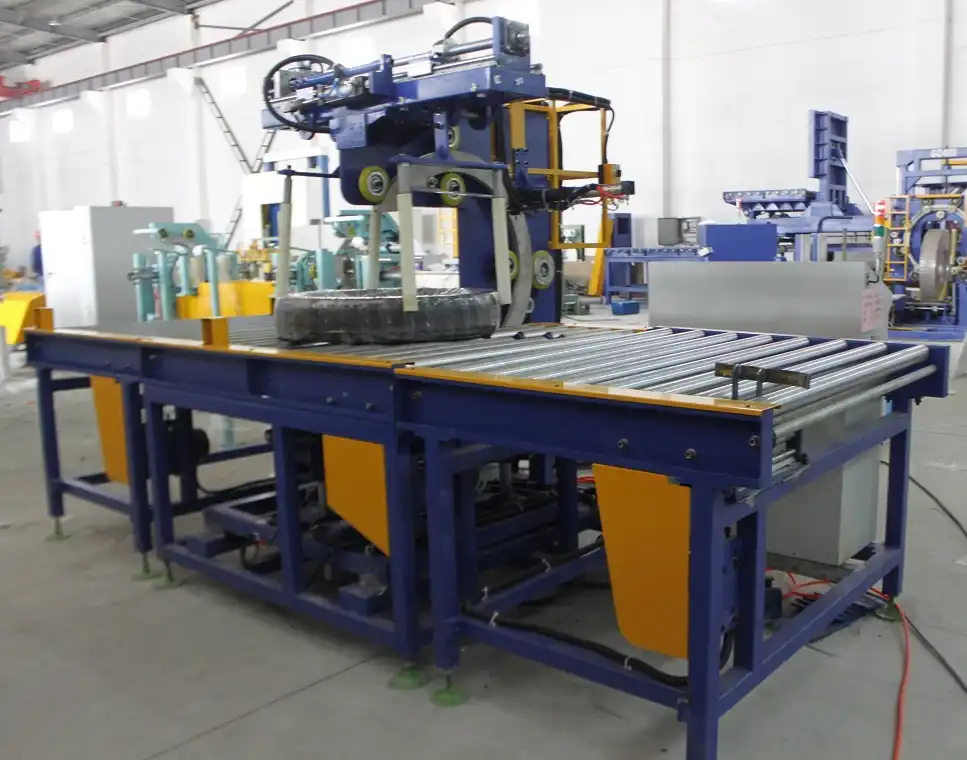
Investing in an automated coil wrapping machine brings benefits that go far beyond just preventing transit damage. For a factory manager like Michael, these wider advantages directly address his core challenges and goals, from efficiency to safety and profitability.
Here is a breakdown of the key advantages:
Operational Efficiency Gains
Automated wrapping machines are game-changers for production flow.
- Speed and Throughput: Machines wrap coils significantly faster than human workers. This means coils move through the packaging line quicker. This speeds up your entire end-of-line process. You can package more coils per hour, leading to higher overall production throughput.
- Consistency: Every coil receives the same high-quality, uniform wrap. There is no variation due to worker fatigue or skill level. This consistency in packaging reduces the need for re-wraps and ensures a professional look.
- Reduced Bottlenecks: Manual wrapping often creates a bottleneck. Coils pile up waiting to be wrapped. Automation removes this choke point, allowing a smoother flow from production to shipment.
Let’s look at a quick comparison:
| Metric | Manual Wrapping | Automated Wrapping | Improvement |
|---|---|---|---|
| Wrap Time per Coil | 15-20 minutes | 1-3 minutes | 80-95% faster |
| Labor Needed | 2-3 workers | 1 worker (for monitoring) | 50-66% less |
| Packaging Consistency | Variable | High and Uniform | Significant |
| Daily Throughput | Lower | Much Higher | Major Boost |
Enhanced Workplace Safety
This is a huge benefit for any factory manager concerned about their team.
- Minimized Manual Handling of Heavy Coils: Workers no longer need to physically maneuver heavy coils or wrestle with wrapping film around them. This eliminates the highest risks. Michael’s concern about high injury risk and insurance costs is directly addressed here.
- Reduced Injury Risk: Fewer back strains, cuts, and crush injuries means a safer working environment. This leads to happier employees and lower rates of absenteeism.
- Improved Ergonomics: Machines are designed with safety in mind. Operators stay away from moving parts during the wrapping process.
Substantial Cost Savings
This is where the ROI becomes clear for Michael.
- Lower Labor Costs: With one worker monitoring a machine instead of two or three manually wrapping, you save on labor costs. These workers can also be reallocated to other value-adding tasks in the factory.
- Optimized Material Usage: Automated machines use packaging film much more efficiently. They apply the correct tension and overlap, reducing waste that often occurs with manual wrapping. This saves on material expenses.
- Reduced Product Loss: As discussed earlier, fewer damaged goods mean direct savings from avoiding rejections, returns, and rework.
- Lower Insurance Premiums: A safer workplace with fewer accidents can lead to lower workers’ compensation insurance premiums over time.
When clients like Michael come to me, they often focus only on damage reduction. But I tell them, “Look beyond that. Think about your whole factory floor.” I have seen operations transform. One company in Quebec, they were always behind schedule. Their wrapping area was a huge bottleneck. We installed an automated system. Not only did their damage complaints drop to almost zero, but their overall line speed went up by 30%. Their workers were happier, too, no longer battling those heavy coils by hand. That’s real impact for your business.
4. How can you select the best coil wrapping machine for your factory’s unique needs?
You know you need one. But walk into the market, and you see dozens of options. Big ones, small ones, different features. How do you cut through the noise? How do you make sure you pick the machine that truly fits your unique operation and helps you reach your goals?
To select the best coil wrapping machine, you must first assess your specific coil dimensions, production volume, and desired level of automation. Next, consider the material types you need to wrap, available factory space, and your budget. Finally, prioritize suppliers who offer strong after-sales support and expertise, like FHOPEPACK.
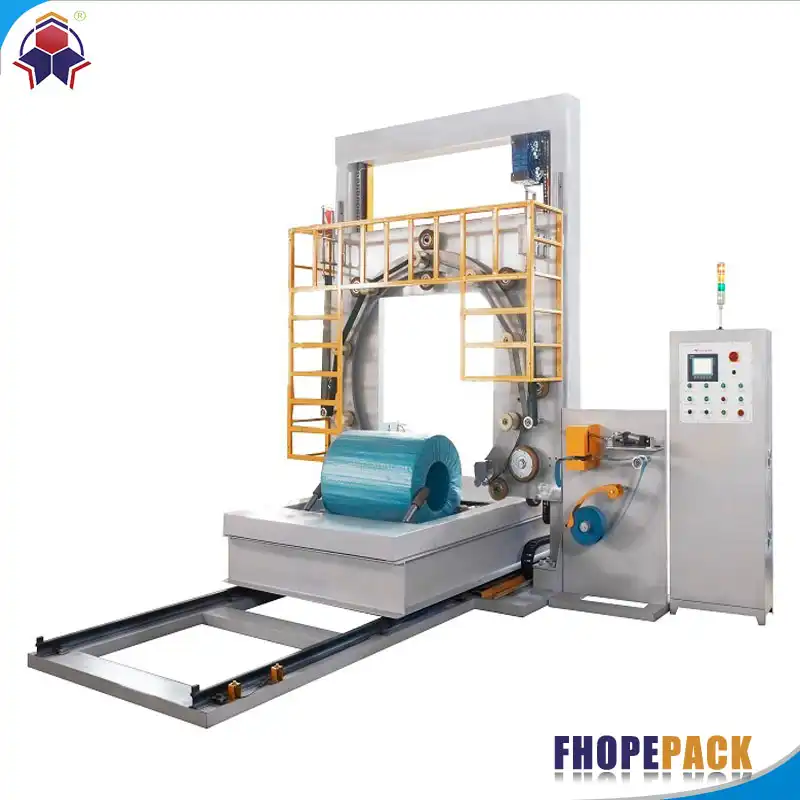
Choosing the right coil wrapping machine is a critical decision. It is an investment that will affect your factory’s efficiency, safety, and profitability for years to come. Making the wrong choice can lead to frustration, missed targets, and financial losses. To make an informed decision, you need a structured approach.
Here are the key factors I always advise my clients to consider:
1. Understand Your Coil Specifications
- Dimensions and Weight: What are the typical outer diameter (OD), inner diameter (ID), and width of your coils? How much do they weigh? These details determine the size and strength of the machine you need. A machine too small will not fit your coils. One too weak will not last.
- Coil Types: Do you wrap steel, copper, aluminum, or wire coils? Different materials may require specific handling or protection features.
2. Define Your Production Requirements
- Target Wrapping Speed: How many coils do you need to wrap per hour or per shift? This dictates the machine’s operational speed and capabilities.
- Production Volume: What is your daily or monthly output? This helps determine if you need a semi-automatic machine (operator involvement) or a fully automatic line (minimal operator input). Michael’s goal to “elevate automation level” directly relates to this.
- Integration: Does the machine need to connect with your existing production line, conveyors, or other equipment?
3. Evaluate Packaging Material Needs
- Material Types: Which packaging materials are essential for your product? (e.g., standard stretch film, VCI film/paper for corrosion protection, robust woven fabric for heavy duty).
- Multi-Roll Capability: Do you need to apply different materials at the same time, such as VCI paper under stretch film?
4. Consider Your Factory Environment
- Available Space: Measure the floor space you have. Coil wrapping machines can be quite large, especially for big coils or fully automatic systems.
- Site Conditions: Are there any specific safety regulations, environmental factors (dust, temperature), or power supply limitations to consider?
5. Budget and Return on Investment (ROI)
- Capital Investment: What is your budget for this new equipment? Be realistic but also think long-term.
- ROI Calculation: Crucially, calculate the expected return on investment. How much will you save in labor, reduced damage, and increased efficiency over time? Michael’s goal for “ROI clearly defined” is essential. A good supplier can help you with this calculation.
6. Prioritize Supplier Support and Expertise
- After-Sales Service: This is often overlooked but extremely important. Does the supplier offer installation, operator training, ongoing maintenance, and readily available spare parts?
- Technical Support: Can you get fast and effective technical help if something goes wrong?
- Industry Expertise: Does the supplier truly understand your industry, your challenges, and your specific needs?
This is where my journey comes in. I started as an employee, then built my own factory. I know the pain of buying equipment that promises the world but delivers little. I learned that a good supplier is not just selling a machine. They are selling a solution. They understand your production bottlenecks, your safety needs, your efficiency goals. That is what FHOPEPACK aims to be. We look at your whole setup, not just one piece of equipment. We want to be the partner Michael Chen is looking for, someone who truly understands the business from the inside. We are here to help you make the best choice for your unique operation.
5. My insights from years in the packing machine industry!
We have talked about problems, solutions, and what to look for. But what truly makes a difference? What is the one thing I have learned that sets successful operations apart from the rest, especially in the demanding world of packing heavy coils?
After decades in this industry, my biggest insight is that investing in the right packing machine is not just about equipment; it is about investing in your factory’s future, your team’s safety, and your customers’ trust. It is about understanding that true efficiency and profit come from smart, reliable automation.

Many people in the industry see a packing machine as just another piece of hardware in the factory. But from my experience, having started as an engineer and then building my own successful packing machine factory, I see it as much more. It is a cornerstone of operational excellence. Your packaging line is the last step before your product leaves your control. A weak link here, whether it is slow manual processes or unreliable equipment, damages everything you have done upstream in production. It affects your brand, your relationships, and your bottom line.
My journey taught me that the best solutions come from understanding the entire workflow of a factory. It is not just about the machine itself. It is about the material handling before the coil reaches the wrapper. It is about the logistics after the coil is wrapped and ready for shipment. It is about how seamlessly the new machine integrates into your existing setup, not just as an add-on but as a vital part of the whole system. This holistic view is what truly defines a “MASTER PACKING MACHINE” operation.
This is why at FHOPEPACK, we do not just sell machines. We share knowledge. We help you think through these complex challenges. Like Michael Chen, I faced efficiency bottlenecks, safety risks, and the frustration of product loss in my own journey. I learned many lessons the hard way. My goal now is to give back. I want to help other businesses avoid those same costly mistakes and find real solutions that drive their growth. We aim to be the knowledgeable partner that Michael, and others like him, are looking for. We provide insights based on real-world experience, not just sales pitches. We help you make informed decisions that actually bring positive change and growth for your business.
The packing industry is always changing. New materials come out, new automation technologies emerge. Staying updated with these trends is key to remaining competitive. A good partner helps you adapt and evolve. This makes sure your packaging solutions remain top-tier. This proactive approach, combining smart equipment with expert knowledge, is what truly makes a factory operate like a master packing machine. It is about continuous improvement and constant innovation.
Conclusion
Smart Canadian exporters master transit damage by using coil wrapping machines. These machines boost safety, cut costs, and improve efficiency. Choosing the right partner makes all the difference for your factory’s success and future.








