
How Can a Pallet Flipper Reduce Forklift Usage and Labor Costs?
In the fast-paced world of logistics, I have seen many warehouse managers like Carlos struggle with daily challenges. Imagine your warehouse floor, bustling with forklifts, staff manually wrestling with heavy pallets, and the constant pressure of tight delivery schedules. This scenario often leads to inefficiencies, increased costs, and even safety hazards. I know this struggle firsthand from my years in the packing machine industry. The good news is, there is a smart solution that can transform your operations.
A pallet flipper, also known as a pallet inverter or pallet changer, significantly reduces forklift usage and labor costs by automating the process of transferring goods from one pallet to another, or changing damaged pallets. This automation minimizes the need for forklifts to handle individual pallet changes, streamlines material flow, and frees up human workers from strenuous, time-consuming manual tasks, leading to substantial savings and improved safety in warehouse operations.
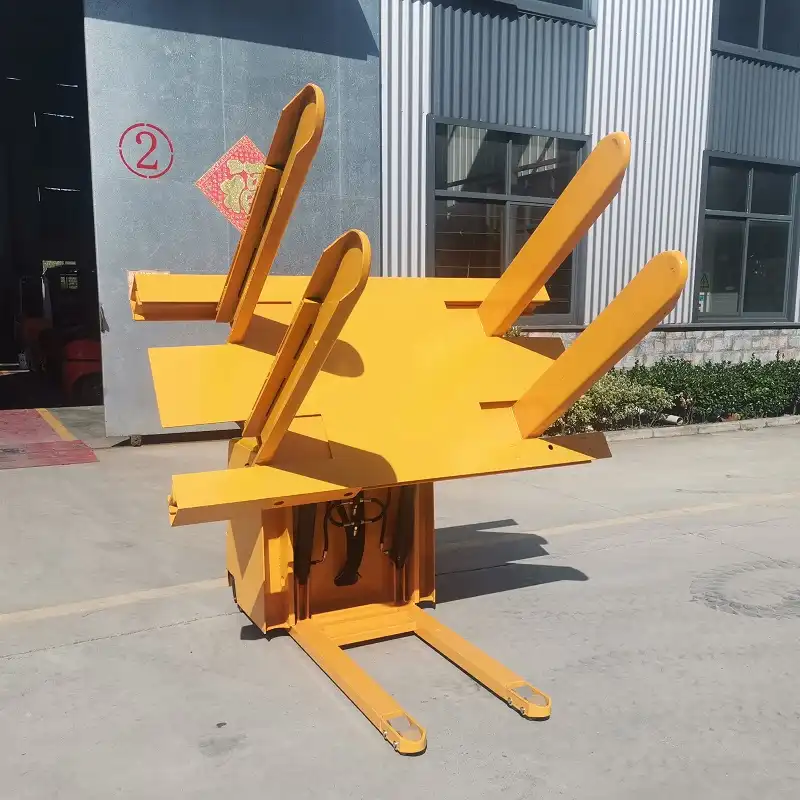
Many warehouse managers, especially those dealing with varied pallet sizes for international shipments like Carlos in Spain, find themselves constantly looking for ways to optimize. If you are tired of the constant juggling act of managing forklift traffic and a shrinking labor pool, keep reading. I will share insights from my journey in the packing machine industry to show you how a simple machine can make a big difference.
What exactly is a Pallet Flipper and how does it work?
Do you ever wonder how some warehouses manage to seamlessly switch between different pallet types without constant manual intervention? The secret often lies in a piece of equipment that many consider a game-changer: the pallet flipper. Without this machine, the thought of daily pallet exchanges, especially for varied international standards, can feel overwhelming.
A pallet flipper is a mechanical device designed to safely and efficiently transfer goods from one pallet to another, or to invert a load. It works by clamping the product, then either rotating it or pushing it onto a new pallet, removing the need for manual lifting or complex forklift maneuvers for pallet changes.

The core function of a pallet flipper is quite simple, but its applications are incredibly diverse. From my experience helping clients automate their logistics, I have seen these machines solve many problems. For instance, consider the challenge Carlos faces with needing to switch between European, American, and plastic pallets for his group’s distribution center. Manual switching is slow and risky. A pallet flipper makes this process fast and safe. There are several types of pallet flippers, each suited for different operational needs and product types. Understanding these types helps in choosing the right solution for specific warehouse challenges, enhancing overall material handling efficiency.
Understanding the Different Types of Pallet Flippers and Their Mechanics
When we talk about pallet flippers, it is not a one-size-fits-all solution. My journey in the industry has shown me how critical it is to match the right tool to the job. These machines are engineered with various mechanisms to handle different load types and operational requirements. Knowing these distinctions can truly optimize your warehouse processes.
-
Fixed vs. Mobile Pallet Changers:
- Fixed Pallet Changers: These are installed in a specific location within the warehouse, often integrated into a conveyor line. They are ideal for high-volume operations where pallet changes are centralized. They offer consistency and can be fully automated. For a large distribution center like Carlos manages, a fixed unit near the loading docks or within a specific processing area would be very efficient for consistent, high-throughput pallet exchanges. Their robust design handles heavy, continuous use. (stationary pallet exchange, automated material flow)
- Mobile Pallet Changers: These units offer flexibility. They can be moved to different areas of the warehouse using a forklift or by being self-propelled. This is perfect for operations with lower volume, varied pallet change locations, or limited space. Imagine if you have different zones for various product types. A mobile unit can service them all. This adaptability is key for businesses that need versatile pallet handling solutions without dedicating permanent space. (portable pallet transfer, flexible warehouse operations)
-
90-Degree Pallet Inverters:
- These machines clamp the load and rotate it 90 degrees. They are mostly used when the product itself needs to be turned, or when you need to transfer goods to a new pallet while maintaining the same orientation relative to the ground. This is very useful for changing damaged pallets or switching from wooden to plastic pallets for hygiene reasons without disturbing the product stacking. Their design allows for a quick, controlled turn. (load rotation, hygienic pallet solutions)
-
180-Degree Pallet Inverters:
- As the name suggests, these clamp the load and invert it completely, turning it 180 degrees. This is often used for frozen goods, which need to be inverted to remove damaged layers, or for applications where the bottom of the load needs to become the top. It is also excellent for retrieving slip sheets or for switching out a bottom pallet. The full inversion capability offers a unique solution for specific product handling needs. (full load inversion, product protection)
-
Pushing or Gripping Plate Pallet Changers:
- These systems use a gripping plate or pushing mechanism to hold the product securely while the original pallet is removed and a new one is inserted. The load itself remains upright. This method is ideal for unstable or fragile products that cannot be tilted or inverted. It ensures minimal movement of the actual goods during the pallet change, significantly reducing the risk of damage. This direct transfer method is often preferred for high-value or delicate items. (secure load transfer, damage prevention)
The mechanics behind these machines are designed for safety and efficiency. They employ hydraulic or electric systems to provide smooth, controlled movement. Safety sensors, emergency stops, and robust construction are standard features, reflecting the industry’s commitment to worker protection and operational reliability. My goal has always been to equip businesses with tools that perform reliably and keep staff safe. (warehouse automation technology, industrial safety features)
How does a Pallet Flipper directly impact forklift operations?
Have you ever watched your forklifts spend more time on non-core tasks like manual pallet transfers than on actual loading and unloading? I have seen this inefficiency many times. It is a drain on resources that often goes unnoticed until you analyze the numbers.
A pallet flipper directly impacts forklift operations by drastically reducing the time and resources forklifts spend on pallet changing tasks. Instead of requiring a forklift operator to meticulously maneuver and manually exchange pallets, the automated flipper handles the process, freeing up forklifts for primary material handling duties and decreasing overall warehouse traffic.
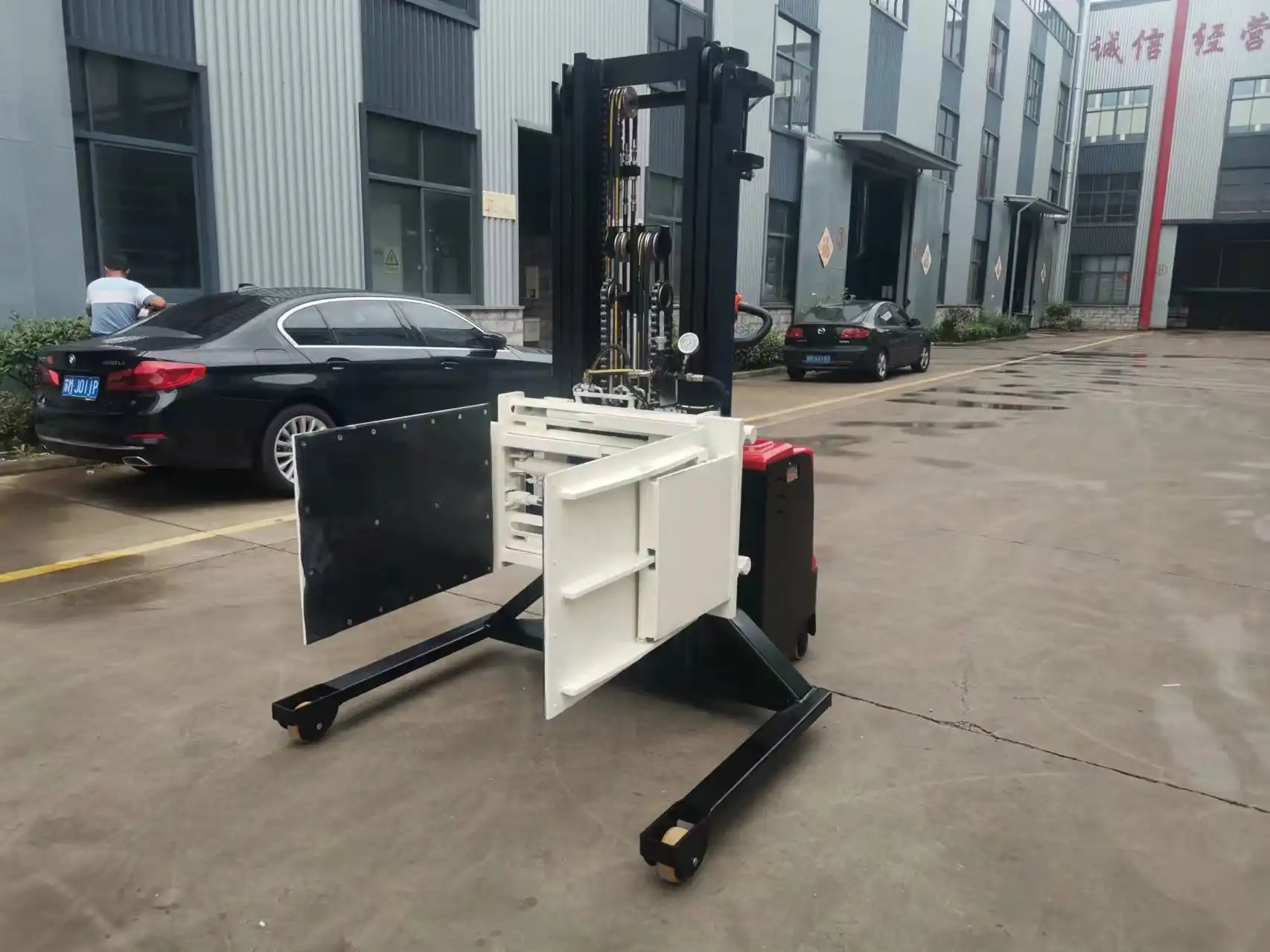
Consider a typical scenario in Carlos’s warehouse where thousands of pallets are handled daily, needing frequent changes between Euro and US standards. Without a pallet flipper, each change might involve a forklift operator carefully lifting, moving, and often waiting for manual assistance to swap pallets. This process is not only slow but also exposes the product to more handling risks. With a pallet flipper, the forklift simply delivers the load to the machine and picks up the new palletized load, significantly speeding up the process. This optimization has several direct benefits for your material handling fleet. It is about working smarter, not harder.
Minimizing Forklift Dependency for Pallet Transfer Tasks
One of the most immediate and tangible benefits I have observed from implementing pallet flippers is the substantial reduction in forklift dependency for routine pallet transfer tasks. This is not just about saving a few minutes here and there; it is about fundamentally rethinking your warehouse’s material flow and resource allocation. My experience with numerous clients has shown that this shift can unlock significant efficiencies.
-
Reduced Forklift Travel and Congestion:
- Without a pallet flipper, forklifts often travel significant distances to designated areas for manual pallet changes. This increases internal traffic, leading to congestion and potential delays, especially in busy distribution centers like Carlos’s. By centralizing or streamlining the pallet changing process with a machine, forklifts make fewer, shorter trips. They only need to bring the loaded pallet to the flipper and then take the newly transferred load away. This reduction in travel minimizes bottlenecks and allows for a smoother, more predictable flow of goods. Less travel also means less wear and tear on your fleet. (warehouse traffic management, optimized material flow)
-
Faster Turnaround Times at Dock and Staging Areas:
- Manual pallet changes are time-consuming. Forklift operators often have to perform multiple lifts, reposition the load, and wait for human assistance to swap pallets. This ties up forklifts and creates queues at crucial points like loading docks or staging areas. A pallet flipper performs these tasks much faster and with greater consistency. A forklift can drop off a pallet, pick up another, and be on its way in minutes. This rapid turnaround directly translates to shorter truck wait times and quicker processing of incoming and outgoing shipments. For businesses facing tight delivery windows, this speed is invaluable. (expedited logistics, dock efficiency)
-
Extended Forklift Lifespan and Reduced Maintenance:
- Every hour a forklift operates contributes to its wear and tear. If forklifts are spending a significant portion of their operational time on inefficient pallet changes, their engines, tires, and hydraulic systems are accumulating unnecessary hours. By shifting these tasks to a dedicated pallet flipper, forklifts are used more for their primary roles – lifting and transporting. This reduces their overall operational hours and the strain on their components, leading to fewer breakdowns, extended service intervals, and a longer operational lifespan for your fleet. Lower maintenance costs and less downtime directly impact your bottom line. (fleet longevity, operational cost savings)
-
Optimized Fuel/Battery Consumption:
- Forklifts consume fuel or battery power every minute they are running. Inefficient movements and idling during manual pallet changes add to this consumption without contributing directly to productive work. By making pallet transfer quick and automated, a pallet flipper ensures that forklifts are only running for necessary transport tasks. This optimization leads to measurable savings in fuel or electricity costs, contributing to a more sustainable and cost-effective operation. For large fleets, these savings can be substantial over time. (energy efficiency, sustainable logistics)
Implementing a pallet flipper transforms how your forklifts are utilized. It shifts them from being part of a tedious, often manual, pallet exchange process to being highly efficient transporters of goods. This strategic change significantly improves your overall material handling system. (efficient material handling, resource optimization)
In what ways does a Pallet Flipper cut down on labor costs?
Have you ever considered the true cost of manual labor in your warehouse beyond just hourly wages? I have seen many businesses overlook the hidden expenses related to manual tasks, especially repetitive, physically demanding ones. This is where a pallet flipper truly shines.
A pallet flipper cuts down on labor costs by automating the physically demanding and time-consuming process of changing or transferring pallets, thereby reducing the need for multiple workers to perform these tasks. It allows staff to be reassigned to more productive roles, minimizes overtime hours, and lowers costs associated with workplace injuries and training for manual pallet handling.

For managers like Carlos, who face rising labor costs and a scarcity of staff willing to do strenuous lifting, this is a critical benefit. Manual pallet changes often require two or more people, involve awkward lifting, bending, and the risk of product damage. My experience has shown that investing in automation like a pallet flipper addresses these challenges head-on. It is not just about replacing people; it is about empowering your workforce and optimizing your human resources.
Shifting from Manual to Mechanized Pallet Handling
The transition from manual to mechanized pallet handling is a strategic move that addresses several core challenges in modern warehousing, especially those related to labor. From my perspective, having witnessed the evolution of packing and handling machines, this shift is not just an upgrade; it is a necessity for long-term sustainability and profitability.
-
Reduced Direct Labor for Pallet Swapping:
- The most direct way a pallet flipper reduces labor costs is by minimizing the number of staff required for pallet changes. What once might have needed two or three workers to manually transfer goods or flip a pallet can now be done by one operator interacting with the machine. This operator primarily supervises the process or simply loads and unloads the machine. For a busy facility like Carlos’s, where hundreds or even thousands of pallets are swapped daily, the cumulative saving in man-hours is significant. This directly translates to lower payroll expenses for these specific tasks. (staff efficiency, reduced manual intervention)
-
Reallocation of Workforce to Higher-Value Tasks:
- By automating the tedious and physically taxing work of pallet changing, you free up your existing workforce to focus on more complex, value-added activities. Instead of spending time on repetitive lifting and repositioning, staff can be reassigned to order picking, quality control, inventory management, or operating other essential equipment. This not only makes your operations more efficient but also improves job satisfaction. Employees appreciate being able to contribute to tasks that require more skill and less physical strain. This strategic reallocation maximizes human potential within the warehouse. (workforce optimization, skilled labor utilization)
-
Decreased Overtime and Temporary Staffing Needs:
- When manual pallet changes are slow and cumbersome, especially during peak seasons or unexpected surges in demand, warehouses often rely on overtime hours or temporary staff to keep up. This adds considerable expense to the operational budget. A pallet flipper’s speed and consistency mean that pallet changes are processed much faster within regular working hours. This reduces the need for costly overtime pay and the expenses associated with hiring and training temporary workers. It brings predictability and control to your labor scheduling. (overtime cost reduction, predictable operations)
-
Lower Training and Supervision Costs:
- Manual pallet handling requires ongoing training to ensure proper techniques for safety and efficiency. New employees need to be taught how to lift correctly, how to prevent damage, and how to work as a team for heavier loads. This training takes time and supervisory effort. With an automated pallet flipper, the training focuses on machine operation, which is typically standardized and less prone to human error. Once trained, the machine performs the task consistently, reducing the need for constant supervision over the pallet changing process itself. (streamlined training, operational consistency)
The integration of a pallet flipper moves your warehouse away from labor-intensive, risky manual processes. It ushers in an era of automated precision, allowing your human resources to be deployed more intelligently and cost-effectively. My goal has always been to help businesses achieve this level of operational excellence. (automated warehouse solutions, labor cost efficiency)
What are the broader operational benefits beyond forklifts and labor?
Beyond the obvious savings in forklift usage and labor costs, do you ever think about the ripple effect of integrating smart automation into your warehouse? From my extensive experience in the packing machine sector, I can tell you that the benefits extend far beyond the direct savings.
A pallet flipper offers broader operational benefits that include significantly enhanced safety for workers and products, improved overall operational efficiency and speed, greater compliance with international shipping standards through seamless pallet exchanges, and a reduced environmental footprint, all contributing to a more robust and responsive supply chain.
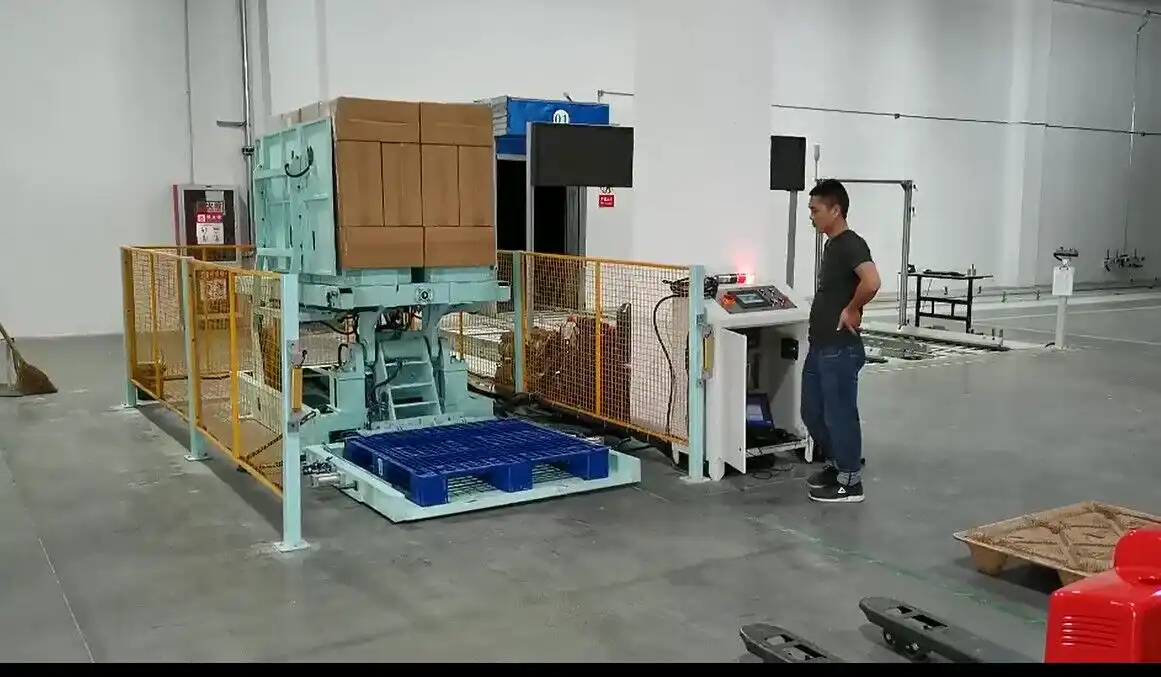
For a supply chain leader like Carlos, whose main concerns include safety, compliance, and meeting stringent customer demands, these “hidden” benefits are just as crucial as cost reduction. The pallet flipper is not just a tool; it is a strategic asset that strengthens your entire operational framework. I have seen how companies transform their logistics by embracing these broader advantages.
Elevating Warehouse Performance Through Automation
Embracing automation, particularly with tools like pallet flippers, is about much more than just a single task improvement. It is about fundamentally elevating the entire performance of your warehouse. My career has been dedicated to understanding these systemic improvements, and I can assure you the ripple effects are profound for any logistics operation.
-
Enhanced Safety for Personnel and Product:
- Manual pallet handling inherently carries significant risks. Workers are exposed to strain injuries from lifting heavy loads, crush injuries from falling products, and accidents involving forklifts during complex maneuvers. Carlos specifically noted incidents of goods tipping and staff injuries. A pallet flipper eliminates these manual risks by performing the heavy lifting and rotating automatically. Products are securely clamped, preventing damage from dropping or shifting. This leads to a safer working environment, fewer workplace accidents, lower insurance premiums, and reduced compensation claims. It protects your most valuable assets: your people and your inventory. (worker safety, product integrity, accident prevention)
-
Increased Operational Speed and Throughput:
- In today’s market, speed is paramount. E-commerce and retail customers demand faster delivery cycles, putting immense pressure on warehouses. Manual pallet changes are a bottleneck. A pallet flipper can perform a complete pallet change in a fraction of the time it takes manually, often within minutes. This rapid processing dramatically increases throughput, allowing for more pallets to be moved and processed in a shorter period. It helps meet tighter delivery schedules, reduces lead times, and improves overall customer satisfaction. For a regional distribution center, this speed can be a major competitive advantage. (expedited throughput, rapid processing)
-
Ensured Compliance with International Standards:
- International logistics often requires strict adherence to various pallet standards (e.g., ISPM 15 for wood pallets, Euro pallets, US pallets). Carlos’s challenge with frequent switching between Euro and US pallets for exports is a perfect example. Manually ensuring compliance can be cumbersome and error-prone. A pallet flipper makes switching between compliant and non-compliant pallets, or simply different standards, effortless. This ensures smooth customs clearance, prevents delays, and avoids costly penalties or rejections at borders. It guarantees that your shipments meet global regulatory requirements consistently. (regulatory compliance, international shipping standards)
-
Reduced Product Damage and Waste:
- Each time a product is manually handled or repositioned, there is a risk of damage. Fragile items, unstable stacks, or simply human error can lead to costly product loss. A pallet flipper securely clamps the entire load during the transfer process, minimizing movement and potential damage. This precision reduces breakage, spills, and other forms of product degradation, leading to less waste and better inventory quality. It directly impacts your profitability by protecting your goods from dock to destination. (damage reduction, inventory protection)
-
Improved Warehouse Hygiene and Organization:
- Pallet flippers also help maintain better warehouse hygiene. They allow for easy transfer from wooden pallets (which can harbor pests or splinters) to plastic or hygienic pallets for internal storage or specific industries like food and beverage. This contributes to a cleaner, more organized facility. The consistency of machine operation also leads to more standardized stacking and clearer aisles, improving overall warehouse flow and cleanliness. (warehouse cleanliness, hygienic storage solutions)
These wider benefits highlight that a pallet flipper is an investment in the overall health and efficiency of your entire supply chain. It is about building a more resilient, safer, and faster operation, which is exactly what modern businesses need. (supply chain resilience, modern warehousing)
How can you choose the right Pallet Flipper for your warehouse needs?
Now that we have covered the extensive benefits, you might be thinking, “How do I pick the right one for my operation?” It is a crucial question, and one I have helped many clients answer over the years. Choosing the wrong equipment can lead to frustration and wasted investment.
To choose the right pallet flipper, you must carefully assess your specific operational needs, including the type and weight of loads, required throughput, available space, and desired level of automation. It is essential to partner with a supplier who understands your unique challenges and can provide a customized, reliable solution rather than just selling a machine.
Finding the right partner is something Carlos values deeply. He wants a supplier who understands warehouse pain points, not just a seller. From my perspective at FHOPEPACK, this collaborative approach is exactly what we advocate. It is about understanding your unique challenges and matching them with the perfect solution. Here are the key factors I always discuss with clients to ensure they make an informed decision.
Key Considerations for Selecting Your Ideal Pallet Flipper
Choosing the right pallet flipper is an investment in your future efficiency and safety. It is not just about the upfront cost, but about how well the machine integrates into your existing operations and addresses your specific challenges. As the founder of FHOPEPACK, I have always believed in a consultative approach. We empower you to make the best decision for your business.
-
Load Characteristics (Weight, Dimensions, Stability):
- This is the starting point. What are you actually moving?
- Weight: Pallet flippers have maximum load capacities. Make sure the machine can comfortably handle your heaviest pallets, including the product.
- Dimensions: Consider the length, width, and height of your typical palletized loads. The flipper must accommodate these sizes, including any overhang.
- Stability: Is your load stable when clamped or inverted? Some products require a gentler transfer method (e.g., gripping plate), while others can withstand a full 180-degree turn. Unstable loads need specific clamping mechanisms to prevent damage. (load handling capacity, product dimensions)
- This is the starting point. What are you actually moving?
-
Required Throughput and Automation Level:
- How many pallets do you need to process per hour or per day?
- Throughput: For high-volume operations like Carlos’s, an automated, fixed pallet flipper integrated into a conveyor system might be ideal. For lower volumes or varied needs, a mobile unit could be more cost-effective.
- Automation Level: Do you need a fully automatic system that requires minimal human interaction, or is a semi-automatic model where an operator initiates the cycle sufficient? Fully automatic systems reduce labor but require a higher initial investment. (high-volume processing, automated pallet handling)
- How many pallets do you need to process per hour or per day?
-
Available Space and Integration:
- Where will the pallet flipper be located in your warehouse?
- Footprint: Consider the physical size of the machine and the space required for operation, including clearance for forklifts or personnel.
- Integration: Will it be a standalone unit, or do you need it to integrate with existing conveyor systems, scales, or warehouse management software? Some advanced models offer seamless data exchange. (warehouse layout, system integration)
- Where will the pallet flipper be located in your warehouse?
-
Specific Application Needs (e.g., Hygiene, Damaged Pallets, Type Switching):
- What is the primary reason for needing a pallet flipper?
- Hygiene: If you are in the food or pharmaceutical industry, you might need to transfer goods to hygienic plastic pallets.
- Damaged Pallets: If replacing damaged pallets is your main issue, a model that allows for easy removal of the old pallet is key.
- Pallet Type Switching: For international shipping, switching between Euro, US, or other specific pallet types (as Carlos needs) will dictate the type of flipper.
- Product Recovery: If you need to recover goods from the bottom of a stack or remove a slip sheet, a 180-degree inverter might be best. (hygienic pallet transfer, pallet repair solutions)
- What is the primary reason for needing a pallet flipper?
-
Supplier Expertise and After-Sales Support:
- This is paramount. You are not just buying a machine; you are investing in a solution.
- FHOPEPACK: We pride ourselves on being a knowledge-sharing platform. I started FHOPEPACK to share my extensive experience in packing machine engineering. We work closely with clients to understand their specific pain points and design flexible, reliable solutions. Our focus is on long-term partnership, offering robust after-sales support, spare parts, and technical assistance. We prioritize FHOPEPACK solutions that are engineered for durability and operational efficiency.
- SHJLPACK: SHJLPACK is another reputable supplier in the market. They also offer a range of pallet handling equipment. When evaluating, look for their reputation in your region, their specific product range that fits your needs, and their commitment to support.
- Look for a supplier who offers installation, training for your staff, and readily available spare parts. A responsive technical support team can prevent costly downtime. (trusted equipment supplier, comprehensive after-sales service)
- This is paramount. You are not just buying a machine; you are investing in a solution.
By methodically addressing these points, you can ensure that the pallet flipper you choose will truly meet your operational needs, delivering maximum return on investment and transforming your warehouse challenges into opportunities for growth.
Conclusion
A pallet flipper is a game-changer for warehouses aiming to reduce forklift usage and labor costs. It automates strenuous tasks, enhances safety, speeds up operations, ensures compliance, and protects products. By carefully selecting the right pallet inverter and partnering with an expert like FHOPEPACK, businesses can achieve significant operational efficiencies and foster a safer, more productive work environment.








