
How Can a Hydraulic Upender Extend Equipment Life by Reducing Mechanical Stress?
Manufacturing today demands precision and reliability. But I often see factory floors struggling with the very basics: moving heavy items safely and efficiently. If your team is still wrestling large steel coils or heavy molds by hand, or relying on outdated methods, you are not just risking worker safety. You are also putting immense, hidden mechanical stress on all your other valuable equipment. This constant strain leads to breakdowns, costly repairs, and ultimately, a shorter lifespan for your essential machinery.
A hydraulic upender significantly extends equipment life by providing a controlled, smooth, and precise method for changing the orientation of heavy objects, thereby eliminating the sudden impacts, uneven loading, and excessive wear that manual or improvised handling methods inflict on cranes, forklifts, and conveyors. This controlled movement protects not only the handling equipment but also the product itself, ensuring operational longevity and reducing costly downtime in heavy manufacturing environments.
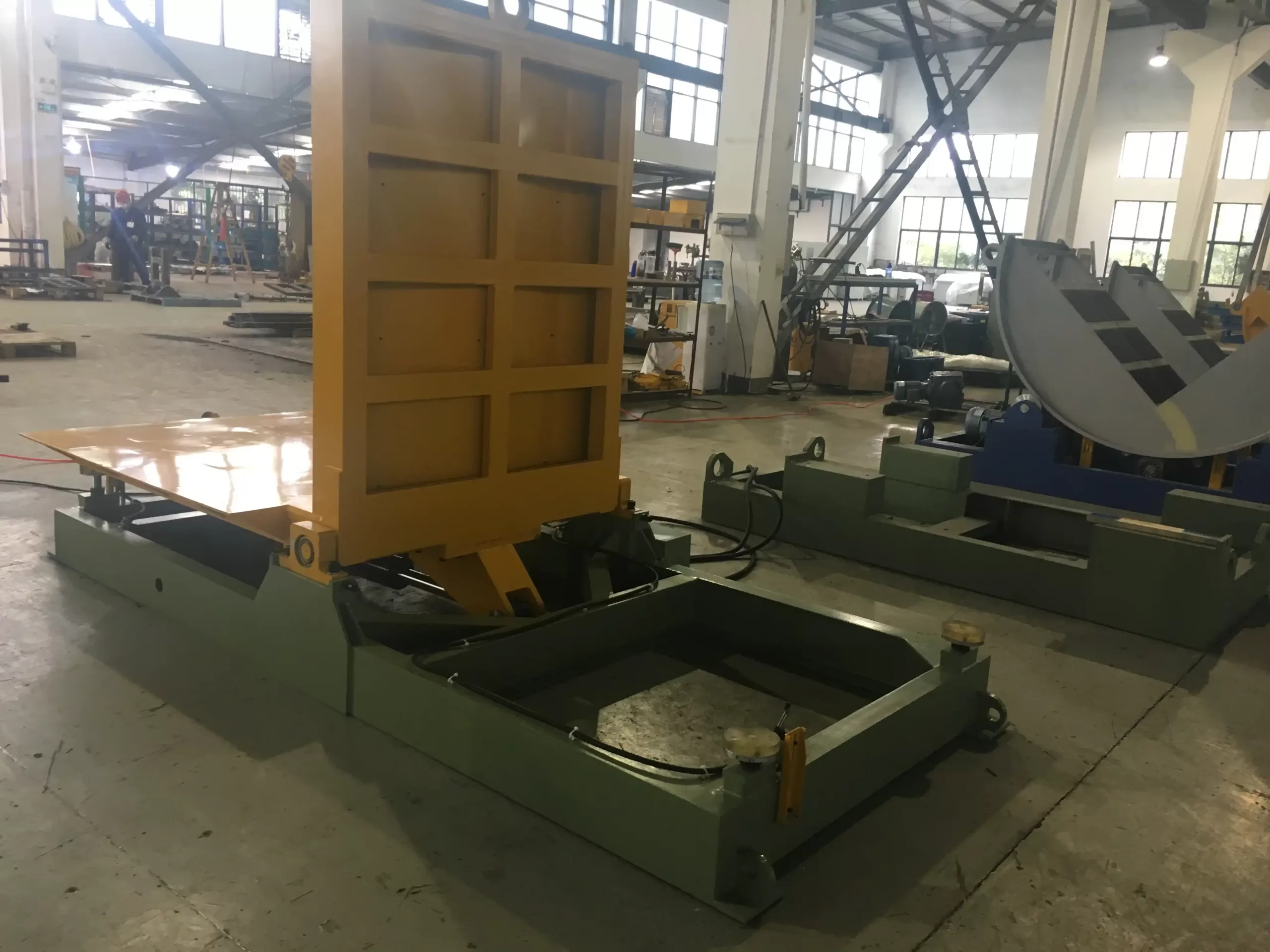
As someone who built a packing machine factory from the ground up, I understand the pressures of managing operations, controlling costs, and ensuring safety. I know that the decision to invest in new equipment is never taken lightly. It needs to solve real problems and deliver clear value. Let’s dig deeper into how a hydraulic upender tackles these challenges head-on, protecting your assets and boosting your bottom line.
1. How Does Manual Handling Cause Hidden Mechanical Stress and Wear?
Think about the daily grind in a metal processing plant. Heavy steel coils, wires, or even large molds need to be flipped, rotated, or tilted to move them through different stages of production or for packaging. If you are doing this manually, or with basic, uncontrolled methods, you are effectively fighting gravity and inertia. This struggle leads to subtle, yet destructive, mechanical stress on every piece of equipment involved. This is a real problem for many factory managers, especially when current processes rely heavily on human labor for moving large, heavy components.
Manual handling methods, especially for heavy items like steel coils or molds, introduce uncontrolled forces and uneven loads that severely stress cranes, forklifts, and other machinery, leading to accelerated wear, frequent breakdowns, and increased maintenance needs due to unpredictable impacts and jerky movements. Without precise control, the sudden shifts in weight and momentum during manual rotation or tilting can cause significant damage to lifting components and structural integrity over time.
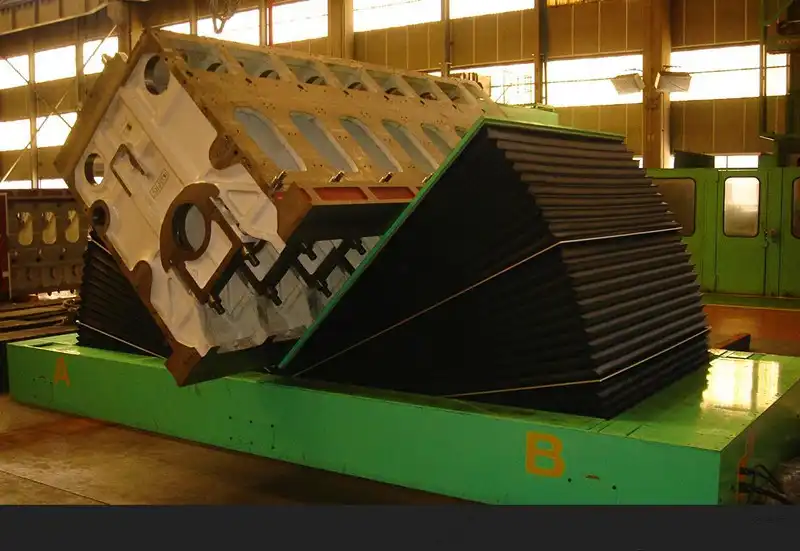
When I first started in the packing machine industry, I saw firsthand the constant battle against these issues. Workers would try to position heavy coils using chains, hooks, or even forklift forks in ways they weren’t designed for. This was not just slow; it was dangerous. More importantly, it was a silent killer of equipment. Think about it:
- Forklift Misuse: Using a forklift to nudge or tip a heavy coil can bend its forks, damage its mast, or strain its hydraulic system. The machine is designed for lifting and transporting, not for applying rotational force with precision. This leads to costly repairs and reduced lifespan for your material handling equipment.
- Crane Overloading and Jerking: If a crane operator tries to flip a heavy object using slings, the sudden shift in weight as the object rotates can cause severe stress on the crane’s cables, hoist mechanism, and structural frame. This increases the risk of cable fraying, motor burnout, and even structural fatigue.
- Conveyor Damage: When coils are manually rolled or pushed onto conveyors without proper alignment, they can hit the conveyor belts or rollers at awkward angles. This causes dents, tears, and misalignment, leading to frequent conveyor belt replacements and system downtime.
- Product Damage: Beyond the equipment, the product itself suffers. Sharp edges of steel coils get dinged, surfaces get scratched, and the overall quality can degrade during rough handling. This leads to customer complaints and financial losses.
- Worker Safety Issues: The risk of injuries from crushing, pinching, or dropped loads is extremely high with manual processes. This impacts insurance costs, employee morale, and ultimately, production efficiency.
Consider a typical scenario in a steel coil processing plant. A 20-ton steel coil needs to be flipped from a horizontal position for a slitting machine to a vertical position for the packing line. ❌ Manual/Improvised Method:
- A forklift might try to carefully (or not so carefully) tip the coil. This puts uneven pressure on the forks and the coil’s edge.
- Cranes with multiple chains might attempt to rotate it, leading to swinging and uncontrolled movements. This strains the crane’s motors and cables.
- Workers might use pry bars, risking severe injury. All these actions introduce unpredictable impacts and stress points. Over time, these small stresses accumulate, leading to:
- Increased wear on forklift tires and hydraulics.
- Frequent replacement of crane slings and cables.
- Fatigue fractures in structural components of both lifting equipment and the product itself. This cycle of stress, damage, and repair is a major drain on factory resources. It slows down production, increases operational costs, and ultimately shortens the useful life of your valuable assets. (equipment longevity, heavy lifting challenges, operational efficiency)
2. How Do Hydraulic Upenders Ensure Smooth, Controlled Handling to Prevent Stress?
Once we understand the problems caused by uncontrolled handling, the solution becomes clear. We need a system that offers precise, gentle, and repeatable control over heavy objects. This is exactly where hydraulic upenders shine. They are engineered to counteract the very forces that cause mechanical stress, ensuring that your valuable assets, both machines and products, are protected. This is crucial for factory managers like Michael who prioritize equipment reliability and minimal downtime.
Hydraulic upenders ensure smooth, controlled handling by utilizing pressurized fluid to generate precise, consistent force, allowing for slow acceleration, controlled deceleration, and stable rotation of heavy loads, thereby eliminating the sudden jolts and uneven weight distribution that cause mechanical stress on lifting equipment and the product itself. This precision prevents impacts and distributes weight evenly, directly extending the lifespan of associated machinery and reducing product damage.
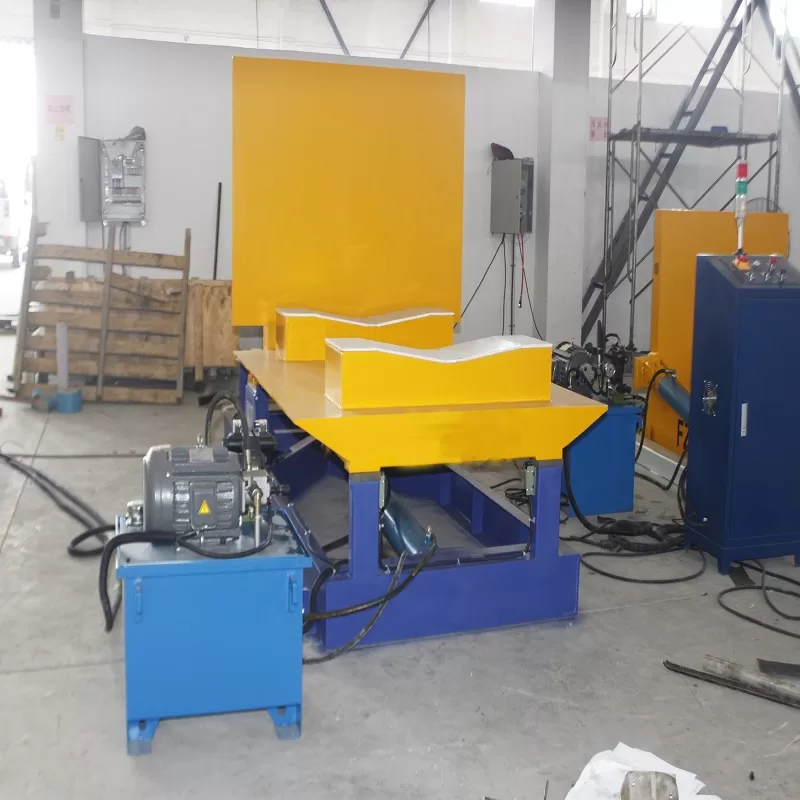
When I designed packing solutions, I always focused on the smallest details to ensure maximum efficiency and safety. A hydraulic upender is a perfect example of this philosophy in action. Here is how it works to prevent mechanical stress:
- Smooth Hydraulic Power: The core of an upender is its hydraulic system. Unlike mechanical systems that can be jerky, hydraulics provide fluid, continuous power. This means the movement—whether tilting a coil from horizontal to vertical or vice versa—is incredibly smooth. There are no sudden starts or stops, which are major sources of mechanical shock and stress.
- Principle: Hydraulic cylinders extend and retract with controlled speed, regulated by valves. This gradual movement minimizes dynamic loading on components.
- Even Weight Distribution: A well-designed upender ensures the heavy object is securely clamped or cradled across its entire surface before rotation begins. This prevents the weight from shifting suddenly or concentrating on a single point during the flip.
- Benefit: This even distribution reduces torsional stress on the upender itself, as well as on any crane or forklift used to place the object onto the upender. It also protects the product from deformation.
- Precise Positioning: Upenders allow for exact positioning at various angles, typically 0, 90, or 180 degrees. This eliminates the need for manual adjustments or “nudging” with other equipment, which can lead to accidental impacts.
- Impact: Precise alignment means when the object is transferred to the next stage (e.g., a conveyor or another machine), it fits perfectly, preventing bumps or misalignments that could damage either the product or the receiving equipment.
- Robust Construction: FHOPEPACK upenders are built with heavy-duty steel frames, designed to withstand the very forces they manage. This robustness ensures the upender itself can handle the load without succumbing to fatigue or deformation, transferring that stability to the objects and other equipment.
- Material Choice: Using high-grade steel and engineered pivot points ensures longevity and minimal wear even under constant heavy use in harsh industrial environments.
Here are the key ways hydraulic upenders specifically reduce mechanical stress:
| Aspect | Manual/Improvised Handling | Hydraulic Upender | Impact on Stress |
|---|---|---|---|
| Movement Control | Unpredictable, jerky, prone to sudden impacts. | Smooth, controlled acceleration and deceleration. | Eliminates shock loads, reduces component fatigue. |
| Load Distribution | Often uneven, creating concentrated stress points. | Evenly supported load, distributing weight uniformly. | Prevents deformation of product and equipment frames. |
| Precision | Low accuracy, requiring adjustments, leading to bumps. | Highly accurate positioning, no need for secondary nudges. | Reduces accidental impacts and misalignment stress. |
| Force Application | Inconsistent, often involves excessive force or leverage. | Consistent hydraulic force, applied steadily. | Minimizes strain on motors, cables, and structural parts. |
| Operator Safety | High risk of injury from dropped loads or pinch points. | Automated process, keeping operators at a safe distance. | Reduces human error and associated equipment misuse. |
By incorporating hydraulic upenders, factories can achieve a level of control and safety that manual methods simply cannot match. This translates directly to less wear and tear on your cranes, forklifts, and conveyors, leading to significantly longer operational life for all your material handling assets. (hydraulic power benefits, precise material handling, equipment stress prevention)
3. What Are the Long-Term Benefits of Reduced Mechanical Stress on Equipment Life and ROI?
Investing in automation is a big decision, especially for a factory manager like Michael who needs to see a clear return on investment. The upfront cost of a hydraulic upender might seem significant, but the long-term savings and benefits from reduced mechanical stress are truly transformative. It is about shifting from a reactive cycle of repair and replacement to a proactive strategy of asset preservation and optimized performance. I’ve seen many clients experience these benefits firsthand, leading to massive improvements in their bottom line.
Reducing mechanical stress through the use of hydraulic upenders directly translates into substantial long-term benefits by extending equipment lifespan, minimizing costly downtime, and decreasing maintenance expenses, leading to a higher overall return on investment (ROI) through enhanced operational efficiency and improved safety records. This proactive approach protects capital assets, ensures consistent production, and safeguards against unexpected operational disruptions.
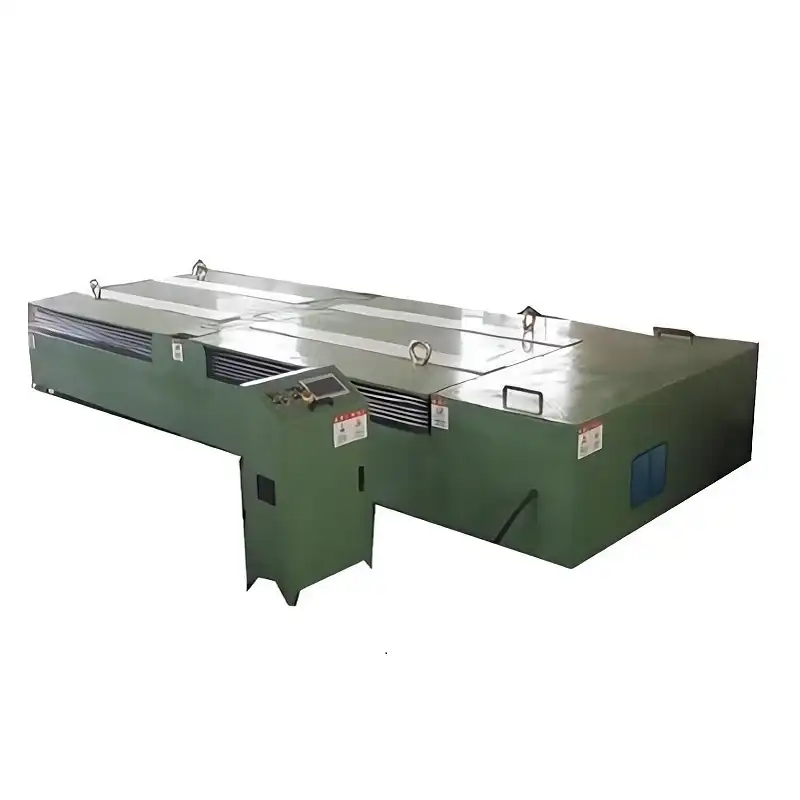
For a factory manager focused on metrics like uptime, maintenance costs, and productivity, these benefits are not just theoretical; they are quantifiable. Here is what you can expect:
3.1 Extended Equipment Lifespan and Reduced Capital Expenditure
When your cranes, forklifts, and other handling equipment are no longer subjected to the constant jolts, uneven loads, and unexpected impacts of manual processes, they simply last longer. It is like driving a car smoothly versus constantly slamming on the brakes.
- Less Component Wear: Critical parts like hydraulic pumps, motors, cables, and gears experience less fatigue. They don’t have to work as hard or absorb as many shocks, meaning their operational life is significantly extended.
- Delayed Replacements: You can put off costly replacements of major equipment components or even entire machines for years. This frees up capital for other essential investments or operational improvements, directly improving your financial outlook.
- Structural Integrity: The frames and structures of your existing machinery remain stronger for longer, preventing hairline cracks or bending that can lead to catastrophic failure.
3.2 Drastically Lowered Maintenance Costs and Downtime
Maintenance is a significant operational expense. When equipment is under constant stress, breakdowns are more frequent, and repairs become a regular, unavoidable cost center.
- Fewer Emergency Repairs: Hydraulic upenders reduce the likelihood of sudden equipment failures caused by excessive stress. This means fewer emergency call-outs for technicians and less frantic scrambling for spare parts.
- Predictable Maintenance: With less wear and tear, your maintenance schedule becomes more predictable and preventative. You can plan for routine servicing rather than reacting to unexpected breakages, leading to better resource allocation.
- Increased Uptime: Every minute a machine is down for repair is a minute of lost production. By protecting your equipment, upenders ensure your production lines run more consistently, meeting delivery deadlines and maximizing output. This directly impacts your efficiency bottlenecks.
3.3 Enhanced Product Quality and Customer Satisfaction
The benefits extend beyond your machinery to your end product.
- Reduced Product Damage: Smooth handling protects fragile edges of steel coils, prevents scratches on surfaces, and minimizes deformation. This ensures that the product reaching your customers is of the highest quality.
- Fewer Returns and Complaints: High-quality products lead to fewer customer complaints, returns, and warranty claims, reinforcing your factory’s reputation for reliability. This strengthens customer trust and builds long-term relationships, a key goal for any business.
3.4 Improved Safety and Lower Insurance Premiums
Safety is paramount, and it directly affects your bottom line.
- Reduced Accidents: Eliminating manual heavy lifting drastically reduces the risk of worker injuries. This means fewer lost workdays, lower medical costs, and a safer working environment.
- Lower Insurance Costs: A strong safety record can lead to lower insurance premiums over time, another direct cost saving for the factory.
- Higher Employee Morale: A safer workplace fosters a happier, more productive workforce. Employees feel valued and protected, reducing turnover and increasing overall job satisfaction.
Investing in a hydraulic upender isn’t just buying a piece of machinery. It’s investing in the longevity of your entire operation, ensuring that your valuable equipment runs reliably for years, your maintenance costs are minimized, and your production remains consistently high. This is how you achieve a robust return on investment and build a sustainable, efficient factory. (equipment maintenance reduction, ROI calculation, operational cost savings)
4. Why is Choosing the Right Hydraulic Upender Partner Crucial for Sustainable Operations?
The benefits of a hydraulic upender are clear, but realizing those benefits fully depends on one critical factor: choosing the right partner. I’ve seen factory managers make decisions based solely on price, only to face ongoing headaches with unreliable equipment and non-existent support. This leads to the very supplier trust crisis Michael mentioned. For sustainable operations and long-term success, you need a partner who understands your unique challenges and stands behind their solutions.
Choosing the right hydraulic upender partner is crucial for sustainable operations because it ensures access to robust, customized equipment designed for your specific heavy manufacturing environment, coupled with expert installation, reliable after-sales support, and deep industry knowledge that guarantees optimized performance and maximum equipment longevity. A true partner provides comprehensive solutions that mitigate risks, enhance safety, and drive long-term operational efficiency, rather than just selling a machine.

When I started FHOPEPACK, my vision was always about more than just selling machines. It was about sharing knowledge and providing real solutions. Here’s why selecting the right partner makes all the difference:
4.1 Understanding Your Specific Operational Needs
Every factory is unique. The size of your coils, the available floor space, the ambient temperature, and the integration with existing lines—all these factors matter.
- Customization is Key: A reputable partner won’t offer a one-size-fits-all solution. They will assess your current bottlenecks, your product dimensions, and your production volume to recommend or even custom-design an upender that fits perfectly into your workflow. This personalized approach ensures the equipment truly solves your problems and integrates seamlessly.
- Industry Expertise: A partner with deep experience in heavy manufacturing understands the nuances of handling steel, wire, or molds. They know the common pitfalls and can recommend features like specialized anti-slip surfaces or reinforced frames that are essential for your harsh environment. This expertise is something I built over decades in the packing machine industry.
4.2 Quality, Durability, and Reliability
The longevity benefits of a hydraulic upender depend entirely on the quality of the upender itself.
- Robust Construction: A good partner, like FHOPEPACK, prioritizes heavy-duty construction using high-grade materials. This means the upender can withstand the constant, rigorous demands of a metal processing factory without quickly succumbing to wear and tear. Durability is not a luxury; it is a necessity for reducing stress on all your equipment.
- Reliable Components: They use top-quality hydraulic components, electrical systems, and safety features that are built to last. This reduces the likelihood of the upender itself becoming a source of downtime and maintenance headaches. This is important for managers who have faced supplier trust issues in the past.
- Testing and Certification: A trustworthy supplier will rigorously test their equipment and ensure it meets international safety and quality standards, giving you peace of mind.
4.3 Comprehensive After-Sales Support and Service
A machine is only as good as the support behind it.
- Installation and Training: A true partner provides expert installation services and thorough training for your team. This ensures your operators know how to use the upender safely and efficiently from day one, maximizing its benefits.
- Maintenance and Parts: They offer readily available spare parts and timely maintenance support. When something eventually needs servicing, you can count on quick assistance to minimize downtime. This is a critical differentiator from suppliers who only focus on making the sale.
- Long-Term Relationship: The best partners are interested in building a long-term relationship. They act as consultants, providing ongoing advice and support as your factory’s needs evolve. This commitment is what transforms a vendor into a true strategic ally.
By carefully evaluating potential partners based on their expertise, product quality, and commitment to service, you can ensure your investment in a hydraulic upender is a wise one. It will not only reduce mechanical stress and extend equipment life but also contribute to the sustainable growth and profitability of your operations, just as I’ve seen it help many of my clients grow their businesses.
Conclusion
A hydraulic upender fundamentally reduces mechanical stress on equipment, dramatically extending its lifespan and boosting ROI through enhanced safety and efficiency. This critical investment safeguards your assets, ensuring smoother operations and higher productivity for any factory handling heavy materials like with a coil wrapping machine.








