
How Can a Door Packing Machine Help Thailand Manufacturers Protect Wood Doors in a Humid Climate?
Have you ever worried about your beautiful wooden doors arriving damaged? In places like Thailand, with high humidity, this is a very real problem. Moisture can warp, swell, or even cause mold on wood products. This means lost money, unhappy customers, and a damaged reputation.
Door packing machines offer a powerful solution for protecting wood doors, especially in humid environments. They create a tight, secure, and often sealed wrap around the door. This protects the wood from moisture, dust, and handling damage during storage and transport. It ensures doors arrive in perfect condition.
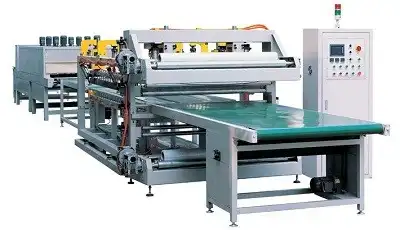
As someone who has built a career in the packing machine industry, I have seen first-hand the difference good packing makes. From helping clients protect heavy steel coils to now sharing knowledge about doors, the goal is always the same: keep the product safe and the customer happy. Let us look deeper into how these machines can transform your operations in Thailand.
How Can a Door Packing Machine Protect Wood from Humidity and Damage?
Are you tired of dealing with moisture damage on your wooden doors? It is frustrating to see a perfectly made product ruined by the environment. Humid climates, like Thailand’s, present a constant threat to wood. This leads to costly returns and customer complaints.
A door packing machine specifically addresses the challenges of humid climates by creating a protective barrier around the wood. This barrier seals out moisture. It keeps the door dry and safe from environmental damage.
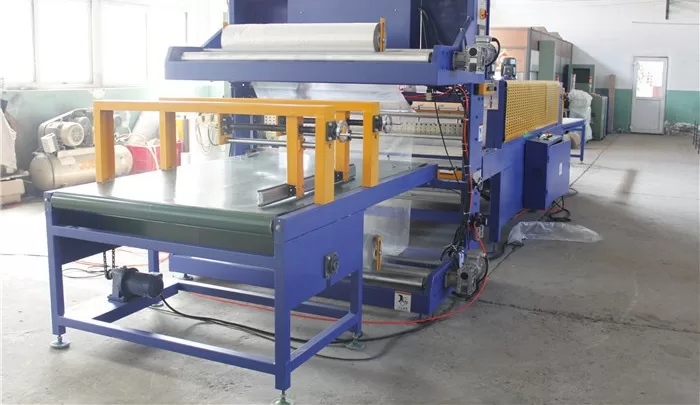
I remember one of my early clients in the steel industry. They struggled with rust because of humidity during shipping. We implemented a robust wrapping solution that completely changed their product delivery. The same principles apply to wood. Protecting your product means understanding the environment it faces. For Thailand, this means fighting humidity head-on. A proper packing solution will use materials designed for moisture resistance. These machines apply the film with consistent tension and coverage. This creates a secure, almost airtight seal. This seal acts as a shield against moisture, dust, and other contaminants that can damage wood. It means your doors arrive looking just as good as when they left the factory.
Key Ways Door Packing Machines Protect Wood:
- Moisture Barrier Creation: The primary benefit for humid climates. Machines use stretch film or shrink film. These films wrap tightly around the door. They prevent moisture from reaching the wood surface. This stops warping, swelling, and mold growth.
- Dust and Dirt Protection: Doors can get dirty during transport. The wrap keeps them clean. This reduces the need for cleaning before installation. It saves time and effort for your clients.
- Scratch and Scuff Resistance: Handling doors can cause cosmetic damage. The film acts as a buffer. It protects the door’s finish from scratches, scuffs, and minor impacts. This maintains the aesthetic value of your product.
- UV Light Protection (with specific films): Some packing films offer UV protection. This is important for doors stored outdoors or exposed to sunlight. UV rays can fade or discolor wood over time.
- Enhanced Stability for Transport: The tight wrap holds the door components together. It prevents shifting or movement during transit. This reduces the risk of internal damage. It also makes stacking and loading safer.
Benefits for Manufacturers in Thailand:
| Benefit Category | Description | Impact for Thailand Manufacturers |
|---|---|---|
| Product Integrity | Ensures doors arrive at their destination in pristine condition, free from environmental damage or handling marks. | Reduces returns and rejections due to humidity-related defects (e.g., warping, mold). Protects brand reputation. Leads to higher customer satisfaction and repeat business in a competitive market. |
| Cost Savings | Minimizes product spoilage and the costs associated with repairs, replacements, and re-shipping damaged goods. | Directly lowers operational costs by cutting down on waste. Reduces warranty claims and after-sales service expenses. Improves profit margins by ensuring every shipped product is a sellable product. |
| Market Access | Allows manufacturers to confidently ship to diverse locations, including those with varying climates, without compromising product quality. | Expands sales opportunities beyond local markets. Manufacturers can reach international customers who demand high-quality, undamaged products. This opens new export markets, boosting overall revenue and growth. |
| Operational Flow | Streamlines the packing process. It reduces manual intervention and speeds up the final stage of production. | Frees up labor for other tasks within the factory. Improves overall production throughput, making the entire manufacturing process more efficient. This is crucial for meeting tight deadlines and high order volumes. |
| Brand Perception | A well-protected, professionally packaged door signals quality and attention to detail. | Enhances the perception of the manufacturer as a reliable and quality-focused supplier. This creates a stronger brand image and can justify premium pricing for products. It sets them apart from competitors who might not invest in proper packaging. |
Using a door packing machine means you are not just wrapping a product. You are investing in its long-term integrity and your business’s reputation. It gives peace of mind to manufacturers. They know their doors are safe from the moment they leave the factory until they reach the customer’s site, regardless of the journey or climate.
Can a Door Packing Machine Really Boost My Factory’s Efficiency and Safety?
Are you struggling with slow packing speeds and safety risks in your factory? Manual packing of large, heavy doors is a bottleneck. It slows down your entire production line. It also puts your workers at risk of injury. This creates a challenging environment.
Door packing machines significantly boost efficiency by automating the packing process. They also improve safety by reducing the need for manual handling of heavy items. This frees up your workforce and makes the factory floor safer.

I have seen many factories transform their operations by embracing automation. When I started my own factory, I knew that efficient processes were key to success. We looked for every way to remove bottlenecks and make tasks easier for our team. The same logic applies here. Human error and physical strain are constant challenges in manufacturing. A machine works consistently. It does not get tired. It does not make mistakes from fatigue. This means your packing process becomes predictable and reliable. It reduces injuries. It also speeds up the entire end-of-line operation. This helps your overall factory throughput. It improves your ability to deliver products on time. This is a critical factor for customer satisfaction and business growth.
How Door Packing Machines Improve Efficiency and Safety:
- Automation of Repetitive Tasks: Manual wrapping is slow and inconsistent. Machines wrap doors quickly and uniformly. This drastically reduces packing time per door. It also ensures every door is packed to the same standard.
- Reduced Labor Requirements: Fewer workers are needed for the packing process. This means your team can focus on more skilled tasks. This redeploys labor to other areas of the factory where human expertise is truly needed.
- Faster Throughput: The increased speed of packing means doors move through the line faster. This reduces bottlenecks at the end of the production. It helps maintain a smooth flow from manufacturing to shipping.
- Minimized Human Error: Machines apply film with precise tension and overlap. This eliminates human inconsistencies. It ensures a high-quality, secure pack every time. This reduces the chances of doors being poorly wrapped and damaged later.
- Elimination of Manual Lifting and Handling: Heavy doors are a major source of back injuries and strains. Automated systems use conveyors and automated arms. They position and wrap the doors without human intervention. This dramatically lowers the risk of workplace accidents.
- Improved Workplace Ergonomics: Workers are no longer performing awkward or strenuous movements. This creates a healthier and more comfortable work environment. It reduces fatigue and improves employee morale.
- Consistent Packing Quality: Automated systems deliver a uniform wrap. This means every door package looks professional. It also provides consistent protection. This improves overall product presentation.
Impact on Factory Operations and Workforce:
| Aspect Affected | Previous Manual Method Challenges | Automated Door Packing Machine Benefits |
|---|---|---|
| Packing Speed | Slow, inconsistent, dependent on worker skill and fatigue. | High-speed, consistent wrapping. Can pack multiple doors per minute, greatly exceeding manual capabilities. This means more products move out the door faster. |
| Labor Costs | High labor requirement for a repetitive task. Overtime often needed to meet deadlines. | Reduces the need for multiple operators. Lower ongoing labor costs. Workers can be reassigned to higher-value activities. This optimizes your workforce and reduces overhead. |
| Workplace Safety | High risk of strains, back injuries, crushing injuries from heavy lifting and maneuvering. | Eliminates manual lifting and awkward positioning. Reduces the risk of musculoskeletal injuries. Creates a safer working environment. This leads to fewer insurance claims and increased employee retention. |
| Productivity | Bottleneck at the packing stage. Leads to production delays and inability to meet high demand. | Smooths out the end-of-line process. Ensures continuous flow of products. Increases overall factory output capacity. This allows you to take on more orders and grow your business. |
| Employee Morale | Workers feel undervalued doing repetitive, physically demanding tasks. High turnover in packing roles. | Employees can focus on more engaging and less physically taxing work. Improves job satisfaction. Reduces absenteeism and employee turnover. This creates a more stable and experienced workforce. |
| Resource Use | Inconsistent film usage, sometimes wasteful. | Optimizes film usage with precise wrapping patterns. Reduces material waste. Contributes to lower operational costs and more sustainable practices. This helps your bottom line and your environmental footprint. |
Investing in automation is not just about buying a machine. It is about creating a more efficient, safer, and sustainable future for your factory. It shows you care about both your product and your people. This is a win-win for any manufacturing business.
How Can Investing in a Door Packing Machine Reduce My Costs and Product Loss?
Are you losing money due to damaged products or high labor expenses? Product damage during handling and transport leads to financial losses. High manual labor costs eat into your profits. These issues directly impact your bottom line.
A door packing machine significantly reduces product loss by providing consistent, secure protection. It also lowers operational costs by cutting down on labor, material waste, and damage-related expenses. This leads to a clear return on investment.
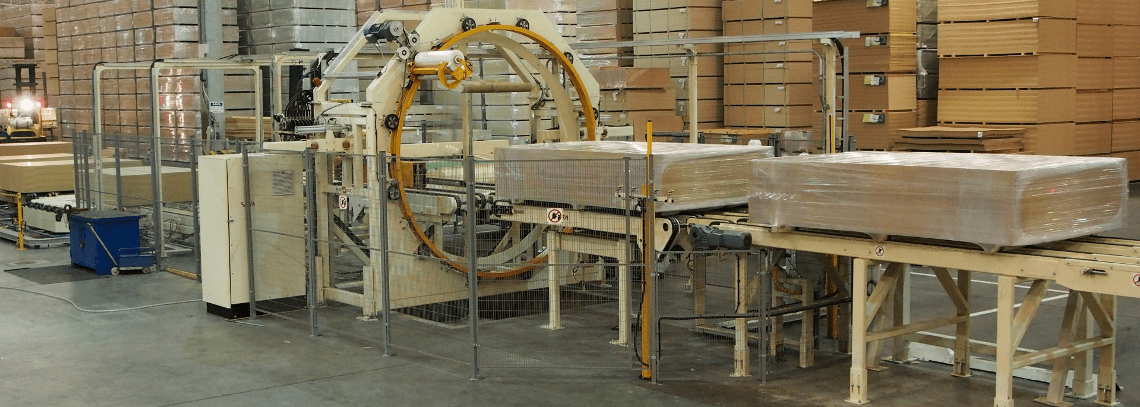
When I built my packing machine factory, every investment had to show a clear benefit. It was not just about buying equipment. It was about solving problems and making the business stronger. Damaged products mean lost sales and damaged reputation. High costs mean less profit. For my clients, especially those dealing with bulky items like steel wires, protecting the product was always tied to profitability. It is the same for doors. Think about the hidden costs of manual packing. It is not just the wages. It is the cost of damaged goods, customer complaints, returns, and the time spent dealing with these issues. A machine tackles these problems head-on. It ensures that more of your manufactured doors actually reach the customer in perfect condition. This directly boosts your profitability.
Key Areas of Cost Reduction and Loss Prevention:
- Reduced Product Damage: Manual handling and inadequate packing lead to scuffs, dents, and moisture damage. Automated machines apply a consistent, tight wrap. This protects the door from physical impacts and environmental factors. This reduces the number of damaged units.
- Lower Labor Costs: Manual packing is labor-intensive. A machine reduces the need for multiple workers on the packing line. This frees up personnel for other tasks. It lowers your overall labor expenditure. This is especially true when considering the long-term wages versus a one-time equipment investment.
- Optimized Material Usage: Manual wrapping often leads to inconsistent film application and waste. Automated machines use film efficiently. They apply it with precise tension and overlap. This minimizes material consumption. It results in significant savings on packing film over time.
- Fewer Customer Complaints and Returns: Damaged products lead to unhappy customers. They cause returns, rework, and re-shipping costs. Consistent, high-quality machine packing ensures doors arrive in perfect condition. This reduces customer service issues and associated costs.
- Lower Insurance and Warranty Claims: Fewer damaged products mean fewer claims related to shipping damage. This can lead to lower insurance premiums and reduced warranty payout expenses. It improves your overall financial health.
- Improved Warehouse and Shipping Efficiency: Uniformly packed doors are easier to stack and store. They are also safer to load and unload. This speeds up logistics operations. It reduces the time and effort spent in the warehouse and during shipping.
- Increased Production Capacity: By speeding up the packing bottleneck, the entire production line can run more efficiently. This allows the factory to produce and ship more doors in the same amount of time. This increases overall revenue potential.
Calculating Your Return on Investment (ROI):
When considering an investment like a door packing machine, it is important to look at the numbers. Here is how you can estimate your ROI:
| ROI Factor | Calculation Point | Potential Savings/Gains Annually |
|---|---|---|
| Reduced Labor Costs | (Number of workers saved) x (Average hourly wage) x (Working hours per year). For example, if you save 2 workers at $5/hour for 2000 hours/year each, that’s 2 x 5 x 2000 = $20,000 annually. | Significant savings on wages, benefits, and associated labor overhead. This is often the largest single cost reduction. |
| Decreased Product Damage | (Current percentage of damaged doors) x (Total doors produced) x (Average cost per door). This includes material cost, labor for rework, and shipping costs for replacements. If 3% of 100,000 doors at $100/door are damaged, that’s 0.03 x 100,000 x 100 = $300,000 in direct loss. | Substantial reduction in material waste, rework expenses, and replacement shipping costs. Improves profit margins on every product sold. |
| Optimized Film Usage | (Current film usage cost) – (Estimated film usage cost with machine). Machines use film more efficiently. For example, if you save 10% on film costs annually, and your current cost is $50,000, you save $5,000. | Direct savings on consumable packing materials. |
| Improved Throughput | (Increased units packed per day) x (Profit per unit) x (Working days per year). If you pack 10 more doors a day and profit $20 per door, over 250 days, that’s 10 x 20 x 250 = $50,000 in increased revenue. | Ability to fulfill more orders. Increased sales and market share. This is a revenue generation factor, not just a cost saving. |
| Reduced Complaint Costs | (Number of customer complaints/returns related to damage) x (Average cost per complaint handling, including administrative time, re-shipping, and discounts). If 50 complaints cost $100 each, that’s $5,000. | Saves administrative time and resources. Enhances customer loyalty. Reduces the soft costs associated with reputation damage. |
| Long-term Savings | Reduced insurance claims, lower worker compensation costs, extended product life in storage due to better protection. | These are harder to quantify precisely but contribute to overall financial health and stability. |
By clearly identifying these cost savings and revenue gains, you can see that the initial investment in a door packing machine pays for itself over time. It is a strategic move that enhances your financial performance and secures your business’s future.
How Do I Choose the Right Door Packing Machine and a Reliable Partner?
Are you feeling overwhelmed by the choices of packing machines? Finding the right equipment is hard. Finding a reliable supplier who truly understands your needs is even harder. You need a partner who offers more than just a sale.
Choosing the right door packing machine means looking at your specific needs, your product, and your budget. Finding a reliable partner means looking for someone with deep industry knowledge, a track record of success, and a commitment to long-term support.
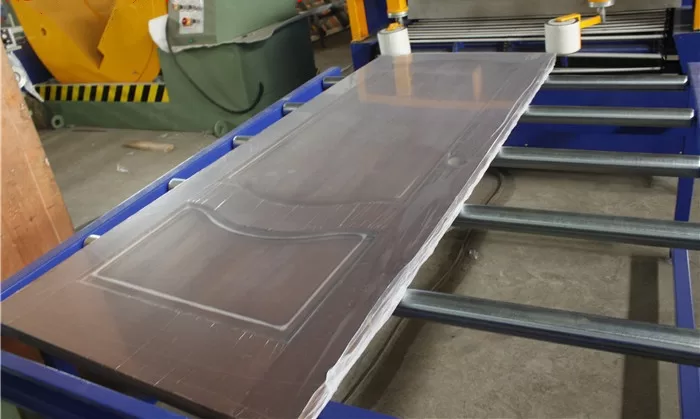
My journey in this industry, from an employee to owning a successful factory, taught me a lot. I learned that a good machine is only as good as the support behind it. I have seen clients struggle because they picked a supplier who only cared about the sale. That is why FHOPEPACK focuses on sharing knowledge. We want to empower you to make informed decisions. When you are looking for a packing solution, you are not just buying steel and electronics. You are buying a solution to a problem. You are also buying a relationship with a supplier. A true partner will take the time to understand your unique challenges. They will consider your factory setup, your production volume, and the specific characteristics of your doors. They will not just sell you a standard machine. They will offer guidance and customize solutions. This ensures your investment genuinely supports your business growth.
Steps to Choosing the Right Machine and Partner:
-
Understand Your Needs:
- Door Dimensions: What are the minimum and maximum lengths, widths, and thicknesses of your doors? This determines the machine size.
- Production Volume: How many doors do you need to pack per hour or per day? This dictates the required speed and automation level.
- Packing Material: Do you prefer stretch film, shrink film, or other materials? Consider the climate and required protection (e.g., thicker film for humid conditions).
- Budget: What is your realistic investment range? This will help narrow down options.
- Factory Layout: Do you have enough space for the machine? Consider the flow of doors into and out of the packing area.
-
Types of Door Packing Machines:
- Horizontal Wrapping Machines: Great for long, flat items like doors. They wrap the door as it moves horizontally through a wrapping ring.
- Shrink Wrapping Machines: Use heat to shrink film tightly around the door. This creates a very secure and moisture-resistant pack.
- Bundling Machines: Can bundle multiple doors together if needed.
- Fully Automatic vs. Semi-Automatic: Automatic machines require less human intervention. Semi-automatic machines need some manual loading or operation. Choose based on your production volume and labor availability.
-
What to Look for in a Reliable Partner:
- Industry Experience: Does the supplier understand the challenges of packing wood products, especially in humid climates? Look for a company with a proven track record.
- Technical Expertise: Can they offer detailed technical specifications? Can they explain how their machines address your specific problems?
- Customization Capabilities: Can they modify a standard machine to fit your unique needs? Not all doors are the same.
- After-Sales Support: What kind of warranty do they offer? Do they provide installation, training, spare parts, and troubleshooting? This is critical for long-term operation.
- Client Testimonials and References: Can you speak to other manufacturers who have used their machines and services? Real-world feedback is very valuable.
- Transparent Communication: Do they explain things clearly? Are they responsive to your questions? A good partner communicates openly.
Questions to Ask Potential Suppliers:
| Category | Key Questions to Ask | Why It Matters |
|---|---|---|
| Technical Fit | Can this machine handle my specific door dimensions and weight range? What type of film does it use, and how well does it protect against humidity? What is the expected packing speed for my door size? | Ensures the machine is technically capable of meeting your specific production requirements and environmental challenges. Avoids buying an unsuitable machine. |
| Support & Service | What is your warranty policy? Do you provide installation and training for my staff? How quickly can you provide spare parts? What kind of technical support do you offer (e.g., remote, on-site)? | Guarantees that you will have help if something goes wrong. Minimizes downtime and ensures your team can operate the machine effectively. Reduces long-term operational headaches. |
| Cost & ROI | Can you provide a detailed cost breakdown, including installation and training? Can you help us calculate the potential ROI for our specific factory? Are there any hidden costs? | Helps you understand the full investment. Allows you to justify the purchase to your management. Ensures financial transparency and helps in budgeting. |
| Reliability | Can you provide references from other customers in the manufacturing industry, especially those in similar climates? How long has your company been in business? What is your typical machine lifespan? | Builds trust and confidence in the supplier’s experience and product quality. Reduces the risk of investing in an unreliable machine or working with an unproven company. |
| Customization | Can the machine be customized to integrate with our existing production line? Are there options for different levels of automation? | Ensures the machine fits seamlessly into your current factory setup. Optimizes your overall production flow. Allows for future scalability and adaptation. |
| Delivery & Lead Time | What is the typical lead time from order to delivery and installation? | Helps with production planning. Ensures you can integrate the new equipment into your schedule without major disruptions. |
Choosing the right partner means finding someone who shares your goals. They should want to see your business succeed. My personal mission with FHOPEPACK is to share knowledge. It is about helping manufacturers like you make the best decisions. This allows you to grow your business, just as I grew mine.
My Insight: The Power of Proactive Protection
I have spent many years in the packing machine industry. I started on the factory floor. Then I built my own company. I learned a simple truth: proactive protection pays off. For my early clients, preventing rust on steel coils meant everything. It secured their reputation. It saved them huge amounts of money. The principles are exactly the same for wooden doors in Thailand’s humid climate.
You are not just buying a machine. You are investing in peace of mind. You are buying fewer headaches. You are buying more profit. You are securing your business’s future. Good packing is not an expense. It is a strategic advantage. It protects your product. It protects your brand. It protects your profits. Think about the value of every door that leaves your factory perfectly protected. It builds customer trust. It sets you apart from your competitors. This is the real power of a well-chosen packing solution. It is about more than just a wrap. It is about delivering quality, consistently.
Conclusion
Door packing machines offer Thailand manufacturers a vital solution. They protect wood doors from humidity and damage. They also boost efficiency, improve safety, and significantly reduce costs. This leads to clear ROI and stronger business growth.








