
How Automatic Steel Coil Packing Machines Are Transforming Steel Plants Across Southeast Asia?
Have you ever stopped to think about the incredible journey a steel coil takes before it reaches its final destination? For decades, this journey often involved a bottleneck at the very end: the packing line. Many steel plants, especially in rapidly developing regions like Southeast Asia, have grappled with slow, manual processes. These outdated methods lead to production delays, frustrated workers, and even damaged products. This problem isn’t just about speed; it touches on safety, cost, and the very reputation of a business. It’s a challenge I’ve seen firsthand, from my early days on the factory floor to establishing my own successful packing machine factory. The question isn’t if transformation is needed, but how to achieve it.
Automatic steel coil packing machines are fundamentally changing how steel plants operate across Southeast Asia by streamlining production, vastly improving safety, and significantly reducing costs and product damage. These advanced systems replace labor-intensive, hazardous manual processes with efficient, automated solutions, making steel manufacturing more competitive and sustainable. They are key to modernization, allowing plants to meet increasing demand while protecting workers and maximizing profitability.
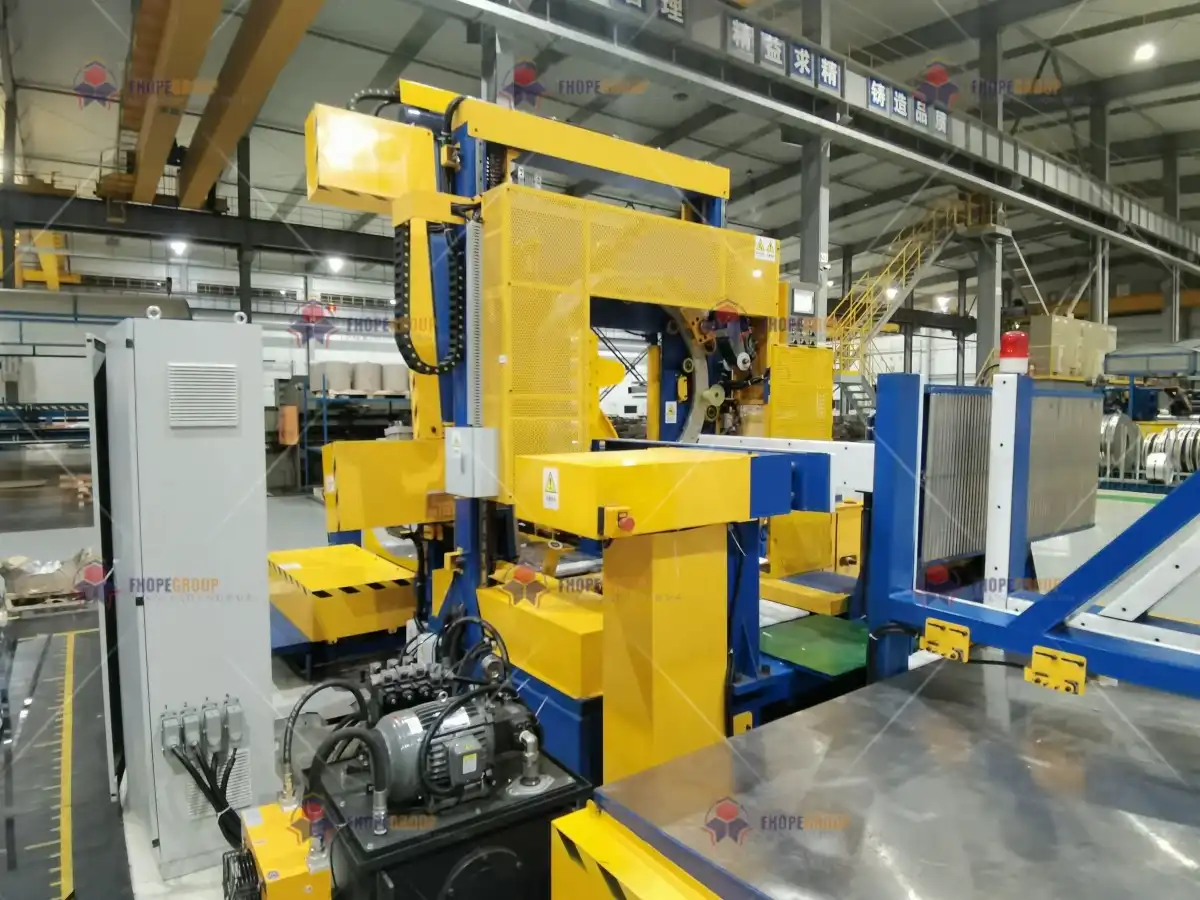
The shift we are seeing in Southeast Asia is more than just an upgrade; it is a complete revolution. Steel plants that embrace this change are not only solving their immediate packing challenges but also setting themselves up for long-term growth and success. As someone who has spent my entire career in this industry, I have learned that the right equipment, backed by solid expertise, can make all the difference. Let’s dive deeper into how this transformation is unfolding and what it means for the future of steel manufacturing in the region.
1. Why are traditional steel coil packing methods struggling in Southeast Asia today?
Are your production lines slowing down right at the finish line? Many factory managers in Southeast Asia find themselves in this exact situation. They work hard to optimize every stage of steel production, only to hit a wall when it comes to packaging. Old packing methods, often relying heavily on manual labor, are no longer keeping pace with modern demands. They create more problems than they solve.
Traditional steel coil packing methods are struggling in Southeast Asia due primarily to their reliance on manual labor, which leads to slow processing speeds, high operational costs, and significant safety risks for workers. These outdated practices also result in inconsistent packaging quality and increased potential for product damage, making them inefficient for the region’s rapidly growing and competitive steel markets.

The Bottlenecks of Yesterday’s Packing Processes
When I started in the packing machine industry, manual handling was the norm. We saw firsthand how much time and effort went into simply wrapping and securing heavy steel coils. Today, with increased production targets and global competition, these old ways are simply not sustainable. Steel plants in Southeast Asia are facing a unique set of pressures, from rising labor costs to stricter safety regulations and the urgent need for faster delivery times. These pressures expose the critical weaknesses of traditional coil packing.
Let’s break down the core issues:
- 🐢 Slow and Inefficient Operations:
- Problem: Manual packing involves many steps: positioning the coil, hand-wrapping it with various materials, and then manually strapping it. This takes a lot of time. Workers can only move so fast. For a manager like Jose, who needs to increase throughput, this is a major choke point.
- Impact: Production bottlenecks at the end of the line. Delays in shipments. Inability to meet high-volume orders quickly. Lost revenue opportunities.
- (Long-tail keyword: manual steel coil packaging inefficiencies)
- ⚠️ High Safety Risks and Worker Injury:
- Problem: Steel coils are extremely heavy. Moving them, tilting them, and strapping them by hand puts workers in dangerous situations. Back injuries, crushed limbs, and repetitive strain injuries are common. This is a personal concern for me. I’ve seen the toll it takes on workers.
- Impact: Increased worker compensation costs. Higher insurance premiums. Employee turnover. A negative work environment. Legal liabilities for the plant.
- (Long-tail keyword: workplace safety hazards in steel packing)
- 💰 Escalating Labor Costs:
- Problem: As economies grow in Southeast Asia, so do wages. Relying on a large workforce for manual packing becomes very expensive. Finding skilled labor for this demanding job also gets harder over time.
- Impact: Reduced profit margins. Difficulty in scaling operations without incurring disproportionate labor expenses. Competitive disadvantage against more automated plants.
- (Long-tail keyword: rising labor costs in industrial packaging)
- 📉 Inconsistent Quality and Product Damage:
- Problem: Human error is inevitable. Manual wrapping can be loose or uneven. Strapping tension might vary. This leads to coils getting damaged during internal transport or shipping. Edges can get bent. Surfaces can get scratched.
- Impact: Customer complaints. Product returns. Financial losses from damaged goods. Reputational damage for the steel supplier. Difficulty maintaining high quality standards.
- (Long-tail keyword: preventing steel coil transit damage)
- 🏭 Limited Scalability and Modernization Barriers:
- Problem: Manual systems are hard to scale up. Adding more workers does not always translate to linear increases in output. This creates a barrier to modernization and integrating new technologies that rely on a smooth, automated workflow.
- Impact: Stagnant growth potential. Inability to adopt industry 4.0 practices. Falling behind competitors who are automating.
- (Long-tail keyword: challenges in steel plant modernization Southeast Asia)








