
How Automated Wrapping Machines Enhance Steel Coil Protection
Are rust and corrosion eating into your profits? Is inconsistent, manual packaging leaving your valuable steel coils exposed to the elements, leading to damaged goods and dissatisfied customers? You’re not alone. Protecting steel during storage and transit is a critical challenge, but leaving it to outdated methods invites costly losses and compromises product integrity.
Automated wrapping machines significantly enhance steel coil protection by providing consistent, airtight, and robust packaging that shields against moisture, mechanical damage, and environmental contaminants. These advanced systems utilize technologies like Through Eye Wrapping (TEW) with stretch film and specialized barrier materials to create a uniform seal, drastically reducing the risk of corrosion and ensuring coils arrive at their destination in pristine condition.
Addressing the vulnerabilities of unprotected steel is paramount. Let’s delve deeper into how automated solutions provide the superior defense your steel coils need and why investing in this technology is a strategic move for long-term success.
The Silent Enemy: Why Moisture Attacks Steel Coils
Moisture is the primary catalyst for corrosion in steel. Ignoring this fundamental vulnerability during storage and transit can lead to significant product damage and financial setbacks. Understanding how and why moisture attacks steel is the first step in implementing effective protective strategies.
Steel coil corrosion, primarily rusting, is an electrochemical process where iron oxidizes in the presence of water and oxygen. Automated wrapping machines combat this by creating a superior barrier against moisture ingress, minimizing the environmental factors that accelerate rust formation and degrade coil quality and structural integrity.
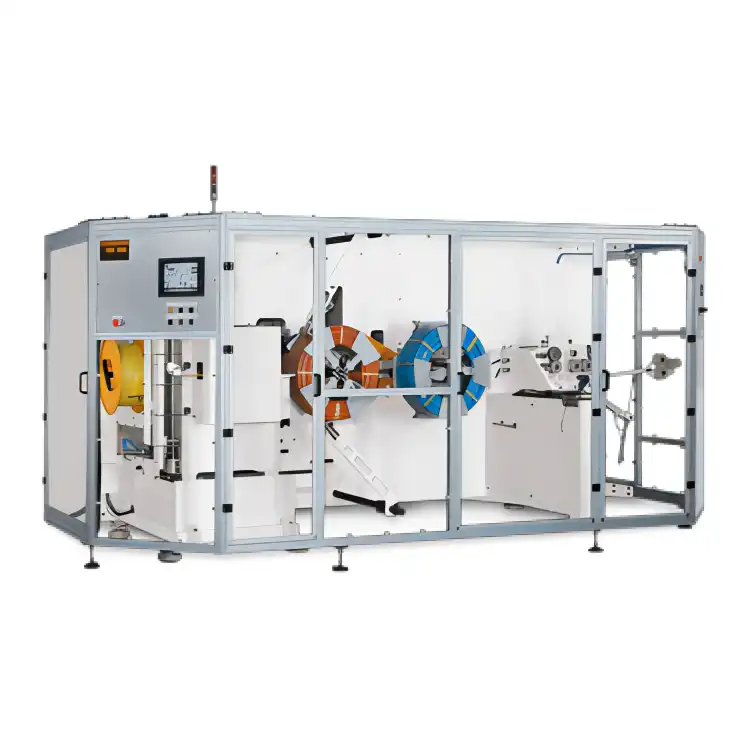
To effectively protect steel coils, we must understand the mechanisms driving corrosion and the factors that exacerbate it. This knowledge is crucial for selecting and implementing the most effective packaging solutions that actively prevent degradation.
Understanding the Science of Steel Corrosion
Steel, primarily composed of iron, is inherently susceptible to oxidation when exposed to humid air and water. This process, known as rusting, forms hydrated iron(III) oxides, which manifest as the familiar reddish-brown flakes. The presence of electrolytes (like salts) in moisture significantly accelerates this reaction.
Factors Accelerating Corrosion:
- Humidity: Higher relative humidity increases the moisture content in the air, facilitating condensation on cooler steel surfaces.
- Temperature Fluctuations: Changes in temperature can cause condensation to form as warm, moisture-laden air cools upon contact with the steel coil.
- Contaminants: Airborne pollutants (sulfur dioxide, chlorides) and surface contaminants act as electrolytes, boosting the electrochemical reaction rate. Saltwater environments are particularly aggressive.
- Exposure Time: Prolonged exposure to these conditions increases the extent of corrosion damage.
Traditional packaging methods often fail to create a sufficient barrier against moisture vapor and liquid water, allowing these corrosive elements to reach the steel surface. For example, simple paper wrapping or loosely applied film can trap moisture or allow air circulation, defeating the purpose of protective layers like VCI paper whose effectiveness relies on containing the vapor.
Types of Corrosion Affecting Steel Coils:
| Type of Corrosion | Description | Contributing Factors | Impact on Steel Coils |
|---|---|---|---|
| General Corrosion | Uniform rusting over the entire exposed surface. | Prolonged exposure to humid air and moisture. | Overall material loss, surface degradation. |
| Pitting Corrosion | Localized formation of small, deep holes. | Surface defects, stagnant moisture, chlorides. | Can compromise structural integrity despite minimal overall weight loss. |
| Crevice Corrosion | Occurs in confined spaces where moisture is trapped. | Poorly sealed overlaps, tight gaps. | Hidden damage, often more severe than surface appearance suggests. |
| Galvanic Corrosion | Accelerated corrosion when dissimilar metals are in contact. | Contact with dissimilar metals in an electrolyte. | Damage to the less noble metal at the contact point. |
Automated wrapping machines are designed to directly address these issues by creating tight, continuous barriers that minimize exposure to moisture, oxygen, and contaminants, thereby significantly reducing the risk and severity of all these corrosion types.
Automated Technology: Building an Impenetrable Barrier
Manual steel coil packaging is labor-intensive, inconsistent, and often provides inadequate protection against moisture and mechanical damage. The challenge of manually applying materials evenly and securely to heavy, awkward coils often results in gaps, tears, and inconsistent tension, leaving vulnerable points for corrosion to begin.
Automated wrapping machines revolutionize steel coil protection by employing precise, repeatable processes like Through Eye Wrapping (TEW) and advanced material application. These systems ensure uniform tension, optimal material overlap, and secure sealing, creating a consistent, high-quality barrier that far surpasses the protection offered by manual methods.

Transitioning from manual processes to automated coil packing lines is not just about speed; it’s about achieving a level of protective quality that is otherwise unattainable. Let’s examine the core technologies that make automated wrapping so effective.
Key Technologies in Automated Steel Coil Wrapping
Modern automated coil packing lines integrate several sophisticated technologies to ensure comprehensive protection. The cornerstone for moisture protection is often Through Eye Wrapping (TEW), complemented by body wrapping and edge protection for mechanical defense.
-
Through Eye Wrapping (TEW) Technology: This is a highly effective method for moisture protection. The machine wraps material (typically stretch film, often combined with crepe paper) spirally through the central eye of the coil.
- Crepe Paper: Placed first, it absorbs any residual moisture inside the coil. Material like crepe paper can absorb up to 30 g/sqm of moisture.
- Stretch Film (PE Film): Applied over the crepe paper (or directly in some configurations), the stretch film conforms tightly to the coil’s surface, creating an airtight and watertight seal. This seamless coating prevents outside humidity, dirt, and impurities from reaching the steel.
- Advantage over Traditional Folding: Traditional folding methods using materials like VCI paper often don’t create an airtight seal. Air circulation allows the VCI chemicals to evaporate, rendering them ineffective over time. TEW technology, by creating an airtight package, locks in any beneficial vapors (if VCI film is used) and, more importantly, prevents new moisture ingress.
Comparison: TEW vs. Traditional Packing
Feature TEW Technology Traditional Folding Method Airtight Package Yes No VCI Effectiveness Maintained (if VCI film used), not essential for barrier Diminishes due to evaporation Moisture Protection Highly Effective Barrier (PE film) + Absorption (Crepe) Relies on VCI, barrier often permeable Storage Time (Rust Free) More than 24 months (typical) Less than 6 months (typical) Material Recyclability High (PE film, Crepe paper are often recyclable) Often Laminated, harder to recycle Operator Involvement Automated, supervision only Manual, physically demanding Safety High (no VCI handling, less manual work) Lower (VCI handling, dangerous phases) -
Automated Body Wrapping: Machines can apply robust materials like steel, board, or plastic film around the outer body of the coil for mechanical protection against impacts, abrasions, and surface damage during handling and transit.
- Optimized Material Usage: Automated systems cut material to the exact size required for each coil, minimizing waste compared to pre-cut materials used in manual processes.
- Consistent Application: Ensures uniform wrapping tension and overlap for reliable protection.
-
Automated Edge Protection: Dedicated machines apply edge protectors to the inner and outer diameters of the coil.
- Function: These protectors (made of plastic, board, or steel) cushion the edges and prevent the wrapping film or other materials from tearing at sharp points. They also distribute clamping forces more evenly.
- Automation Benefit: Ensures precise placement and consistent application compared to manual methods which can be uneven or result in material overlap waste.
These integrated technologies, particularly the combination of TEW for moisture and robust body/edge protection for mechanical forces, provide a multi-layered defense system for steel coils.
Quantifiable Benefits: Efficiency, Cost Savings, and Quality
Beyond superior protection, automated wrapping machines deliver tangible improvements across operational metrics. Relying on manual labor introduces variability in speed, quality, and material usage, leading to unpredictable costs and potential bottlenecks in the production line.
Automated wrapping machines drastically improve efficiency and throughput, reduce labor and material costs, and ensure consistent, high-quality packaging every time. This automation transforms the packaging process from a potential bottleneck into a streamlined, cost-effective operation that enhances overall plant productivity and profitability.
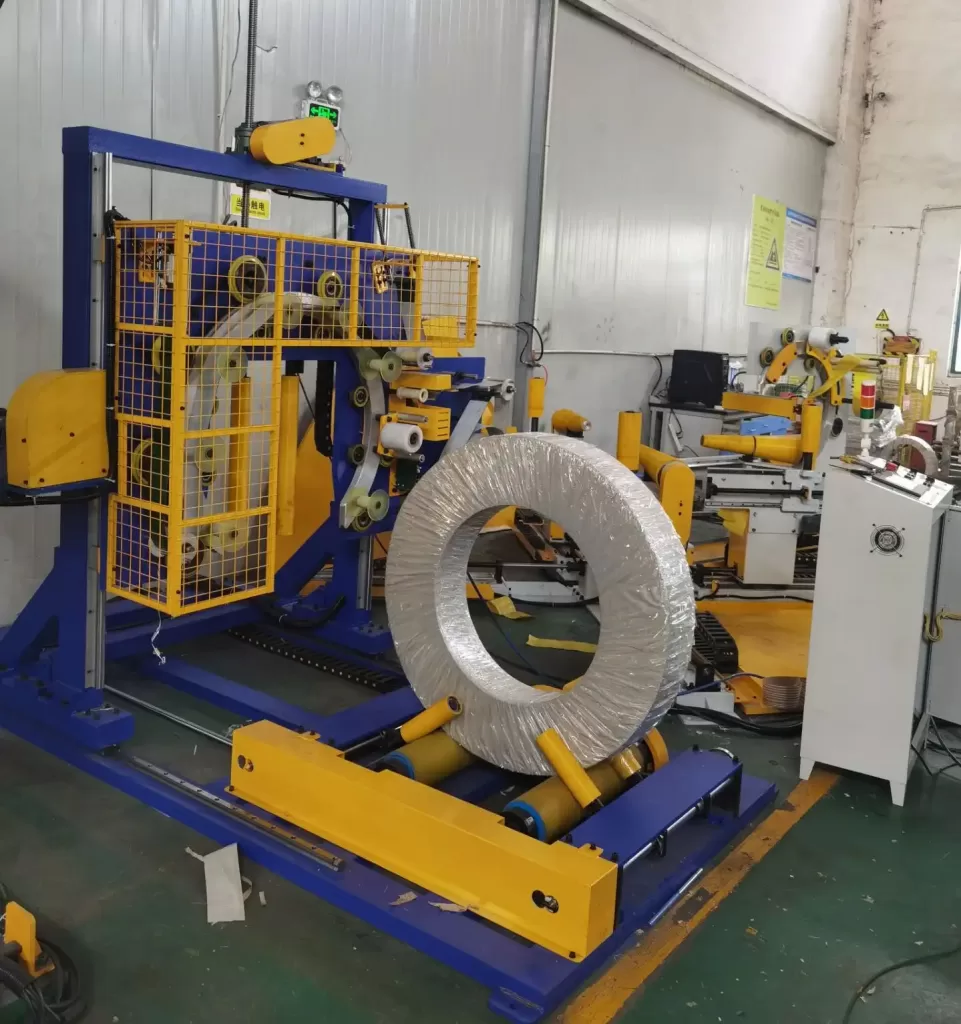
The advantages of automating steel coil packaging are not theoretical; they are measurable and directly impact the bottom line. Let’s explore the specific gains offered by these systems.
- Increased Throughput: Automated lines operate significantly faster than manual processes. While a skilled operator might package 1-3 coils per hour manually, an automated line can handle 20-30 coils per hour, sometimes more depending on the packing code and machine type (e.g., F60 series). This allows manufacturers to keep pace with high-speed production lines and meet tight delivery schedules.
- Reduced Labor Costs: Automated lines dramatically reduce the need for manual labor in the packaging area. Instead of multiple operators per station, a fully automatic line often requires only one or two supervisors. This leads to substantial labor cost savings, allowing staff to be redeployed to more value-added tasks.
- Material Savings: Automated systems optimize the use of packing materials. By cutting materials like stretch film, board, or steel body wrap to the precise size of each coil and applying it with controlled tension and overlap, waste is minimized. The reference material indicates automated packing can reduce material costs by up to 30% compared to manual methods. This is achieved by manufacturing materials on-site from large coils and precise application, eliminating the need for pre-cut materials and reducing inventory space.
- Consistent Packaging Quality: Automation removes human variability from the process. Machines apply materials with consistent tension, overlap, and sealing, ensuring every package meets the exact same standard. This consistency is crucial for reliable moisture protection and mechanical defense, leading to fewer damaged coils and reduced customer complaints.
- Enhanced Safety: Manual coil packaging involves handling heavy materials and repetitive motions, posing risks of strains, cuts, and other injuries. Automated lines significantly reduce direct operator interaction with the coils during the wrapping process, creating a safer working environment and reducing packaging-related accidents.
- Integration with Plant Systems: Modern automated lines, like those using WinCC control systems mentioned in the material, can integrate with Mill Information Systems (MIS) or ERP/MES. This allows for real-time data tracking, performance monitoring, diagnostics, predictive maintenance, and improved overall process visibility and control. This integration is a key aspect of Industry 4.0 adoption in the steel industry.
These quantifiable benefits make a compelling case for investing in automated coil packing technology, demonstrating a clear return on investment through reduced operating costs, increased capacity, and improved product quality and reliability.
Comprehensive Protection: Beyond Moisture Control
While moisture is a primary threat, steel coils also require protection from mechanical damage throughout their journey from the mill to the end-user. Handling with cranes or forklifts, stacking for storage, and vibrations or impacts during transportation can all cause dents, scratches, or deformation if the packaging is insufficient.
Automated wrapping machines provide comprehensive protection for steel coils by combining effective moisture barriers with robust mechanical defense through automated body wrapping, edge protection, and consistent, secure packaging. This multi-layered approach ensures coils are shielded not only from rust but also from physical damage during handling, storage, and transportation.
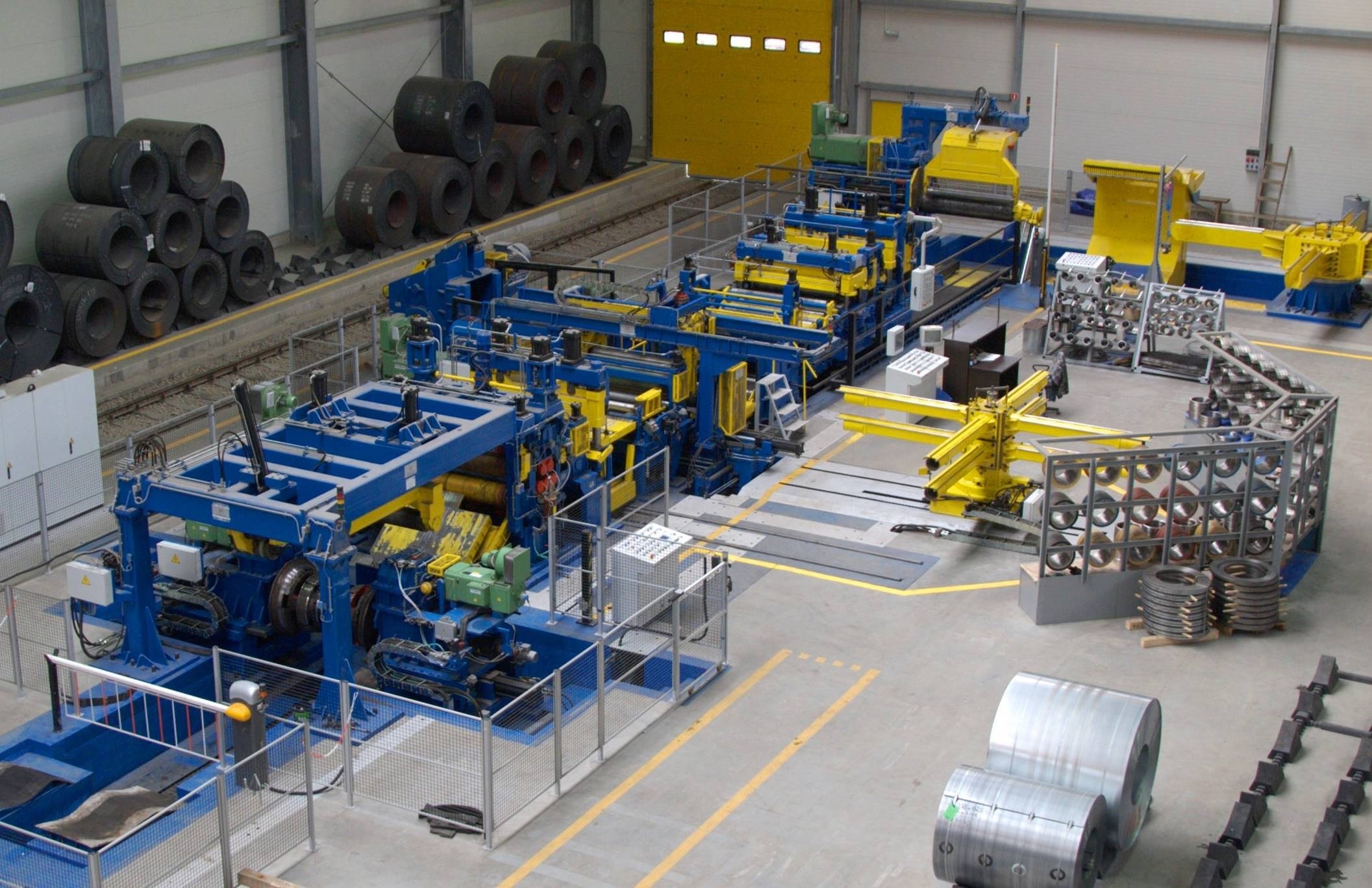
A holistic approach to coil packaging considers all potential threats. Automated systems are designed to integrate various protective elements seamlessly, ensuring all vulnerabilities are addressed.
Integrating Mechanical and Moisture Protection Automatically
Automated lines allow for the precise and consistent application of multiple layers of protective materials, combining moisture and mechanical defense into a single, efficient process.
Key elements of integrated automated protection:
- Layered Protection: The automated line can apply moisture barrier layers (crepe paper and PE film via TEW) followed by mechanical protection layers (steel or board body wrap, edge protectors), all in a controlled sequence.
- Edge Protection Automation: Automated machines place edge protectors exactly where needed on the inner and outer diameters. This prevents the wrapping film from tearing at sharp corners and provides cushioning against impacts. Manual application is often inconsistent and material-intensive.
- Body Wrapping Precision: Automated body wrapping ensures materials like steel or board are applied with the correct tension and overlap around the coil body, providing a robust shield against punctures, abrasions, and handling damage. The machine automatically selects the correct width and cuts the material to size.
- Strapping: Automated strapping machines can apply steel or plastic straps securely around the packaged coil to unitize the load and prevent shifting or unwrapping during transit. This adds another layer of mechanical stability and security.
Automated lines can be configured to apply different packing codes based on the required level of moisture and mechanical protection, determined by storage duration, transportation method, and handling frequency. The material references mention different packing levels (Moisture Protection + 8 Mechanical Protection Codes).
Example Packing Series (based on material concepts):
| Series | Handling Method | Handling Times (Typical) | Transportation Method | Key Mechanical Protection Elements Applied by Automation |
|---|---|---|---|---|
| 10 | Hooks | 1-3 (Automatically) | Internal mill use / nearby location | Basic wrap, maybe auto-applied edge protection |
| 40 | Hooks | 3-6 | Truck/Train (Horizontal) | Auto body wrap, auto outer edge protection |
| 80 | Hooks or chains | 4-8 | Truck/Train (Horizontally/Vertically), Maritime (Continental/Intercontinental) | Auto body wrap (steel/board), Auto outer/inner edge protection, Strapping |
This modular and configurable approach allows manufacturers to tailor the automated packaging process to the specific requirements of each coil and its intended journey, ensuring the optimal balance of protection and cost-effectiveness. Palletizing can also be integrated into automated lines for further mechanical protection, especially for sensitive products or complex handling chains.
Streamlining Operations: Efficiency Beyond Packaging
The impact of automated wrapping machines extends beyond the packaging area itself, influencing overall plant efficiency and material flow. Bottlenecks in packaging can slow down upstream production lines and delay shipments.
Automated wrapping machines streamline the entire steel coil packaging process, boosting throughput, reducing labor needs, minimizing material waste, and integrating with broader plant management systems for optimized material flow and improved overall operational efficiency. This automation is key to achieving higher productivity and cost-effectiveness in steel handling.
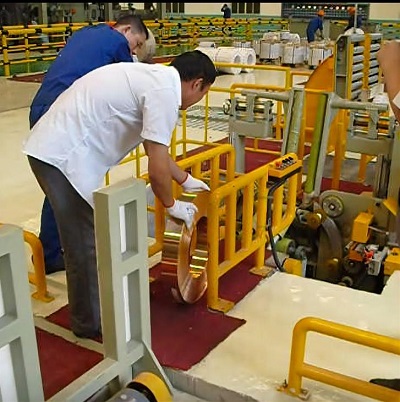
Implementing automated packaging is a strategic step towards a more efficient and integrated manufacturing process.
Manual packaging is inherently slower and less predictable than automated systems. It requires significant floor space for material storage (often pre-cut), involves manual lifting and handling of materials and coils, and is prone to variability in speed based on operator availability and fatigue. This can create a bottleneck that limits the overall output of the plant.
Automated coil packing lines, conversely, are designed for high capacity and continuous operation.Automated wrapping machines enhance steel coil protection by ensuring high-speed, consistent application of moisture barriers like stretch film and protective layers. They drastically increase throughput compared to manual methods, require minimal operator supervision (often just material filling once per shift for high-capacity lines), optimize material usage by cutting from large coils, reduce required packing space, and seamlessly integrate into automatic material flow systems, improving overall plant logistics and efficiency.
The high throughput of automated lines (20-30 coils/hour vs. 1-3/hour manually) directly impacts the capacity of the downstream process and the entire plant. With automatic lines, multiple slitters or production lines can be served simultaneously by one packing line. The modular design allows lines to be configured to match the capacity of the upstream processes and expanded later if needed.
Material management is significantly improved. Instead of managing inventory of various pre-cut material sizes, automated lines work with large material coils, cutting and optimizing material usage on-the-fly according to coil dimensions. This reduces inventory complexity, storage space requirements, and material waste.
Furthermore, automated lines are designed to fit into automated material flow systems. Coils are often transported to the packing line automatically via carriages or conveyors, and once packaged, they can be automatically transferred to storage or shipping areas. This end-to-end automation minimizes manual handling, improves safety, and increases the speed and efficiency of the entire logistics chain within the mill or distribution center.
The control systems (like WinCC) provide real-time monitoring, diagnostics, and data exchange with higher-level systems (MIS, ERP), enabling better planning, tracking, and optimization of the entire material flow, from production to final shipment.
Conclusion
Protecting steel coils from moisture and mechanical damage is paramount for preserving product quality, ensuring customer satisfaction, and reducing costly losses. Automated wrapping machines offer a revolutionary solution, providing consistent, high-quality packaging that manual methods simply cannot match. By implementing technologies like Through Eye Wrapping with stretch film and integrating automated mechanical protection features, manufacturers can create robust barriers against corrosion and physical damage. The benefits extend beyond protection, delivering significant improvements in efficiency, reducing labor and material costs, enhancing safety, and streamlining overall operations. Investing in an automated steel coil wrapping line is a strategic decision that safeguards your product, optimizes your processes, and strengthens your position in the competitive steel market.








