
Hose Coil Winding and Packing Systems: An Industry Analysis# Hose Coil Winding and Packing Systems: An Industry Analysis
I. Introduction to Hose Coiling and Packing
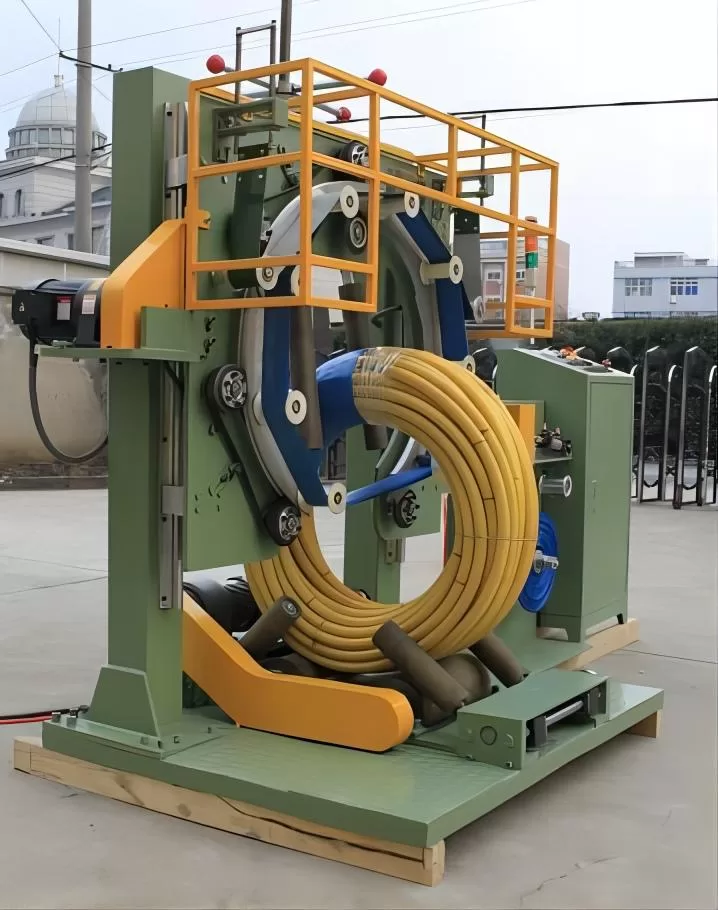
I. A. Defining the Processes: Purpose and Significance
The manufacturing and distribution of industrial and consumer hoses involve critical post-production steps: coiling (or winding) and packing. Understanding the purpose and significance of each process is fundamental to optimizing production efficiency, ensuring product quality, and managing logistics effectively.
Hose Coiling/Winding: This process transforms long, continuous lengths of flexible hose into a compact, typically circular, configuration.[^1] The primary objectives driving this step include:
- Storage Efficiency: Coiled hoses consume considerably less space compared to their straight counterparts. This is crucial for efficient warehouse management, inventory control, and maximizing storage density.[^3]
- Handling and Transport: Coils are inherently easier to handle, move, palletize, and transport than long, potentially unwieldy straight lengths.[^1] This simplifies logistics from the factory floor to the end-user.
- Preparation for Sale/Use: Coiling presents the hose in a standardized format suitable for retail display, industrial dispensing systems, or subsequent packaging steps.[^1] It makes the product ready for the next stage in the supply chain or for direct use by the customer.
- Damage Prevention: Properly executed coiling minimizes the risk of kinking, tangling, abrasion, and other forms of damage that can occur when hoses are handled or stored loosely.[^3]
Hose Packing: Following coiling, packing involves applying materials and methods to secure and protect the coiled hose for storage, transit, and eventual sale.[^1] The importance of effective packing cannot be overstated, as it serves several critical functions:
- Product Protection: Packaging acts as a barrier, shielding the hose (particularly its cover and any end fittings) from physical damage such as abrasions, impacts, crushing, and punctures. It also protects against environmental factors like dust, moisture, UV radiation, and contaminants during handling, storage, and shipping.[^16]
- Maintaining Coil Integrity: Packing methods like strapping, wrapping, or boxing ensure the coil maintains its wound form, preventing it from unwinding, loosening, or becoming tangled during transit.[^15]
- Facilitating Logistics: Securely packed coils form stable, often unitized loads that are easier to stack, store in warehouses, and load onto transport vehicles efficiently and safely.[^20]
- Meeting Customer/Retail Requirements: Packaging must often meet specific end-user needs or retail display standards, including labeling and presentation.[^12]
The effectiveness of the packing process is intrinsically linked to the quality of the initial winding. A poorly wound coil, characterized by uneven tension, loose layers, or inconsistent shape, presents significant challenges for secure packing. Such coils are more susceptible to damage during transit, regardless of the packing materials used. Conversely, the choice of packing method can influence the optimal winding parameters. For instance, a coil destined for shrink wrapping might require different tension or layering compared to one simply being strapped. Achieving a “perfect coil” [^1] – one that is uniform, stable, and tightly wound – is therefore essential not only for the hose’s performance but also for the success of subsequent packing and handling operations.[^1] Preventing issues like kinking [^3] or tangling [^3] during winding is paramount for efficient packing using methods like shrink wrapping or boxing.[^15]
I. B. Overview of Hose Types and Characteristics Influencing Handling
The hose market encompasses a vast array of products designed for diverse applications, including hydraulic systems, pneumatic tools, water transfer, material handling (abrasives, chemicals), and more.[^3] Several key characteristics inherent to these hoses significantly influence the selection and design of appropriate winding and packing systems:
- Material: Hoses are constructed from various materials, including rubber compounds (natural, EPDM, nitrile), plastics (PVC, Polyurethane/PU, Nylon, EVA, PE), composites, and occasionally metal (stripwound, corrugated).[^3] The material dictates crucial properties like flexibility, weight, surface friction (affecting winding tension), temperature resistance, and chemical compatibility with packing materials (e.g., adhesives, films).
- Construction: Most industrial hoses consist of an inner tube to contain the medium, reinforcement layers (textile braids, wire braids, spiral wires) to provide strength against pressure, and an outer cover for protection.[^12] The type and amount of reinforcement heavily influence the hose’s stiffness, pressure rating, minimum bend radius, and overall weight. The cover material determines abrasion resistance and the need for protection from environmental factors.
- Size: Key dimensions include Inner Diameter (ID), Outer Diameter (OD), and Length.[^3] These dimensions directly determine the final coil size, weight, and the capacity requirements of the winding and packing machinery.
- Flexibility & Minimum Bend Radius: This is a critical factor determining how tightly a hose can be coiled without kinking or damage.[^3] Stiffer hoses necessitate larger minimum coil diameters and may require specialized winding equipment with precise tension control to avoid damage.
- Pressure Rating (Working/Burst): High-pressure hoses typically require more substantial reinforcement (e.g., multiple wire braids or spirals), making them heavier, stiffer, and potentially requiring more robust winding and packing solutions.[^3]
- Temperature Rating: The operational temperature range influences material selection.[^12] While primarily an operational concern, extreme temperature ratings might necessitate specific packing materials to protect the hose during storage or transit in harsh climates.
The selection of appropriate winding techniques, machinery, packing methods, and materials is fundamentally driven by these inherent physical and mechanical properties of the hose. Manufacturers must carefully consider factors like size, weight, flexibility, material composition, and surface sensitivity when designing their winding and packing processes.[^12] For example, a heavy, large-diameter, relatively stiff hydraulic hose [^4] demands a heavy-duty coiling machine capable of handling its weight and managing winding tension precisely to avoid damage.[^1] Its packing will likely involve robust methods like heavy-duty strapping or even crating. In contrast, a lightweight, highly flexible garden hose [^9] can be processed on lighter machinery and may only require simple strapping or bagging. Winding machinery specifications frequently list capacity limits based on hose diameter, weight, and material type, underscoring the direct link between hose characteristics and equipment selection.[^1] Ignoring these fundamental properties inevitably leads to inefficient operations, increased risk of product damage, and higher overall costs.
II. Hose Coil Winding Technology
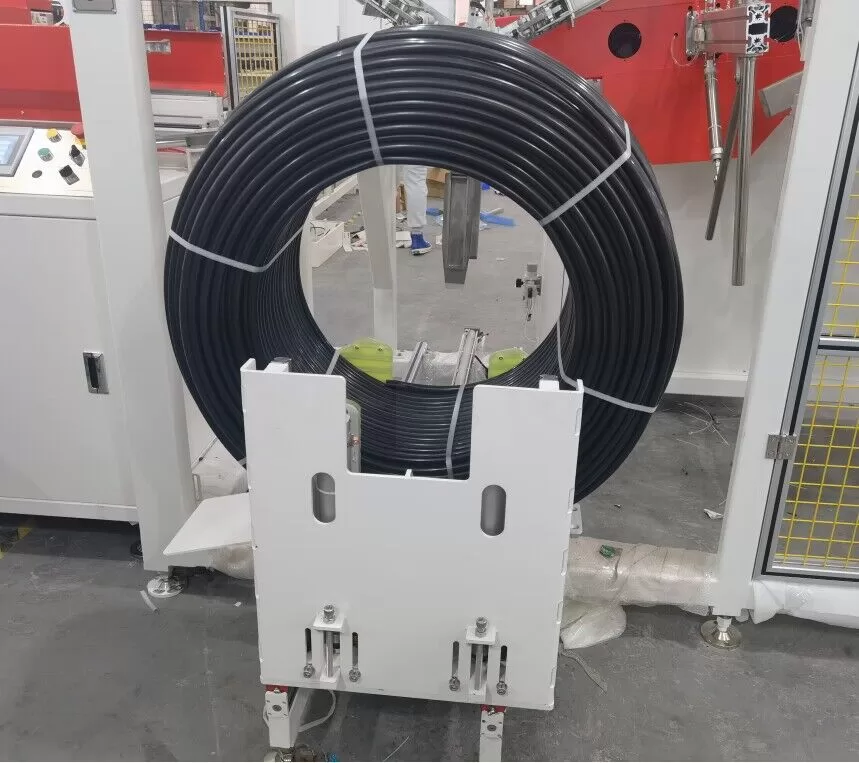
II. A. Objectives of Coiling and Winding
The primary objectives of coiling and winding hoses remain consistent: achieving efficient storage, simplifying handling and transportation, preparing the product for subsequent packaging or sale, and preventing damage such as kinks and tangles that compromise hose integrity and usability.[^1]
A key underlying goal is the creation of a “perfect coil”.[^1] This implies a coil with uniform layers, consistent winding tension throughout, and a stable, self-supporting structure (or one properly supported by a spool). Achieving this optimal coil form is critical for efficient downstream processing, including automated packing operations like strapping, wrapping, or boxing, as well as for trouble-free dispensing and use by the end customer.[^54] The specific format of the coil—whether it’s a reel-less coil intended for bulk use or easy dispensing, or a hose wound onto a specific spool or reel for integration into machinery or retail sale—is also a critical consideration determined by the application and market requirements.[^10]
II. B. Winding Methodologies
The method chosen for winding hoses depends heavily on production volume, budget, required consistency, and labor availability. Three main methodologies exist:
- Manual Winding: This involves operators manually coiling the hose, often using simple hand-cranked reels or coiling stands, or even coiling by hand.[^4]
- Advantages: Lowest initial equipment cost, allows for complete operator control over winding speed and tension, adaptable to various hose types and irregular lengths.[^67]
- Disadvantages: Highly labor-intensive and time-consuming, prone to inconsistencies in coil quality and tension, can lead to operator fatigue and potential strain injuries, unsuitable for high-volume production.[^55]
- Semi-Automatic Winding: In this approach, the operator typically loads the hose end, initiates the cycle (often via foot pedal), and unloads the finished coil, while the machine performs the automated winding action.[^2] Some semi-automatic systems may also include automated tying or strapping.
- Advantages: Reduces manual labor and fatigue compared to manual winding, improves consistency, offers faster cycle times than purely manual methods. Represents a balance between cost and automation.[^2]
- Disadvantages: Still requires operator intervention for loading/unloading, limiting overall throughput compared to fully automatic systems. Initial cost is higher than manual setups.
- Fully Automatic Winding: These systems are designed for high-volume production, often integrating directly with the hose production line (e.g., post-extrusion).[^55] They automatically handle hose feeding, length measurement, coiling, cutting, securing (tying, strapping, or preparing for wrapping), and ejection of the finished coil with minimal or no operator involvement.[^2]
- Advantages: Maximizes production speed and throughput, ensures high consistency in coil dimensions and quality, significantly reduces labor costs, enables seamless integration into automated production lines, enhances workplace safety by minimizing manual handling.[^55]
- Disadvantages: Highest initial capital investment, greater complexity requiring skilled maintenance, potentially less flexible for very frequent product changeovers compared to simpler systems.[^67]








