
Horizontal Orbital Wrapper Safety: Will It Clear NR-10/NR-12 and INMETRO Audits Without Rework?
The thought of new equipment failing a safety audit fills many factory managers with dread. You buy a horizontal orbital wrapper, hoping it solves your packaging problems. Then, you find out it does not meet critical local safety standards like Brazil’s NR-10 or NR-12, or international certifications like INMETRO. This means costly rework, production delays, and even potential fines. I have seen this happen too many times, and it is a pain no factory should endure.
Yes, a horizontal orbital wrapper can clear NR-10, NR-12, and INMETRO audits without rework, but only if its design and construction prioritize these compliance standards from the start. This requires selecting a machine engineered with specific safety features, electrical integrity, and robust mechanical guarding that meet regulatory requirements, not just basic operation.

When I built my packing machine factory, I learned that cutting corners on safety is a direct path to higher costs and endless headaches. You do not just want a machine that works; you need one that works safely and legally. Let us look deeper into what this means for your next horizontal orbital wrapper.
Why is NR-10 and NR-12 Compliance Non-Negotiable for Orbital Wrappers?
Imagine your new horizontal orbital wrapper is installed. Production is about to begin. Then, an inspector walks in, finds your machine is not compliant with NR-10 or NR-12, and shuts it down. This is not just a minor delay. It is a full stop on your production line. This costs you money, wastes time, and puts your workers at risk. The pressure to meet targets is already high. You do not need this added stress.
NR-10 and NR-12 compliance for horizontal orbital wrappers is non-negotiable because these Brazilian regulatory standards mandate electrical safety (NR-10) and machine safety (NR-12) to prevent serious accidents, injuries, and fatalities in the workplace. Ignoring these rules leads to legal penalties, operational shutdowns, increased insurance costs, and severe harm to personnel.

As someone who started on the factory floor and then built a successful packing machine factory, I have seen first-hand the dangers of unsafe equipment. NR-10 deals with electrical installations and services. It ensures your machine’s wiring, grounding, and control panels are safe. For an orbital wrapper, this means proper circuit breakers, emergency stop buttons that cut power immediately, and insulated wiring. If a machine does not meet NR-10, a worker could face electric shock. This is a very serious risk. NR-12 focuses on machine safety itself. This covers things like physical guards around moving parts, interlock systems that stop the machine if a guard is opened, and safe operating procedures. It also requires clear labels, emergency stops, and training for operators. A horizontal orbital wrapper has rapidly moving parts, like the rotating ring. Without proper guarding or interlocks, a worker’s hand or clothing could get caught. These rules are not just bureaucratic hurdles. They are essential for keeping people safe. Compliance ensures your investment protects your employees and avoids costly legal battles or compensation claims from accidents. It also prevents your factory from being shut down by regulators.
Key Aspects of NR-10 for Orbital Wrappers
- Electrical Design and Installation: All electrical components must be installed according to NR-10 rules. This includes proper grounding, circuit protection, and insulation.
- Emergency Stop Systems: Machines must have easily accessible emergency stop buttons that immediately de-energize the machine. These buttons should be prominent and clearly marked.
- Lockout/Tagout Procedures (LOTO): The machine’s electrical system must allow for safe lockout procedures during maintenance. This prevents accidental startup.
Key Aspects of NR-12 for Orbital Wrappers
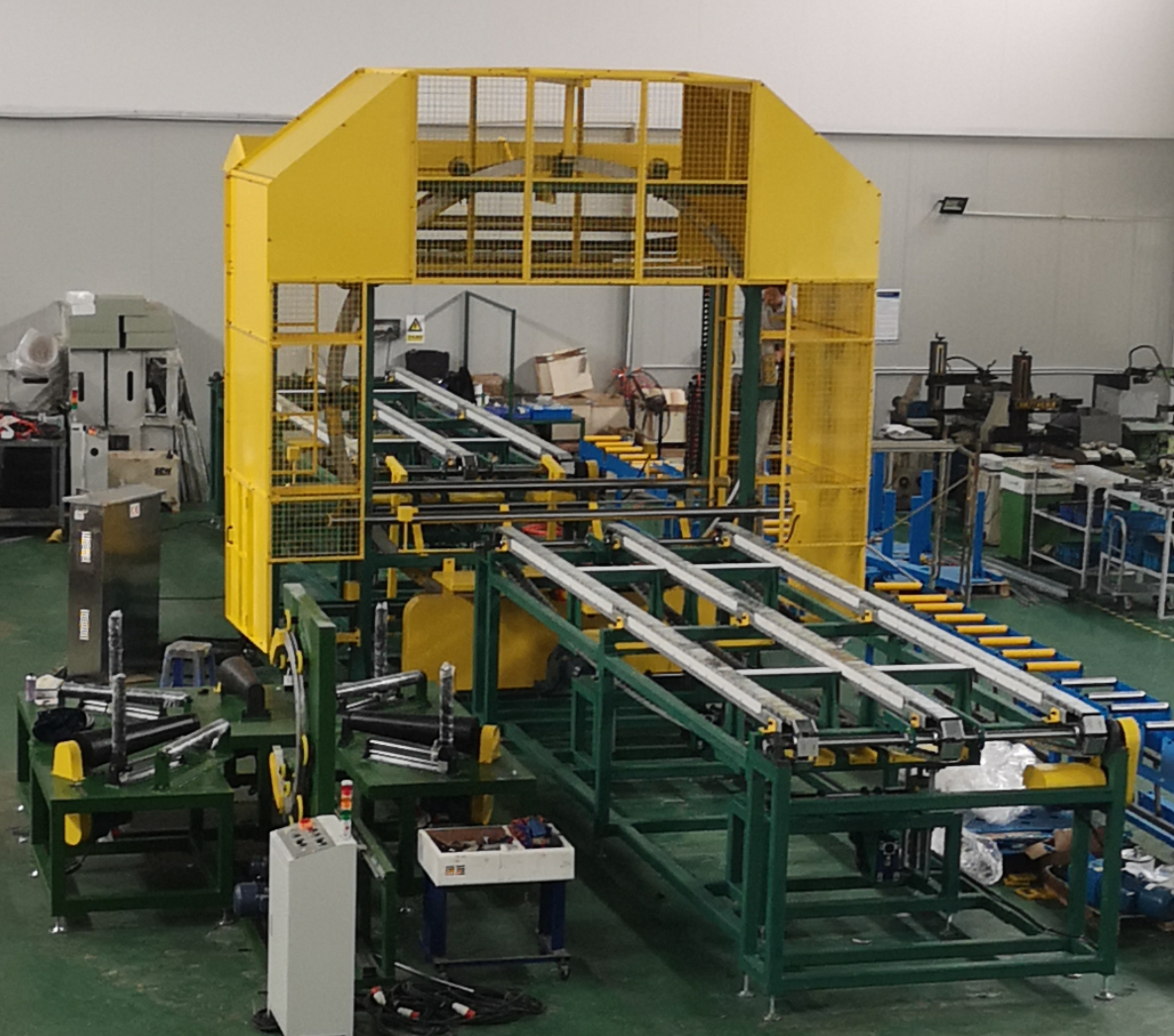
- Safety Guards and Barriers: All moving parts, especially the rotating ring and conveyor systems, must have robust physical guards. These prevent access to danger zones during operation.
- Interlock Systems: Guards must be interlocked. If a guard is opened, the machine must stop automatically and not restart until the guard is closed again.
- Safety Devices: Light curtains, safety mats, and two-hand controls are examples of safety devices that might be needed depending on the machine’s risk assessment.
- Risk Assessment: Before selling a machine in Brazil, the manufacturer must conduct a detailed risk assessment. This identifies potential hazards and puts controls in place.
- Operator Training: Workers operating the machine must receive specific training on its safe use and emergency procedures. This is a crucial part of NR-12.
Meeting these standards means choosing a supplier who understands and builds machines specifically for these requirements, not just an off-the-shelf model. It saves you from unexpected costs later on.
How Does INMETRO Certification Protect Your Investment and Operations?
You invest in new equipment to boost efficiency and output. But what if that equipment fails quickly, or its parts are hard to find? This can happen with machines that do not have proper certification. INMETRO certification might seem like just another stamp, but it is much more. It affects the long-term reliability and support of your horizontal orbital wrapper.
INMETRO certification protects your investment and operations by ensuring the horizontal orbital wrapper meets strict quality, safety, and performance standards set by Brazil’s national metrology, standardization, and industrial quality institute. This certification assures product reliability, reduces the risk of operational failures, simplifies regulatory compliance, and guarantees access to genuine parts and support.
When I was building my factory, I learned the hard way about unreliable suppliers. I bought machines that were cheaper upfront but cost me a fortune in downtime and repairs. INMETRO certification is Brazil’s official quality mark. It means a product has been tested and certified to meet specific national standards. For a horizontal orbital wrapper, this means:
- Quality Assurance: The machine components meet certain quality benchmarks. This means less breakdown.
- Performance Reliability: The machine performs as stated. You get the output you expect.
- Safety Compliance: INMETRO often involves checking compliance with other standards like NR-10 and NR-12. It acts as an umbrella for safety and quality.
- Market Access: In many cases, INMETRO certification is required by law for products sold in Brazil. Without it, your machine might not even be allowed into the country.
- Easier Maintenance: Certified machines often use standardized parts. This makes finding replacements easier.
Choosing an INMETRO-certified orbital wrapper is a smart business decision. It is about reducing risk and ensuring the machine supports your operations for years, not just months. It shows the manufacturer is serious about quality and safety. This helps build trust, which is something Michael Chen, a factory manager, values deeply. He needs partners who truly understand his production bottlenecks and provide reliable solutions.
Benefits of INMETRO Certification
| Benefit | Description | Impact on Your Factory |
|---|---|---|
| Reduced Risk | Less chance of equipment failure, safety incidents, or regulatory fines due to non-compliance. | Lower operational costs, fewer unexpected expenses, improved worker safety. |
| Increased Trust | Demonstrates commitment to quality and safety, building confidence with regulators and customers. | Stronger reputation, smoother audits, better business relationships. |
| Market Entry | Mandatory for many products in Brazil, allowing legal sale and use of the machine. | Ensures your machine can operate legally without import or use restrictions. |
| Product Longevity | Higher quality components and design lead to a longer machine lifespan and better performance over time. | Maximizes your ROI, reduces need for early replacement, consistent production output. |
| After-Sales Support | Manufacturers of certified products often provide better documentation, parts, and technical support. | Faster troubleshooting, easier access to spare parts, reduced downtime for repairs. |
Think of INMETRO as a stamp of approval that protects your initial investment. It is not just about meeting a rule. It is about getting a machine that you can rely on, day in and day out. It means the supplier cares about the product’s quality, not just the sale. This is crucial for factory managers who need solutions, not just equipment.
Can Smart Design Truly Eliminate Costly Rework and Downtime?
Have you ever bought a machine that seemed perfect on paper, only to find out it caused more problems than it solved? This often happens when designs overlook real-world factory needs. Small design flaws can lead to big issues, like constant breakdowns, product damage, or safety hazards that stop your entire line. The cost of these issues quickly outweighs any initial savings.
Yes, smart design can truly eliminate costly rework and downtime for horizontal orbital wrappers. By integrating robust safety features, ergonomic considerations, and durable components from the outset, a well-designed machine prevents the need for expensive post-installation modifications, minimizes breakdowns, and ensures smooth, continuous operation, directly impacting your bottom line.
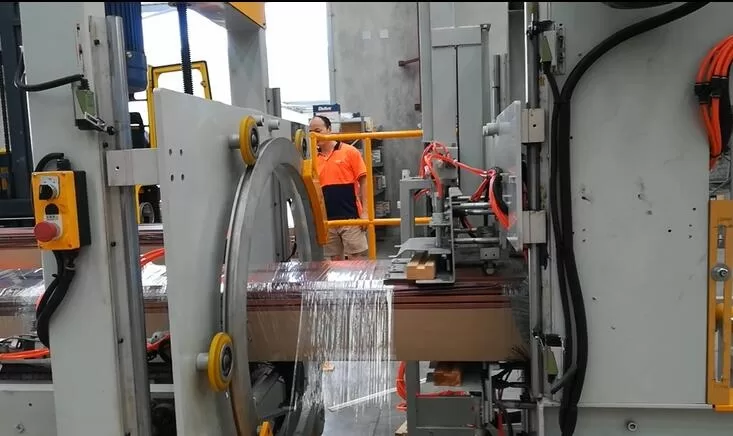
I remember one time, early in my career, we installed a machine that looked good. But it had a key part that wore out too fast. Replacing it was a huge job every few months. This downtime was a big financial hit. It taught me the importance of design that thinks beyond just basic function. For horizontal orbital wrappers, smart design means several things:
- Integrated Safety: Safety is not an add-on. It is built into the machine’s core. This includes the placement of emergency stops, the design of guards, and the logic of the control system. When safety is part of the design, it works seamlessly. This avoids the need for expensive retrofits to meet NR-10 or NR-12.
- Robust Construction: A machine for heavy-duty environments like metal processing needs to be tough. This means using high-quality steel, durable bearings, and industrial-grade electrical components. These parts cost more upfront but last much longer. This prevents frequent breakdowns that cause downtime.
- User-Friendly Interface: An intuitive control panel and clear instructions reduce operator errors. Errors can lead to product damage or machine malfunction. A simple interface also reduces training time.
- Ease of Maintenance: Machines should be easy to maintain. Access points for lubrication or part replacement should be clear. If maintenance is hard, it gets skipped, leading to bigger problems.
- Optimized Material Handling: For Michael Chen, product damage is a big concern. Smart design means the wrapper handles products like steel coils or wire coils gently. This prevents edge damage or deformation during wrapping. Features like adjustable tension control and specialized conveyors help here.
A well-designed horizontal orbital wrapper does more than just wrap. It protects your product, your workers, and your profits. It helps achieve Michael’s goals: higher automation, better safety, and reduced costs.
How Smart Design Addresses Common Challenges
- Efficiency Bottlenecks: A robust control system ensures smooth film application and automatic cutting. This reduces manual labor. It speeds up the wrapping process, removing bottlenecks at the end of the line.
- Safety Hazards: Built-in safety features like interlocked gates and light curtains remove workers from danger zones. This greatly reduces the risk of injury from moving parts or heavy loads.
- Product Damage: Adjustable tension systems and custom-designed conveyors ensure the product is held securely. This prevents scratches, dents, or crushing during the wrapping process. It also reduces material waste.
- Supplier Trust: When a supplier offers machines with truly smart designs, it builds trust. It shows they understand your operational needs and are committed to long-term performance. This is crucial for forming real partnerships.
In my experience, investing in well-designed machinery pays for itself many times over. It is about looking at the total cost of ownership, not just the purchase price.
What Steps Guarantee Your Orbital Wrapper Meets All Safety Standards?
You are ready to invest in a new horizontal orbital wrapper. You want it to improve your operations, not create new compliance headaches. How do you make sure your new machine meets all necessary safety standards like NR-10, NR-12, and INMETRO without constant rework? It can feel overwhelming to navigate all the rules, especially when you are focused on daily production goals.
To guarantee your orbital wrapper meets all safety standards, you must prioritize supplier selection, demand clear compliance documentation, verify machine design specifications before purchase, and ensure a thorough pre-delivery inspection that includes all relevant certifications. This proactive approach minimizes rework and ensures seamless integration into your factory operations.
When I was running my packing machine factory, I learned that due diligence is key. You cannot just hope for the best. You need to verify. Here are the steps I would take to ensure an orbital wrapper clears all audits:
- Choose the Right Supplier: This is the most important step. Look for a supplier with a proven track record in manufacturing machines that comply with international and local standards. Ask for references from clients in your region or industry. A good supplier will understand the specific requirements for Brazil (NR-10, NR-12, INMETRO). They will not just try to sell you a generic machine.
- Demand Compliance Documentation: Before you buy, ask for proof of compliance. This includes:
- Certificates: Ask for INMETRO certification documents.
- Technical Files: Request the machine’s technical file, which should detail its design, safety features, risk assessments, and compliance with NR-10 and NR-12.
- Manuals: Ensure the machine comes with comprehensive operation and maintenance manuals in your language. These should clearly outline safety procedures.
- Review Machine Design Specifications: Work with the supplier’s engineers. Understand how safety features are integrated. Ask specific questions about:
- Emergency stop circuits and their redundancy.
- Guard interlock types and their reliability.
- Electrical panel design and component ratings.
- Ergonomics for safe loading and unloading.
- Insist on Factory Acceptance Testing (FAT) with Compliance Check: Before the machine leaves the factory, perform a FAT. During this test, simulate your production environment. Have your team, or a third-party expert, specifically check all safety functions against NR-10, NR-12, and any other relevant standards. Take photos and videos.
- Plan for On-Site Installation and Commissioning: Ensure the supplier provides support for installation. Proper installation is crucial for maintaining compliance. Electrical connections, grounding, and safety device calibration must be done correctly.
- Operator Training: After installation, ensure your operators and maintenance staff receive thorough training. They need to understand the machine’s safety features and emergency procedures. NR-12 specifically requires this.








