
Horizontal Orbital Wrapper Layout: What Ring Size and Conveyor Length Fit a Typical Canadian Bay?
Factory operations often face a silent enemy: inefficient end-of-line processes. Are you constantly struggling with slow packing speeds, risking worker safety with manual handling, or seeing valuable products damaged before they even leave your dock? These hidden bottlenecks do more than just slow you down; they eat into your profits, frustrate your team, and erode customer trust. You need solutions that work, solutions that last, and solutions that pay for themselves.
A typical Canadian factory bay, with its standard industrial dimensions, often finds optimal fit with orbital wrapper ring sizes ranging from 1600mm to 2200mm, coupled with conveyor lengths of 6 to 10 meters on each side of the wrapper for efficient material handling and flow, directly addressing common bottlenecks in coil and wire packing.
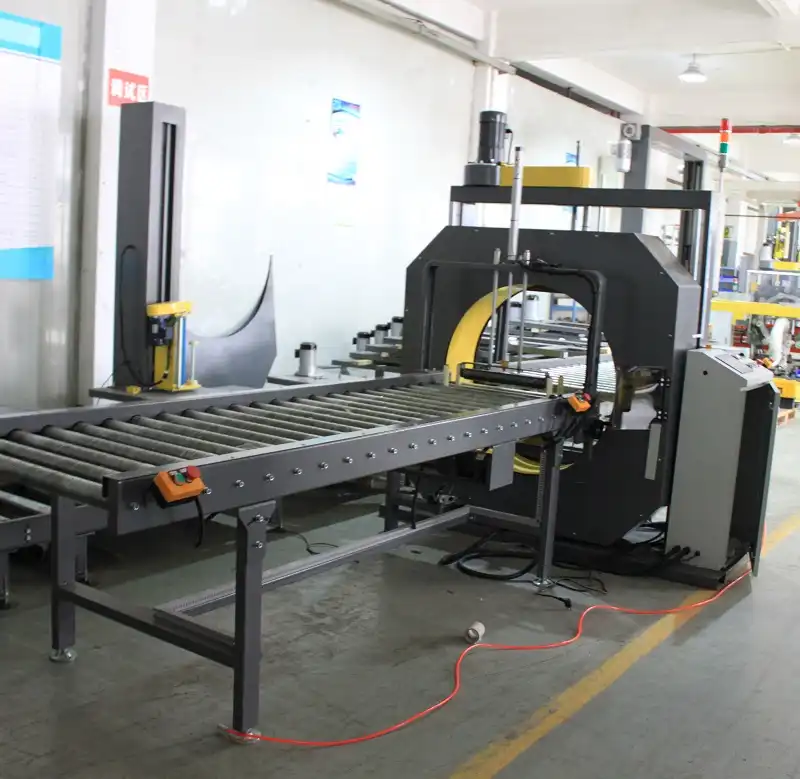
I built FHOPEPACK because I believe in sharing knowledge. My journey from a factory employee to a successful factory owner showed me the real challenges you face every day. I know what it takes to make a production line sing. So, let us look closer at how to optimize your packing layout for peak performance and safety.
How Do You Choose The Right Ring Size For Your Products?
Do you ever feel like your packing machine is either too big for small items or too small for your large products? This common problem causes wasted space, slow operations, or even the inability to pack certain items. It leads to frustration and lost productivity, directly impacting your bottom line.
Choosing the right horizontal orbital wrapper ring size means matching it to your largest product’s dimensions, adding enough clearance for safe operation and future growth, and common sizes like 1600mm or 2000mm often suit a wide range of industrial coils and bundles.

When I started my own packing machine factory, one of the first things I learned was the importance of proper sizing. It is not just about fitting the product. It is about flow, safety, and efficiency. Get this wrong, and you will have headaches for years.
Understanding Product Dimensions
You need to know the exact width and height of your largest and smallest products. This means measuring them accurately. Do not guess. If you pack various sizes, you need a ring size that can handle the biggest one. The wrapper ring must be wider and taller than your product. This lets the product pass through easily. It also gives space for the wrapping film to move around it.
For example, if you pack steel coils, they come in different diameters. You might have coils with an outside diameter of 1500mm. Then, a 1600mm ring size works well. It gives you 100mm of clearance. This space is needed for the wrapping arm. It also helps with small variations in product size.
Considering Future Growth
Think about your business five years from now. Will your products get bigger? Will you add new product lines? Investing in a wrapper that is slightly larger than your current biggest product can save you money later. You avoid having to buy a new machine when your products grow. This is a smart long-term plan. It ensures your equipment can keep up with your business.
Standard Ring Sizes and Their Uses
Many industrial products, like coils, pipes, or panels, fit common ring sizes.
- 1200mm – 1600mm: These are good for smaller coils or bundles. This could be wire coils or certain pipe sizes.
- 1800mm – 2200mm: These sizes handle medium to large steel coils or larger pipe bundles. These are very common in metal processing plants.
- 2500mm+: These are for very large or unusually shaped products. These machines take up more space. They also cost more.
When I first helped clients, they often underestimated the need for clearance. They just wanted the smallest machine that would fit. But a little extra space makes a big difference in daily operation. It reduces jams and makes the process smoother. Always factor in about 100mm to 200mm of clearance around your largest product. This prevents problems and keeps your line moving.
What Conveyor Length Is Best For Canadian Factory Layouts?
Are your current packing lines causing a traffic jam in your factory? Long queues of products waiting to be wrapped, or workers tripping over material, signal a big problem. This slows down your entire production. It also creates safety risks. A poorly planned layout wastes valuable floor space. It also makes your operations inefficient.
For a typical Canadian factory bay, optimizing horizontal orbital wrapper conveyor length usually means having 6 to 10 meters of infeed and outfeed conveyor, allowing for product accumulation, safe loading, and smooth transfer, preventing bottlenecks and maximizing throughput within standard industrial building dimensions.
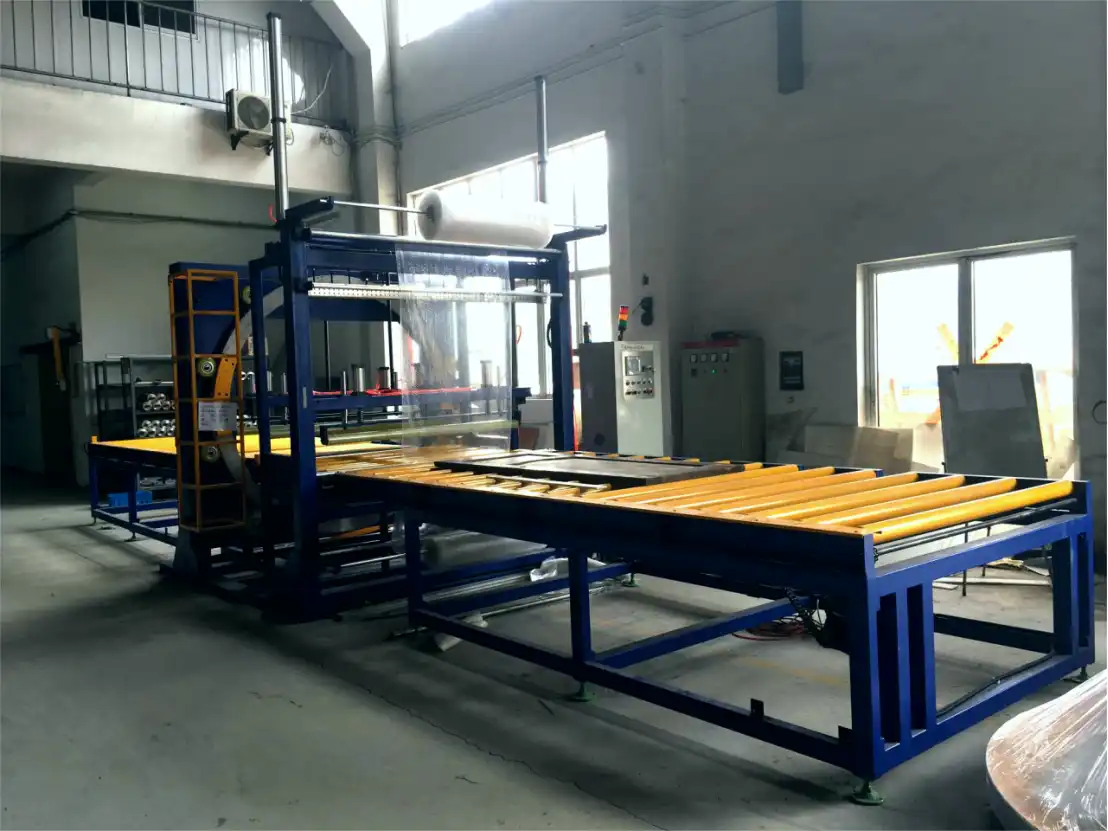
When I was setting up my own factory, space was always a premium. I had to learn how to make every square foot count. But I also learned that cutting corners on conveyor length could create bigger problems. You need enough space to handle products safely and efficiently.
Understanding the Bay Dimensions
Typical Canadian factory bays are designed for manufacturing and storage. They have clear spans and column grids. These often allow for long, straight production lines. A common bay might be 20 meters wide and much longer. This space gives you flexibility. You can set up your wrapper with generous conveyor lengths.
Consider the flow of your materials. Products usually come from a processing area. Then they go to the packing machine. After packing, they go to storage or shipping. Each step needs space. The conveyor connects these steps.
Infeed and Outfeed Conveyor Needs
The horizontal orbital wrapper needs conveyors on both sides.
- Infeed Conveyor: This brings products to the wrapper. You need enough length here for:
- Accumulation: Products can queue up before wrapping. This means the wrapper can run continuously. It does not stop waiting for the next product.
- Loading: Workers or overhead cranes need space to load products onto the conveyor safely.
- Safety Zone: There must be a safe distance between the loading point and the wrapper itself. This protects workers from moving parts.
- Outfeed Conveyor: This moves wrapped products away from the machine. You need length for:
- Offloading: Products can accumulate here while waiting for a forklift or crane to pick them up.
- Inspection: Space for quality checks if needed.
- Buffer: It creates a buffer zone. This prevents wrapped products from blocking the machine’s exit.








