

Future-Ready Logistics | How Pallet Changing Machines Support Smart Factory Operations?
The world of logistics moves fast. Are you grappling with endless pallet inconsistencies, rising labor costs, and constant pressure for faster deliveries? I have seen these challenges firsthand throughout my journey in the packing machine industry. Many businesses, especially in Europe’s busy distribution centers, face these exact problems every day. They struggle to keep pace with diverse pallet standards and increasing demand. This often leads to bottlenecks, costly mistakes, and missed opportunities in a competitive market. (logistics challenges, pallet inconsistencies)
Pallet changing machines are the essential technology helping businesses like yours achieve future-ready logistics and support smart factory operations by automating the complex process of transferring goods between different types of pallets, ensuring seamless product flow, reducing manual labor, and significantly improving overall warehouse efficiency and safety. These machines handle the heavy lifting, literally, making sure your operations stay agile and compliant with international shipping standards. (smart factory operations, automated pallet transfer)
It is clear that simply “getting by” with old methods is not enough anymore. The future of logistics demands smarter, more automated solutions. Let us explore how pallet changing machines can be the game-changer for your facility, transforming challenges into strategic advantages.
How are Pallet Changing Machines Redefining Modern Warehouse Operations?
Are your current warehouse operations feeling the strain of diverse pallet types and manual handling? In my experience, facilities that rely on traditional methods often face significant delays and operational bottlenecks, especially when dealing with international shipments. This can impact your delivery schedules and customer satisfaction. The old ways just cannot keep up with today’s speed. (warehouse operational challenges, international shipments)
Pallet changing machines are redefining modern warehouse operations by providing a fast, efficient, and safe solution for switching goods between different pallet types, such as Euro pallets, US pallets, and plastic pallets, thereby eliminating manual labor, reducing product damage, and streamlining the flow of goods for better logistical agility. They act as a critical bridge in the supply chain, ensuring compatibility across various transport and storage systems without interruption. (modern warehouse operations, pallet type switching)
The shift towards automated pallet handling marks a fundamental change in how warehouses manage their inventory and dispatch. This is not just about moving boxes; it is about creating a more cohesive, responsive, and ultimately more profitable operational environment. Let us look at the specific ways these machines achieve this.
-
Seamless Pallet Compatibility Across Borders International logistics presents a complex challenge. Different countries and industries have their own pallet standards. For instance, European distribution centers frequently need to switch goods from standard Euro pallets to US pallets for export, or to hygienic plastic pallets for internal food processing. Manually transferring thousands of items between these diverse pallet types is time-consuming and error-prone. Pallet changing machines automate this critical step. They ensure that your products arrive on the correct pallet, meeting local regulations and customer requirements without any hassle. This capability is vital for multinational groups, preventing costly delays at customs or rejection by receiving parties. At FHOPEPACK, we understand this pain point deeply, having helped many clients navigate these varied requirements with our adaptable solutions. Our machines handle multiple pallet dimensions and materials, offering a versatile solution for any international supply chain. This means less worry about compliance and more focus on timely deliveries. (international logistics, diverse pallet standards, pallet compatibility)

Automated Pallet Changer for Diverse Pallet Types in European Logistics -
Boosting Throughput and Operational Speed Manual pallet changes inherently limit a warehouse’s throughput. Each manual transfer takes time, requires multiple workers, and introduces the risk of human error. In high-volume operations, these small delays add up significantly, impacting overall efficiency and delivery cycles. Pallet changing machines, however, can process pallets much faster and more consistently. They can perform a full pallet transfer in minutes, often in under a minute, drastically reducing the time spent on this task. This speed allows warehouses to handle a greater volume of goods daily, increasing their overall capacity and improving inventory turnover rates. For businesses under pressure to meet shorter delivery windows, like those serving e-commerce or fast-moving consumer goods, this enhanced speed is not just a benefit; it is a necessity. It means more orders processed, fewer backlogs, and ultimately, happier customers. (warehouse throughput, operational speed, high-volume logistics)
-
Reducing Labor Dependence and Costs The logistics industry faces a persistent challenge: a shrinking labor pool and rising labor costs. Manual pallet handling is physically demanding, often leading to high turnover and difficulty in recruiting new staff. By automating pallet changes, businesses can significantly reduce their reliance on manual labor for this specific task. This does not always mean eliminating jobs, but rather reallocating skilled workers to more value-added roles within the warehouse. The savings come from lower wages, reduced recruitment costs, and fewer expenses related to worker injuries. Moreover, automated systems operate consistently, without fatigue or the need for breaks, providing predictable labor efficiency. As someone who started as an employee, I know the value of empowering workers, and automation often means safer, more strategic roles for staff. It allows your existing team to focus on complex tasks that truly need human intelligence, rather than repetitive, heavy lifting. (labor dependence reduction, operating cost savings, warehouse labor challenges)

Why are Pallet Changers Crucial for Enhancing Efficiency in Smart Factories?
Is your smart factory struggling to achieve its full efficiency potential due to manual pallet handling? The promise of a smart factory hinges on seamless integration and automation across all processes. If your packing and logistics segments still rely on slow, manual pallet changes, this creates a significant bottleneck that undermines all other automated efforts. It is like having a super-fast highway with a single-lane bridge right in the middle. (smart factory efficiency, manual pallet handling bottleneck)
Pallet changers are crucial for enhancing efficiency in smart factories because they provide a vital automated link in the material handling chain, ensuring continuous flow, eliminating manual intervention in pallet exchanges, and integrating seamlessly with other automated guided vehicles (AGVs) and warehouse management systems (WMS) to maximize throughput and operational consistency. They prevent interruptions that can degrade the performance of an otherwise highly automated production line. (automated material handling, seamless integration, operational consistency)
The integration of pallet changing technology is a key step towards a truly autonomous and optimized smart factory. It is about removing the weak links in the chain and letting your entire system work as one intelligent unit. Let us explore the core reasons why.
-
Ensuring Continuous Flow in Automated Production Lines A smart factory is designed for continuous, uninterrupted production. Every stoppage, however brief, impacts overall efficiency. Pallet changes are often necessary at various points, such as before and after quality control, during sterilization, or when preparing products for different storage conditions. If these changes require manual intervention, they introduce significant pauses. Pallet changing machines perform these transfers quickly and automatically. This ensures that products keep moving along the production line, preventing bottlenecks that can halt downstream processes and reduce output. My experience has shown that even minor interruptions can accumulate into substantial losses over a production cycle. By maintaining a steady flow, these machines uphold the core principle of a smart factory: maximizing operational uptime and output. They become a non-stop, reliable component, keeping the entire system running smoothly and predictably. (automated production lines, continuous product flow, operational uptime)
Efficient Pallet Changer for Automated Production Lines in Smart Factories -
Seamless Integration with AGVs and WMS For a smart factory to operate effectively, all its components must communicate and work together. This includes Automated Guided Vehicles (AGVs) or Autonomous Mobile Robots (AMRs) that transport goods, and Warehouse Management Systems (WMS) that orchestrate the entire operation. Modern pallet changing machines are designed for seamless integration with these systems. They can receive commands from the WMS, prepare pallets for AGV pickup, or load pallets onto AGVs autonomously. This level of integration creates a truly hands-free environment. For instance, an AGV can drop off a pallet, the machine changes it, and another AGV picks up the new pallet, all without human intervention. This connectivity is what truly defines a “smart” operation, minimizing errors and maximizing the utilization of all automated assets. It is about creating a cohesive ecosystem where every piece of equipment plays its part in an intelligent workflow. (AGV integration, WMS compatibility, smart factory ecosystem)
-
Maximizing Throughput and Inventory Accuracy The goal of any factory is to produce and move goods as efficiently as possible. Pallet changers contribute significantly to maximizing throughput by speeding up the transition points where pallet types must change. This directly translates to more products processed and dispatched per hour. Furthermore, by reducing manual handling, they also reduce the likelihood of errors in inventory tracking. When a WMS integrates with a pallet changer, it can precisely log each pallet transfer, ensuring real-time inventory accuracy. This eliminates discrepancies that often arise from manual data entry or oversight. For a smart factory, knowing exactly what you have and where it is at all times is fundamental to effective planning and customer fulfillment. This precision supports lean manufacturing principles and helps maintain tight control over the entire supply chain, from raw materials to finished goods. (inventory accuracy, throughput maximization, lean manufacturing)

How Do Pallet Changing Systems Address Safety Risks and Ensure Compliance?
Are you concerned about the safety risks and compliance issues that arise from manual pallet handling in your warehouse? I have personally witnessed accidents caused by improper lifting or overturning of heavy pallets. These incidents are not just costly in terms of insurance and worker compensation; they also create a hazardous work environment and can damage your company’s reputation. It is a real problem, especially in busy distribution centers handling thousands of pallets daily. (warehouse safety risks, manual pallet handling accidents)
Pallet changing systems address safety risks and ensure compliance by mechanizing the hazardous process of pallet transfer, thereby eliminating the need for manual lifting and flipping, significantly reducing the risk of worker injuries and product damage, and ensuring all palletized goods meet international and industry-specific regulations. They provide a controlled, automated environment that protects both your employees and your products. (automated pallet transfer, worker safety, regulatory compliance)
Safety and compliance are not just good practices; they are legal and ethical obligations. Implementing automated pallet changers is a proactive step towards building a safer, more compliant, and ultimately more responsible operation. Let us dive into the specific ways they achieve this.
-
Eliminating Manual Handling and Injury Risks Manually flipping or changing pallets, especially heavy loads, is one of the most dangerous tasks in a warehouse. Workers risk back injuries, crushed limbs, or accidents from falling goods. These incidents lead to lost workdays, increased insurance premiums, and potential lawsuits. Pallet changing machines remove humans from these hazardous operations entirely. They use hydraulic or mechanical systems to safely clamp, lift, tilt, or transfer goods between pallets. This automation creates a much safer workplace. I have always believed that the well-being of employees is paramount, and investing in such equipment shows a commitment to their safety. This also makes the job more attractive for younger generations who are less willing to perform high-intensity manual labor. For instance, in a food processing plant, where hygiene is critical, removing manual interaction also reduces contamination risks. (manual handling elimination, worker injury prevention, workplace safety)

Safe Automated Pallet Changer for Warehouse Operations -
Preventing Product Damage and Ensuring Quality Beyond human safety, manual pallet transfers also carry a high risk of product damage. Goods can fall, shift, or be mishandled during the process, leading to costly waste and customer complaints. This is particularly critical for fragile items, food products, or high-value electronics. Pallet changing machines are designed for precision and gentle handling. They apply even pressure, support the load securely, and execute movements smoothly. This drastically reduces the likelihood of goods being damaged during the transfer. By ensuring that products arrive at their destination in perfect condition, businesses protect their brand reputation and avoid financial losses from damaged inventory. Quality control is not just about the product itself, but also about how it is handled throughout its journey. Automated pallet changing helps maintain that quality from the factory floor to the customer’s door. (product damage prevention, quality assurance, gentle product handling)
-
Meeting Regulatory Standards and Customer Expectations Compliance is non-negotiable in international logistics. Different countries have strict regulations on pallet types, especially regarding hygiene (e.g., plastic pallets for food) and phytosanitary requirements (e.g., heat-treated wood pallets). Failing to meet these standards can result in rejected shipments, fines, and significant delays. Pallet changing systems ensure that your goods are always on the correct, compliant pallet for their next leg of the journey. This proactive approach avoids costly penalties and keeps your supply chain running smoothly. Moreover, customers, especially large retail or e-commerce clients, often have specific requirements for how goods are received. Fast, error-free pallet switching ensures you meet these expectations, strengthening client relationships. For Carlos Rodríguez, managing a regional distribution center in Europe, this means consistently meeting the diverse demands of a multinational food and beverage group, preventing contract penalties and customer churn. (regulatory compliance, customer expectations, international shipping standards)

Can Pallet Changer Automation Really Drive Down Operating Costs and Labor Needs?
Are you skeptical about the real impact of pallet changer automation on your bottom line? Many managers worry about the upfront investment and question if the savings truly justify the cost. However, I have seen time and again how strategic automation, particularly with pallet changers, transforms operational expenses and labor dependency. The traditional approach is full of hidden costs that often go unnoticed until a detailed analysis. (operating cost reduction, labor needs automation, upfront investment concerns)
Pallet changer automation can significantly drive down operating costs and labor needs by minimizing manual handling expenses, reducing accident-related costs, optimizing storage space, and streamlining the overall logistics process, leading to substantial long-term savings and a more efficient allocation of human resources within the warehouse. The initial investment is often quickly recouped through these compounded benefits. (cost savings, labor optimization, long-term operational efficiency)
It is about looking beyond the immediate cost and understanding the broader financial landscape of your operations. When you factor in all elements, the case for automation becomes very strong. Let us break down how these savings truly materialize.
-
Reducing Direct Labor Costs and Overtime The most obvious cost reduction comes from minimizing the need for manual labor in pallet transfer. In areas like Europe, where labor costs are consistently rising, this is a huge advantage. Pallet changing machines can perform tasks that previously required multiple workers, often more quickly and with fewer errors. This allows you to reallocate staff to more strategic or specialized tasks, or simply manage with a smaller team for repetitive, heavy-lifting duties. For peak seasons, where overtime might normally be needed for manual changes, automation keeps operations running without incurring extra labor expenses. This predictable staffing model helps to stabilize your budget and reduces the pressure of finding temporary workers. My personal experience, helping factories optimize their operations, confirms that this direct saving is often the first and most tangible benefit seen by businesses adopting FHOPEPACK solutions. (direct labor cost reduction, overtime expenses, strategic staff reallocation)
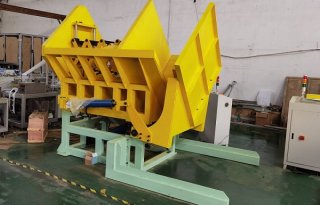
Automated Pallet Changer for Labor Cost Savings in High-Volume Warehouses -
Minimizing Costs Associated with Accidents and Damage As we discussed, manual handling increases the risk of worker injuries and product damage. Each incident brings direct costs like medical expenses, insurance claims, and workers’ compensation. Indirect costs include lost productivity, administrative time, and potential legal fees. For damaged goods, there are costs of replacement, disposal, and reputational harm. Pallet changing machines drastically reduce these risks. By operating autonomously, they remove humans from dangerous situations and handle products with consistent precision. This leads to fewer accidents, lower insurance premiums, and a significant drop in product damage claims. These “hidden costs” often add up to a substantial amount annually, and automation provides a clear path to eliminating them. A safer operation also creates a more positive work environment, which can indirectly improve employee morale and retention. (accident cost reduction, product damage minimization, insurance premium savings)
-
Optimizing Warehouse Space and Inventory Management Inefficient pallet handling can lead to underutilized warehouse space. For example, if you need to manually sort and change pallets, you might require larger staging areas. Automated pallet changers can be integrated into tighter spaces and work efficiently within existing layouts, sometimes even in-line. This optimization of floor space can reduce the need for larger warehouses or allow you to store more inventory in your current footprint. Furthermore, by speeding up pallet turnover and improving inventory accuracy (as goods are moved faster and tracked better), you can reduce holding costs and manage your stock more effectively. This means less capital tied up in slow-moving inventory and a more responsive supply chain. These efficiencies contribute to a leaner, more cost-effective operation. (warehouse space optimization, inventory management efficiency, reduced holding costs)

What Key Factors Should You Consider When Choosing a Pallet Changer Partner?
Are you looking for a pallet changer supplier but unsure how to pick the right one? Many companies simply sell machines, but a true partner understands your unique challenges and provides tailored solutions. I know from my own journey of building a successful packing machine factory that finding the right collaborator is essential for long-term growth. You need someone who is invested in your success, not just in making a sale. (pallet changer supplier, long-term partnership, tailored solutions)
When choosing a pallet changer partner, you must consider their track record of reliability and product quality, their ability to customize solutions for diverse pallet specifications, their commitment to comprehensive after-sales support and spare parts availability, and their deep understanding of your specific industry challenges to ensure a truly collaborative and effective long-term relationship. This goes beyond just the machine itself; it includes the expertise and support behind it. (supplier selection, product reliability, after-sales support)
Selecting a partner is a strategic decision that affects your operations for years to come. Do not just buy a machine; invest in a relationship. Here are the crucial elements to evaluate.
-
Proven Reliability and Adaptability The core of any automation investment is reliability. Downtime for a pallet changer can bring your entire production or distribution center to a halt, costing you heavily. Therefore, look for a supplier with a proven track record of building robust, durable machines designed for continuous, high-intensity operations. At FHOPEPACK, we pride ourselves on engineering equipment that stands the test of time, drawing on years of industry experience. Equally important is the machine’s adaptability. Can it handle different pallet sizes (Euro, US, plastic)? Can it accommodate varying load weights and product types? Your operations are likely to evolve, and your equipment should be able to adapt without requiring costly upgrades or replacements. A partner who offers flexible, configurable solutions will save you a lot of trouble down the road. This flexibility is crucial for businesses like Carlos Rodríguez’s, dealing with diverse international requirements. (machine reliability, adaptable solutions, diverse pallet handling)
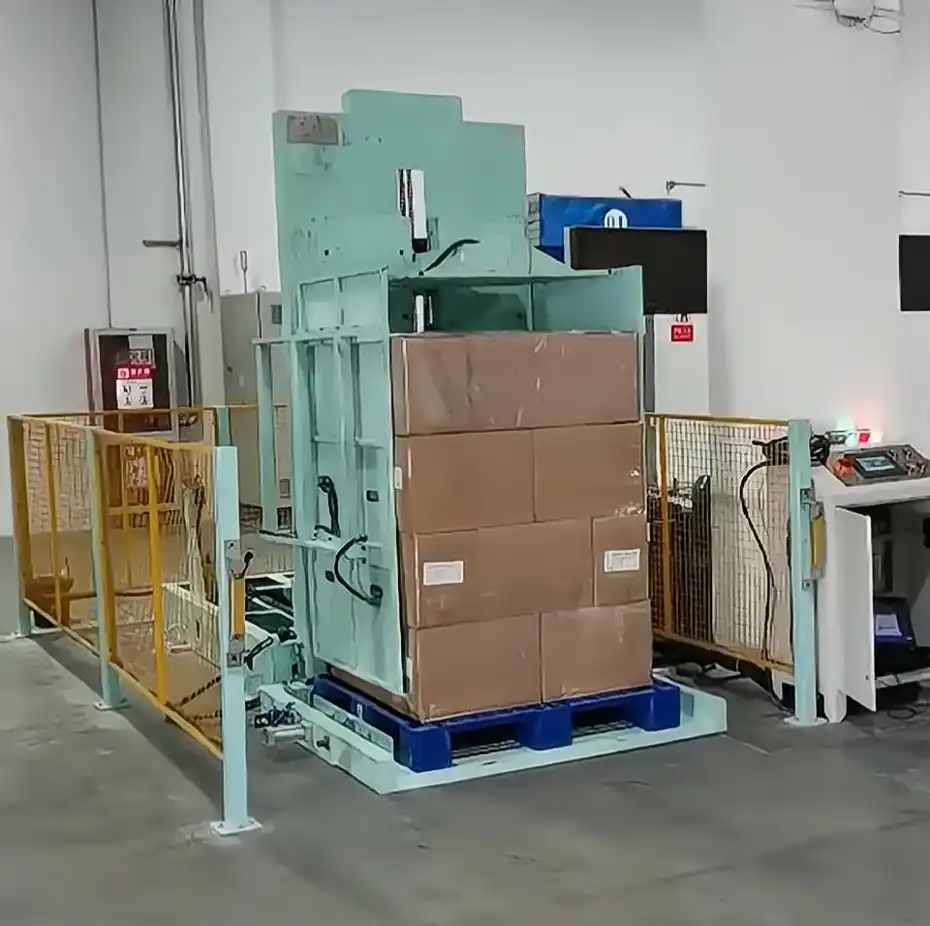
Robust Pallet Changer for High-Intensity Operations in Logistics -
Comprehensive After-Sales Support and Technical Expertise A machine is only as good as the support behind it. What happens when you need spare parts, technical assistance, or maintenance? A reliable partner provides comprehensive after-sales support, including readily available spare parts, responsive technical service, and preventive maintenance programs. This ensures minimal downtime and keeps your operations running smoothly. Ask about their service network, response times, and the expertise of their technicians. At FHOPEPACK, we believe that our relationship with clients extends far beyond the point of sale. We view ourselves as an extension of your team, providing the knowledge and support you need to maximize your investment. Our commitment is to ensure your pallet changer continues to operate at peak performance throughout its lifespan, just as I have helped my clients grow their businesses over the years. (after-sales support, technical expertise, preventive maintenance)
-
Industry Understanding and Customized Solutions Every business has unique operational nuances. A truly valuable partner takes the time to understand your specific challenges, industry standards (e.g., food and beverage, logistics), and future goals. They do not just offer a generic product; they provide customized solutions that integrate seamlessly into your existing workflow. For Carlos Rodríguez, this means a supplier who understands the intricacies of a multinational food group’s European distribution center, the pressure of diverse pallet standards, and the need for high-speed, compliant operations. A good partner will conduct a thorough assessment of your facility, recommend the most suitable pallet changer model (or design a custom one), and assist with installation and operator training. This consultative approach ensures that the solution you implement truly addresses your pain points and aligns with your strategic objectives, setting you up for long-term success. (industry understanding, customized solutions, strategic partnership)

How Can Pallet Changers Prepare Your Logistics for a Future-Ready World?
The future of logistics is dynamic, demanding agility, efficiency, and sustainability. Are your current methods equipped to meet these evolving demands? If not, you risk falling behind competitors and struggling to satisfy increasingly demanding customers. The question is not if you will adapt, but how quickly and effectively you will embrace innovation. (future logistics demands, operational agility)
Pallet changers prepare your logistics for a future-ready world by driving automation, improving safety, cutting costs, ensuring compliance with global standards, and providing the flexibility needed to respond to market changes, making your supply chain more resilient, efficient, and sustainable for years to come. They are a foundational element for building truly smart and adaptive logistics operations.
By integrating advanced pallet changing solutions, businesses are not just solving today’s problems; they are actively building the infrastructure for tomorrow’s success.
Conclusion
Pallet changing machines are indispensable for future-ready logistics and smart factory operations. They automate complex pallet transfers, improving safety, boosting efficiency, and cutting costs by addressing labor shortages and diverse pallet needs. Investing in reliable automation with a knowledgeable partner for your pallet inverter and pallet changer solutions ensures compliance and long-term operational excellence.












