

Coil Wrapping Machine vs Shrink Wrap: What Suits Czech Export Needs?
You run a busy factory, pushing out high-quality steel coils or wire products. Every day, you face the pressure of meeting production targets, controlling costs, and keeping your team safe. I know this story well because I have lived it. When it comes to getting your products ready for export, especially to demanding markets, the choice of packing equipment can make or break your business. If your packing process is slow, unsafe, or leads to damaged goods, you are losing money and reputation.
Choosing the right packing solution for your coiled products, like steel or wire, is critical for Czech exporters. While both coil wrapping machines and shrink wrap systems offer protection, coil wrapping machines are generally better suited for the heavy-duty, robust protection needed for long-distance export, offering superior defense against physical damage, moisture, and dust during transit.
I have seen countless factories struggle with inefficient packing methods. They often face high labor costs, frequent product damage, and even serious safety risks. We need to look closer at these two common packing methods. This will help you decide which one truly meets your factory’s specific needs, especially when sending your valuable products across borders.
1. Why Does Packing for Export Matter So Much, Especially for Czech Businesses?
Have you ever thought about how much your product’s journey impacts your customer’s satisfaction and your bottom line? For Czech businesses exporting steel coils or wire, the packing process is not just the last step; it is a vital part of your product’s quality and your company’s reputation. Damaged goods lead to angry customers, costly returns, and a loss of trust.
Packing for export is crucial for Czech businesses because it protects valuable products from damage during long transit times, harsh handling, and varied environmental conditions, ensuring products arrive in perfect condition, maintaining customer satisfaction and brand reputation in international markets.
When I started my first packing machine factory, I quickly learned that good packing is more than just putting something in a box. It is about understanding the entire supply chain. From the moment a coil leaves your factory floor until it reaches its final destination, it faces many risks. For export, these risks are even bigger. You need packing that can stand up to heavy vibrations, changes in temperature, humidity, and rough handling. Ignoring these factors means risking your hard-earned profits and your business relationships.
The Real Risks of Poor Export Packing for Coils
Poor packing is not just a minor issue; it creates many problems. I have seen first-hand how it affects businesses. Let’s look at the main risks:
1.1 Product Damage and Financial Loss
- Impact: When coils are not packed well, they can get scratched, dented, or deformed. Edges can get damaged, and surfaces can corrode if exposed to moisture.
- Consequence: This means you cannot sell the product at full price. You might have to offer discounts, or worse, recall entire shipments. These costs add up fast. Imagine a factory shipping thousands of tons of steel. Even a small percentage of damaged goods means a huge financial hit. I remember one client who lost over 10% of a shipment due to improper wrapping. It was a tough lesson.
1.2 Reputation Damage and Customer Loss
- Impact: Customers expect products to arrive in perfect condition. When they receive damaged goods, they see it as a failure on your part.
- Consequence: This harms your brand’s reputation. Customers might switch to competitors who offer more reliable packing. In today’s global market, a bad reputation spreads quickly. It is hard to win back trust once it is lost.
1.3 Safety Hazards During Handling
- Impact: Unsecured or poorly wrapped coils can shift during transport. This makes them dangerous to unload and handle at the destination.
- Consequence: Workers can get injured. This can lead to legal issues, higher insurance costs, and a bad work environment. Safe handling starts with safe packing.
1.4 Increased Logistics Costs
- Impact: Damaged goods often require re-shipping, re-packing, or special disposal.
- Consequence: This adds extra costs to your logistics budget. It can also cause delays, which further upsets customers. For export, these delays can be very expensive.
1.5 Environmental Compliance and Waste
- Impact: Excessive or ineffective packing materials can lead to more waste. This is a growing concern for many countries, including those in Europe.
- Consequence: Businesses need to think about sustainable packing solutions. Choosing the right method helps reduce waste while still protecting the product.
Packing for export is a strategic decision. It needs careful thought about the product, the journey, and the destination. For Czech exporters, understanding these risks and choosing a robust packing method is key to success in the international market.
2. What Exactly is a Coil Wrapping Machine, and How Does It Protect Your Products?
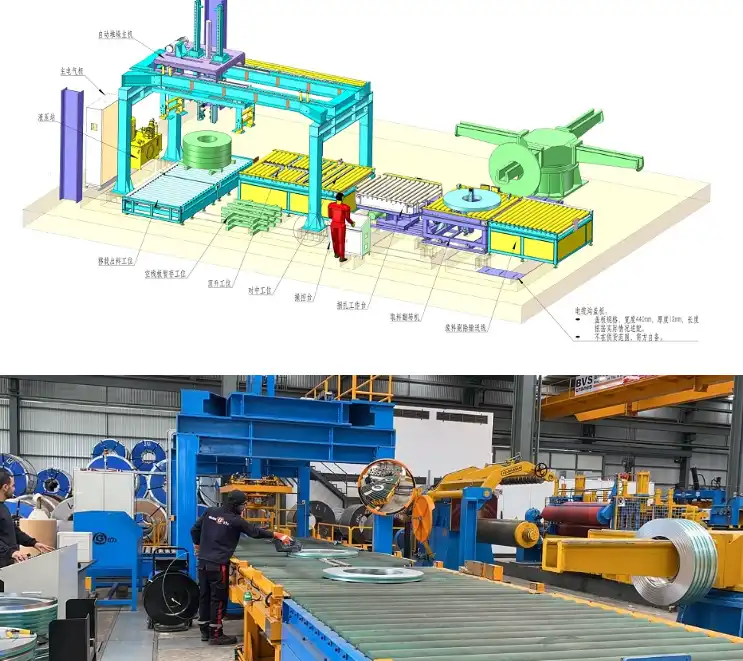
You want to protect your valuable steel or wire coils, especially when they are traveling long distances for export. A coil wrapping machine is a specialized piece of equipment designed to do just that. It wraps your coils securely, providing a strong barrier against the many challenges of shipping and handling.
A coil wrapping machine is an automated system that wraps packaging material tightly around the circumference of a coil, creating a protective, multi-layered seal. It protects products by shielding them from physical damage, moisture, dust, and corrosion, making it ideal for heavy industrial goods like steel coils and wire for export.
When I started FHOPEPACK, I knew that manual wrapping was a bottleneck for many factories. It was slow, inconsistent, and often led to poor protection. A good coil wrapping machine changes all of that. It takes a heavy, often difficult-to-handle product and wraps it with precision and speed. The machine uses stretch film, VCI paper, or other materials to create a custom-fit cover. This cover moves with the coil during transit. It protects against bumps and environmental factors.


Key Features and Benefits of Coil Wrapping Machines
I have spent years working with these machines. I have seen how they transform packing operations. They are not just about wrapping; they are about adding a layer of security and efficiency to your entire production line.
2.1 Superior Product Protection
- Mechanism: Coil wrapping machines apply multiple layers of film or other materials. They wrap it tightly around the coil’s outer and inner diameter. This creates a strong, sealed package.
- Benefits: This wrapping protects against impact, scratches, and abrasions. It also acts as a barrier against moisture, dust, and other contaminants. For steel coils, this means less rust and corrosion. For a client exporting large steel coils from Czech Republic to Asia, this protection was non-negotiable due to long sea voyages.
2.2 Increased Efficiency and Speed
- Mechanism: These machines automate the wrapping process. They can wrap coils much faster than manual methods.
- Benefits: This dramatically speeds up your packing line. It helps you meet tight export deadlines. It also frees up your workers for other tasks. A single machine can do the work of several people.
2.3 Enhanced Workplace Safety
- Mechanism: The machine handles the heavy and awkward wrapping tasks. Workers do not need to manually maneuver around large, heavy coils with film rolls.
- Benefits: This reduces the risk of strains, sprains, and other injuries common with manual packing. Safety is always a top priority for factory managers like Michael.
2.4 Consistent and Professional Packaging
- Mechanism: Machines apply the film evenly and consistently every time.
- Benefits: This ensures that every coil is packed to the same high standard. It gives your products a professional look. This consistent quality reinforces your brand image in export markets.
2.5 Cost Savings Over Time
- Mechanism: By reducing labor needs, cutting down on product damage, and optimizing material use, these machines offer a good return on investment.
- Benefits: You save money on wages, re-works, and compensation for damaged goods. The initial investment pays for itself through these long-term savings.
Choosing a coil wrapping machine is a decision for quality, efficiency, and safety. It is an investment in your product’s journey and your company’s future success in export markets.
3. What is Shrink Wrapping, and When is it the Right Choice for Your Coils?
When you need to pack items, shrink wrapping often comes up as an option. It is a common method for many products, and it can be very effective in the right situations. But is it the best choice for your heavy industrial coils, especially for export from the Czech Republic?
Shrink wrapping involves encasing a product in a loose plastic film. Heat is then applied, causing the film to shrink tightly around the item, creating a snug, protective seal. It is a good option for protecting coils from dust and minor abrasions, but it typically offers less robust protection against heavy impact or severe environmental conditions compared to coil wrapping.
I have seen shrink wrapping used for many different products, from consumer goods to smaller industrial parts. The process is simple: you put the item inside a bag or sheet of shrink film, then pass it through a heat tunnel or use a heat gun. The film shrinks, making a tight package. This is great for keeping dust out and for bundling multiple items together. It can also give a clear view of the product inside, which is sometimes helpful.

Key Features and Considerations for Shrink Wrapping Coils
While shrink wrapping has its place, it is important to understand its limitations, especially for large, heavy coils destined for international export.
3.1 Basic Protection from Elements
- Mechanism: The tight film creates a barrier against dust, dirt, and some moisture.
- Considerations: This is good for indoor storage or short-distance transport. However, the film can be easily punctured or torn. This reduces its effectiveness against sharp objects or rough handling. It does not offer strong impact protection.
3.2 Visual Appeal
- Mechanism: Shrink film is often clear. This allows customers to see the product inside.
- Considerations: If your product’s appearance is important, this can be a benefit. But for many industrial coils, the primary concern is protection, not visibility.
3.3 Versatility for Various Shapes (Within Limits)
- Mechanism: Shrink film can conform to many shapes.
- Considerations: While it can wrap coils, it may not provide the same structural integrity as a multi-layered, circumferentially wrapped package. The film’s strength might not be enough for very heavy coils that shift during transit.
3.4 Cost-Effectiveness for Lighter Applications
- Mechanism: Shrink film and basic shrink equipment can sometimes have lower initial costs.
- Considerations: For lighter products or less demanding transport, this can be economical. However, if product damage becomes frequent, the “cost-effectiveness” quickly disappears due to losses and claims. For large, heavy steel coils, the long-term cost of potential damage can outweigh any initial savings.
3.5 Application for Smaller Coils or Bundles
- Mechanism: It works well for bundling smaller wire coils or parts together.
- Considerations: For a large steel coil, shrink wrapping may not provide the necessary strength and durability needed for ocean freight or long truck journeys. A tear in the film can expose the entire coil.
For many industrial applications, especially when products are heavy and travel through a harsh supply chain, shrink wrap often falls short. It offers good basic protection but might not be robust enough for the demands of Czech export, where strong, reliable packing is essential.
4. Comparing the Two: Which Packing Method Truly Delivers for Czech Export?
Now we have looked at both coil wrapping machines and shrink wrap. The big question for you, especially with Czech export demands, is which method truly gives you the best return and protects your business. It is not just about price; it is about overall value, long-term performance, and peace of mind.
For Czech export needs, a coil wrapping machine generally offers superior protection, efficiency, and safety for heavy industrial coils compared to shrink wrap. While shrink wrap provides basic dust and moisture protection, coil wrapping delivers robust defense against physical damage and environmental factors during long-distance transit, ensuring product integrity and reducing claims.
I have seen factories try to cut corners with packing, only to pay a much higher price later. My experience tells me that investing in the right equipment upfront saves you money and headaches in the long run. Michael, a factory manager like you, cannot afford product damage or delays. Let’s compare these two methods on the factors that matter most to your export operations.
Head-to-Head: Coil Wrapping vs. Shrink Wrap for Export
To make this decision clear, let’s break down the key differences in a structured way. This will help you see where each method truly stands.
4.1 Level of Protection
- Coil Wrapping Machine:
- Protection: Excellent. Provides multiple, tight layers of strong film (often stretch film or VCI paper). It covers the entire circumference and side faces, creating a dense, secure package. It protects against physical impact, sharp edges, abrasions, moisture, and dust very effectively. Ideal for heavy-duty items like steel coils.
- Suitability for Export: High. The robust nature of the wrap means coils are well-protected against the rigors of long-distance shipping, including vibrations, shifting, and varying climates.
- Shrink Wrap:
- Protection: Good for basic protection. Forms a tight seal against dust and light moisture. However, the film is generally thinner and more prone to punctures or tears from sharp edges or rough handling. Offers limited protection against heavy impact.
- Suitability for Export: Low to Moderate. For heavy industrial coils, it is often insufficient. A small tear can compromise the entire package, exposing the product to the elements during transit.












