
Coil Wrapping Machine in Indonesia: What Are Its Typical Applications in Industry?
Factory managers in Indonesia face big pressures every day. They must hit production targets, control costs, and keep workers safe. I have seen this many times in my own journey. Many operations still rely on manual packing. This causes slow speeds, high risks, and often damages products. These problems do not just slow things down. They also eat into profits and make it hard to keep good people. It creates a cycle of stress and inefficiency.
Modern coil wrapping machines offer a strong solution to these common factory problems. These machines are vital in industries across Indonesia. They protect various coiled products. This includes steel coils, wire coils, and even large rolls of cable. They ensure products are safe from damage during transit and storage. They also make packing much faster and safer for workers. This technology helps factories meet demand. It helps them save money and keep their teams safe. That is why so many Indonesian companies are looking at them.
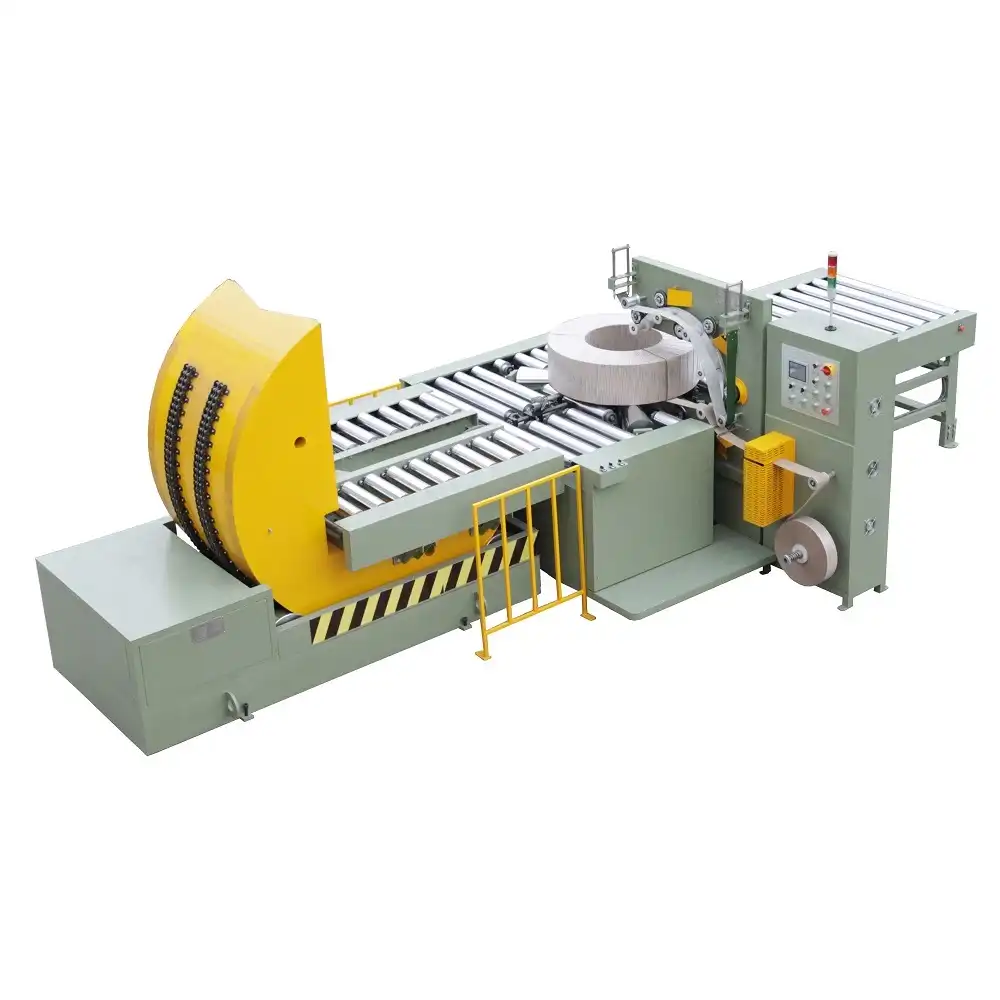
Understanding the real benefits of these machines is key. It is about more than just buying new equipment. It is about making smart investments that solve real problems. We need to look closely at how these machines truly change operations in places like Indonesia. We will see how they improve efficiency, boost safety, and protect product quality.
1. Coil Wrapping Machines: How Do They Solve Efficiency Bottlenecks in Indonesian Factories?
Are you tired of slow packing lines? Do you see piles of finished products waiting to be wrapped? Many factory managers tell me their end-of-line processes are the biggest bottleneck. Manual packing is slow. It takes many people. This directly limits how much a factory can produce each day. It also increases labor costs.
Coil wrapping machines greatly speed up the packing process. They remove the need for most manual labor. A machine can wrap coils much faster and more consistently than a human team. This means products move out of the factory quickly. It reduces waiting times. It also helps factories meet tight deadlines. This boosts overall production capacity and cuts down on labor expenses. It makes the whole operation smoother and more cost-effective.

In my years, first as an engineer and then running my own factory, I learned that time is money. Every minute a product sits waiting to be packed is a lost opportunity. Manual packing might seem cheap at first. But when you look at the total cost, it is very expensive. It slows down your entire operation. It takes up valuable floor space. It also uses a lot of manpower that could do other jobs. Coil wrapping machines change this. They work non-stop. They deliver consistent quality. They reduce the number of people needed for packing. This frees up your team to focus on more complex tasks. It makes your production line much more efficient. For example, a steel mill in Indonesia might produce hundreds of tons of steel coils daily. If the packing line cannot keep up, the entire production slows down. An automated coil wrapper can handle these volumes with ease. It ensures a continuous flow from production to dispatch. This investment pays for itself quickly through increased output and lower operational costs. I always looked for ways to get the most out of my factory. Automation was always a big part of that plan. It is not just about replacing hands. It is about optimizing the flow and getting more done with less effort.
The Hidden Costs of Manual Packing
Manual packing has costs that are not always clear at first glance. These costs impact your bottom line.
- Slow Throughput: Each coil takes time to wrap by hand. This limits your daily output. It creates bottlenecks at the end of the line.
- High Labor Expenses: You need many workers for manual packing. These costs add up fast. They include wages, benefits, and training.
- Inconsistent Quality: Human workers can make mistakes. The wrapping might not be uniform. This can lead to product damage or customer complaints.
- Space Usage: Manual packing often needs large areas. It has to store wrapped and unwrapped products. This takes up valuable factory space.
Automation as a Strategic Advantage
Investing in coil wrapping machines gives you a strategic edge. It changes your factory operations for the better.
| Feature | Manual Coil Wrapping | Automated Coil Wrapping Machine |
|---|---|---|
| Speed | Slow, varies by worker | Fast, consistent, high output |
| Labor Needs | High (multiple workers per shift) | Low (one operator per several machines) |
| Consistency | Variable, prone to errors | High, uniform wrap quality |
| Safety | High risk of injury from heavy lifting | Low risk, minimal human interaction |
| Product Damage | Higher risk due to handling | Lower risk, gentle handling |
| Operational Cost | High (labor, reworks, lost time) | Lower (reduced labor, less waste) |
| Return on Investment | Negative over time (hidden costs) | Positive (efficiency, savings) |
2. Beyond Speed: How Do Coil Wrapping Machines Boost Safety in Heavy Industries?
Do your workers handle heavy coils every day? Are you worried about their safety? I know the risks well. In my early days, I saw many workers get hurt. Lifting heavy coils, turning them, or even just moving them by hand is very dangerous. It causes many injuries. These injuries lead to high medical costs, lost workdays, and high staff turnover. It is a big problem for any factory.
Coil wrapping machines drastically improve worker safety. They do this by taking over the dangerous tasks of heavy lifting and manual handling. Workers no longer need to manually move or wrap large, heavy coils. The machine does this work. This removes the risk of back injuries, crushed limbs, and other serious accidents. It creates a much safer workplace. It also reduces insurance costs and improves employee morale. For a factory manager in Indonesia, this means fewer incidents and a more stable workforce.

When I started my first factory, safety was always a top priority for me. I wanted my team to go home safe every day. I understood that a safe workplace is a productive workplace. Manual handling of heavy products like steel coils or wire bundles is one of the riskiest parts of any heavy industry. Workers can suffer muscle strains, sprains, fractures, or even worse. These incidents are not just bad for the person injured. They also stop production, need investigations, and increase your operational costs through higher insurance premiums and worker compensation claims. An automated coil wrapping machine changes this whole picture. It handles the heavy lifting, rotation, and wrapping. This keeps human hands away from moving parts and heavy loads. For example, in a metal fabrication plant in Indonesia, workers used to use cranes and manual force to position coils for wrapping. This was a high-risk activity. Now, with a coil wrapping machine, the coil is placed onto a conveyor or directly into the machine. The machine then completes the wrapping without direct human intervention. This makes the entire process much safer. It helps you keep your best employees by showing you care about their well-being.
The Direct Link Between Automation and Worker Well-being
Automation directly makes your workplace safer. It protects your most valuable asset: your people.
- Elimination of Heavy Lifting: Machines lift, rotate, and position coils. Workers do not need to do this physically.
- Reduced Repetitive Strain: Manual wrapping often involves repetitive movements. Machines remove this strain.
- Minimized Contact with Moving Parts: Workers stay clear of dangerous machinery during operation.
- Fewer Accidents: Less human interaction with heavy, moving objects means fewer chances for accidents.
- Improved Ergonomics: The workstation design is for machine operation, not manual labor. This is better for the human body.
Beyond Compliance: Creating a Safer Workplace
Safety is not just about following rules. It is about building a culture where everyone feels secure.
- Lower Injury Rates: This reduces direct costs like medical bills and worker compensation.
- Higher Employee Morale: Workers feel valued when their safety is a priority. This leads to happier, more productive staff.
- Reduced Employee Turnover: A safer workplace means fewer people leave due to injuries or fear.
- Enhanced Reputation: A company known for safety attracts better talent and improves its public image.
- Uninterrupted Production: Fewer accidents mean fewer unplanned stoppages. This keeps your production line running smoothly.
3. What Types of Materials and Industries Benefit Most from Coil Wrapping in Indonesia?
Are you wondering if a coil wrapping machine is right for your product? Many factory owners think these machines are only for one type of item. But the truth is, coil wrapping machines are very versatile. They can handle many different materials. Each material has unique needs. The machine’s job is to protect these products from dust, moisture, scratches, and impact. This keeps them in perfect condition until they reach the customer.
Coil wrapping machines are essential across a wide range of Indonesian industries. They are especially useful for anything that comes in a coiled form. This includes heavy steel coils for construction, delicate wire coils for electronics, and large rolls of cable for infrastructure projects. They also pack plastic pipes, rubber hoses, and even industrial bearings. The key benefit is robust protection. This protects products from environmental damage and transit impacts. It ensures products arrive at their destination in perfect shape. This reduces damage claims and improves customer satisfaction.
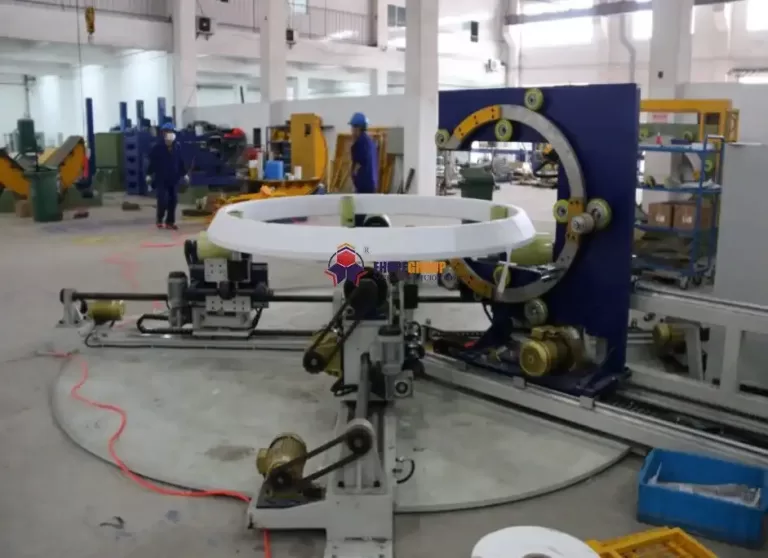
When I was building FHOPEPACK, I aimed to provide solutions for a broad range of challenges. I knew different industries had different needs. For example, a steel mill needs to protect heavy coils from rust and physical damage during shipping. A cable manufacturer needs to protect long lengths of cable from tangling and external abrasion. A factory making rubber hoses needs to keep its products clean and tightly bound. A versatile coil wrapping machine can adapt to these different requirements. They use different wrapping materials like stretch film, woven fabric, or specialized paper. They can adjust tension and overlap. This means one type of machine can serve many industries. In Indonesia, with its growing infrastructure and manufacturing sectors, the demand for protecting various coiled products is huge. Imagine a large factory producing massive bearings. These need careful packing to prevent any damage to their precision surfaces. A coil wrapping machine can secure these perfectly. Or consider the countless small and large diameter wire coils produced for various uses. Each needs a reliable, consistent wrap. This versatility makes coil wrapping machines a smart investment for diverse manufacturing plants across the country. My goal was always to offer adaptable solutions that truly fit the customer’s specific product.
Tailoring Solutions to Diverse Industrial Needs
Different industries use coil wrapping for specific reasons. The machine must adapt to these unique requirements.
- Steel Industry: Protects large, heavy steel coils from rust, scratches, and moisture. This is crucial for construction and automotive sectors.
- Wire and Cable Industry: Secures wire bundles and cable rolls. It prevents tangling, abrasion, and keeps products clean.
- Hose and Pipe Industry: Wraps plastic pipes and rubber hoses. It protects them from dust, dirt, and scuffing during transport.
- Bearing Industry: Packs large, precision bearings. This prevents damage to critical surfaces and ensures clean delivery.
- Other Coiled Products: Also used for textile rolls, paper rolls, and other similar items needing protection.
Protecting High-Value Coiled Products
Ensuring product integrity is key for customer satisfaction and profitability.
| Industry/Material | Primary Wrapping Need | Typical Coil Dimensions (Example) | Wrapping Material (Common) |
|---|---|---|---|
| Steel Coils | Protection from rust, scratches, moisture, impact | Diameter: 800-2500mm, Width: 300-2000mm | Stretch Film, VCI Paper |
| Wire Coils | Prevent tangling, abrasion, dust protection | Diameter: 300-1200mm, Width: 50-400mm | Stretch Film, Woven Fabric |
| Cable Rolls | Secure outer layers, prevent unravelling, dirt barrier | Diameter: 500-2000mm, Width: 100-1000mm | Stretch Film, PE Film |
| Plastic Pipes/Hoses | Surface protection, dust barrier, bundle integrity | Diameter: 200-1000mm, Width: 50-500mm | Stretch Film, Bubble Wrap |
| Large Bearings | Precision surface protection, cleanliness | Diameter: 400-1500mm, Width: 100-500mm | Stretch Film, Anti-rust Film |
4. Why Is Supplier Expertise as Crucial as the Machine Itself for Your Investment?
Have you ever bought equipment that promised a lot but delivered little? Many factory managers have shared stories with me. They bought machines. But the after-sales service was bad. The supplier did not understand their real needs. This leads to frustration, downtime, and wasted money. Buying a packing machine is a big investment. You need more than just a piece of metal. You need a partner.
Choosing the right supplier for a coil wrapping machine is as important as the machine itself. A good supplier offers deep industry knowledge. They understand your specific production challenges. They provide customized solutions, not just off-the-shelf products. They also offer strong after-sales support, installation, training, and maintenance. This partnership ensures your investment truly solves your problems. It helps your business grow. It gives you peace of mind that your equipment will run reliably for years. It is about securing long-term operational success, not just a sale.
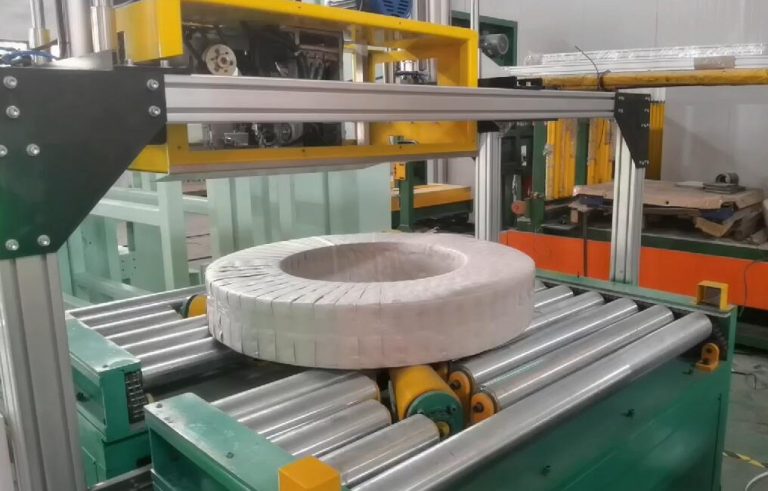
My journey from an employee to owning my own successful packing machine factory taught me a lot. I saw firsthand what works and what does not. I learned that just selling a machine is not enough. You must understand the customer’s factory. You must understand their production bottlenecks, their safety concerns, and their efficiency goals. This is what Michael Chen, a factory manager, truly looks for. He wants a partner who can provide professional insights and reliable solutions. He needs someone who gets his challenges. When I work with a client in Indonesia, my goal is to share my experience. I want to help them make the best choices for their specific needs. It is about finding the right equipment that genuinely solves their problems and contributes to their business growth. Without proper support, even the best machine can become a liability. Think about it. What happens if your machine breaks down? Who fixes it? Who trains your staff? A reliable supplier provides clear answers to these questions. They are there for you long after the sale. They ensure your operations run smoothly and you get the full value from your investment. This is what FHOPEPACK stands for. It is the core of our mission: to share knowledge and help others succeed.
The Difference a Partner Makes
A true partner offers more than just equipment. They offer ongoing support and expertise.
- Understanding Your Needs: They take time to learn about your factory, products, and challenges.
- Customized Solutions: They suggest machines and features tailored to your specific requirements. This avoids a one-size-fits-all approach.
- Expert Installation: Proper setup is crucial. They ensure the machine integrates smoothly into your existing line.
- Thorough Training: Your team needs to know how to operate and maintain the machine safely and efficiently.
- Reliable After-Sales Support: When problems happen, quick and effective support is vital to minimize downtime.
- Spare Parts Availability: Easy access to parts ensures your machine stays running.
- Long-Term Relationship: They aim to build a lasting partnership, not just a transactional sale.
Questions to Ask Your Potential Packing Machine Supplier
Before you commit, ask these questions to gauge a supplier’s true value.
- “Can you provide references from other factories in Indonesia or similar heavy industries?” This checks their local experience and reputation.
- “What is your typical lead time for delivery and installation in Indonesia?” This helps with your planning and project timeline.
- “What kind of after-sales support do you offer, and how quickly can you respond to service requests?” This is crucial for minimizing downtime.
- “Do you offer training for our operators and maintenance staff?” Proper training ensures efficient and safe operation.
- “Can you customize a machine to fit our specific coil dimensions and wrapping material needs?” This shows their flexibility and problem-solving ability.
- “What is the warranty period, and what does it cover?” Understand the protection for your investment.
- “How do you ensure the availability of spare parts for your machines?” This prevents long waits for repairs.
- “Can you demonstrate the machine’s ROI for a factory like ours?” This helps you understand the financial benefits.
Conclusion
Coil wrapping machines are transformative for Indonesian industries. They boost efficiency, enhance safety, and protect diverse products. Choosing a knowledgeable partner like FHOPEPACK is key for long-term success.








