
Coil Wrapping Machine for Singapore Factories: What Are the Pros and Cons?
Are your Singapore factory’s coil packing lines struggling with slow speeds, high labor costs, or constant product damage? In Singapore’s competitive market, these issues are not just headaches; they eat into your profits and delay crucial deliveries. Manual processes can also put your valuable workers at risk. Many factory managers, just like you, are now looking at coil wrapping machines. But is this the right answer for your specific needs?
Coil wrapping machines automate the packaging of steel coils, wire coils, and other circular products. For Singapore factories, they offer significant benefits like increased efficiency, enhanced worker safety, and reduced product damage. However, considerations like initial investment, space requirements, and proper integration are also important.
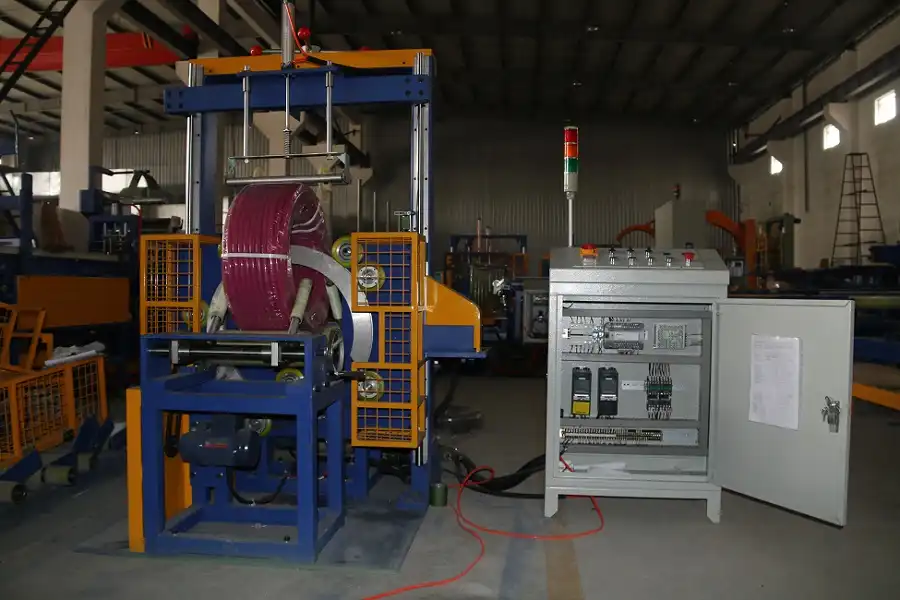
As a packing machine engineer who has built a factory from the ground up, I have seen first-hand how the right equipment can transform an operation. My journey in the packing machine industry has taught me what truly works on the factory floor. Let us break down the specifics. We will explore what these machines truly offer and what potential pitfalls you should be aware of. This will help you make an informed decision for your Singapore-based operations.
1. What is a Coil Wrapping Machine and How Does it Benefit Singapore Factories?
You have heard about coil wrapping machines, but maybe you are wondering what they actually do and if they fit your factory in Singapore. Without a clear understanding, it is hard to see their real impact on your production lines and bottom line. My own experience in setting up my factory showed me that choosing the right basic equipment is always the first step. Let us define what these machines are and then look at the core benefits they bring, especially for high-volume, precision-focused factories common in Singapore.
A coil wrapping machine automatically applies a protective layer, often stretch film, to coiled products. This includes steel coils, copper coils, and wire coils. For Singapore factories, its primary benefits include speeding up the packing process, ensuring consistent packaging quality, and freeing up labor for more skilled tasks.
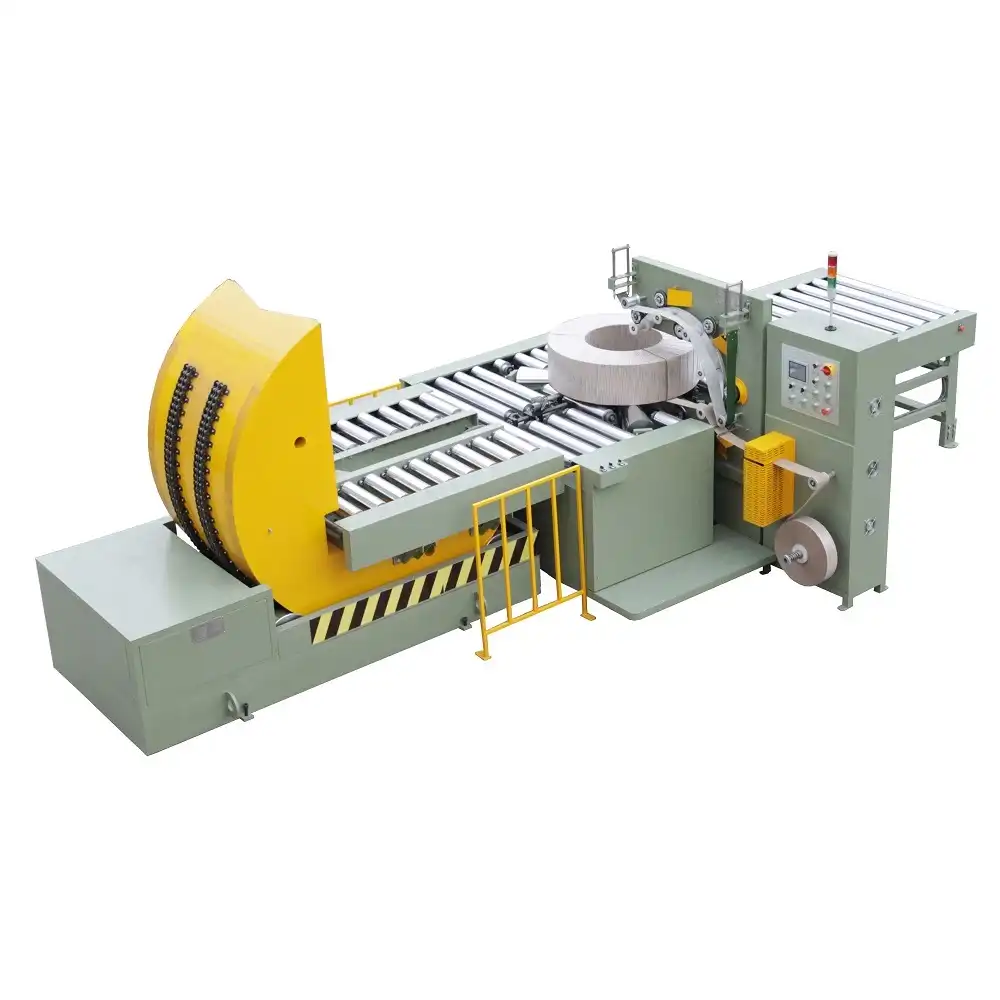
A coil wrapping machine is essentially an industrial device designed to securely wrap various types of coiled materials. Think about large steel coils, wire bundles, or even aluminum coils. These machines use a continuous process to apply stretch film, woven plastic, or paper around the outer diameter of the coil. The goal is to protect the product from dust, moisture, rust, and physical damage during storage and transit. There are generally two main types. Horizontal orbital wrappers move a wrapping ring around the coil as it passes through horizontally. Vertical orbital wrappers handle coils that are standing upright. Both types aim for a tight, consistent wrap.
For Singapore factories, these machines offer fundamental advantages. Firstly, they drastically improve efficiency. Manual wrapping is slow and inconsistent. A machine can wrap coils much faster, increasing throughput significantly. This means your production line moves smoother from start to finish. Secondly, they ensure product integrity. Imagine the precision required for high-value metal products. A machine applies uniform tension and overlap. This protects the coil edges and surfaces, preventing the kind of damage that leads to customer complaints and wasted material. Thirdly, they reduce labor dependency. In Singapore, labor costs are high, and skilled labor is always in demand. Automating the packing process means you need fewer people for strenuous, repetitive tasks. This frees up your workforce for more complex, value-added jobs. I remember in my early days, we struggled with manual packing bottlenecks. Automating this step was a critical move for my factory. It allowed us to take on bigger orders and grow our business, just like many Singapore factories aim to do.
Here is a quick look at the core benefits:
| Benefit Category | Specific Advantage for Singapore Factories |
|---|---|
| Operational Speed | Significantly faster packing cycles compared to manual methods. |
| Product Protection | Consistent, tight wrap safeguards coils from damage, dust, and moisture. |
| Labor Efficiency | Reduces need for manual labor, reallocates staff to higher-value tasks. |
| Consistency | Uniform packaging quality, critical for maintaining high industry standards. |
| Cost Reduction | Lowers costs associated with product damage and potential labor injuries. |
2. What Are the Real-World Advantages of Using Coil Wrappers in Singapore’s Industrial Landscape?
Knowing what a coil wrapper is just the start. You need to see how these machines deliver tangible value to your Singapore factory. Generic benefits are not enough. You want to know the specific advantages that impact your operations every single day. As someone who has helped many clients grow their businesses, I understand that real-world results are what truly matter. Let us explore the concrete advantages. These directly address critical challenges faced by factory managers like you.
Coil wrapping machines offer significant real-world advantages for Singapore factories. They increase packing speed by multiple folds, drastically reduce manual labor, and improve worker safety by eliminating risky handling of heavy coils. They also provide superior product protection against moisture and damage during transport and storage.

The industrial landscape in Singapore is highly competitive and demands efficiency, precision, and safety. Coil wrapping machines directly address these needs, offering several key advantages that translate into real financial and operational improvements.
2.1 Boosted Production Throughput
One of the most immediate benefits is the dramatic increase in packing speed. Manual wrapping can take a long time, especially for large or heavy coils. It is often a bottleneck at the end of the production line. A well-chosen coil wrapping machine can complete a wrap cycle in minutes, sometimes even seconds. This means your finished products move out faster, improving your overall production throughput. This also reduces lead times for customers, which is a major competitive advantage in Singapore’s fast-paced market.
2.2 Enhanced Worker Safety
Safety is a top concern for any factory manager, and for good reason. Manually handling heavy coils or trying to wrap them can lead to serious injuries. Workers are at risk of strains, sprains, or even crushing injuries. By automating this process, coil wrapping machines remove the need for workers to directly handle or maneuver heavy products during wrapping. This drastically reduces the risk of accidents and improves the overall safety environment on your factory floor. I once had a client who struggled with high insurance costs and employee turnover due to packing-related injuries. After implementing an automated wrapper, their safety record improved dramatically, and employee morale went up. It was a clear win for everyone.
2.3 Superior Product Protection and Reduced Damage
Coils, especially those made of steel or copper, are susceptible to damage. Edges can get bent, surfaces can get scratched, or they can suffer from moisture ingress leading to rust. A machine applies a tight, consistent, and overlapping layer of protective film. This creates a much more robust barrier against physical impacts and environmental factors. This means fewer damaged products reaching your customers. Fewer damaged products mean fewer customer complaints, fewer returns, and less scrap. This directly translates to higher profit margins and a better reputation for your factory.
2.4 Significant Labor Cost Savings and Resource Optimization
In Singapore, labor is a significant operational cost. By automating the packing process, you can reduce the number of workers needed for this specific task. These workers can then be reassigned to other areas where their skills can add more value, such as quality control, equipment maintenance, or other production roles. This optimization of your workforce improves overall factory efficiency and reduces your total labor expenditure over time. The machine works tirelessly, without breaks, ensuring continuous operation.
3. What Potential Challenges or Downsides Should Singapore Factories Consider Before Investing?
No investment is perfect. You need to understand the potential hurdles before committing to a coil wrapping machine. Overlooking these challenges can lead to unexpected costs, operational disruptions, and regret. My experience has shown me that honest assessment saves money in the long run. My factory, like any other, faced its share of unexpected issues with new equipment. That is why it is so important to look at the full picture. Let us look at the “cons.” This will help you plan better and avoid common pitfalls.
For Singapore factories, key challenges when investing in coil wrapping machines include the significant initial capital expenditure, the need for adequate floor space, and the requirement for skilled operators and maintenance staff. Integration with existing production lines and ensuring a reliable after-sales service are also critical considerations.
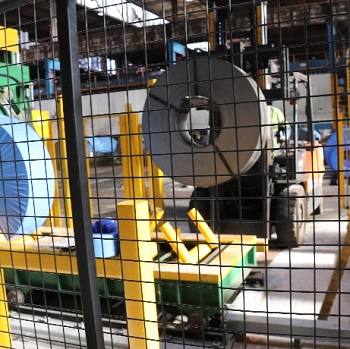
While coil wrapping machines offer many advantages, it is important to look at the potential challenges. Being aware of these can help you plan better and make a more informed decision.
3.1 Initial Capital Investment
The first and often biggest hurdle is the upfront cost. High-quality, automated coil wrapping machines represent a significant capital expenditure. This includes the machine itself, installation costs, and any necessary modifications to your factory layout or power supply. For a medium-sized factory in Singapore, this investment needs careful budgeting and a clear ROI justification. It is not just about the price tag; it is about the total cost of ownership. You must think about how long it takes to recover this investment through savings and increased revenue.
3.2 Space Requirements
Coil wrapping machines, especially those designed for large industrial coils, can be quite large. They require a substantial amount of floor space. This is for the machine itself, but also for the infeed and outfeed conveyors, and for the safe loading and unloading of coils. Space is often at a premium in Singaporean industrial facilities. You need to ensure your factory has enough room without disrupting other critical operations. An unplanned layout can create new bottlenecks.
3.3 Training and Maintenance Needs
These are advanced pieces of equipment. They require trained personnel to operate them safely and efficiently. Your staff will need training on how to load coils, select wrapping programs, troubleshoot minor issues, and perform routine maintenance. Furthermore, like any complex machinery, coil wrappers need regular maintenance to ensure continuous operation. This means having skilled technicians, either in-house or readily available through your supplier. Neglecting maintenance can lead to unexpected downtime, which costs time and money. I once saw a factory buy a great machine but neglect training and maintenance. It ended up breaking down often, causing more problems than it solved. It really taught me the importance of a comprehensive approach.
3.4 Integration Complexities
Installing a new coil wrapping machine is rarely a standalone task. It usually needs to integrate seamlessly with your existing production line. This means aligning it with your upstream processes (e.g., coil slitting lines) and downstream logistics (e.g., palletizing or shipping). This integration can be complex. It may require custom engineering, new conveyor systems, and careful planning to avoid creating new bottlenecks in your workflow. Compatibility with your current factory management systems might also be a factor.
3.5 Reliance on Supplier Support
You rely heavily on your equipment supplier for after-sales service, spare parts, and technical support. If you choose a supplier who only cares about the sale and not the long-term relationship, you could face significant issues. This means long downtimes if a part breaks or if you need technical assistance. This is a common concern for factory managers like Michael Chen, who have faced supplier trust issues in the past. It is critical to choose a partner, not just a vendor.
4. How Can Singapore Factories Choose the Right Coil Wrapping Solution for Long-Term Success?
You are now aware of the pros and cons. The next step is knowing how to make the best choice for your Singapore factory. A wrong decision here can be costly. It can tie up capital in a machine that does not fully meet your needs. My journey from an employee to a factory owner taught me that the right equipment is nothing without the right partnership. Choosing the right coil wrapping solution requires a strategic approach. It is about finding a true partner, not just a vendor. This is what I have learned from my journey.
To choose the right coil wrapping solution, Singapore factories should first clearly define their production volume, coil dimensions, and desired automation level. They need to evaluate potential suppliers based on their track record, customization capabilities, after-sales service, and overall industry expertise. A detailed ROI analysis is also essential.
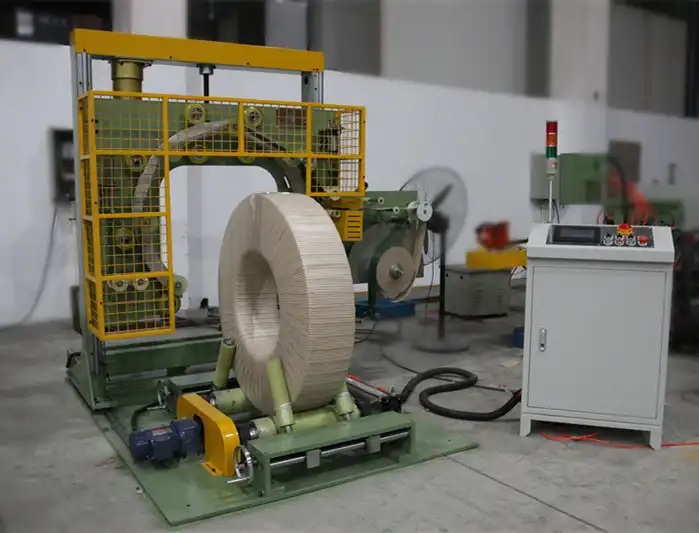
Selecting the optimal coil wrapping machine for your Singapore factory requires more than just picking a model from a catalog. It involves a systematic approach, considering your unique operational needs and long-term business goals. Here are key steps to ensure you make a smart investment.
4.1 Define Your Specific Needs and Specifications
Before looking at any machine, you must understand your own requirements. What types of coils do you pack (steel, wire, copper)? What are their typical dimensions (diameter, width, weight)? What is your current packing volume, and what is your projected growth? How much automation do you truly need? Are you looking for a semi-automatic solution or a fully integrated automatic line? What are your space constraints? Clearly defining these points will narrow down your options significantly. This prevents you from overbuying or underbuying equipment.
4.2 Research and Evaluate Potential Suppliers Thoroughly
This is perhaps the most critical step. Do not just look at the machine; look at the company behind it. A reputable supplier offers more than just equipment. They provide expertise, support, and a long-term partnership.
- Industry Experience: Does the supplier have a proven track record specifically in coil packing solutions? Have they worked with factories similar to yours in Singapore or the region?
- Customization Capability: Can they tailor the machine to your specific coil sizes or integrate it with your existing lines? Not all factories are the same, and off-the-shelf solutions may not always be the best fit.
- After-Sales Service and Support: This cannot be overstated. What kind of warranty do they offer? What about spare parts availability? How quickly can they provide technical support or send technicians if something goes wrong? A good support system is vital to minimize downtime.
- References and Testimonials: Ask for references from other factories they have served. Hearing directly from other clients provides valuable insight into their reliability and service quality.
4.3 Conduct a Detailed Return on Investment (ROI) Analysis
Any significant investment needs a clear financial justification. Calculate the potential savings from reduced labor costs, decreased product damage, and increased efficiency. Compare these savings against the initial investment cost, ongoing maintenance, and operational expenses. A clear ROI calculation will show you the payback period and the long-term financial benefits. It helps present a strong case to your management team. This shows you are not just buying a machine; you are investing in your factory’s future profitability.
4.4 Consider the Total Cost of Ownership (TCO)
Look beyond the purchase price. The TCO includes installation, training, maintenance, spare parts, energy consumption, and even the cost of downtime if the machine fails. A cheaper machine initially might end up costing more in the long run if it is unreliable or expensive to maintain. Always aim for a balance between initial cost and long-term operational efficiency and reliability. As an engineer who started an entire factory, I learned that a slightly higher upfront investment often pays for itself many times over through reliability and fewer headaches. My clients have seen this too. Choosing a partner like FHOPEPACK, with deep industry background and a commitment to understanding your challenges, ensures your investment genuinely solves problems and drives business growth.
Conclusion
Coil wrapping machines offer significant benefits for Singapore factories, boosting efficiency, safety, and product protection. Yet, careful consideration of initial costs, space, maintenance, and integration is vital. Partnering with an experienced expert ensures your investment delivers lasting value and growth.








