

Digitalizing the Steel Plant: How Coil Packing Lines Integrate with ERP/MES Systems
Summary: This analysis explains how modern coil packing lines act as a physical data bridge. By integrating with ERP/MES via PLCs, they transform packaging from a manual task into a source of real-time operational intelligence, achieving over 99.8% accuracy in material status synchronization.

The Data Disconnect in Traditional Coil Handling
Your shipping manager, Maria, says the coil for the urgent BMW order is packed and ready. But Jose, the warehouse foreman, can’t find it. The paper ticket is smudged. The coil is “somewhere” in the staging area. Meanwhile, the ERP system still shows it as “In Production,” delaying invoicing. This isn’t just frustrating—it’s lost revenue, excess inventory, and a hit to your credibility.
For plant managers, the core question is how to eliminate manual data entry and status guesswork in post-production logistics. The answer is direct machine-to-system integration. A modern packing line equipped with A-Plus PLCs and industrial scanners automatically captures and transmits critical data points—like coil ID, weight, dimension, and packaging status—directly to your MES or ERP. This cuts manual reporting errors to near zero and provides a real-time, digital twin of your finished goods inventory.
🛠️ The Integration Layer: PLC as the Universal Translator
The programmable logic controller (PLC) is the unsung hero. It’s no longer just about controlling hydraulics and motors.
- Data Acquisition: It collects signals from sensors (photoelectric, weight cells, barcode scanners) throughout the line—confirming a coil is present, recording its actual weight, reading its unique ID.
- Protocol Conversion: It translates this machine-level data (e.g., Modbus TCP, Profinet) into a language business systems understand, typically OPC UA or a direct API call.
- Triggered Updates: Upon a successful pack cycle, the PLC doesn’t just signal “done” to the operator. It sends a structured data packet to the MES:
{Coil_ID: "A123XYZ", Status: "Packed & Strapped", Timestamp: "2023-10-27T14:30:00Z", Position: "Line_1_Exit"}.
ROI Insight: Eliminating 15 minutes of daily manual data logging per packing station, across three shifts and multiple lines, saves over 450 hours of clerical labor annually. This directly translates to redeploying staff to value-add tasks and near-perfect inventory record accuracy.
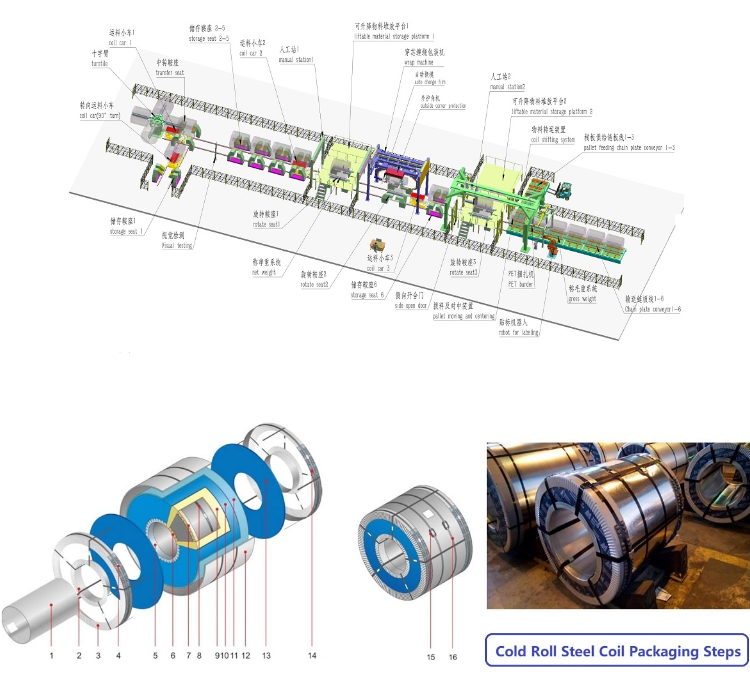

From Packing Station to System-Compliant Process
Without integration, the packing line is an island. An operator manually inputs a work order number, hoping it’s correct. The system doesn’t know if a coil was rejected for bad wrapping or if the protective paper ran out mid-cycle. This creates blind spots in production scheduling and consumables management.
The integrated line enforces process discipline and feeds real-time execution data upstream. It works by validating each coil against the MES production schedule before any wrapping begins. The system confirms, “Yes, coil A123XYZ is next for 0.5mm galvanized steel, requiring two layers of craft paper and six steel straps.” This ensures the right packaging specs are applied every time, eliminating material waste and customer complaints.
⚙️ How Validation and Feedback Loops Work
This turns a passive machine into an active process gatekeeper.
- Scan-to-Start: The operator scans the coil’s barcode. The PLC queries the MES: “Is this coil ID scheduled for packing here and now?”
- Dynamic Work Instruction: Upon confirmation, the MES sends back the precise packaging recipe (film layers, top cap size, strap pattern) to the line’s HMI, guiding the operator.
- Exception Handling: If a coil is scanned out of sequence, the line alerts the operator and logs a deviation. If a sensor detects a strap break, it flags the coil for rework and updates its status to “Quality Hold” in the system automatically.


Actionable Intelligence: Beyond Basic Tracking
Knowing a coil’s location is level one. Understanding why Line 2 is 20% slower, or predicting when your stretch film will run out, is where real value is created. Integrated lines generate the granular data needed for this analysis.
Integrated systems transform operational data into predictive insights for maintenance and logistics planning. By analyzing cycle times, motor currents, and error logs, the system can alert maintenance teams about potential failures—like a weakening hydraulic valve on the tilting mechanism—weeks in advance. It also provides accurate consumption rates for packaging materials, enabling just-in-time procurement and reducing warehouse clutter.
📊 The Metrics That Matter for Management
The data funnel enables fact-based decision-making. Focus on these Key Performance Indicators (KPIs):
| KPI | Description | Target & Impact |
|---|---|---|
| Line OEE (Overall Equipment Effectiveness) | Availability x Performance x Quality. Calculated from automated start/stop times and good coil count. | >85% indicates world-class utilization, directly impacting ROI. |
| Packaging Material Usage per Ton | (Film/Paper/Straps used) / (Total tonnage packed). Automatically tracked per coil. | Enables precise cost allocation and identifies waste (e.g., 5% overuse of film). |
| Mean Time Between Assist (MTBA) | Average time the line runs fully automatically before needing manual intervention. | Increasing MTBA from 30 min to 4 hours signifies superior reliability and lower labor burden. |
| Order-to-Dispatch Lead Time | Time from MES marking a coil “production complete” to it being “packed and ready for shipment.” | Integration can compress this by over 50% by eliminating queues and manual paperwork. |
Expert Pro Tip: During integration, insist on a standardized data dictionary. Agree with your IT team that “Status_Code 10” means “Awaiting Packaging” for all systems. This prevents endless mapping work and ensures your BI tools, like Power BI or Tableau, can pull clean data directly from the MES for live production dashboards.
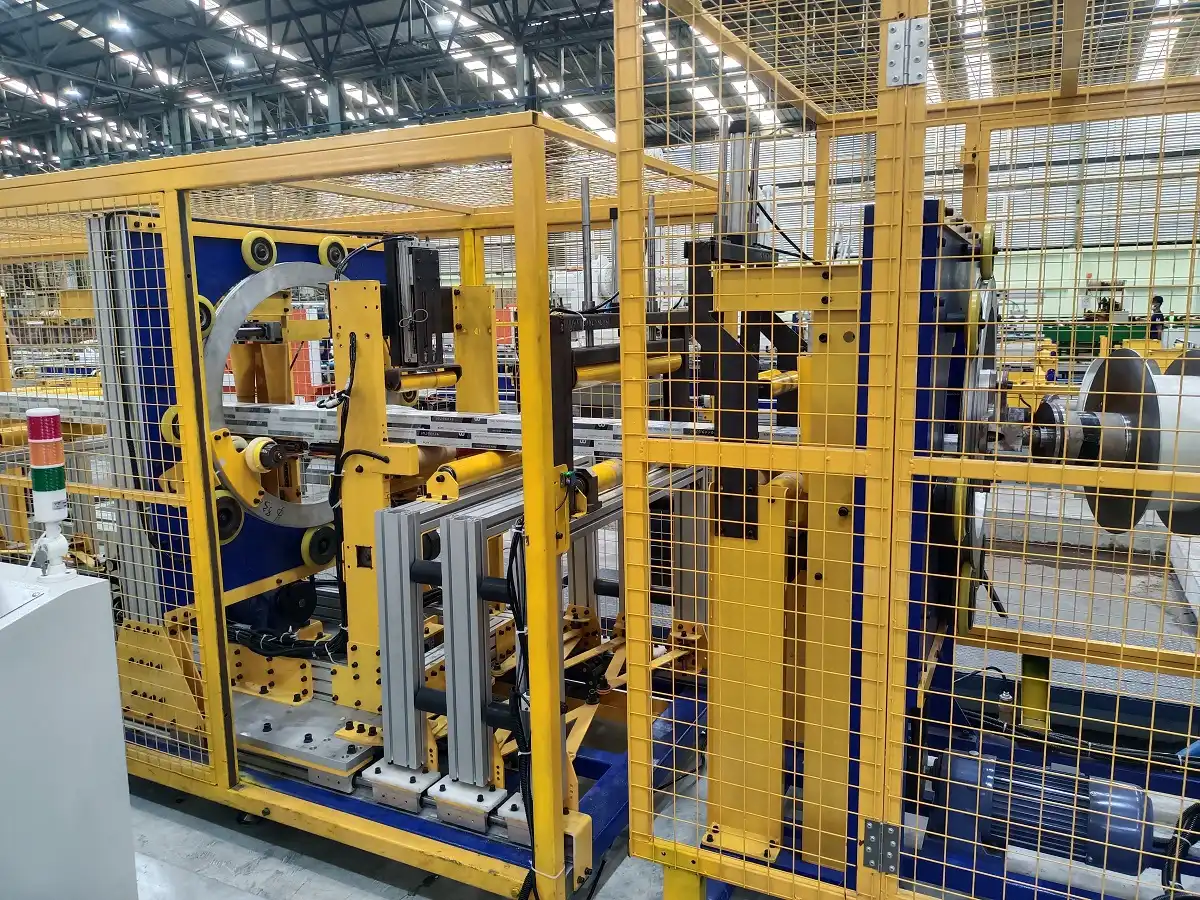

Ensuring Success: The Human and Technical Foundation
A perfect integration can fail if the operator doesn’t trust the new HMI or if the network keeps dropping. Success hinges on robust infrastructure and focused training, not just software.
Successful integration requires a dual focus on stable industrial networks and role-specific operator training. Technically, this means installing managed industrial Ethernet switches with VLAN segmentation to protect machine data from office network traffic. For the team, it means moving from “press this button” training to “understand what the system is telling you,” empowering them to manage exceptions rather than just operate machinery.
🛡️ Building a Resilient Data Backbone
The physical layer cannot be an afterthought.
- Network Stability: Use Category 6A or better shielded cables throughout the shop floor. PLC-to-MES communication requires consistent latency under 100ms.
- Security: A firewall between the plant network and the corporate ERP is mandatory. The integration should use read/write permissions specific to its function, not an administrator account.
- Redundancy: For critical lines, consider a redundant PLC or network ring topology. The goal is to keep the line running even if the ERP connection is temporarily lost, with data buffering locally until it reconnects.
👨🔧 Training for a Digital Mindset
The human element is your biggest leverage point.
- Maintenance Techs: Train them on basic network diagnostics (pinging the MES server) and how to pull error logs from the PLC for remote support.
- Line Operators: Shift their role from manual laborers to process supervisors. Train them to interpret system alerts (e.g., “MES Connection Lost – Buffering Data”) and perform basic troubleshooting.
- Supervisors: Give them access to the real-time dashboards. Show them how a drop in OEE correlates with a specific error code, enabling root-cause analysis.


Conclusion: The Integrated Line as a Strategic Asset
Digitalizing your coil packing line is not an IT project; it’s a core operations strategy. It turns the final step of your manufacturing process into a source of truth, driving visibility, efficiency, and accountability across the entire organization. The data captured ensures you bill faster, schedule smarter, and maintain proactively.
The journey starts with a single, integrated line. The ROI from reduced errors, saved labor, and optimal material use typically justifies the investment in under 18 months. From there, the model can be scaled across your facility. This is how you build a resilient, data-driven, and truly modern steel plant.
Ready to transform your packing station from a cost center to a data hub? Explore our range of ready-to-integrate coil wrapping machine solutions designed for the Industry 4.0 landscape.












