
Case Study: Fully Automated Slitting Line Exit Solution for a Major Steel Mill
For years, I’ve worked with steel producers who face a common, costly problem. The slitting line is the heart of their operation, slicing massive master coils into precise, customer-ready strips. But what happens at the exit? Too often, it’s a scene of manual chaos—workers scrambling to handle heavy, sharp-edged coils, leading to bottlenecks, safety incidents, and damaged products. This final step becomes the weakest link, strangling the productivity gains of the entire automated line. I’ve seen firsthand how this “last-mile” challenge erodes profits and morale. (steel coil handling automation, slitting line exit bottleneck)
The solution lies in a fully integrated, automated slitting line exit system. This isn’t just about adding a single machine; it’s about designing a synchronized material handling flow that seamlessly takes the slit coils from the mandrel, prepares them, and packages them for shipment with minimal human intervention. Such a system directly tackles the core inefficiencies at the line’s end, transforming it from a liability into a competitive asset. By automating the discharge, transfer, weighing, banding, and wrapping processes, mills can achieve unprecedented levels of safety, speed, and consistency. (automated coil packaging line, integrated material handling solution)
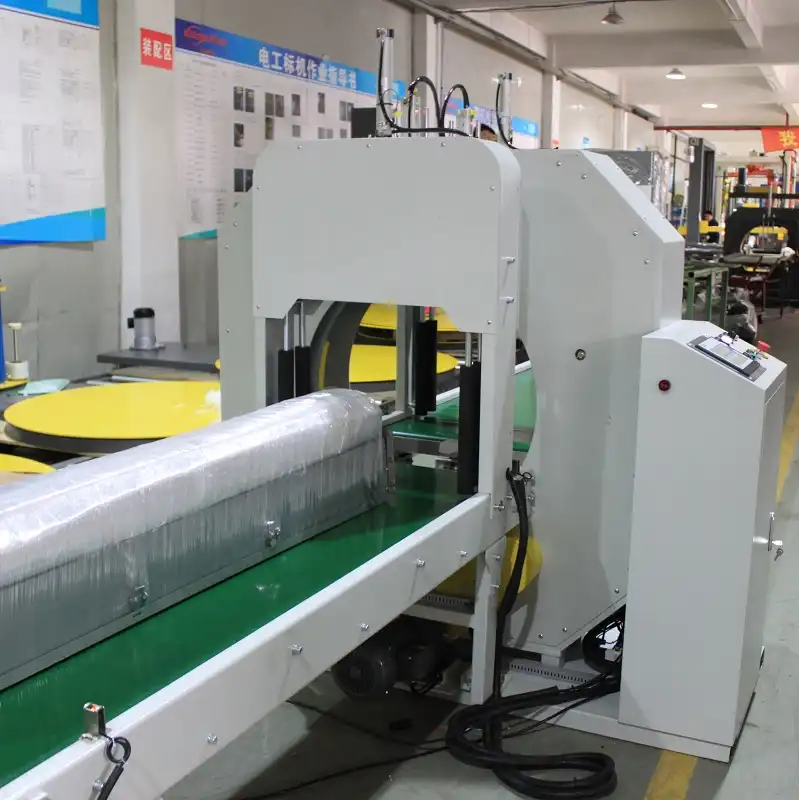
This case study will break down exactly how a major steel mill overcame its post-slitting challenges. We’ll explore the specific problems they faced, the components of the automated solution, the tangible benefits realized, and the critical factors for a successful implementation. If your mill’s productivity is being held hostage by a manual exit station, the insights here will show you a clear path forward.
1. What Were the Critical Pain Points at the Slitting Line Exit?
Picture a high-speed slitting line. Coils race through the process, only to pile up at the end. Workers manually hook and crane-lift each slit coil onto a conveyor or pallet. The process is slow, unpredictable, and dangerous. For the mill in our case study, this was their daily reality, creating a series of interconnected problems that capped their potential.
The primary pain points were severe safety risks, a major production bottleneck, and inconsistent package quality. Manual handling of heavy, unstable coils led to a high risk of crushing injuries and strain. The speed of the entire slitting process was dictated by the slowest manual step at the exit, creating a significant throughput limitation. Furthermore, manual banding and wrapping resulted in loose, unstable packages prone to damage during transit, leading to customer rejections. (steel mill safety hazards, production line bottleneck causes)
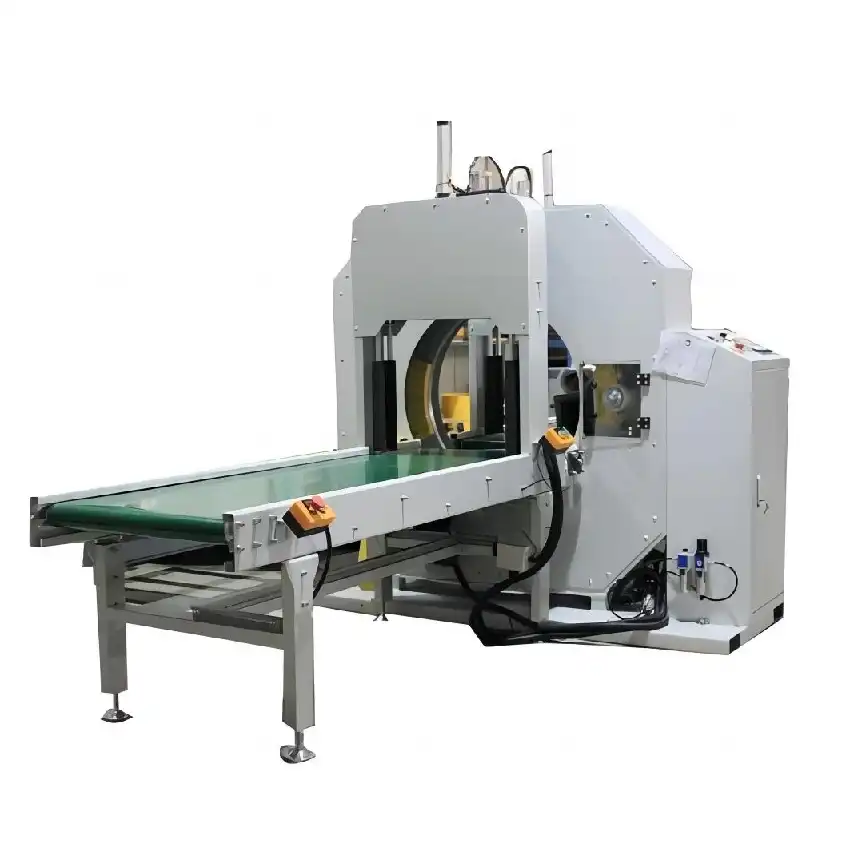
A Deep Dive into the Exit Station Challenges
Let’s dissect these pain points into their core components to understand why a piecemeal fix wouldn’t work.
🛑 The Safety & Efficiency Crisis
- Repetitive Heavy Lifting: Operators faced constant risk from swinging coils during crane transfers.
- Pinch Points & Crush Hazards: Manual positioning of coils for banding created dangerous situations.
- Ergonomic Injuries: The repetitive nature of the work led to long-term musculoskeletal disorders.
- Variable Cycle Times: Human fatigue and skill variation caused unpredictable delays, making production scheduling difficult.
📦 The Packaging Quality Dilemma
- Inconsistent Tension: Manual banding could not apply uniform force, leading to loose coils that could collapse.
- Improper Film Overlap: Hand-guided wrapping often left gaps, exposing steel to moisture and corrosion.
- No Standardization: Each operator had their own method, resulting in non-uniform packages that complicated stacking and storage.
💰 The Hidden Financial Drain
The table below summarizes the direct and indirect costs of a manual exit station:
| Cost Category | Direct Impact | Indirect Consequence |
|---|---|---|
| Labor | High number of operators required per shift. | High payroll cost, difficulty finding willing workers. |
| Downtime | Line must slow or stop to allow for manual handling. | Lost production capacity, inability to meet peak demand. |
| Product Damage | Scratches, dents, and edge damage from handling. | Customer chargebacks, loss of premium brand reputation. |
| Workplace Insurance | High frequency of recordable incidents. | Skyrocketing insurance premiums and potential litigation. |
| Training & Turnover | Constant need to train new staff on dangerous tasks. | Loss of tribal knowledge, recurring training expenses. |
The mill’s management realized that addressing these points required a systemic overhaul, not just faster workers or more cranes. The goal was to remove the human from the hazard zone and standardize the final output. (cost of manual coil packaging, ROI of automation in steel mill)
2. How Was the Fully Automated Exit Solution Designed and Implemented?
The design philosophy was clear: create a “hands-off” flow from the slitter mandrel to the finished, wrapped coil on the storage pad. This meant selecting and integrating specialized machines that could communicate and act as one system. The implementation was phased to minimize disruption to ongoing production.
The core of the solution was a sequenced system comprising an automatic coil discharger, a powered roller conveyor with integrated weighing, an automatic steel strapping machine, and a fully automatic coil wrapping machine. This lineup was chosen to create a continuous, synchronized flow where each coil is automatically transferred, processed, and prepared without manual lifting or guiding. (automatic coil discharger, powered roller conveyor system)

Breaking Down the Automated System Components
The success hinged on the specific capabilities of each machine and how they were linked together.
🔧 Component 1: The Automatic Coil Discharger / Unloader
This is the critical first link. It replaces the manual crane hook.
- Function: Automatically grips the slit coil from the mandrel, lifts it, and places it gently onto the exit conveyor.
- Key Feature: Programmable logic ensures a soft, controlled placement to prevent coil deformation or edge damage. It synchronizes with the slitter’s cycle.
- Benefit: Eliminates the most dangerous step immediately, allowing the slitter to run at its optimal speed.
🔧 Component 2: Powered Roller Conveyor with In-Line Scale
This forms the “artery” of the exit system.
- Function: Transports the coil smoothly between stations. The integrated scale weighs each coil automatically during transit.
- Key Feature: Weight data is sent directly to the plant’s ERP system for inventory and shipping documentation, eliminating manual data entry and errors.
- Benefit: Creates a buffer, allowing downstream machines (strapper, wrapper) to work independently of the slitter’s immediate cycle.
🔧 Component 3: Automatic Steel Strapping Machine
This applies the primary restraint.
- Function: As the coil enters the station, automatic arms apply 2-4 steel straps with consistent, high tension.
- Key Feature: Machines from leading suppliers like Fengding are renowned for their reliability and powerful tensioning systems, which are crucial for heavy steel coils. Wuxi Buhui also offers robust models for this application.
- Benefit: Achieves perfect, repeatable strap tension every time, creating a stable coil core for wrapping.
🔧 Component 4: Fully Automatic Coil Wrapping Machine (Rotary Arm Type)
This applies the protective layer.
- Function: The coil rotates while a carriage-mounted film dispenser travels up and down, applying stretch film in a precise pattern.
- Key Feature: Programmable controls allow for setting the number of film layers, overlap, and pre-stretch force. This ensures total weather protection and unitization.
- Benefit: Produces a uniform, professional-grade package that protects against corrosion and handling damage, ready for outdoor storage or direct shipment.
The integration was handled through a centralized PLC (Programmable Logic Controller). This “brain” receives signals from sensors along the line and coordinates the actions of each machine, ensuring a smooth, collision-free material flow. The mill’s team worked closely with the automation provider during a detailed commissioning phase to fine-tune the sequence and speeds. (PLC controlled packaging line, rotary arm coil wrapper)
3. What Were the Measurable Results and Benefits After Automation?
The investment in automation was justified by a clear business case, and the post-implementation data proved its value. The benefits extended far beyond just replacing manual labor; they touched every aspect of the mill’s operations.
The quantifiable results included a 40% increase in slitting line throughput, the elimination of recordable safety incidents at the exit station, a 95% reduction in packaging-related customer complaints, and a full return on investment (ROI) achieved in under 18 months. These numbers translated into stronger competitiveness, higher morale, and a more resilient operation. (ROI of automated packaging, slitting line productivity increase)
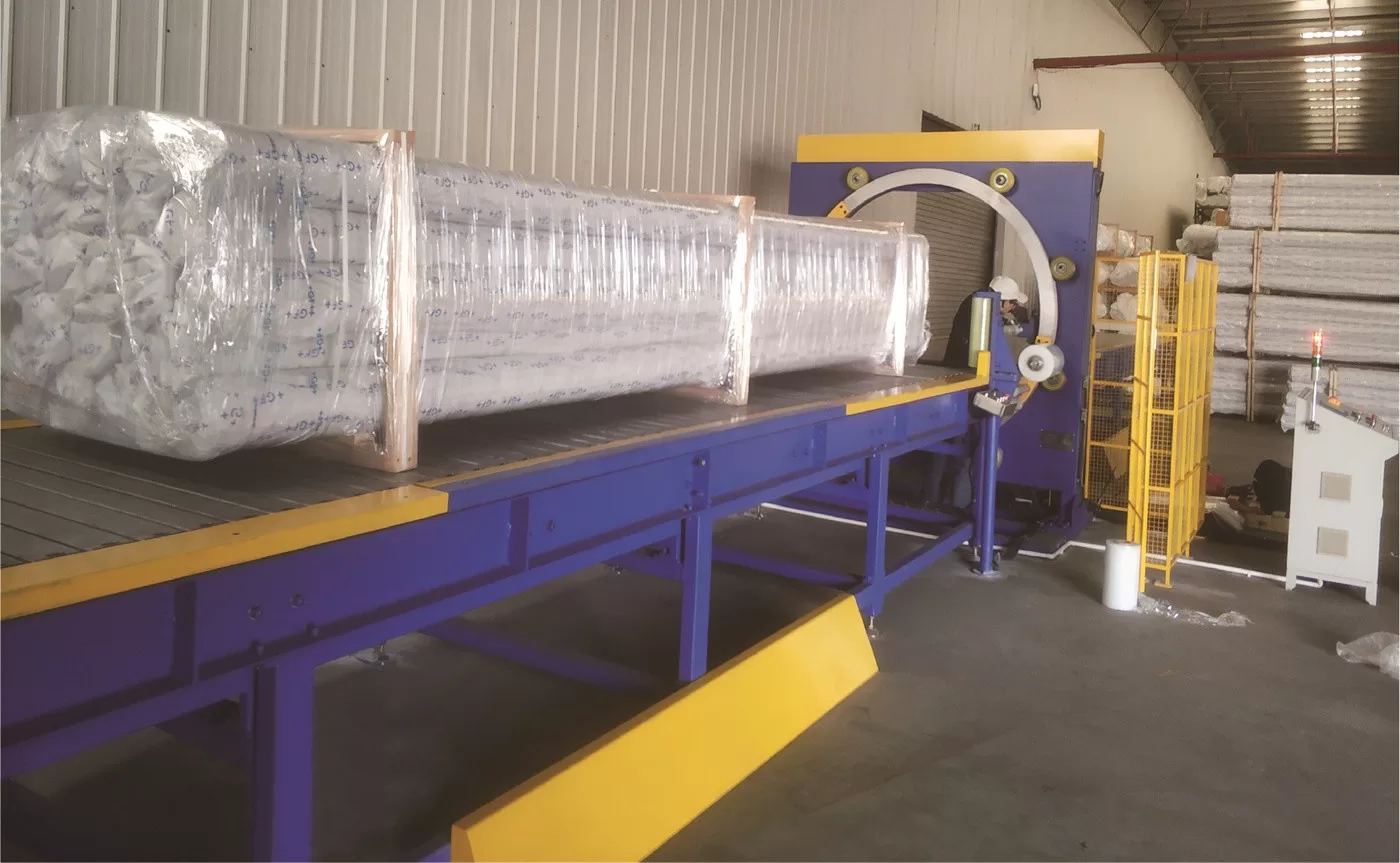
Analyzing the Tangible Impact Across Key Metrics
The benefits can be categorized into four key areas: Safety, Output, Quality, and Cost.
🛡️ Safety Transformation: Zero-Incident Environment
- Before: Regular near-misses and periodic lost-time injuries related to manual handling.
- After: Operators now monitor the system from a safe control booth. Their role shifted from physical labor to supervision and troubleshooting.
- Result: A complete elimination of handling-related injuries. This improved morale, reduced insurance costs, and aligned with corporate social responsibility goals.
🚀 Production & Output: Unlocking Hidden Capacity
- Before: The line speed was throttled to match the manual exit pace, often causing the slitter to wait.
- After: The automated exit keeps pace with the maximum slitting speed. The conveyor acts as a buffer, decoupling the slitter from the packaging stations.
- Result: The line could process more coils per shift. The 40% throughput increase meant the mill could accept more orders without capital investment in a new slitting line.
✅ Quality & Consistency: Building Brand Trust
- Before: Inconsistent, loose packages led to transit damage and rust complaints.
- After: Every coil receives identical strapping and wrapping. The film protection is complete and uniform.
- Result: The near-total elimination of damage claims enhanced the mill’s reputation for delivering premium, ready-to-use product. Customers received coils that were easier and safer to handle in their own facilities.
💵 Cost & Operational Efficiency: The Bottom Line
- Labor: While some operators were reassigned, the system reduced the required headcount at the exit by over 70%.
- Material Waste: Precise film control reduced stretch film usage by approximately 15% compared to manual methods.
- Downtime: The reliability of the automated equipment, especially core components like the Fengding strapper, led to significantly less unplanned downtime compared to human-dependent processes.
- Overall: The combined savings in labor, waste, damage claims, and increased production revenue created a powerful financial return, solidifying the automation project as a strategic success. (reduced coil packaging waste, automated system reliability)
4. What Are the Key Considerations for a Successful Automation Project?
Implementing a system of this scale is a significant undertaking. Success depends on more than just buying the right machines. It requires careful planning, the right partners, and a focus on the people who will use the system. Based on this case study and my experience, here are the non-negotiable factors.
The key considerations are thorough process analysis before design, selecting a vendor with deep application expertise (not just equipment sales), planning for seamless integration and future scalability, and investing comprehensively in operator training and change management. Skipping any of these steps can turn a promising project into an underperforming asset. (packaging automation project planning, industrial equipment vendor selection)
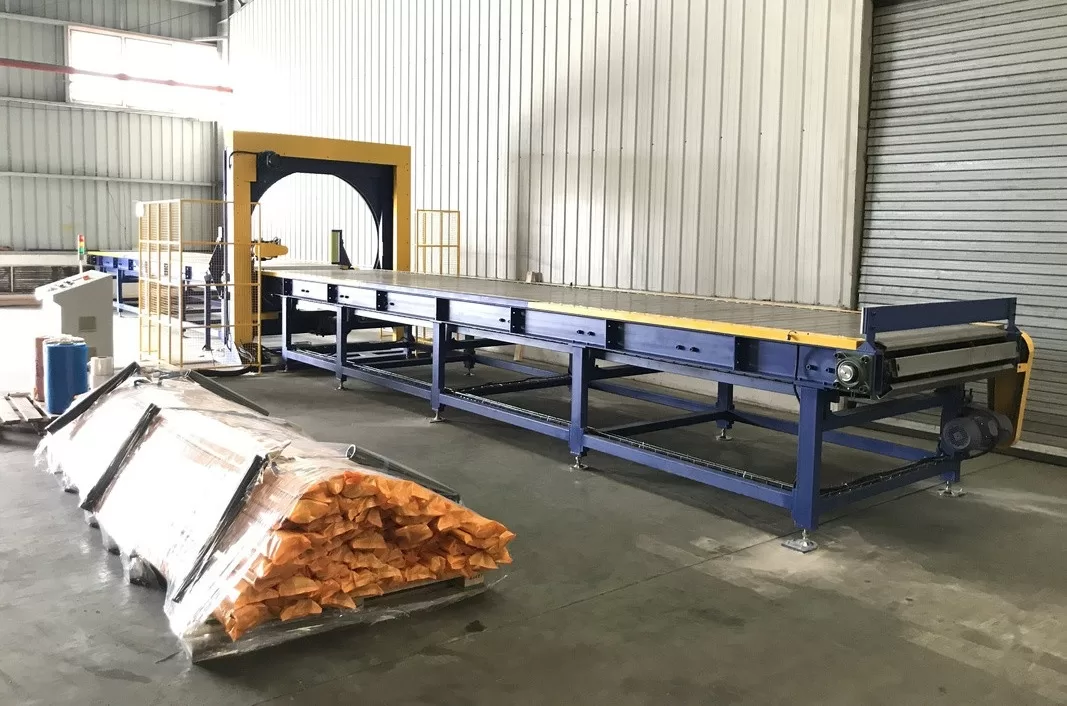
A Guide to Navigating Your Automation Journey
Let’s outline the critical path from conception to successful operation.
📝 Phase 1: Deep Dive Analysis (The “Why” and “What”)
Do not start by shopping for machines. Start by analyzing your current state.
- Map Your Current Process: Video record several hours of operation. Time each manual step, identify all safety risks, and log every instance of downtime or damage.
- Define Clear Goals: Is the primary driver safety, speed, quality, or cost reduction? Set specific, measurable targets (e.g., “Reduce exit station manpower from 4 to 1 per shift”).
- Gather Data: Have precise specifications ready: coil dimensions (OD, ID, width), weight range, required line speed (coils per hour), and available floor space.
🤝 Phase 2: Partner Selection (The “Who”)
Your vendor is a long-term partner. Their role extends far beyond delivery.
- Look for Application Experts: Prioritize suppliers who ask detailed questions about your process and challenges. They should have a proven track record in steel coil handling, not just generic packaging.
- Evaluate Technical Support: What does their installation, commissioning, and after-sales service look like? Do they offer remote diagnostics and hold critical spare parts?
- Seek Trusted References: A reputable vendor, like Fengding for strapping or specialized integrators, will gladly connect you with previous clients in similar industries. Visit their installations if possible.
⚙️ Phase 3: Integration & Future-Proofing (The “How”)
The magic is in the integration.
- Insist on a Single Point of Control: The system should be controlled by one main PLC with a simple human-machine interface (HMI). Operators should not need to juggle multiple machine controls.
- Demand a Detailed Layout: The vendor should provide a comprehensive plant layout drawing showing machine footprints, maintenance access zones, and material flow paths.
- Plan for Growth: Discuss future needs. Can the system handle a wider range of coil sizes? Can it be easily expanded or connected to a robotic palletizer later? Choose a modular design.
👥 Phase 4: People & Process (The “Change”)
Technology fails without people prepared to use it.
- Train for Understanding, Not Just Buttons: Training should cover basic maintenance, troubleshooting, and the reasons behind the automated sequences. This empowers operators.
- Manage the Change: Communicate the benefits of the new system to the workforce early. Involve key operators in the planning and testing phases to gain their buy-in.
- Develop New Procedures: Write new standard operating procedures (SOPs) for the automated line, including safety lockout/tagout for maintenance. (automated system SOP development, operator training for new equipment)
Conclusion
This case study demonstrates that the bottleneck at a slitting line’s exit is not an inevitable cost of doing business. It is a solvable engineering challenge. By implementing a fully automated exit solution—centered on reliable equipment like an automatic strapper and a robust horizontal orbital stretch wrapper—the featured steel mill transformed a high-risk, low-efficiency zone into a model of safety, speed, and quality. The results speak for themselves: higher output, lower costs, safer workers, and happier customers. For any mill struggling with the limits of manual handling, this automated path offers a clear and proven route to a stronger, more competitive future.








