
Understanding the carbon footprint of coil packaging is crucial to reducing greenhouse gas emissions. This analysis can help businesses make sustainable choices by identifying emission sources and employing strategies to reduce. Coil packaging, ubiquitous across industries from metal manufacturing to electronics, often gets overlooked when companies assess their environmental impact. However, even seemingly small aspects of coil packaging operations can contribute significantly to a company’s carbon footprint. This article delves into the carbon footprint analysis of coil packaging, highlighting the materials, processes, and logistical factors that can impact emissions, and exploring strategies for a more sustainable approach.
Understanding the Carbon Footprint
A carbon footprint, measured in carbon dioxide equivalent (CO2e), represents the total greenhouse gases emitted by a product, service, organization, or individual. Calculating a carbon footprint involves identifying all emission sources associated with the subject, from raw material extraction to end-of-life disposal. By understanding these sources, businesses can strategize ways to reduce their environmental impact. For coil packaging, this means accounting for every stage in it’s supply chain, from raw materials to disposal/recycling.
Calculating the Carbon Footprint of Coil Packaging
Calculating the carbon footprint of coil packaging involves evaluating emissions from each stage of its lifecycle. This includes:
- Raw Material Acquisition: Emissions from extracting and processing raw materials like cardboard, plastic, steel and wood.
- Production: Energy consumption in the manufacturing process, including the production of cardboard boxes, plastic wrapping, steel support structures, or wooden skids.
- Transportation: Fuel consumption during transportation of raw materials and finished packaging to and from production facilities.
- Packaging and Assembly: Energy used to package the coils.
- Transportation to Customer: Emissions from transporting the packaged coils to the customer for the product they’ll become.
- Waste Management / Recycling: Emissions or savings from disposal or or recycling processes. Several carbon footprint calculators are available to assist with these calculations. One example is the Plan Be Eco calculator, you enter packaging data, such as weight, material type, and transportation distance, to get an estimate of emissions.
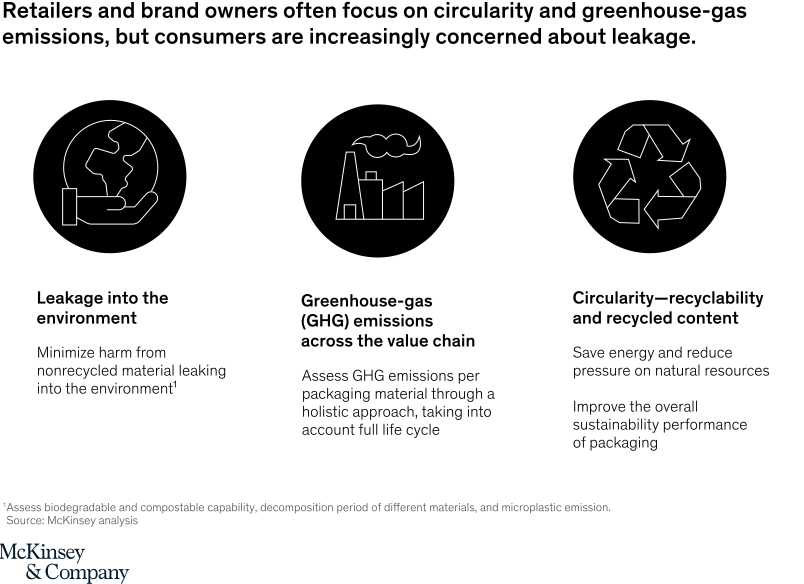
For a more in-depth analysis, companies might use the Greenhouse Gas Protocol, an international standard for carbon accounting. This approach requires gathering data on energy consumption, materials used, production methods, transportation distances, and waste disposal practices.
Impact of Materials on the Carbon Footprint
The choice of materials significantly impacts the carbon footprint of coil packaging. Selecting sustainably sourced materials is critical.
Environmentally Certified Materials
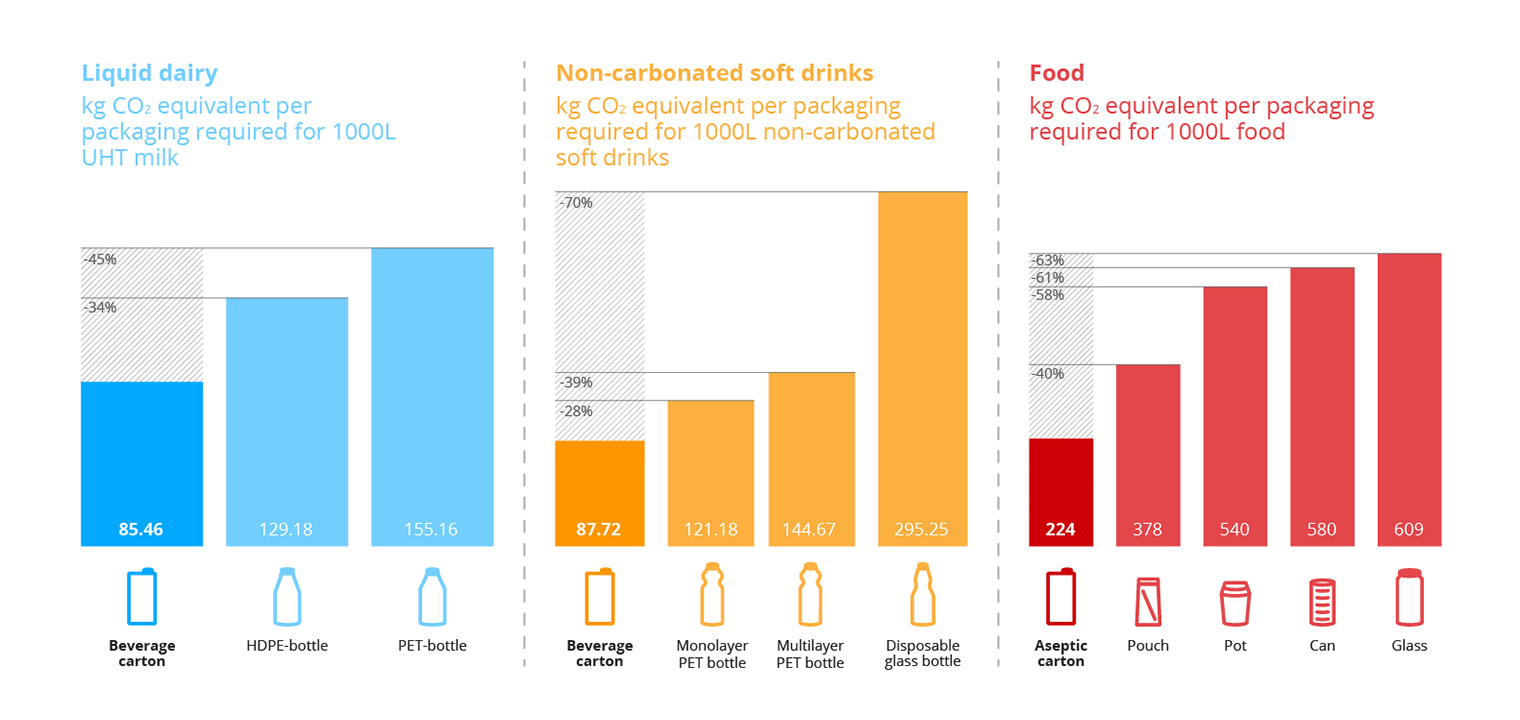
Forest Stewardship Council (FSC): cardboard from FSC-certified forests can ensure the responsible forest managment.Program for the Endorsement of Forest Certification (PEFC): similar to FSC but focusing on smaller landowners as well. These certifications ensure that the paper and wood used in coil packaging originates from sustainably managed forests, mitigating deforestation and promoting biodiversity. According to the Pro Carton group, sustainable sourcing is key to reducing lifecycle carbon emissions.
Corrugated Board vs. Solid Board
| Feature | Corrugated Board | Solid Board |
|---|---|---|
| Weight | Heavier due to its layered structure | Lighter and thinner |
| Recyclability | Generally easier to recycle | Can be more difficult to recycle |
| Carbon Footprint | Can be higher due to transportation costs | Potentially lower due to reduced weight |
| Best Use Cases | Heavy or fragile contents, stacking strength. | Lighter products, printing clarity is desired |
| Sustainable Sourcing| Can be made with high recycled content | Can be more difficult to source reliably | The choice between corrugated board and solid board should consider the specific product requirements, transportation costs, and recycling capabilities.
Optimizing Production Processes
Optimizing production processes can reduce the carbon footprint of cardboard packaging. Key strategies include:
- Combined Heat and Power (CHP) Plants: Using CHP plants for paper mills improves the efficient production of steam and electricity.
- Green Electricity: Utilizing renewable energy sources, such as solar or wind power, in the production process reduces reliance on fossil fuels.
Transparency in the Supply Chain: Accurately reporting the processes throughout the cardboard packaging supply chain ensures comprehensiveness in carbon footprint calculations.
Transportation and Logistics: Minimizing Emissions
Transportation is a significant contributor to coil packaging’s carbon footprint.
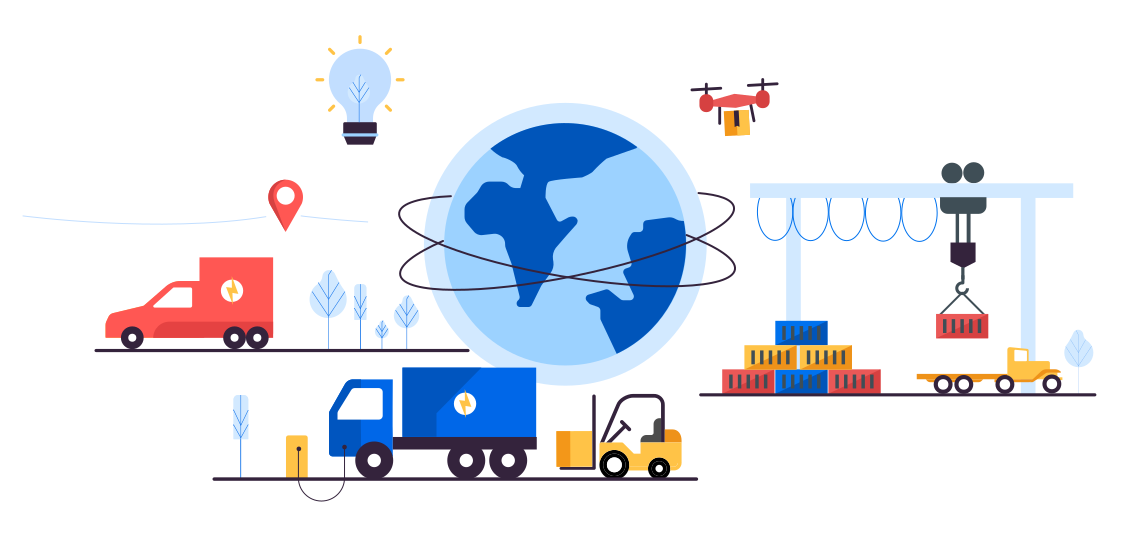
- Optimize Supply Chain: Consolidating shipments and utilizing local raw materials minimizes transport distances and emissions
- Lighter Packaging: Replacing heavy packaging materials with lighter alternatives reduces transportation weight and associated fuel consumption.
- Efficient Pallet Packing: Optimizing pallet packing and reducing empty spaces in boxes decreases the number of required shipments.
- Greener Transportation Modes: Choosing trains over trucks or ships and implementing advanced logistics management minimizes greenhouse gas emissions.
Recycling Cardboard Packaging: Closing the Loop
Recycling is crucial for lowering the environmental impact of coil packaging. This reduces the need for new paper production and mitigates methane emissions in landfills.Using recycled materials reduces the CO2 emissions because the previous product use and extraction are already completed and do not need to be repeated.
Innovative Solutions in Coil Packaging
Innovative solutions are paving the way for more sustainable coil packaging.Reducing the space taken up by packaging has become increasingly important to many companies. Such as: Aluminum-Free Cartons: Reducing carbon footprint by reducing wasted packaging materials used.Biodegradable Packaging Materials: Reducing CO2 and plastic waste.Reusable Packaging: Recycling old product packaging for product manufacturing.
Case Studies: Companies Leading the Way
Several companies have successfully reduced the carbon footprint of their packaging:Nike: Reduced unnecessary materials and emissions by using shoeboxes as shipping boxes.Boxed Water is Better: Uses 100% recyclable packaging, with 75% of the paper sourced from sustainably managed forests.Tetra Laval Using renewable energy sources in their operations.
These examples demonstrate how companies can achieve significant environmental benefits by embracing sustainable packaging practices. An example is McDonald’s, which opened its paper production line using used packaging from its products. The company created its circuit, producing towels, toilet paper, and napkins from old food packaging.
The Importance of Carbon Footprint Reduction for Businesses
Reducing the carbon footprint of coil packaging is essential for businesses because it:
- Enhances Reputation: Displays a commitment to environmental sustainability.
- Increases Profitability: Reduces waste and improves operational and logistical efficiency.
- Attracts Consumers: Meets the demands of environmentally conscious customers.
- Adapts to Regulatory Requirements: Helps businesses meet the packaging standards set forth by the European Union.
There are already growing interests in reducing emissions by companies producing cardboard packaging due to the requirements imposed by the European Union because packaging is part of the supply chain of almost every business.
Conclusion
By understanding the key factors contributing to the carbon footprint of coil packaging operations and adopting more sustainable practices, companies can significantly reduce their environmental impact. From selecting environmentally certified materials to optimizing transportation logistics, there are numerous strategies to minimise greenhouse gas emissions. Transparency, innovation, and a commitment to eco-friendly choices are essential components of any successful carbon footprint reduction plan.
Frequently Asked Questions
Is carbon footprint calculation mandatory for all businesses? No, there is not yet a legal obligation for SME companies to calculate their carbon footprint. However, as of January 1, 2026, small companies will already have to report ESG. How can businesses calculate their carbon footprint? The Greenhouse Gas Protocol provides an international standard for measuring carbon footprint. Software like Plan Be Eco are available to simplify this process.








