
How to Select the Right Orbital Stretch Wrapper for Your Sandwich Panels: An Engineer’s Perspective?
Are you a factory manager, maybe in a place like Mexico, overseeing a busy production line? Do you feel the constant pressure to boost output, control costs, and keep your workers safe? I understand this perfectly. I have spent years in packing machine factories, both as an employee and as an owner. I know the challenges of high-volume manufacturing firsthand. You see current packing processes eating into your profits and slowing down your deliveries.
Choosing the right orbital stretch wrapper for sandwich panels means looking at machine reliability, speed, safety features, and the supplier’s long-term support. You need a machine that handles your specific panel dimensions and weight, wraps them securely to prevent damage, and integrates smoothly into your existing line. It also means finding a supplier who acts as a true partner, not just a seller.
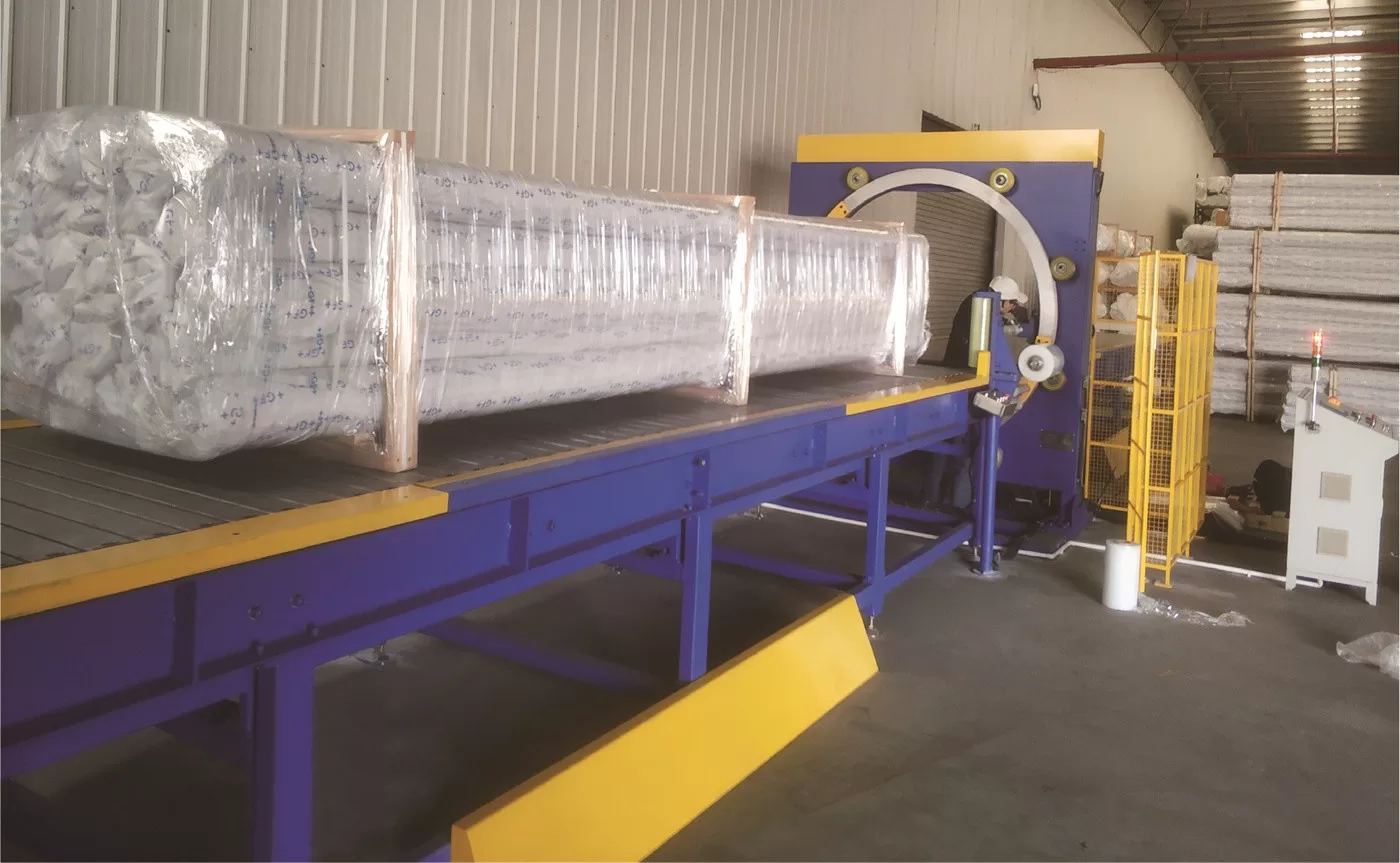
This guide is for you, the experienced factory manager or operations director, who needs practical answers. It is for those who are tired of inefficient processes and risky manual handling. I will share my insights from years in this industry. We will look at how an orbital stretch wrapper can solve your biggest problems, especially when handling large, bulky items like sandwich panels. Keep reading to find out how to make a smart investment.
Can an Orbital Wrapper Truly Boost My Sandwich Panel Production Speed?
Are your current sandwich panel packing methods manual, slow, and creating bottlenecks at the end of your production line? You are not alone. Many factories still rely on labor-intensive wrapping that simply cannot keep up with production demands. This slows down everything. It delays shipments and frustrates your clients.
Yes, an orbital stretch wrapper significantly boosts sandwich panel production speed by automating the wrapping process, reducing manual labor, and enabling continuous flow. It eliminates bottlenecks caused by slow hand-wrapping, ensuring panels move quickly from production to shipping without delays. This automation allows your factory to process more panels in less time.

When I first started in the packing machine industry, I saw many factories struggling with slow packing. It was always the last part of the line, but it held everything back. For sandwich panels, which can be long and heavy, manual wrapping is incredibly inefficient. An orbital stretch wrapper changes this completely. It wraps the panel while it moves through the machine. This means the wrapping process is continuous. There is no stopping and starting. This continuous flow makes a huge difference in overall output. Think about the time saved. Each panel gets wrapped in seconds or minutes, not tens of minutes. This adds up quickly over a full day.
Consider the speed difference. A manual process needs workers to walk around the panel, stretch film, and secure it. This takes time, effort, and multiple people for large panels. An orbital wrapper does this automatically. It uses a rotating arm that moves around the product. The panel itself stays still or moves forward on a conveyor. This design is perfect for long, flat items like sandwich panels. You can even adjust the wrapping tension and overlap for different panel sizes. This flexibility means you do not need to change machines for different orders. The machine just adjusts. This saves more time. Also, many orbital wrappers can be integrated directly into your existing production line. This means the panels come off the line and go straight into the wrapper. This removes any pauses or manual transfers. It is all about smooth, uninterrupted workflow. I have seen factories boost their packing speed by 300% or more with the right automation. It is a game-changer for hitting high production targets.
Key Factors for Speed Improvement:
- Automation of Wrapping: The machine does the work, not people. This eliminates human fatigue and variations in wrapping quality.
- Continuous Flow Integration: Panels move through the wrapper without stopping. This keeps the entire production line moving at a steady pace.
- Adjustable Parameters: Quick adjustments for different panel sizes or film types mean less downtime for changeovers.
- Reduced Labor Dependency: Fewer workers are needed for wrapping. This frees up your team for other tasks.
Comparing Packing Speeds (Example):
| Method | Panels Per Hour (Approx.) | Labor Required |
|---|---|---|
| Manual Hand Wrapping | 5-10 | 2-3 workers |
| Semi-Automatic Wrapper | 15-25 | 1-2 workers |
| Fully Automatic Orbital Wrapper | 30-60+ | 0-1 worker |
This table shows a clear difference. The more automatic the system, the faster you can pack. This directly translates to higher output for your factory.
How Does Orbital Wrapping Improve Safety and Prevent Damage for Sandwich Panels?
Are you worried about your workers getting injured while moving or packing heavy sandwich panels? Is product damage during internal transport or shipping a constant headache? These are serious concerns. High injury rates lead to higher insurance costs and employee turnover. Damaged products mean customer complaints and lost profits.
Orbital wrapping dramatically improves safety by reducing the need for manual handling of heavy sandwich panels, thus lowering the risk of worker injuries. It also prevents product damage by creating a secure, uniform wrap that protects panel edges and surfaces from impacts, dust, and moisture during transport and storage. This means fewer accidents and less waste.
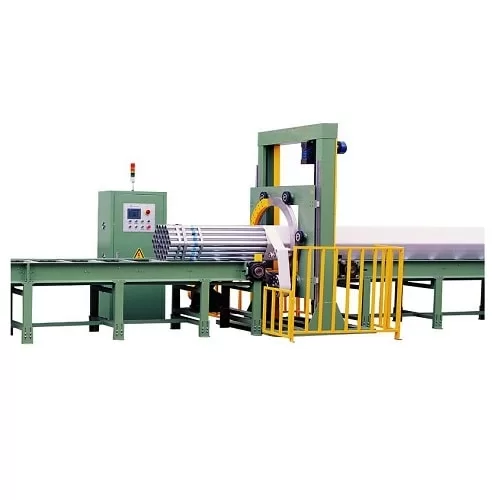
Safety was always a top priority for me when I ran my packing machine factory. Manual handling of heavy items like sandwich panels is one of the riskiest jobs in any factory. Workers can suffer back injuries, crushed fingers, or other serious accidents. These incidents cause pain for your employees. They also cause major costs for your business, like medical bills, lost workdays, and higher insurance premiums. An orbital wrapper almost completely removes this risk. The panels are typically loaded onto a conveyor or directly into the machine with forklifts or cranes. Once inside, the machine does all the heavy lifting and wrapping. Workers just monitor the process. They do not have to physically lift, turn, or stretch film around the heavy panels. This shift to automation means a safer workplace for everyone.
Beyond safety, product damage is another major concern. Sandwich panels can be delicate, especially their edges. If they get bumped or scratched during transport or packaging, you face quality complaints. This hurts your brand. It also costs you money to replace damaged goods. An orbital wrapper applies a tight, consistent layer of stretch film around the entire panel. This wrap acts as a protective shield. It holds the panel securely, preventing movement and scuffing. It also protects against dust, dirt, and moisture. I have seen countless examples where proper wrapping saved companies thousands in avoided damage claims. The film forms a durable barrier. This barrier protects the panel from impacts during internal transfers. It also protects during shipping across long distances, even to places like Mexico. A good wrap means your panels arrive at the customer’s site in perfect condition. This builds trust and reduces costly returns.
How Orbital Wrapping Addresses Safety and Damage:
- Reduced Manual Handling: Less need for workers to lift, rotate, or secure heavy panels. This directly lowers strain injuries.
- Automated Wrapping Process: The machine performs the repetitive, physical task, removing human error and fatigue.
- Consistent Protection: Uniform film tension and overlap provides excellent protection for edges and surfaces.
- Environmental Barrier: The stretch film protects against dust, dirt, moisture, and UV light, preserving product quality.
Impact on Operations:
| Aspect | Manual Process Impact | Orbital Wrapper Impact |
|---|---|---|
| Worker Safety | High risk of sprains, strains, cuts | Significantly reduced injury risk |
| Product Damage | High risk of edge scuffs, dents, dust | Low risk, robust protection |
| Insurance Costs | Higher due to worker compensation claims | Lower due to fewer workplace incidents |
| Customer Satisfaction | Potential for complaints, returns | Increased due to pristine product delivery |
Investing in an orbital wrapper is not just about speed; it is about creating a safer, more reliable operation. This leads to happier employees and happier customers.
What ROI Can I Expect From Investing in an Orbital Wrapper for My Panels?
Are you hesitant about a large investment in new equipment? Do you need a clear financial justification for buying an orbital wrapper for your sandwich panels? Many factory managers focus on upfront costs. But the real value lies in the return on investment (ROI). You need to see how the machine pays for itself and then generates profit.
You can expect a strong ROI from an orbital wrapper through significant reductions in labor costs, decreased product damage, lower insurance premiums, and improved operational efficiency. The investment often pays for itself within 1-3 years due to these savings and the increased capacity to meet customer demand. This makes it a financially sound decision.

When I established my own packing machine factory, every investment had to make financial sense. It was not enough for a machine to just “do the job.” It had to pay for itself and then contribute to the bottom line. For an orbital stretch wrapper for sandwich panels, the ROI calculation is quite straightforward. First, look at labor costs. If you are currently using two or three workers for manual wrapping, you can reallocate them to other valuable tasks. The machine often needs only one operator, or even no dedicated operator in a fully automated setup. The salary savings alone can be substantial. For a factory in a high-labor-cost region, these savings can offset the machine cost very quickly. Even in places with lower labor costs, the efficiency gain is huge.
Next, consider product damage. As we discussed, damaged panels mean lost revenue. If you lose just a few panels each month due to damage during packing or transit, those losses add up. An orbital wrapper drastically reduces this. The cost of replacing damaged goods, handling customer complaints, and re-shipping items can be very high. By preventing this, the machine directly saves you money. Also, think about film consumption. Manual wrapping can be wasteful. Workers might use too much film, or apply it unevenly. Orbital wrappers are designed to optimize film usage. They apply consistent tension and stretch the film efficiently. This means you use less film per panel. This also contributes to cost savings over time. Finally, the improved safety reduces injury-related costs like medical expenses and insurance premiums. All these savings, plus the increased production capacity, mean that the machine does not just pay for itself. It helps your factory grow and become more profitable. I always advise clients to do a detailed cost-benefit analysis. It shows the true power of automation.
Key Drivers of ROI:
- Labor Cost Reduction: Reallocate or reduce staff dedicated to manual wrapping.
- Reduced Product Loss: Prevent damage from handling, impacts, and environmental factors.
- Optimized Material Use: Efficient film stretching and application reduces film consumption.
- Increased Throughput: Higher production capacity means more sales and revenue.
- Lower Insurance & Medical Costs: Fewer workplace injuries lead to reduced claims and premiums.
ROI Calculation Example (Simplified):
| Cost/Saving Category | Annual Impact |
|---|---|
| Labor Savings | -$50,000 |
| Product Damage Avoided | -$20,000 |
| Film Savings | -$5,000 |
| Increased Production Value | -$30,000 |
| Total Annual Savings | -$105,000 |
| Initial Machine Cost | $150,000 |
| ROI Payback Period | ~1.4 years |
This example shows how quickly an investment in an orbital wrapper can become profitable.
Beyond the Machine: What Makes a Packing Machine Supplier a True Partner?
Have you worked with equipment suppliers who were great during the sale but disappeared when you needed support? As a factory manager, you know that buying a machine is just the start. You need a long-term partner. You need someone who understands your real-world production problems, like those in a busy metal processing factory.
A true packing machine supplier acts as a partner by providing comprehensive after-sales support, technical expertise, and a deep understanding of your specific operational challenges. They offer more than just equipment; they offer solutions, training, maintenance, and readily available spare parts to ensure your orbital wrapper runs smoothly for years. This partnership ensures your investment truly supports your business growth.
This is something I feel very strongly about. In my journey from an employee to a factory owner, I learned that the machine itself is only part of the solution. The people behind the machine are just as important. I have dealt with suppliers who only cared about making the sale. Once the machine was delivered, their interest ended. This is a huge problem, especially for complex equipment like an orbital wrapper. You need a supplier who understands your specific needs, like handling large sandwich panels in a high-demand environment. They should be able to offer insights, not just sell you a standard model.
A true partner will ask about your production bottlenecks. They will inquire about your safety concerns. They will want to understand your exact product dimensions and your desired packing speed. They use this information to recommend the right machine, not just any machine. After the sale, their support continues. This includes installation assistance, comprehensive training for your operators and maintenance staff, and readily available spare parts. Nothing is worse than a machine sitting idle because you cannot get a replacement part quickly. I made sure my factory always had excellent after-sales support because I knew how critical it was for my clients. A good supplier should also offer preventative maintenance guidance. This helps you avoid breakdowns before they happen. They should have a quick response time for any technical issues. When you choose a supplier, look for their track record. Ask for references. Talk to their existing clients. This due diligence is crucial. It ensures you are not just buying a piece of equipment but gaining a reliable ally in your quest for operational excellence.
Hallmarks of a True Supplier Partner:
- Consultative Approach: They listen to your problems and offer tailored solutions, not just products.
- Expertise in Your Industry: They understand the specific challenges of packing heavy, flat items like sandwich panels.
- Strong After-Sales Support: This includes installation, training, and troubleshooting.
- Availability of Spare Parts: Fast access to parts minimizes downtime.
- Proactive Maintenance Guidance: They help you keep the machine running smoothly and prevent issues.
- Commitment to Long-Term Relationship: They care about your success beyond the initial purchase.
What to Look for in a Supplier:
| Feature | Red Flag (Bad Supplier) | Green Flag (Good Partner) |
|---|---|---|
| Sales Focus | Pushes generic models, disappears after sale | Asks about specific needs, follows up |
| Technical Support | Slow response, limited knowledge | Quick, knowledgeable, remote support available |
| Parts Availability | Long delays, high cost for parts | Stocked parts, quick shipping |
| Training | Basic or none | Comprehensive for operators & maintenance |
| Industry Knowledge | Generalist, no understanding of panel specifics | Deep understanding of your product & factory |
Choosing the right partner is just as important as choosing the right machine. It guarantees your investment pays off.
Conclusion
Investing in an orbital stretch wrapper for sandwich panels delivers clear benefits: higher speeds, better safety, and significant cost savings. It is a strategic move for any modern factory.
My Insights!
I have spent my entire career helping businesses like yours thrive. From my early days on the factory floor to building my own successful packing machine factory, I have seen firsthand the impact of smart automation. The journey to financial independence for me was directly linked to understanding client needs and delivering real solutions. When you think about an orbital wrapper for your sandwich panels, remember it is more than just a machine. It is a tool for transformation. It is about creating a safer environment for your team. It is about making your production line faster and more reliable. Most importantly, it is about partnering with someone who truly understands your challenges and wants to see you succeed. I built FHOPEPACK to share this knowledge. I want to help you make informed decisions that drive your business forward.








