
Analytics for Board Bundle Packaging and Protection: Optimizing Warehousing and Delivery through Automation
Executive Summary
The effective packaging and protection of board bundles—encompassing materials such as lumber, Medium-Density Fiberboard (MDF), Oriented Strand Board (OSB), plywood, gypsum board, and corrugated sheets—are critical for operational efficiency and profitability in manufacturing and logistics. These products, integral to construction, furniture, and various other industries, present unique challenges due to their bulk, weight, and susceptibility to damage. This report provides a comprehensive analysis of current and emerging strategies for board bundle packaging, with a particular focus on the transformative potential of automation in warehousing and delivery operations.
Key findings indicate that a transition from manual to automated packaging processes yields substantial benefits, including significant cost reductions through optimized labor and material utilization, drastically minimized product damage rates, and notable improvements in overall operational throughput and consistency. The initial investment in automation, while considerable, often delivers a strong Return on Investment (ROI) when evaluated through a Total Cost of Ownership (TCO) lens, especially for medium to high-volume operations.
The report delves into various automated solutions, including advanced strapping systems (utilizing PET over traditional steel for enhanced safety and sustainability), versatile wrapping technologies (stretch wrap, shrink wrap, and particularly stretch hooding for superior protection), and integrated corner and edge protection applicators. Robotic handling systems are emerging as a pivotal technology for further streamlining these processes.
Furthermore, the analysis extends to best practices in warehousing, emphasizing environmental controls, appropriate stacking techniques, and the impact of unitization on storage density. For delivery, the report examines packaging optimization for different transport modes, the strategic use of dunnage, and the influence of packaging choices on freight costs and damage rates, including adherence to international standards like ISPM 15 for wood packaging materials.
Sustainability is an increasingly crucial factor, with a discernible shift towards recyclable materials like PET strapping and recycled-content paperboard, and energy-efficient machinery such as stretch hooders. Key Performance Indicators (KPIs) are identified as essential tools for monitoring packaging effectiveness across warehousing, logistics, and line efficiency, enabling data-driven decision-making and continuous improvement.
Strategic recommendations for businesses include conducting thorough TCO/ROI analyses prior to automation adoption, selecting packaging solutions tailored to specific board types and distribution challenges, prioritizing modular and flexible automation, investing in workforce training, and diligently tracking relevant KPIs. The future of board bundle packaging lies in smarter, more integrated, and sustainable automated solutions that enhance both operational excellence and competitive advantage.
I. Introduction: The Imperative for Optimized Board Bundle Packaging
Board products, including essential materials like lumber, Medium-Density Fiberboard (MDF), Oriented Strand Board (OSB), plywood, gypsum board, and corrugated sheets, form the backbone of numerous industries, most notably construction and furniture manufacturing. Despite their ubiquity and importance, these materials are often characterized by their bulk, considerable weight, and inherent susceptibility to damage during the various stages of handling, warehousing, and transportation.1 The consequences of inefficient or inadequate packaging are far-reaching, manifesting as significant direct costs from damaged goods and material waste, as well as indirect costs associated with operational delays, customer dissatisfaction, and reputational harm. Damage incurred during transit, for example, is a major cost factor for many businesses 1, and appropriate packaging is paramount for protecting against impacts, vibrations, and environmental factors like moisture.2 The very nature of these board products makes them challenging to manage effectively without robust packaging strategies.
However, these challenges are increasingly being met with innovative solutions. Continuous advancements in packaging materials, the accelerating adoption of sophisticated automation technologies, and the application of analytical approaches to process optimization present substantial opportunities for the industry.3 These advancements empower businesses to significantly enhance product protection, streamline operational workflows, curtail waste, and ultimately reduce overall operating expenditures. Automation, in particular, is consistently highlighted as a powerful remedy for the inherent inefficiencies of manual packaging methods.4 Optimized packaging, therefore, directly and positively influences supply chain efficiency and cost structures.5
This report aims to deliver a comprehensive analysis of contemporary and emerging strategies for board bundle packaging and protection, specifically tailored for warehousing and delivery operations. A primary focus will be placed on automated solutions, their cost-benefit implications, and their contribution to sustainable practices. The objective is to equip operations managers, logistics directors, plant managers, and other key decision-makers within industries that manufacture or distribute board products with the critical information needed to refine their packaging processes.
The impetus for optimizing packaging extends beyond mere cost reduction; it is increasingly linked to broader strategic business goals. These include enhancing sustainability credentials, safeguarding brand reputation (as damaged goods invariably tarnish a company’s image 1), and bolstering overall supply chain resilience. Initially, the focus of packaging improvements might be on direct expenses such as materials and labor. However, a more holistic view reveals that damaged products lead to a cascade of negative consequences, including returns, re-shipping costs, and lost sales opportunities 1, all of which erode customer satisfaction and brand loyalty. Furthermore, inefficient packaging consumes more resources and generates greater waste, directly conflicting with corporate sustainability objectives.6 Consequently, the optimization of packaging evolves into a strategic instrument capable of influencing multiple critical business outcomes.
The inherent diversity of board products—varying significantly in size, weight, material composition, and susceptibility to different types of damage—underscores the need for tailored, rather than generic, approaches to packaging automation. The wide array of board materials, from moisture-sensitive MDF and particleboard 7 to delicate yet heavy gypsum board 8, necessitates flexible and customizable automation solutions. This implies that a one-size-fits-all, rigid automated packaging line is unlikely to be optimal. Suppliers who offer adaptable and configurable systems, such as Packsize with its on-demand box-making technology 3, Cross Wrap with its versatile board packaging lines 4, Fromm with its specialized wood product solutions 9, and Mosca with its adaptable strapping systems 10, are therefore crucial partners in this endeavor. The critical nature of initial consultation and meticulous system design becomes apparent, as these phases are foundational to the successful adoption and integration of automation tailored to the unique characteristics of board bundles.
II. Understanding Board Bundles: Materials, Dimensions, and Weights
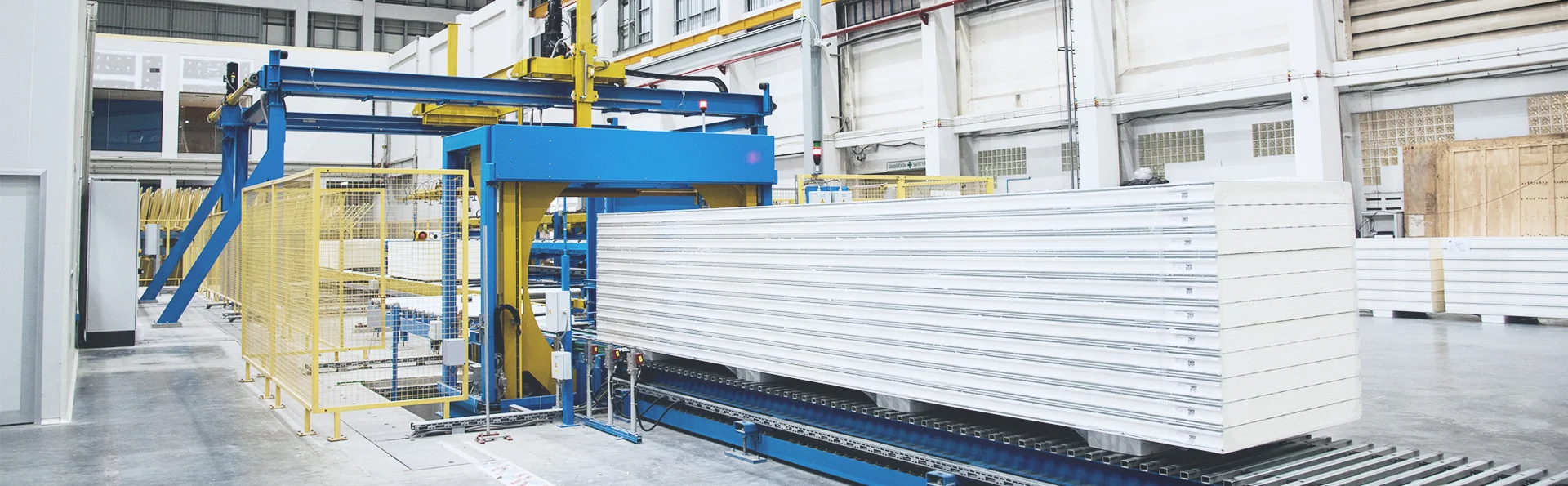
A foundational understanding of the materials, typical dimensions, and weight characteristics of board bundles is essential for designing and implementing effective packaging and handling solutions. These physical attributes directly influence equipment selection, packaging material choices, warehousing strategies, and transportation logistics.
II.A. Types of Industrial Board Materials
The term “board products” encompasses a wide array of materials, each with distinct physical properties that dictate packaging requirements:
- Lumber: Includes various species of wood, processed into planks and beams. Its weight and susceptibility to moisture vary significantly with species, treatment, and kiln-drying status.11
- Medium-Density Fiberboard (MDF): An engineered wood product made from wood fibers, resin, and wax, pressed into dense, flat panels. MDF is known for its smooth surface but is particularly susceptible to moisture and edge damage if not handled and packaged correctly.7
- Oriented Strand Board (OSB): An engineered wood panel formed by layering strands of wood in specific orientations and bonding them with adhesives. It is a common structural panel in construction.12
- Plywood: An engineered wood sheet material made from thin layers or “plies” of wood veneer that are glued together with adjacent layers having their wood grain rotated up to 90 degrees to one another. It is valued for its strength and resistance to warping.12
- Particleboard (Chipboard): An engineered wood product manufactured from wood chips, sawmill shavings, or even sawdust, and a synthetic resin or other suitable binder, which is pressed and extruded.12 Like MDF, it is sensitive to moisture.7
- Corrugated Sheets: Made from paper-based material consisting of a fluted corrugated sheet and one or two flat linerboards. Used extensively in packaging itself, but also shipped as raw material in bundles.13
- Gypsum Board (Drywall/Plasterboard): A panel made of calcium sulfate dihydrate (gypsum), with or without additives, typically extruded between thick sheets of facer and backer paper. It is heavy and can be brittle, requiring careful handling and packaging to prevent breakage and edge damage.8
The unique characteristics of each material—such as MDF’s and particleboard’s high moisture sensitivity 14, or gypsum board’s delicate yet heavy nature 8—necessitate specific considerations in packaging design to ensure product integrity throughout the supply chain. Lumber, for instance, presents wide variability based on species and moisture content, impacting both weight and stability.11
II.B. Standard Dimensions and Weights
The dimensions and weights of board bundles are critical parameters influencing the design of handling equipment, the strength requirements of packaging materials, and the efficiency of storage and transport.
- Lumber: Weights are often expressed per 1,000 board feet, varying considerably by species and whether the lumber is rough or surfaced (S2S). For example, 1-inch thick Ponderosa Pine surfaced on two sides (S2S) weighs approximately 1850 lbs per 1,000 board feet, whereas rough Red Oak of the same thickness weighs around 3800 lbs.11 Finished lumber weights are also provided per 100 lineal feet, such as 1×6 Fir at 100 lbs and 1×6 Pine & Spruce at 75 lbs.11 Panel weights per board foot also show variation.15
- MDF: Commonly available in sheet sizes like 4’x8′, 4’x10′, 5’x8′, and 5’x12′. As an example of weight, a 3/4″ thick MDF panel weighs approximately 3 lbs per square foot, while a 1/4″ thick panel weighs about 1 lb per square foot.16 A 4’x8′ sheet of 1/4″ MDF typically weighs around 35 lbs.17
- Particleboard: Available in various metric and imperial sizes (e.g., 2400x1200mm, 2400x1800mm) and thicknesses ranging from 12mm to 33mm.18 For instance, 19mm Green Tongue particleboard (3600x900mm) has a weight of 13.1 kg/m².19
- Plywood: Often bundled in 4’x8′ sheets. Bundle weights for Douglas Fir are illustrative: a bundle of 80 sheets of 3/8″ plywood weighs approximately 2,400 lbs, and a bundle of 60 sheets of 1/2″ plywood also weighs around 2,400 lbs.20 Metric bundle weights and sheet counts are also available.21
- OSB: A common panel size is 1220x2440mm (4×8 ft), with thicknesses from 6mm (1/4″) to 28.5mm (1-1/8″). A 9.5mm (3/8″) thick OSB panel of this size weighs about 18kg (40 lbs).22 Ultralam provides detailed bundle weights for OSB destined for auto and container transport, varying by thickness and sheet count per bundle.23
- Corrugated Sheets: Maximum weight and dimensions for boxes made from corrugated sheets are governed by bursting test and Edge Crush Test (ECT) values.13 Flute thickness also varies, for example, A Flute is typically 4.8mm thick.24
- Gypsum Board: These panels are notably heavy. A single 4’x12’x1/2″ gypsum board can weigh over 80 lbs (36kg), meaning a stack of just 25 such boards exceeds a ton (900kg).8 For 4’x8′ sheets, a unit of 1/4″ boards might contain 50 pieces, while a unit of 5/8″ boards might contain 24 pieces.25
The substantial weight and diverse dimensions of these board materials necessitate robust, and often customized, packaging solutions. This data is crucial not only for selecting appropriate packaging machinery (e.g., determining the required strapping strength or wrapper capacity) but also for accurate freight cost calculations, which are often based on dimensional weight. The absence of universal standardization in bundle sizes across different manufacturers and board types presents a notable challenge for deploying off-the-shelf automation solutions. This variability underscores the importance of adaptable or custom-engineered systems. While some “standard” sizes are prevalent, variations are common. Automated systems, which typically perform best with consistent inputs, must therefore be capable of handling this diversity. This market reality pushes equipment suppliers towards offering more flexible robotic solutions 26 or highly configurable systems like those from Packsize.3
Ultimately, the data on board weights and dimensions has implications that extend beyond packaging machinery selection. These figures directly influence warehouse infrastructure design, including racking capacity and forklift specifications, as well as transportation logistics, such as vehicle load optimization and adherence to legal weight limits. A gypsum board bundle weighing over a ton 8 clearly requires heavy-duty handling equipment and robust storage solutions. Similarly, understanding common bundle dimensions 8 is fundamental for designing warehouse layouts that optimize space utilization 27 and for planning freight shipments to maximize density and minimize costs.5 This interconnectedness means that packaging decisions cannot be made in isolation but must be part of a holistic operational strategy.
II.C. Bundle Configuration and Unitization
The way individual boards are grouped into bundles and how these bundles are then unitized for larger-scale handling significantly impacts efficiency and protection.
- Bundling: This involves grouping a specific number of sheets or pieces together, often secured by strapping. Common bundling practices vary by product type and manufacturer.23 For instance, plywood bundles might contain 40 to 80 sheets depending on thickness 20, while OSB bundles for shipping can have varying piece counts based on thickness and transport mode.23
- Unitization: This is the process of consolidating multiple items or bundles into a single, larger load, typically on a pallet or with bolsters, to facilitate easier and more efficient handling, storage, and transport by mechanical means like forklifts.28 Unitization is key for improving warehouse efficiency and protecting products during transit.29 The configuration of these unit loads (e.g., stacking patterns, use of pallet boxes 30) influences the choice of packaging materials and automated systems.
The way bundles are configured directly impacts the selection of appropriate packaging materials and the design of automated systems. For example, the number of sheets in a bundle and the overall bundle dimensions will determine the length and strength of strapping required, the size of stretch wrap or hood needed, and the capacity of robotic handling equipment.
III. Manual vs. Automated Packaging: A Comparative Analysis
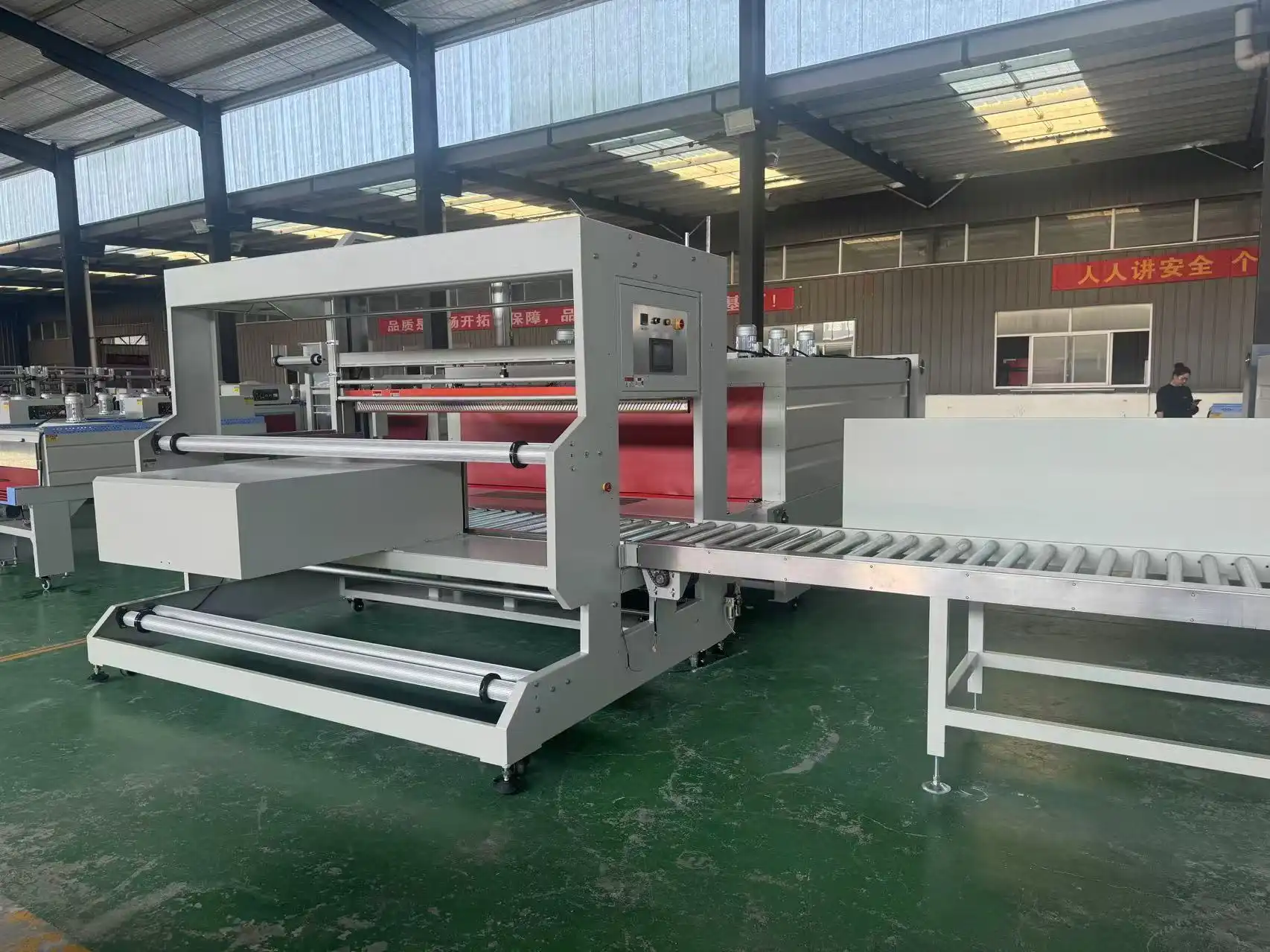
The choice between manual and automated packaging methods for board bundles represents a critical decision point for businesses, with significant implications for cost, efficiency, quality, and worker safety.
III.A. Manual Packaging Processes for Board Bundles
Traditional manual packaging for board bundles typically involves operators performing tasks such as hand strapping, manually applying stretch wrap, and affixing corner protectors by hand.31 While these methods may appear to have lower initial setup costs 32, they are inherently labor-intensive and prone to several drawbacks. These include inconsistencies in application, which can compromise load stability and product protection, and significant ergonomic risks for workers handling heavy or awkward bundles.31 Manual processes often result in higher long-term labor costs, which can constitute a substantial portion of overall business expenses—in some cases, nearly 65-70%.33 Furthermore, manual methods are generally slower, leading to potential bottlenecks in the production line and reduced overall throughput.34
III.B. Automated Packaging Processes for Board Bundles
Automated packaging encompasses a range of technologies designed to perform packaging tasks with minimal human intervention. For board bundles, these solutions include automatic strapping machines, stretch wrappers, shrink or stretch hooders, and robotic handling systems for tasks like stacking and palletizing.3 The primary benefits of automation are a significant increase in throughput, improved consistency in packaging quality, substantial reductions in labor costs, and enhanced workplace safety.4 Automated systems directly address the inefficiencies and risks associated with manual packaging. For example, Cross Wrap highlights its fully automatic operation, which reduces labor costs and improves package quality.4 Similarly, EAM-Mosca emphasizes the speed and reliability of its automated strapping systems.10
III.C. Cost Comparison: Manual vs. Automated
A critical aspect of the decision-making process is the cost comparison between manual and automated systems. This involves looking beyond the initial investment to consider long-term operational expenditures.
Table 1: Comparative Cost Factors: Manual vs. Automated Board Bundle Packaging
| Cost Factor | Manual Packaging | Semi-Automated Packaging | Fully Automated Packaging |
|---|---|---|---|
| Initial Investment | Low 32 | Medium 35 | High 36 |
| Labor Cost/Unit | High 33 | Medium | Low 33 |
| Material Cost/Unit | Higher (due to potential waste/inconsistent use) 34 | Medium | Lower (due to precision & optimization) 37 |
| Maintenance Cost | Low (tools); High (inefficiency-related) | Medium | Higher (machinery); Offset by uptime 38 |
| Damage Cost Contribution | Higher (inconsistency) 39 | Medium | Lower (consistency & better protection) 36 |
| Energy Cost | Very Low/None (manual tools) 40 | Medium | Higher (machinery); Efficient systems available 40 |
Rationale for Table 1: Manual strapping generally involves lower initial investment in tools but incurs higher ongoing labor costs.32 Automated systems, conversely, demand a significant upfront capital expenditure but offer substantial long-term savings through increased productivity, reduced labor requirements, and optimized material usage.36 Reports suggest that labor can account for 65-70% of total business costs in manual packaging scenarios.34 The adoption of even a simple automated machine, like an L-sealer, can potentially pay for itself within a year by eliminating a single headcount, translating to annual savings of $25,000 to $35,000 or more.41 While specific “cost per board bundle” figures are not readily available across all scenarios, the principle of reduced labor and material waste through automation strongly suggests a lower per-unit packaging cost over time, particularly for high-volume operations.34
III.D. Efficiency and Throughput Comparison
The difference in packaging speed between manual and automated systems is stark.
- Manual: Inherently limited by human speed and endurance.
- Automated:
- Packsize systems can produce a packed box every 3.5 seconds.3
- Mosca’s KOV-111 strapping machine manages up to 3 strappings per minute, while their SoniXs M-RI can achieve 18 strappings per minute.42
- EAM-Mosca’s ROMC-6 handles up to 30 units/minute, and the TR-6 SoniXs up to 40 units/minute.10
- Robopac automatic stretch wrappers can process 30-200 pallets per hour, compared to semi-automatic versions at around 35 pallets per hour.36
- Fromm’s curtain wrapper completes a pack in approximately 60 seconds.9
- CRG Automation’s C-BAS corner board applicator can service up to 60 unit loads per hour.43








