
Best Practices for Using Steel Coil Handling Racks
Dealing with heavy steel coils presents significant challenges, from potential injury risks to operational bottlenecks. Improper handling and storage can damage valuable material, leading to costly downtime and safety hazards. Mastering coil management, especially with the right racks, is essential.
Effective use of steel coil handling racks involves prioritizing safety through proper training, utilizing appropriate lifting equipment and techniques, and ensuring racks are correctly specified and maintained for the coils they hold. Optimal storage strategies, such as eye-to-the-side orientation for production-bound coils in suitable racks, streamline workflows and enhance efficiency.
By implementing structured storage solutions like coil handling racks and adhering to established best practices, manufacturers and fabricators can significantly improve their coil management processes, ensuring both the safety of their workforce and the integrity of their materials.
Safety First: Handling Coils in Racks
Workplace safety is paramount when dealing with materials as heavy and potentially hazardous as steel coils. Implementing robust safety protocols specifically tailored to the interaction with coil handling racks ensures that workers are protected from crushing, cutting, and falling hazards inherent in coil management.
Ensuring safety when using steel coil handling racks requires a multi-faceted approach starting with comprehensive worker training on proper lifting techniques and equipment operation. Personal Protective Equipment (PPE) like steel-toed boots, cut-resistant gloves, and eye protection is non-negotiable. Racks themselves must be inspected regularly for structural integrity and rated appropriately for the weight and dimensions of stored coils. Clear labeling of coils and designated safe zones around rack systems further minimize risks. Procedures for loading and unloading must prevent sudden shifts or falls, often requiring mechanical aids designed for stable coil handling, such as specialized forklifts, coil lifters, or integrated gantry systems that serve the racks.

Essential Safety Practices for Rack Usage
Safety isn’t just about wearing the right gear; it’s embedded in every process, especially when interacting with heavy-duty storage solutions like steel coil racks. Understanding the nuances of handling techniques and equipment compatibility with different rack types is critical. This involves not only general forklift safety but specific training on how to approach, load, and unload coils from racks without damaging the coils or the rack structure itself, and most importantly, without endangering personnel. Overlooked details, such as ensuring forklift forks are long enough and properly spaced for the pallet or cradle used within the rack, can prevent catastrophic failures.
Hazard Mitigation in Coil Rack Operations
Mitigating hazards begins with a thorough understanding of the risks associated with coil storage in racks. Weight calculations are crucial; overloading a rack or using equipment not rated for the coil’s weight is a direct path to disaster. The stability of the rack itself, the floor surface it sits on, and the stored coil within the rack all play a role. Narrow coils stored ‘eye to the side’ (bore-horizontal) are inherently unstable outside of a proper rack designed to cradle them or secure them with fixed supports. While broad coils might not roll as easily, their immense weight requires robust chocking or racking systems to prevent movement and consider the downward forces on lower coils in stacked configurations. Fire safety is another often-overlooked aspect; fire inspectors should be aware of coil storage locations and heights, as burning pallets can cause stacks to collapse, potentially breaching walls and harming emergency responders. Regular, perhaps quarterly or bi-annual, refresher training for equipment operators interacting with racks is vital to combat complacency that can develop over time.
| Hazard | Risk of Injury/Damage | Mitigation Strategy | Role of Racks in Mitigation |
|---|---|---|---|
| Coil Rolling/Falling | Crushing, severe impact injury, property damage | Secure storage on stable surfaces, chocking, using appropriate racks. | Racks provide dedicated, often contoured or supported bays to prevent rolling or falling. |
| Improper Lifting/Loading | Dropping coil, equipment failure, injury | Proper training, using rated equipment, appropriate attachments (coil hooks, slings). | Rack design dictates necessary lifting approach; integrated gantries simplify process. |
| Overloading Racks | Rack collapse, injury, property damage | Know rack weight limits, label coils, enforce procedures. | Proper rack specification and adherence to capacity limits are foundational safety. |
| Damaging Coil During Handling | Product scrap, material loss | Gentle handling, minimizing touchpoints, using appropriate equipment. | Racks designed for specific coil orientations/support minimize contact points and stress. |
| Unstable Stacks (outside racks) | Domino effect collapse, injury | Stacking rules (larger on bottom), securing units, using appropriate racks. | Racks eliminate unstable stacking by providing individual or secured bays. |
Optimizing Storage Layouts with Racks
Efficient storage of steel coils is about more than just putting them away; it’s about creating a system that supports workflow, minimizes handling, and maximizes space while maintaining safety. Steel coil handling racks are central to achieving this balance.
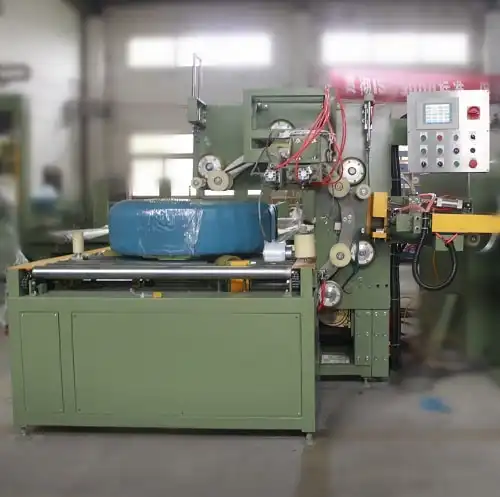
Steel coil handling racks are crucial for optimizing storage layouts by allowing for organized, high-density storage in controlled environments. They facilitate both eye-to-the-sky and eye-to-the-side storage methods, depending on production needs and coil type. Using racks helps prevent the damage caused by stacking coils directly on top of each other or on unstable surfaces. Strategic placement of racks streamlines material flow from storage to production lines, reducing transit time and the risks associated with excessive handling.
Eye-to-the-Sky vs. Eye-to-the-Side in Racks
The orientation in which coils are stored significantly impacts both space utilization and ease of access for processing. ‘Eye-to-the-sky’ (bore-vertical) is often preferred for finished or bulk coils due to its stability when stacked (with limits, e.g., two high for master coils, three high for slit coils on pallets) and potential for higher storage density per square foot, provided the floor can bear the load and stacks are secured. However, accessing the coil core for decoiling requires a coil tipper to change the orientation to ‘eye-to-the-side’.
Racks specifically designed for ‘eye-to-the-side’ (bore-horizontal) storage are invaluable for coils destined for immediate processing on roll-forming lines. These racks allow the decoiler mandrel to be inserted directly into the coil eye, dramatically reducing changeover time (down to 2-3 minutes with fixed gantry systems feeding the rack). While this orientation requires racks for stability (coils cannot be stacked horizontally without rack support), it optimizes the production workflow. Different rack systems cater to these needs: bulk coil racks often store vertically or can be part of a traveling gantry system, while specialized horizontal racks provide secure cradles for eye-to-the-side storage, often with ample side clearance for lifting hooks or straps. Integrating storage racks with material handling systems like gantries ensures coils are readily available, minimizing machine downtime and enhancing overall factory efficiency. Careful consideration of coil size (narrow vs. broad) is also key when selecting rack types, as broad coils are too large for standard vertical stacking and require chocked or specific racking for horizontal storage, paying attention to their significant weight. The strategic placement of these racks within the facility, considering both inbound logistics from suppliers and outbound flow to production lines, is fundamental to optimizing material flow and minimizing unnecessary, risky handling movements.
Equipment and Technology for Rack Handling
Interacting with steel coil handling racks necessitates the use of specific, often heavy-duty, equipment. The choice and proper use of these tools are critical not only for efficient workflow but, more importantly, for the safety of operators and the protection of valuable steel coils.
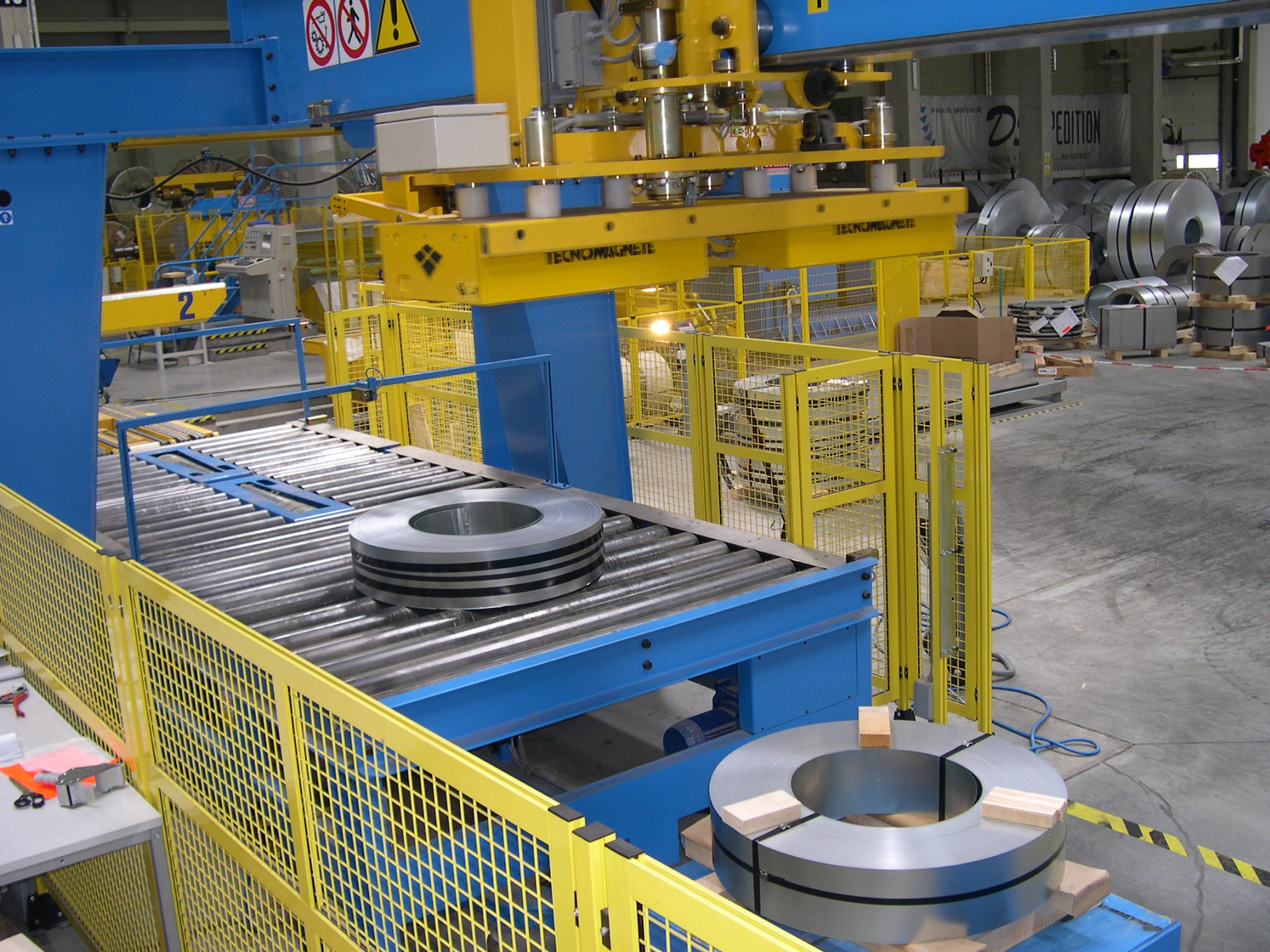
Utilizing the correct equipment is paramount when handling steel coils in conjunction with racks. This includes forklifts with appropriate weight ratings and adequate fork length/width, coil lifters, C-hooks, grabs, tongs, and potentially integrated gantry systems. Regular inspection and maintenance of all lifting equipment are essential to prevent mechanical failures. Operators must be trained on the specific handling techniques required to safely load and unload coils from various rack designs, ensuring the coil is secure and balanced before movement to prevent damage or accidents.
Choosing the Right Tools for Rack Interaction
The diverse nature of steel coil sizes, weights, and the variety of rack systems available means that a one-size-fits-all approach to handling equipment is rarely sufficient. Facilities must assess their specific needs, coil types, and rack configurations to select the most effective and safest tools. For instance, while standard forklifts are common, multi-directional forklifts like those used by Metroll offer enhanced maneuverability and the ability to handle coils in both eye-to-sky and eye-to-side orientations, improving stability when traversing narrow aisles common between racks. Specialized coil lifters, such as C-hooks or core grabs, provide secure attachment points designed for the unique shape and weight distribution of coils, reducing the risk of slippage compared to standard forks when handling coils eye-to-side. Gantry cranes, particularly fixed gantries integrated with eye-to-side racks, offer a highly efficient and controlled method for changing coils on production lines, minimizing the need for forklifts in that specific area and streamlining the process. Automated handling systems, while a significant investment, can further enhance efficiency and safety by precisely positioning coils into or out of racks, reducing human error and potential for coil damage. The selection process should always prioritize equipment capacity well above the maximum expected coil weight, as using underrated equipment is a major safety hazard.
| Equipment Type | Primary Function in Rack Handling | Key Safety Considerations | Compatibility with Rack Types |
|---|---|---|---|
| Forklift (Standard) | Moving coils on pallets into/out of racks | Weight rating, fork length/width, stability, operator training, load balancing. | Pallet racks, floor storage (eye-to-sky) |
| Forklift (Multi-directional) | Versatile coil movement, often between racks | Enhanced maneuverability, weight distribution, operator training for unique operation. | High-density rack systems, narrow aisle racks, handling eye-to-side with cradles. |
| Coil Lifters (C-hooks, Grab) | Securely lifting coils by the eye or outer diameter | Proper sizing for coil dimensions, weight rating, structural integrity, controlled swing. | Eye-to-side racks, floor storage (for repositioning before racking). |
| Gantry Crane (Fixed/Traveling) | Overhead lifting for rack loading/unloading | Load capacity, clear pathways, operator training, hoist type (manual/electric). | Racks integrated into or placed under gantry systems, production line feeding. |
| Automated System | Robotic or automated loading/unloading | Programming accuracy, safety interlocks, reduced human interaction risks, maintenance. | Custom-designed automated rack systems, high-volume facilities. |
| Coil Tipper | Changing coil orientation (vertical to horizontal) | Stability of base, controlled tilting speed, secure coil before tilting. | Used in conjunction with vertical storage before loading into horizontal racks. |
Maintaining Racks and Procedures for Longevity
The effectiveness and safety of steel coil handling racks are not solely dependent on their initial design and proper usage but also on ongoing maintenance and adherence to established procedures. A proactive approach ensures that these critical storage assets remain reliable over time.
Regular inspection and maintenance of steel coil handling racks are paramount to preventing structural failures and ensuring continued safe operation. This includes checking for damage, corrosion, or deformation caused by impact or overloading. Implementing a preventive maintenance schedule for both the racks and the equipment used to interact with them, such as forklifts and lifting devices, minimizes unexpected breakdowns and extends the lifespan of assets. Clear, documented procedures for loading, unloading, and inventory management within the rack system are essential for consistency, safety, and efficiency. These procedures should be regularly reviewed and updated based on industry best practices and internal incident analysis, ensuring that all personnel are adequately trained and adhere to the latest safety protocols. An effective inventory management system, often integrated with the rack layout, reduces unnecessary searching and handling, further contributing to both efficiency and safety by minimizing the risk of moving or damaging coils incorrectly.

Maintaining handling equipment, including forklifts, cranes, and specific coil attachments, according to manufacturer recommendations and regulatory requirements is just as vital as rack maintenance. Worn forks, faulty hydraulics, or damaged lifting hooks can directly lead to accidents when interacting with racks. Establishing clear lockout/tagout (LOTO) procedures for equipment maintenance or repair is crucial to prevent accidental activation while workers are in potentially hazardous areas around racks. Procedural systems, even those relying on simple moveable chocks or cradles on a floor, require strict adherence to safe operating procedures (SOPs) to be effective. Engineered systems, like large racking structures, may even require a pre-start health and safety review according to regulations, highlighting the importance of formal assessment and approval. Training should cover these SOPs, the limitations of different equipment, and the specific requirements for loading and unloading coils into different rack types, emphasizing the importance of securing loads and avoiding sudden movements. Combining diligent maintenance with well-defined and enforced procedures creates a safer, more efficient environment for managing steel coils stored in racks.
Conclusion
Effective steel coil management, particularly through the strategic use of handling racks, is fundamental to safety and efficiency in metal processing operations. By prioritizing proper training, utilizing appropriately rated equipment, and implementing rigorous storage and handling procedures, companies can mitigate the significant risks associated with these heavy materials. Regular maintenance of racks and equipment, coupled with efficient workflow design and inventory management, streamlines operations, reduces waste, and protects valuable assets. Embracing these best practices ensures a safer work environment, prevents costly damage, and ultimately supports long-term business success in the demanding world of steel fabrication and manufacturing. Implementing a robust coil handling system is a critical investment in your company’s future.








