
Automation for Growth | The Role of Slit Coil Packing Lines in Mexico’s Steel Service Centers
The steel industry in Mexico is booming. This growth brings many opportunities but also tough challenges. Service centers often struggle with outdated packing methods. These methods are slow, prone to errors, and can lead to higher operational costs. This affects their ability to meet rising demand and compete effectively. I have seen this problem many times in my journey in the packing machine industry. Businesses need to adapt and embrace modern solutions to stay ahead.
Slit coil packing lines play a vital role in ensuring growth for steel service centers in Mexico by boosting efficiency, improving product quality, and lowering operating costs. These automated systems help centers handle increased production volumes. They also meet strict customer demands. They position businesses for stronger market competition and sustainable expansion in a dynamic economic landscape.

As a packing machine engineer, I have seen how automation transforms businesses. Many of my clients achieved financial independence and grew their operations significantly by adopting the right technology. Now, let’s explore how these advanced packing lines truly make a difference. We will look at why they are so important for Mexico’s thriving steel service centers.
Why is automation critical for slit coil packing in Mexico’s steel industry?
Outdated, manual packing processes can hinder growth in a fast-paced market. Mexico’s steel industry is experiencing rapid expansion. This means businesses face pressure to deliver products quickly and with high quality. Relying on old methods often leads to bottlenecks, inconsistent packaging, and missed delivery targets. This situation can damage customer trust and impact profitability.
Automation is critical for slit coil packing in Mexico’s steel industry because it directly addresses the need for speed, consistency, and cost-efficiency in a growing market. It helps service centers meet increasing local and international demands. These demands require higher throughput and reliable packaging quality. Automation ensures products are ready for market faster and safer. It also helps businesses stay competitive in a global economy.
I have worked with many companies. I often see how manual processes slow down operations. This is especially true for tasks like coil packing. In Mexico, steel service centers need to handle diverse products. They also need to manage varying customer requirements. Manual operations lead to high labor intensity. They also cause quality variations. This results in customer complaints and higher operational costs. An automated system solves these problems. It ensures smooth, continuous operation. It handles different coil sizes and packing styles without constant manual adjustments. This makes the entire process more efficient and much more reliable. (automation benefits for steel service centers)
What are the key features of an efficient slit coil packing line?
Choosing the right packing line is very important. Not all machines offer the same level of performance or flexibility. Investing in a line that lacks essential features can lead to new problems. This includes limited product adaptability and high maintenance costs. Businesses need to understand what makes a packing line truly efficient to make a smart investment.
An efficient slit coil packing line includes automatic strapping, robust wrapping capabilities, and integrated handling systems. It adapts to different coil dimensions and weights. These lines ensure consistent, secure, and protective packaging. They reduce manual intervention and maximize throughput. They are built for continuous, high-volume operation.

When I design solutions at FHOPEPACK, I focus on several core features. These features ensure a packing line delivers real value.
-
Versatile Handling and Conveying Systems:
- Automated Movement: The line uses specialized conveyors and turntables. They move coils smoothly between stations. This reduces the need for manual handling. It also prevents damage to the coils.
- Weight and Dimension Adaptability: An efficient line handles a wide range of coil sizes and weights. This includes coils from 1 to 3 tons. It also adjusts for varying inner and outer diameters. This flexibility is key for diverse product lines.
- Integrated Weighing and Labeling: Before packing, coils are automatically weighed. They also receive labels. These labels often include barcodes. This ensures accurate inventory management. It also supports traceability for export. (versatile coil handling systems)
-
Advanced Strapping and Wrapping Technology:
- Automatic Strapping: The system uses PET or steel straps. It applies them automatically and with consistent tension. This secures the coil for transport. It prevents loosening during transit.
- Moisture-Proof Wrapping: High-quality stretch film or VCI paper provides excellent protection against rust and corrosion. The wrapping machine applies film tightly. This forms a protective barrier around the coil.
- Customizable Packing Patterns: The line can apply different wrapping patterns. This meets specific customer requirements. It also ensures optimal protection for various steel types, like cold-rolled or galvanized coils. (advanced coil packing technology)
-
Reliability and Continuous Operation:
- Heavy-Duty Construction: All components are built for demanding industrial environments. This ensures long-term reliability. It also supports 24/7 operation with minimal downtime.
- Automated Diagnostics: Modern lines include sensors and software. They monitor performance. They also detect potential issues early. This allows for proactive maintenance. It prevents costly breakdowns.
- Easy Integration: The packing line integrates seamlessly with upstream production lines. This creates a continuous, automated workflow. It eliminates manual transfers between processes. This improves overall plant efficiency. (reliable industrial packing lines)
How do automated lines address labor shortages and safety concerns?
Many steel service centers face significant challenges with labor. It is hard to find enough workers for high-intensity packing tasks. Young workers often prefer less physically demanding jobs. This leads to high turnover rates and a reliance on an aging workforce. Manual handling of heavy steel coils also presents serious safety risks. These risks include crush injuries, strains, and other accidents.
Automated slit coil packing lines address labor shortages by reducing the need for manual labor in repetitive and strenuous tasks. They enhance safety by replacing human involvement in hazardous operations, such as lifting and turning heavy coils. This lowers the risk of workplace injuries and creates a safer environment for remaining personnel.
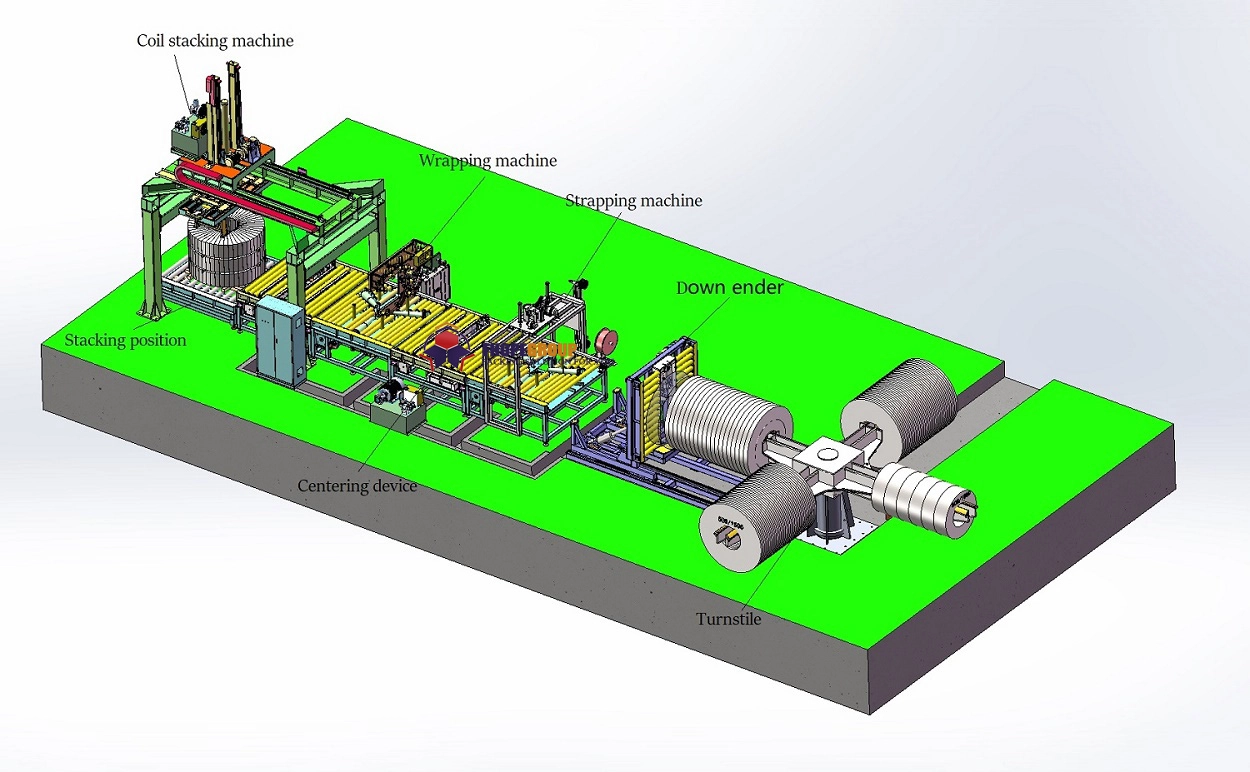
My experience has shown me that safety and labor are often linked. When I help clients automate their packing, I see direct improvements in both areas.
-
Reducing Physical Strain and Repetitive Tasks:
- Automated Lifting: Machines handle all heavy lifting and maneuvering of coils. This eliminates the risk of back injuries and strains for workers.
- Repetitive Task Elimination: Tasks like manual strapping and wrapping are automated. This reduces repetitive motion injuries. It also frees up workers for more skilled roles.
- Ergonomic Design: The overall design of automated lines considers human factors. This makes the interface simple for operators. It improves the working environment. (labor saving packing solutions)
-
Minimizing Exposure to Hazards:
- Controlled Environments: Automated lines operate within safety enclosures. This prevents workers from coming into contact with moving machinery or heavy loads.
- Reduced Foot Traffic: Less manual intervention means fewer people are moving around active production areas. This lowers the chance of accidents from forklift traffic or coil movement.
- Predictable Operations: Automated systems follow precise, programmed movements. This reduces the unpredictability and human error that can lead to accidents. (workplace safety automation)
-
Improving Worker Retention and Morale:
- Upskilling Opportunities: Workers can learn to operate and maintain automated systems. This leads to higher-skilled roles. It also offers better career paths.
- Better Working Conditions: A safer, less strenuous work environment improves job satisfaction. It also helps retain experienced employees. It attracts new talent.
- Consistent Output: Automation reduces stress from production bottlenecks. It also improves overall plant morale. Everyone benefits from a smoother operation. (employee retention through automation)
Can automated packing solutions meet diverse customer demands and export standards?
Customers today expect more than just a product. They demand specific packaging that protects the material and meets various certifications. For steel service centers, this means handling diverse requirements for different types of coils. They also need to meet strict export standards like CE or ISO. Manual packing struggles with this complexity. It often leads to inconsistent quality and compliance issues.
Automated packing solutions are designed to meet diverse customer demands and strict export standards by providing consistent, high-quality, and customizable packaging. They ensure precise application of protective materials, accurate labeling, and adherence to international certifications. This allows steel service centers to confidently serve a wide range of clients, including those with stringent requirements for export.

At FHOPEPACK, I focus on delivering solutions that are not just efficient but also versatile. My goal is to empower businesses to meet any customer request.
-
Precision and Consistency for Quality:
- Uniform Wrapping Tension: Automated machines apply stretch film or VCI paper with consistent tension. This creates an even, secure, and aesthetic package. It protects coils from moisture and corrosion.
- Accurate Strapping Placement: Straps are applied precisely in the correct positions. This ensures maximum load security. It prevents shifting during transport.
- Repeatable Processes: Every coil receives the same high-quality treatment. This eliminates the inconsistencies found in manual packing. It builds customer confidence. (consistent packing quality)
-
Adaptability for Varied Product Types and Requirements:
- Multi-Material Handling: The line can seamlessly switch between different packing materials. This includes PET straps, steel straps, stretch film, VCI paper, and even cardboard protectors.
- Automated Recipe Management: Operators can select pre-programmed packing “recipes” for different coil types (e.g., cold rolled, galvanized, color-coated). This automates material selection and application patterns.
- Specialized Protection: For critical applications, additional protection elements like edge protectors or anti-scratch film can be integrated. This safeguards delicate surfaces. (diverse packaging solutions)
-
Compliance with Global Standards and Traceability:
- Certification Readiness: Automated processes ensure packaging meets international standards like CE, ISO, or specific industry guidelines. This is crucial for export markets.
- Integrated Barcode and Labeling Systems: Machines automatically print and apply labels with unique identifiers, barcodes, and shipping information. This improves traceability. It also helps with inventory control.
- Data Logging: Modern packing lines can record packing parameters for each coil. This provides an audit trail. It helps with quality assurance. (export standard packing)
What is the impact of advanced packing technology on operational costs and efficiency?
High operational costs can reduce profits. Inefficient processes waste valuable resources, time, and materials. For steel service centers, manual packing often means higher labor expenses, more material waste, and frequent production bottlenecks. These issues prevent businesses from reaching their full potential. They also reduce competitiveness.
Advanced packing technology significantly reduces operational costs by minimizing labor needs, optimizing material usage, and decreasing reworks from packing errors. It boosts efficiency through higher throughput, reduced downtime, and seamless integration with existing production lines. This leads to substantial savings and improved overall productivity for steel service centers.
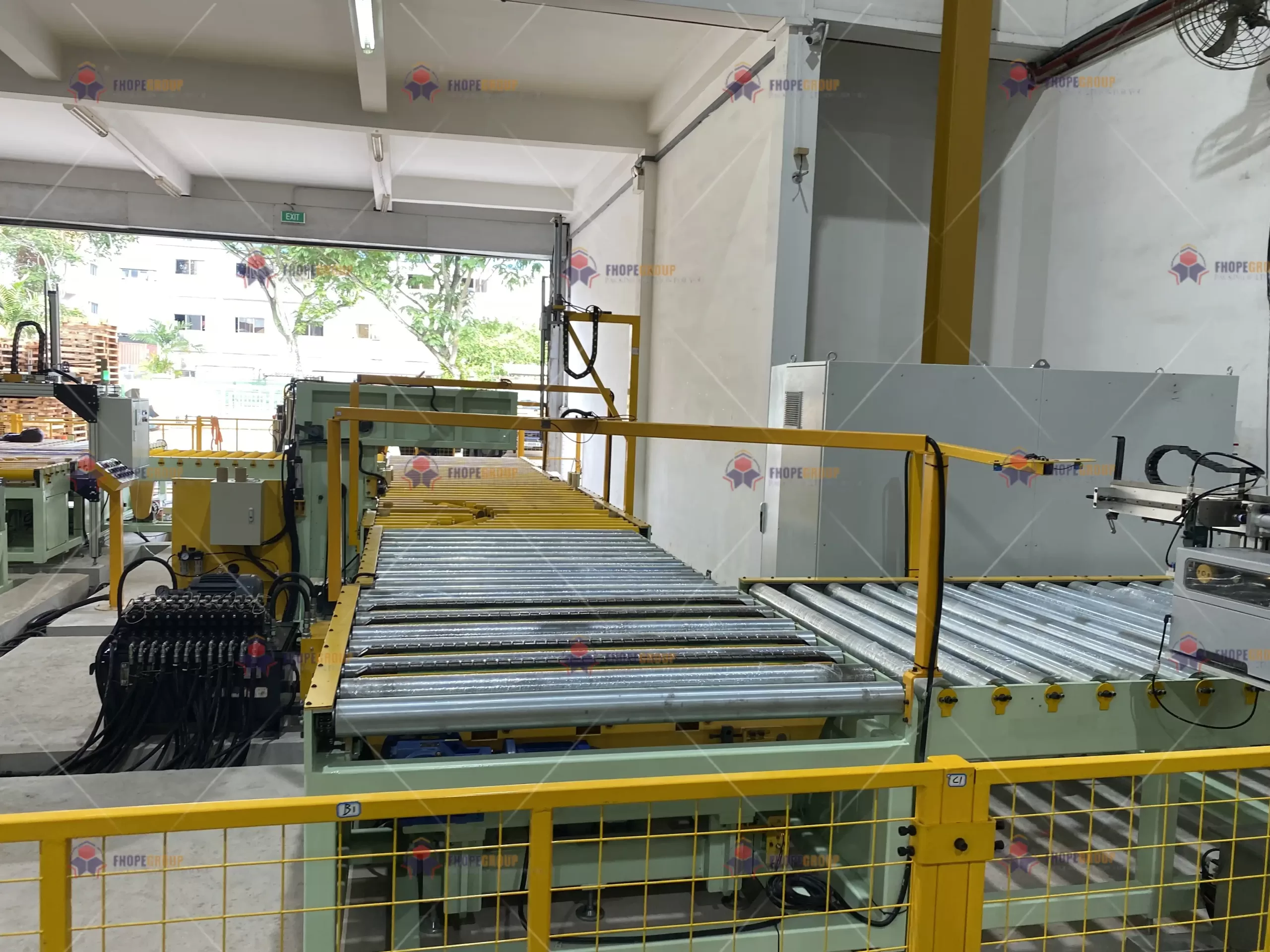
Through my work at FHOPEPACK, I have helped many clients achieve remarkable cost savings and efficiency gains. It is about smart investment.
-
Reduction in Labor Costs:
- Fewer Personnel Required: Automated lines perform tasks that previously needed multiple workers. This reduces direct labor costs. It also frees up staff for other critical areas.
- Lower Training Costs: The need for extensive training on manual packing techniques decreases. Operators focus on monitoring and basic maintenance.
- Reduced Overtime: Automated systems operate continuously. This eliminates the need for expensive overtime to meet production targets. (labor cost reduction automation)
-
Optimization of Packaging Material Usage:
- Precise Material Application: Machines apply exactly the right amount of strapping or film. This minimizes waste. Manual packing often uses excess materials.
- Consistent Tension Control: Automated wrapping ensures optimal stretch and tension. This maximizes the protective qualities of the film. It uses less material to achieve the same or better results.
- Reduced Damaged Goods: Better packaging quality means fewer damaged coils during transit or storage. This saves on replacement costs and repackaging expenses. (packaging material efficiency)
-
Increased Throughput and Production Continuity:
- Faster Packing Cycles: Automated lines pack coils much faster than manual methods. This increases the total number of coils processed per shift.
- Reduced Bottlenecks: The packing stage no longer slows down the overall production flow. It keeps pace with upstream processes.
- 24/7 Operation Capability: Machines can run continuously with minimal supervision. This allows for higher utilization of assets. It maximizes production output. (increased production efficiency)
Conclusion
Automation is not just a trend; it is a necessity for growth in Mexico’s steel service centers. Implementing advanced coil packing line solutions brings immense benefits. These benefits include increased efficiency, improved safety, higher product quality, and significant cost savings. Businesses can overcome labor challenges and meet diverse customer demands. Embracing automation positions them for sustainable success and stronger competitiveness in the market.








