
Automatic vs Semi-Automatic Steel Coil Packaging Line — Key Differences Explained
Have you ever faced sleepless nights worrying about your steel coil packaging process? Many factory owners and production directors, just like Ivan in Russia, tell me about their struggles. They deal with hundreds of tons of cold-rolled and slit coils every day. The packaging process often feels like a bottleneck, slowing down deliveries and leading to customer complaints. Manual methods can be inconsistent and even dangerous. This problem is not unique to Russia or any single region; it is a global challenge for the steel industry (steel coil packaging challenges, global steel industry).
Understanding the core differences between an automatic and a semi-automatic steel coil packaging line is vital for any steel mill aiming for efficiency and reliability. The automatic system integrates multiple steps—like strapping, wrapping, and labeling—into a seamless, hands-free operation, while a semi-automatic line still requires significant human intervention for loading, positioning, and operating individual machines. This distinction directly impacts throughput, labor costs, safety, and the final quality of your packaged coils (automatic vs semi-automatic, packaging line differences).

When I first started in the packing machine industry, I saw firsthand how critical efficient packaging is. It is not just about putting a cover on a product; it is about protecting your reputation and your bottom line. As your production demands grow, so does the pressure on your packaging line. Staying competitive means choosing the right technology. Let’s explore these options to help you make the best decision for your operation (packaging line technology, industrial efficiency).
What Defines an Automatic Coil Packaging Line?
Are you struggling to keep up with high-volume production? Do you want to reduce manual labor and human error? Many operations face these exact questions. An automatic coil packaging line is a complete solution designed to handle steel coils from the production line all the way to shipping, with minimal human involvement. It is about speed, consistency, and safety (high-volume packaging, automated solutions).
An automatic coil packaging line is a fully integrated system that performs every packaging step without direct manual operation. This means coils move seamlessly through different stations like turning, wrapping, strapping, and labeling. My experience building FHOPEPACK was to address this very need. We focus on creating systems that truly automate the entire process. This reduces the need for operators to touch heavy, dangerous coils. It ensures a continuous and consistent flow, which is critical for modern steel mills aiming for high output and quality (fully integrated packaging, continuous flow systems).
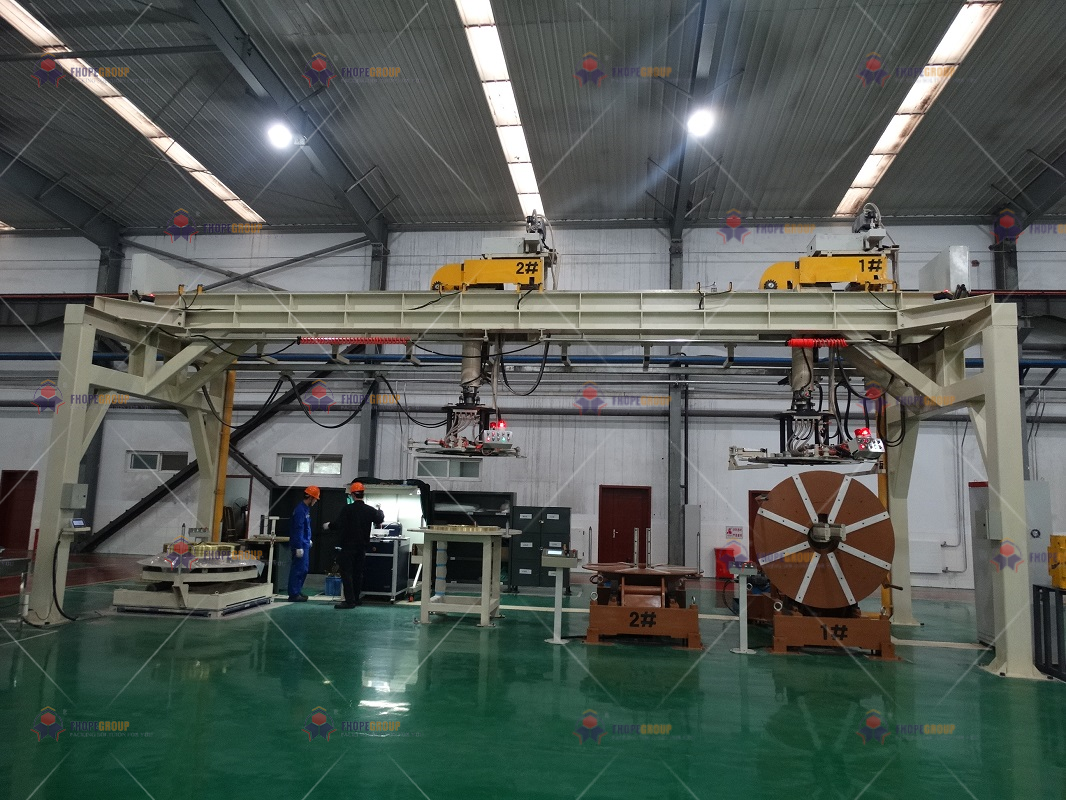
An automatic coil packing line often includes several key modules that work together in a synchronized manner. This integrated approach is what makes it “automatic.”
-
Coil Handling and Positioning:
- Automated Conveyors: These systems automatically transport coils from the production line to the packaging stations. They manage the flow without operators pushing or pulling heavy coils. This removes human interaction with moving parts, reducing injury risks.
- Coil Tilters/Upenders: These machines automatically change the coil’s orientation, from vertical to horizontal or vice versa. This prepares the coil for specific packaging steps, like radial or axial wrapping. This is a critical step for diversified packaging needs.
- Centering Devices: Advanced sensors ensure the coil is perfectly aligned before strapping or wrapping. This precision is vital for consistent packaging quality and preventing material waste. It adapts to varying coil diameters and weights (automated material handling, precise positioning).
-
Packaging Application:
- Automatic Strapping Machines: These units automatically apply multiple PET or steel straps around the coil. They adjust tension based on coil size and material. This ensures the coil is securely bundled for transport. It meets export standards requiring specific strapping patterns and tension (automatic strapping, secure bundling).
- Automatic Wrapping Machines (Stretch/Shrink): Robotic arms or rotating platforms apply stretch film or shrink film around the coil. This provides protection against moisture, dust, and scratches. Different film types can be used for various protection levels, like for galvanized or color-coated coils. This adapts to different client requirements (protective wrapping, moisture barrier).
- Automatic Labeling and Marking: Integrated systems print and apply labels with barcodes, product information, or customer details. This ensures traceability and compliance with international shipping regulations. It is essential for managing diverse product types like cold-rolled, galvanized, and pre-painted coils (automated labeling, product traceability).
-
Output and Stacking:
- Automated Stacking and Palletizing: After packaging, coils are automatically moved to designated storage areas or onto pallets. This reduces manual lifting, which is a common cause of workplace injuries. This system streamlines the final steps before shipment. It connects smoothly with warehouse management systems for efficient logistics (automated stacking, warehouse integration).
The biggest benefit of an automatic system, as Ivan from Russia recognizes, is its ability to ensure reliable, continuous operation 24/7. It handles varying coil sizes, from 1 to 3 tons, with consistent results. My team at FHOPEPACK has seen how this level of automation transforms production floors, increasing output while significantly improving worker safety (24/7 reliability, transformed production).
How Does a Semi-Automatic System Compare in Operation?
Are you running a smaller operation or just starting to automate? Do you have a limited budget but still want to improve your packaging process? Many businesses face these exact questions. A semi-automatic packaging line offers a middle ground. It balances mechanization with human involvement. This can be a good first step towards full automation (small scale automation, budget-friendly packaging).
A semi-automatic system involves machines that perform specific packaging tasks but require an operator for loading, positioning, or activating each step. For example, an operator might place a coil on a strapping machine and then manually initiate the strapping cycle. While it reduces physical labor compared to fully manual methods, it still depends on human intervention. This contrasts with automatic systems that handle these steps autonomously. It often means a slower pace and higher potential for inconsistency compared to full automation (operator-assisted machines, manual intervention).

A semi-automatic packaging line integrates machines that perform specific tasks but still require human input to control or initiate various operations. This hybrid approach has its own set of characteristics.
-
Operator Involvement and Control:
- Manual Loading/Unloading: Operators typically use overhead cranes or forklifts to place coils onto individual machines. They also remove packaged coils. This requires skilled labor and attention to safety protocols for heavy lifting. It can be a bottleneck in high-throughput environments (manual material handling, crane operation).
- Manual Machine Activation: Each packaging machine, whether it is a strapper or a wrapper, usually needs an operator to press buttons or levers to start its cycle. This means a direct human presence is required at each station. This affects the overall speed and consistency of the line (manual machine control, operator presence).
- Adjustments by Hand: Operators often need to manually adjust machine settings for different coil sizes, weights, or packaging requirements. This can include changing strap tension, film overlap, or machine speed. This offers flexibility but introduces potential for human error (manual adjustments, human variability).
-
Machine Components:
- Standalone Strapping Machines: These machines apply straps automatically once the coil is in place and the cycle is started by an operator. They can use PET or steel straps. They are generally simpler and less integrated than their automatic counterparts. They are good for operations with variable coil types (standalone strappers, simple operation).
- Semi-Automatic Wrapping Machines: Operators position the coil and then initiate the wrapping process. Some machines might have a rotating platform for the coil, while others might have a rotating arm that moves around the stationary coil. Film cutting and sealing might still require manual input. These machines protect against dust and moisture, but consistency depends on the operator (operator-assisted wrapping, film application).
- Basic Labeling Devices: Labels are often printed separately and then manually applied to the packaged coils. This process is slower and might lack the precision or data integration of an automatic system. It is less suitable for strict traceability requirements or high export volumes (manual labeling, basic identification).
-
Flexibility and Setup:
- Easier Changeovers: Because human operators are involved in adjustments, changing between different coil types or packaging styles can sometimes be simpler. It needs less complex programming than a fully automatic line. This suits diverse product portfolios (flexible changeovers, manual customization).
- Modular Design: Semi-automatic lines often consist of individual, modular machines. This means you can add or upgrade components over time. This offers a more scalable approach, allowing for gradual investment into automation as needs grow (modular scalability, phased investment).
From my perspective at FHOPEPACK, semi-automatic systems are excellent for businesses that need to improve from purely manual methods without committing to the full investment of an automatic line. They offer better safety and speed than manual work alone. They are a valuable stepping stone for many businesses in the steel packaging industry (gradual automation, cost-effective upgrade).
What Are the Key Differences in Efficiency and Output?
Are your current packaging methods limiting your production throughput? Is inconsistent output affecting your delivery schedules? These questions are at the heart of operational efficiency. The choice between automatic and semi-automatic systems has a direct impact on how many coils you can package and how quickly you can do it (production throughput, operational efficiency).
The most striking difference between automatic and semi-automatic lines lies in their efficiency and output capabilities. An automatic line, designed for continuous, high-speed operation, can process significantly more coils per hour than a semi-automatic one. This is because every step is synchronized and automated, eliminating waiting times and human-paced tasks. For instance, while a semi-automatic line might achieve 20-30 coils per hour with dedicated operators, a fully automatic line can easily exceed 60-80 coils per hour, often even more. This makes a huge difference for large-scale operations like Ivan’s steel mill (high-speed packaging, continuous operation).
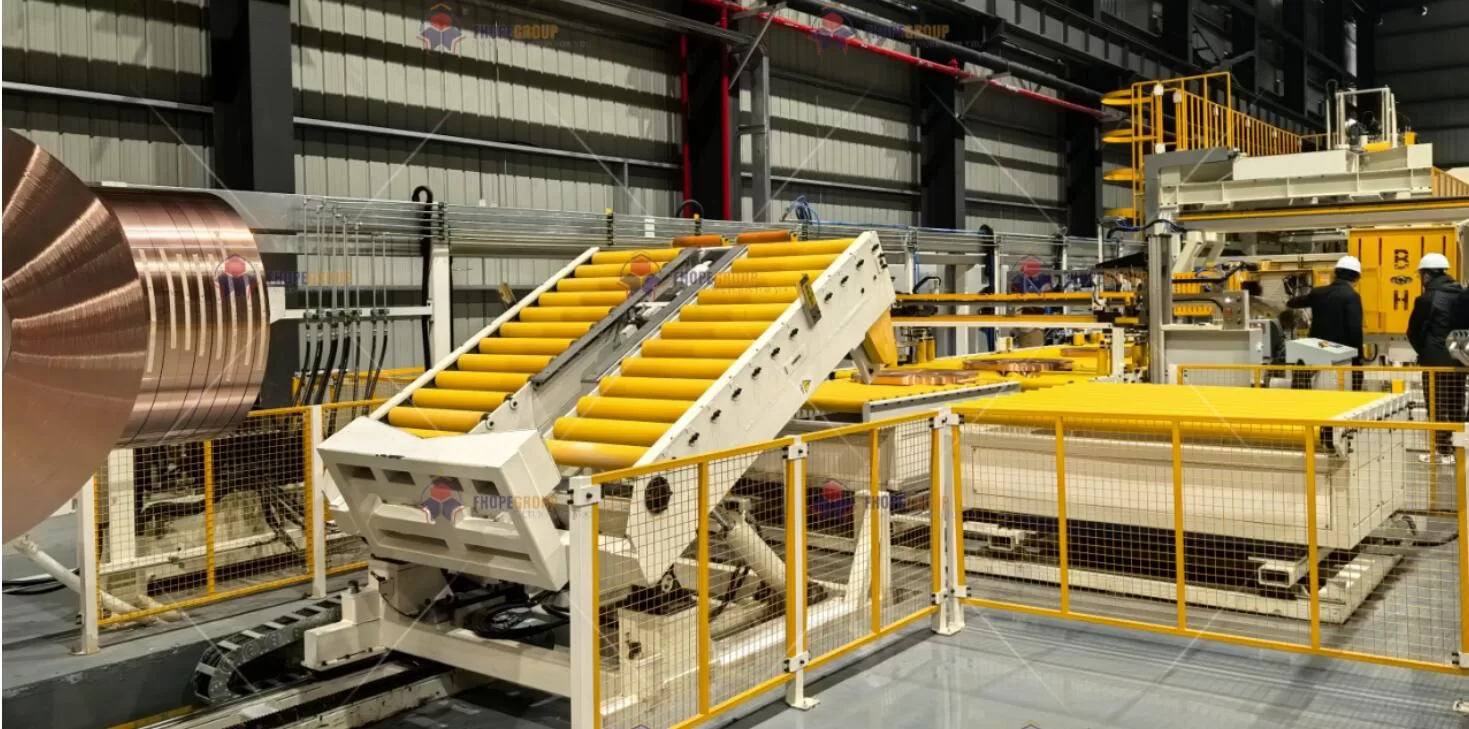
When we talk about the efficiency and output of packaging lines, we need to consider several key factors that differentiate automatic and semi-automatic systems. These factors directly affect a steel mill’s ability to meet demand and maintain competitive delivery times.
-
Production Speed and Throughput:
- Automatic Lines: These systems are engineered for maximum speed and continuous operation. They use sensors, conveyors, and robotic arms to move coils seamlessly from one process to the next without interruption. This results in significantly higher coils per hour (CPH) compared to semi-automatic systems. For example, an automatic line can often achieve 60-120 CPH, depending on coil size and packaging complexity. This makes them ideal for large steel mills with high production volumes (maximum speed, continuous throughput).
- Semi-Automatic Lines: Production speed is limited by the pace of human operators. Each manual action, such as loading a coil, initiating a machine cycle, or adjusting settings, adds to the overall cycle time. While faster than purely manual methods, semi-automatic lines typically achieve 20-40 CPH. Their output is less consistent due to operator fatigue or varying skill levels. This is a challenge for plants experiencing labor shortages (operator-limited speed, inconsistent output).
-
Bottleneck Identification and Elimination:
- Automatic Lines: Because the entire process is integrated and synchronized, bottlenecks are often designed out during the engineering phase. If a bottleneck arises, it is usually due to a specific machine malfunction, which can be diagnosed and addressed systematically. The goal is a smooth, uninterrupted flow. This means minimizing idle time between packaging steps (integrated flow, bottleneck elimination).
- Semi-Automatic Lines: Human intervention at multiple points creates potential bottlenecks. An operator might be slower at one station, causing coils to pile up at the previous one. Coordination between different operators can be challenging, especially during shift changes or when dealing with diverse product types like cold-rolled or galvanized coils. This leads to intermittent stoppages (human bottlenecks, coordination challenges).
-
Operational Consistency:
- Automatic Lines: These systems perform tasks with precise, repeatable movements and programmed settings. This ensures a uniform output across all coils, minimizing variations in strapping tension, wrapping overlap, and label placement. Consistency is key for meeting strict quality standards, especially for export clients requiring CE/ISO certification (uniform output, precise operations).
- Semi-Automatic Lines: The consistency of packaging quality and speed relies heavily on the operator’s skill, training, and attentiveness. Fatigue or inexperience can lead to variations in packaging quality, such as uneven film tension or loose straps. This can result in costly reworks or customer complaints, affecting the steel mill’s reputation (operator-dependent consistency, quality variability).
Based on my years in this industry, the numbers speak for themselves. If your goal is to maximize efficiency, reduce human-related delays, and ensure a steady output for diverse steel products, an automatic line, like those FHOPEPACK designs, is the clear winner. It helps companies achieve their production targets with confidence (maximized efficiency, consistent production).
How Do Safety and Labor Costs Differ Between the Two Systems?
Are you concerned about workplace safety in your packaging area? Is the cost and availability of skilled labor a growing problem? These are critical questions for any production manager. The differences in safety and labor costs between automatic and semi-automatic systems are substantial and directly impact a company’s bottom line and its most valuable asset: its employees (workplace safety, labor cost reduction).
Workplace safety and labor costs are often intertwined. An automatic coil packaging line drastically reduces the need for human interaction with heavy machinery and dangerous moving parts, thus enhancing safety. Less manual handling means fewer strains, crushes, and other common industrial accidents. This also translates directly into lower labor requirements. For example, a single operator might oversee an entire automatic line, whereas a semi-automatic line might need several operators for the same output. This difference is especially important in regions like Russia where experienced labor for physically demanding jobs can be hard to find and retain (reduced human interaction, lower labor requirements).

When considering packaging solutions, the impact on safety and labor costs is a top priority for production directors like Ivan. These two areas often justify the investment in higher levels of automation.
-
Workplace Safety:
- Automatic Lines: These systems are designed with advanced safety features. They include interlocking guards, emergency stop buttons, and sensors that detect human presence or misfeeds. Automation removes operators from direct contact with heavy, moving steel coils and strapping mechanisms. This significantly reduces the risk of injuries such as crushing, cuts, or strains. It creates a much safer working environment. My experience at FHOPEPACK has shown that reducing human intervention is the most effective way to prevent accidents in a steel mill (advanced safety features, reduced direct contact).
- Semi-Automatic Lines: While better than fully manual processes, semi-automatic lines still require operators to load/unload coils, initiate cycles, and sometimes manually adjust equipment. This increases the risk of accidents from heavy lifting, pinch points, or unexpected machine movements. Operators must be highly vigilant and strictly adhere to safety protocols. This demands ongoing training and supervision, which adds to operational overhead (operator exposure, higher accident risk).
-
Labor Requirements and Costs:
- Automatic Lines: A fully automatic line requires minimal human oversight. Often, one or two technicians can monitor the entire line. This drastically reduces the number of operators needed for packaging. Lower labor needs mean significant cost savings in wages, benefits, and recruitment. It also helps address labor shortages, a common challenge in heavy industries. This allows for redeployment of skilled workers to more critical tasks within the steel mill (minimal oversight, significant cost savings).
- Semi-Automatic Lines: These systems require a dedicated operator for each machine or station. If you have separate machines for strapping, wrapping, and labeling, you might need three or more operators. This results in higher labor costs compared to automatic lines. Furthermore, finding and retaining skilled operators for repetitive, sometimes demanding, tasks can be difficult. This contributes to the issue of high employee turnover and inconsistent performance (higher labor demand, increased operational costs).
-
Human Error and Fatigue:
- Automatic Lines: Machines do not get tired or make mistakes due to fatigue. They perform tasks consistently for 24 hours a day, seven days a week. This virtually eliminates errors related to human concentration or physical endurance. This ensures consistent packaging quality and reduces material waste (error-free operation, consistent performance).
- Semi-Automatic Lines: Operators working long shifts can experience fatigue, which increases the likelihood of errors. These errors can range from incorrect strapping tension to improper film application, leading to product damage or inefficient use of packaging materials. Such errors lead to rework, waste, and potential customer dissatisfaction. This impacts the overall efficiency and profitability (operator fatigue, increased error rates).
For a large-scale steel mill, the long-term savings in labor costs and the improved safety record from an automatic system are compelling. It is an investment in both your financial health and your employees’ well-being. FHOPEPACK prioritizes both aspects in our designs (long-term savings, employee well-being).
Which System Offers Better Packaging Quality and Consistency?
Are your packaged coils arriving at your customers with inconsistent quality? Do you worry about damage from moisture, rust, or scratches during transit? These concerns directly impact your brand reputation and customer satisfaction. Packaging quality is not just about aesthetics; it is about product integrity and meeting strict export standards (packaging quality, product integrity).
When it comes to packaging quality and consistency, automatic lines generally outperform semi-automatic ones. Automatic systems apply packaging materials with precise, programmed tension and overlap. This results in uniformly protected coils, every time. For instance, in an automatic PET or steel strapping machine, the tension is electronically controlled, ensuring each strap is applied perfectly. Manual or semi-automatic operations, however, rely on the operator’s judgment and physical effort, leading to variations in tension, alignment, and overall protection. This inconsistency can be a major issue for high-value products or export markets with stringent requirements, such as those Ivan’s steel mill serves (precise packaging, uniform protection).
Achieving superior packaging quality and consistency is a non-negotiable for modern steel mills. This is especially true for companies dealing with diverse products like cold-rolled, galvanized, or color-coated coils, and those with demanding export customers.
-
Precision in Material Application:
- Automatic Lines: These systems are equipped with advanced sensors and control units that ensure precise application of all packaging materials. For example, strapping machines apply straps with exact tension and position, preventing loosening during transport. Wrapping machines maintain consistent film overlap and tension, creating a uniform, moisture-proof barrier. This precision is difficult to replicate with human hands. It guarantees optimal protection against rust, dust, and physical damage (exact tension, uniform barrier).
- Semi-Automatic Lines: The quality of material application heavily depends on the operator’s skill and attention. Manual adjustments or inconsistent physical effort can lead to uneven strap tension, gaps in wrapping film, or improper seal. These inconsistencies compromise the protective qualities of the packaging. They increase the risk of product damage in transit, which can lead to customer complaints and financial losses (operator variability, compromised protection).
-
Protection Against Environmental Factors:
- Automatic Lines: With consistent and tightly sealed packaging, automatic systems offer superior protection against environmental factors. Whether it is moisture, humidity, or dust, the uniform application of stretch film, shrink film, or other protective layers creates an effective barrier. This is critical for galvanized and color-coated coils that require strict moisture and rust prevention. It ensures the product arrives in pristine condition, meeting stringent customer demands (superior environmental protection, rust prevention).
- Semi-Automatic Lines: Inconsistent film application or inadequate sealing from semi-automatic processes can leave coils vulnerable to environmental damage. Gaps or loose spots in the wrapping can allow moisture ingress, leading to rust formation. This is a significant concern for export shipments where coils endure long journeys and varying climatic conditions. The cost of damage and returns can quickly outweigh any initial savings on equipment (vulnerable packaging, transit damage).
-
Adherence to Standards and Certifications:
- Automatic Lines: The consistent output of automatic packaging lines makes it easier to meet international packaging standards like CE/ISO certifications. Automated labeling systems can also accurately apply barcodes and product information. This ensures full traceability and compliance. This is a crucial advantage for export-oriented operations, which often have to meet very specific packaging requirements from global clients (international compliance, traceable packaging).
- Semi-Automatic Lines: Achieving consistent adherence to strict international standards can be challenging with semi-automatic systems. The reliance on human intervention introduces variability that may not always meet precise specifications. Manual barcode application might lead to errors. This can create hurdles for export approvals and increase the risk of rejected shipments (variable compliance, export challenges).
My team at FHOPEPACK always emphasizes that consistent quality builds trust. For steel mills exporting sensitive products, investing in an automatic line guarantees that every coil meets the highest standards. It protects your product and your reputation (consistent quality, brand trust).
Conclusion
Choosing between an automatic and semi-automatic steel coil packaging line depends on your specific needs, production volume, and budget. For operations like Ivan’s, facing high output, labor shortages, and stringent quality demands, an automatic coil packing line is a strategic investment. It ensures unparalleled efficiency, safety, and consistent packaging quality, helping you meet global standards and secure your long-term success. My team at coil packing line solutions is ready to customize the perfect system for you.








