
Automatic Steel Coil Packing Machine Price Guide for the USA Steel Service Centers?
Are you a factory manager in the USA, constantly battling inefficiencies on your packing line? Do you worry about worker safety or product damage during handling and wrapping? The pressure to boost output, control costs, and meet stringent safety regulations is immense, especially in the demanding environment of a steel service center. You know that any downtime means significant losses, and you’re tired of relying on outdated, manual processes.
Investing in an automatic steel coil packing machine can be a game-changer for USA steel service centers, directly addressing efficiency bottlenecks, safety concerns, and product loss while providing a clear return on investment. This guide will help you understand the core costs and value propositions, ensuring you make an informed decision for your operation.
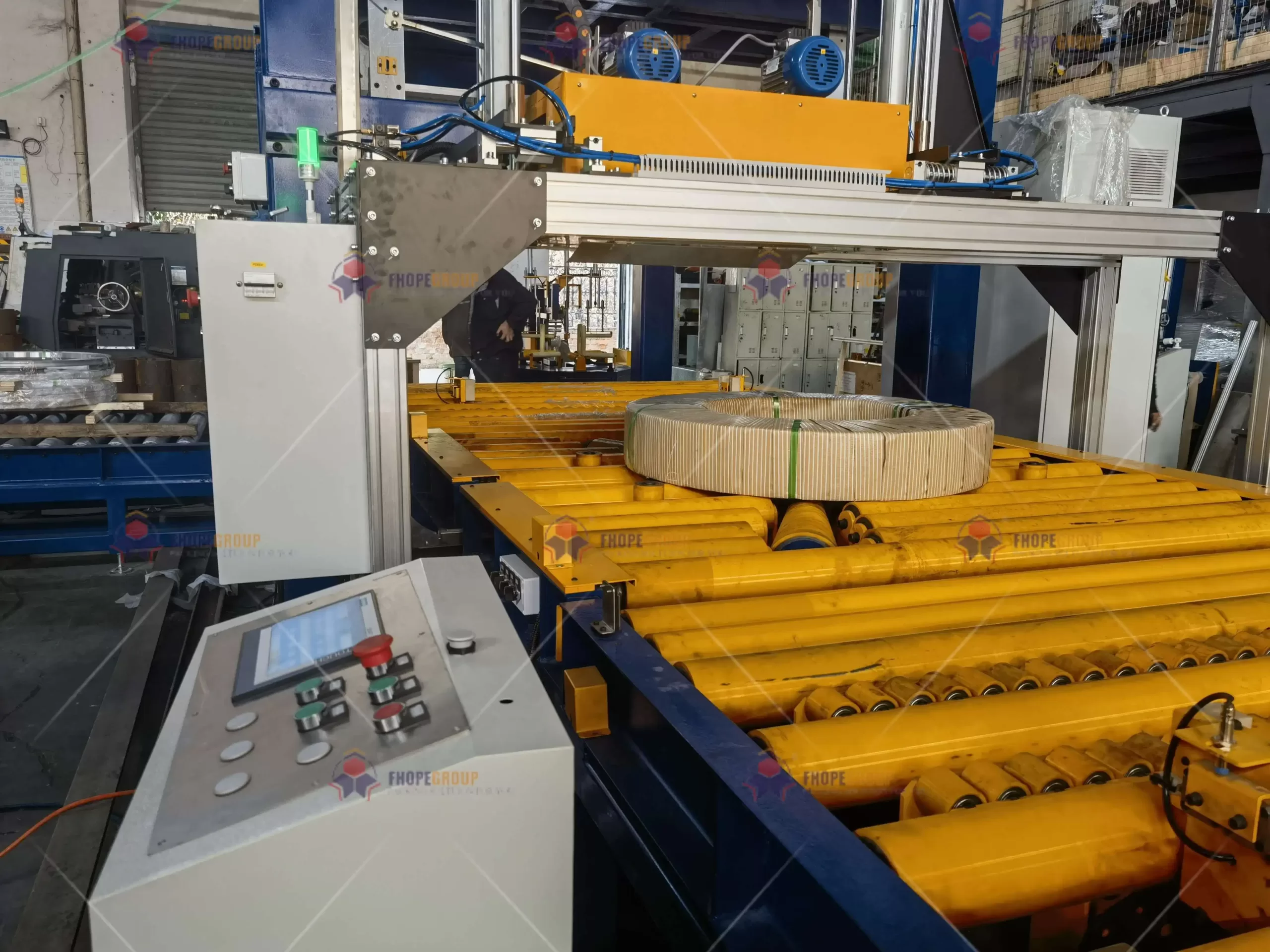
I’ve seen firsthand how automation transforms businesses, from small operations to large-scale plants. If you’re looking for solutions that truly understand your challenges – from production bottlenecks to safety risks – and can deliver reliable, durable equipment, then you’ve come to the right place. Let’s explore how to navigate the world of automatic steel coil packing machines.
1. What Exactly is an Automatic Steel Coil Packing Machine, and Why Do USA Steel Service Centers Need One?
Manual coil packing is slow, labor-intensive, and carries significant risks. Workers often struggle with heavy loads, leading to injuries and inconsistent packing quality. This impacts not only efficiency but also your bottom line. An automatic steel coil packing machine provides a complete solution.
An automatic steel coil packing machine is an integrated system designed to efficiently and safely wrap, strap, and handle heavy steel coils, minimizing human intervention. These machines are crucial for USA steel service centers seeking to improve throughput, reduce labor costs, enhance safety standards, and protect finished products during storage and transit.
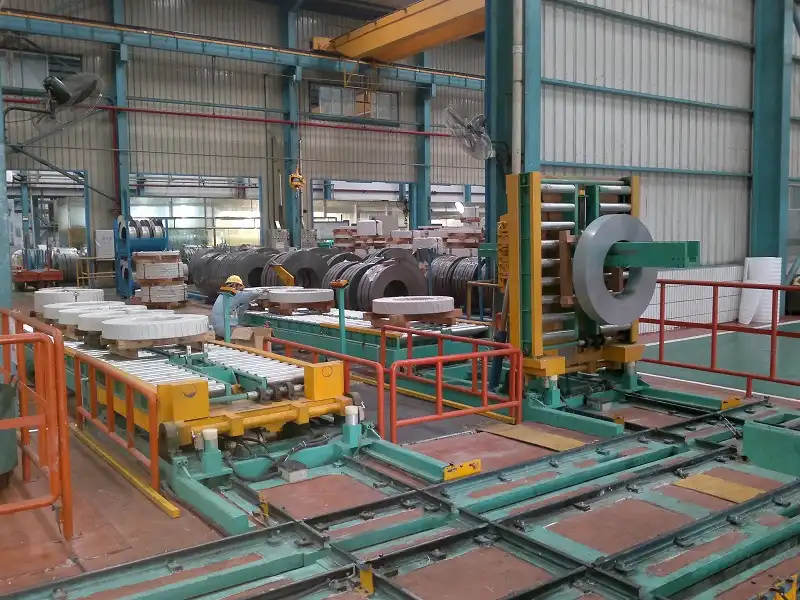
The Core Components and Functions of an Automated Coil Packing System
At FHOPEPACK, we’ve spent years developing and refining these systems. From my experience building and running packing machine factories, I’ve learned that a robust automated system isn’t just about speed; it’s about consistency, safety, and reliability. For a USA steel service center, these machines are more than just equipment; they are strategic investments that streamline the entire post-processing workflow. They handle various coil types, including slit coils, master coils, and wire coils, providing tailored protection. This automation directly tackles the “efficiency bottleneck” and “safety hazard” challenges many managers, like Michael, face daily. (automated coil wrapping, industrial coil strapping, steel coil handling solutions)
Let’s break down the essential elements you’ll find in an automatic steel coil packing line:
- Coil Loading System: This is where the process begins. Coils are often loaded onto a conveyor or shuttle car using overhead cranes or forklifts. Automated loading systems ensure precise positioning and smooth transfer into the packing zone. This minimizes manual effort and eliminates the dangers associated with heavy lifting. For instance, a common setup might involve a V-type conveyor that aligns the coil perfectly.
- Wrapping Machine: This is the heart of the system. It applies various packing materials – such as stretch film, VCI paper, HDPE, or woven fabric – around the circumference of the coil. The machine rotates the coil or orbits around it, creating a tightly secured, weather-resistant, and anti-corrosion barrier. Different wrapping patterns can be programmed for optimal protection. Think of it as giving your valuable steel products a custom-fit protective shield.
- Strap Applicators: After wrapping, strapping machines apply robust steel or PET straps to further secure the coil. These straps prevent the packing material from shifting and add structural integrity, especially for heavy coils during transportation. Automatic strapping ensures consistent tension and placement, which is vital for preventing product damage.
- Down Ender/Up Ender (Optional but Recommended): Many coils need to be flipped from horizontal to vertical or vice versa for storage or shipping. Automated down enders perform this task safely and efficiently, reducing the need for dangerous manual flipping or specialized crane attachments. This is a huge win for workplace safety in any US steel plant.
- Conveyor Systems: A series of motorized conveyors move the coils seamlessly through each packing stage, from loading to wrapping, strapping, and finally to the outbound area. These conveyors are built to withstand heavy loads and harsh industrial environments. They maintain a steady flow, preventing bottlenecks and increasing overall line speed.
- Control System: The entire line is managed by a centralized PLC (Programmable Logic Controller) system with an HMI (Human-Machine Interface) touch screen. Operators can easily set parameters, monitor progress, diagnose issues, and switch between different packing programs. This smart control enhances efficiency and reduces the need for constant manual adjustments.
(automatic steel coil packing equipment, industrial automation for steel, heavy-duty coil wrappers)
These machines are not just about “packing”; they are about transforming your logistical efficiency and safety protocols in a demanding sector like USA steel manufacturing.
2. What Factors Significantly Influence the Price of Automatic Steel Coil Packing Machines for USA Service Centers?
The price of an automatic steel coil packing machine is not a fixed number. It’s an investment, and like any major investment, its cost is influenced by several critical factors. Understanding these elements is key to budgeting effectively and ensuring you get a solution that truly meets your needs.
The price of an automatic steel coil packing machine for USA steel service centers varies widely, primarily influenced by the level of automation, coil size and weight capacity, packing material requirements, customization needs, integration with existing lines, and the reputation and support offered by the supplier.
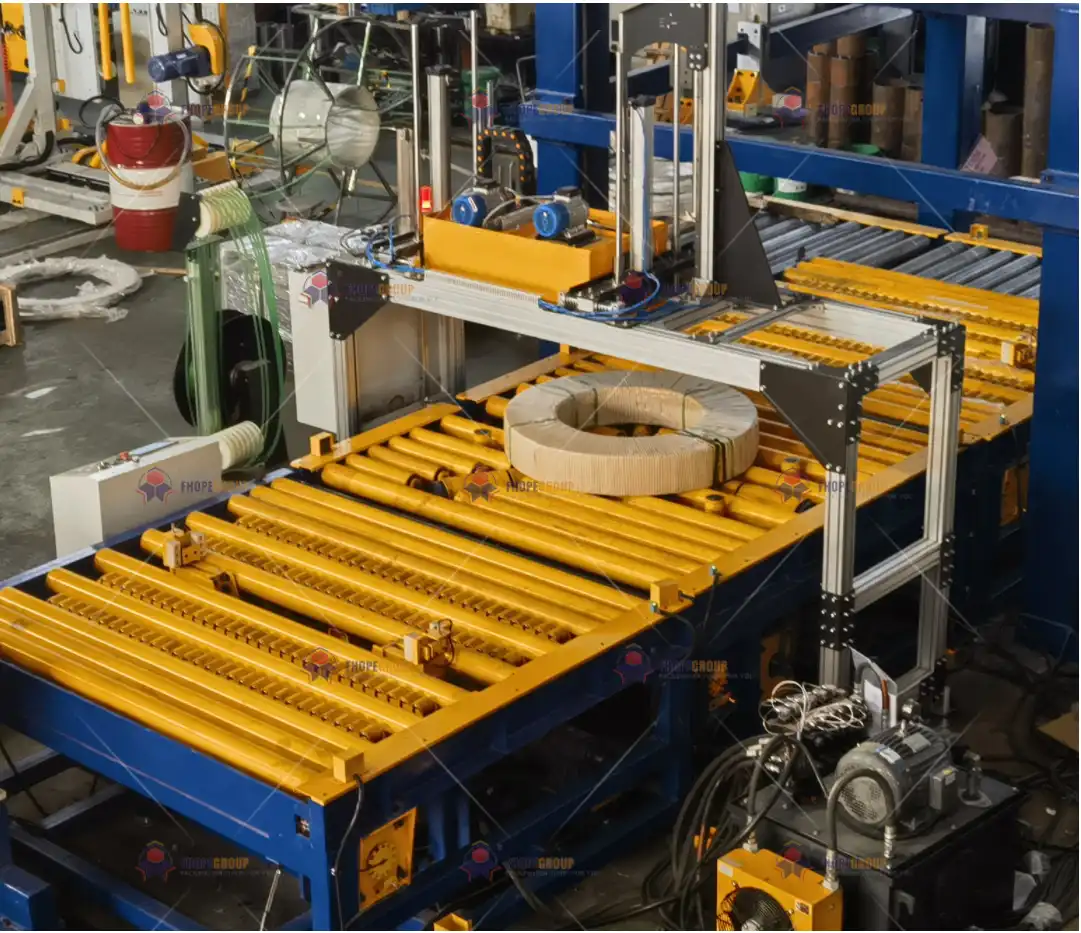
Decoding the Cost: Key Price Drivers
When clients ask me for a quote, I always explain that it’s like building a custom vehicle – you can go for a basic model or a fully loaded, high-performance machine. Each feature adds value and, naturally, impacts the cost. My goal is always to provide the most effective solution, not just the cheapest. For USA steel service centers, the robust nature of the equipment and the local support are often non-negotiable, influencing the final investment. (steel coil packaging machine cost, industrial wrapping equipment pricing, automated strapping system price)
Here are the primary factors that will determine the final price of your automated steel coil packing solution:
- Level of Automation & Throughput Capacity:
- Semi-Automatic: Requires some manual input (e.g., loading film, positioning coils). Generally lower cost, suitable for lower production volumes. Price range: 💲💲
- Fully Automatic: Handles the entire process with minimal operator intervention. Higher cost, ideal for high-volume operations and maximum efficiency. Price range: 💲💲💲💲
- Line Speed: Machines designed for very high throughput (e.g., 60-120 coils/hour) will naturally be more expensive due to more sophisticated mechanics and control systems.
- Coil Specifications (Size & Weight):
- Coil Diameter & Width: Larger coils require bigger machines with wider wrapping rings and longer conveyor sections, which drives up material and manufacturing costs.
- Coil Weight: Heavier coils demand more robust frames, stronger motors, and heavy-duty conveyor systems. A machine designed for a 5-ton coil will be less expensive than one for a 30-ton coil.
- Packing Material Requirements:
- Multiple Material Layers: If you need multiple layers of different materials (e.g., VCI paper for corrosion, stretch film for weather protection, woven fabric for abrasion), the machine will need additional applicators and complex controls, increasing the price.
- Material Dispensing: Automated film cutting, sealing, and tension control features also add to the complexity and cost.
- Customization and Integration:
- Tailored Solutions: Every factory is unique. Integrating a new packing line with existing production flows (e.g., slitting lines, inspection stations) often requires custom engineering, specialized conveyors, or unique safety interlocks.
- Special Features: Features like automatic labeling, weighing scales, data logging, or remote diagnostic capabilities add significant value and cost.
- Supplier Reputation and After-Sales Support:
- Established Manufacturers: Reputable suppliers like FHOPEPACK often have higher initial prices but offer proven reliability, advanced technology, comprehensive warranties, and excellent after-sales support (spare parts, technical assistance, training). This is crucial for minimizing downtime in a US steel service center.
- Installation & Commissioning: The cost typically includes installation, commissioning, and operator training. On-site support in the USA can be a significant component of the overall investment.
- Technology and Components:
- High-Quality Components: Machines using premium brands for motors, sensors, PLCs (e.g., Siemens, Allen-Bradley) will have a higher price but offer superior reliability and longevity.
- Advanced Control Systems: Sophisticated HMI interfaces, diagnostic tools, and predictive maintenance capabilities contribute to a higher price point but also offer greater operational efficiency and reduced long-term maintenance costs.








