
Automated Coil Packing and Storage: A One-Stop Solution for Smart Steel Logistics?
leading paragraph: Are you feeling the squeeze of outdated factory processes? Is your manual steel coil and wire packing eating into your profits, causing delays, and putting your workers at risk? Many factory managers, just like you, face these exact problems every day. They see their production lines moving fast, but then everything slows down at the very end. This bottleneck costs a lot of money, creates safety issues, and often leads to damaged products.
snippet paragraph:
A one-stop solution for smart steel logistics means bringing together advanced automation, reliable equipment, and expert guidance to solve your biggest challenges in coil and wire packing and storage. This approach moves you from slow, risky manual work to fast, safe, and efficient automated systems. It uses specialized machines for wrapping, strapping, and moving heavy materials. This helps your factory run much smoother.

Transition Paragraph: You know the problems well. But how do you actually fix them? You need solutions that work. You also need a partner who understands your industry inside and out. Let me share how modern automation and my own experiences can change your factory for the better. We can look at the real ways to tackle your main challenges.
How can automation truly speed up your steel coil and wire packing?
leading paragraph: Do you see piles of finished steel coils waiting to be packed? Does your team struggle to keep up with production demands at the very end of the line? Manual packing methods are a big bottleneck for many factories. This slows down everything. It also delays customer orders. You might be losing money and missing out on new business because of this.
snippet paragraph:
Automation speeds up steel coil and wire packing by replacing slow, manual tasks with fast, precise machines. It uses automatic wrappers, strapping machines, and robotic handlers. These machines work much faster and without breaks. This means more coils are packed in less time. Your products get ready for shipping quicker. This greatly increases your overall factory output.

Dive deeper Paragraph: When I started my packing machine factory, I saw many places where manual work just was not efficient enough. We had to find ways to make things faster and more consistent. Manual coil packing is a prime example of a process that seems simple but hides huge inefficiencies. Workers manually apply protective materials. They also use hand tools for strapping. This process is slow. It is also inconsistent. Each coil might take too long. This creates a bottleneck at the end of the production line. This bottleneck cancels out the speed of earlier processes.
Think about the time it takes to manually wrap a large steel coil. One person might take 10 or 15 minutes. This is just for one coil. An automated stretch wrapper can do the same job in a few minutes. It can do it with much better tension and consistency. This speed difference adds up fast. If you pack hundreds of coils a day, the time savings are huge.
Another big factor is labor cost. Manual packing requires many workers. These workers need training. They also need to be paid. Automated systems reduce the need for so many hands. One operator can often manage several machines. This cuts down on your labor expenses. It also frees up your skilled workers for other important tasks.
Automated systems also work without getting tired. They do not need breaks. They do not get sick. This means they offer constant, reliable speed. Your production output becomes predictable. You can promise faster delivery times to your customers. This gives you a big advantage in the market.
Here is a simple way to look at the differences:
| Feature | Manual Packing | Automated Packing |
|---|---|---|
| Speed | Slow, inconsistent | Fast, consistent, high throughput |
| Labor Needs | High, multiple workers | Low, fewer operators |
| Consistency | Varies by worker, prone to errors | High, uniform quality |
| Operating Time | Limited by shifts, breaks, fatigue | 24/7 capability |
| Overall Output | Limited, bottleneck creator | High, production accelerator |
This table shows clearly why automation is not just an option. It is a must for factories looking to maximize their packing speed. My own experience building FHOPEPACK taught me that small improvements in efficiency can lead to huge gains overall. This is especially true at the final stage of production.
Can we really eliminate the dangers of heavy coil handling in your factory?
leading paragraph: Are your workers constantly lifting heavy steel coils or bundles? Do you worry about serious injuries every day? Manual handling of heavy materials is one of the riskiest jobs in any factory. It causes back injuries, crushed limbs, and other accidents. These accidents lead to high insurance costs, missed work, and sometimes even losing good employees.
snippet paragraph:
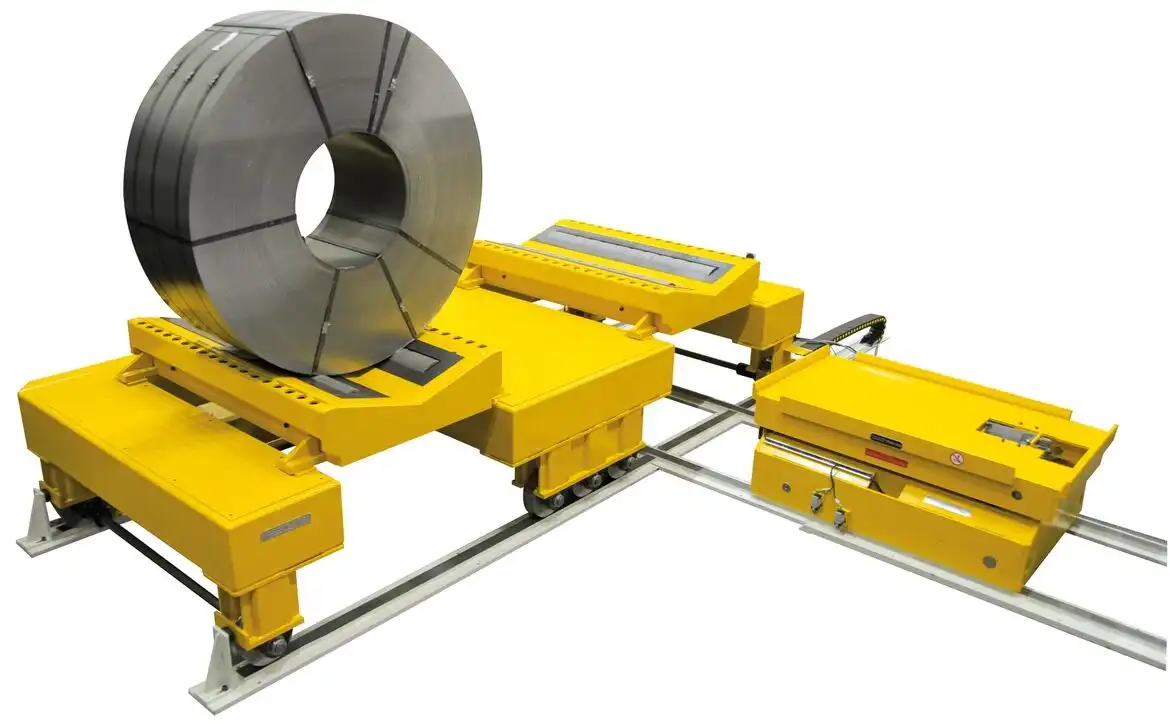
Yes, you can eliminate the dangers of heavy coil handling by using specialized automated equipment. Machines like coil upenders, traversers, transfer carts, and robotic manipulators take over the heavy lifting. They move, flip, and position coils safely. This removes workers from dangerous situations. It greatly reduces the risk of accidents and injuries in your factory.

Dive deeper Paragraph: Safety has always been a top priority for me. When I was an employee at a packing machine factory, I saw firsthand how quickly an accident could happen. A moment of carelessness or fatigue when handling a heavy object could change a life forever. When I started my own company, FHOPEPACK, I knew that building machines that enhanced safety was just as important as building machines that boosted efficiency.
Manual handling of heavy steel coils, wire bundles, or even heavy molds is extremely dangerous. Workers can suffer muscle strains, sprains, fractures, and even fatal crush injuries. These incidents are not just tragic for the workers and their families. They also create big problems for your factory. Injury claims increase insurance premiums. OSHA fines can be high. Losing skilled workers affects your production. It also hurts team morale.
Automated solutions directly address these risks. Take coil upenders, for example. These machines safely flip a coil from horizontal to vertical, or vice versa. Workers do not need to use chains or cranes by hand. This removes them from the path of a swinging load. Automated transfer carts move coils across the factory floor. They replace forklifts or manual pushing. This reduces the risk of collisions. It also lowers the chance of dropping a load.
Robotic systems can handle palletizing and stacking. They lift heavy bundles onto pallets. They also stack them precisely. This means your workers are not lifting anything heavy. They are just monitoring the process from a safe distance. These technologies are not just about making things faster. They are about making your workplace much safer. This protects your most valuable asset: your employees.
Here is how automation helps improve safety:
| Risk Point | Manual Operation | Automated Solution | Safety Benefit |
|---|---|---|---|
| Lifting Heavy Coils | High risk of back injuries, strains, drops | Robotic arms, overhead cranes, specialized lifters | Eliminates manual lifting, prevents injuries |
| Flipping Coils/Molds | Requires manual force, dangerous unbalancing | Coil upenders, tilters | Safe, controlled rotation, no worker involvement |
| Moving Coils Across Floor | Forklifts, manual pushing, collision risk | Automated Guided Vehicles (AGVs), transfer carts | Reduced human error, fewer collisions |
| Stacking/Palletizing | Repetitive strain, crushing hazards | Palletizing robots, stackers | Eliminates repetitive heavy lifting |
Investing in these systems shows you care about your workers. This can also improve staff retention. Workers feel more secure and valued. This leads to a happier, more productive workforce.
What is the best way to stop losing money from damaged steel products during packing?
leading paragraph: Are you tired of hearing about damaged products? Do your customers complain about dented coil edges or scratched surfaces? Product damage during internal transfer and packing is a silent killer of profits. It leads to rework. It leads to customer dissatisfaction. It also leads to lost sales. You are losing money before the product even leaves your factory.
snippet paragraph:
The best way to stop losing money from damaged steel products is to use precision automated packing and handling systems. These systems provide consistent, secure wrapping. They also handle products gently. This prevents dents, scratches, and deformations. They make sure your coils and wire bundles are protected from the moment they are finished until they reach the customer.
Dive deeper Paragraph: When I was running my factory, one of the most frustrating things was getting a call from a client about damaged goods. We put so much effort into making a quality product. Then, it got damaged just before or during shipping. This felt like a punch to the gut. It also meant a re-order, shipping costs, and a big hit to our reputation. I quickly learned that the packaging stage is not just about making things look nice. It is a critical line of defense for your product.
Manual packing often leads to product damage. Workers might not apply tension evenly when wrapping. This leaves parts of the product exposed. They might use too much force when strapping, causing dents. Or, the handling process itself can cause issues. Dropping a coil, even a short distance, can damage edges. Improper stacking can lead to deformation. These damages might seem small, but they add up. They lead to customer complaints, returned goods, and ultimately, lost profits.
Automated packing machines are designed for precision. An automatic stretch wrapper applies film with consistent tension. It covers the entire surface. This protects against dust, moisture, and impact. Automatic strapping machines apply straps with controlled force. This secures the product without causing dents or crushing. This consistency is hard to achieve with human hands, especially over many hours or shifts.
Beyond just wrapping, automated handling systems ensure gentle movement. Robotic arms pick up and place coils with exact movements. They do not drop them. Specialized conveyor systems move coils smoothly from one station to another. They avoid bumps or scrapes. This complete protection throughout the packing and internal logistics process means your product leaves the factory in perfect condition. This reduces your damage rate to almost zero. It also keeps your customers happy.
Here is where damage usually happens and how automation prevents it:
| Damage Point | Manual Operation Risk | Automated Solution | Prevention Benefit |
|---|---|---|---|
| Coil Edges/Surfaces | Inconsistent wrapping, accidental bumps | Automated stretch wrapping, precise handling | Even protection, no impact damage |
| Deformation | Over-tight strapping, improper stacking | Automated strapping with tension control, robotic stacking | Consistent force, stable stacking |
| Moisture/Dust | Gaps in wrapping, exposed areas | Full enclosure wrapping, consistent overlap | Complete environmental protection |
| Internal Transport | Drops from forklifts, collisions | Automated guided vehicles (AGVs), conveyor belts | Smooth, controlled movement, no drops |
| Loading/Unloading | Rough handling, impact | Robotic loading/unloading, specialized grippers | Gentle transfer, reduced human error |
By investing in these solutions, you are not just buying machines. You are buying peace of mind. You are protecting your brand. You are also securing your profits by delivering pristine products every time.
How do you find a packing machine supplier you can truly trust for long-term success?
leading paragraph: Have you ever bought a machine, only to find the supplier disappears after the sale? Or maybe their customer service was terrible? Finding a reliable packing machine supplier is tough. Many companies care only about making a quick sale. They do not care about your long-term needs. This makes you hesitant to invest again. You worry about making another bad choice.
snippet paragraph:
To find a trustworthy packing machine supplier, look for a partner with deep industry experience, a proven track record, and a strong commitment to after-sales support. They should understand your factory’s specific challenges and offer tailored solutions. They must not just sell machines but also offer expert guidance and reliable service for years to come.

Dive deeper Paragraph: My journey from an employee to owning a successful packing machine factory taught me a lot about what clients truly need. It is not just about the machine itself. It is about the relationship with the supplier. It is about trust. I built FHOPEPACK on the idea of being a knowledge-sharing platform and a true partner. I know the pressures factory managers face. I know the frustration of production bottlenecks and unexpected breakdowns.
Many suppliers focus only on the initial sale. They give a low price. They might promise a lot. But after the machine arrives, their support disappears. You might face installation problems. You might have training issues. Or, the biggest problem, getting spare parts and technical help when a machine breaks down. This kind of experience leaves factory managers feeling abandoned. It leads to lost production time. It causes major stress.
A trusted supplier, like what I aim for with FHOPEPACK, does things differently. We start by understanding your factory’s specific needs. We listen to your challenges. We do not just try to sell you a standard machine. We recommend solutions that directly address your pain points. This includes custom designs if needed. This also includes integrating new machines with your existing lines. My background in building my own factory means I understand the entire process. I know what it takes to make a production line work smoothly.
After-sales service is also very important. A good supplier provides comprehensive training for your staff. They have a readily available supply of spare parts. They also offer quick technical support. This means if a machine goes down, you are not left waiting for weeks. You get help fast. This minimizes your downtime. It protects your investment. This long-term support builds true partnership. It is what makes your investment pay off for years.
Here is what to look for in a trusted supplier:
| Aspect | What to Look For | What to Avoid |
|---|---|---|
| Industry Knowledge | Deep understanding of your specific operations | Generic sales pitch, no specific examples |
| Problem Solving | Offers tailored solutions, asks detailed questions | Pushes standard products, one-size-fits-all |
| After-Sales Support | Clear plans for installation, training, parts, tech support | Vague promises, poor communication post-sale |
| Reputation | Positive client testimonials, strong track record | Many complaints, lack of transparency |
| Long-Term Vision | Focuses on your growth and ROI | Only focused on immediate sale, short-term gain |
Choosing the right partner is perhaps the most important decision you will make. It ensures that your investment in automation not only solves today’s problems but also helps your factory grow stronger for the future.
Conclusion
Smart automation in steel logistics cuts costs, boosts safety, and prevents damage. Partnering with experts like FHOPEPACK ensures your factory thrives with trusted, efficient solutions.








