
Why Are India’s Plant Managers Specifying Automated Coil Upenders for 24/7 Operations?
When you manage a factory, especially one handling heavy materials like steel coils, you face many pressures. Manual coil handling is often slow, very risky, and can damage your products. This cuts into your profits and puts your workers in danger every day. Automated coil upenders are now changing how factories operate, especially for India’s busy production lines.
India’s plant managers are choosing automated coil upenders for their 24/7 operations to boost efficiency, drastically improve worker safety, and cut down on product damage. These machines ensure continuous, reliable production, which is crucial for high-volume manufacturing environments.
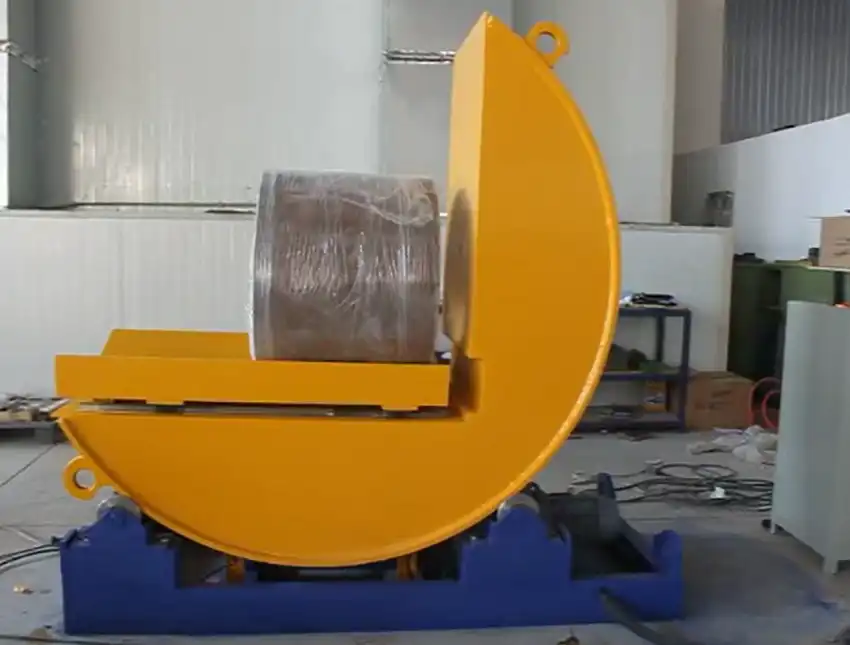
If you are struggling with these very same issues, you are certainly not alone. Many plant managers face these problems. Let us look deeper into why these specialized machines are becoming absolutely essential for factories like yours.
Are Manual Coil Handling Processes Holding Your Production Back in India?
Manual handling of heavy coils is a very slow process. It creates major bottlenecks at the end of your production line. This directly slows down your overall output and affects your delivery times. Automated coil upenders offer a clear path to faster, smoother operations.
Manual coil handling in Indian factories often leads to significant production bottlenecks because it is slow, labor-intensive, and prone to human error. This directly impacts overall output and delivery schedules.
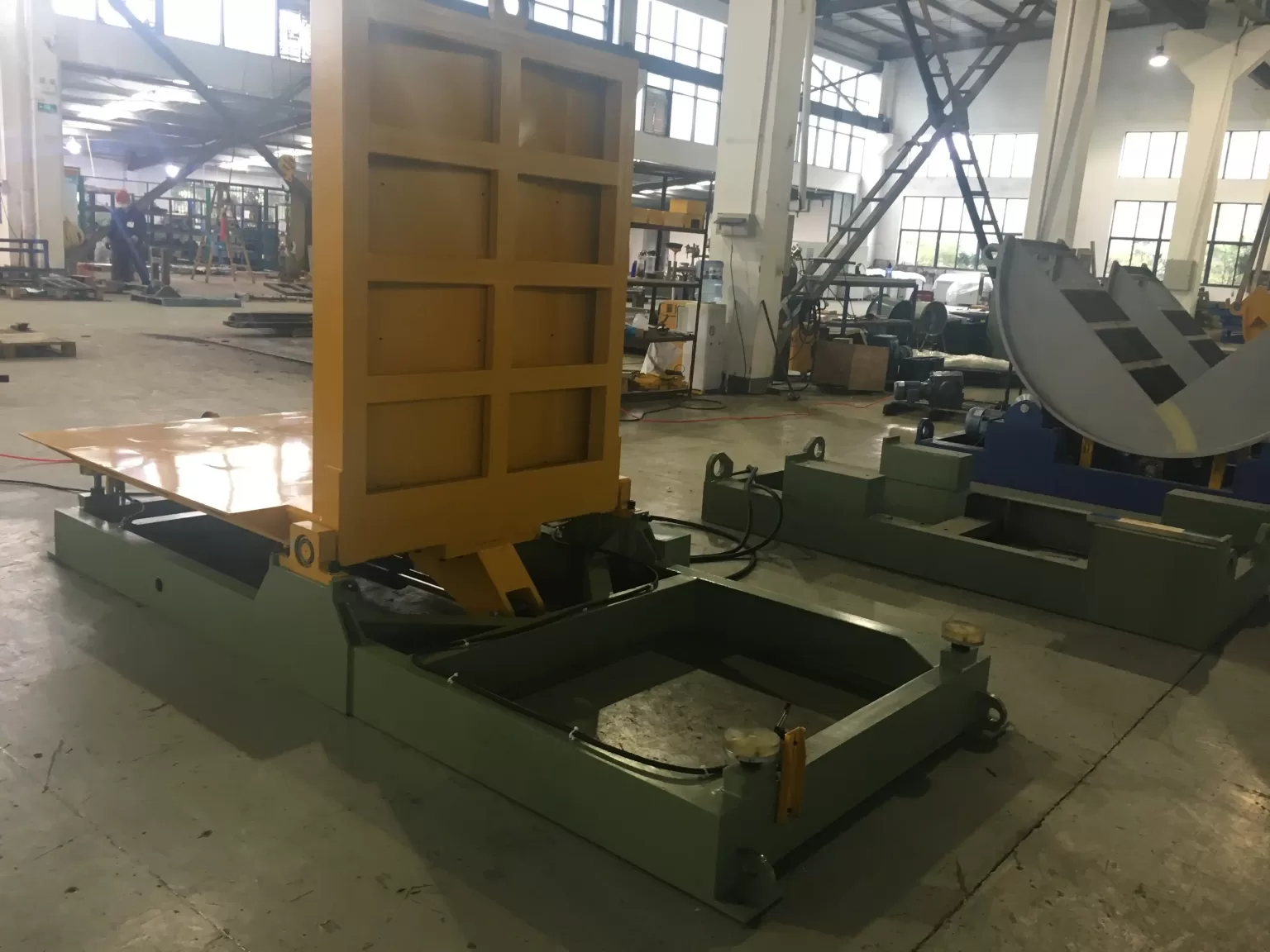
When I first started in the packing machine industry, I saw many factories relying heavily on manual labor for coil handling. Workers used cranes and chains. They often struggled with the sheer weight and awkwardness of the coils. This caused huge slowdowns, especially when a coil needed to be turned from eye-to-sky to eye-to-wall, or vice versa. This was true even for factories in developing regions like India where labor might seem cheaper. The hidden costs of manual handling always surprised me. They included slower production times, more errors, and the need for more space for manual maneuvering. Automated coil upenders directly solve these issues. They are designed for continuous, high-volume operation. They can flip a heavy coil in seconds, without any human effort needed for the actual turning. This speed alone removes a major bottleneck.
Time Waste vs. Efficiency Gain
- Manual Process: Each coil requires multiple workers. They need time to set up slings, attach hooks, lift the coil, turn it, and then place it down. This entire sequence is slow. It creates idle time for downstream processes. If one coil is delayed, the whole line stops or slows. For 24/7 operations, this small delay repeats hundreds of times a day. The cumulative time loss is huge.
- Automated Process: An automated upender operates with a push of a button. It cycles very quickly. It can turn a coil in less than a minute. This allows for a continuous flow of material. There is no waiting for human operators to position themselves or for multiple lifts. The machine performs the task consistently, every time. This speed directly translates into higher throughput. It ensures that your packing or storage areas receive coils ready for the next step without delay.
Labor Cost vs. Productivity Boost
- Manual Labor: You need several skilled workers for safe manual coil handling. These workers require wages, benefits, and training. The cost of labor adds up quickly. Also, manual work is tiring. Fatigue leads to slower work and more mistakes as shifts progress. In a 24/7 operation, you need multiple shifts of these workers.
- Automated Productivity: An automated upender needs one operator, or sometimes even no direct operator if integrated into an automated line. This frees up multiple workers to do other, more valuable tasks in your factory. The machine does not get tired. It maintains its speed and accuracy around the clock. This means you get much more done with fewer people. This boosts overall factory productivity significantly. It also lowers your operational costs in the long run.
Space Optimization
- Manual Handling: Manual coil handling needs a large clear area. Workers must move around the coil safely. Cranes need a wide swing radius. This consumes valuable floor space. In a factory where every square meter counts, this is not efficient.
- Automated Handling: Automated upenders are compact units. They perform the turning action within a defined footprint. They do not need extra space for human movement or crane swings. This allows you to use your factory floor space more efficiently. You can arrange other machines closer. You can optimize your material flow paths. This makes your entire layout more productive.
| Feature | Manual Coil Handling | Automated Coil Upender |
|---|---|---|
| Speed | Slow and inconsistent; depends on human effort | Fast and consistent; fixed cycle time |
| Labor Needs | Multiple workers per shift; high labor cost | Minimal labor (one operator or integrated); low cost |
| Bottlenecks | Creates significant delays at handling points | Eliminates bottlenecks; smooth material flow |
| Space Required | Large area for maneuvering workers and crane swings | Compact footprint; efficient use of factory space |
| 24/7 Operation | Challenging to maintain consistency due to fatigue | Highly reliable; maintains performance continuously |
Can Automated Coil Upenders Really Make Your Indian Factory Safer?
Moving heavy coils manually puts your workers at very great risk. This leads to serious injuries, higher insurance costs, and staff turnover. Automated coil upenders remove workers from dangerous lifting tasks. This makes your factory much safer for everyone.
Automated coil upenders dramatically improve factory safety by removing the need for workers to manually handle heavy, unstable loads. This reduces the risk of crushing injuries, strains, and falls that are common in traditional operations.
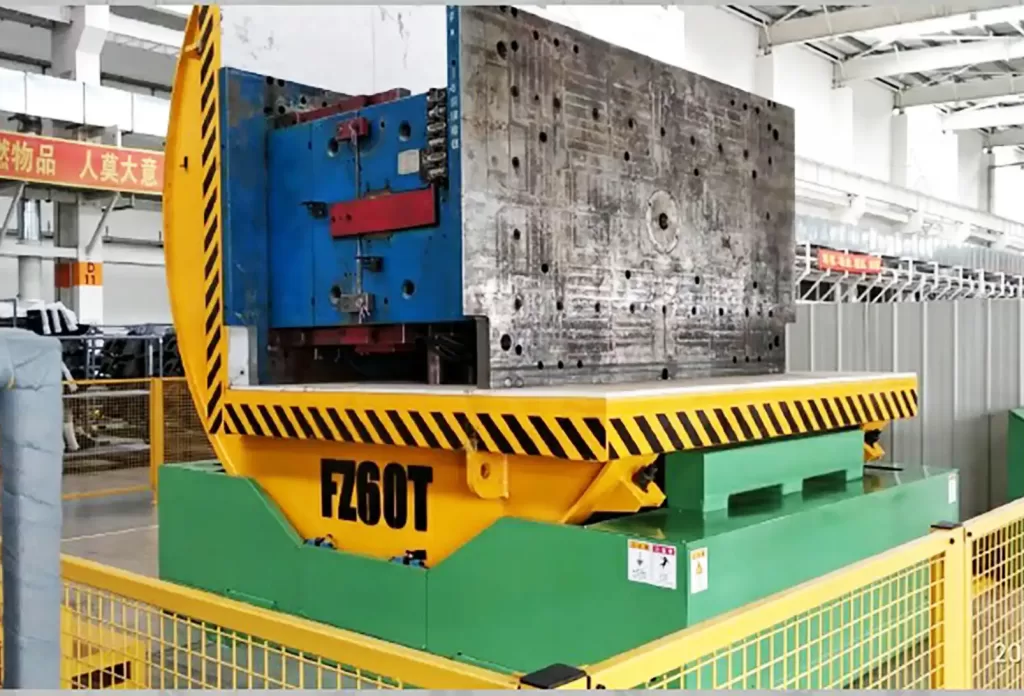
My journey in the packing machine industry showed me firsthand the dangers workers face. I saw the painful consequences of accidents. People got injured by falling objects or from strains caused by improper lifting. When I established my own factory, worker safety became a core value. I learned that an unsafe workplace costs more than just medical bills. It hurts morale. It causes high employee turnover. It also raises your insurance premiums significantly. A single serious accident can disrupt an entire production line for hours or even days. This is why automated solutions are not just about efficiency. They are fundamentally about protecting your most valuable asset: your people. Automated coil upenders take the human element out of the most dangerous part of coil handling. The machine handles the heavy lifting and precise rotation, keeping workers away from the pinch points and crushing zones.
Direct Injury Prevention
- Crushing Hazards: Manual handling of coils involves workers being very close to extremely heavy objects. If a coil shifts, falls, or is dropped, the risk of severe crushing injuries is immense. Automated upenders enclose the coil during the turning process. They have safety interlocks. These stop the machine if a human enters a danger zone. This design removes workers from the direct path of the moving coil.
- Musculoskeletal Injuries: Lifting, pushing, and pulling heavy, awkward coils manually causes immense strain on workers’ backs, shoulders, and knees. Over time, this leads to chronic pain and debilitating injuries. Automated upenders remove all manual lifting. Workers only need to load the coil onto a platform or activate the machine. This drastically reduces the physical demands on the workforce. This promotes long-term worker health.
Reduced Hidden Costs and Enhanced Morale
- Lower Insurance Premiums: Every factory manager knows that worker compensation claims and high accident rates directly translate to higher insurance premiums. By implementing automated safety solutions, you reduce the likelihood of accidents. This can lead to significant savings on your insurance costs over time. It shows your insurer that you are proactively managing risks.
- Improved Employee Morale: A safe workplace is a happy workplace. When employees feel that their employer cares about their safety, morale improves. This leads to less absenteeism. It reduces staff turnover. Workers are more productive when they are not constantly worried about getting hurt. A safer environment also makes your factory more attractive to new hires. This helps you retain experienced talent.
| Safety Aspect | Manual Coil Handling | Automated Coil Upender |
|---|---|---|
| Crushing Risk | High; workers near heavy, moving objects | Very low; workers removed from danger zone |
| Strain Injuries | High; manual lifting and positioning of heavy coils | Eliminated; machine handles all heavy movements |
| Fall Hazards | Present, especially when positioning or securing coils | Minimized; stable platform and controlled rotation |
| Insurance Cost | Potentially high due to injury claims | Lower due to reduced accident rates |
| Worker Morale | Can be low due to perceived danger and physical toll | Higher due to safer, less strenuous work environment |
Do Automated Coil Upenders Prevent Costly Product Damage During Handling?
When you move coils by hand or with improper equipment, product damage often happens. This leads to customer complaints and lost profits for your business. Automated upenders provide a gentle, precise way to handle coils. They protect your products from damage.
Automated coil upenders prevent costly product damage by ensuring precise, controlled handling of coils. They avoid impacts, scratches, and deformations that often occur during manual or less precise mechanical transfers, thus reducing scrap and improving product quality.
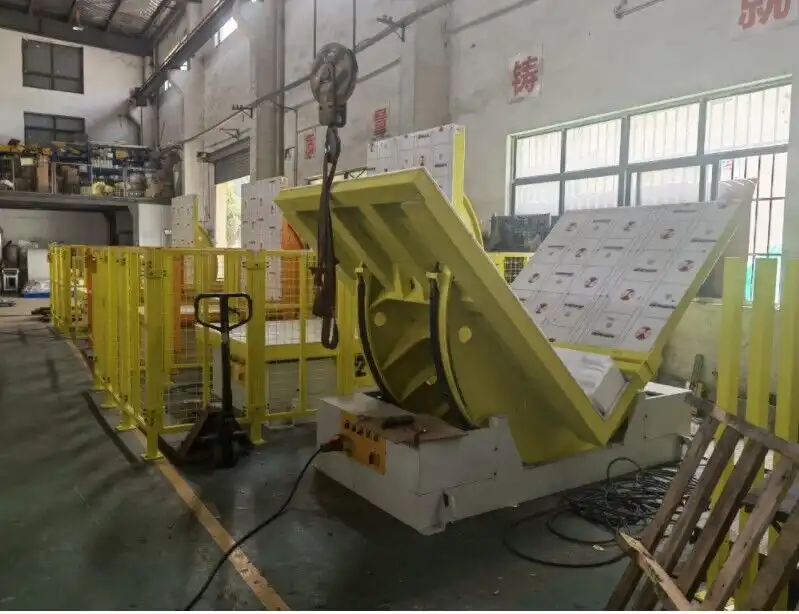
As an engineer who has designed and built packing machinery, I understand how much effort goes into producing a quality steel coil or wire product. It is incredibly frustrating to see that quality compromised during the final handling and packing stages. I have heard many stories from my clients about damaged coil edges, scratched surfaces, or deformed shapes. These problems almost always happen during transfer or turning. Such damage not only leads to wasted material but also directly causes customer dissatisfaction. This hurts your reputation and your bottom line. My focus has always been on systems that are not just fast but also incredibly precise and gentle. This is exactly what automated coil upenders deliver. They are engineered to cradle and rotate the coil smoothly, eliminating the jarring impacts and uncontrolled movements common in manual or semi-manual processes.
Common Damage Points and Their Impact
- Edge Damage: The edges of steel coils are very vulnerable. During manual handling, workers might bump the coil against floors, walls, or other equipment. Or, a sling might pinch an edge. Even small dents or nicks on the edge can make the coil unusable for specific applications. This leads to rejection by the customer. It results in costly rework or scrap. This directly reduces your factory’s profit margin.
- Surface Scratches and Dents: The surface of a coil must often remain pristine, especially for finished products. Manual methods using chains or rough lifting equipment can easily scratch or dent the surface. These blemishes can make the product unsellable. They lead to returns. They also tarnish your brand’s reputation for quality. In some cases, surface damage can also lead to rust or corrosion over time.
- Deformation: Improper lifting or turning can cause the coil to deform slightly. This is common if the weight is not distributed evenly. Or, if the coil is not properly supported during rotation. Even minor deformation can make the coil difficult to process further down the line. It can also make it impossible for the end-user to use. This also results in rejection and financial loss.
Automated Protection Methods
- Controlled, Smooth Motion: Automated upenders are designed for hydraulic or mechanical precision. They lift and rotate coils with very smooth, controlled movements. There are no sudden jerks or drops. The coil is securely held throughout the entire process. This minimizes any risk of impact or scraping.
- Even Weight Distribution: These machines use wide, robust platforms or cradles. These supports distribute the coil’s weight evenly across its surface. This prevents localized stress points that can cause deformation. The coil rests securely, preventing it from shifting or rolling uncontrolled.
- Reduced Human Error: Humans can make mistakes, especially when tired or rushed. Automated systems follow a programmed sequence without deviation. This eliminates human error as a source of damage. The machine performs the exact same safe maneuver every single time. This ensures consistent product quality from the first coil to the last.
| Damage Type | Manual Handling Risk | Automated Upender Benefit |
|---|---|---|
| Edge Damage | High; from bumps, pinches, or drops | Very low; controlled movement, secure positioning |
| Surface Scratches | High; from rough contact with slings or surfaces | Minimal; smooth surfaces, no direct metal-on-metal |
| Coil Deformation | High; from uneven support or uncontrolled movements | Eliminated; even weight distribution, stable rotation |
| Customer Returns | Increased due to damaged goods | Reduced significantly; higher product quality |
| Profit Impact | Negative; due to rework, scrap, and reputation loss | Positive; improved quality, reduced waste, better ROI |
Why Partnering with an Expert Matters for Your Factory Automation Investment?
Choosing the right machinery for your factory is a very big decision. Many suppliers only care about making a sale. They do not care about your real needs or providing good after-sales support. Working with an expert like me, who understands the factory floor, helps you make smart investments. These investments truly solve your problems and help your business grow.
Partnering with an expert in factory automation is crucial because they offer deep industry insights, custom solutions, and reliable long-term support. This ensures your investment truly addresses production bottlenecks and delivers tangible ROI, unlike general sales-focused vendors.
When I started FHOPEPACK, it was after many years working as an employee in a packing machine factory. Then, I built my own successful packing machine factory. This journey taught me so much. I learned what makes a machine truly useful on a busy factory floor. I learned the pains of breakdowns and the joy of smooth operations. I also saw how many equipment suppliers just want to sell a box. They do not understand the real pressures factory managers like you face. They do not offer true support after the sale. My goal with FHOPEPACK is different. I want to share the knowledge and experience I gained. I want to help you avoid costly mistakes. I want to ensure your investment in automation truly delivers the results you need.
Beyond the Machine: True Partnership
- Understanding Your Unique Challenges: A good partner does not just offer a catalog. They listen. They ask about your specific production flow, your existing bottlenecks, your safety concerns, and your budget. They understand that every factory is different. For example, a factory in India operating 24/7 with specific coil sizes needs different considerations than a smaller operation. I have seen countless factory setups. I can quickly identify where automated solutions will have the biggest impact for you.
- Customized Solutions, Not Just Products: Many times, a standard machine is not enough. You might need specific integration with your existing conveyor lines. You might need different weight capacities or precise control systems. An expert partner can tailor a solution. They can design or modify equipment to fit your exact needs. This ensures maximum efficiency and the best return on your investment. We do not just sell machines. We solve problems.
- Long-Term Support and Trust: The relationship with your equipment supplier should not end after the purchase order. You need reliable installation support, operator training, maintenance guidance, and quick access to spare parts. Past experiences with poor after-sales service can make you cautious. An expert partner builds trust by being there for you long-term. This includes prompt technical support and a commitment to keeping your machines running smoothly for years. My philosophy is that your success is our success.
Randal’s Experience: Why It Matters
- From Shop Floor to Factory Owner: I started on the shop floor. I understand the gritty details of manufacturing. This hands-on experience means I know what works and what does not work in a real production environment. This is very different from someone who has only seen machines in a showroom. I can anticipate potential operational issues and design solutions to prevent them.
- Solving Real-World Problems: Through my own factory and helping many clients, I have directly faced challenges like product damage, efficiency bottlenecks, and safety risks. I have implemented solutions to overcome these. This means I do not just offer theoretical advice. I offer practical, proven strategies and equipment that have worked for others and for myself.
- Financial Independence Through Industry Success: My success in the packing machine industry allowed me to achieve financial independence. This success was not just for me. It was for my clients too. Many grew their businesses significantly with the right equipment and guidance. Now, I am committed to giving back. This platform is my way of sharing valuable insights. I want to help you achieve similar success in your factory operations.
Conclusion
Automated coil upenders are essential for India’s 24/7 operations. They boost safety, increase efficiency, and eliminate costly product damage. Partnering with FHOPEPACK ensures you get expert guidance and reliable solutions for true business growth. and the
- I often help people with this. This means my advice is not always from a textbook. I have firsthand experience. I worked on a factory floor. I know what it feels like to worry about things going wrong. This helps me find real solutions for your factory.








