
What Key Technical Features Should New Zealand Engineers Consider When Evaluating Orbital Stretch Wrappers?
Is your New Zealand factory struggling with slow, unsafe, or damaging packing processes? Many factory managers, just like Michael Chen, tell me they face these exact problems. Their current manual systems can seriously slow down production and lead to more costs. They worry about worker safety and products getting damaged before they even leave the factory. But there is a real solution. Getting the right orbital stretch wrapper can change your operations for the better. It can make things faster, safer, and protect your products.
When New Zealand engineers look at orbital stretch wrappers, they should focus on several key technical features. These include machine speed and throughput, advanced safety designs, reliable material handling capabilities, and overall durability. These elements work together to ensure your factory runs efficiently, your workers stay safe, your products are protected, and you get a good return on your investment over time.

Choosing the best wrapping machine is a big decision for any factory. It is not just about buying equipment. It is about improving your whole production line. Let us look deeper into these important features. Understanding them will help you pick a machine that truly solves your factory’s problems and helps your business grow.
Why is Machine Speed and Throughput Critical for Your Factory’s Flow?
Are your current packing methods slowing down your entire production line? Many factories I have worked with see their finished products piling up because packing cannot keep up. This creates a big bottleneck. It means you cannot ship products as fast as you make them. This directly impacts your delivery times and your ability to meet customer demand.
Machine speed and throughput are very important because they directly affect how much product you can pack and ship. A faster machine means more items wrapped per hour or per day. This helps clear bottlenecks at the end of your production line, boosts overall factory output, and improves your delivery schedules.

When we talk about machine speed, we often look at the wrapper’s ring speed. This is how fast the wrapping ring spins around your product. A higher ring speed usually means faster wrapping. But speed alone is not enough. You also need to think about how much film the machine can apply per minute and how quickly it can handle different product sizes. For a factory manager like Michael, who has to oversee entire operations from raw materials to shipping, speed means everything for meeting production targets. Slow packing costs money in many ways. It ties up labor, takes up floor space with waiting products, and can delay shipments.
A good orbital wrapper must also have an efficient film delivery system. This includes the pre-stretch ratio. Pre-stretching film means stretching it before it touches the product. This makes the film stronger and uses less material. So, a high pre-stretch ratio saves you money on film. Also, features like automatic film cutting and clamping help keep the machine running continuously without stopping for manual tasks. This improves throughput. When I started my own factory, I learned that every minute of downtime costs money. So, I focused on machines that could run smoothly for a long time. These technical details directly translate into real benefits for your factory’s bottom line.
Understanding Throughput Capabilities
- Ring Speed: This measures revolutions per minute (RPM). Higher RPM means faster wrapping cycles.
- Film Pre-Stretch Ratio: This shows how much the film is stretched before it is applied. A 250% pre-stretch means 1 meter of film becomes 3.5 meters. Higher ratios save film.
- Automatic Film Handling: Machines that automatically cut and clamp the film between cycles save time and labor.
- Product Loading/Unloading Speed: How fast products can enter and exit the wrapping area also affects the overall speed.
| Feature | Benefit for Your Factory | Impact on Production Flow |
|---|---|---|
| High Ring Speed | Faster individual wrap cycles | Reduces wrapping time per product, increases output. |
| High Pre-Stretch | Uses less film per package, lower material cost | More packages wrapped with less material stops. |
| Auto Film System | Reduces manual intervention, faster changeovers | Improves continuous operation, cuts down on labor time. |
| Efficient Handling | Less time spent loading and unloading | Smooth product flow, avoids pile-ups. |
For example, if Michael’s factory currently takes five minutes to manually wrap a steel coil, and an automated orbital wrapper can do it in one minute, that is a huge gain. Over a shift, that translates into hundreds more coils packed. This directly helps him meet his goals of increasing output and cutting costs. It also means his workers can focus on more skilled tasks, which makes the factory more efficient overall.
How Does Advanced Safety Design Protect Your Team and Operations?
Are your workers constantly at risk when handling heavy or awkward products for packing? Many factory operations, especially those dealing with large items like steel coils or wire bundles, involve significant manual labor. This often leads to serious safety concerns. Injuries increase insurance costs and make it hard to keep good employees.
Advanced safety design in orbital stretch wrappers is crucial for protecting your workers and ensuring smooth operations. These designs include features like emergency stop buttons, safety guarding, light curtains, and automatic error detection. They reduce the risk of accidents, prevent injuries, and help your factory comply with safety regulations.
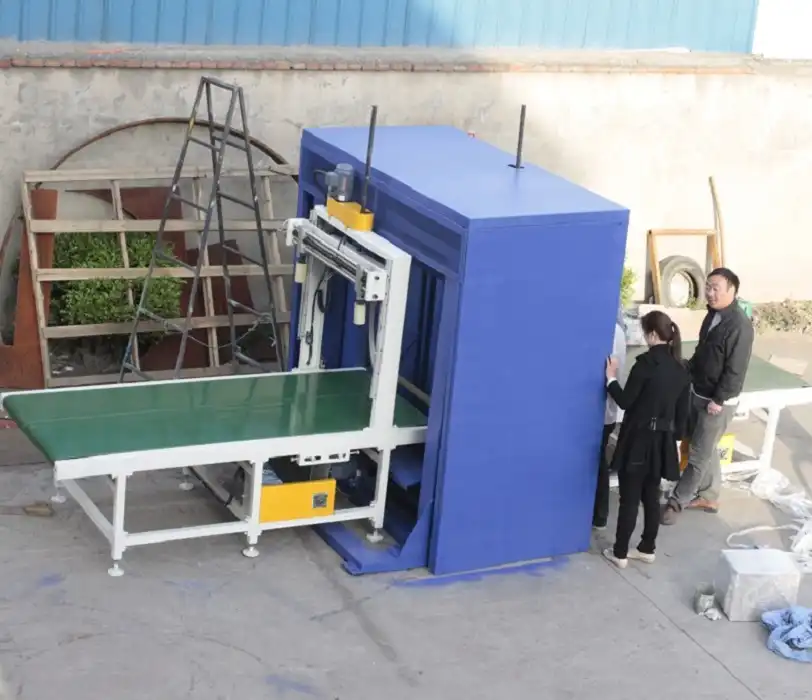
For a factory manager like Michael, worker safety is not just a moral duty; it is a business necessity. High injury rates lead to lost workdays, higher insurance premiums, and a negative impact on employee morale. An orbital wrapper should be designed with safety as a top priority. This means having physical barriers and electronic sensors to keep operators safe. Safety guarding around moving parts, like the wrapping ring, is a must. These guards should prevent access to dangerous areas during operation. Also, emergency stop buttons should be placed in easy-to-reach spots around the machine. Workers must be able to stop the machine quickly if there is any problem.
Light curtains or safety mats are also very important. These systems create an invisible barrier around the machine. If a worker steps into this safety zone while the machine is running, the machine stops immediately. This is much better than relying on human reaction time alone. Some advanced machines also have fault detection systems. These systems can tell if something is wrong, like a jammed film roll or an improperly loaded product. They can then stop the machine safely and alert the operator. My experience has shown me that investing in safety features always pays off. It protects your people, and it protects your business from costly accidents and legal problems.
Key Safety Features to Look For
- Emergency Stop (E-Stop) Buttons: Clearly marked and easily accessible buttons that immediately cut power to the machine.
- Safety Interlocks: Mechanisms that prevent guards from being opened while the machine is running.
- Perimeter Guarding: Physical barriers that prevent access to moving parts during operation.
- Light Curtains/Safety Scanners: Optical devices that stop the machine if an object or person enters a defined danger zone.
- Automatic Fault Detection: Sensors that identify machine malfunctions or unsafe conditions and trigger an immediate shutdown.
| Safety Feature | How It Works | Why It Matters to Michael Chen’s Factory |
|---|---|---|
| E-Stop Buttons | Instantly shuts down the machine in an emergency. | Allows immediate reaction to prevent serious injury or damage. |
| Safety Guarding | Physical barriers around moving parts. | Prevents workers from accidentally touching dangerous machine parts. |
| Light Curtains | Stops the machine if someone enters a restricted area. | Provides an automatic safety zone, reducing human error risk. |
| Fault Detection | Machine detects problems and stops itself. | Prevents damage to the machine or product, protects operators. |
For Michael, who faces high injury risks due to manual handling, an orbital wrapper with these features is a game-changer. It directly addresses his goal of improving worker safety. This reduces worker compensation claims and creates a safer work environment. This also helps with employee retention and overall factory morale.
What Material Handling Systems Ensure Your Products Stay Perfect?
Do you frequently deal with damaged products, like scuffed steel coil edges, during internal transfer or packing? Product damage can lead to unhappy customers, costly returns, and lost profits. It is a common problem when factories rely on manual or inefficient material handling. This issue hurts your reputation and your bottom line.
Effective material handling systems on an orbital stretch wrapper ensure your products remain undamaged from start to finish. These systems include robust conveyors, precise centering mechanisms, and gentle handling components. They support the product properly throughout the wrapping process. This prevents scuffs, dents, and other forms of damage, which leads to higher product quality and fewer customer complaints.
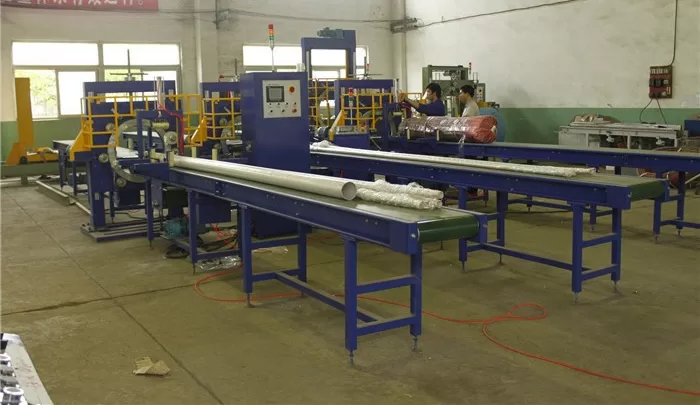
For Michael, preventing product loss is a key goal. He knows that every damaged steel coil or wire bundle means lost profit and potential customer trust issues. The way an orbital wrapper handles products is as important as how it wraps them. First, consider the conveyor system. For heavy items like steel coils, the conveyor must be strong enough to support the weight without bending or failing. It should also have a smooth surface or specialized rollers that do not scratch or mark the product. Some conveyors use V-shaped rollers that are perfect for cradling cylindrical items. This stops them from rolling off or shifting during wrapping.
Next, look at the centering mechanism. The machine needs to position the product accurately in the center of the wrapping ring. If the product is off-center, the wrap might be uneven, or the machine could even damage the product by hitting it. Some orbital wrappers use sensors or adjustable guides to make sure the product is always in the correct spot. Also, consider how the product enters and exits the machine. Smooth transitions are vital. Any sudden jolts or drops can cause damage. My own experience has taught me that even small bumps can lead to big problems. This is especially true for delicate or high-value items. A well-designed material handling system directly saves your factory money by reducing waste and ensuring customer satisfaction.
Critical Material Handling Features
- Heavy-Duty Conveyors: Designed to support the specific weight and shape of your products (e.g., roller conveyors for coils, chain conveyors for pallets).
- Product Centering Guides: Adjustable guides or sensors that ensure the product is always perfectly aligned with the wrapping ring.
- Variable Speed Control: Allows the conveyor speed to be adjusted for different product sizes and weights, ensuring gentle transfer.
- Smooth Transition Points: Designed to prevent jarring or dropping of products as they enter and exit the wrapper.
| Feature | How It Prevents Damage | Benefit for Michael’s Operations |
|---|---|---|
| Robust Conveyors | Supports heavy items without sag or flex. | Prevents deformation or impact damage to products. |
| Centering Mechanisms | Keeps product perfectly aligned. | Ensures even wrap, avoids collisions with machine parts. |
| Gentle Transfer | Smooth movement of product in and out of wrapper. | Reduces scuffs, scratches, and drops. |
| Custom Support | Specialized rollers or cradles for specific shapes. | Cradles items like coils, preventing rolling and damage. |
For Michael, who deals with potential damage to steel coil edges during internal movement, these features are essential. They directly address his challenge of product loss. By investing in a machine with superior material handling, he can significantly reduce complaints and increase the perceived quality of his outgoing products. This also improves his factory’s overall reputation.
Why is Durability and Component Quality Essential for Long-Term Value?
Have you ever invested in new equipment, only to have it break down shortly after installation? Many factory managers, like Michael, have dealt with equipment suppliers who focused on sales but provided poor after-sales service. This leads to costly downtime, missed deadlines, and a major loss of trust. Cheap machines often mean short lifespans and constant repair headaches.
Durability and high component quality are essential for getting long-term value from an orbital stretch wrapper. Machines built with robust materials and high-quality parts last longer, break down less often, and require less maintenance. This means lower operating costs, consistent production, and a higher return on your investment over many years.
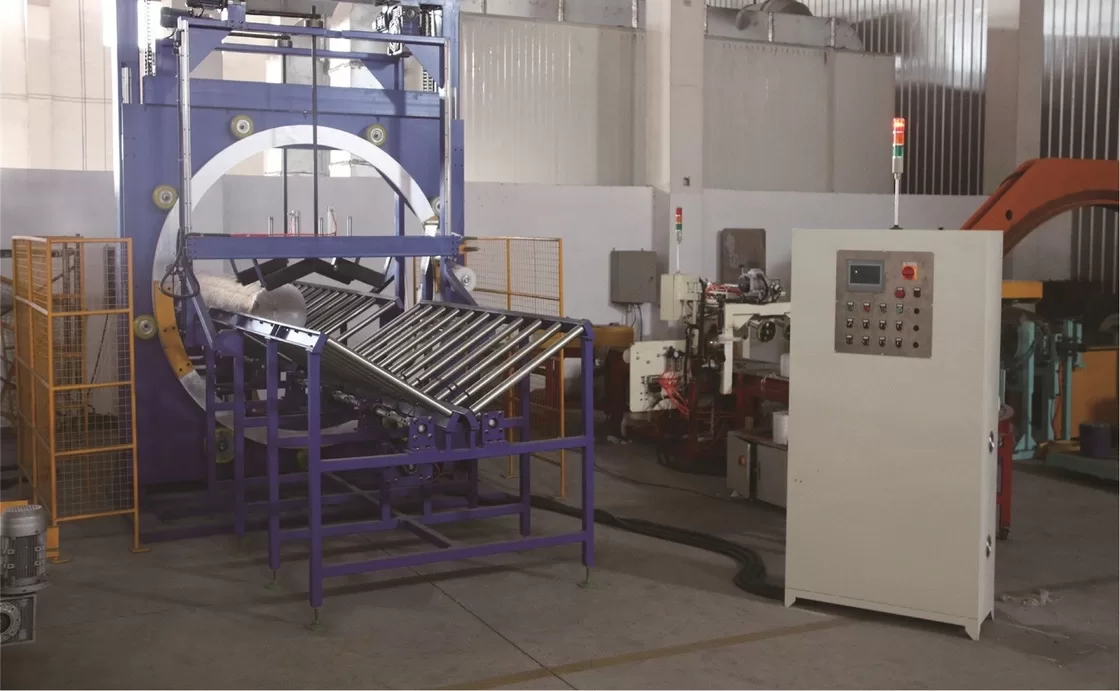
For Michael, who values reliability and has faced bad experiences with past suppliers, the quality of a machine’s build is critical. It is not just about the upfront price. It is about the total cost of ownership over the machine’s life. A cheap machine might save you money today, but it will cost you much more in repairs, lost production, and replacement parts tomorrow. When evaluating an orbital wrapper, look closely at the materials used. Is the frame made from heavy-gauge steel? Are critical moving parts, like gears and bearings, made from durable, wear-resistant materials? Reputable manufacturers use components from well-known brands. This includes motors, sensors, and control systems.
These branded components often have better reliability and are easier to find replacement parts for. Think about the type of bearings used in the wrapping ring. High-quality sealed bearings will last much longer in a dusty factory environment than cheaper ones. Also, consider the electrical components and the PLC (Programmable Logic Controller) system. A reliable PLC ensures the machine’s controls are stable and precise. My own journey from an employee to owning a successful packing machine factory taught me this lesson deeply. I saw firsthand how a broken machine can halt an entire production line. This is why I always prioritize building machines that last. This helps my clients grow their businesses without constant worries about equipment failure.
Key Aspects of Durability and Quality
- Construction Materials: Heavy-duty steel frames, industrial-grade coatings for corrosion resistance.
- Component Brands: Use of internationally recognized brands for motors, gearboxes, bearings, and electrical components.
- Wear Parts: Design that allows for easy replacement of parts that naturally wear out, with high-quality spares readily available.
- Control System (PLC): Reputable PLC brands for stable and reliable machine operation.
| Aspect of Quality | What to Look For | Long-Term Benefit for Your Factory |
|---|---|---|
| Frame Construction | Thick, welded steel frame, anti-corrosion treatment. | Machine stability, resistance to vibration and heavy use. |
| Reputable Components | Siemens, Schneider, SKF, etc. for motors, bearings. | Higher reliability, easier to source replacement parts. |
| Serviceability | Modular design, accessible internal parts. | Quicker repairs, less downtime during maintenance. |
| Electrical System | Industrial-grade wiring, proper grounding. | Reduces risk of electrical failures, improves safety. |
For Michael, who has suffered from unreliable suppliers, focusing on durability and component quality is key to building trust. It assures him that his investment will deliver consistent performance. This will reduce unexpected costs and downtime, helping him achieve his goal of lowering costs and improving overall profitability.
My Personal Insights: What True Partnership Really Means for Your Business?
Have you ever bought equipment from a supplier who was great at selling but disappeared when you needed support? Many factory owners I know have experienced this. They feel alone when a machine breaks down or when they need advice. This lack of trust and support can be just as damaging as a broken machine. It holds back your business growth.
True partnership in the packing machine industry means more than just a sale. It means your supplier understands your unique challenges, provides expert guidance, and offers reliable, long-term support. A real partner acts as an extension of your team, helping you optimize operations and achieve your goals, rather than just selling you a machine.
When I started my journey in the packing machine industry, first as an employee and later building my own successful factory, FHOPEPACK, I learned a lot. I saw firsthand the daily pressures on factory floors. I understood how a small problem with a machine could stop an entire production line. I also saw how much good design and reliable support could help a business. This is why I am so passionate about sharing my knowledge today. It is not just about selling machines. It is about helping people like Michael succeed.
For me, a true partnership begins with really listening. When Michael talks about his efficiency bottlenecks, his safety concerns, and his challenges with product loss, I understand them deeply. I have faced similar problems myself or helped many clients solve them. It is about offering solutions that fit your specific factory, not just a one-size-fits-all product. This means providing professional insights, sharing best practices, and helping you clearly see the return on your investment. I believe in giving back because the packing machine industry gave me so many opportunities. So, when you work with FHOPEPACK, you are not just buying equipment. You are gaining a partner who genuinely cares about your success and is ready to support you every step of the way.
Conclusion
New Zealand engineers evaluating orbital stretch wrappers must prioritize speed, safety, material handling, and durability. These technical features ensure efficiency, protect workers, prevent product damage, and provide lasting value. Partnering with a knowledgeable expert is key to maximizing your investment.








