
Looking to Improve Packaging Speed for High-Volume Door Production?
For door manufacturers, meeting high demand means a constant push for speed and efficiency. But are you still relying on slow, manual packaging methods? This approach often creates a frustrating bottleneck at the very end of your production line. This bottleneck costs you time, money, and valuable production capacity. You produce doors quickly, but if packaging cannot keep up, your overall output suffers.
Automating your door packaging process is the most direct way to drastically improve speed for high-volume production. Specialized packaging machines can wrap doors far faster and more consistently than any manual team. This helps you get more products out the door, meet tight deadlines, and boost your factory’s overall throughput without compromising quality.

You know the challenges in a busy factory. The pressure to deliver, the need for cost control, and the constant focus on safety. These are not just abstract ideas; they affect your bottom line every single day. Let us explore how modern packaging solutions address these core issues for door manufacturers and help you achieve your production goals.
Is Your Door Packaging Line Slowing Down Your Entire Production?
The pressure to produce high volumes of doors is constant. Yet, many factories face a common problem: their packaging line cannot keep up. Manual wrapping is slow and inconsistent. It leaves your expensive production machinery sitting idle, waiting for the packaged doors to clear the line. This means wasted time and lost profits.
Your packaging line can become the slowest part of your entire operation if you rely on manual labor. This creates a severe efficiency bottleneck. Automated packaging solutions directly solve this problem. They work at high speeds with consistent output. This ensures your doors are ready for shipment quickly.
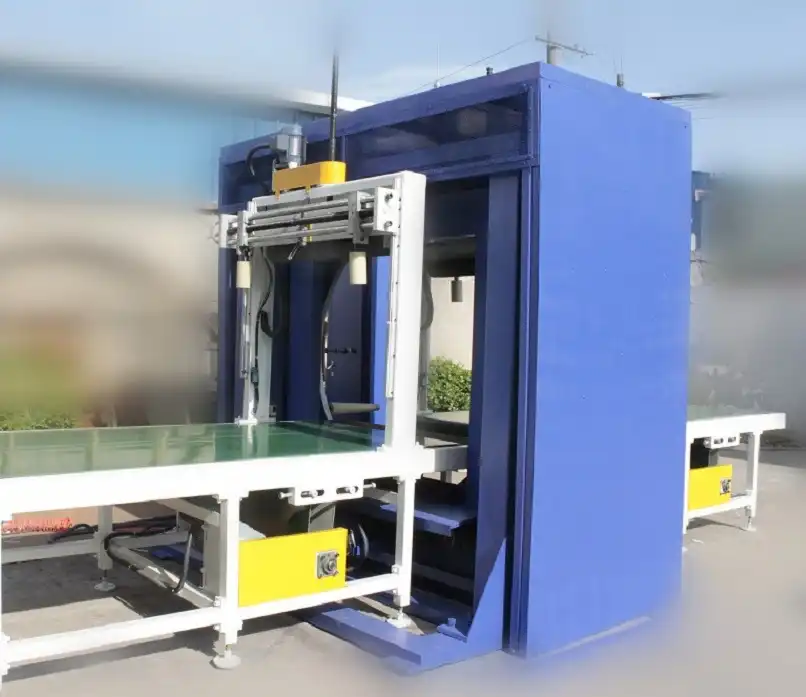
Manual door packaging, especially for high volumes, is a significant drain on resources. Think about the time it takes to manually wrap each door. This process involves multiple steps: positioning the door, stretching film, securing it, and often adding protective materials by hand. When you are producing hundreds or thousands of doors daily, these minutes add up to hours of lost production time. This is not just about labor costs. It is about the opportunity cost of not being able to ship more products.
Manual vs. Automated Door Packaging Throughput
| Feature | Manual Door Packaging | Automated Door Packaging |
|---|---|---|
| Speed | Slow, highly variable based on worker skill and fatigue | Fast, consistent, often 30-60+ doors per hour depending on machine |
| Consistency | Varies, prone to human error, uneven wraps | High, precise, uniform wraps every time |
| Labor Cost | High, requires multiple workers, benefits, training | Low, often one operator to oversee multiple machines |
| Downtime | Prone to breaks, shift changes, worker injury | Minimal, high uptime, scheduled maintenance |
| Floor Space | Can be spread out, but inefficient workflow | Compact, optimized for flow, less clutter |
| Scalability | Difficult to scale up quickly, requires more hiring | Easy to scale, just run machines for longer or add more |
My journey in the packing machine industry taught me that efficiency is king. When I started my own factory, I saw firsthand how much a bottleneck at the end of the line could cost. We invested heavily in automation. This choice allowed us to increase our output significantly. For door manufacturers, the goal is similar. You want to move doors from production to shipment as smoothly as possible. Automated door packaging machines, such as horizontal orbital wrappers or specialized shrink wrappers, are designed for this. They can handle large, heavy, or oddly shaped doors. They apply consistent tension and coverage. This not only speeds up the process but also prepares the doors better for transport. You get a reliable, high-speed solution that truly masters your wrapping challenges.
Are Your Workers at Risk Handling Heavy Doors Manually?
Heavy door production means your workers are constantly lifting and moving substantial weights. This manual handling creates a very real safety hazard. The risk of back injuries, strains, and even crushed limbs is high. When accidents happen, they lead to increased insurance costs, lost workdays, and staff turnover. This affects both your finances and your team’s morale.
Protecting your employees is not just a moral obligation. It is also good business practice. Automated packaging systems remove the need for manual heavy lifting. They significantly improve workplace safety. Machines handle the weight, which reduces the risk of injury. This creates a safer work environment for everyone.
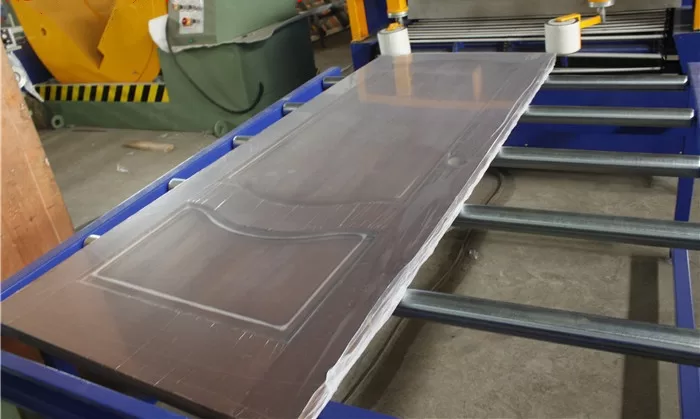
Manual handling of heavy doors exposes your workforce to considerable risks. Each door, especially solid core or commercial-grade doors, can weigh a lot. Workers manually lifting, shifting, and positioning these doors repeatedly throughout a shift are prone to musculoskeletal injuries. These injuries can be severe and long-lasting. They lead to workers’ compensation claims, higher insurance premiums, and potential lawsuits. Beyond the financial impact, there is the human cost. Injured employees mean lost productivity. They also mean a drop in team morale for those who remain. This creates a cycle of high turnover and constant retraining.
Automated packaging equipment directly addresses these safety concerns. For instance, a horizontal orbital wrapper designed for doors includes conveyor systems. These systems move the doors into and out of the wrapping zone. Workers do not need to lift the doors manually. The machine takes over the heavy lifting. This greatly reduces physical strain. It minimizes the chance of accidents. Many modern machines also come with advanced safety features. These include emergency stop buttons, safety guarding, and automatic sensing systems. These features further protect operators.
I remember early in my career, seeing firsthand the toll manual labor took on factory workers. It was a tough job. This experience drove my passion for developing machines that not only boosted efficiency but also protected people. At FHOPEPACK, we design our machines with safety as a core principle. For door manufacturers, this means investing in equipment that reduces physical labor. It means creating a safer environment. It also means complying with strict safety regulations. By automating, you are not just buying a machine. You are investing in your employees’ well-being. You are building a more secure and sustainable operation. This commitment to safety helps you retain experienced staff. It also improves your factory’s reputation.
Are Damaged Doors Costing Your Business Profits and Reputation?
You work hard to produce high-quality doors. But what happens if they get damaged before they reach your customer? Scratches, dents, and broken edges during internal transfers or shipping lead to customer complaints. This results in costly returns, rework, and reduced profits. Your carefully crafted product loses its value. Your brand reputation also takes a hit.
Product damage during packaging and transit is a silent killer of profits. Automated packaging ensures a consistent, secure wrap every time. This protects your doors from physical harm and environmental factors. It helps them arrive at their destination in perfect condition. This means happier customers and a stronger brand.

Doors are robust products, but they are still vulnerable to damage. During handling, especially when manually moved or poorly secured for transit, they can suffer from various forms of damage. These include scratches on painted surfaces, dents on edges, and even structural damage from impacts. Even minor imperfections can lead to a customer rejecting the shipment. These rejections mean you incur the cost of return shipping, potential repair, or even manufacturing a new door. This directly impacts your profit margins. Beyond the immediate financial loss, there is the long-term impact on your reputation. A customer who receives damaged goods is unlikely to order from you again. They may also share their negative experience, hurting your future sales.
Automated packaging machines provide a consistent and protective solution. Unlike manual wrapping, which can be inconsistent in film tension and coverage, a machine applies the same amount of film in the same way for every door. This ensures maximum protection. For doors, this often involves using durable stretch film or even specialized bubble film. The machine wraps the entire surface, including vulnerable edges. This creates a secure, weather-resistant barrier. Some automated systems also incorporate additional protective elements, such as corner boards or edge protectors, which are applied precisely by the machine.
Key Factors in Protecting Doors During Transit
| Factor | Manual Packaging Risk | Automated Packaging Solution |
|---|---|---|
| Film Coverage | Inconsistent, gaps, uneven tension, leading to exposed areas | Full, uniform coverage, consistent tension for optimal protection |
| Edge Protection | Often missed or poorly applied, leaving edges vulnerable | Precise application of edge protectors (if applicable), comprehensive wrapping |
| Moisture/Dust | Inadequate sealing, allowing ingress and potential damage | Tightly sealed wrap, creating a barrier against environmental factors |
| Handling Impact | Slippage during manual lifting, potential drops, clumsy movement | Secure grip by machine, smooth conveyor transfer, reduced human contact |
| Vibration | Loose wraps can allow movement and scuffing during transit | Tight, stable wrap minimizes shifting and abrasion during transport |
My goal at FHOPEPACK is to help businesses eliminate these painful losses. I have seen how much product damage can eat into a company’s bottom line. It is not just about the cost of a new product. It is also about the administrative time spent handling complaints. It is about the loss of customer trust. By investing in a dedicated door packing machine, you ensure that each door leaves your factory perfectly protected. This means fewer returns, fewer complaints, and a stronger reputation in the market. It is a smart investment that pays for itself by preventing avoidable losses.
How Can You Find a Packaging Partner Who Truly Understands Your Needs?
Many equipment suppliers focus only on making a sale. They often provide poor after-sales service or generic solutions. This leaves you feeling frustrated and unsupported. You need a partner who understands your specific production challenges. You need someone who can offer expert insights and reliable, long-term support. You do not just want a machine; you want a true solution.
Finding the right partner is crucial for successful automation. Look for suppliers who have deep industry experience. They should offer tailored solutions, not just off-the-shelf products. A good partner provides excellent after-sales support. This includes maintenance, spare parts, and technical assistance.
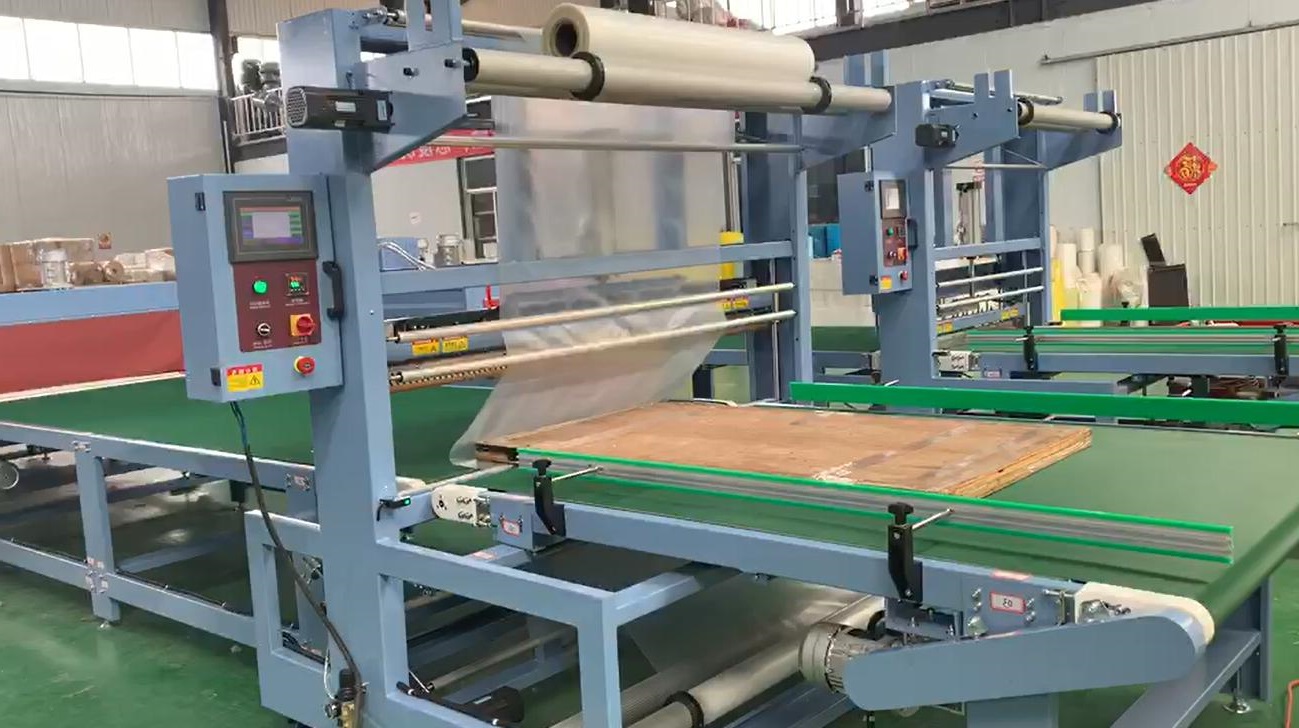
My personal journey taught me the importance of a true partnership. I started as an employee in a packing machine factory. I learned the ropes from the ground up. I saw the everyday struggles faced by factory managers like Michael Chen. This experience led me to start my own successful packing machine factory. I understood that clients needed more than just a machine. They needed a partner who could truly understand their production bottlenecks, safety concerns, and efficiency challenges. They needed someone who could offer real solutions.
When you are looking for a packaging equipment supplier, consider these points:
What to Look For in a Packaging Partner
| Aspect | What a Good Partner Provides | What to Avoid |
|---|---|---|
| Industry Expertise | Deep understanding of your industry (e.g., door manufacturing), specific challenges | Generic sales pitches, lack of specific knowledge about your product/process |
| Tailored Solutions | Custom-engineered machines or configurations for your unique needs and space | “One-size-fits-all” products, unwillingness to adapt |
| After-Sales Support | Comprehensive support: installation, training, maintenance, spare parts, troubleshooting | Disappearing after the sale, slow or non-existent response to issues |
| Long-Term Relationship | Focus on your success, regular check-ins, continuous improvement suggestions | Transactional approach, only focused on the initial sale |
| Transparency | Clear communication on costs, timelines, machine capabilities, and limitations | Hidden fees, vague promises, overstating machine performance |
| Proven Track Record | Case studies, client testimonials, long-standing industry presence | New companies with no history, no verifiable references |
I built FHOPEPACK on the principle of giving back. My success came from understanding and solving packaging problems for businesses. This is why we focus on sharing knowledge and expertise. For Michael and other factory managers, this means we do not just sell machines. We work with you to analyze your current process. We identify the bottlenecks and safety risks. Then, we recommend the most effective, ROI-driven solutions. Whether it is a machine for coil packing, steel wire packing, or, in your case, high-volume door packaging, our approach is the same. We aim to be a long-term partner. We ensure your investment truly drives growth and solves your problems. We want to help you achieve financial independence and business success, just as the packing machine industry helped me.
Conclusion
Improving packaging speed for high-volume door production requires smart automation. Investing in specialized machines boosts efficiency, enhances safety, and protects your product. Choose a partner with real expertise and dedication to your success.








